
Chapter 9 Cellular Respiration Chemical Pathway Calorie C
- Slides: 17
Chapter 9 Cellular Respiration Chemical Pathway
Calorie (C) ●The amount of energy needed to raise the temp of 1 gram of water 1 degree C. ●They are released as forms of energy from burning sugars etc.
Glycolysis • Release very little energy • In the presence of O 2 2 pathway that release a lot of energy • In the absence of O 2 followed by different pathway
Cellular Respiration • A process that releases energy by breaking down carbohydrates and O 2 to, produce CO 2, water, and energy
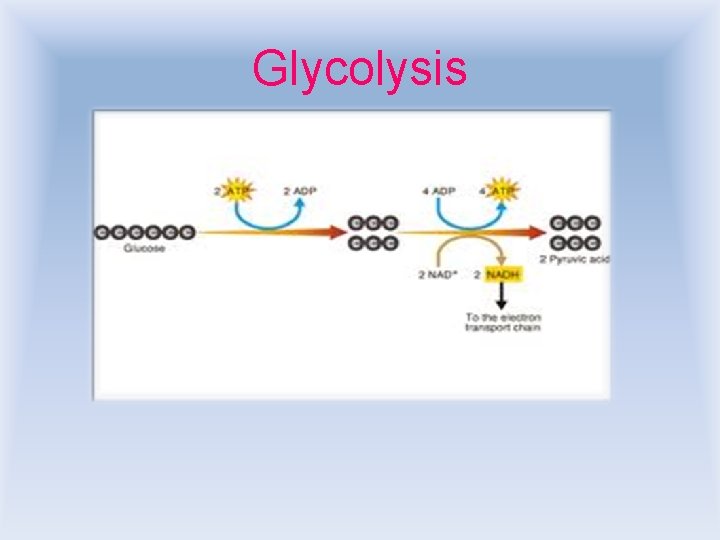
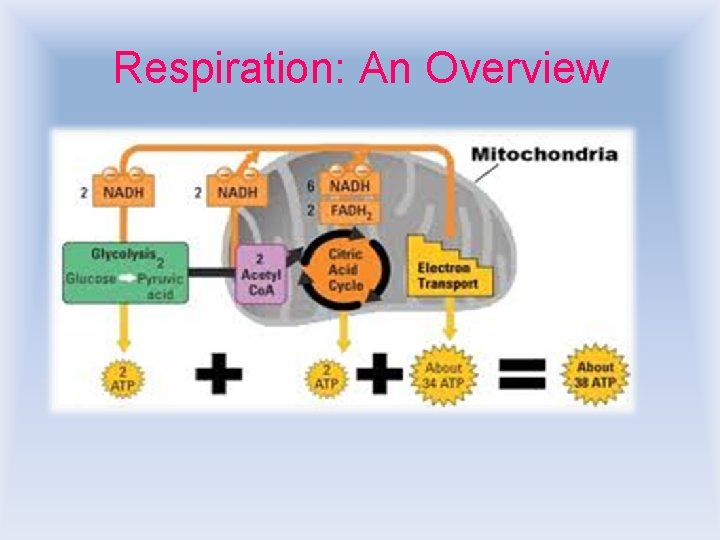
Glycolysis • A process by which 1 molecule of glucose is broken in 1/2 , producing 2 molecules of Pyruvic acid (A 3 Carbon Compound) • In this process ATP and NADH are produced alongside Pyruvic Acid
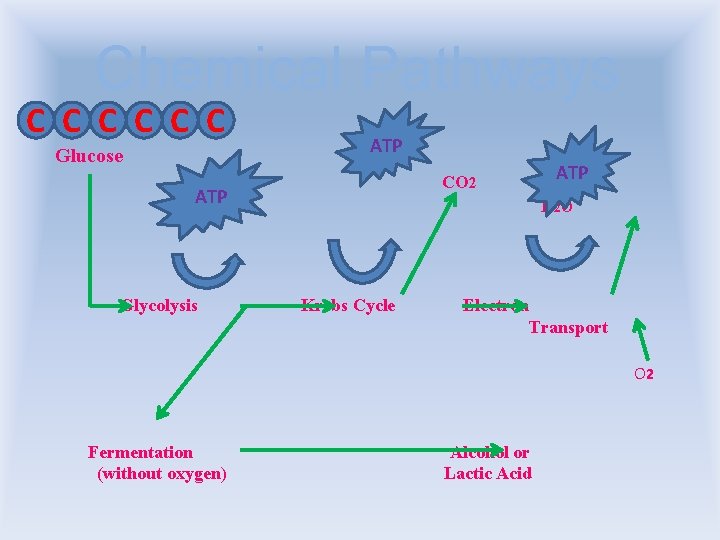
Chemical Pathways C C C Glucose ATP Glycolysis ATP CO 2 H 2 O Krebs Cycle Electron Transport O 2 Fermentation (without oxygen) Alcohol or Lactic Acid
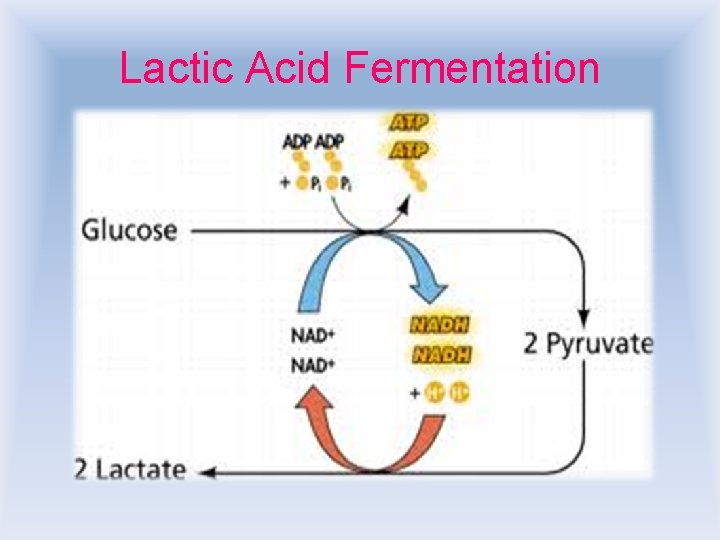
Fermentation ●Release energy from food molecules in the absence of O 2 ●Anaerobic – “Without Air” ●Convert , NADH NAD, so glycolysis can continue to produce ATP 2 Types ▪Lactic Acid ▪ Alcoholic
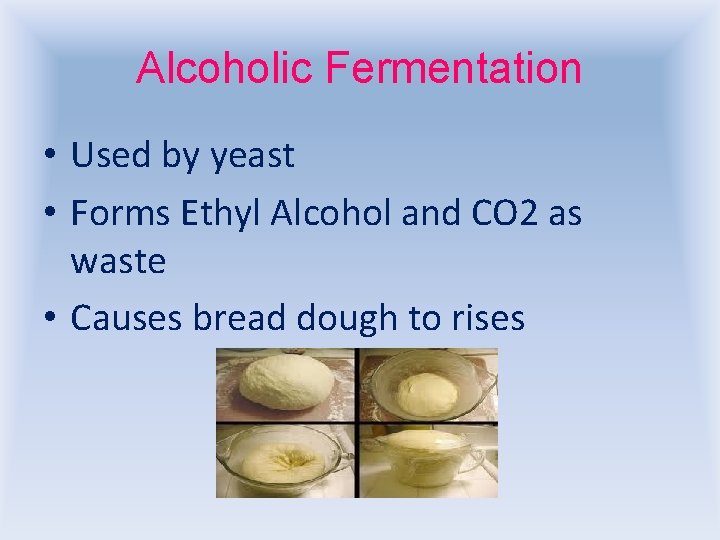
Alcoholic Fermentation • Used by yeast • Forms Ethyl Alcohol and CO 2 as waste • Causes bread dough to rises
Lactic Acid Fermentation
Lactic Acid • Produces Lactic Acid and NAD+ so glycolysis can continue • Produced in muscles when O 2 supply runs out • Reason for muscle soreness
Krebs Cycle • Pyruvic Acid is broken down into CO 2 in a series of energy – extracting reactions • The source of CO 2 in your breath • Produces ATP for cellular activities
Electron Transport • Krebs Cycle produces e-; that are passed to NADH which are passed from these carriers to an e- transport chain • Uses high energy e- from Krebs Cycle to convert ADP to ATP
Glycolysis • Produce 2 ATP & Glucose • With No O 2 2 ATP • With O 2 present Krebs Cycle (34 ATP) + 2 ATP • This is about 38% of the total energy of glucose, the rest (62%) is released as heat • This is why we feel warmer after exercise
Glycolysis
Energy & Exercise Quick Energy • the body uses Stored Energy 1 st but then depends on Lactic Acid fermentation after the 1 st few seconds (can last for 90 seconds)
Long Term Energy • Cellular Respiration releases energy slowly then Lactic Acid form • Body uses stored carbohydrates (glycogen) last 15 -20 min • After this, the body begins to break down others sources of energy, such as fats • Called “Aerobic” exercise
Respiration: An Overview