
Chapter 9 Basic Signal Processing Motivation n Many
Chapter 9 Basic Signal Processing
Motivation n Many aspects of computer imagery differ from aspects of conventional imagery n n n Computer representations are digital and discrete Natural representations are continuous Reqires a basic understanding of signal processing

Reconstruction Display creates a continuous light image from these discrete digital values. Ex) framebuffer
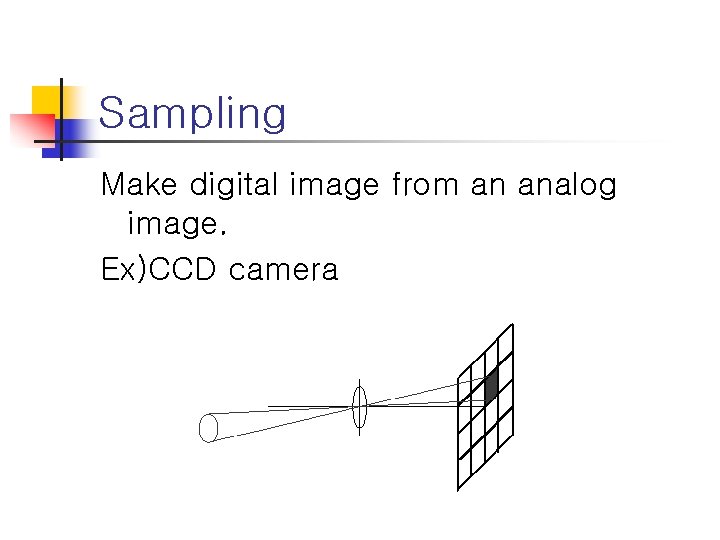
Sampling Make digital image from an analog image. Ex)CCD camera
Discussion of reconstruction and sampling leads to an interesting question : Is it possible to sample an image and then reconstuct it without any distortion?
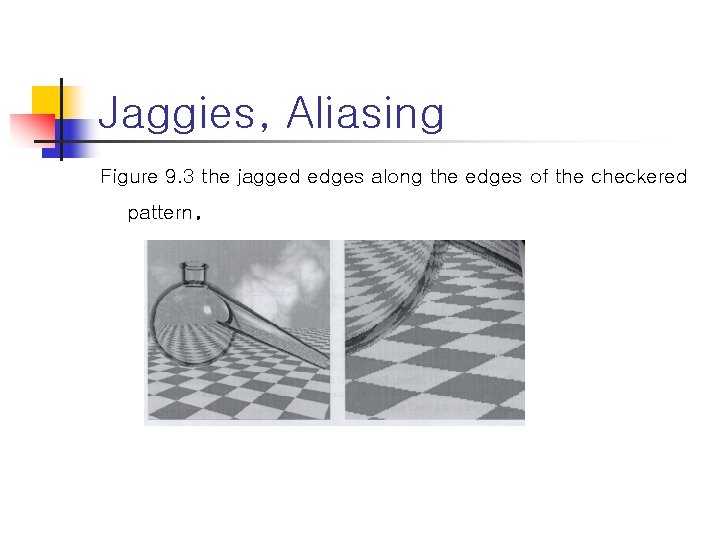
Jaggies, Aliasing Figure 9. 3 the jagged edges along the edges of the checkered pattern .
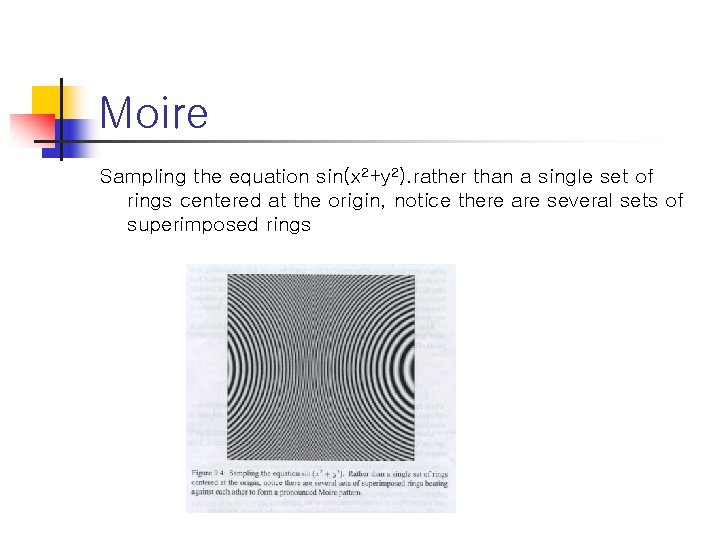
Moire Sampling the equation sin(x 2+y 2). rather than a single set of rings centered at the origin, notice there are several sets of superimposed rings
Usefulness Signal processing is very useful tool in computer graphics and image processing. 1. images can be filtered to improve their appearance 2. Multiple signals can be cleverly combined into a single signal.
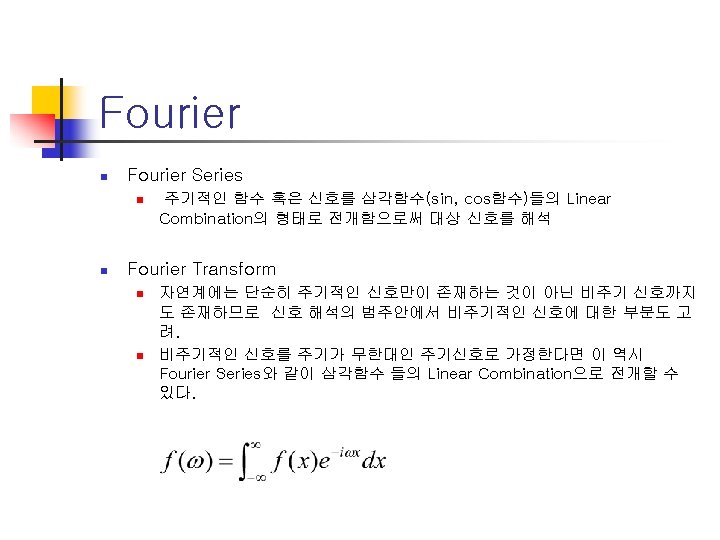
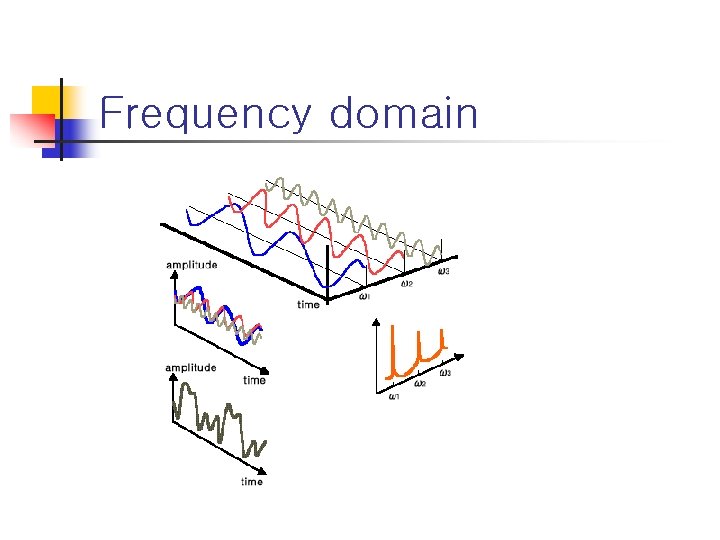
Mathematical fact n Anyperiodic funtion can always be written as a sum of sine and cosine waves. n More generally, a non-periodic function can also be represented as a sum of sin’s and cos ’s n Fourier transform

Example a square pulse
Frequency domain
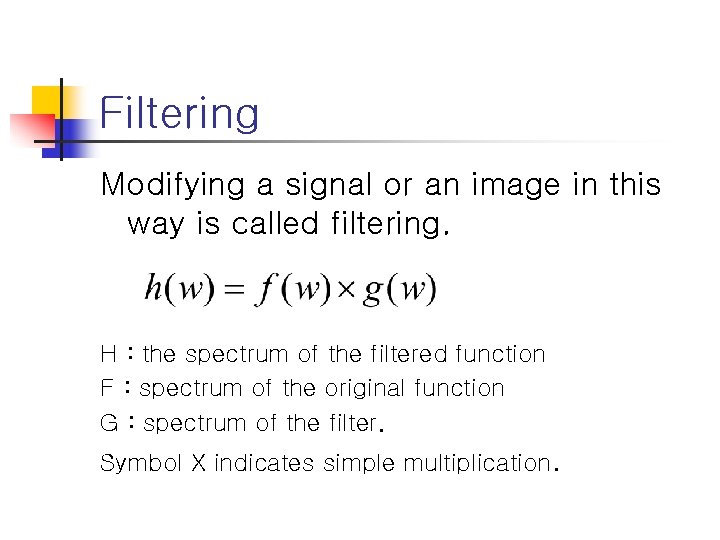
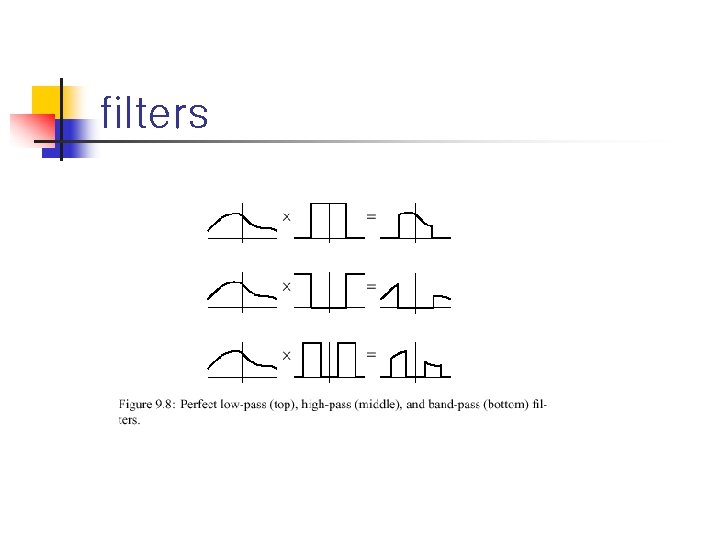
Filtering Modifying a signal or an image in this way is called filtering. H : the spectrum of the filtered function F : spectrum of the original function G : spectrum of the filter. Symbol X indicates simple multiplication.
filters

Low pass filtering
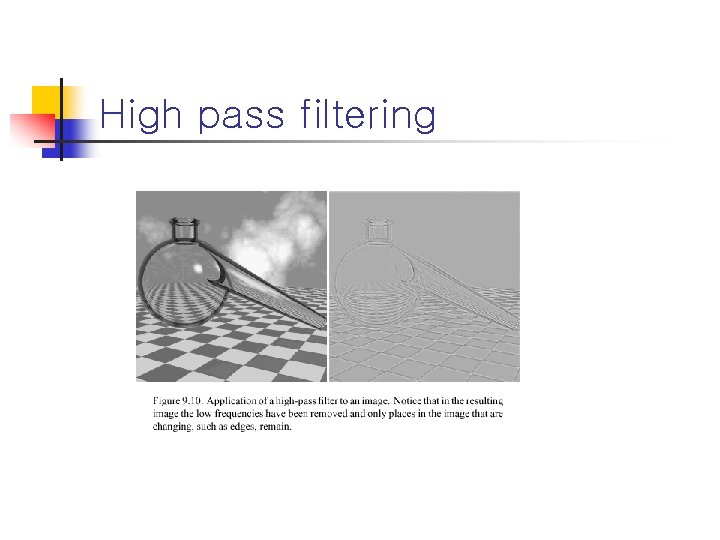
High pass filtering
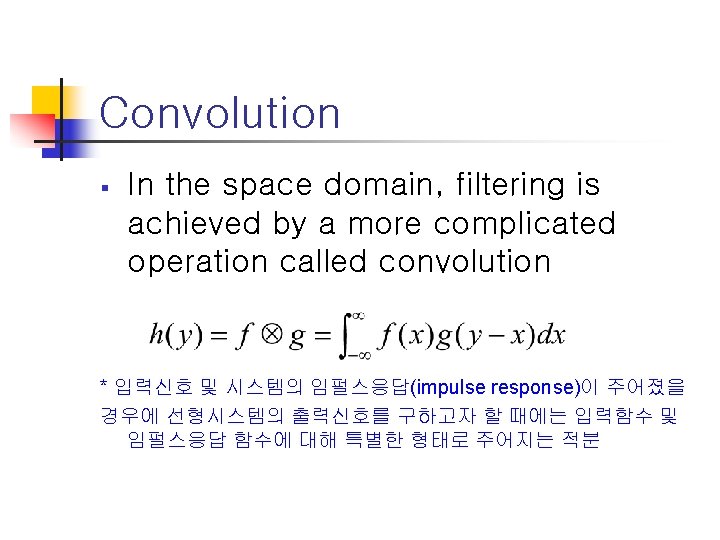
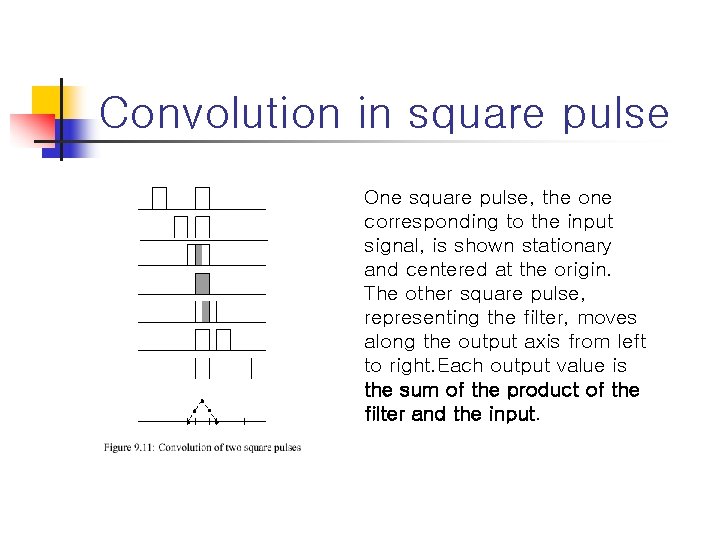
Convolution in square pulse One square pulse, the one corresponding to the input signal, is shown stationary and centered at the origin. The other square pulse, representing the filter, moves along the output axis from left to right. Each output value is the sum of the product of the filter and the input.
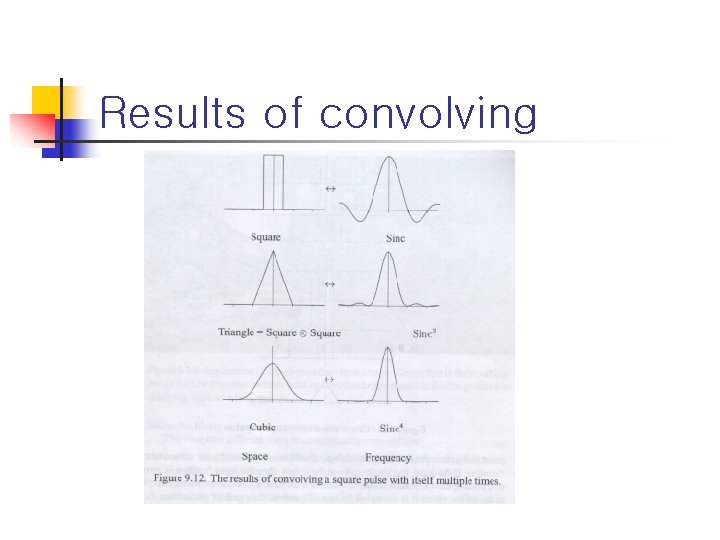
Results of convolving
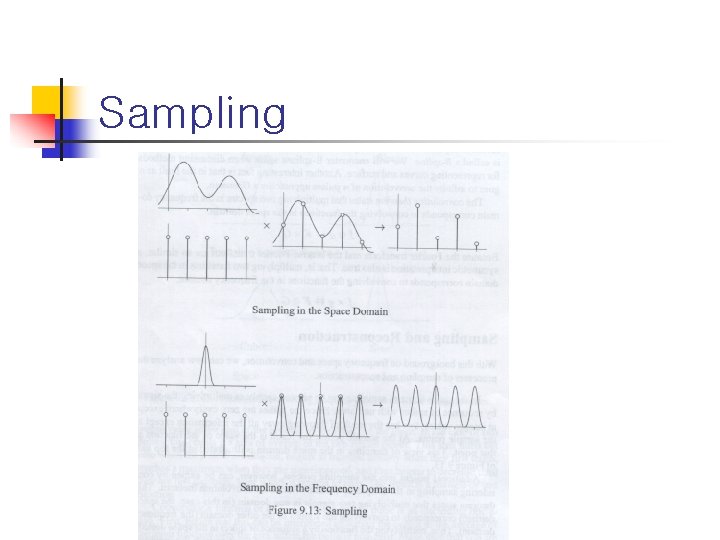
Sampling
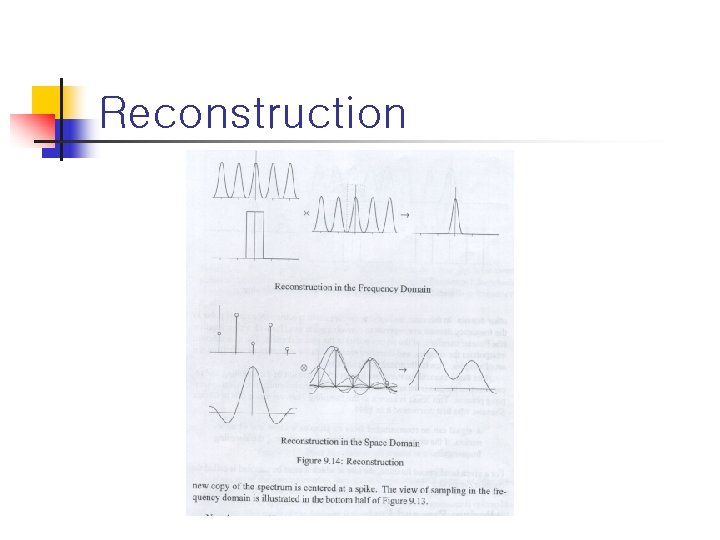
Reconstruction
Sampling theorem A signal can be reconstucted from its smaples without loss of information, if the original signal has no frequencies above 1/2 the sampling frequency. -Claude shannon (1949)
Aliasing Pre-aliasing Due to undersampling (sampled at less than its nyquist frequency) Post-aliasing Due to bad reconstuction (low-pass filter is not perfect : in general, reconstruction is a property of the hardware and media)
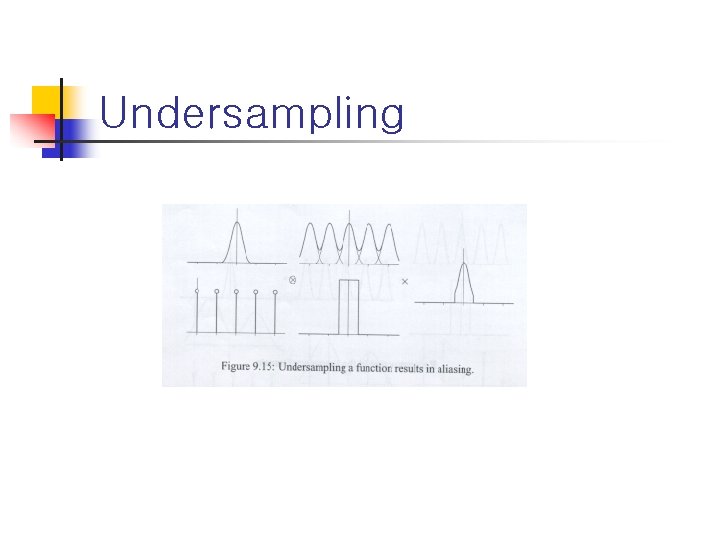
Undersampling
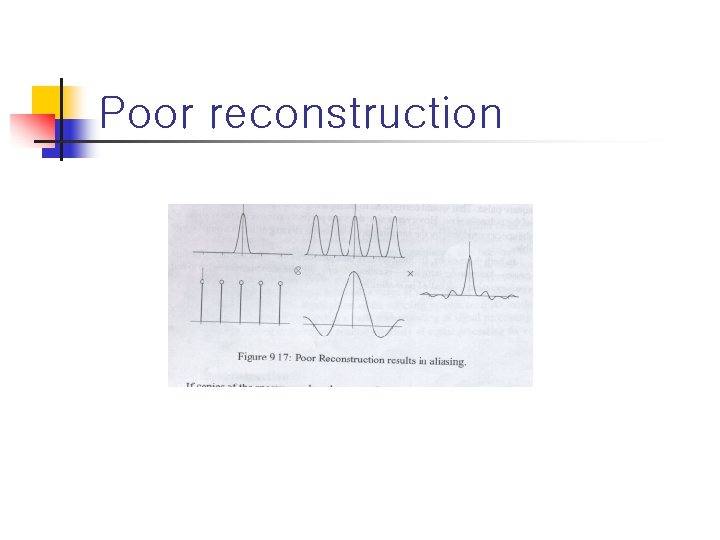
Poor reconstruction
- Slides: 25