
Chapter 9 Architectural Pattern of an Animal Metazoans

- Slides: 39
Chapter 9: Architectural Pattern of an Animal Metazoans
l 32 Phyla of multicellular animals – Survivors of 100 phyla from the Cambrian explosion 600 million years ago.
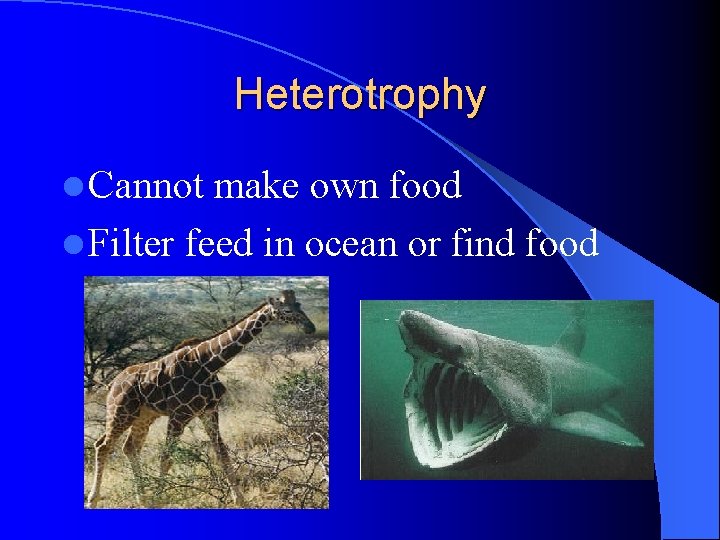
Heterotrophy l Cannot make own food l Filter feed in ocean or find food
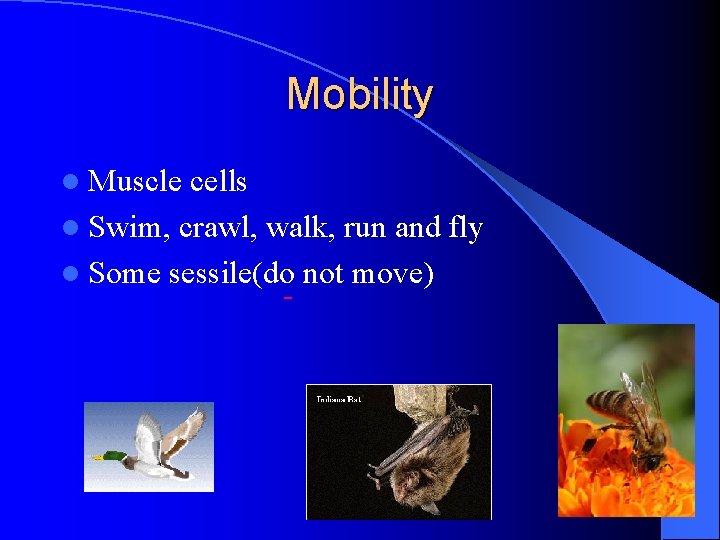
Mobility l Muscle cells l Swim, crawl, walk, run and fly l Some sessile(do not move)
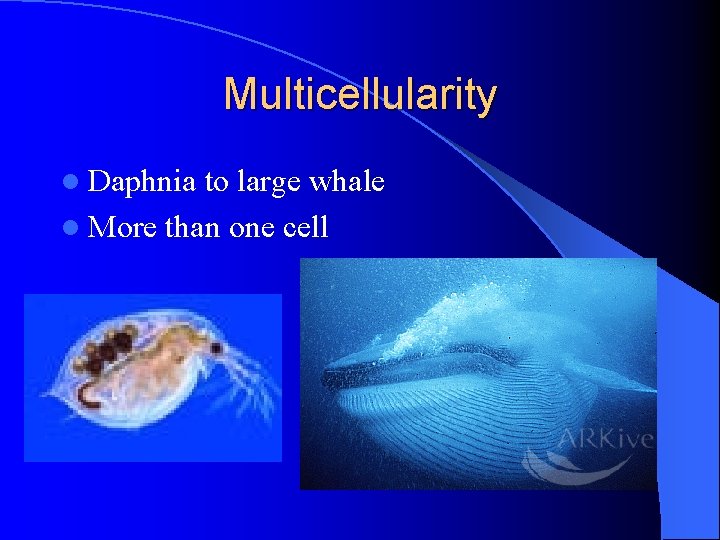
Multicellularity l Daphnia to large whale l More than one cell
Organization and Complexity l Metazoa or multicellular animals evolved greater complexity by combining cell into larger units l Cell – tissue – organs – organ systems l Parenchyma – main functional cells l Stroma – supportive tissues
Segmentation l Also called metamerism l Common feature of animals l Serial repetition of similar body segments along the longitudinal axis of body (parts repeat) l Each segment is called a metamere or somite.
l Allows for more mobility and complexity of structure and function l Examples include annelids, chordates and arthropods ( Worms, vertebrates and insects)
Diploidy l Adults have 2 copies of each chromosome l One from mother and one from father
Sexual reproduction l Gametes from 2 separate parents l Can also see asexual reproduction in the animal kingdom – budding – all genetic information comes from on parent
l No cell wall - mobility l Eukaryotic – nucleus and other membrane bound organelles
Blastula Formation l Zygote forms blastula l Hollow ball of cells l Develop into 3 distinct layers l Ectoderm/endoderm/mesoderm l These layers give rise to all other tissues/organs
Zygote - Gastrula l Found in all animals but sponges l One cell – 8 cells – blastula – layers l Process is called cleavage l Takes 3 hours to reach blastula l Second process the blastula begins to collapse inward while cells move to position - gastrulation
l Cell begin to vary in size and form the 3 primary tissues l Now at embryo stage l Evidence of common ancestor
Blastopore l Opening to the gut where the inward bending begins l First opening that forms in the gastrula
l During embryonic development germ layers become differentiated into four tissues. – Epithelial – Connective – Muscular – Nervous
l The development of an animal embryo follows one of two different patterns l Protostome – The blastopore develops into mouth-most invertebrates l Deuterostome-The blastopore develops into the anus – Echinoderms and Chordates
Animal Body Plans l Limited by ancestral history. l Shaped by habitat and way of life.
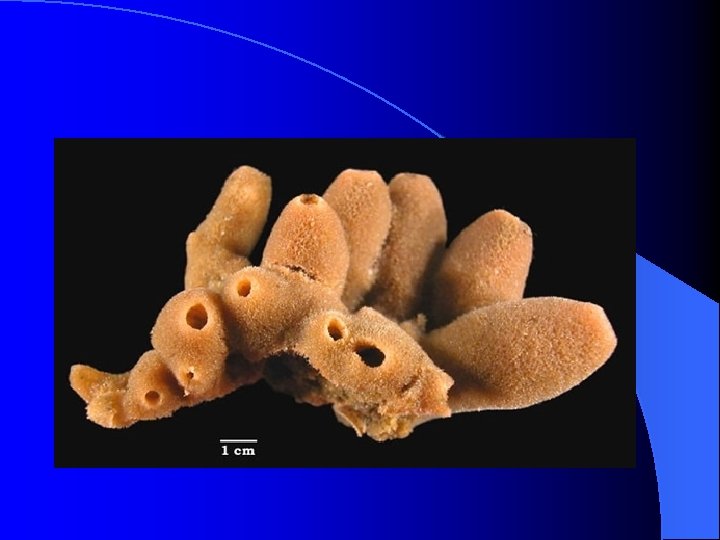
Animal Symmetry l Arrangement of body parts with reference to same axis of body. l Most animals have symmetry. l Sponges do not. – Asymmetrical
Asymmetry l Without symmetry
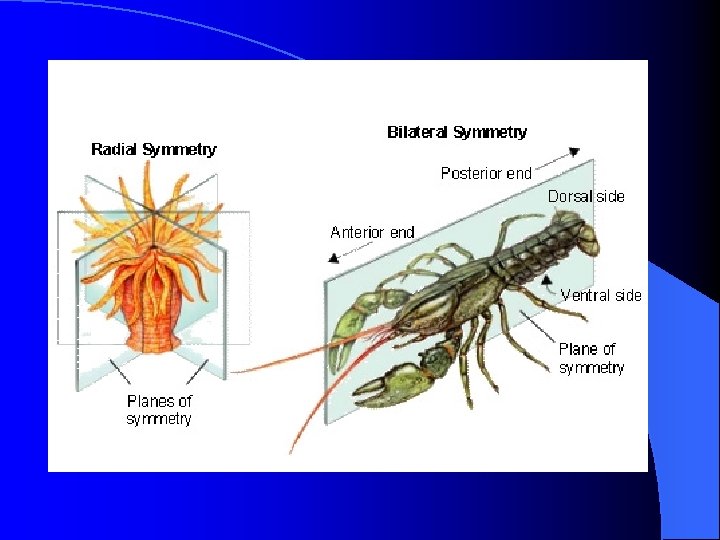
l Spherical Symmetry – Any plane passing through the center divides the body into mirrored halves. – Protozoa
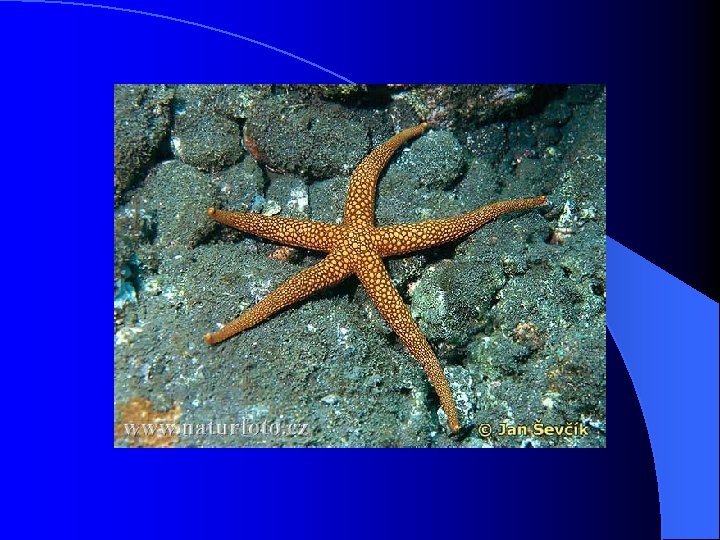
l Radial Symmetry – Divided into similar halves by more than two planes passing through one main axis. – Tubular, vase or bowl shape. – Some sponges, Hydras, Jellyfish
l Biradial Symmetry – Some parts are paired rather than radial.
l Echinoderms – Larvae are Bilateral – Become secondarily radial as adults.
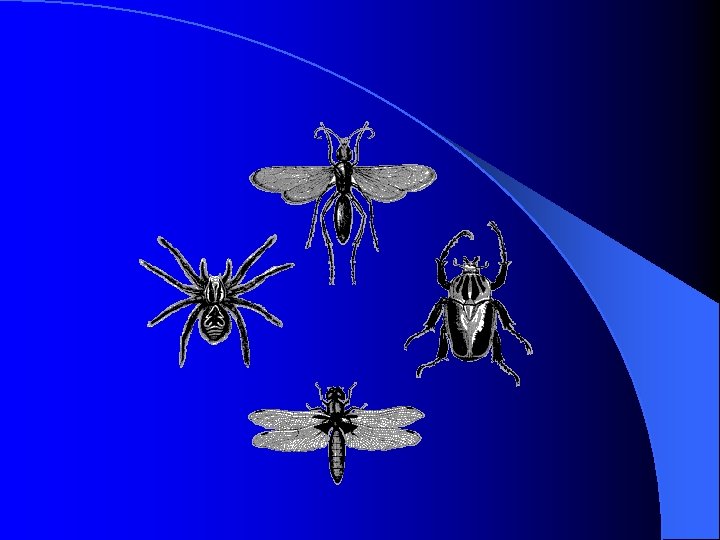
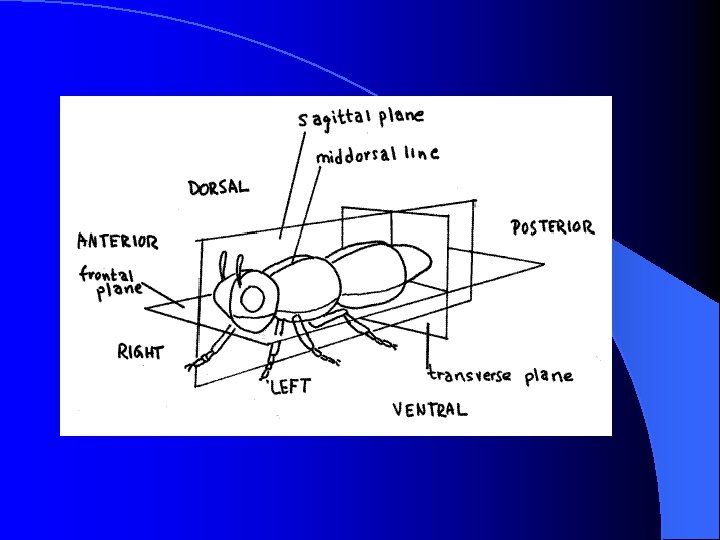
Bilateral Symmetry l Divided along a sagital plane into two mirrored portions-right and left halves l Better fitted for directional movement-forward l Associated with cephalization
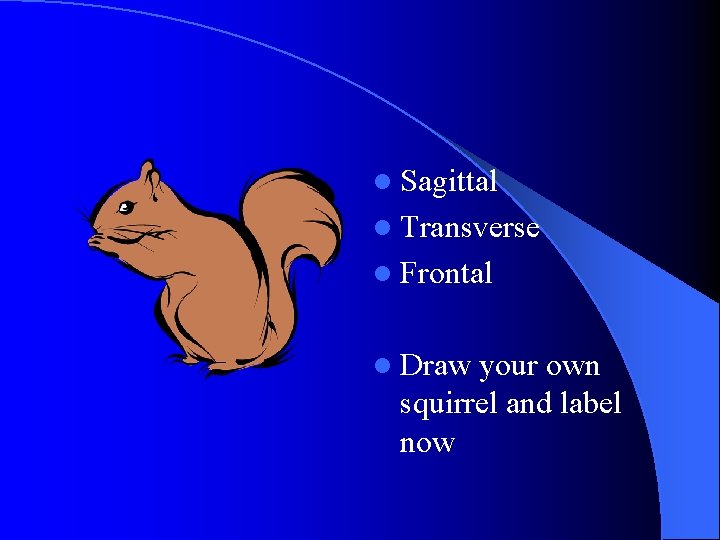
l Sagittal l Transverse l Frontal l Draw your own squirrel and label now
Animal Body Regions l Anterior – head end l Posterior – tail end l Dorsal – back side l Ventral – front or belly side l Medial – midline of the body l Lateral – the side of body
l Distal – farther from the middle of the body l Proximal – parts near a reference point l Pectoral – chest region l Pelvic – hip region or area supported by hind legs
Body Cavities l Bilateral animals can be grouped according to their body cavity type or lack of body cavity. l Coelom – in more complex animals the main body cavity. l A fluid filled space that surrounds the gut.
l Provides a “tube within a tube” arrangement. l Allows body flexibility. l Provides a space for visceral organs or internal organs.
l Greater size and complexity – more cells exposed to surface exchange. l Hydrostatic skeleton in many animals. – Worms
l Coelom forms differently in protostomes and deuterostomes l Some inverts or protostomes lack a coelom
Cephalization l Differentiation of a head or head region. l Bilaterally symmetrical animals. l Most efficient position for sensing the environmental and responding to it.
THE END Time to write your summary!!