
Chapter 9 A TwoPeriod Model The Consumption Savings






- Slides: 51
Chapter 9 A Two-Period Model: The Consumption -Savings Decision and Credit Markets Copyright © 2014 Pearson Education, Inc.
Chapter 9 Topics • Consumer’s consumption/savings decision – responses of consumer to changes in income and interest rates. • Government budget deficits and the Ricardian Equivalence Theorem. © 2014 Pearson Education, Inc. 1 -2
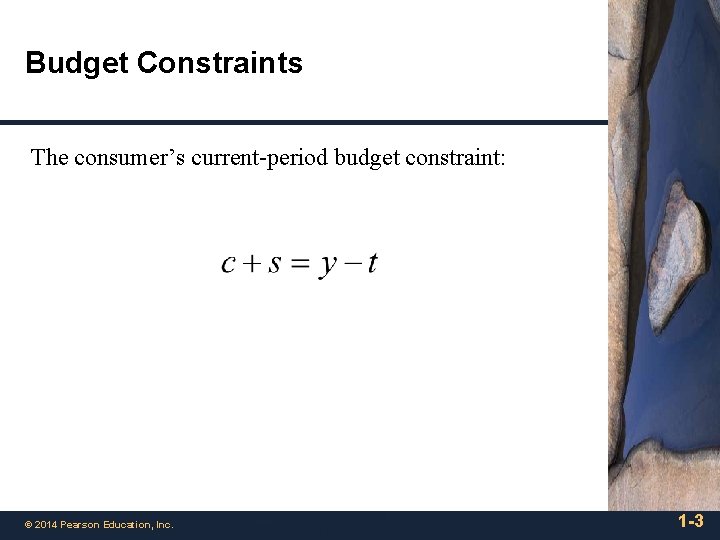
Budget Constraints The consumer’s current-period budget constraint: © 2014 Pearson Education, Inc. 1 -3
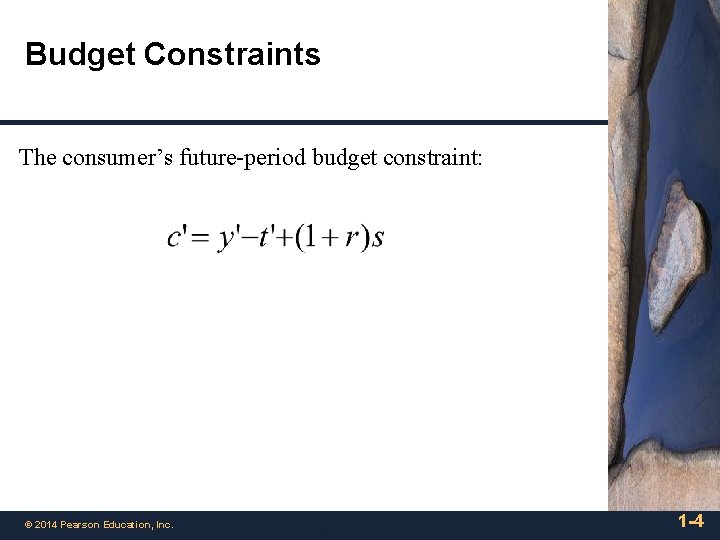
Budget Constraints The consumer’s future-period budget constraint: © 2014 Pearson Education, Inc. 1 -4
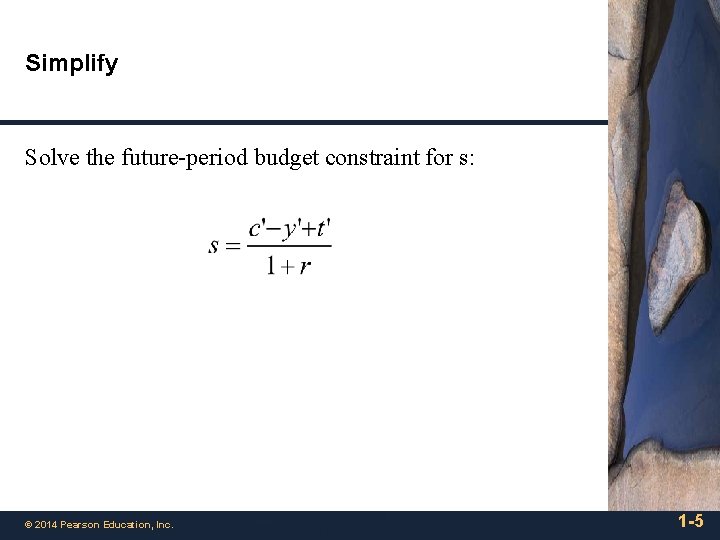
Simplify Solve the future-period budget constraint for s: © 2014 Pearson Education, Inc. 1 -5
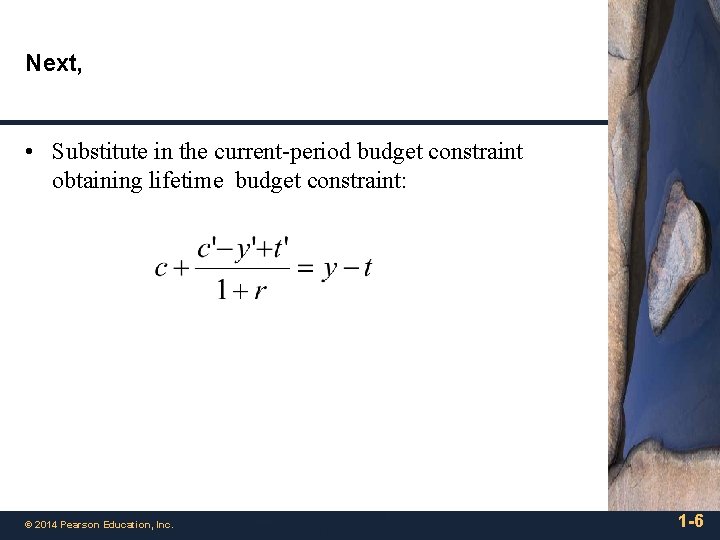
Next, • Substitute in the current-period budget constraint obtaining lifetime budget constraint: © 2014 Pearson Education, Inc. 1 -6
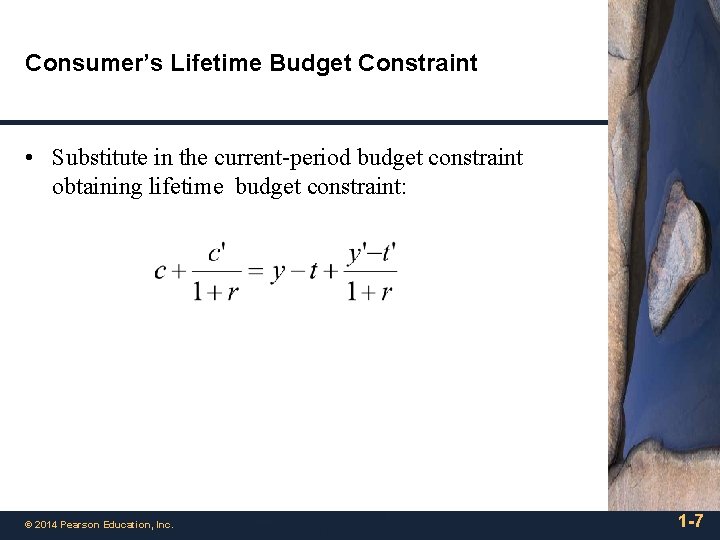
Consumer’s Lifetime Budget Constraint • Substitute in the current-period budget constraint obtaining lifetime budget constraint: © 2014 Pearson Education, Inc. 1 -7
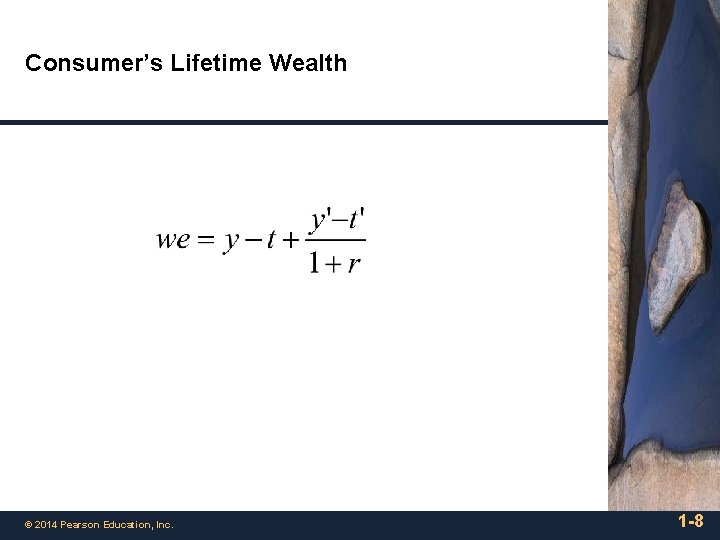
Consumer’s Lifetime Wealth © 2014 Pearson Education, Inc. 1 -8
Simplified Lifetime Budget Constraint © 2014 Pearson Education, Inc. 1 -9
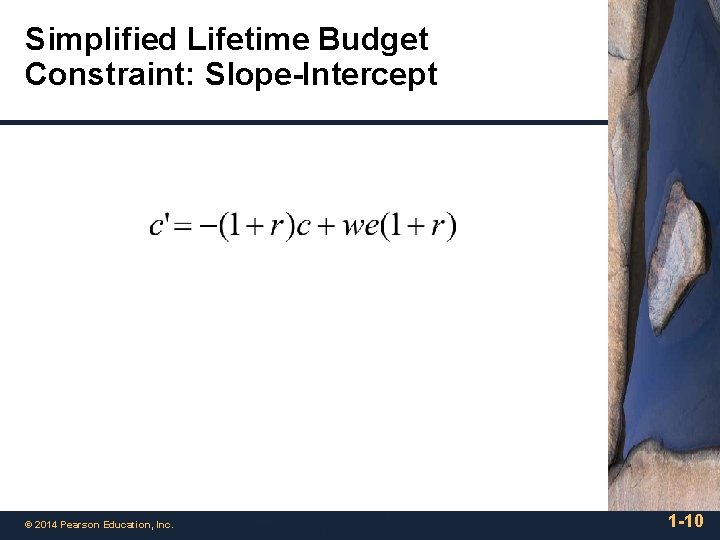
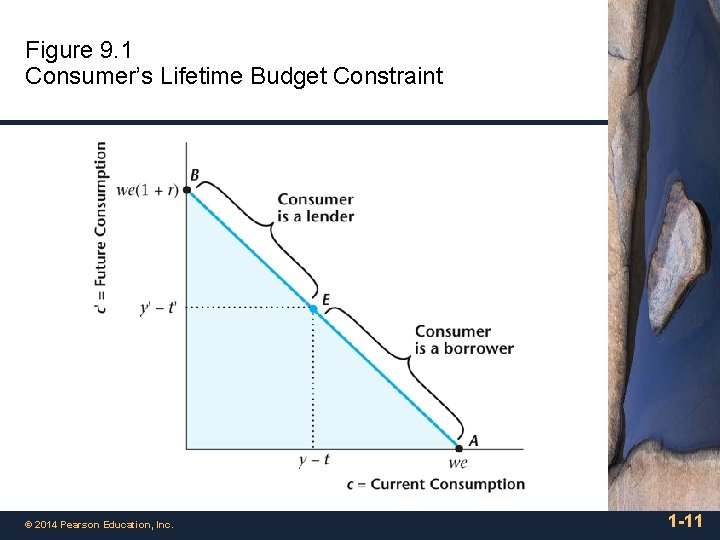
Simplified Lifetime Budget Constraint: Slope-Intercept © 2014 Pearson Education, Inc. 1 -10
Figure 9. 1 Consumer’s Lifetime Budget Constraint © 2014 Pearson Education, Inc. 1 -11
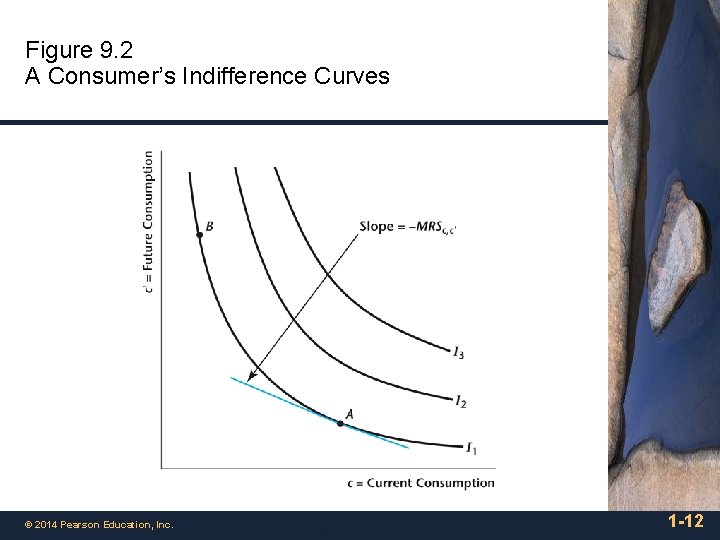
Figure 9. 2 A Consumer’s Indifference Curves © 2014 Pearson Education, Inc. 1 -12
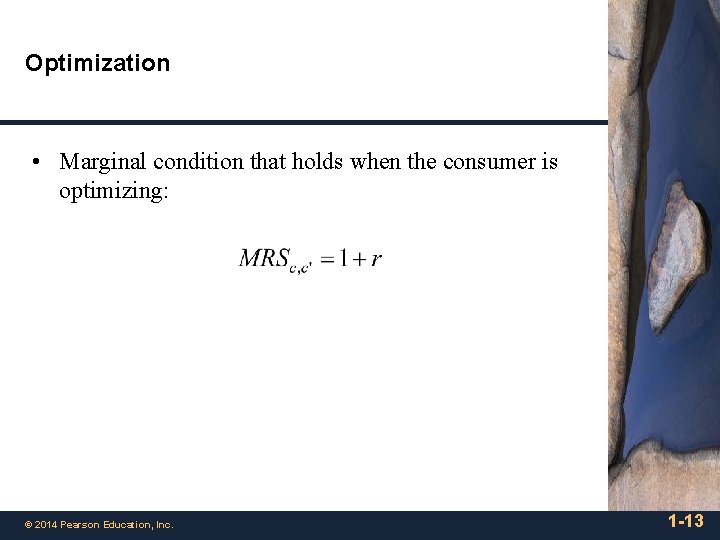
Optimization • Marginal condition that holds when the consumer is optimizing: © 2014 Pearson Education, Inc. 1 -13
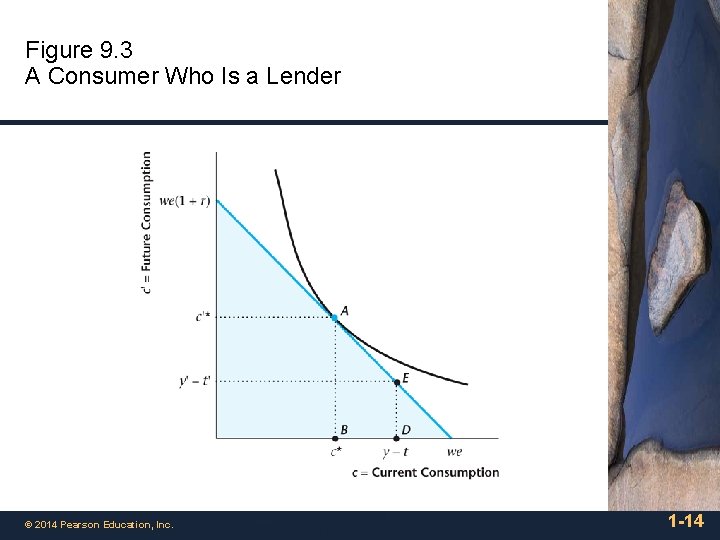
Figure 9. 3 A Consumer Who Is a Lender © 2014 Pearson Education, Inc. 1 -14
Figure 9. 4 A Consumer Who Is a Borrower © 2014 Pearson Education, Inc. 1 -15
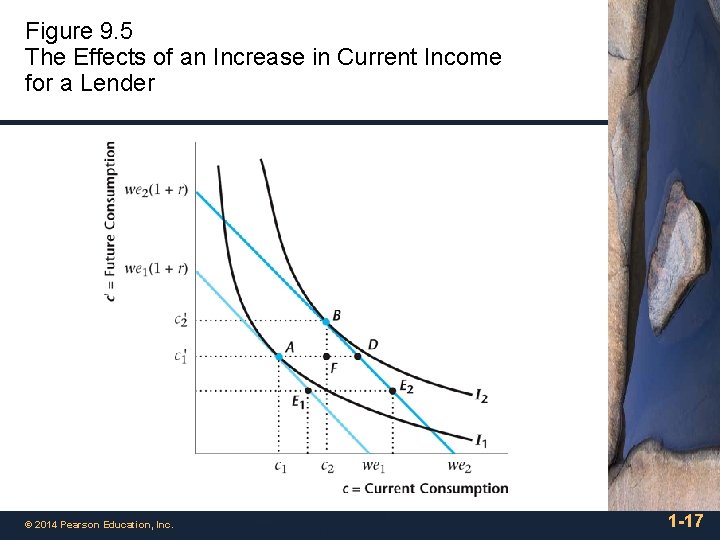
An Increase in Current Income for the Consumer • Current and future consumption increase. • Saving increases. • The consumer acts to smooth consumption over time. © 2014 Pearson Education, Inc. 1 -16
Figure 9. 5 The Effects of an Increase in Current Income for a Lender © 2014 Pearson Education, Inc. 1 -17
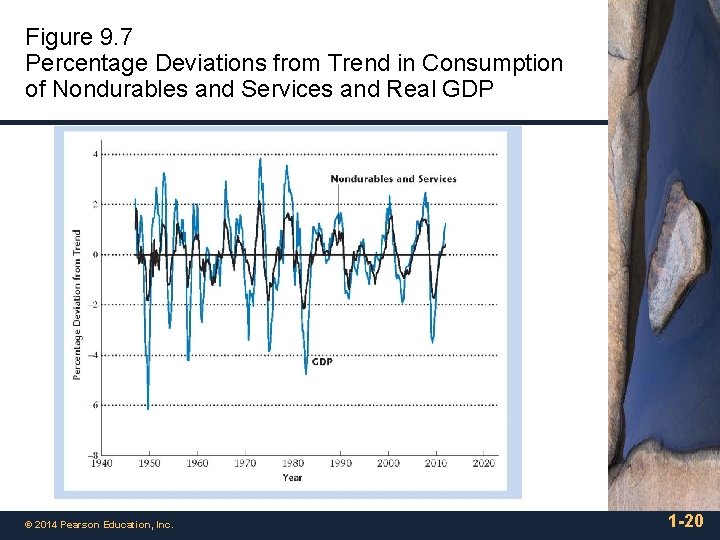
Observed Consumption-Smoothing Behavior • Aggregate consumption of non-durables and services is smooth relative to aggregate income, but the consumption of durables is more volatile than income. • This is because durables consumption is economically more like investment than consumption. © 2014 Pearson Education, Inc. 1 -18
Figure 9. 6 Percentage Deviations from Trend in Consumption of Durables and Real GDP © 2014 Pearson Education, Inc. 1 -19
Figure 9. 7 Percentage Deviations from Trend in Consumption of Nondurables and Services and Real GDP © 2014 Pearson Education, Inc. 1 -20
An Increase in Future Income for the Consumer • Aggregate consumption of non-durables and services is smooth relative to aggregate income, but the consumption of durables is more volatile than income. • This is because durables consumption is economically more like investment than consumption. © 2014 Pearson Education, Inc. 1 -21
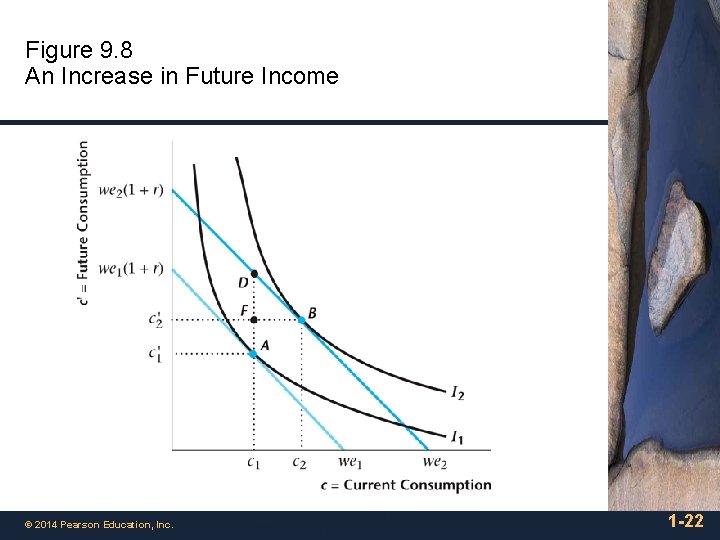
Figure 9. 8 An Increase in Future Income © 2014 Pearson Education, Inc. 1 -22
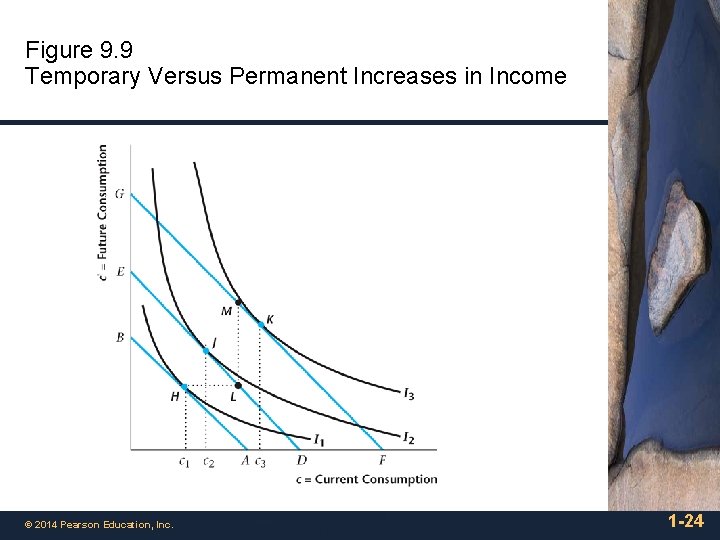
Temporary and Permanent Increases in Income • As a permanent increase in income will have a larger effect on lifetime wealth than a temporary increase, there will be a larger effect on current consumption. • A consumer will tend to save most of a purely temporary income increase. © 2014 Pearson Education, Inc. 1 -23
Figure 9. 9 Temporary Versus Permanent Increases in Income © 2014 Pearson Education, Inc. 1 -24
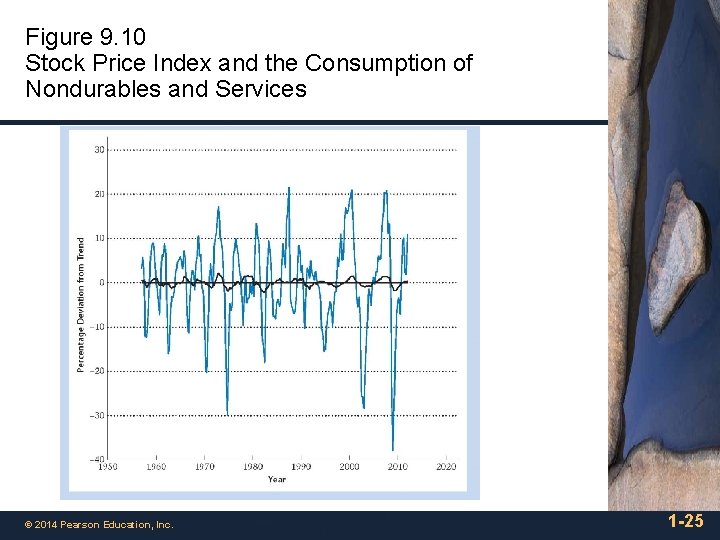
Figure 9. 10 Stock Price Index and the Consumption of Nondurables and Services © 2014 Pearson Education, Inc. 1 -25
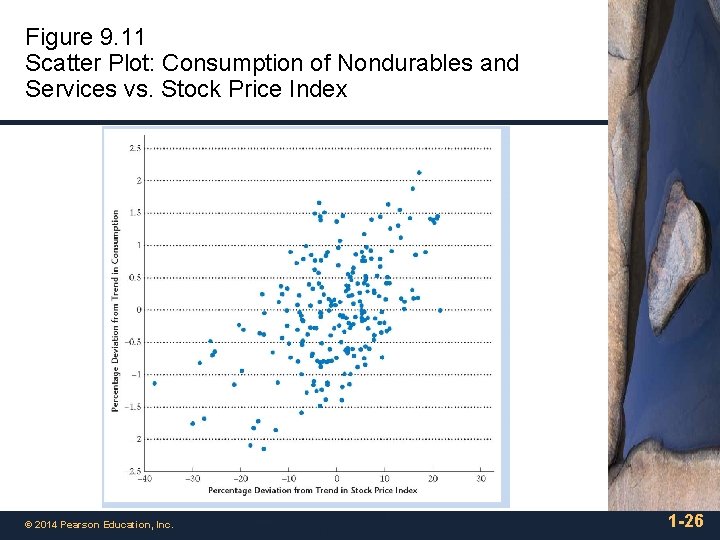
Figure 9. 11 Scatter Plot: Consumption of Nondurables and Services vs. Stock Price Index © 2014 Pearson Education, Inc. 1 -26
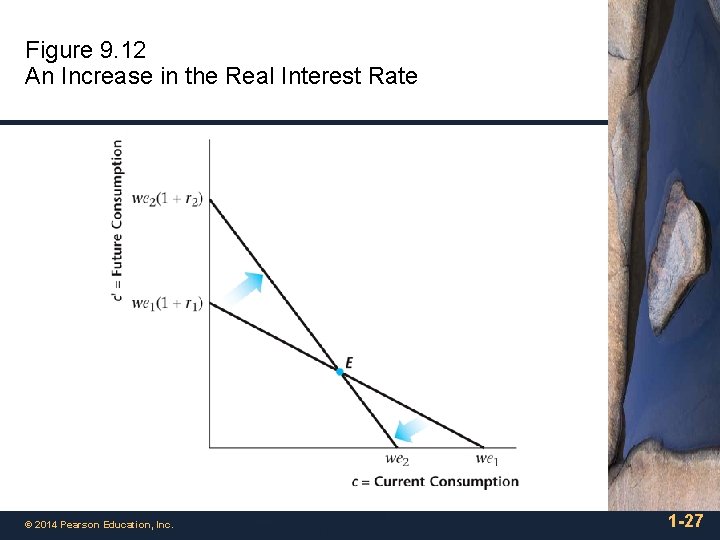
Figure 9. 12 An Increase in the Real Interest Rate © 2014 Pearson Education, Inc. 1 -27
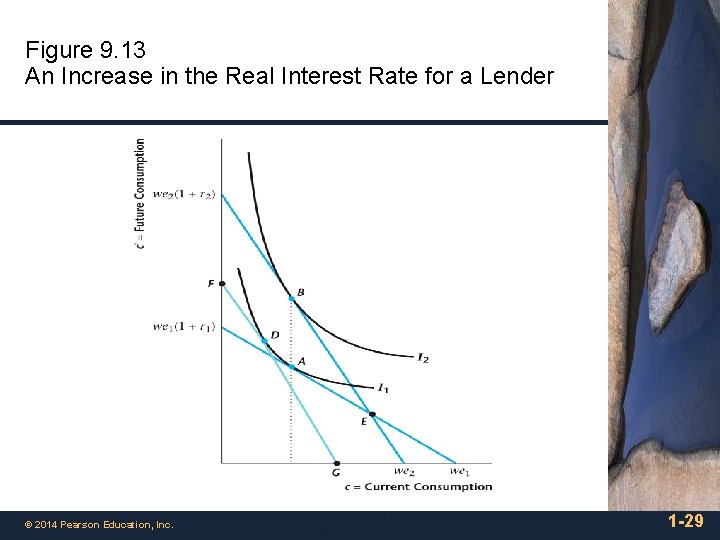
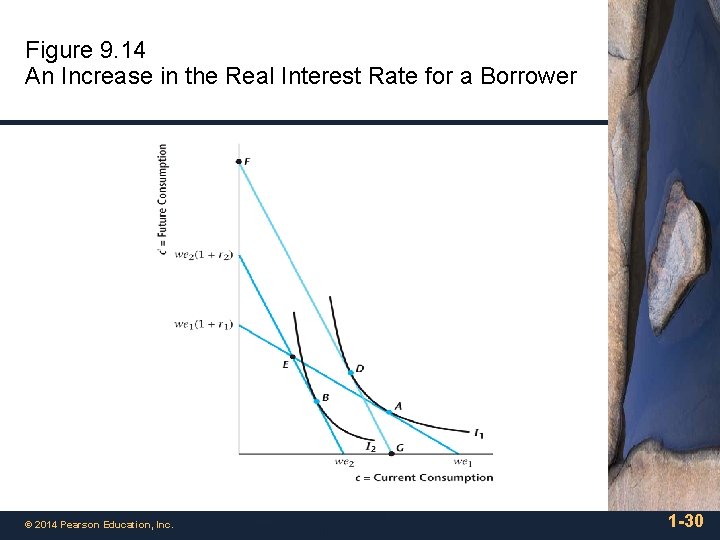
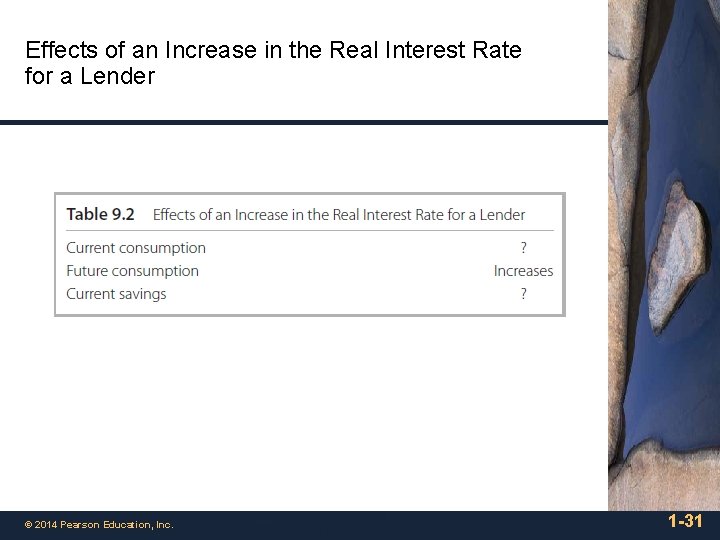
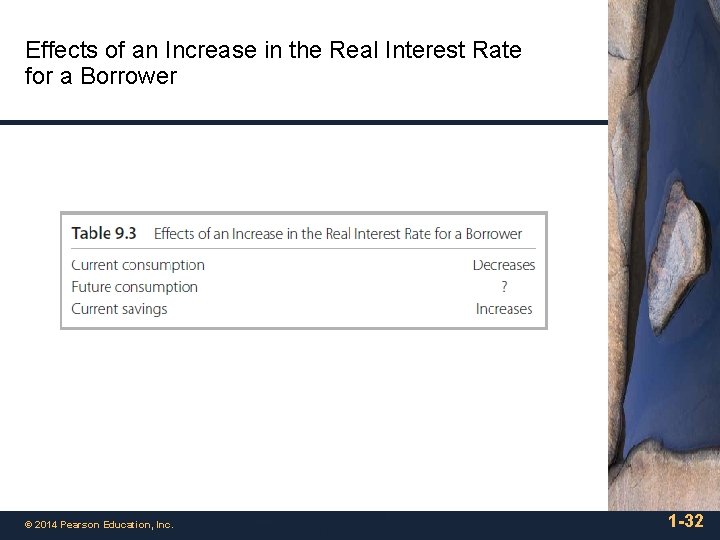
An Increase in the Market Real Interest Rate • An increase in the market real interest rate decreases the relative price of future consumption goods in terms of current consumption goods – this has income and substitution effects for the consumer. © 2014 Pearson Education, Inc. 1 -28
Figure 9. 13 An Increase in the Real Interest Rate for a Lender © 2014 Pearson Education, Inc. 1 -29
Figure 9. 14 An Increase in the Real Interest Rate for a Borrower © 2014 Pearson Education, Inc. 1 -30
Effects of an Increase in the Real Interest Rate for a Lender © 2014 Pearson Education, Inc. 1 -31
Effects of an Increase in the Real Interest Rate for a Borrower © 2014 Pearson Education, Inc. 1 -32
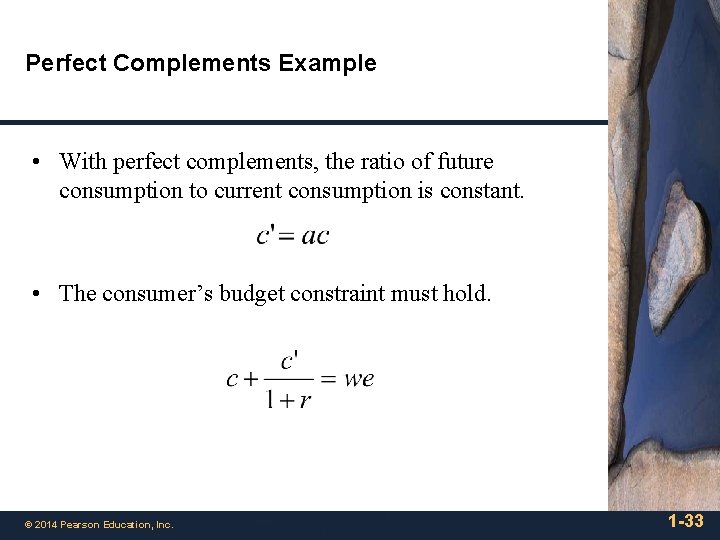
Perfect Complements Example • With perfect complements, the ratio of future consumption to current consumption is constant. • The consumer’s budget constraint must hold. © 2014 Pearson Education, Inc. 1 -33
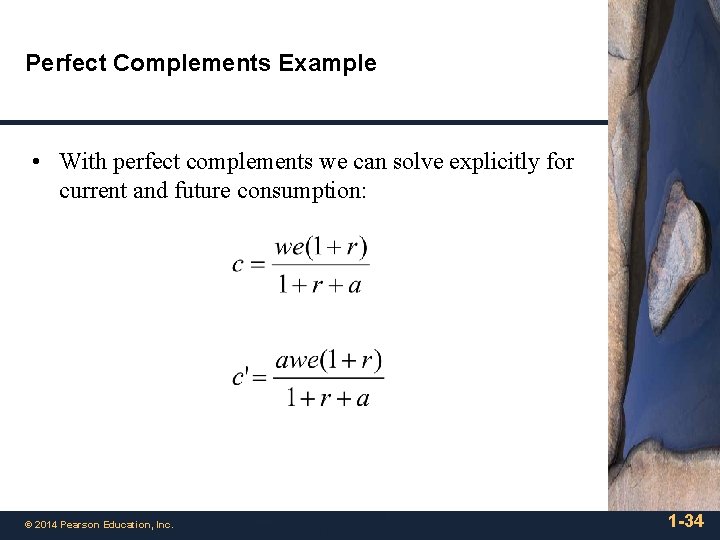
Perfect Complements Example • With perfect complements we can solve explicitly for current and future consumption: © 2014 Pearson Education, Inc. 1 -34
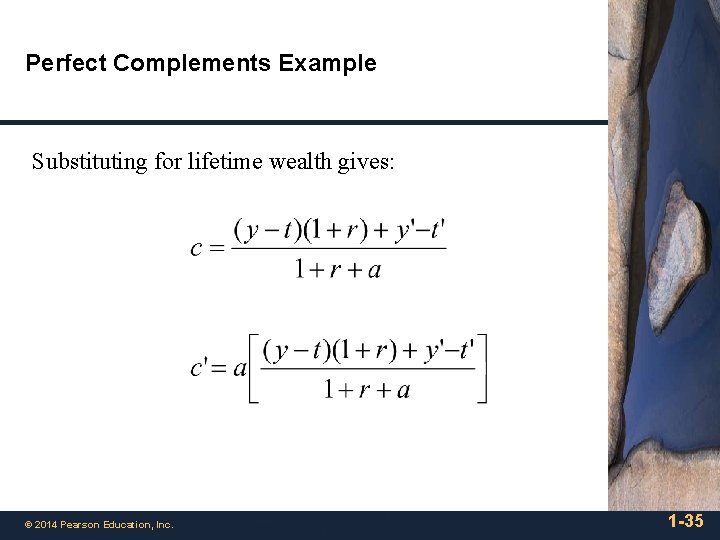
Perfect Complements Example Substituting for lifetime wealth gives: © 2014 Pearson Education, Inc. 1 -35
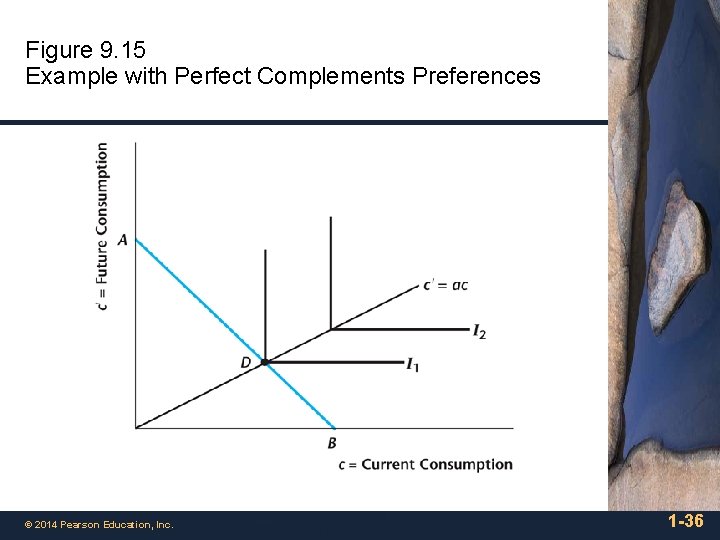
Figure 9. 15 Example with Perfect Complements Preferences © 2014 Pearson Education, Inc. 1 -36
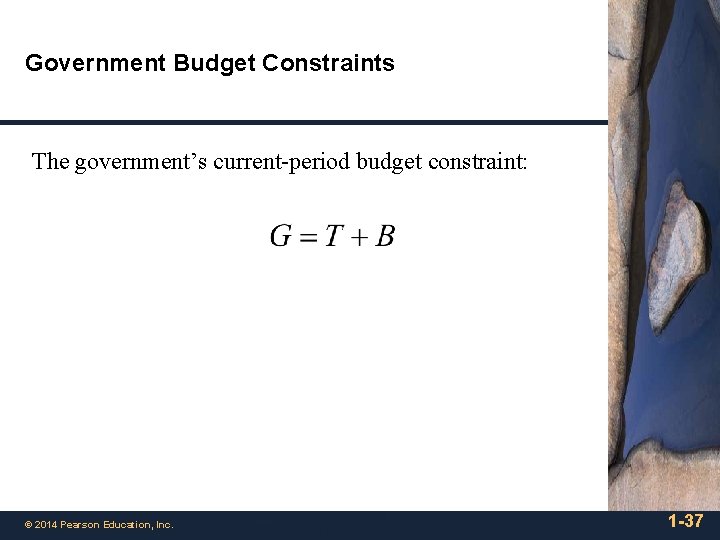
Government Budget Constraints The government’s current-period budget constraint: © 2014 Pearson Education, Inc. 1 -37
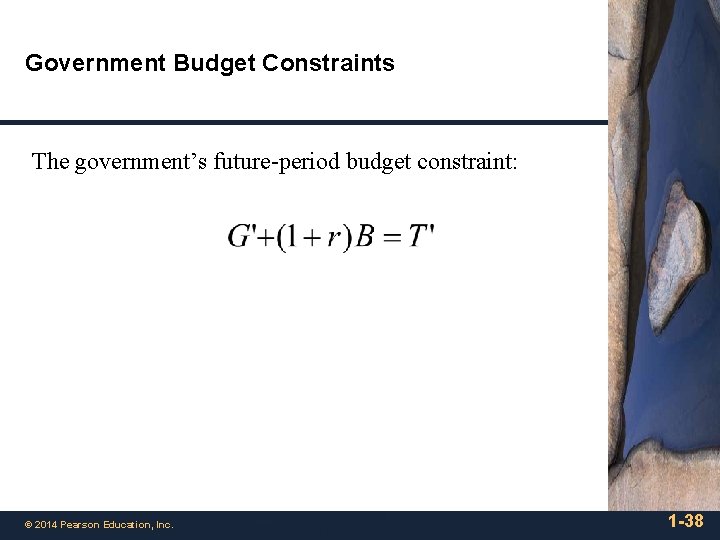
Government Budget Constraints The government’s future-period budget constraint: © 2014 Pearson Education, Inc. 1 -38
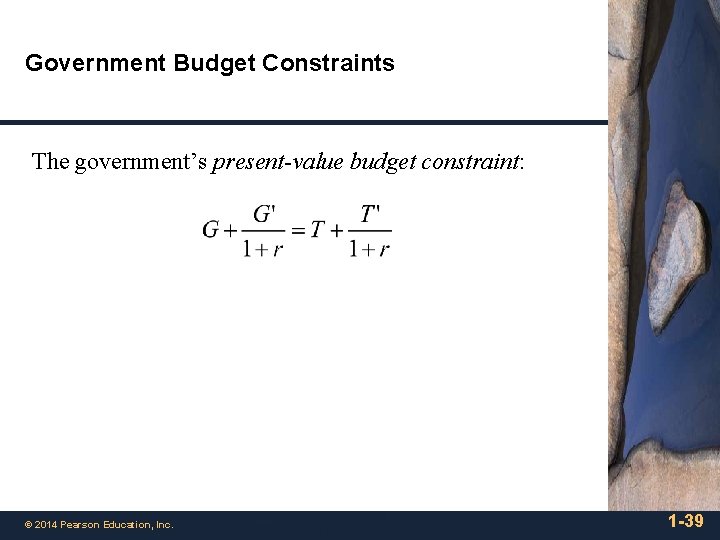
Government Budget Constraints The government’s present-value budget constraint: © 2014 Pearson Education, Inc. 1 -39
Credit Market Equilibrium Condition • Total private savings is equal to the quantity of government bonds issued in the current period. © 2014 Pearson Education, Inc. 1 -40
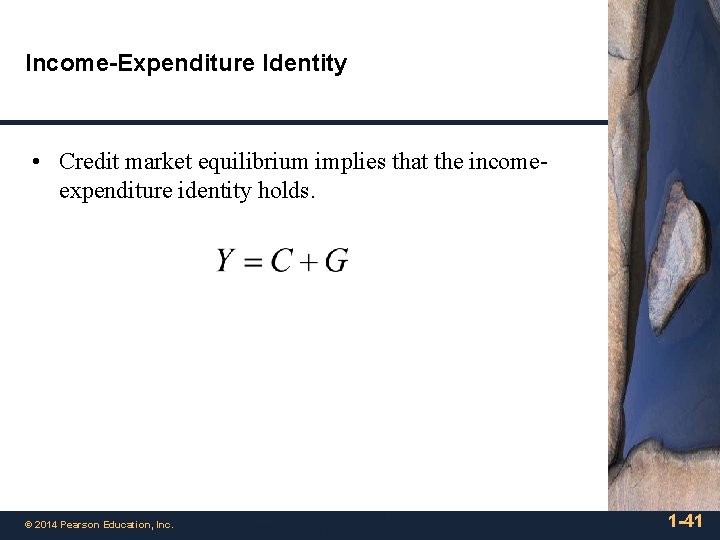
Income-Expenditure Identity • Credit market equilibrium implies that the incomeexpenditure identity holds. © 2014 Pearson Education, Inc. 1 -41
Ricardian Equivalence • The Ricardian Equivalence Theorem is illustrated algebraically, numerically, and in two graphs. © 2014 Pearson Education, Inc. 1 -42
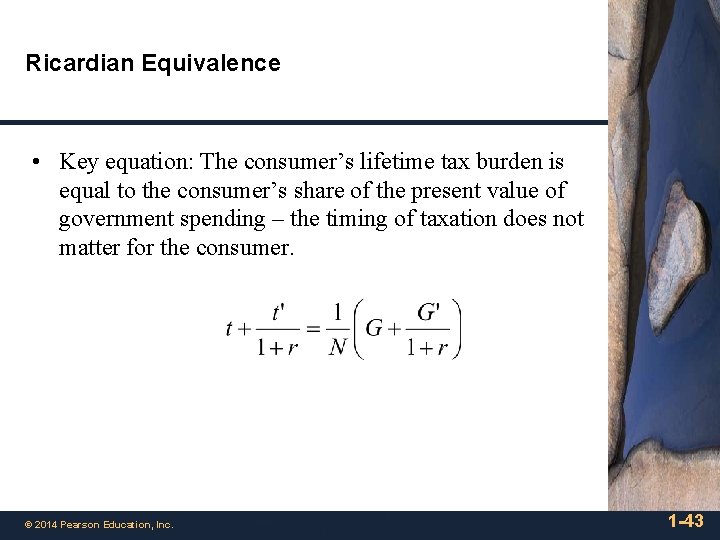
Ricardian Equivalence • Key equation: The consumer’s lifetime tax burden is equal to the consumer’s share of the present value of government spending – the timing of taxation does not matter for the consumer. © 2014 Pearson Education, Inc. 1 -43
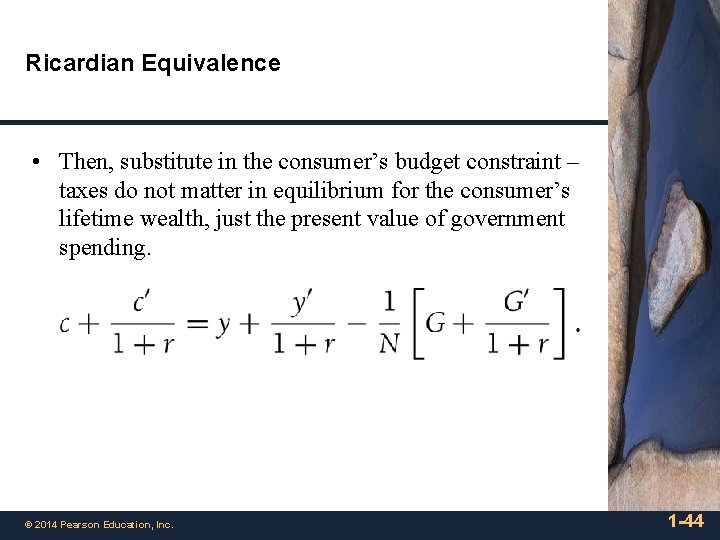
Ricardian Equivalence • Then, substitute in the consumer’s budget constraint – taxes do not matter in equilibrium for the consumer’s lifetime wealth, just the present value of government spending. © 2014 Pearson Education, Inc. 1 -44
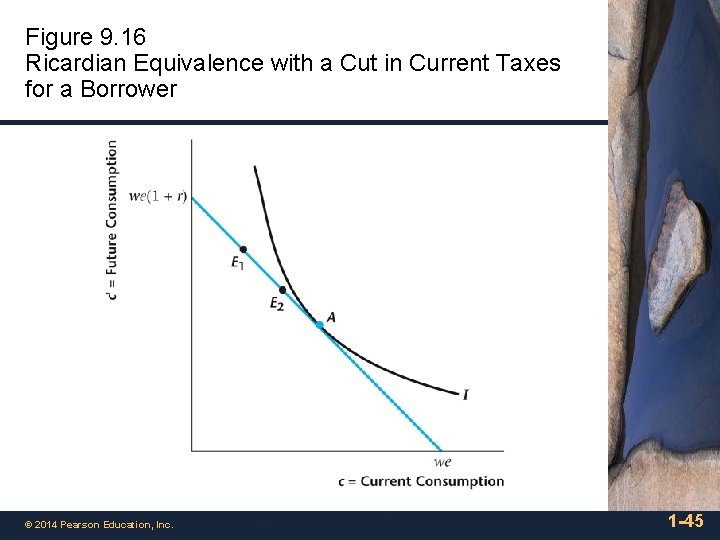
Figure 9. 16 Ricardian Equivalence with a Cut in Current Taxes for a Borrower © 2014 Pearson Education, Inc. 1 -45
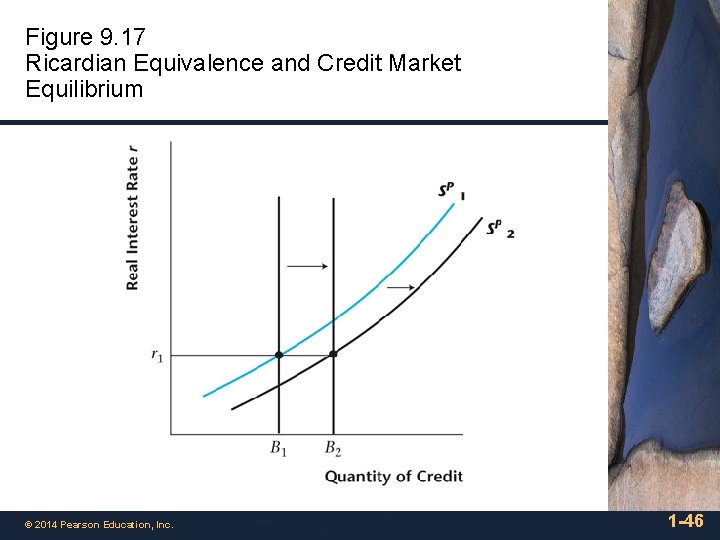
Figure 9. 17 Ricardian Equivalence and Credit Market Equilibrium © 2014 Pearson Education, Inc. 1 -46
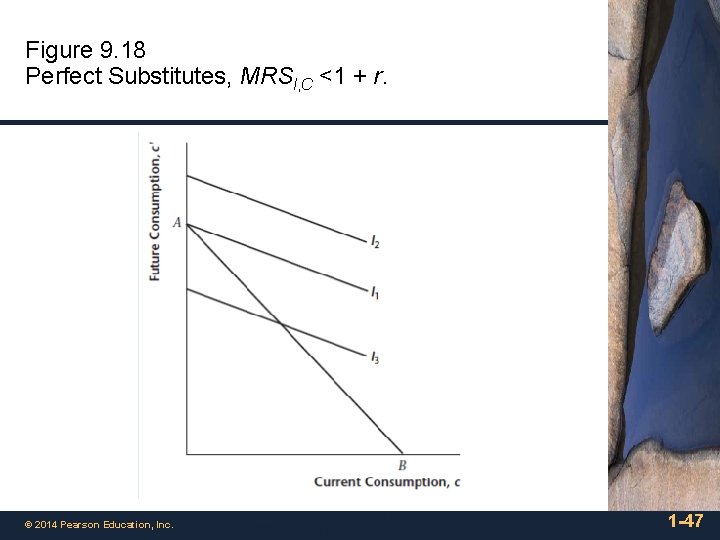
Figure 9. 18 Perfect Substitutes, MRSl, C <1 + r. © 2014 Pearson Education, Inc. 1 -47
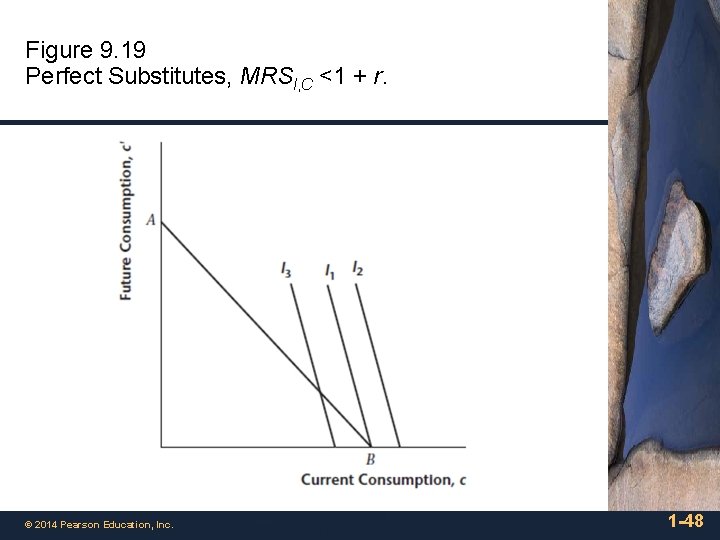
Figure 9. 19 Perfect Substitutes, MRSl, C <1 + r. © 2014 Pearson Education, Inc. 1 -48
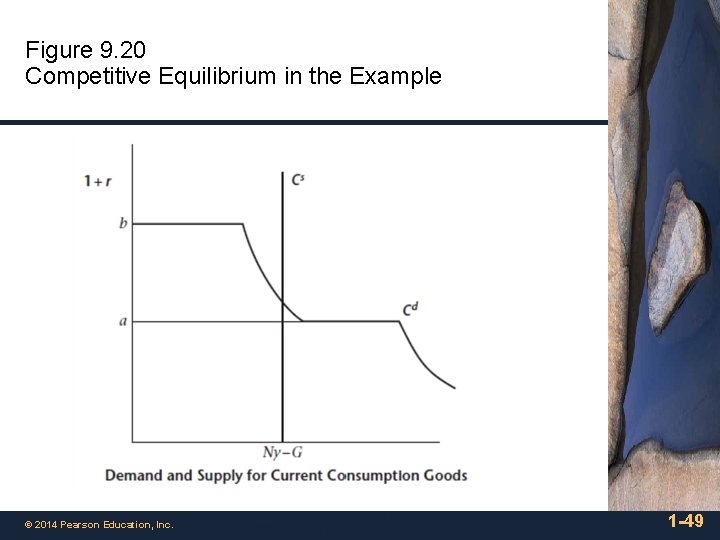
Figure 9. 20 Competitive Equilibrium in the Example © 2014 Pearson Education, Inc. 1 -49
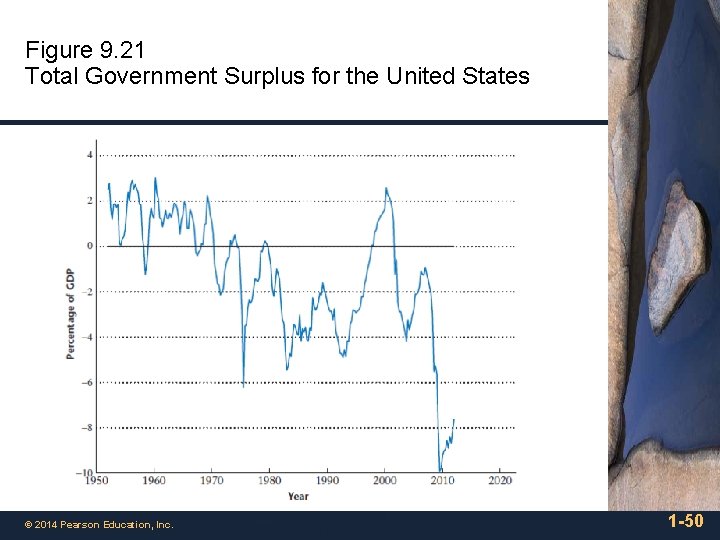
Figure 9. 21 Total Government Surplus for the United States © 2014 Pearson Education, Inc. 1 -50
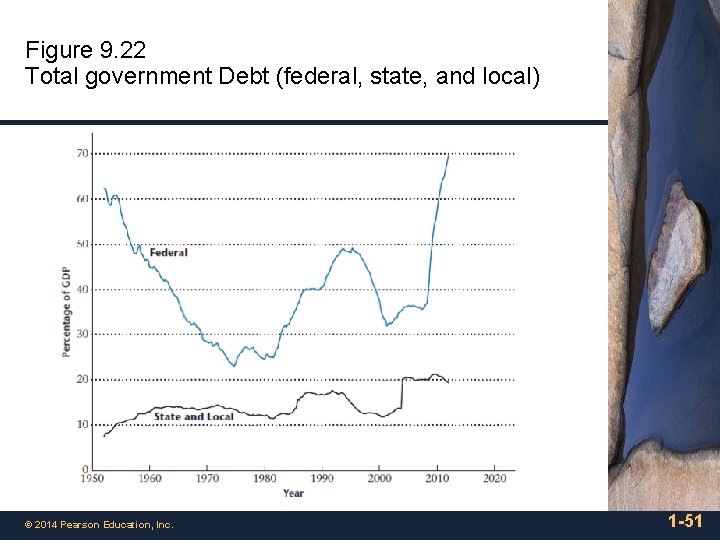
Figure 9. 22 Total government Debt (federal, state, and local) © 2014 Pearson Education, Inc. 1 -51