
Chapter 9 1 Draw reflected images reflection Recognize
- Slides: 13
Chapter 9. 1
• Draw reflected images. • reflection • Recognize and draw lines of symmetry and points of symmetry. • line of reflection • isometry • line of symmetry • point of symmetry Standard 22. 0 Students know the effect of rigid motions on figures in the coordinate plane and space, including rotations, translations, and reflections. (Key)
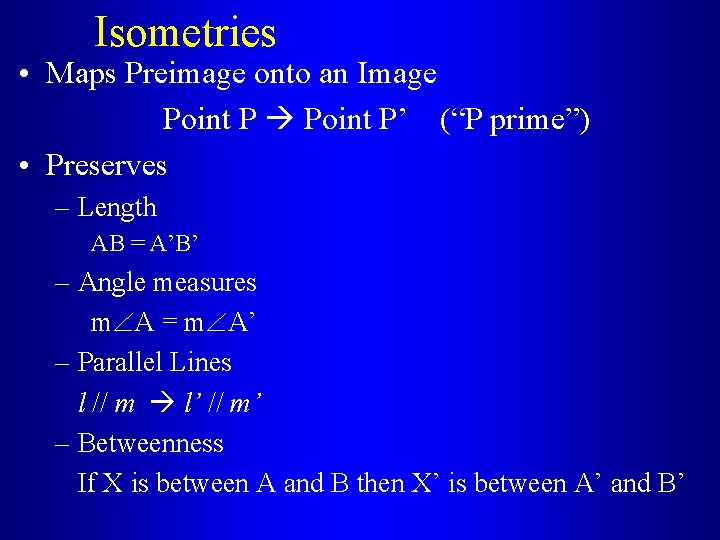
Isometries • Maps Preimage onto an Image Point P’ (“P prime”) • Preserves – Length AB = A’B’ – Angle measures m A = m A’ – Parallel Lines l // m l’ // m’ – Betweenness If X is between A and B then X’ is between A’ and B’
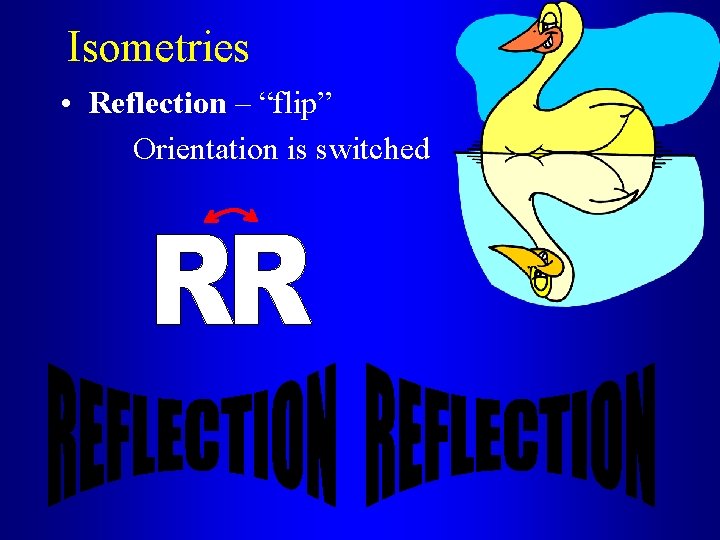
Isometries • Reflection – “flip” Orientation is switched
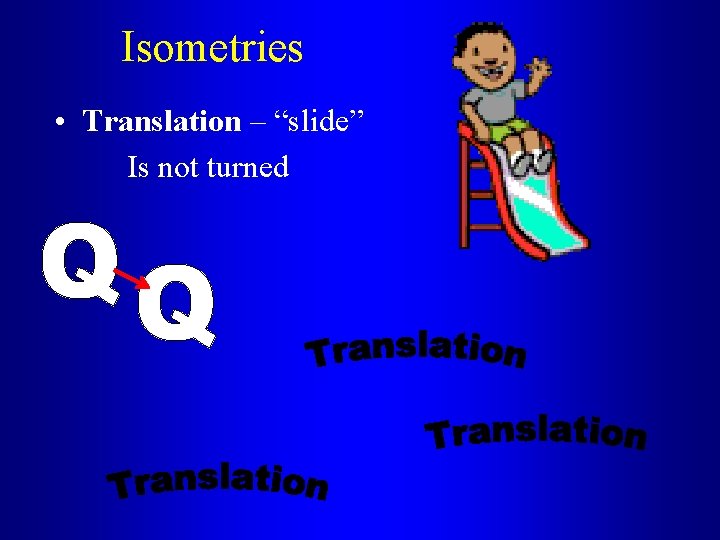
Isometries • Translation – “slide” Is not turned
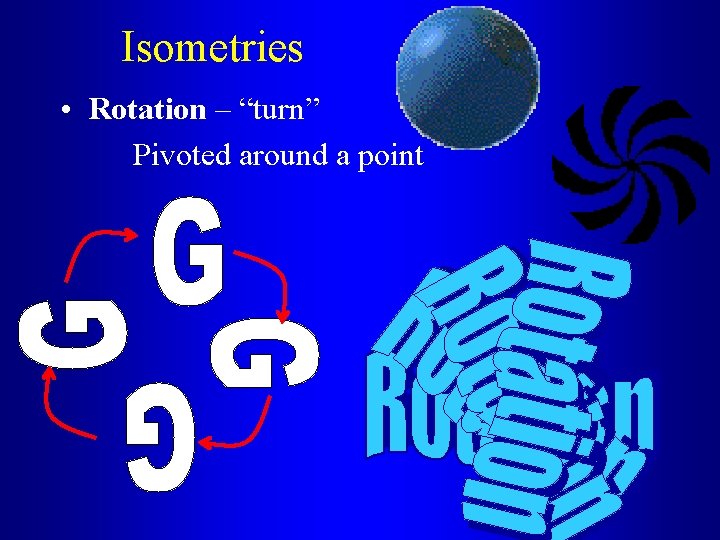
Isometries • Rotation – “turn” Pivoted around a point
Reflections • Line of reflection – Mirror line • A reflection over a line m is a transformation that maps every point P to a point P’, so that the following properties are true: – If P is not on m, then m is the perpendicular bisector of PP’ – If P is on m, then P = P’
Symmetry • A figure has a line of symmetry if the figure can be mapped onto itself by a reflection over the line.
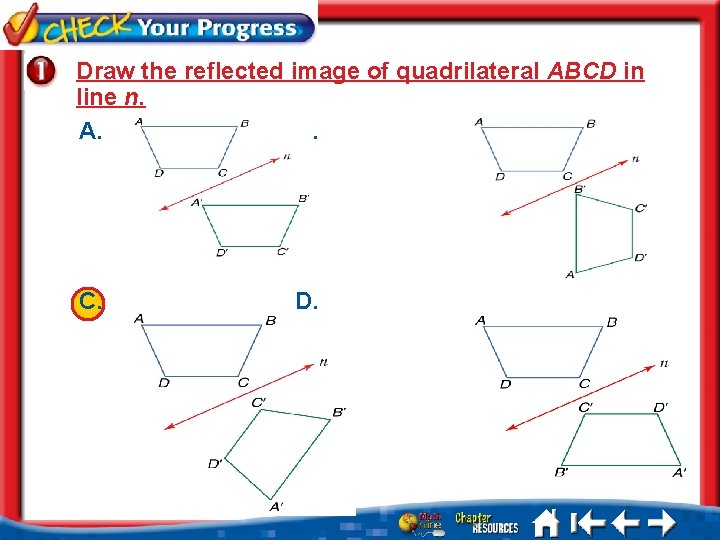
Draw the reflected image of quadrilateral ABCD in line n. A. B. C. D. A. B. C. D. A B C D
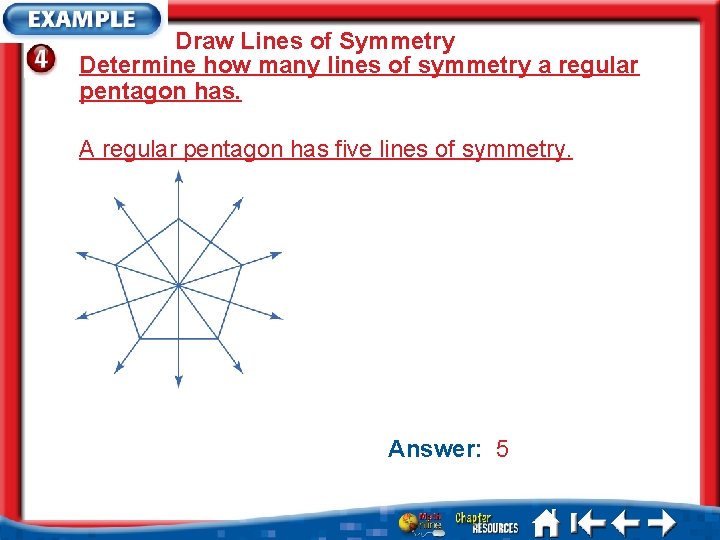
Draw Lines of Symmetry Determine how many lines of symmetry a regular pentagon has. A regular pentagon has five lines of symmetry. Answer: 5
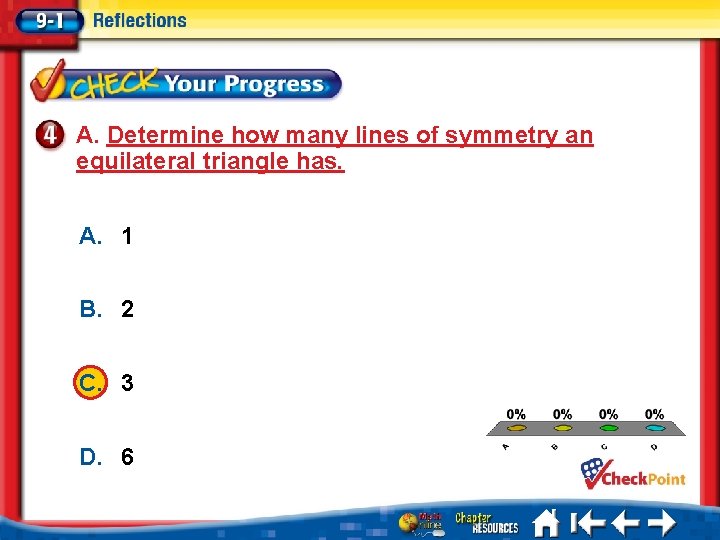
A. Determine how many lines of symmetry an equilateral triangle has. A. 1 B. 2 C. 3 D. 6 A. B. C. D. A B C D
Chapter 9 -1 Homework Pg 501 1 – 4, 6, 8, 9 10 – 17, 21 – 23, 25 – 28 Don’t worry about “Point of Symmetry”