
Chapter 8 Using Supporting Materials for Your Speech





- Slides: 26
Chapter 8 Using Supporting Materials for Your Speech
Using Supporting Materials: Introduction • Supporting materials are all the different types of information you use during your speech. – Select the best supporting materials for your main points. – Include materials that show you have done research and know the topic well. – Use clear and understandable language.
Using Supporting Materials: An Overview • To get a better understanding of using supporting materials consider: – Why use supporting materials? – Types of supporting materials – Guidelines for using supporting materials
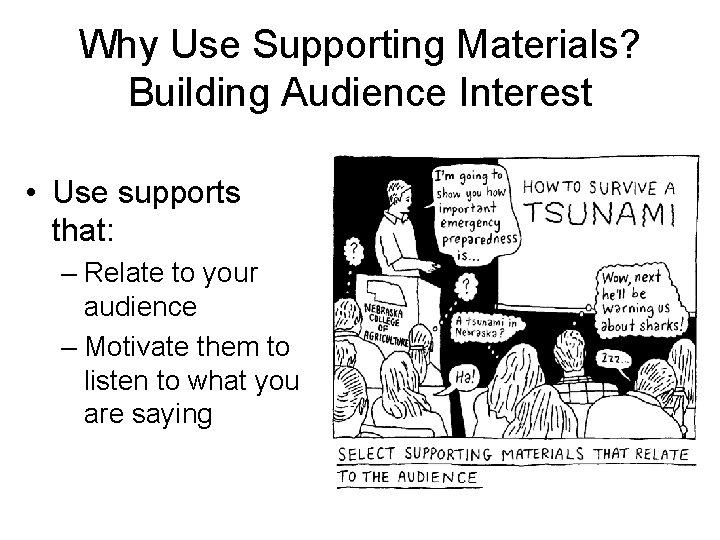
Why Use Supporting Materials? Building Audience Interest • Use supports that: – Relate to your audience – Motivate them to listen to what you are saying
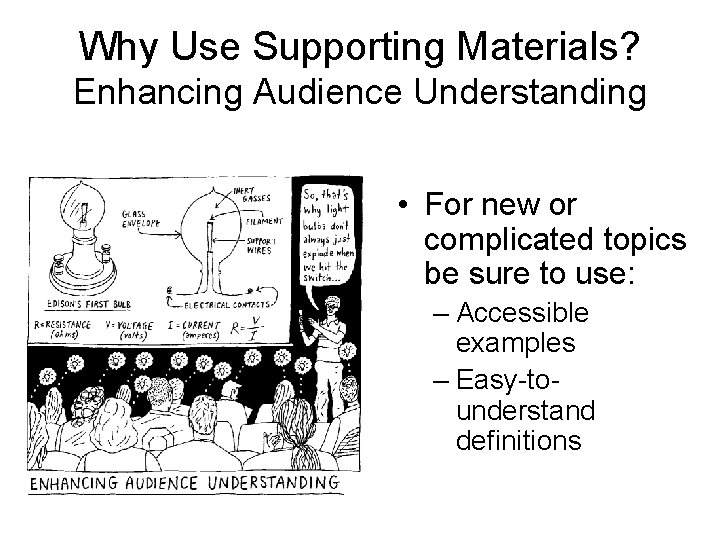
Why Use Supporting Materials? Enhancing Audience Understanding • For new or complicated topics be sure to use: – Accessible examples – Easy-tounderstand definitions
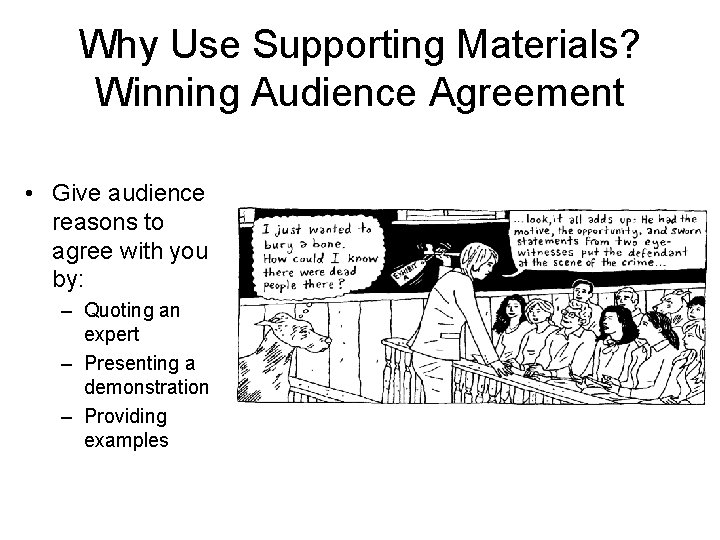
Why Use Supporting Materials? Winning Audience Agreement • Give audience reasons to agree with you by: – Quoting an expert – Presenting a demonstration – Providing examples
Why Use Supporting Materials? Evoking Audience Emotion • Try tapping into audience emotions. • It’s easier to keep interest during the speech if you get the audience to feel something: – Humor – Empathy – Anger – Commitment to act
Types of Supporting Materials: Examples • Samples or instances that support or illustrate a general claim – Brief examples are small pieces of information (one sentence). – Extended examples give more detail and provide a richer picture.
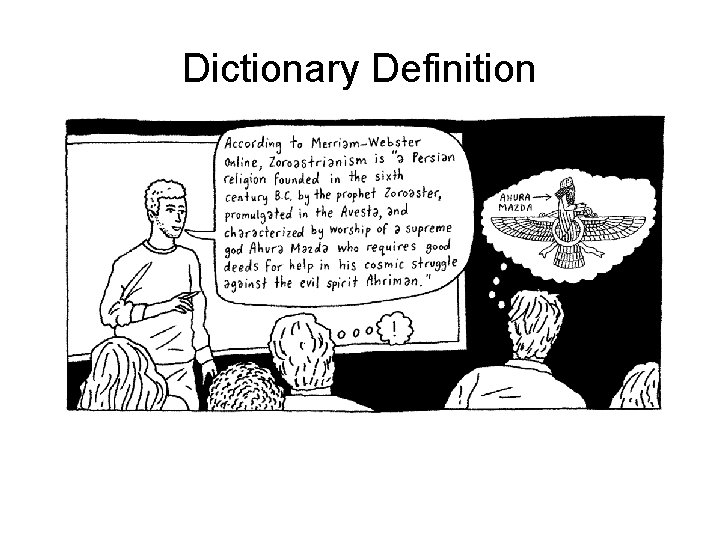
Types of Supporting Materials: Definitions • Dictionary definitions provide the meaning of a term as it appears in a dictionary. • Expert definitions come from a person who is a credible source of information. • Etymological definitions explain the linguistic origin of terms. • Functional definitions explain how something is used or what it does.
Dictionary Definition
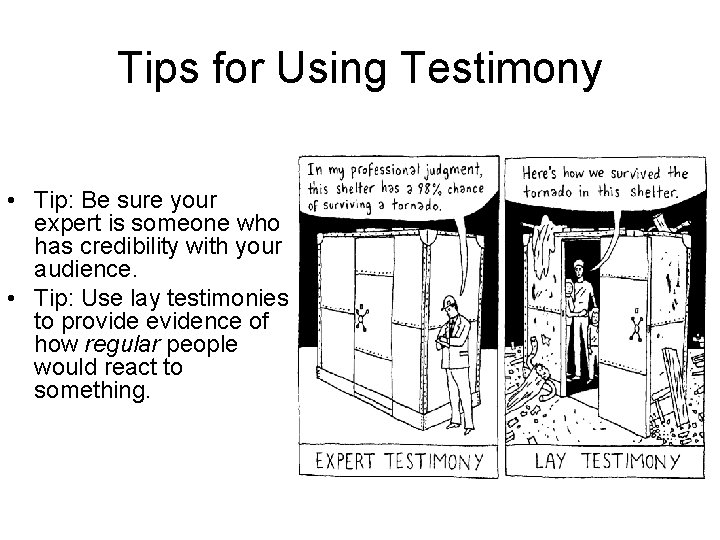
Types of Supporting Materials: Testimony • Information provided by others: – Expert testimony: Comes from professionals who have in-depth knowledge of a topic – Lay testimony: Comes from people who have no subject-matter expertise
Tips for Using Testimony • Tip: Be sure your expert is someone who has credibility with your audience. • Tip: Use lay testimonies to provide evidence of how regular people would react to something.
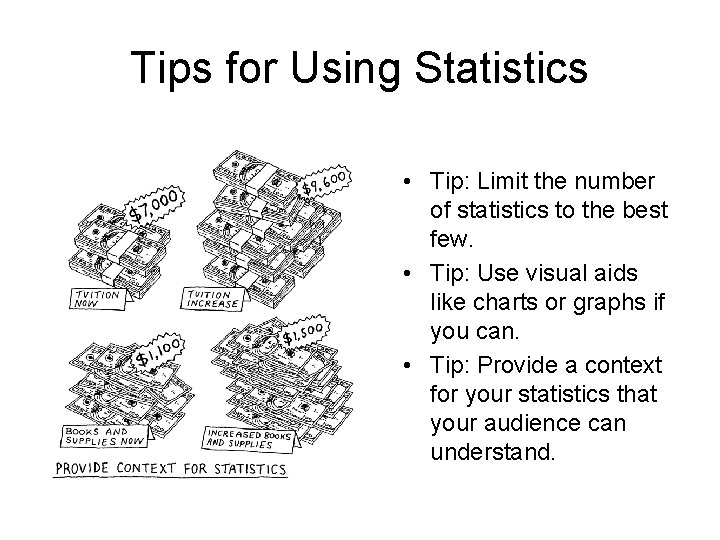
Types of Supporting Materials: Statistics • Information presented in numerical form
Tips for Using Statistics • Tip: Limit the number of statistics to the best few. • Tip: Use visual aids like charts or graphs if you can. • Tip: Provide a context for your statistics that your audience can understand.
Types of Supporting Materials: Narratives • Brief (real or imaginary) stories that support your main point – Use them as attention-getters. – Use them as illustrations of how something plays out. – Use short narratives to recapture the audience’s attention. – Anecdotal evidence does not replace credible proof.
Types of Supporting Materials
Types of Supporting Materials: Analogies • Comparison based on similarities between two things, one of which is familiar to the audience. – Literal analogy: Compares two things in same category – Figurative: Compares two different things, using traits of one to explain the other • Draw analogies: – To other material previously presented – From common experiences or traditions
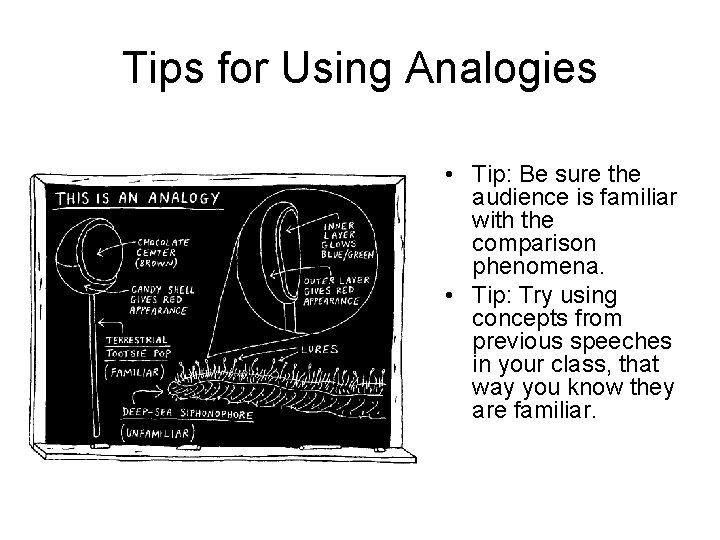
Tips for Using Analogies • Tip: Be sure the audience is familiar with the comparison phenomena. • Tip: Try using concepts from previous speeches in your class, that way you know they are familiar.
Guidelines for Supporting Materials: Choose the Most Credible Proof • Give priority to supporting materials that are backed by credible evidence. – Examples are more credible when they can be proven.
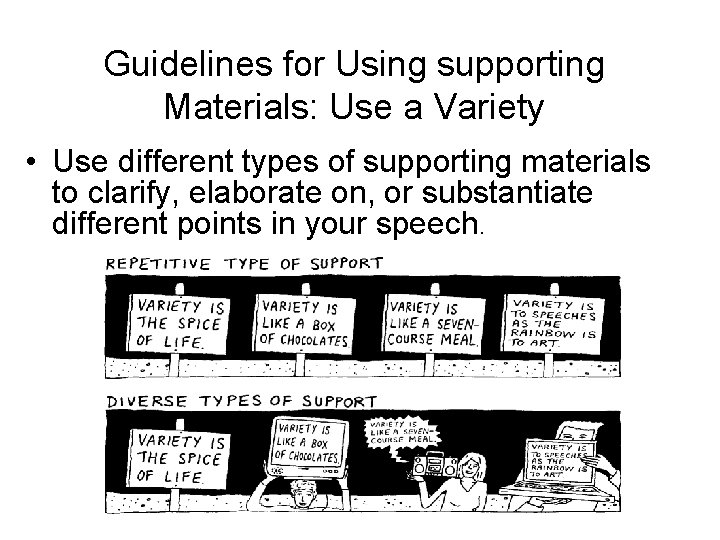
Guidelines for Using supporting Materials: Use a Variety • Use different types of supporting materials to clarify, elaborate on, or substantiate different points in your speech.
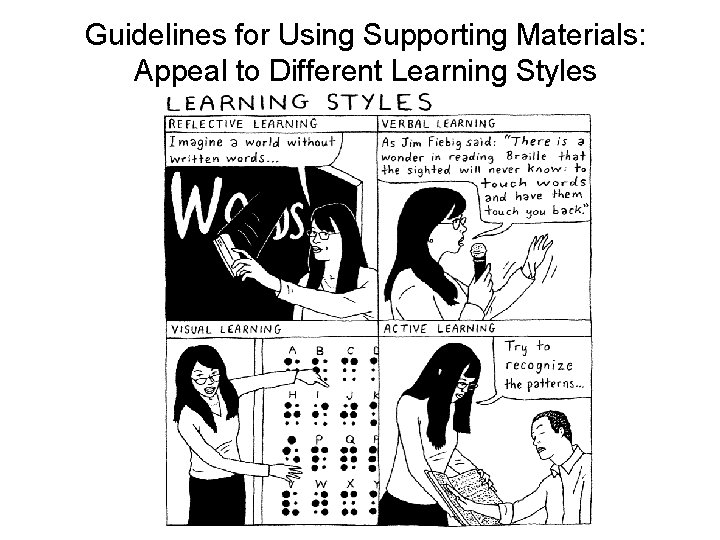
Guidelines for Using Supporting Materials: Appeal to Different Learning Styles • Incorporate visual aids for visual learners. • Have active learners do something with the supporting materials. • Have reflective learners think about the supporting materials being presented. • Ask verbal learners to read or listen to the materials.
Guidelines for Using Supporting Materials: Appeal to Different Learning Styles
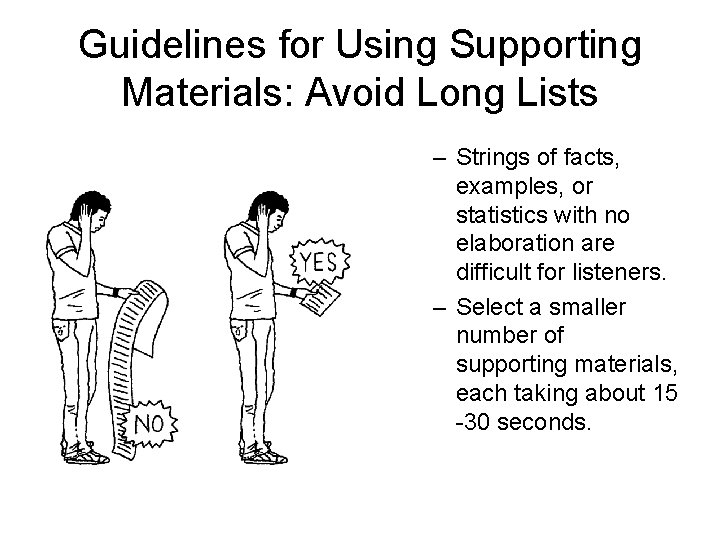
Guidelines for Using Supporting Materials: Avoid Long Lists – Strings of facts, examples, or statistics with no elaboration are difficult for listeners. – Select a smaller number of supporting materials, each taking about 15 -30 seconds.
Guidelines for Using Supporting Materials: Consider Your Audience • Your audience’s knowledge and interests should guide your selection of supporting materials. • Listeners will respond more effectively to interesting and informative materials to which they can relate.
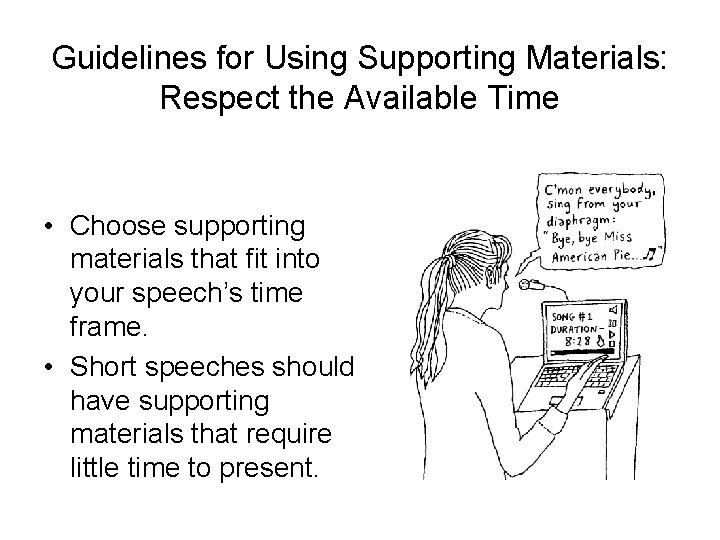
Guidelines for Using Supporting Materials: Respect the Available Time • Choose supporting materials that fit into your speech’s time frame. • Short speeches should have supporting materials that require little time to present.
Tips for Supporting Materials • Tip: Always consider your audience by using supporting materials that will get your audience’s attention and keep it. • Tip: Variety is the spice of life—and a good speech. No one wants to see a speech with only statistics, but one with only funny stories would be weak as well.