
Chapter 8 Urbanization RuralUrban Migration Urbanization and Development
Chapter 8: Urbanization & Rural-Urban Migration
Urbanization and Development l Economic development causes urbanization l There is a positive correlation with economic development and urban population growth
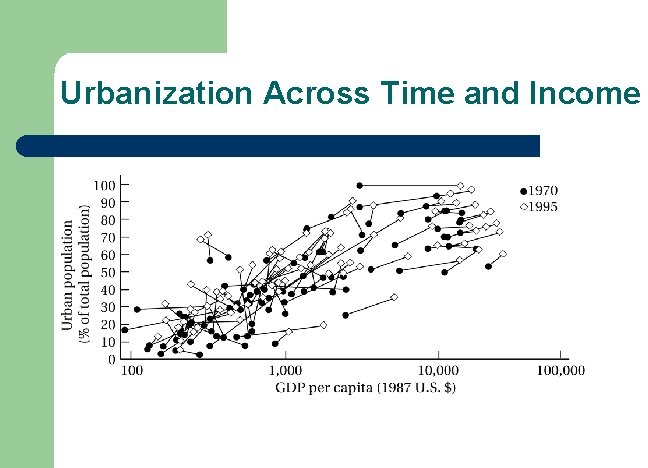
Urbanization Across Time and Income
Urbanization The LDCs experience rapid urban population growth because of l Natural increase: birth rate > death rate l Rural-urban migration: movement of rural workers to urban areas
Contribution of R-U Migration l On average, about 50% of urban population growth is due to R-U migration l Rapid R-U migration has resulted in the construction of slumps and shanty towns that house a large percentage of urban population
Dualistic Economic Structure l Formal sector: organized and regulated economic system (e. g. , government agencies, banks); it generates 2/3 of GDP l Informal sector: fragmented and unregulated economic system (e. g. , street vendors, loan sharks); it generates 1/3 of GDP
Dualistic Labor Market l Formal labor market: urban & rural: skilled labor (e. g. , government employees, teachers) with education and license l Informal labor market: urban & rural: semiskilled and unskilled labor (e. g. , small business, street vendors)
Urban Informal Sector l Most rural migrants find jobs in the “informal” urban labor markets l The “informal” urban labor force is a large component of the urban labor force
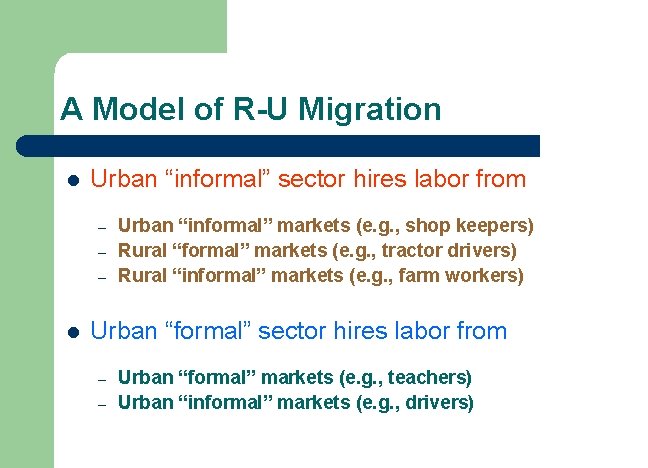
A Model of R-U Migration l Urban “informal” sector hires labor from – – – l Urban “informal” markets (e. g. , shop keepers) Rural “formal” markets (e. g. , tractor drivers) Rural “informal” markets (e. g. , farm workers) Urban “formal” sector hires labor from – – Urban “formal” markets (e. g. , teachers) Urban “informal” markets (e. g. , drivers)
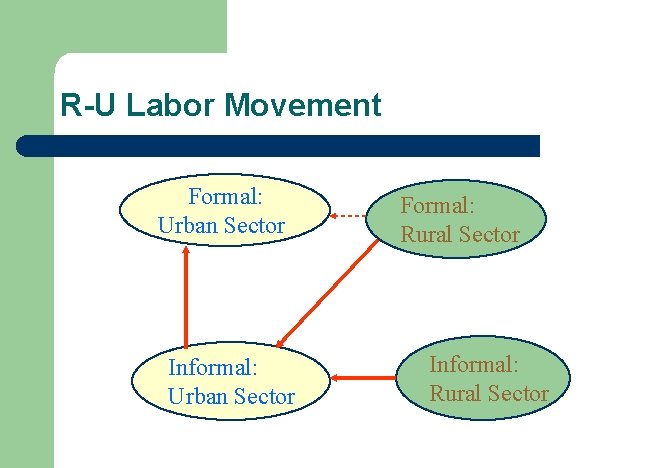
R-U Labor Movement Formal: Urban Sector Informal: Urban Sector Formal: Rural Sector Informal: Rural Sector
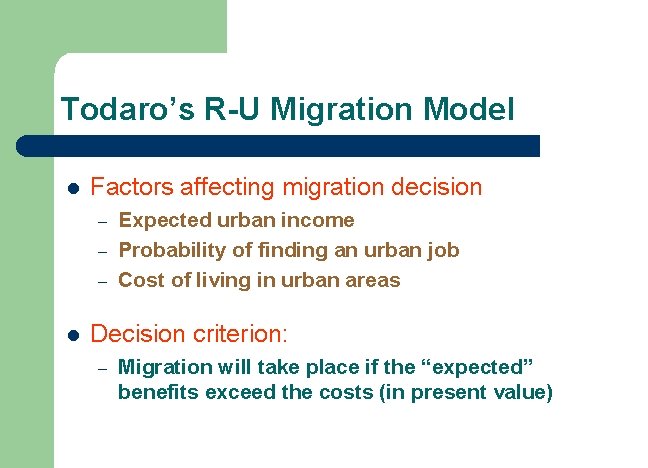
Todaro’s R-U Migration Model l Factors affecting migration decision – – – l Expected urban income Probability of finding an urban job Cost of living in urban areas Decision criterion: – Migration will take place if the “expected” benefits exceed the costs (in present value)
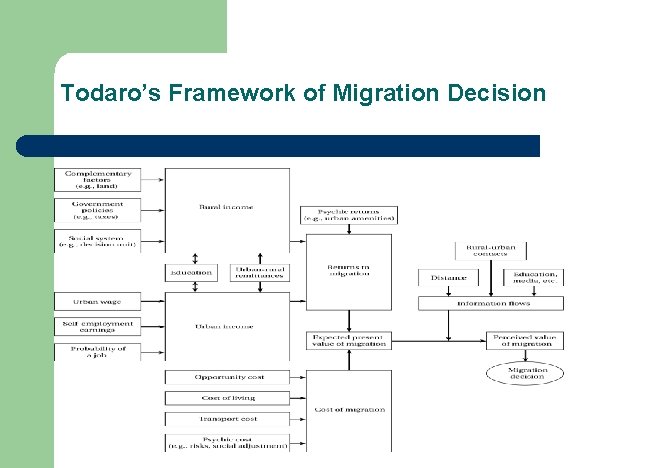
Todaro’s Framework of Migration Decision
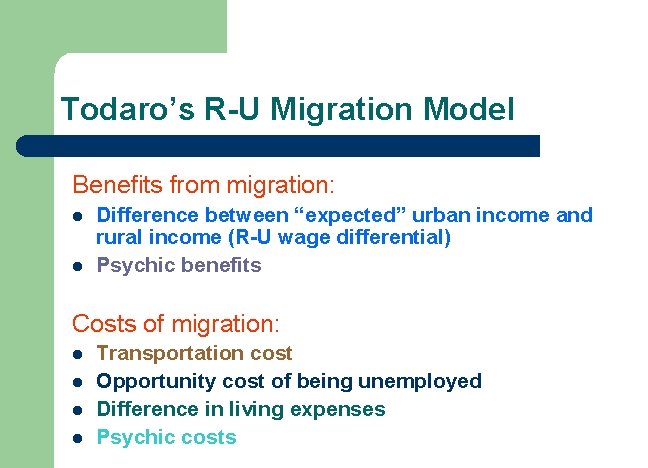
Todaro’s R-U Migration Model Benefits from migration: l l Difference between “expected” urban income and rural income (R-U wage differential) Psychic benefits Costs of migration: l l Transportation cost Opportunity cost of being unemployed Difference in living expenses Psychic costs
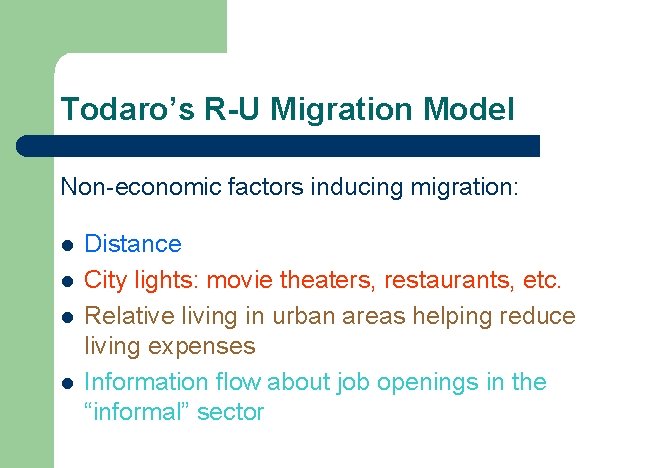
Todaro’s R-U Migration Model Non-economic factors inducing migration: l l Distance City lights: movie theaters, restaurants, etc. Relative living in urban areas helping reduce living expenses Information flow about job openings in the “informal” sector
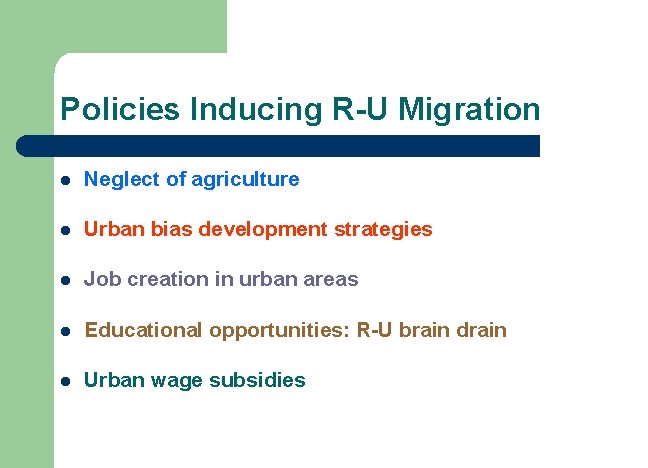
Policies Inducing R-U Migration l Neglect of agriculture l Urban bias development strategies l Job creation in urban areas l Educational opportunities: R-U brain drain l Urban wage subsidies
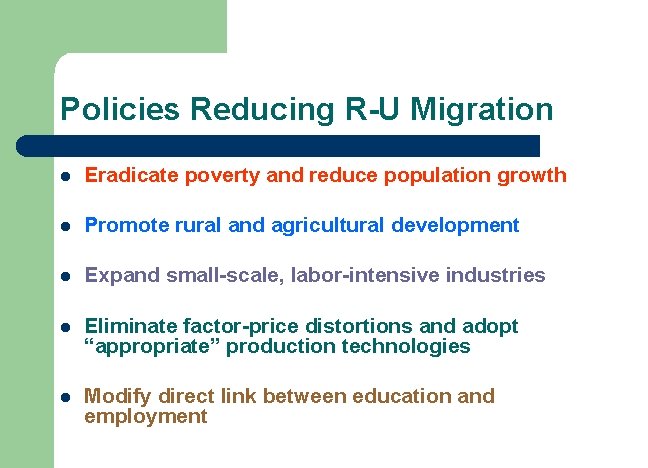
Policies Reducing R-U Migration l Eradicate poverty and reduce population growth l Promote rural and agricultural development l Expand small-scale, labor-intensive industries l Eliminate factor-price distortions and adopt “appropriate” production technologies l Modify direct link between education and employment
- Slides: 16