
Chapter 8 The Steady State Magnetic Field The
- Slides: 28
Chapter 8 The Steady State Magnetic Field The Concept of Field (Physical Basis ? ) Why do Forces Must Exist? Magnetic Field – Requires Current Distribution Effect on other Currents – next chapter Free-space Conditions Magnetic Field - Relation to its source – more complicated Accept Laws on “faith alone” – later proof (difficult) Do we need faith also after the proof? 1
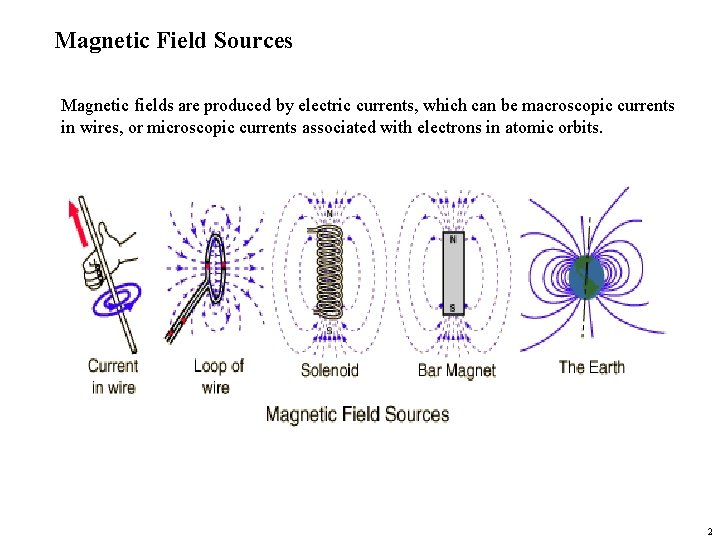
Magnetic Field Sources Magnetic fields are produced by electric currents, which can be macroscopic currents in wires, or microscopic currents associated with electrons in atomic orbits. 2
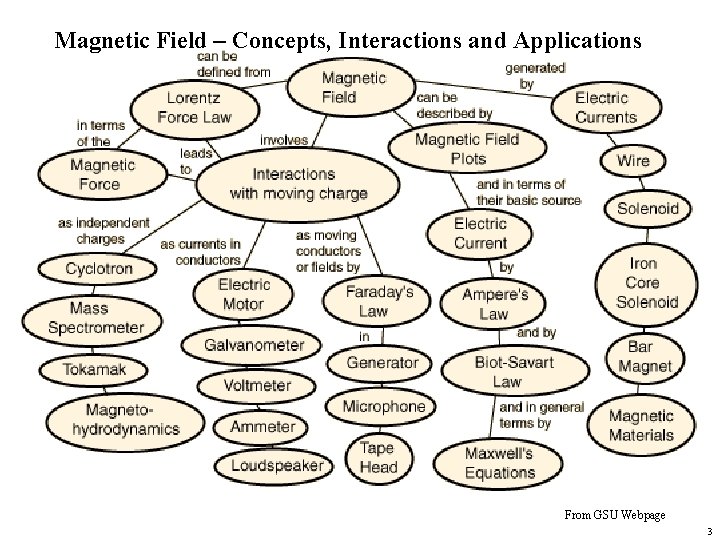
Magnetic Field – Concepts, Interactions and Applications From GSU Webpage 3
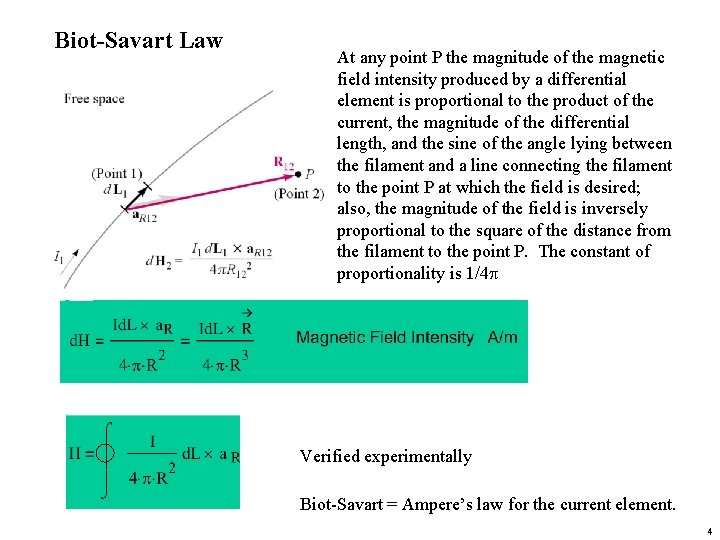
Biot-Savart Law At any point P the magnitude of the magnetic field intensity produced by a differential element is proportional to the product of the current, the magnitude of the differential length, and the sine of the angle lying between the filament and a line connecting the filament to the point P at which the field is desired; also, the magnitude of the field is inversely proportional to the square of the distance from the filament to the point P. The constant of proportionality is 1/4 p Verified experimentally Biot-Savart = Ampere’s law for the current element. 4
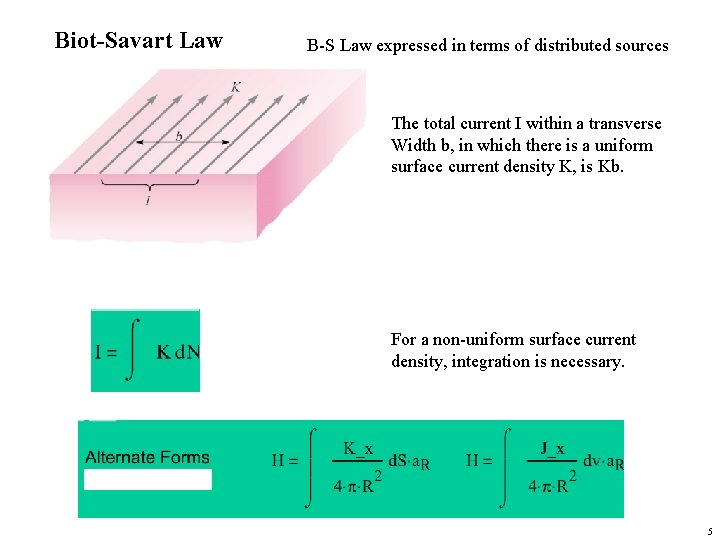
Biot-Savart Law B-S Law expressed in terms of distributed sources The total current I within a transverse Width b, in which there is a uniform surface current density K, is Kb. For a non-uniform surface current density, integration is necessary. 5
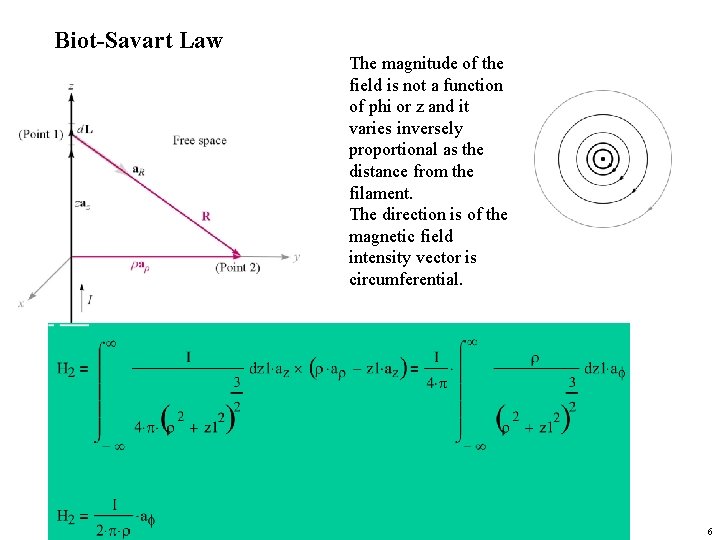
Biot-Savart Law The magnitude of the field is not a function of phi or z and it varies inversely proportional as the distance from the filament. The direction is of the magnetic field intensity vector is circumferential. 6
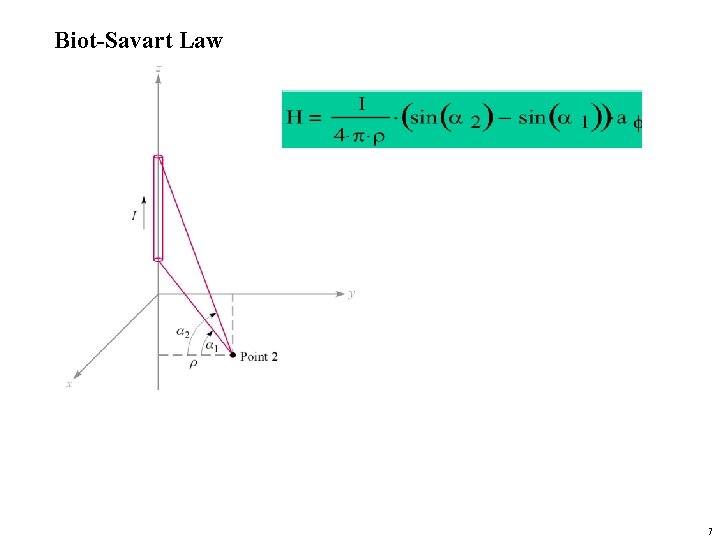
Biot-Savart Law 7
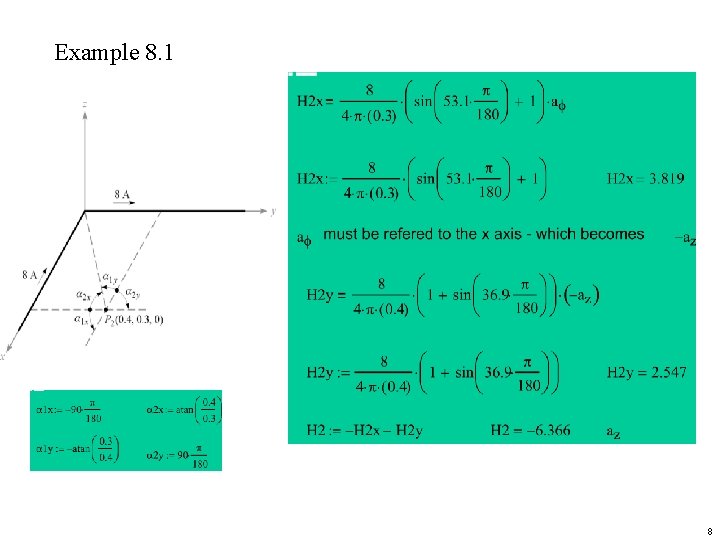
Example 8. 1 8
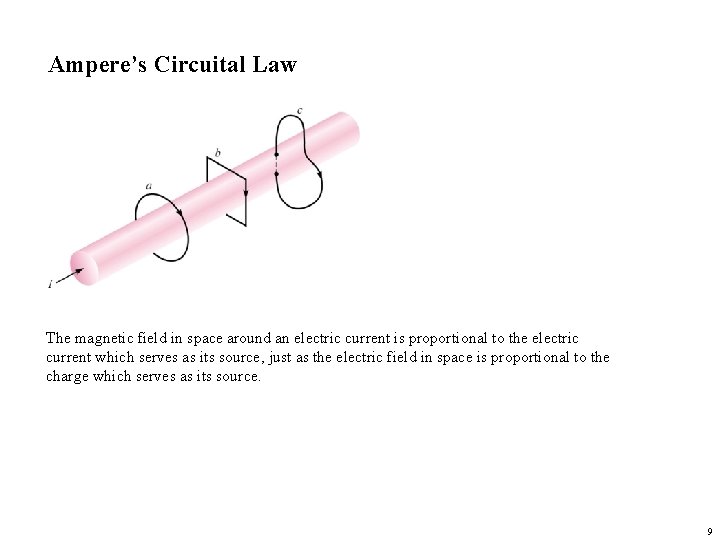
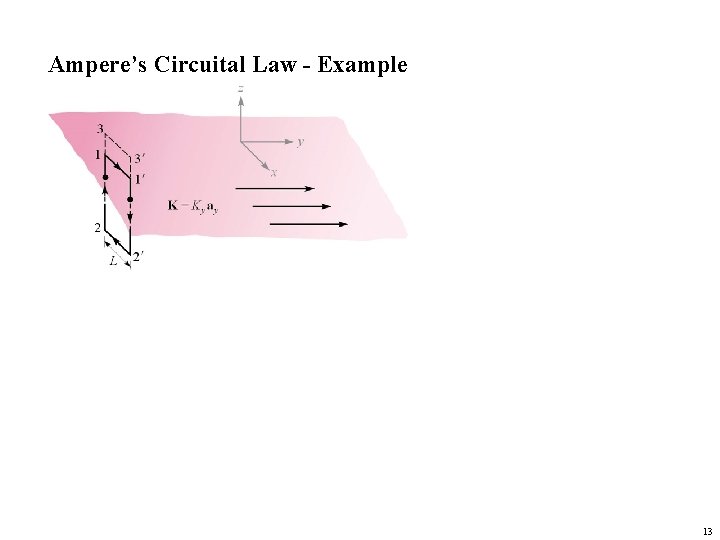
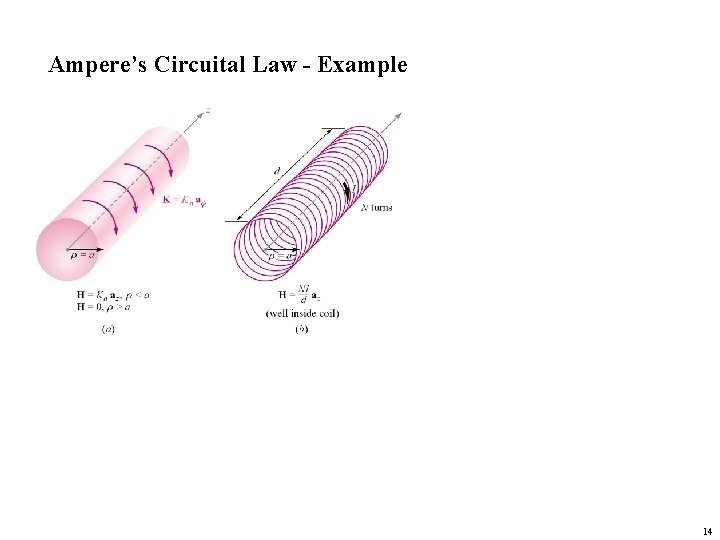
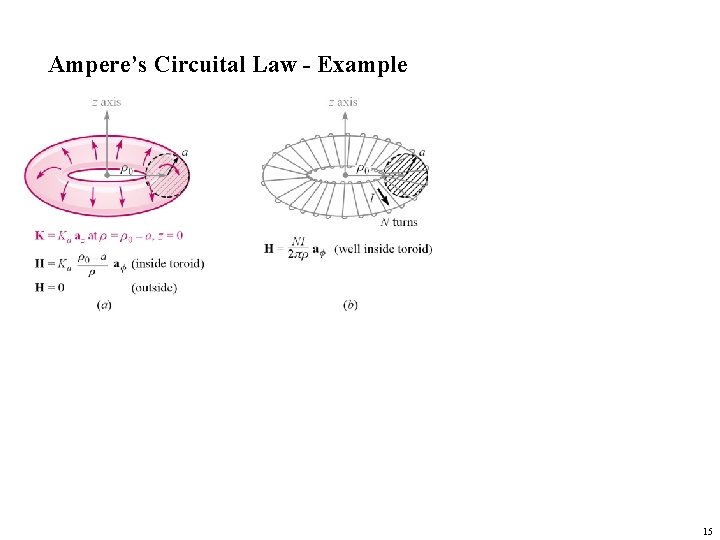
Ampere’s Circuital Law The magnetic field in space around an electric current is proportional to the electric current which serves as its source, just as the electric field in space is proportional to the charge which serves as its source. 9
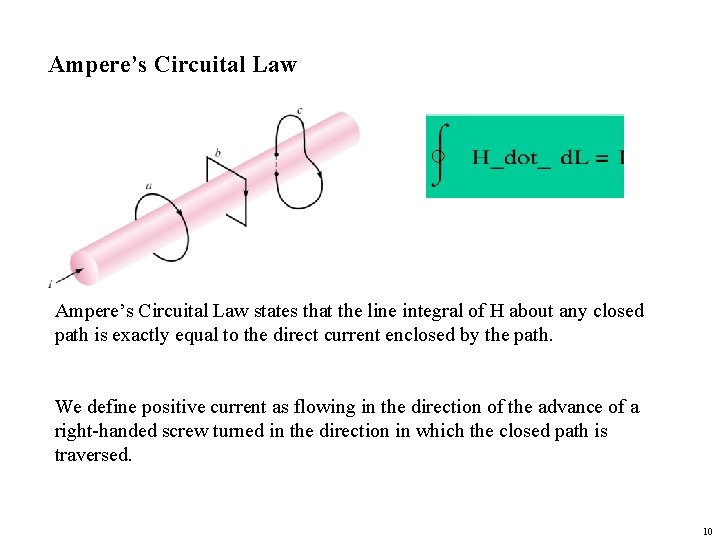
Ampere’s Circuital Law states that the line integral of H about any closed path is exactly equal to the direct current enclosed by the path. We define positive current as flowing in the direction of the advance of a right-handed screw turned in the direction in which the closed path is traversed. 10
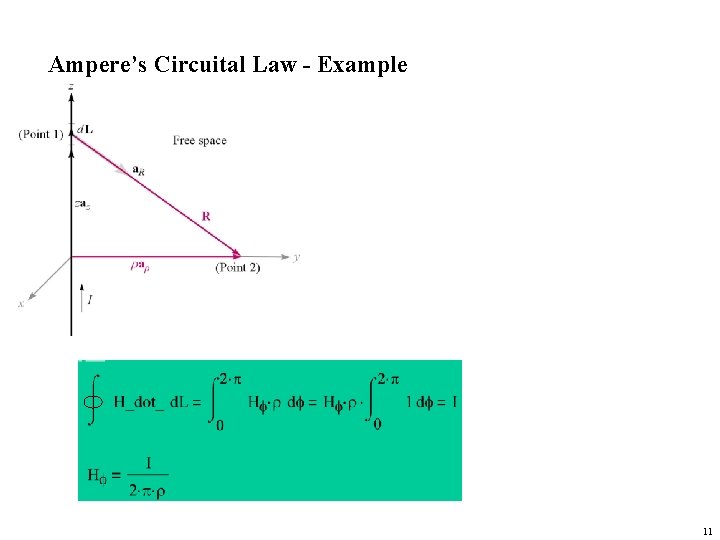
Ampere’s Circuital Law - Example 11
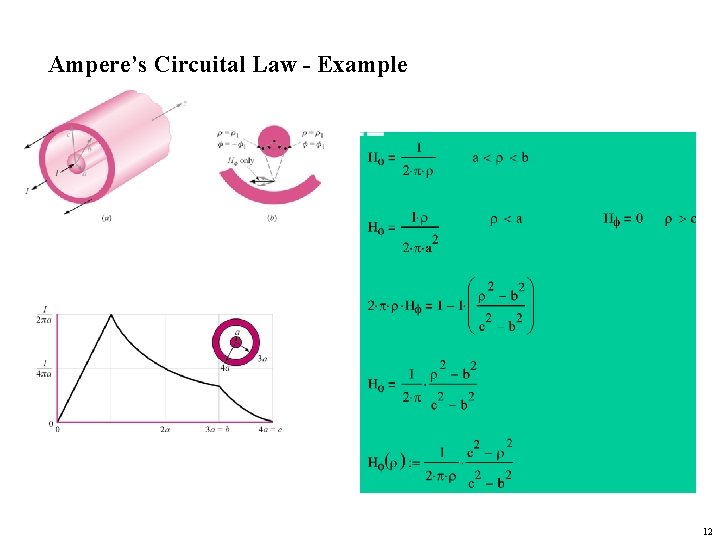
Ampere’s Circuital Law - Example 12
Ampere’s Circuital Law - Example 13
Ampere’s Circuital Law - Example 14
Ampere’s Circuital Law - Example 15
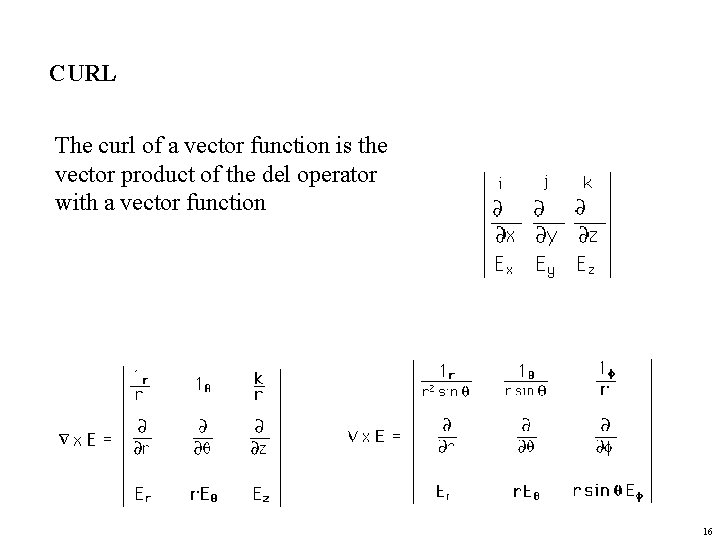
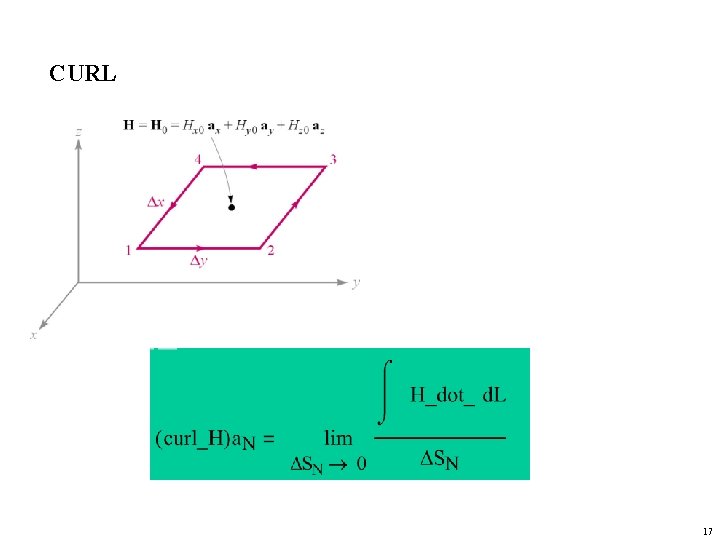
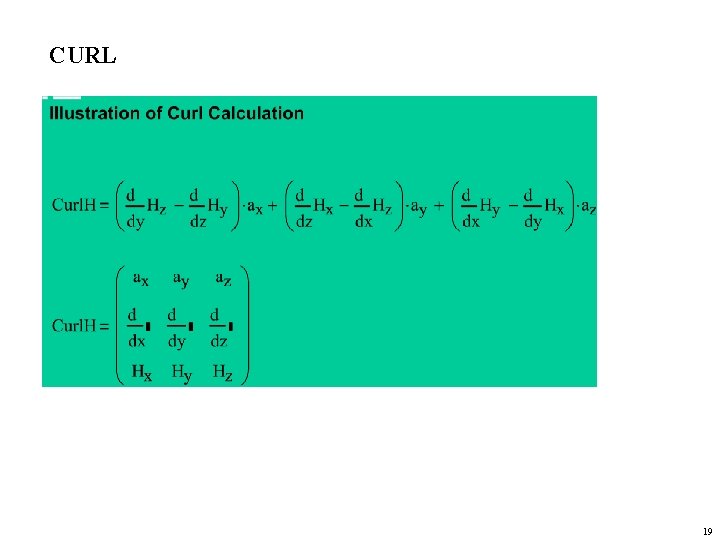
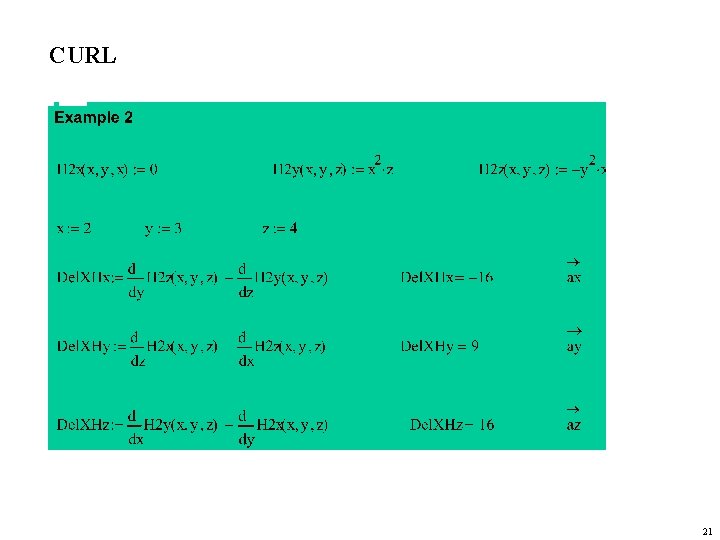
CURL The curl of a vector function is the vector product of the del operator with a vector function 16
CURL 17
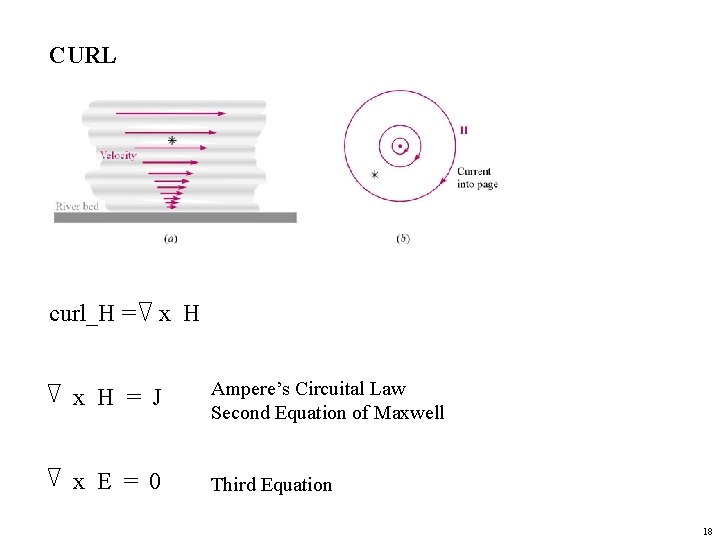
CURL curl_H = x H = J Ampere’s Circuital Law Second Equation of Maxwell x E = 0 Third Equation 18
CURL 19
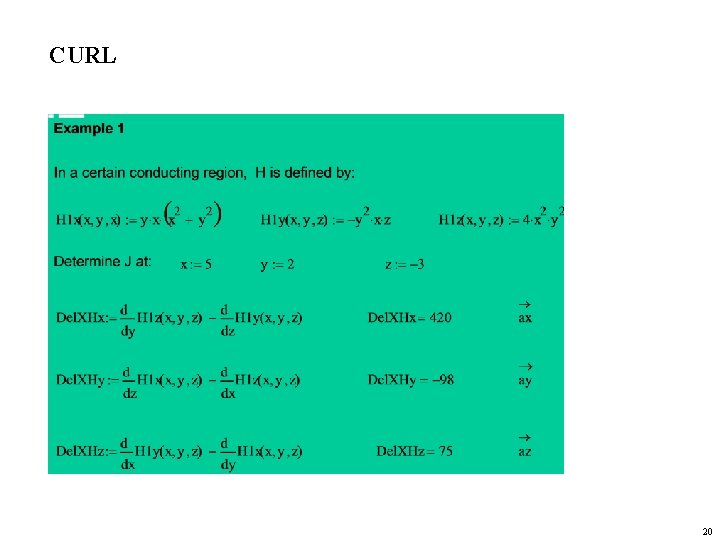
CURL 20
CURL 21
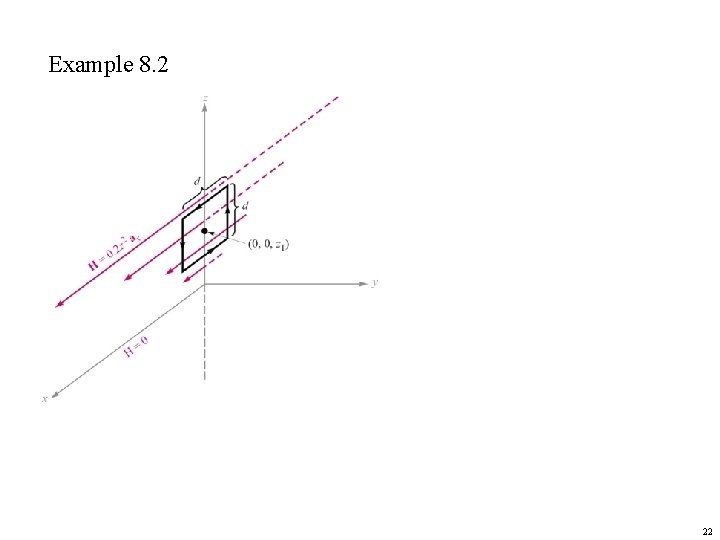
Example 8. 2 22
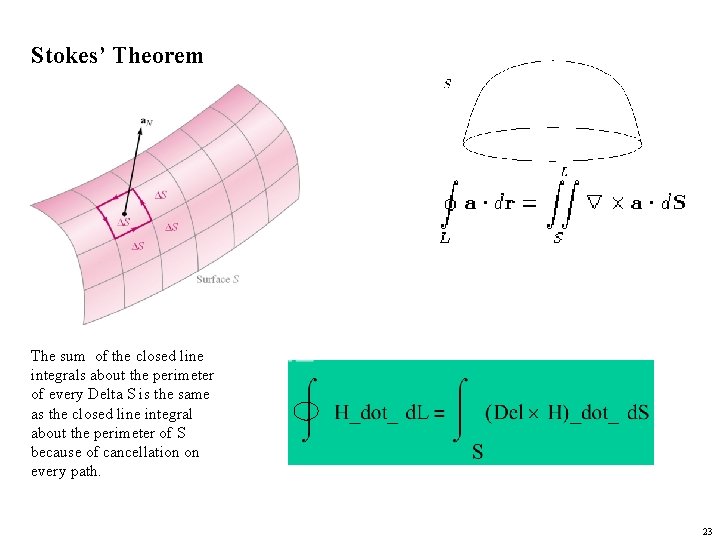
Stokes’ Theorem The sum of the closed line integrals about the perimeter of every Delta S is the same as the closed line integral about the perimeter of S because of cancellation on every path. 23
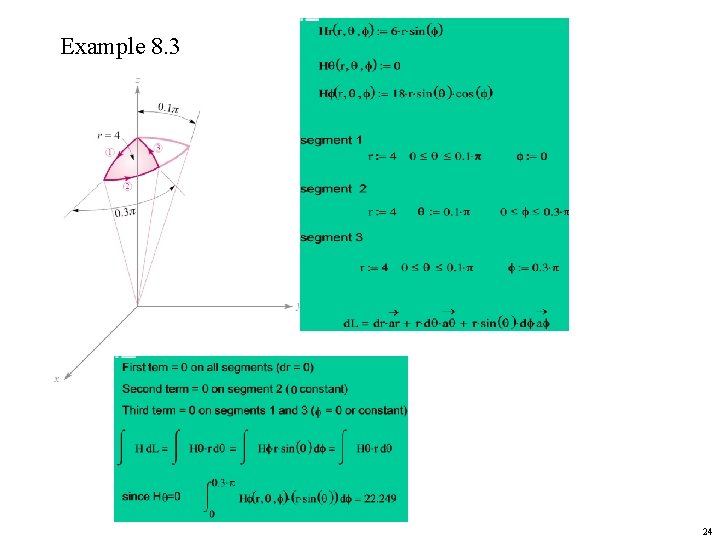
Example 8. 3 24
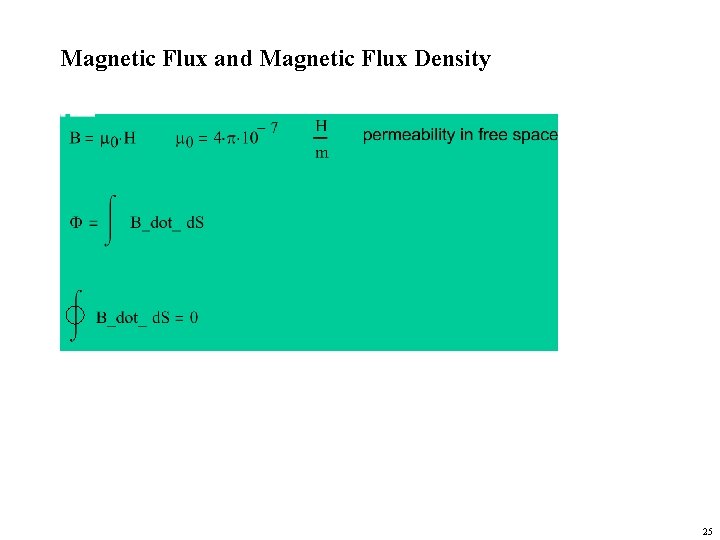
Magnetic Flux and Magnetic Flux Density 25
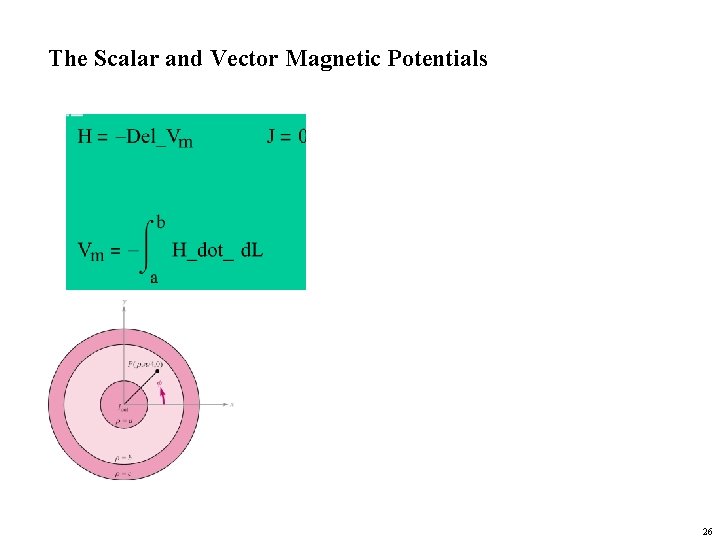
The Scalar and Vector Magnetic Potentials 26
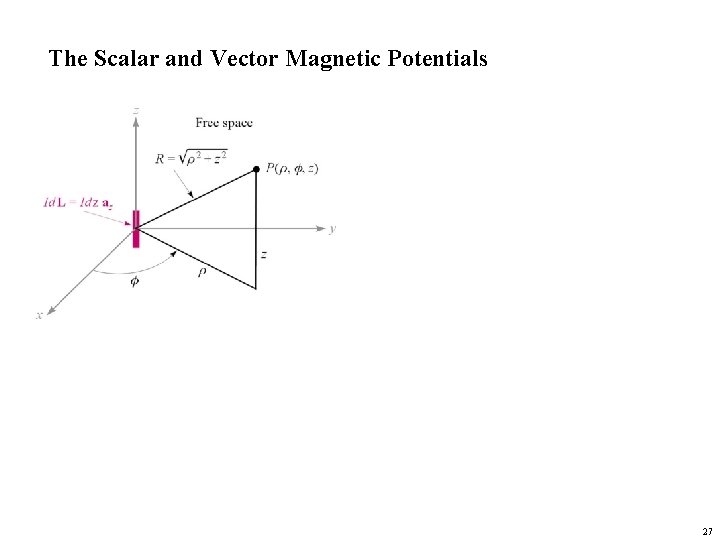
The Scalar and Vector Magnetic Potentials 27
Derivation of the Steady-Magnetic-Fields Laws 28