
Chapter 8 The Joy of Fitness Elizabeth Lytle

Chapter 8 The Joy of Fitness Elizabeth Lytle, MPH, BSN, RN Los Altos School District
Chapter 8—Learn About Physical Fitness Five health-related components of physical fitness Benefits of physical activity Physical Activity Guidelines for Americans Principles of exercise Performance-enhancing drugs Measuring body composition

Health-related Components Of Fitness Cardiorespiratory Muscular Strength Body Composition Physical Fitness Flexibility Muscular Endurance
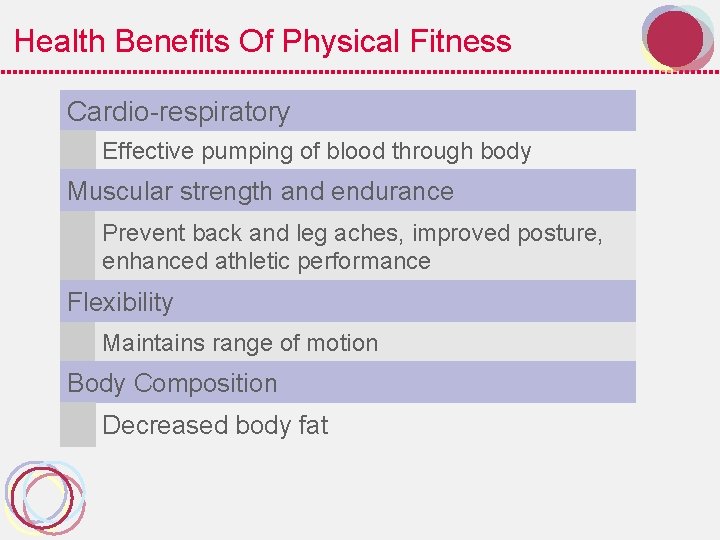
Health Benefits Of Physical Fitness Cardio-respiratory Effective pumping of blood through body Muscular strength and endurance Prevent back and leg aches, improved posture, enhanced athletic performance Flexibility Maintains range of motion Body Composition Decreased body fat
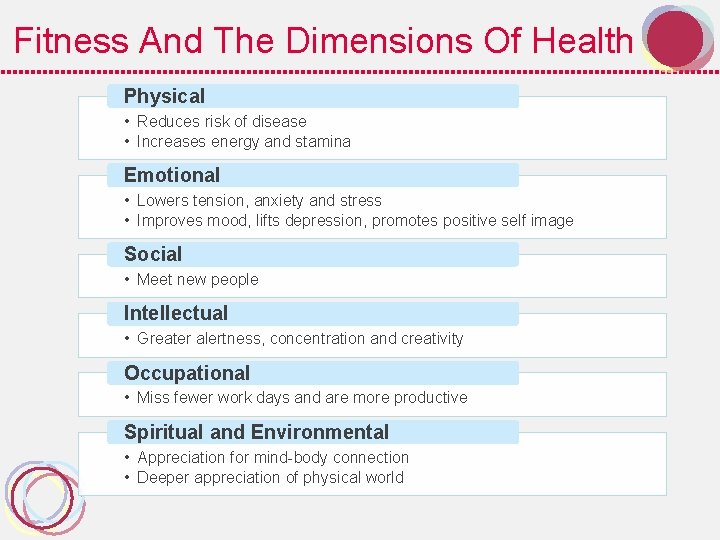
Fitness And The Dimensions Of Health Physical • Reduces risk of disease • Increases energy and stamina Emotional • Lowers tension, anxiety and stress • Improves mood, lifts depression, promotes positive self image Social • Meet new people Intellectual • Greater alertness, concentration and creativity Occupational • Miss fewer work days and are more productive Spiritual and Environmental • Appreciation for mind-body connection • Deeper appreciation of physical world
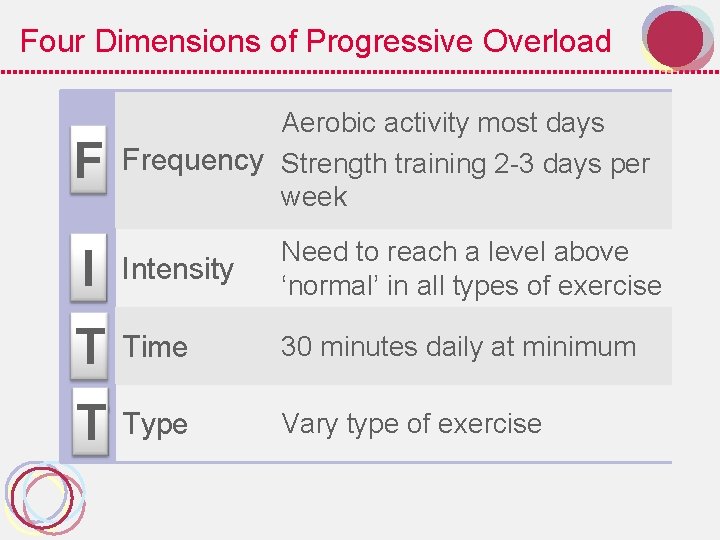
Four Dimensions of Progressive Overload F Aerobic activity most days Frequency Strength training 2 -3 days per week I Intensity Need to reach a level above ‘normal’ in all types of exercise T Time 30 minutes daily at minimum T Type Vary type of exercise
Use It Or Lose It If you stop exercising, you can lose as much as 50% of your fitness improvements within 2 months If you are too busy to maintain your routine, keep intensity of work-outs constant and decrease the time
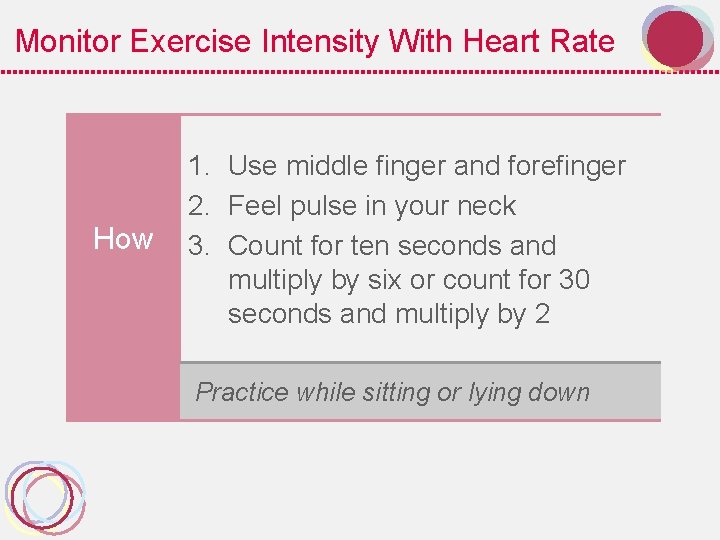
Monitor Exercise Intensity With Heart Rate How 1. Use middle finger and forefinger 2. Feel pulse in your neck 3. Count for ten seconds and multiply by six or count for 30 seconds and multiply by 2 Practice while sitting or lying down
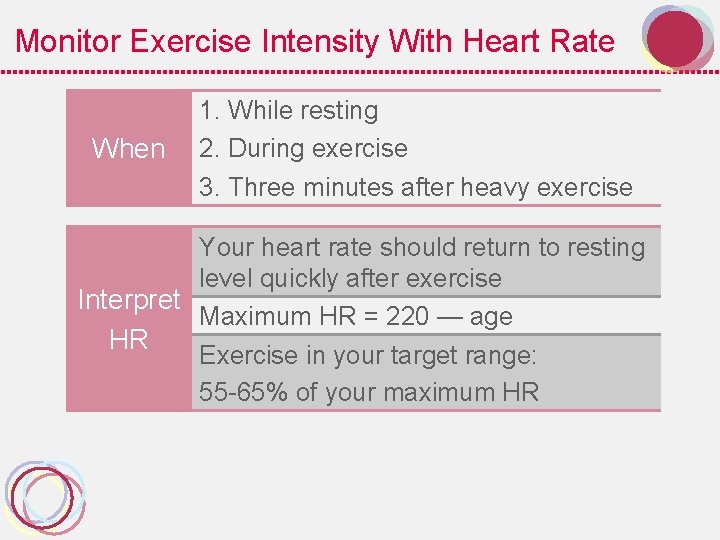
Monitor Exercise Intensity With Heart Rate When 1. While resting 2. During exercise 3. Three minutes after heavy exercise Your heart rate should return to resting level quickly after exercise Interpret Maximum HR = 220 — age HR Exercise in your target range: 55 -65% of your maximum HR
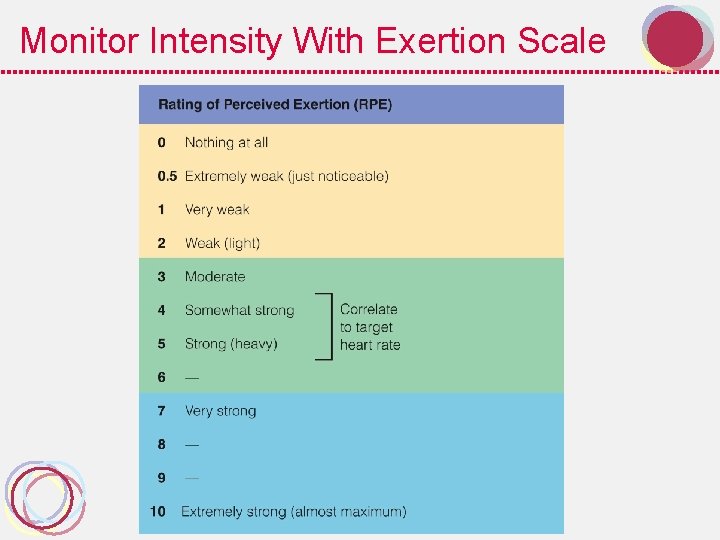
Monitor Intensity With Exertion Scale
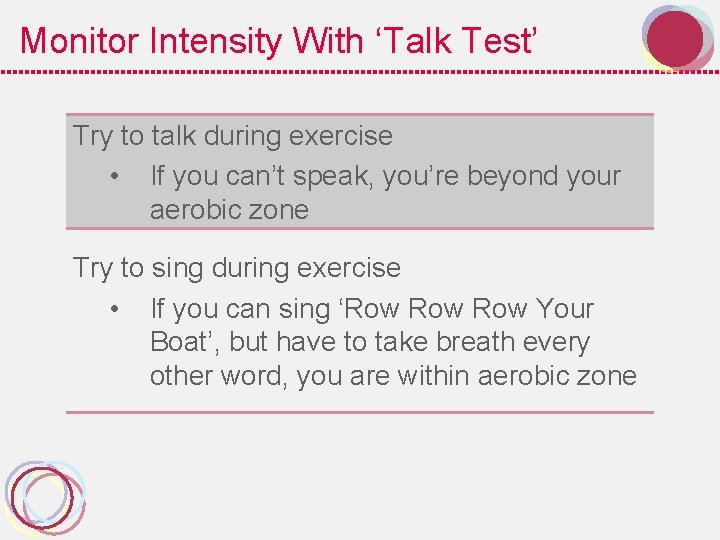
Monitor Intensity With ‘Talk Test’ Try to talk during exercise • If you can’t speak, you’re beyond your aerobic zone Try to sing during exercise • If you can sing ‘Row Row Your Boat’, but have to take breath every other word, you are within aerobic zone
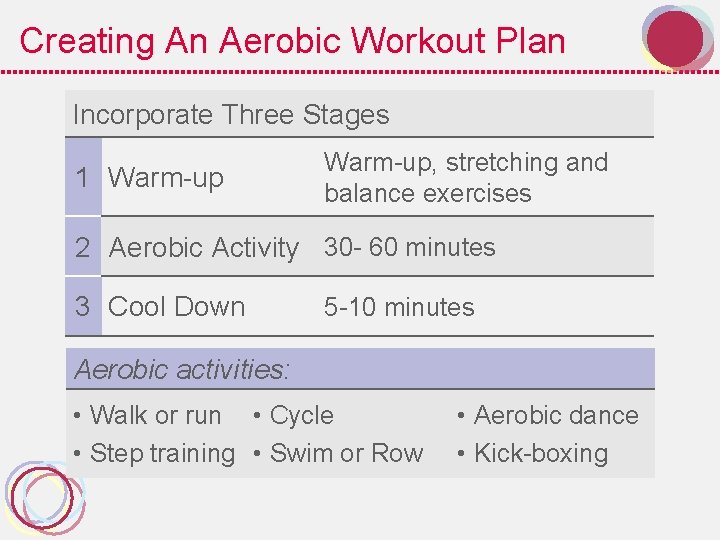
Creating An Aerobic Workout Plan Incorporate Three Stages 1 Warm-up, stretching and balance exercises 2 Aerobic Activity 30 - 60 minutes 3 Cool Down 5 -10 minutes Aerobic activities: • Walk or run • Cycle • Step training • Swim or Row • Aerobic dance • Kick-boxing
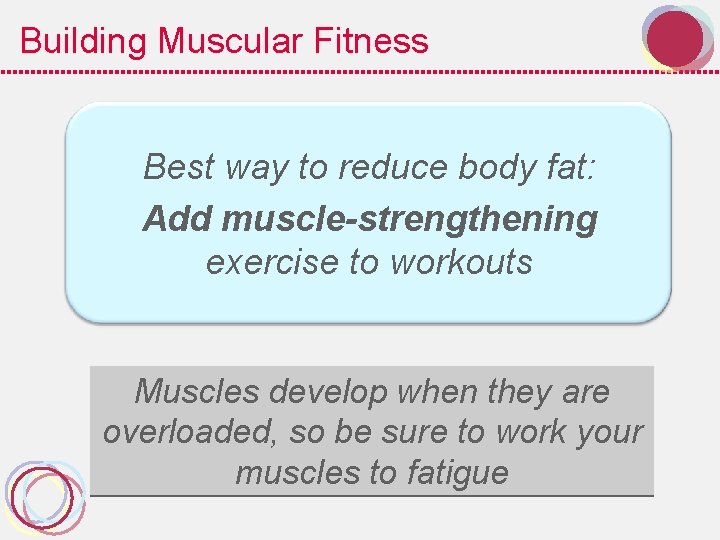
Building Muscular Fitness Best way to reduce body fat: Add muscle-strengthening exercise to workouts Muscles develop when they are overloaded, so be sure to work your muscles to fatigue
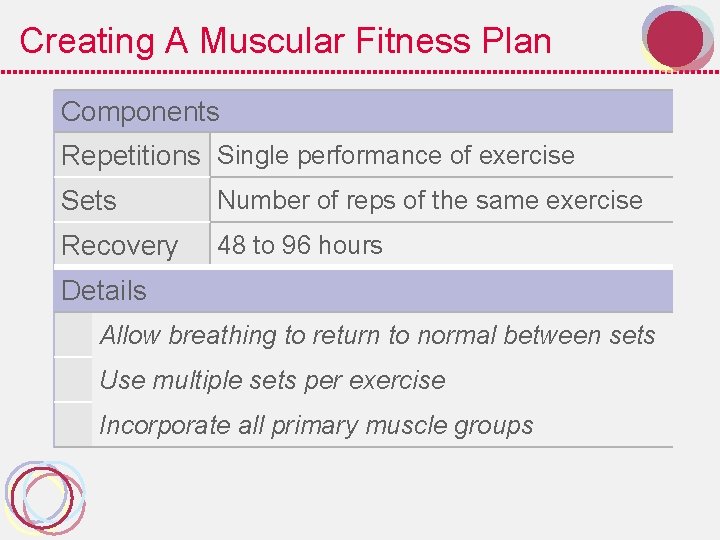
Creating A Muscular Fitness Plan Components Repetitions Single performance of exercise Sets Number of reps of the same exercise Recovery 48 to 96 hours Details Allow breathing to return to normal between sets Use multiple sets per exercise Incorporate all primary muscle groups
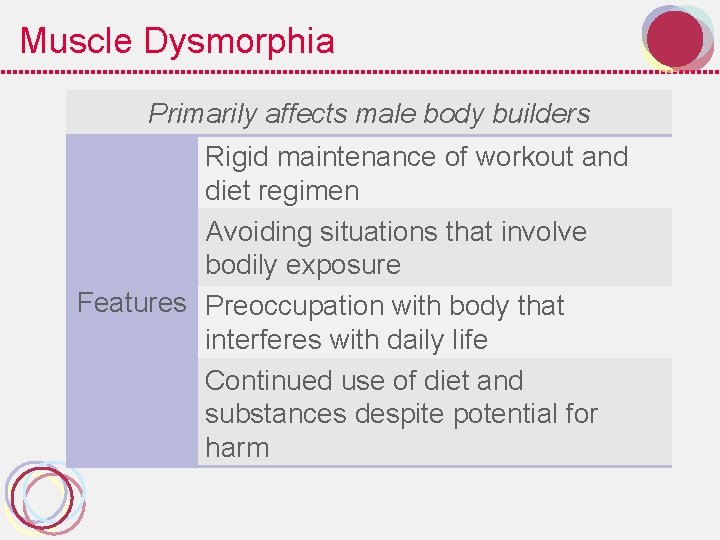
Muscle Dysmorphia Primarily affects male body builders Rigid maintenance of workout and diet regimen Avoiding situations that involve bodily exposure Features Preoccupation with body that interferes with daily life Continued use of diet and substances despite potential for harm
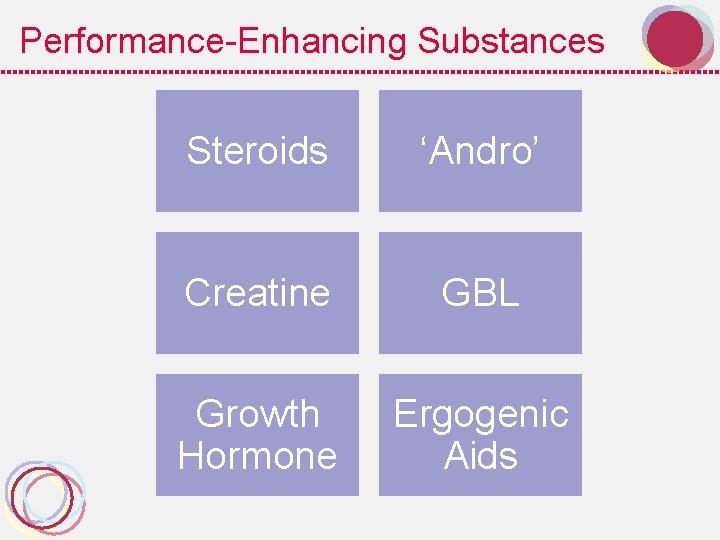
Performance-Enhancing Substances Steroids ‘Andro’ Creatine GBL Growth Hormone Ergogenic Aids
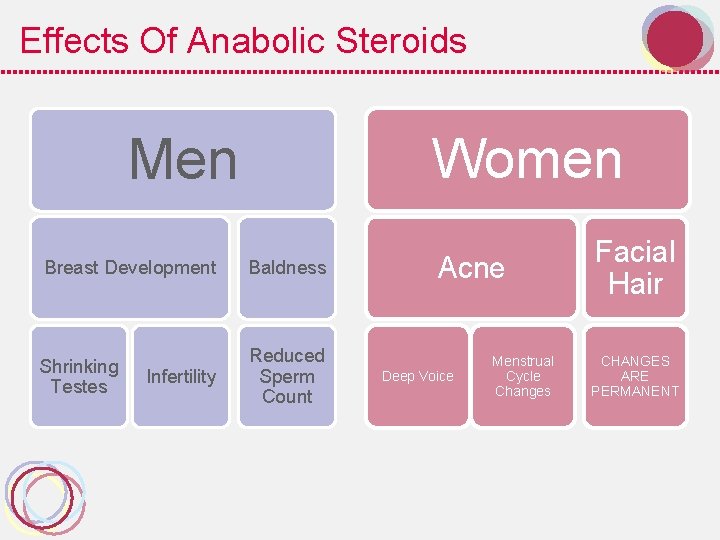
Effects Of Anabolic Steroids Men Women Breast Development Baldness Shrinking Testes Reduced Sperm Count Infertility Acne Deep Voice Menstrual Cycle Changes Facial Hair CHANGES ARE PERMANENT
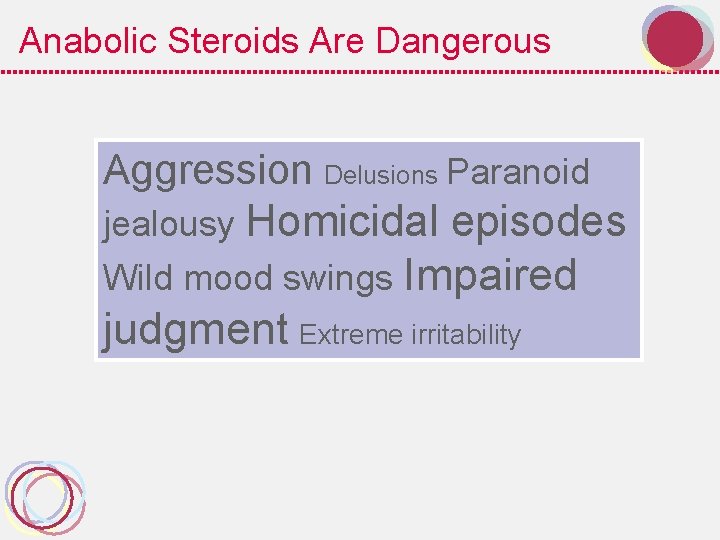
Anabolic Steroids Are Dangerous Aggression Delusions Paranoid jealousy Homicidal episodes Wild mood swings Impaired judgment Extreme irritability
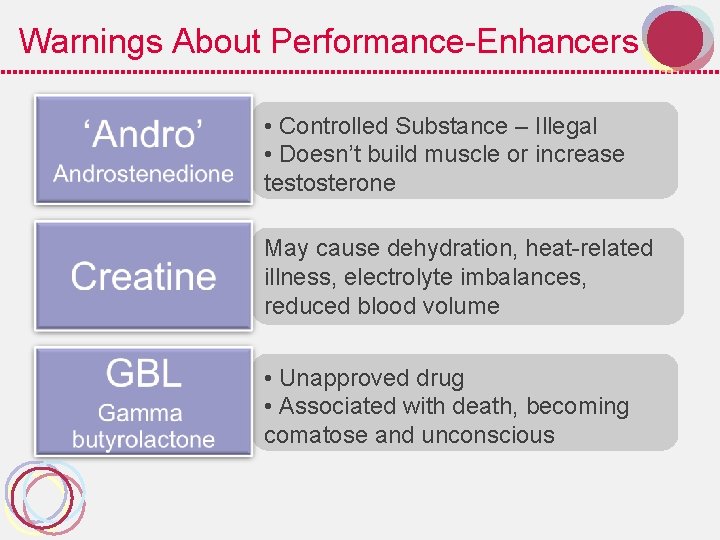
Warnings About Performance-Enhancers • Controlled Substance – Illegal • Doesn’t build muscle or increase testosterone May cause dehydration, heat-related illness, electrolyte imbalances, reduced blood volume • Unapproved drug • Associated with death, becoming comatose and unconscious
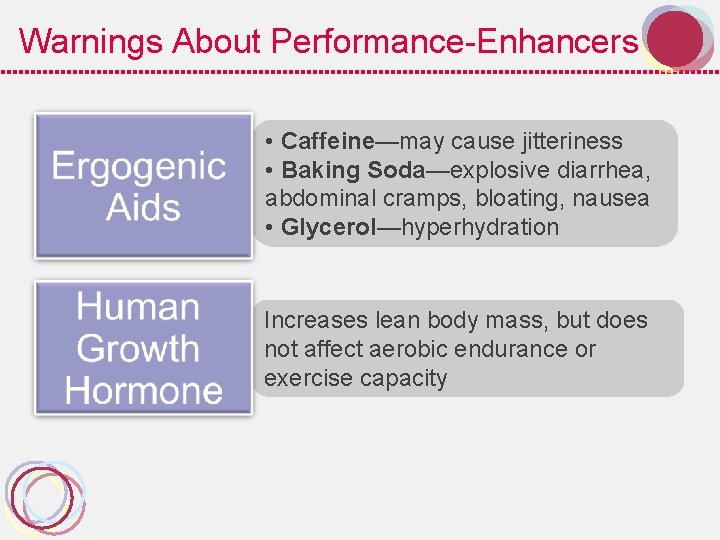
Warnings About Performance-Enhancers • Caffeine—may cause jitteriness • Baking Soda—explosive diarrhea, abdominal cramps, bloating, nausea • Glycerol—hyperhydration Increases lean body mass, but does not affect aerobic endurance or exercise capacity
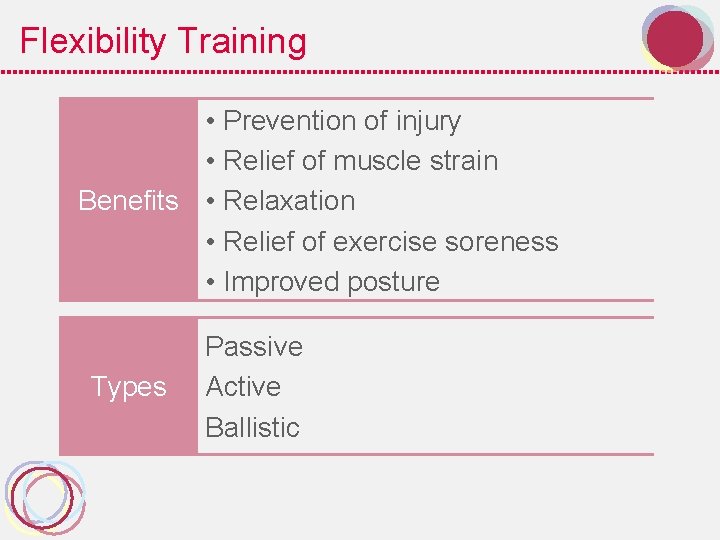
Flexibility Training • Prevention of injury • Relief of muscle strain Benefits • Relaxation • Relief of exercise soreness • Improved posture Types Passive Active Ballistic
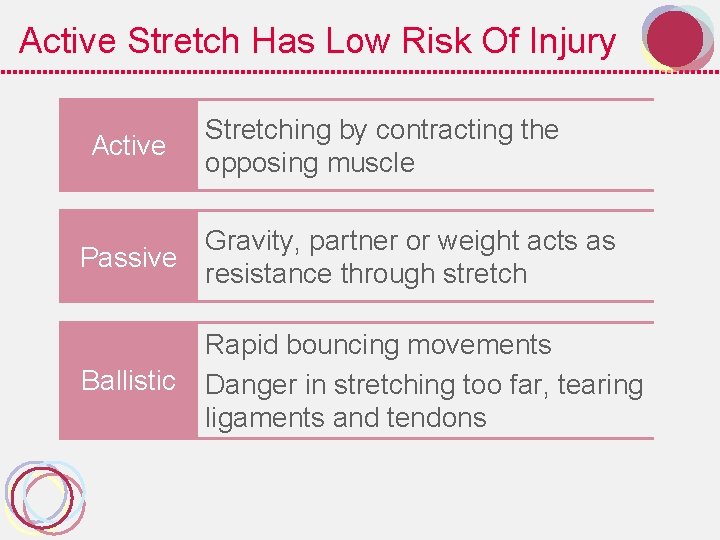
Active Stretch Has Low Risk Of Injury Active Stretching by contracting the opposing muscle Gravity, partner or weight acts as Passive resistance through stretch Ballistic Rapid bouncing movements Danger in stretching too far, tearing ligaments and tendons
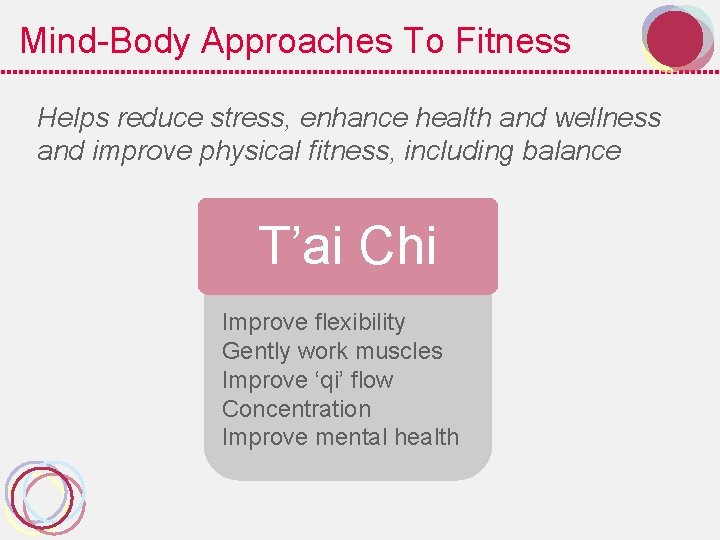
Mind-Body Approaches To Fitness Helps reduce stress, enhance health and wellness and improve physical fitness, including balance T’ai Chi Improve flexibility Gently work muscles Improve ‘qi’ flow Concentration Improve mental health
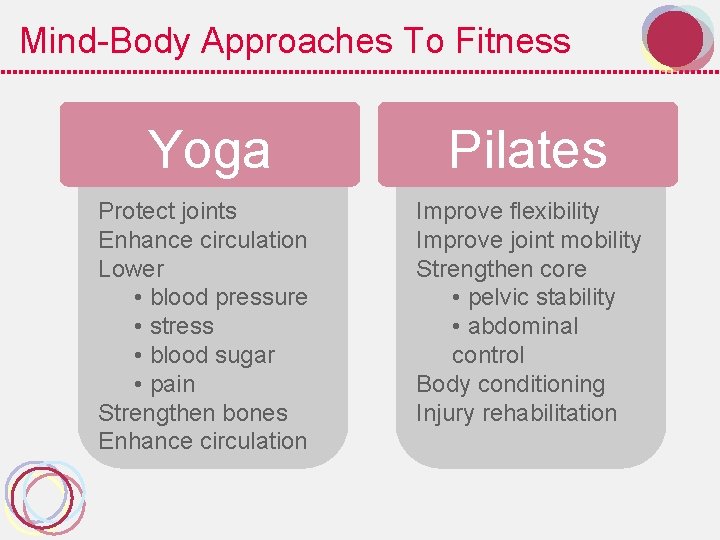
Mind-Body Approaches To Fitness Yoga Pilates Protect joints Enhance circulation Lower • blood pressure • stress • blood sugar • pain Strengthen bones Enhance circulation Improve flexibility Improve joint mobility Strengthen core • pelvic stability • abdominal control Body conditioning Injury rehabilitation
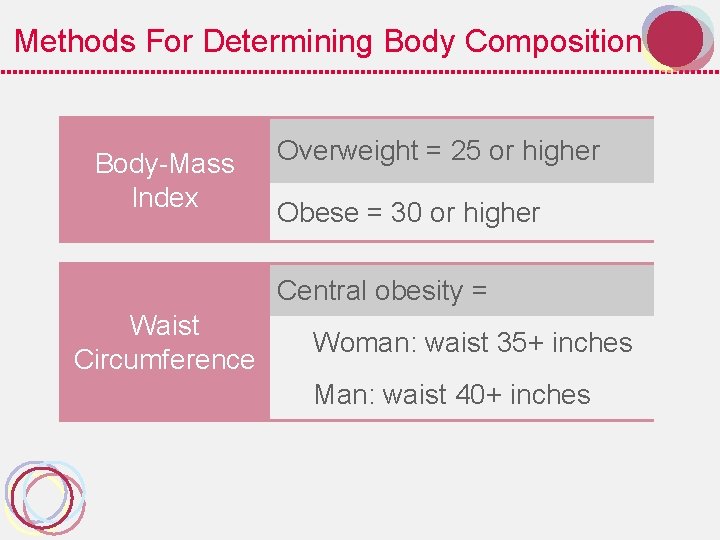
Methods For Determining Body Composition Body-Mass Index Overweight = 25 or higher Obese = 30 or higher Central obesity = Waist Circumference Woman: waist 35+ inches Man: waist 40+ inches
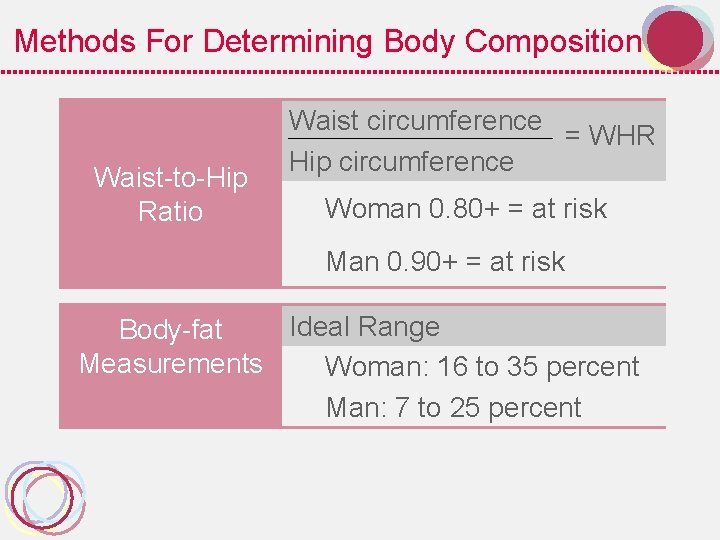
Methods For Determining Body Composition Waist-to-Hip Ratio Waist circumference = WHR Hip circumference Woman 0. 80+ = at risk Man 0. 90+ = at risk Ideal Range Body-fat Measurements Woman: 16 to 35 percent Man: 7 to 25 percent
Did You Know? Athletes generally do not need more protein Most active people need the same basic nutrients as everyone else
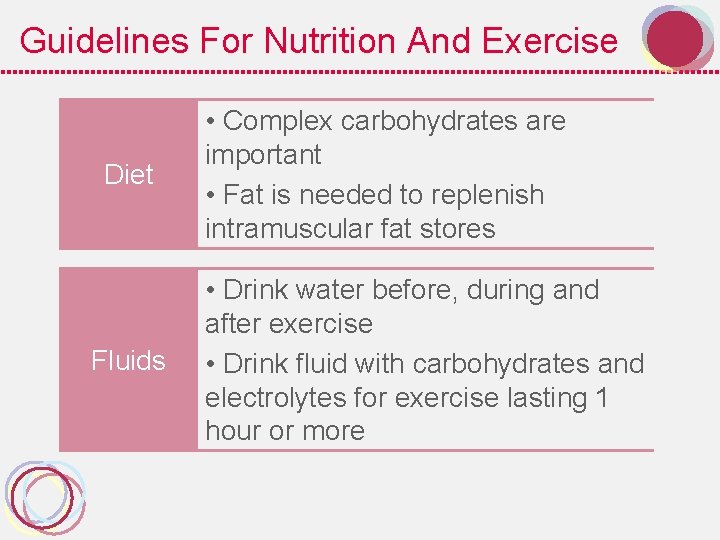
Guidelines For Nutrition And Exercise Diet Fluids • Complex carbohydrates are important • Fat is needed to replenish intramuscular fat stores • Drink water before, during and after exercise • Drink fluid with carbohydrates and electrolytes for exercise lasting 1 hour or more
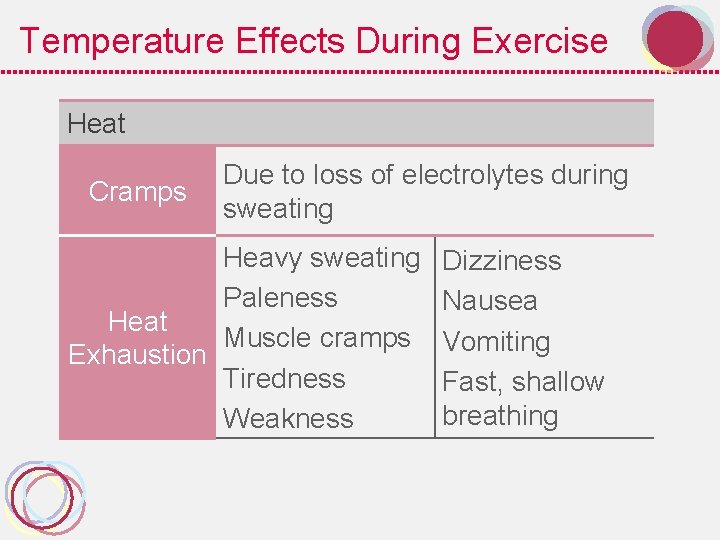
Temperature Effects During Exercise Heat Cramps Due to loss of electrolytes during sweating Heavy sweating Paleness Heat Muscle cramps Exhaustion Tiredness Weakness Dizziness Nausea Vomiting Fast, shallow breathing
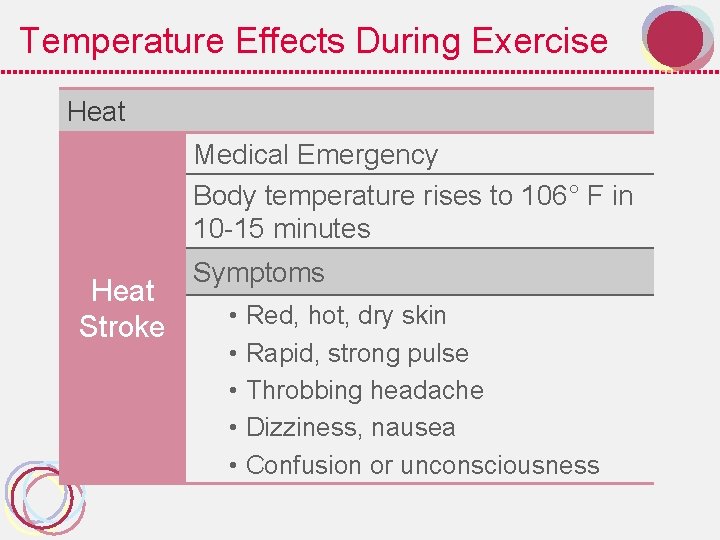
Temperature Effects During Exercise Heat Medical Emergency Body temperature rises to 106° F in 10 -15 minutes Heat Stroke Symptoms • Red, hot, dry skin • Rapid, strong pulse • Throbbing headache • Dizziness, nausea • Confusion or unconsciousness
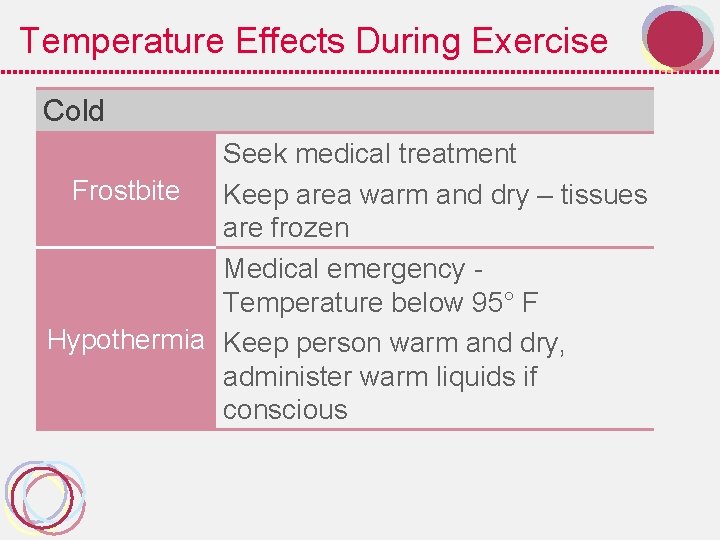
Temperature Effects During Exercise Cold Seek medical treatment Frostbite Keep area warm and dry – tissues are frozen Medical emergency Temperature below 95° F Hypothermia Keep person warm and dry, administer warm liquids if conscious
- Slides: 31