
Chapter 8 The Growth of a National Economy

- Slides: 21
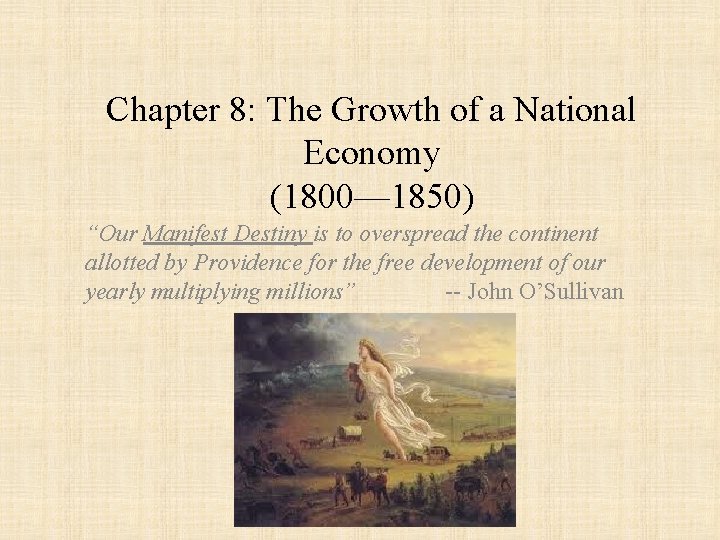
Chapter 8: The Growth of a National Economy (1800— 1850) “Our Manifest Destiny is to overspread the continent allotted by Providence for the free development of our yearly multiplying millions” -- John O’Sullivan
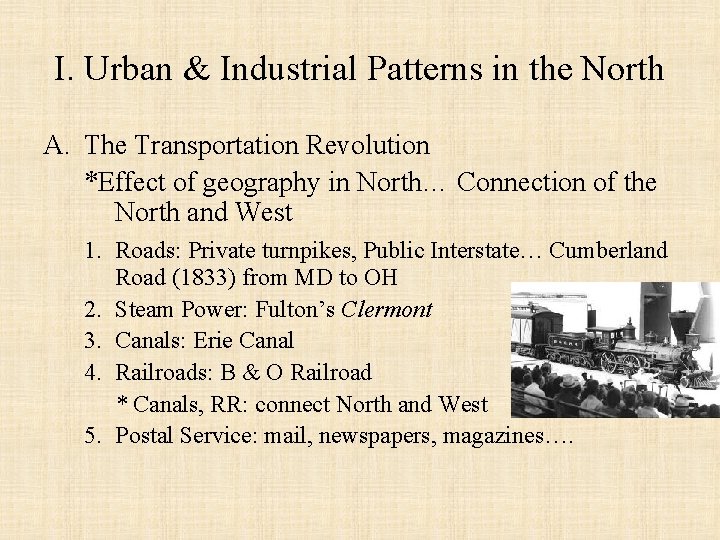
I. Urban & Industrial Patterns in the North A. The Transportation Revolution *Effect of geography in North… Connection of the North and West 1. Roads: Private turnpikes, Public Interstate… Cumberland Road (1833) from MD to OH 2. Steam Power: Fulton’s Clermont 3. Canals: Erie Canal 4. Railroads: B & O Railroad * Canals, RR: connect North and West 5. Postal Service: mail, newspapers, magazines….
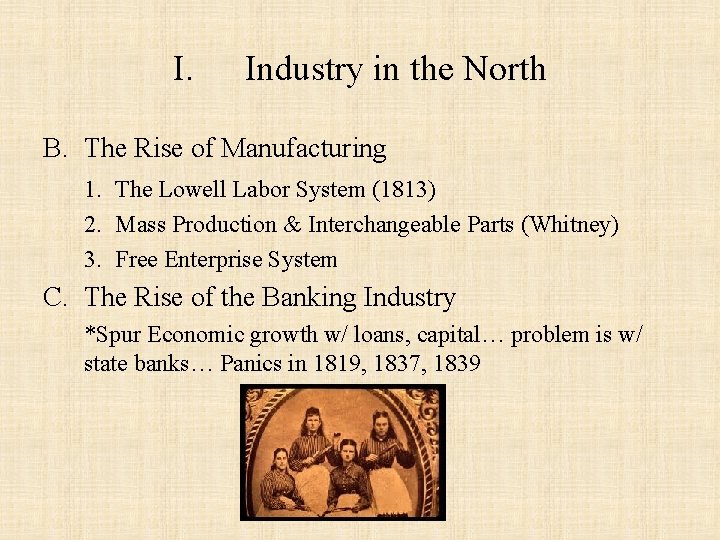
I. Industry in the North B. The Rise of Manufacturing 1. The Lowell Labor System (1813) 2. Mass Production & Interchangeable Parts (Whitney) 3. Free Enterprise System C. The Rise of the Banking Industry *Spur Economic growth w/ loans, capital… problem is w/ state banks… Panics in 1819, 1837, 1839
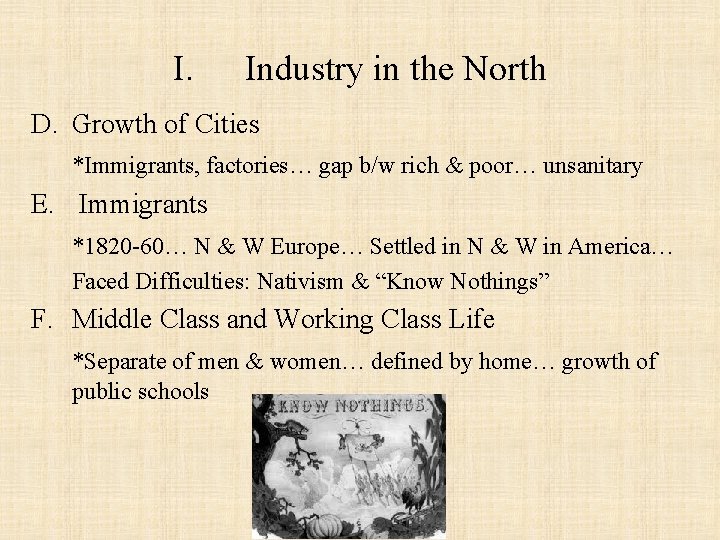
I. Industry in the North D. Growth of Cities *Immigrants, factories… gap b/w rich & poor… unsanitary E. Immigrants *1820 -60… N & W Europe… Settled in N & W in America… Faced Difficulties: Nativism & “Know Nothings” F. Middle Class and Working Class Life *Separate of men & women… defined by home… growth of public schools
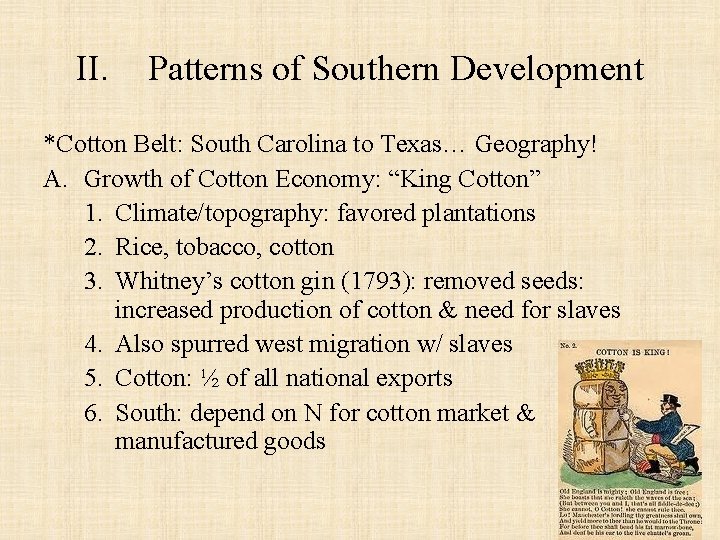
II. Patterns of Southern Development *Cotton Belt: South Carolina to Texas… Geography! A. Growth of Cotton Economy: “King Cotton” 1. Climate/topography: favored plantations 2. Rice, tobacco, cotton 3. Whitney’s cotton gin (1793): removed seeds: increased production of cotton & need for slaves 4. Also spurred west migration w/ slaves 5. Cotton: ½ of all national exports 6. South: depend on N for cotton market & manufactured goods
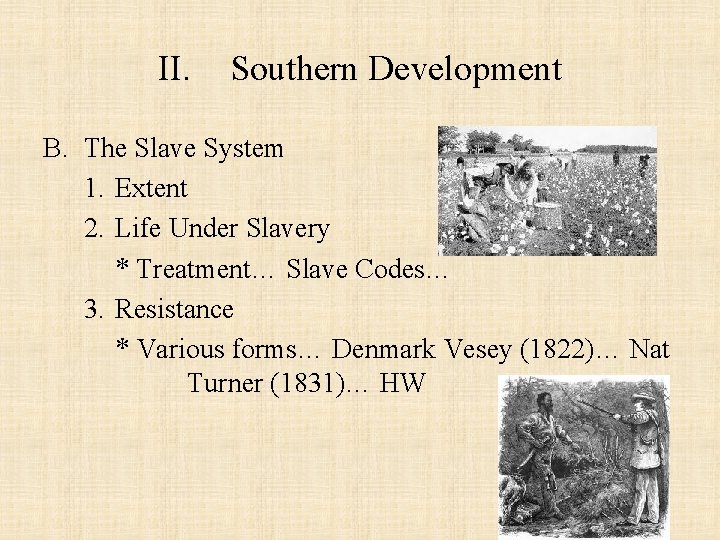
II. Southern Development B. The Slave System 1. Extent 2. Life Under Slavery * Treatment… Slave Codes… 3. Resistance * Various forms… Denmark Vesey (1822)… Nat Turner (1831)… HW
II. Southern Development C. The South on the Defensive 1. “Peculiar Institution”… Set south apart 2. John C. Calhoun: not just necessary but “good” * Existed throughout history * Sanctioned in Bible: “out of God’s graces” * Important for South’s prosperity * Better than Africa * Better than North’s “wage slavery” * Mentally inferior
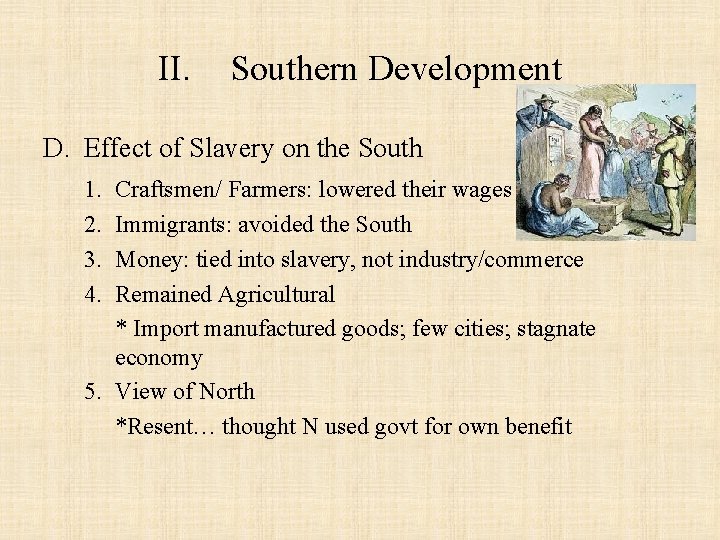
II. Southern Development D. Effect of Slavery on the South 1. 2. 3. 4. Craftsmen/ Farmers: lowered their wages Immigrants: avoided the South Money: tied into slavery, not industry/commerce Remained Agricultural * Import manufactured goods; few cities; stagnate economy 5. View of North *Resent… thought N used govt for own benefit
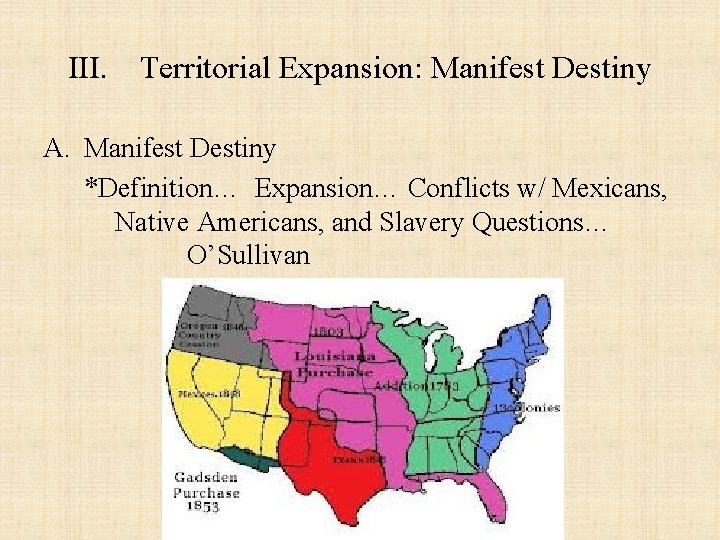
III. Territorial Expansion: Manifest Destiny A. Manifest Destiny *Definition… Expansion… Conflicts w/ Mexicans, Native Americans, and Slavery Questions… O’Sullivan
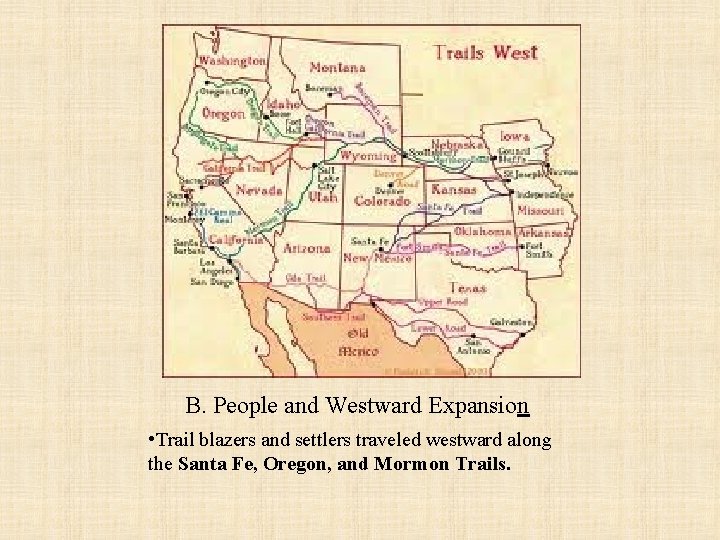
B. People and Westward Expansion • Trail blazers and settlers traveled westward along the Santa Fe, Oregon, and Mormon Trails.
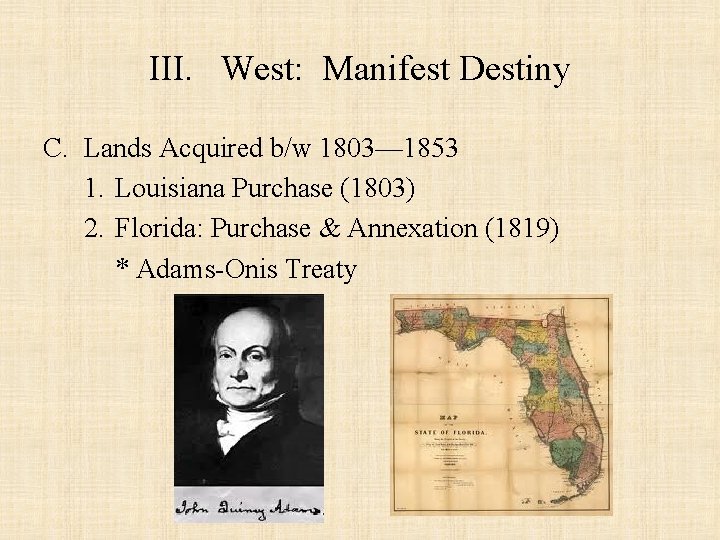
III. West: Manifest Destiny C. Lands Acquired b/w 1803— 1853 1. Louisiana Purchase (1803) 2. Florida: Purchase & Annexation (1819) * Adams-Onis Treaty
C. Lands Acquired by the US 3. Texas: Westward Expansion or Eastern Invasion? Americans In Texas • Mexico: newly independent from Spain (1821) • Americans: invited to settle in N. province of MX: Texas • Stephen Austin: led group of several hundred • Fertile land/ warm climate: perfect for cotton • 1830 s: friction b/w Americans & Mexicans 1. Mexican govt: not want slavery; claimed everyone had to be Catholic 2. Disliked independent spirit of the “Texans”
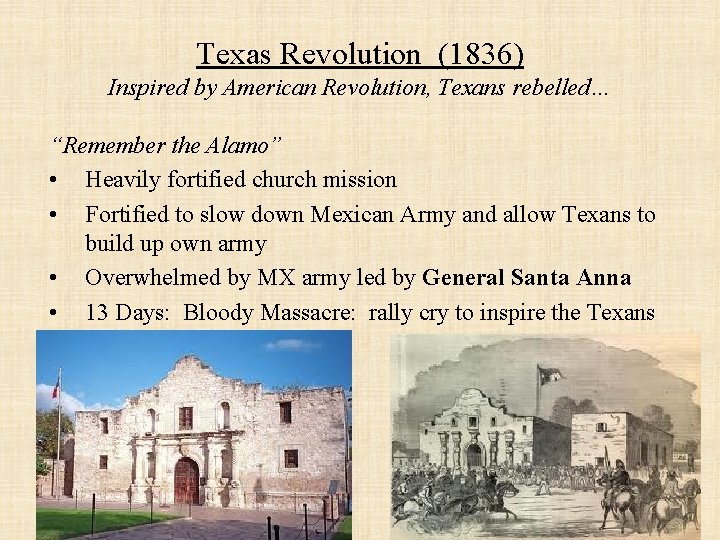
Texas Revolution (1836) Inspired by American Revolution, Texans rebelled… “Remember the Alamo” • Heavily fortified church mission • Fortified to slow down Mexican Army and allow Texans to build up own army • Overwhelmed by MX army led by General Santa Anna • 13 Days: Bloody Massacre: rally cry to inspire the Texans
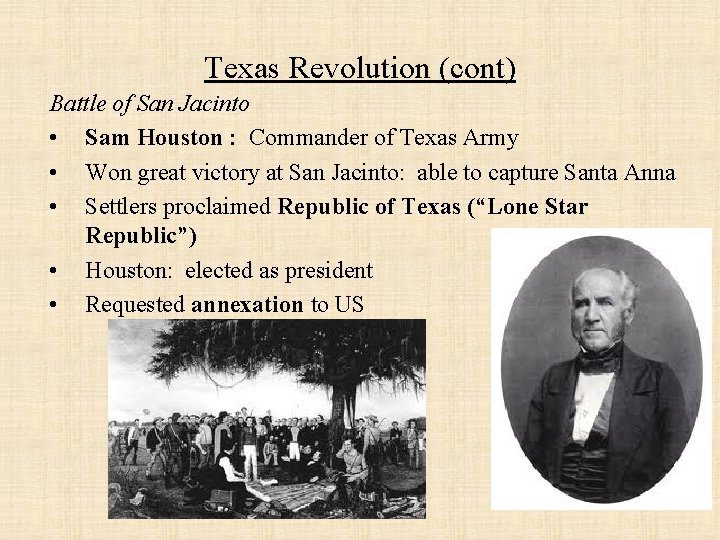
Texas Revolution (cont) Battle of San Jacinto • Sam Houston : Commander of Texas Army • Won great victory at San Jacinto: able to capture Santa Anna • Settlers proclaimed Republic of Texas (“Lone Star Republic”) • Houston: elected as president • Requested annexation to US
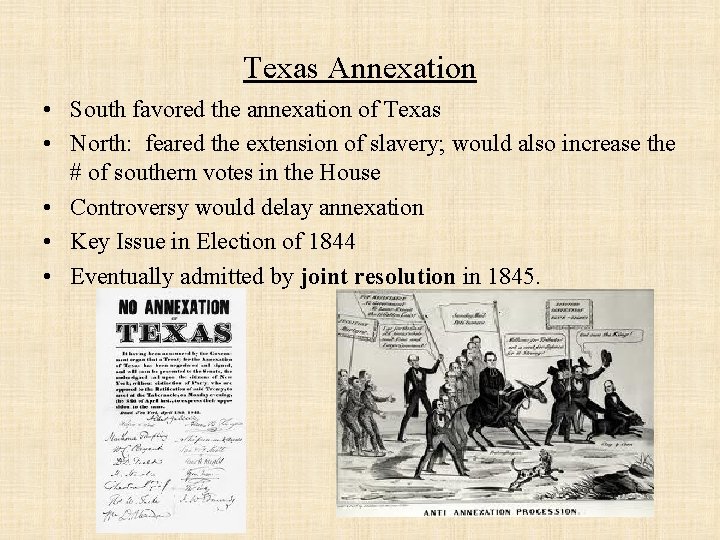
Texas Annexation • South favored the annexation of Texas • North: feared the extension of slavery; would also increase the # of southern votes in the House • Controversy would delay annexation • Key Issue in Election of 1844 • Eventually admitted by joint resolution in 1845.
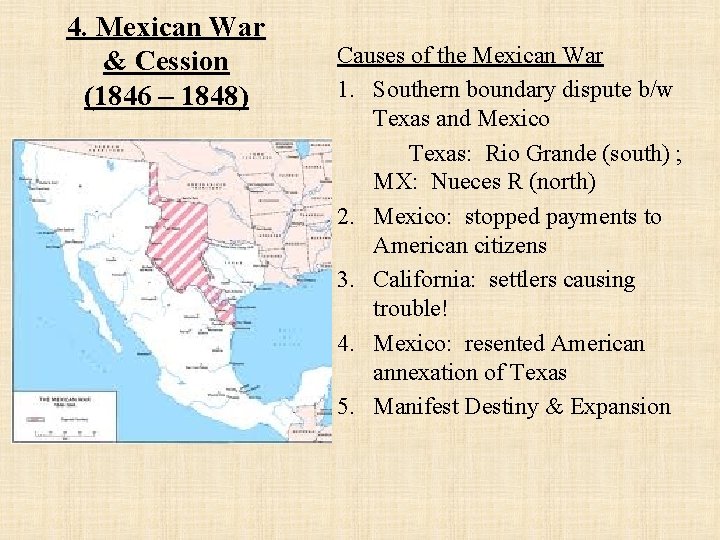
4. Mexican War & Cession (1846 – 1848) Causes of the Mexican War 1. Southern boundary dispute b/w Texas and Mexico Texas: Rio Grande (south) ; MX: Nueces R (north) 2. Mexico: stopped payments to American citizens 3. California: settlers causing trouble! 4. Mexico: resented American annexation of Texas 5. Manifest Destiny & Expansion
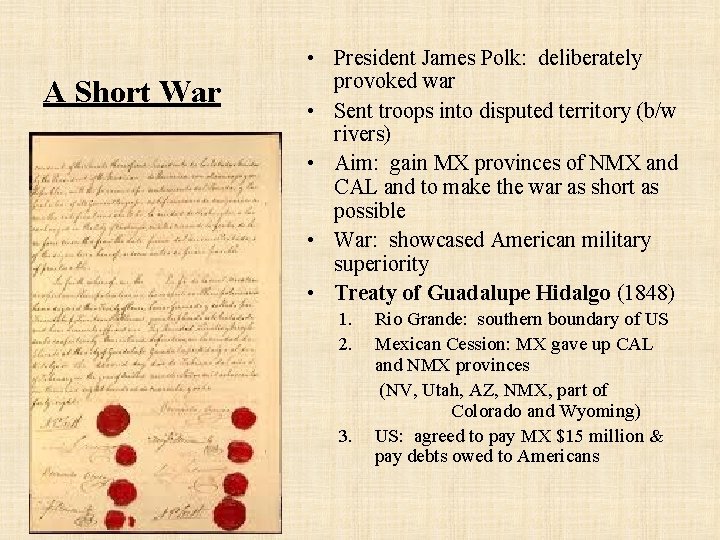
A Short War • President James Polk: deliberately provoked war • Sent troops into disputed territory (b/w rivers) • Aim: gain MX provinces of NMX and CAL and to make the war as short as possible • War: showcased American military superiority • Treaty of Guadalupe Hidalgo (1848) 1. 2. 3. Rio Grande: southern boundary of US Mexican Cession: MX gave up CAL and NMX provinces (NV, Utah, AZ, NMX, part of Colorado and Wyoming) US: agreed to pay MX $15 million & pay debts owed to Americans
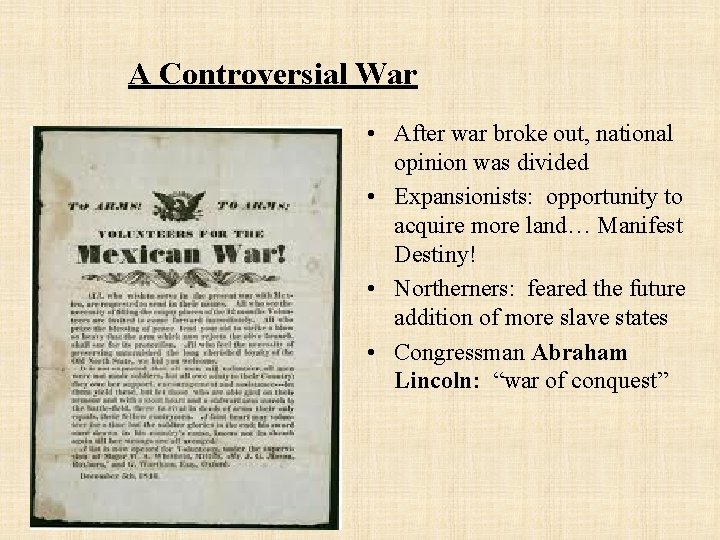
A Controversial War • After war broke out, national opinion was divided • Expansionists: opportunity to acquire more land… Manifest Destiny! • Northerners: feared the future addition of more slave states • Congressman Abraham Lincoln: “war of conquest”
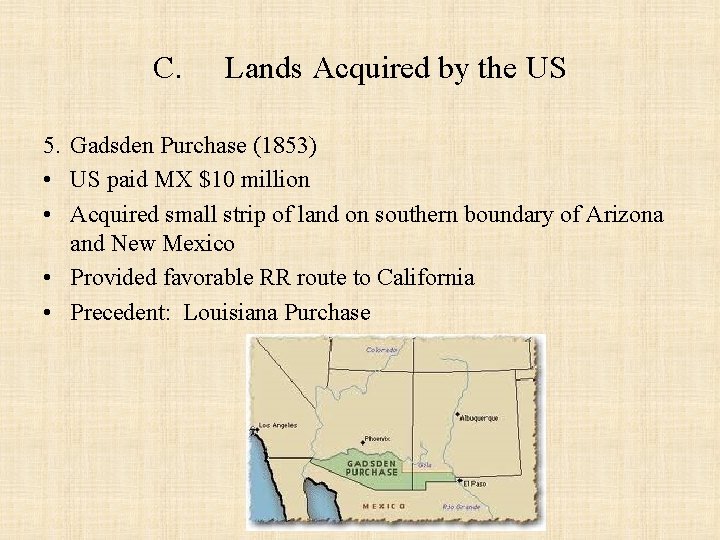
C. Lands Acquired by the US 5. Gadsden Purchase (1853) • US paid MX $10 million • Acquired small strip of land on southern boundary of Arizona and New Mexico • Provided favorable RR route to California • Precedent: Louisiana Purchase
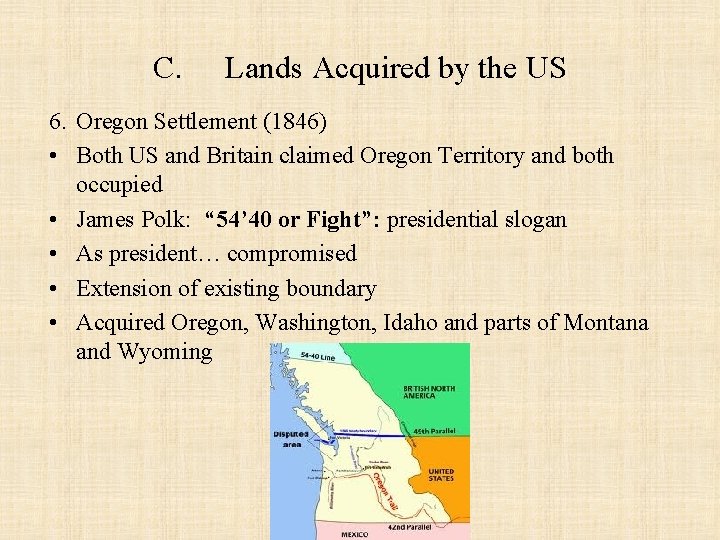
C. Lands Acquired by the US 6. Oregon Settlement (1846) • Both US and Britain claimed Oregon Territory and both occupied • James Polk: “ 54’ 40 or Fight”: presidential slogan • As president… compromised • Extension of existing boundary • Acquired Oregon, Washington, Idaho and parts of Montana and Wyoming
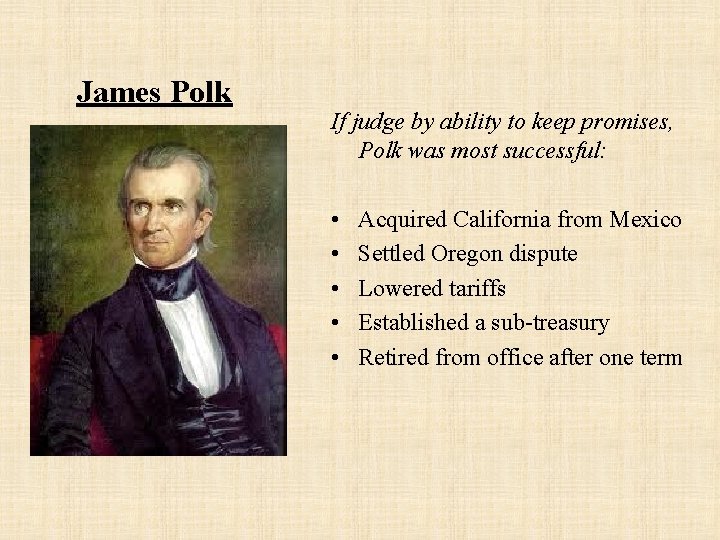
James Polk If judge by ability to keep promises, Polk was most successful: • • • Acquired California from Mexico Settled Oregon dispute Lowered tariffs Established a sub-treasury Retired from office after one term