
Chapter 8 The Cellular Basis of Reproduction and
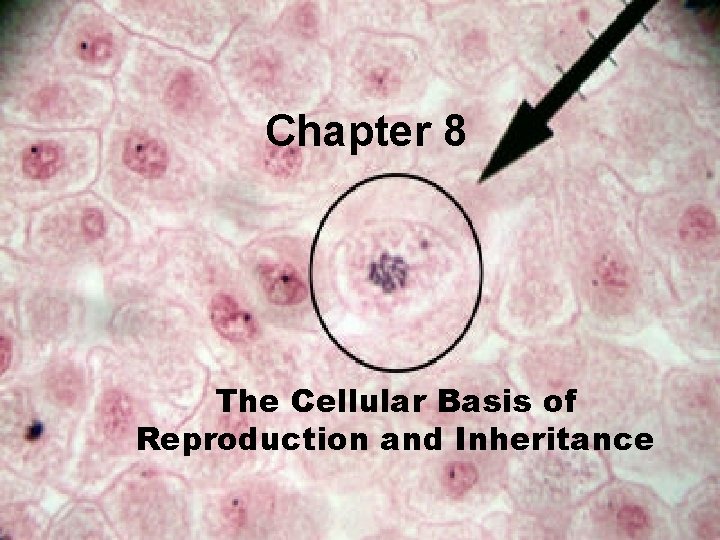
Chapter 8 The Cellular Basis of Reproduction and Inheritance
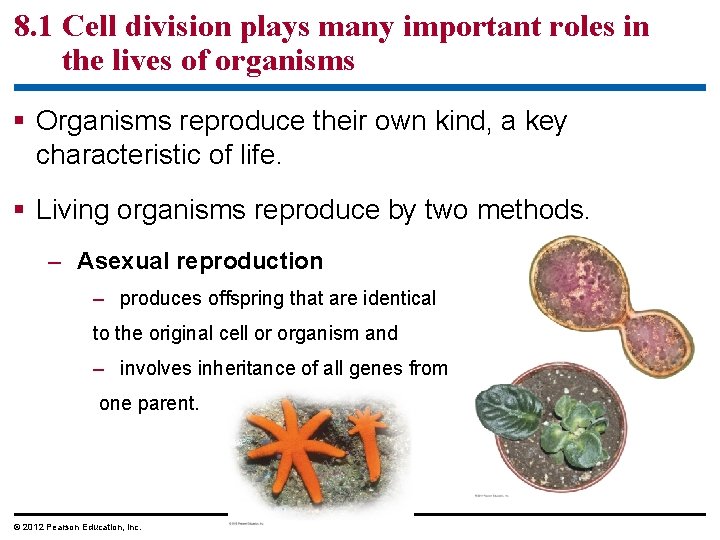
8. 1 Cell division plays many important roles in the lives of organisms § Organisms reproduce their own kind, a key characteristic of life. § Living organisms reproduce by two methods. – Asexual reproduction – produces offspring that are identical to the original cell or organism and – involves inheritance of all genes from one parent. © 2012 Pearson Education, Inc.
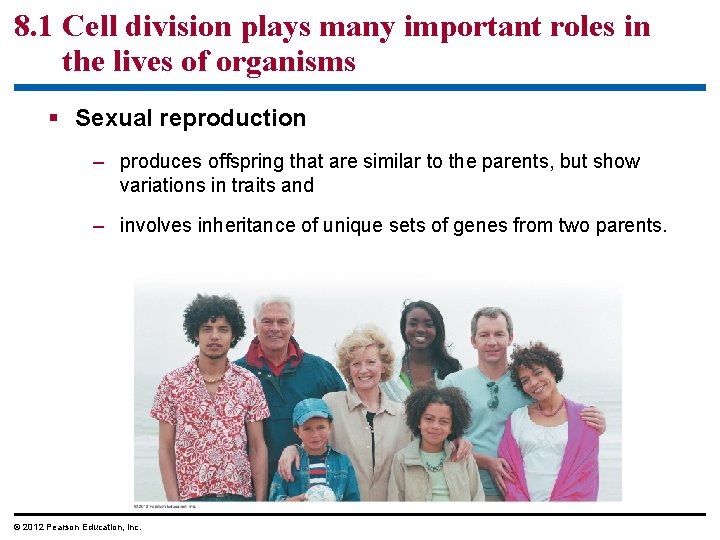
8. 1 Cell division plays many important roles in the lives of organisms § Sexual reproduction – produces offspring that are similar to the parents, but show variations in traits and – involves inheritance of unique sets of genes from two parents. © 2012 Pearson Education, Inc.
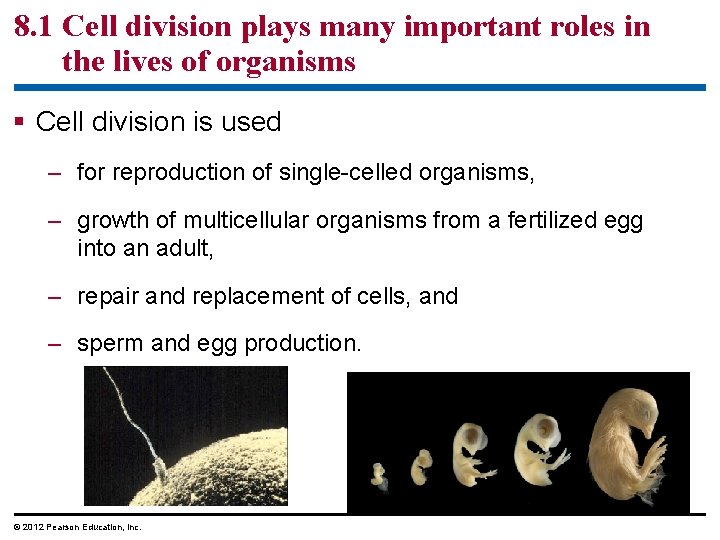
8. 1 Cell division plays many important roles in the lives of organisms § Cell division is used – for reproduction of single-celled organisms, – growth of multicellular organisms from a fertilized egg into an adult, – repair and replacement of cells, and – sperm and egg production. © 2012 Pearson Education, Inc.
Challenges to Making More Cells… 1. 2. 3.

8. 2 Prokaryotes reproduce by binary fission § Prokaryotes (bacteria and archaea) reproduce by binary fission (“dividing in half”).
8. 3 The large, complex chromosomes of eukaryotes duplicate with each cell division § Eukaryotic cells – are more complex and larger than prokaryotic cells, – have more genes, and – store most of their genes on multiple chromosomes within the nucleus. Eukaryotic chromosomes are composed of chromatin consisting of – one long DNA molecule and – proteins that help maintain the chromosome structure and control the activity of its genes. To prepare for division, the chromatin becomes – highly compact and – visible with a microscope.
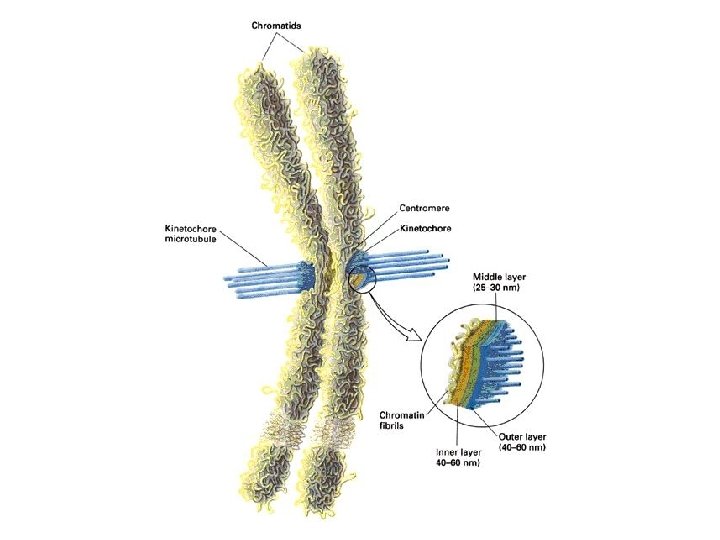
8. 3 The large, complex chromosomes of eukaryotes duplicate with each cell division § Before a eukaryotic cell begins to divide, it duplicates all of its chromosomes, resulting in – two copies called _____________ – joined together by a narrowed “waist” called the _____________. § When a cell divides, these 2 parts – separate from each other, now called chromosomes, and – sort into separate daughter cells. © 2012 Pearson Education, Inc.
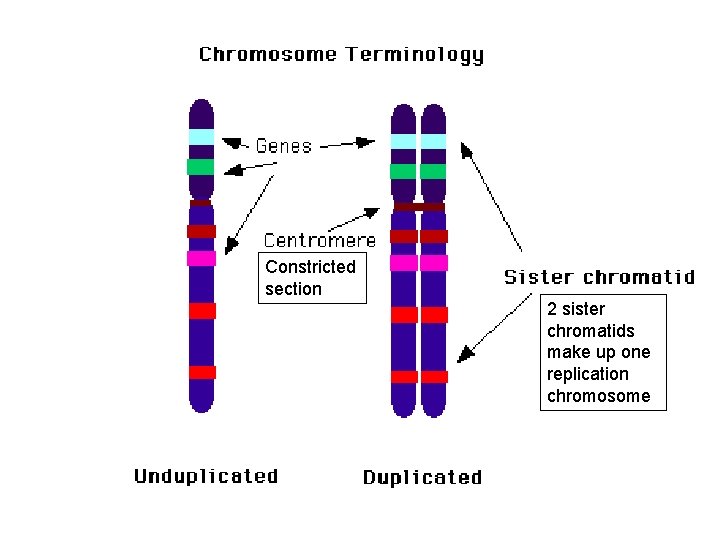
Constricted section 2 sister chromatids make up one replication chromosome
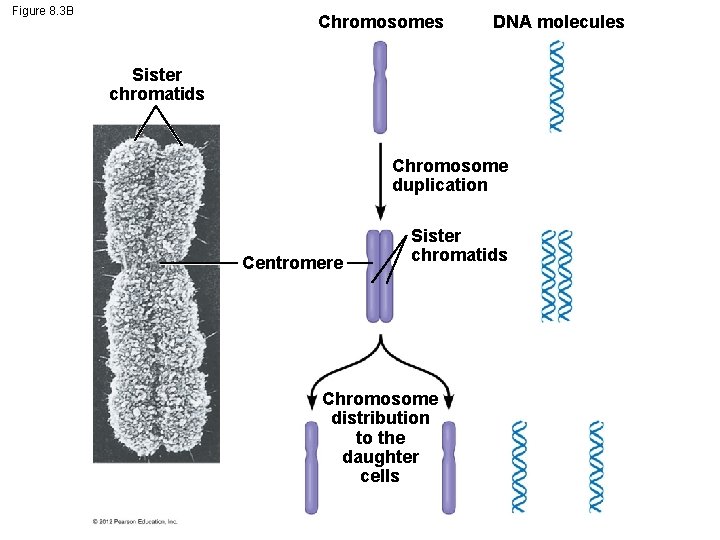
Figure 8. 3 B Chromosomes DNA molecules Sister chromatids Chromosome duplication Centromere Sister chromatids Chromosome distribution to the daughter cells
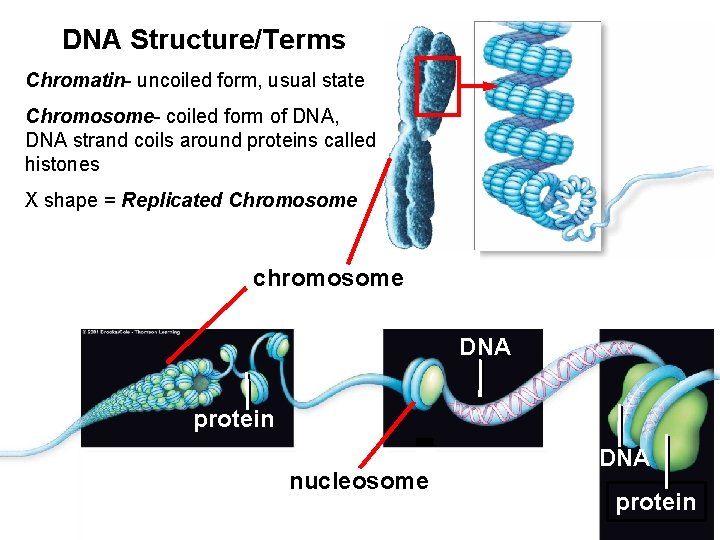
DNA Structure/Terms Chromatin- uncoiled form, usual state Chromosome- coiled form of DNA, DNA strand coils around proteins called histones X shape = Replicated Chromosome chromosome DNA protein nucleosome DNA protein
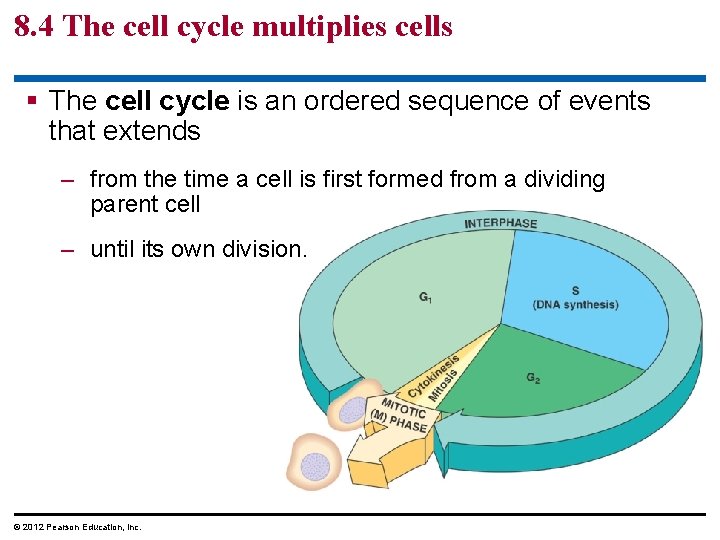
8. 4 The cell cycle multiplies cells § The cell cycle is an ordered sequence of events that extends – from the time a cell is first formed from a dividing parent cell – until its own division. © 2012 Pearson Education, Inc.
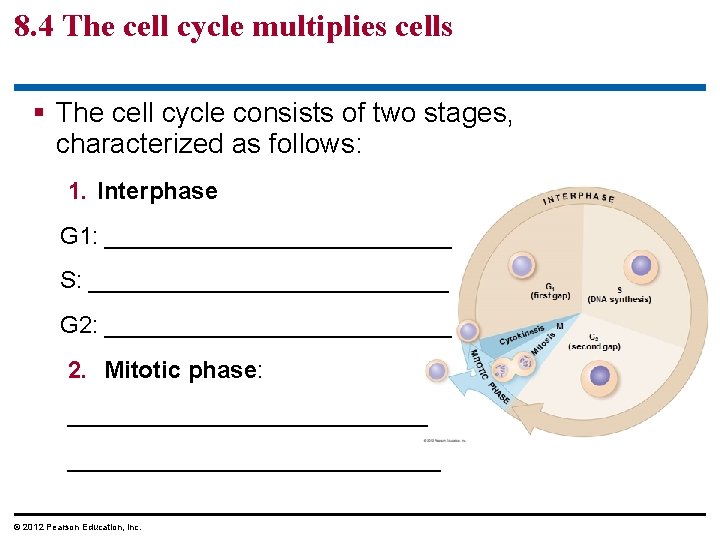
8. 4 The cell cycle multiplies cells § The cell cycle consists of two stages, characterized as follows: 1. Interphase G 1: _____________ S: ______________ G 2: _____________ 2. Mitotic phase: ____________________________ © 2012 Pearson Education, Inc.
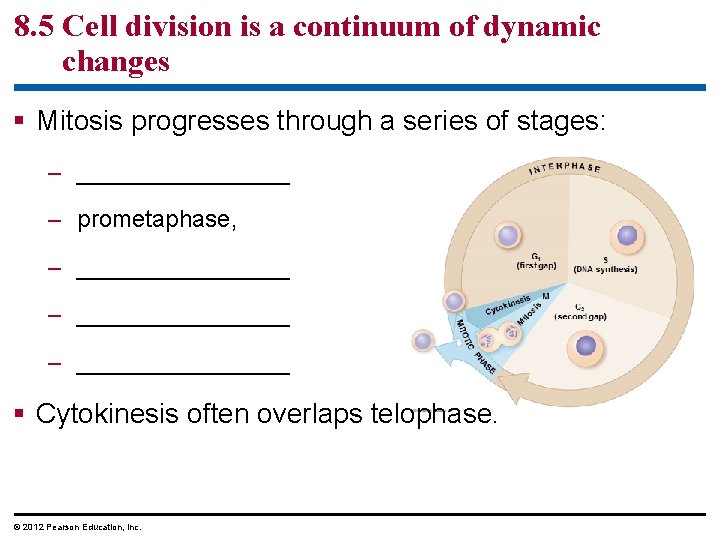
8. 5 Cell division is a continuum of dynamic changes § Mitosis progresses through a series of stages: – ________ – prometaphase, – ________________ – ________ § Cytokinesis often overlaps telophase. © 2012 Pearson Education, Inc.
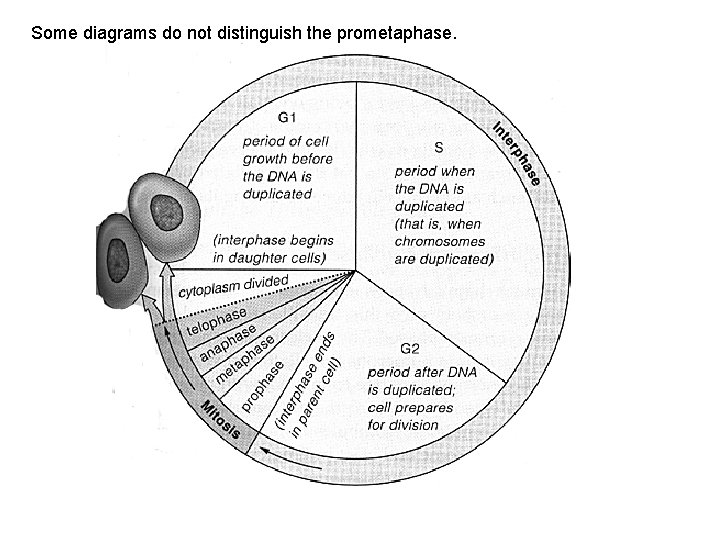
Some diagrams do not distinguish the prometaphase.
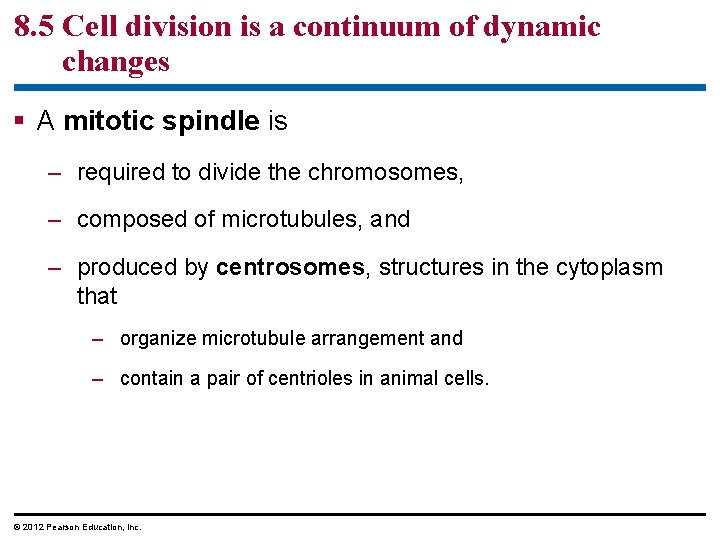
8. 5 Cell division is a continuum of dynamic changes § A mitotic spindle is – required to divide the chromosomes, – composed of microtubules, and – produced by centrosomes, structures in the cytoplasm that – organize microtubule arrangement and – contain a pair of centrioles in animal cells. © 2012 Pearson Education, Inc.
DRAW AND LABEL STAGES OF MITOSIS • Terms – Spindle fibers (mitotic spindle) – Centrosome (center of microtubule production) – Centrioles (paired organelles, organize centrosome) – Cell membrane – Nuclear membrane / Nuclear envelope – Nucleolus – Kinetochore (protein at centromere) (next slide…)
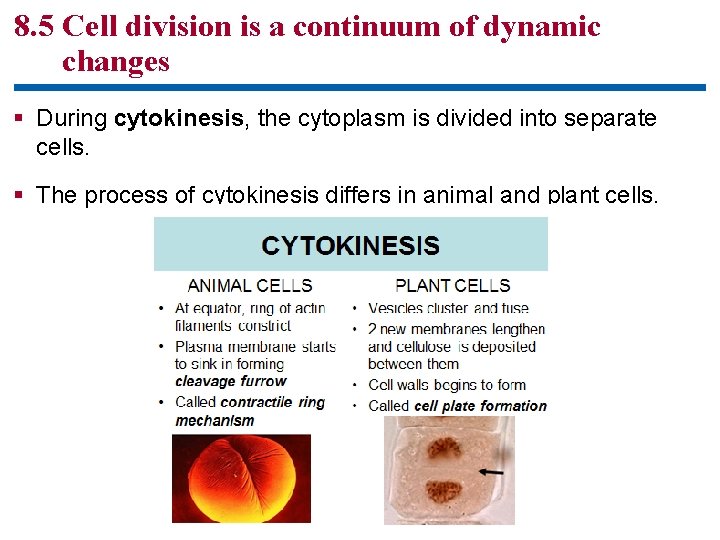
8. 5 Cell division is a continuum of dynamic changes § During cytokinesis, the cytoplasm is divided into separate cells. § The process of cytokinesis differs in animal and plant cells.
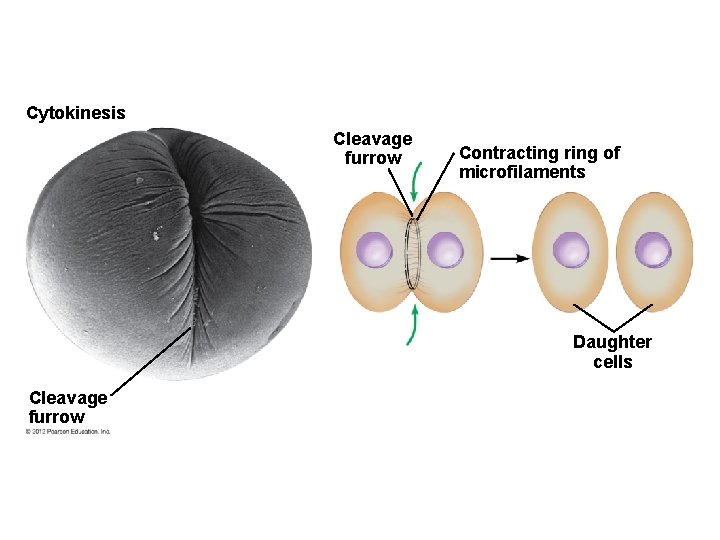
Cytokinesis Cleavage furrow Contracting ring of microfilaments Daughter cells Cleavage furrow
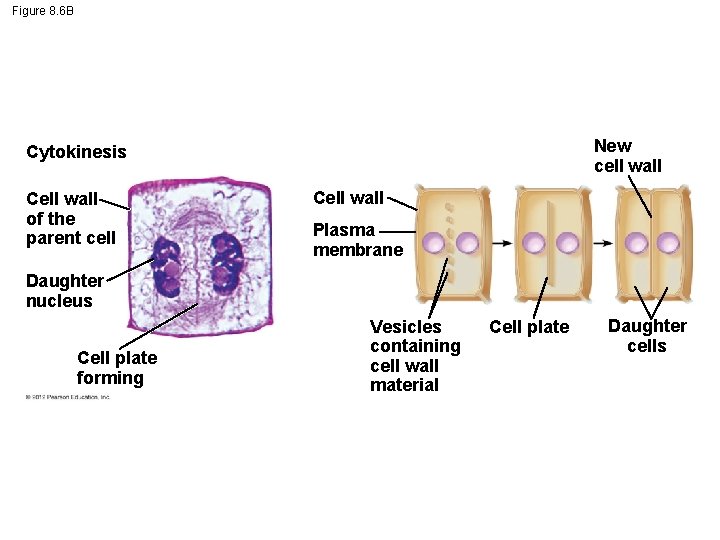
Figure 8. 6 B New cell wall Cytokinesis Cell wall of the parent cell Cell wall Plasma membrane Daughter nucleus Cell plate forming Vesicles containing cell wall material Cell plate Daughter cells
Cell Cycle Animation • http: //www. cellsalive. com/cell_cycle. htm • http: //highered. mcgrawhill. com/sites/0072495855/student_view 0/ chapter 2/animation__how_the_cell_cycle_ works. html
8. 7 Anchorage, cell density, and chemical growth factors affect cell division § The cells within an organism’s body divide and develop at different rates. § Cell division is controlled by – the presence of essential nutrients, – growth factors, proteins that stimulate division, – density-dependent inhibition, in which crowded cells stop dividing, and – anchorage dependence, the need for cells to be in contact with a solid surface to divide. © 2012 Pearson Education, Inc.
Rate of Cell Division • Differs from one cell type to the next – Examples: • red bone marrow cells divide every 12 hours to replace RBCs that wear out • Cells at tip of root divide about every 19 hours. • Neurons (nerve cells) normally never divide again once brain is fully formed in utero • Control of Division, lost = CANCER – – Lack of control over cell division Abnormal, uncontrolled cell division Mutation in genes that target and control abnormal cells. Abnormal cells impede functioning of normal cells
8. 8 Growth factors signal the cell cycle control system § The cell cycle control system is a cycling set of molecules in the cell that – triggers and – coordinates key events in the cell cycle. § Checkpoints in the cell cycle can – stop an event or – signal an event to proceed. © 2012 Pearson Education, Inc.
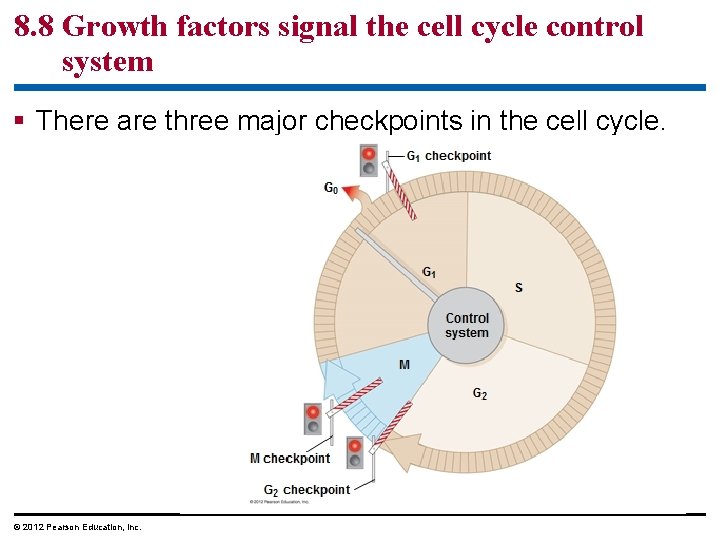
8. 8 Growth factors signal the cell cycle control system § There are three major checkpoints in the cell cycle. © 2012 Pearson Education, Inc.
8. 9 CONNECTION: Growing out of control, cancer cells produce malignant tumors § Cancer currently claims the lives of 20% of the people in the United States and other industrialized nations. § Cancer cells escape controls on the cell cycle. § Cancer cells – divide rapidly, often in the absence of growth factors, – spread to other tissues through the circulatory system, and – grow without being inhibited by other cells. © 2012 Pearson Education, Inc.
8. 9 CONNECTION: Growing out of control, cancer cells produce malignant tumors § A tumor is any abnormally growing mass of body cells. – Benign tumors remain at the original site. – Malignant tumors spread to other locations, called metastasis. © 2012 Pearson Education, Inc.
8. 9 CONNECTION: Growing out of control, cancer cells produce malignant tumors § Cancers are named according to the organ or tissue in which they originate. – Carcinomas arise in external or internal body coverings. – Sarcomas arise in supportive and connective tissue. – Leukemias and lymphomas arise from blood-forming tissues. © 2012 Pearson Education, Inc.
8. 9 CONNECTION: Growing out of control, cancer cells produce malignant tumors § Cancer treatments – Localized tumors can be – removed surgically and/or – treated with concentrated beams of high-energy radiation. – Chemotherapy is used for metastatic tumors. © 2012 Pearson Education, Inc.
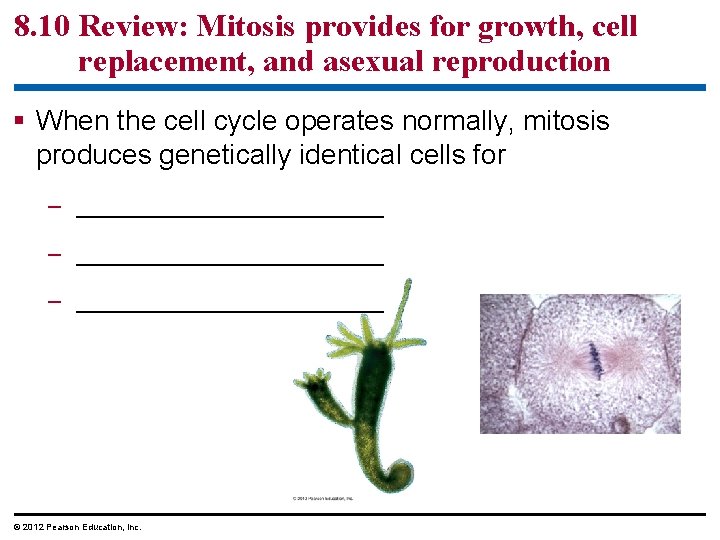
8. 10 Review: Mitosis provides for growth, cell replacement, and asexual reproduction § When the cell cycle operates normally, mitosis produces genetically identical cells for – _______________________ – ____________ © 2012 Pearson Education, Inc.
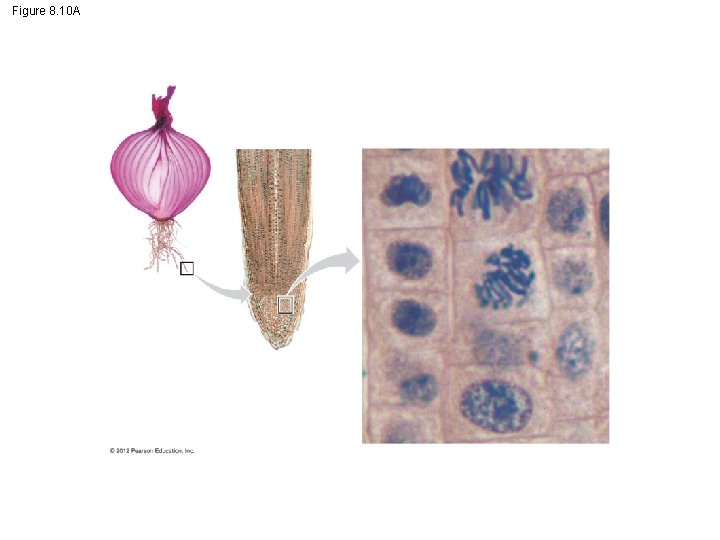
Figure 8. 10 A
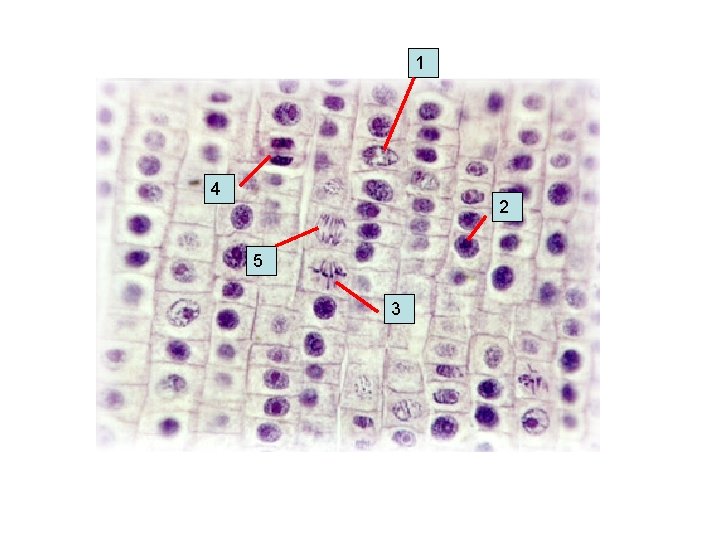
1 4 2 5 3
Good Animations of Mitosis http: //science. nhmccd. edu/biol/bio 1 int. htm this is address for a collection of animations listed by topic • http: //www. loci. wisc. edu/outreach/bioclips/ CDBio. html (with music ) • http: //highered. mcgrawhill. com/sites/0072437316/student_view 0/ chapter 11/animations. html# (keep in mind that although cell appears square it is in fact an animal cell, as determined by presence of centrioles and cleavage furrow)
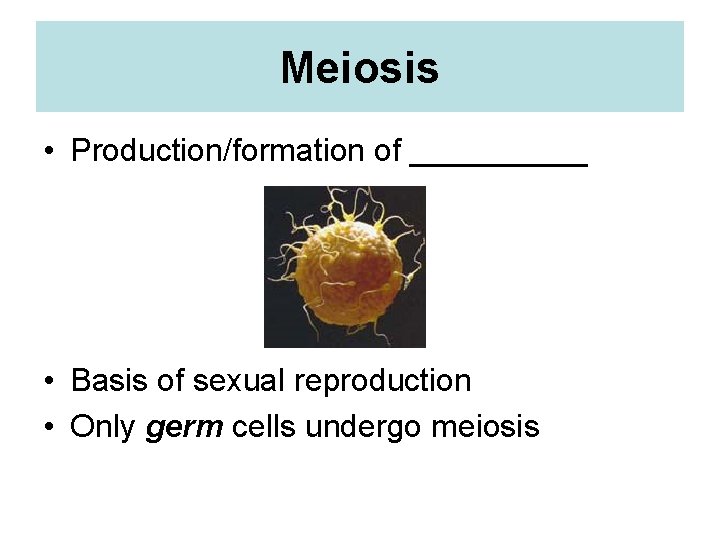
Meiosis • Production/formation of _____ • Basis of sexual reproduction • Only germ cells undergo meiosis
8. 11 Chromosomes are matched in homologous pairs § In humans, somatic cells have – 23 pairs of homologous chromosomes and – one member of each pair from each parent. § The human sex chromosomes X and Y differ in size and genetic composition. § The other 22 pairs of chromosomes are called _______. One chromosome from each pair was inherited from each parent. © 2012 Pearson Education, Inc.
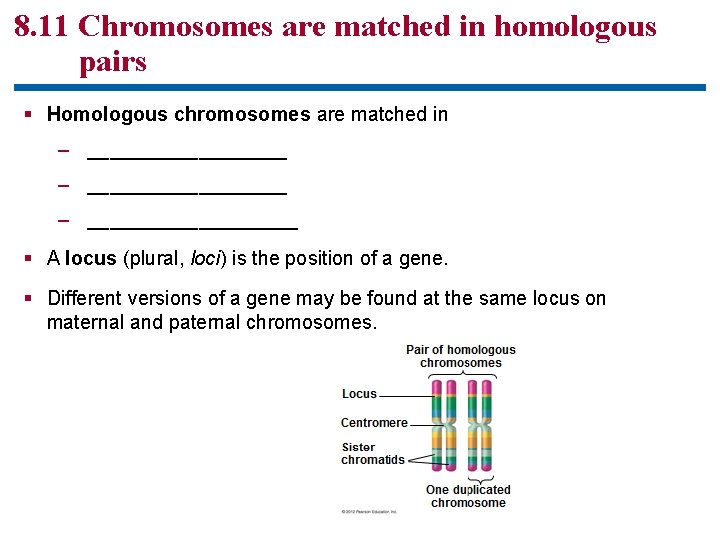
8. 11 Chromosomes are matched in homologous pairs § Homologous chromosomes are matched in – __________________ – __________ § A locus (plural, loci) is the position of a gene. § Different versions of a gene may be found at the same locus on maternal and paternal chromosomes.
8. 12 Gametes have a single set of chromosomes § An organism’s life cycle is the sequence of stages leading – from the adults of one generation – to the adults of the next. § Humans and many animals and plants are ______, with body cells that have – two sets of chromosomes, – one from each parent. © 2012 Pearson Education, Inc.
8. 12 Gametes have a single set of chromosomes § Meiosis is a process that converts diploid nuclei to haploid nuclei. – Diploid cells-________________ – Haploid cells- ________________ § Meiosis occurs in the sex organs, producing gametes—sperm and eggs. § _______ is the union of sperm and egg. § The ______ has a diploid chromosome number, one set from each parent. © 2012 Pearson Education, Inc.
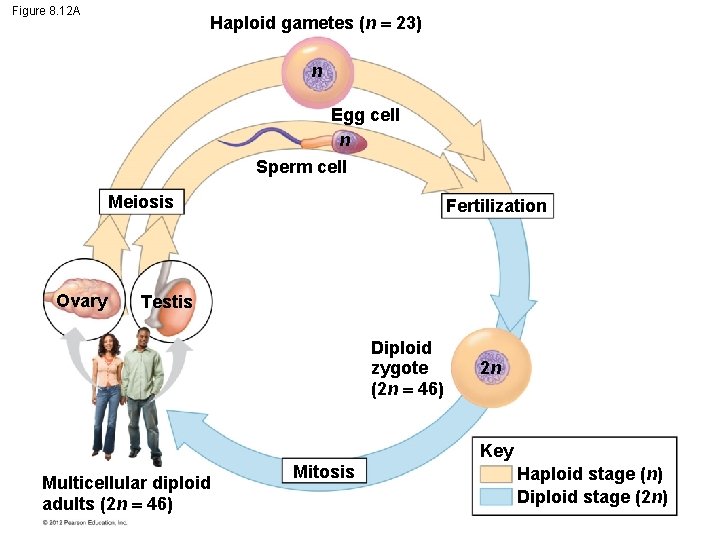
Figure 8. 12 A Haploid gametes (n 23) n Egg cell n Sperm cell Meiosis Ovary Fertilization Testis Diploid zygote (2 n 46) 2 n Key Multicellular diploid adults (2 n 46) Mitosis Haploid stage (n) Diploid stage (2 n)
8. 12 Gametes have a single set of chromosomes § All sexual life cycles include an alternation between – a diploid stage and – a haploid stage. § Producing haploid gametes prevents the chromosome number from doubling in every generation. © 2012 Pearson Education, Inc.
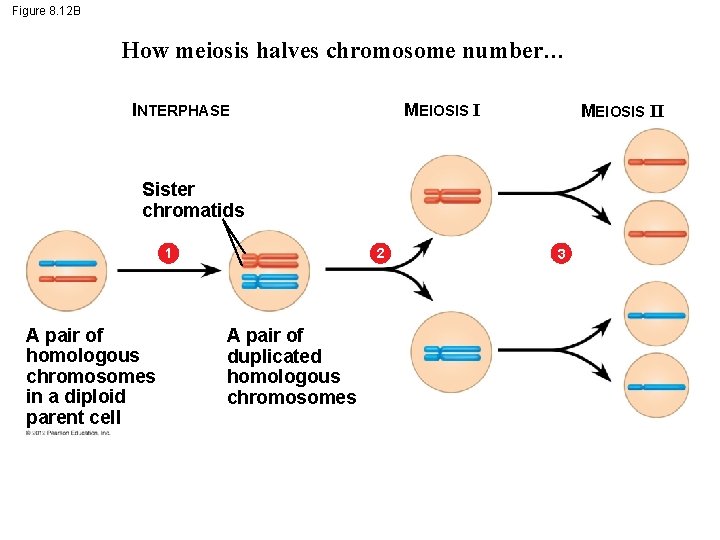
Figure 8. 12 B How meiosis halves chromosome number… MEIOSIS I INTERPHASE MEIOSIS II Sister chromatids 2 1 A pair of homologous chromosomes in a diploid parent cell A pair of duplicated homologous chromosomes 3
8. 13 Meiosis reduces the chromosome number from diploid to haploid § Meiosis is a type of cell division that produces haploid gametes in diploid organisms. § Meiosis has two consecutive cell divisions. One duplication of chromosomes is followed by two divisions, producing four daughter cells with a haploid set of chromosomes. § Two haploid gametes produced by meiosis can combine in fertilization to restore the diploid state in the zygote. © 2012 Pearson Education, Inc.
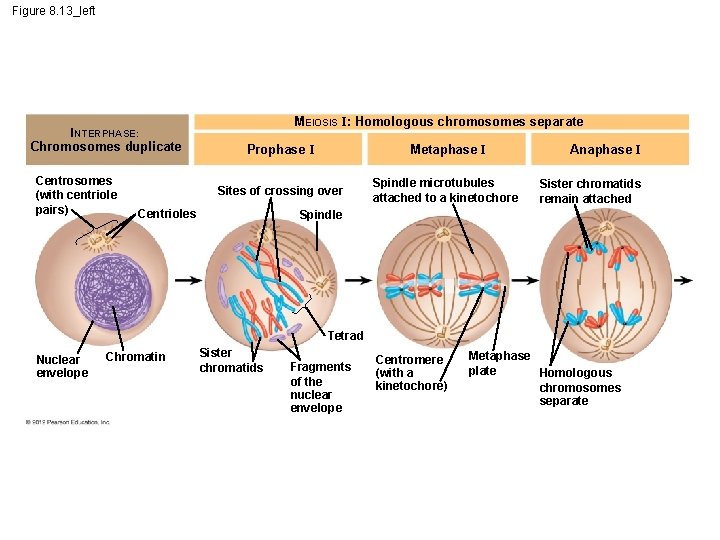
Figure 8. 13_left MEIOSIS I: Homologous chromosomes separate INTERPHASE: Chromosomes duplicate Centrosomes (with centriole pairs) Prophase I Metaphase I Sites of crossing over Spindle microtubules attached to a kinetochore Centrioles Anaphase I Sister chromatids remain attached Spindle Tetrad Nuclear envelope Chromatin Sister chromatids Fragments of the nuclear envelope Centromere (with a kinetochore) Metaphase plate Homologous chromosomes separate
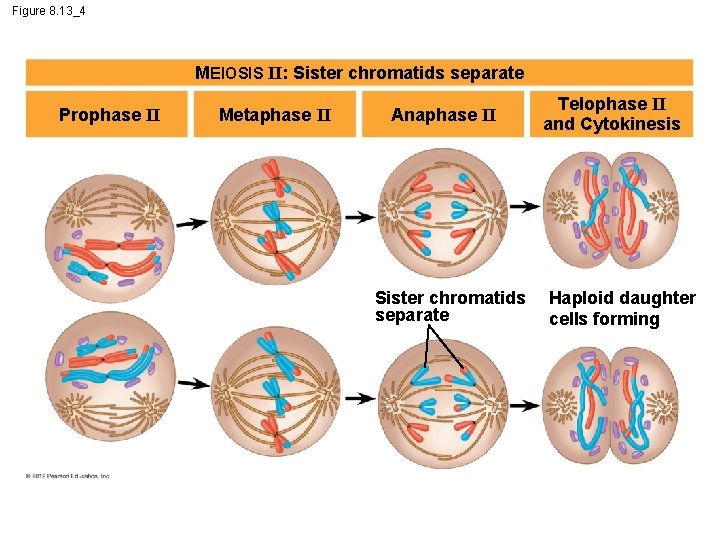
Figure 8. 13_4 MEIOSIS II: Sister chromatids separate Prophase II Metaphase II Anaphase II Sister chromatids separate Telophase II and Cytokinesis Haploid daughter cells forming
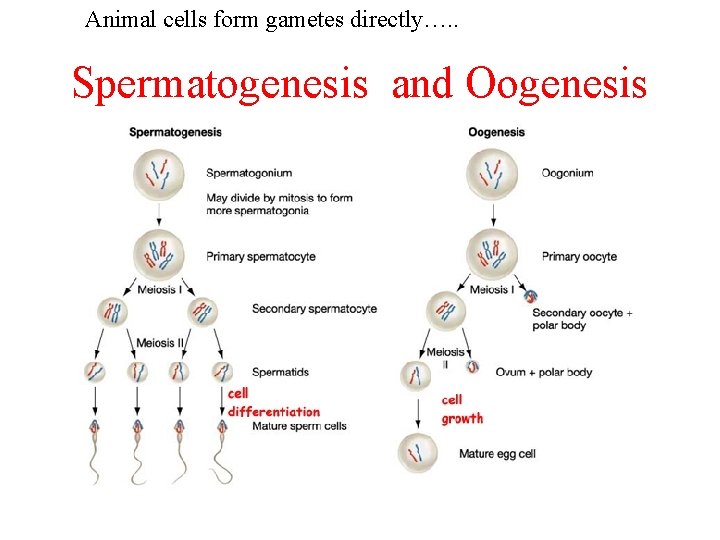
Animal cells form gametes directly…. . Spermatogenesis and Oogenesis
8. 14 Mitosis and meiosis have important similarities and differences § Mitosis and meiosis both – begin with diploid parent cells that – have chromosomes duplicated during the previous interphase. § However the end products differ. – Mitosis produces two genetically identical diploid somatic daughter cells. – Meiosis produces four genetically unique haploid gametes. © 2012 Pearson Education, Inc.
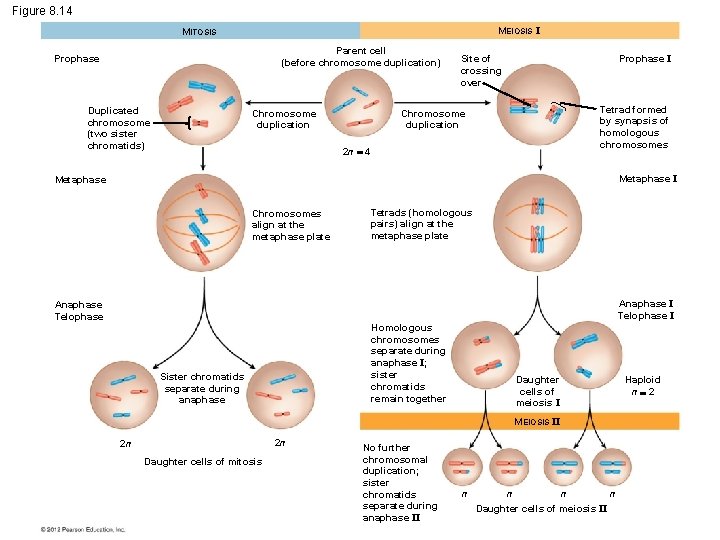
Figure 8. 14 MEIOSIS I MITOSIS Parent cell (before chromosome duplication) Prophase Duplicated chromosome (two sister chromatids) Chromosome duplication Site of crossing over Prophase I Tetrad formed by synapsis of homologous chromosomes Chromosome duplication 2 n 4 Metaphase I Metaphase Chromosomes align at the metaphase plate Tetrads (homologous pairs) align at the metaphase plate Anaphase I Telophase I Anaphase Telophase Homologous chromosomes separate during anaphase I; sister chromatids remain together Sister chromatids separate during anaphase Daughter cells of meiosis I MEIOSIS II 2 n 2 n Daughter cells of mitosis No further chromosomal duplication; sister chromatids separate during anaphase II n n Daughter cells of meiosis II Haploid n 2
8. 15 Independent orientation of chromosomes in meiosis and random fertilization lead to varied offspring § Genetic variation in gametes results from – ____________________________________ – __________________. © 2012 Pearson Education, Inc.
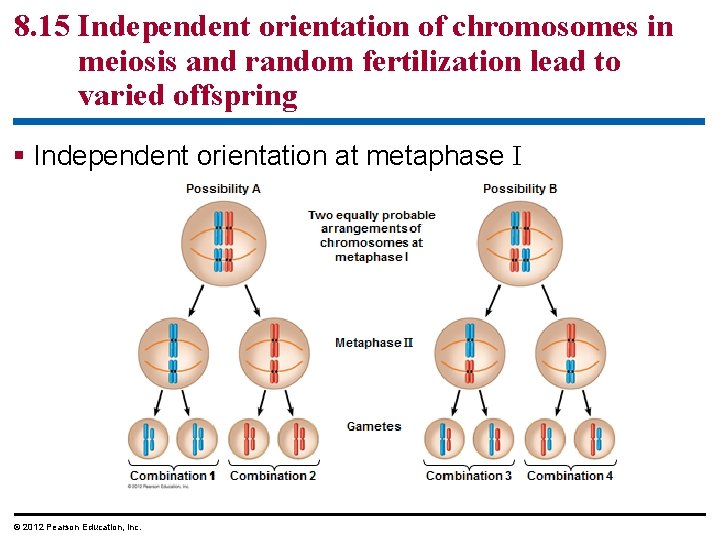
8. 15 Independent orientation of chromosomes in meiosis and random fertilization lead to varied offspring § Independent orientation at metaphase I © 2012 Pearson Education, Inc.
8. 15 Independent orientation of chromosomes in meiosis and random fertilization lead to varied offspring § Random fertilization – The combination of each unique sperm with each unique egg increases genetic variability. § Crossing Over in prophase I also produces varied offspring. © 2012 Pearson Education, Inc.
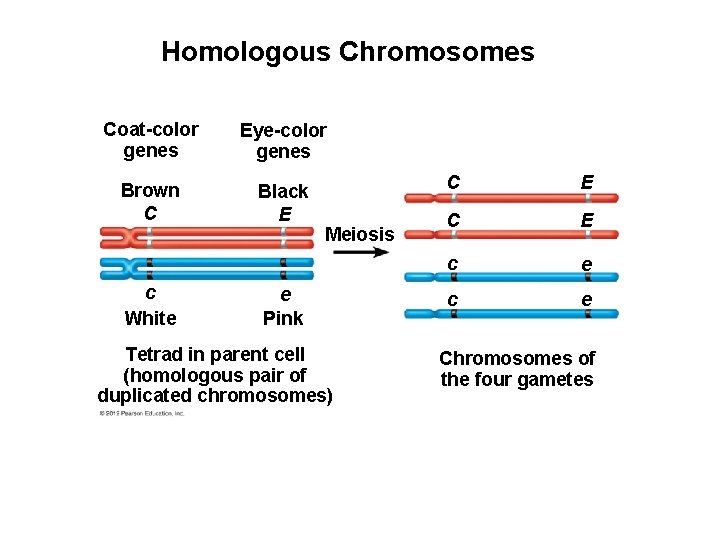
Homologous Chromosomes Coat-color genes Eye-color genes Brown C Black E c White Meiosis e Pink Tetrad in parent cell (homologous pair of duplicated chromosomes) C E c e Chromosomes of the four gametes
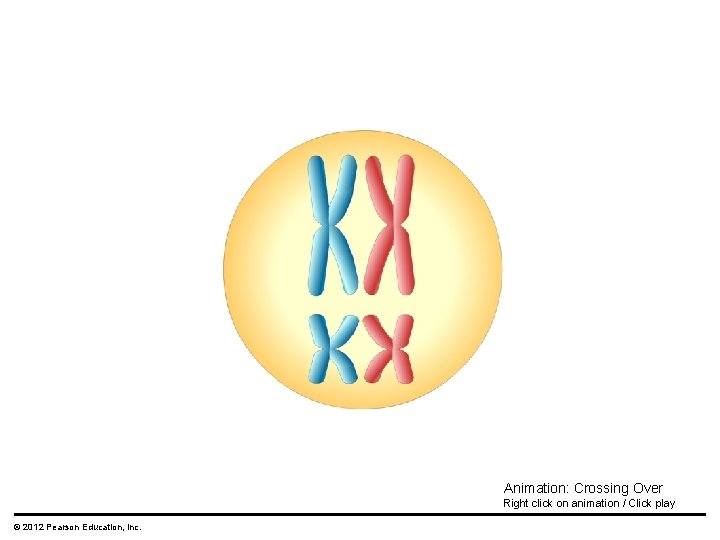
Animation: Crossing Over Right click on animation / Click play © 2012 Pearson Education, Inc.
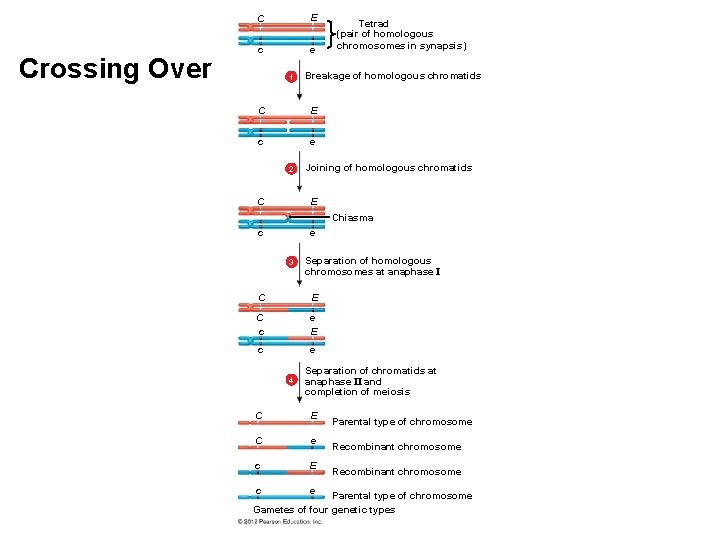
Crossing Over C E c e 1 Breakage of homologous chromatids C E c e 2 Tetrad (pair of homologous chromosomes in synapsis) Joining of homologous chromatids E C Chiasma c e 3 Separation of homologous chromosomes at anaphase I C E C c e E c e 4 Separation of chromatids at anaphase II and completion of meiosis C E C e c E c e Parental type of chromosome Recombinant chromosome Parental type of chromosome Gametes of four genetic types
8. 18 A karyotype is a photographic inventory of an individual’s chromosomes § A karyotype is an ordered display of magnified images of an individual’s chromosomes arranged in pairs. § Karyotypes – are often produced from dividing cells arrested at metaphase of mitosis and – allow for the observation of – homologous chromosome pairs, – chromosome number, and – chromosome structure. © 2012 Pearson Education, Inc.
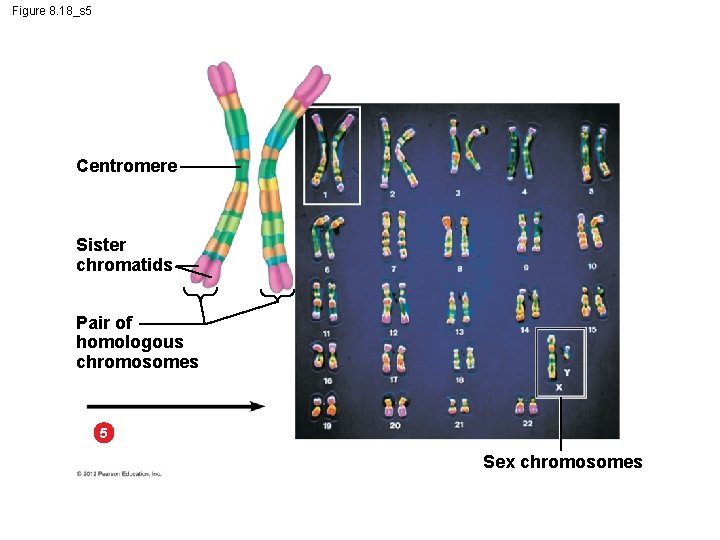
Figure 8. 18_s 5 Centromere Sister chromatids Pair of homologous chromosomes 5 Sex chromosomes
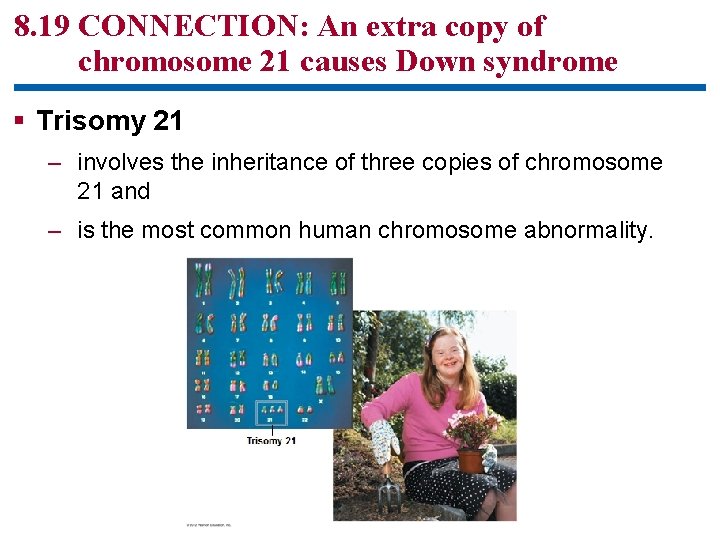
8. 19 CONNECTION: An extra copy of chromosome 21 causes Down syndrome § Trisomy 21 – involves the inheritance of three copies of chromosome 21 and – is the most common human chromosome abnormality.
8. 20 Accidents during meiosis can alter chromosome number § Nondisjunction is the failure of chromosomes or chromatids to separate normally during meiosis. This can happen during – meiosis I, if both members of a homologous pair go to one pole or – meiosis II if both sister chromatids go to one pole. § Fertilization after nondisjunction yields zygotes with altered numbers of chromosomes. © 2012 Pearson Education, Inc.
8. 20 Accidents during meiosis can alter chromosome number § Nondisjunction is the failure of chromosomes or chromatids to separate normally during meiosis. This can happen during – meiosis I, if both members of a homologous pair go to one pole or – meiosis II if both sister chromatids go to one pole. § Fertilization after nondisjunction yields zygotes with altered numbers of chromosomes. © 2012 Pearson Education, Inc.
8. 21 CONNECTION: Abnormal numbers of sex chromosomes do not usually affect survival § Sex chromosome abnormalities tend to be less severe, perhaps because of – the small size of the Y chromosome or – X-chromosome inactivation. © 2012 Pearson Education, Inc.
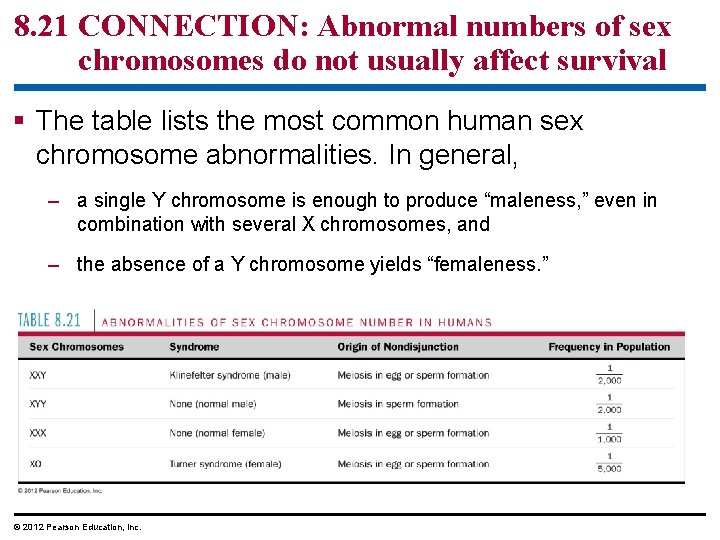
8. 21 CONNECTION: Abnormal numbers of sex chromosomes do not usually affect survival § The table lists the most common human sex chromosome abnormalities. In general, – a single Y chromosome is enough to produce “maleness, ” even in combination with several X chromosomes, and – the absence of a Y chromosome yields “femaleness. ” © 2012 Pearson Education, Inc.
8. 22 EVOLUTION CONNECTION: New species can arise from errors in cell division § Errors in mitosis or meiosis may produce polyploid species, with more than two chromosome sets. § The formation of polyploid species is – widely observed in many plant species but – less frequently found in animals. © 2012 Pearson Education, Inc.
8. 23 CONNECTION: Alterations of chromosome structure can cause birth defects and cancer § Chromosome breakage can lead to rearrangements that can produce – genetic disorders or, – if changes occur in somatic cells, cancer. § These rearrangements may include – a deletion, the loss of a chromosome segment, – a duplication, the repeat of a chromosome segment, – an inversion, the reversal of a chromosome segment, or – a translocation, the attachment of a segment to a nonhomologous chromosome that can be reciprocal © 2012 Pearson Education, Inc.
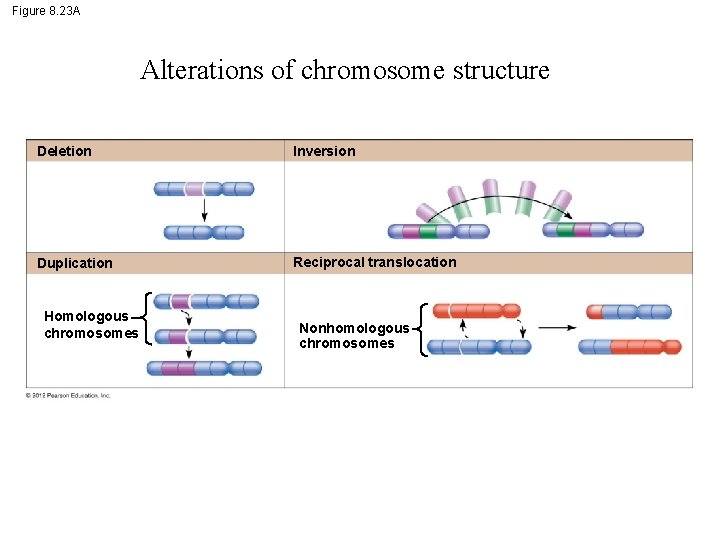
Figure 8. 23 A Alterations of chromosome structure Deletion Inversion Duplication Reciprocal translocation Homologous chromosomes Nonhomologous chromosomes
8. 23 CONNECTION: Alterations of chromosome structure can cause birth defects and cancer § Example. Chronic myelogenous leukemia (CML) – is one of the most common leukemias, – affects cells that give rise to white blood cells (leukocytes), and – results from part of chromosome 22 switching places with a small fragment from a tip of chromosome 9. © 2012 Pearson Education, Inc.
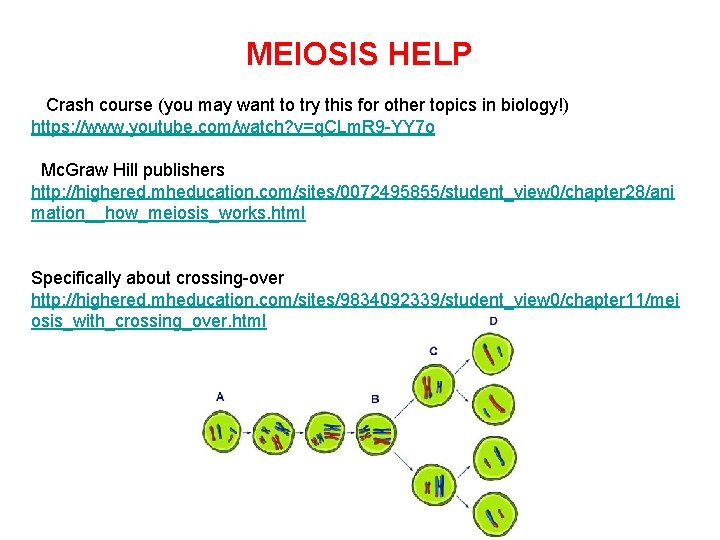
MEIOSIS HELP Crash course (you may want to try this for other topics in biology!) https: //www. youtube. com/watch? v=q. CLm. R 9 -YY 7 o Mc. Graw Hill publishers http: //highered. mheducation. com/sites/0072495855/student_view 0/chapter 28/ani mation__how_meiosis_works. html Specifically about crossing-over http: //highered. mheducation. com/sites/9834092339/student_view 0/chapter 11/mei osis_with_crossing_over. html
You should now be able to 1. Compare the parent-offspring relationship in asexual and sexual reproduction. 2. Explain why cell division is essential for prokaryotic and eukaryotic life. 3. Explain how daughter prokaryotic chromosomes are separated from each other during binary fission. 4. Compare the structure of prokaryotic and eukaryotic chromosomes. 5. Describe the stages of the cell cycle. © 2012 Pearson Education, Inc.
You should now be able to 6. List the phases of mitosis and describe the events characteristic of each phase. 7. Compare cytokinesis in animal and plant cells. 8. Explain how anchorage, cell density, and chemical growth factors control cell division. 9. Explain how cancerous cells are different from healthy cells. 10. Describe the functions of mitosis. 11. Explain how chromosomes are paired. 12. Distinguish between somatic cells and gametes and between diploid cells and haploid cells. © 2012 Pearson Education, Inc.
You should now be able to 13. Explain why sexual reproduction requires meiosis. 14. Describe the differences in oogenesis and spermatogenesis. 15. List the phases of meiosis I and meiosis II and describe the events characteristic of each phase. 16. Compare mitosis and meiosis noting similarities and differences. 17. Explain how genetic variation is produced in sexually reproducing organisms. 18. Explain how and why karyotyping is performed.
You should now be able to 19. Describe the causes and symptoms of Down syndrome 20. Describe the consequences of abnormal numbers of sex chromosomes. 21. Define nondisjunction, explain how it can occur, and describe what can result. 22. Explain how new species form from errors in cell division. 23. Describe the main types of chromosomal changes. Explain why cancer is not usually inherited. © 2012 Pearson Education, Inc.
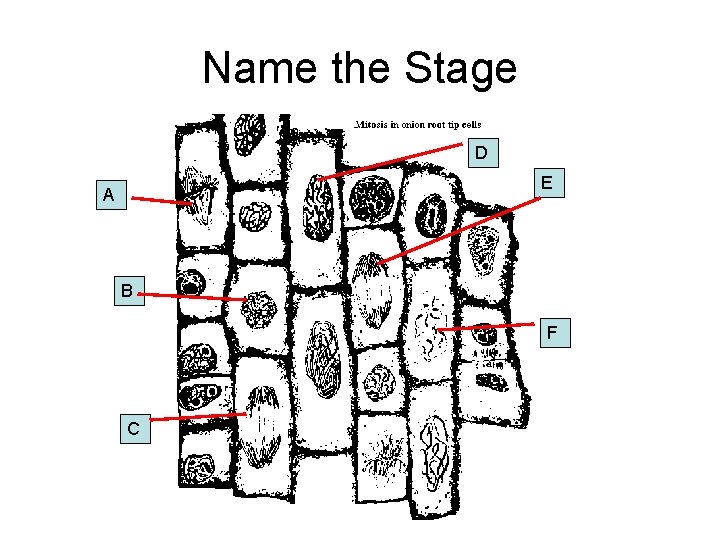
Name the Stage D E A B F C
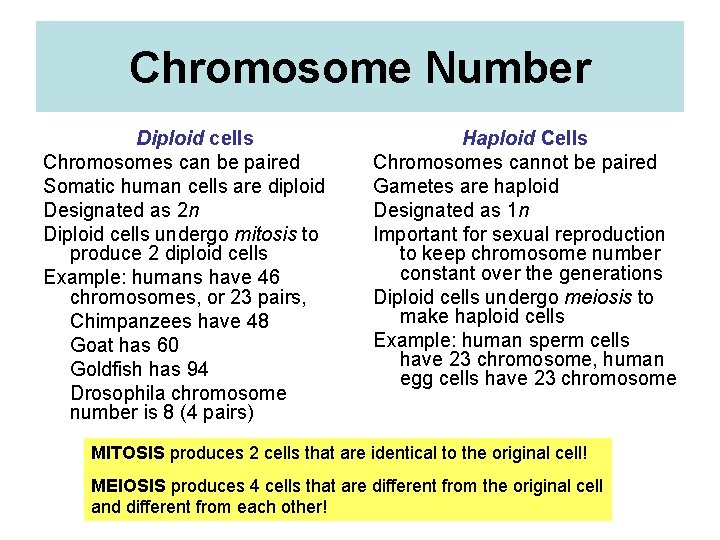
Chromosome Number Diploid cells Chromosomes can be paired Somatic human cells are diploid Designated as 2 n Diploid cells undergo mitosis to produce 2 diploid cells Example: humans have 46 chromosomes, or 23 pairs, Chimpanzees have 48 Goat has 60 Goldfish has 94 Drosophila chromosome number is 8 (4 pairs) Haploid Cells Chromosomes cannot be paired Gametes are haploid Designated as 1 n Important for sexual reproduction to keep chromosome number constant over the generations Diploid cells undergo meiosis to make haploid cells Example: human sperm cells have 23 chromosome, human egg cells have 23 chromosome MITOSIS produces 2 cells that are identical to the original cell! MEIOSIS produces 4 cells that are different from the original cell and different from each other!
- Slides: 72