
Chapter 8 The Cell Cycle Copyright 2005 Pearson
- Slides: 51
Chapter 8 The Cell Cycle Copyright © 2005 Pearson Education, Inc. publishing as Benjamin Cummings
The Life of a Eukaryotic Cell • The ability of organisms to reproduce best distinguishes living things from nonliving matter • The continuity of life is based upon the reproduction of cells, or cell division Copyright © 2005 Pearson Education, Inc. publishing as Benjamin Cummings
Copyright © 2005 Pearson Education, Inc. publishing as Benjamin Cummings
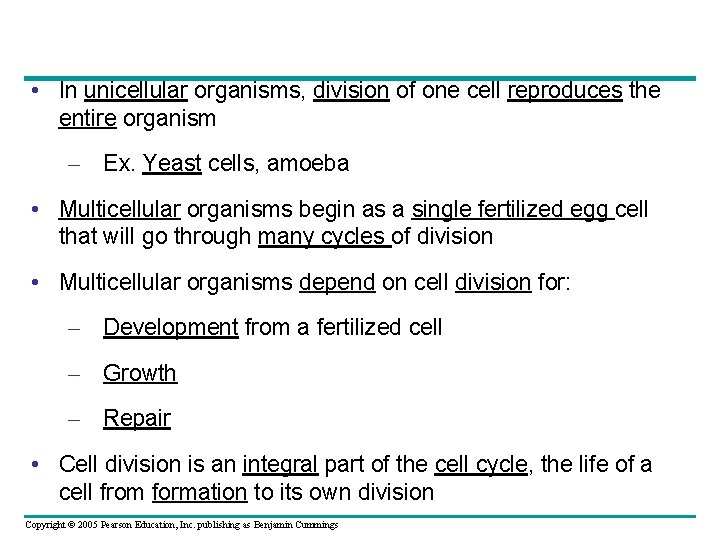
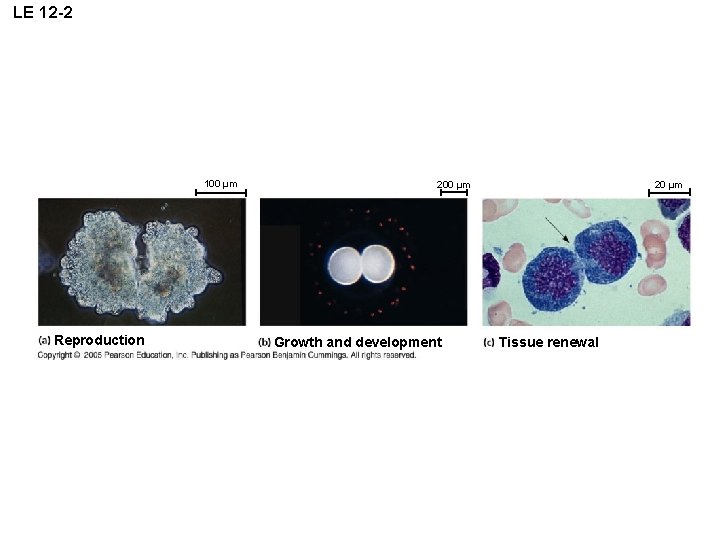
• In unicellular organisms, division of one cell reproduces the entire organism – Ex. Yeast cells, amoeba • Multicellular organisms begin as a single fertilized egg cell that will go through many cycles of division • Multicellular organisms depend on cell division for: – Development from a fertilized cell – Growth – Repair • Cell division is an integral part of the cell cycle, the life of a cell from formation to its own division Copyright © 2005 Pearson Education, Inc. publishing as Benjamin Cummings
LE 12 -2 100 µm Reproduction 200 µm Growth and development 20 µm Tissue renewal
Cell division results in genetically identical daughter cells • Cells duplicate their genetic material before they divide, ensuring that each daughter cell receives an exact copy of the genetic material, DNA • A dividing cell duplicates its DNA, allocates the two copies to opposite ends of the cell, and only then splits into daughter cells Copyright © 2005 Pearson Education, Inc. publishing as Benjamin Cummings
Chromosomes: Cellular Organization of the Genetic Material • A cell’s endowment of DNA (its genetic information) is called its genome • DNA molecules in a cell are packaged into chromosomes Copyright © 2005 Pearson Education, Inc. publishing as Benjamin Cummings
• Every eukaryotic species has a characteristic number of chromosomes in each cell nucleus • Ex. Human ……. 46 • Alligator…… 32 • Amoeba ……. 50 • Corn………… 20 Copyright © 2005 Pearson Education, Inc. publishing as Benjamin Cummings
• Somatic (nonreproductive, also called autosomal) cells have two complete sets of chromosomes • Gametes (reproductive cells: sperm and eggs) have half as many chromosomes as somatic cells (one complete set) Copyright © 2005 Pearson Education, Inc. publishing as Benjamin Cummings
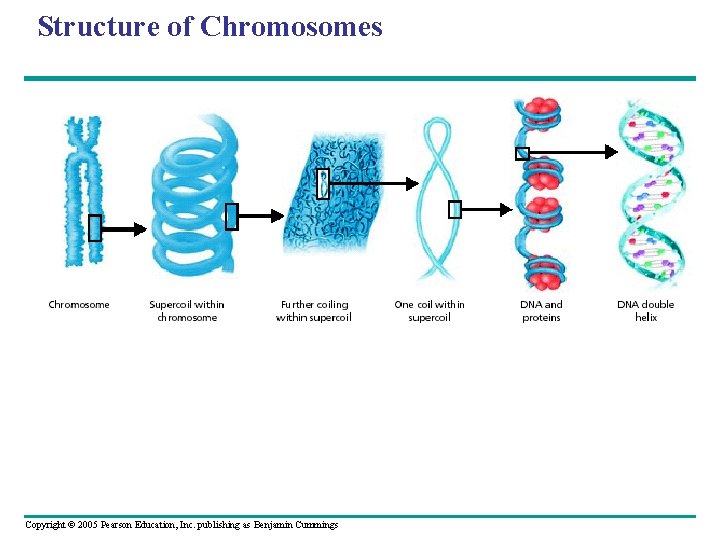
Chromosomes • Eukaryotic chromosomes consist of chromatin, a complex of DNA and protein (histones) that condenses during cell division • Bacteria typically contain one single circular chromosome • When cell prepare to divide: • Chromatin chromosomes • Does this by: 1. chromatin duplicates ( DNA replication) creating a complete second copy of the DNA strand 2. strands begin to coil tightly until a rod shaped chromatid is formed Copyright © 2005 Pearson Education, Inc. publishing as Benjamin Cummings
Structure of Chromosomes Copyright © 2005 Pearson Education, Inc. publishing as Benjamin Cummings
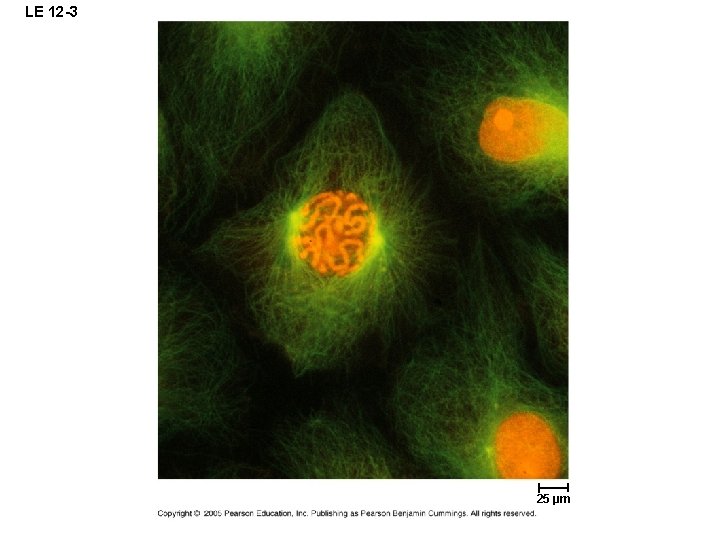
LE 12 -3 25 µm
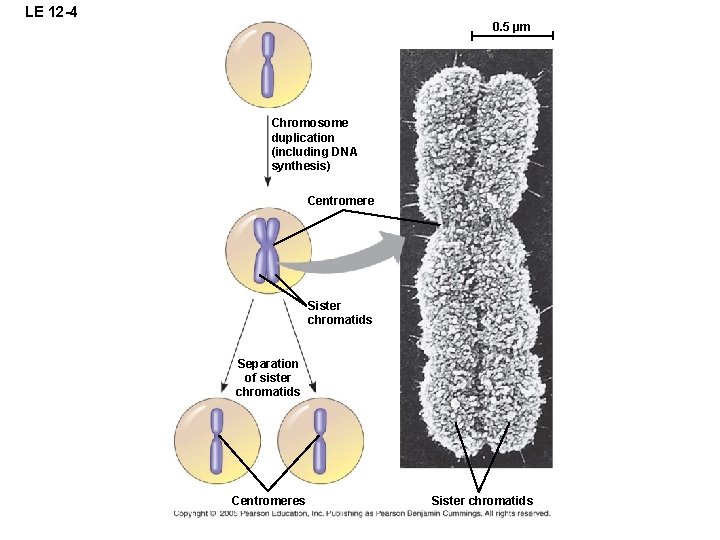
Distribution of Chromosomes During Cell Division • In preparation for cell division, DNA is replicated and the chromosomes condense • Each duplicated chromosome has two sister chromatids, which separate during cell division • The centromere is the narrow “waist” of the duplicated chromosome, where the two chromatids are most closely attached Copyright © 2005 Pearson Education, Inc. publishing as Benjamin Cummings
LE 12 -4 0. 5 µm Chromosome duplication (including DNA synthesis) Centromere Sister chromatids Separation of sister chromatids Centromeres Sister chromatids
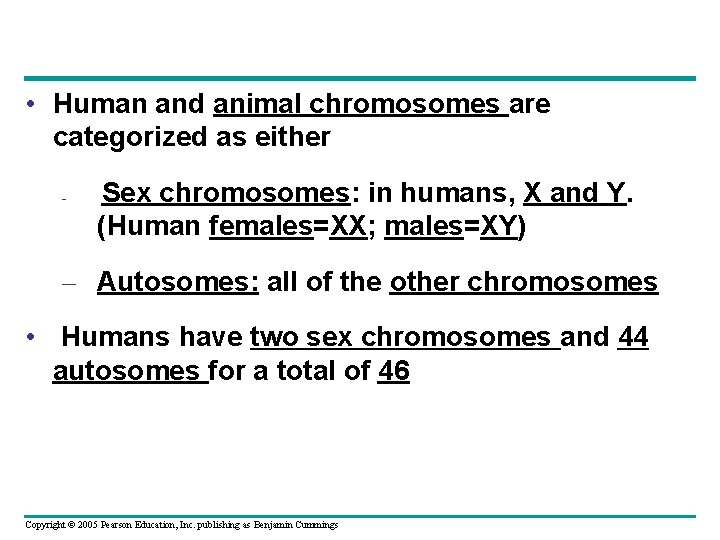
• Human and animal chromosomes are categorized as either – Sex chromosomes: in humans, X and Y. (Human females=XX; males=XY) – Autosomes: all of the other chromosomes • Humans have two sex chromosomes and 44 autosomes for a total of 46 Copyright © 2005 Pearson Education, Inc. publishing as Benjamin Cummings
• In sexually reproducing organisms, chromosomes occur in pairs – Homologous chromosomes or homologs: • Each member of a pair; they are the same size, shape, and carry genes for the same trait, but may have different forms of the gene. Copyright © 2005 Pearson Education, Inc. publishing as Benjamin Cummings
• A cell containing homologous pairs is called • Diploid = 2 N, where N = the number of different kinds of chromosomes. • Ex. The 2 N, or diploid number of chromosomes for humans = 46, where N=23 in regular body cells (not sperm or egg) • Haploid = 1 N, where only one member of a pair is present. • Ex. 1 N or haploid number of chromosomes for humans = 23 (sex cells, sperm and egg) Copyright © 2005 Pearson Education, Inc. publishing as Benjamin Cummings
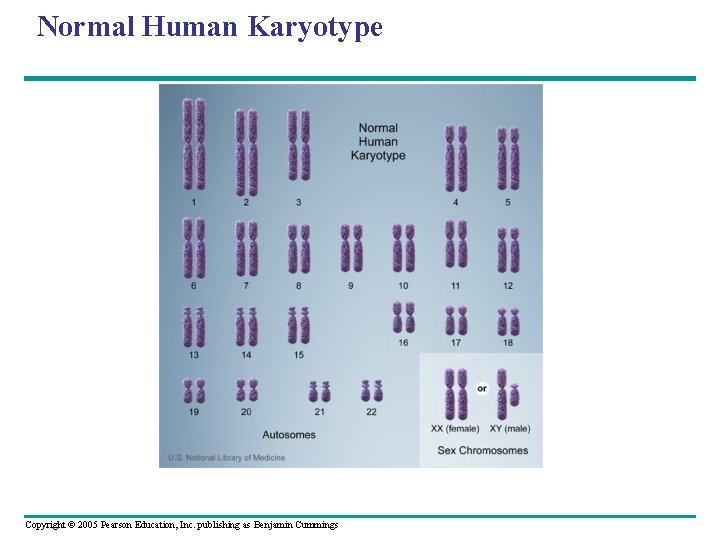
Karyotype • A diagram of all 46 human chromosomes is shown on a karyotype • Karyotypes are can be used to diagnose a chromosomal abnormality in a child • Mistakes in chromosome number may result in a genetic disorder Copyright © 2005 Pearson Education, Inc. publishing as Benjamin Cummings
Normal Human Karyotype Copyright © 2005 Pearson Education, Inc. publishing as Benjamin Cummings
Chromosomal Abnormalities • Deletion: a piece of a chromosome is lost • Inversion: a segment flips around and reattaches • Translocation: a piece from one chromosomes attaches to another • Duplication: a segment doubles itself • Nondisjunction: failure of the two chromatids to separate during division resulting in too few or too many chromosomes Copyright © 2005 Pearson Education, Inc. publishing as Benjamin Cummings
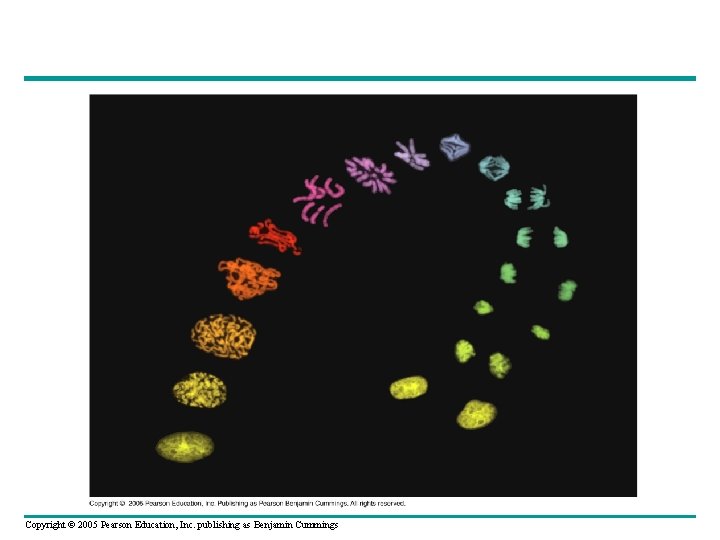
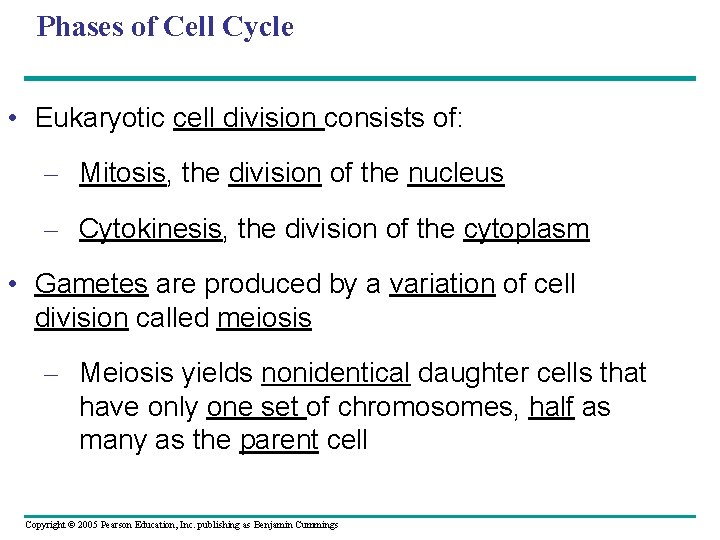
Phases of Cell Cycle • Eukaryotic cell division consists of: – Mitosis, the division of the nucleus – Cytokinesis, the division of the cytoplasm • Gametes are produced by a variation of cell division called meiosis – Meiosis yields nonidentical daughter cells that have only one set of chromosomes, half as many as the parent cell Copyright © 2005 Pearson Education, Inc. publishing as Benjamin Cummings
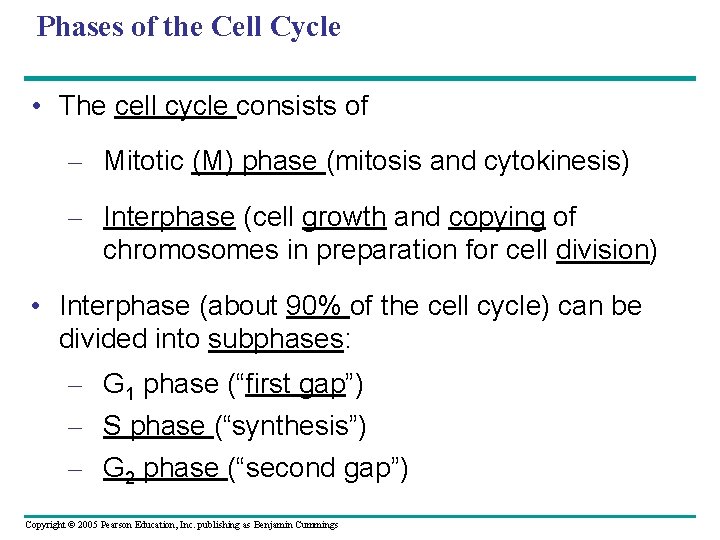
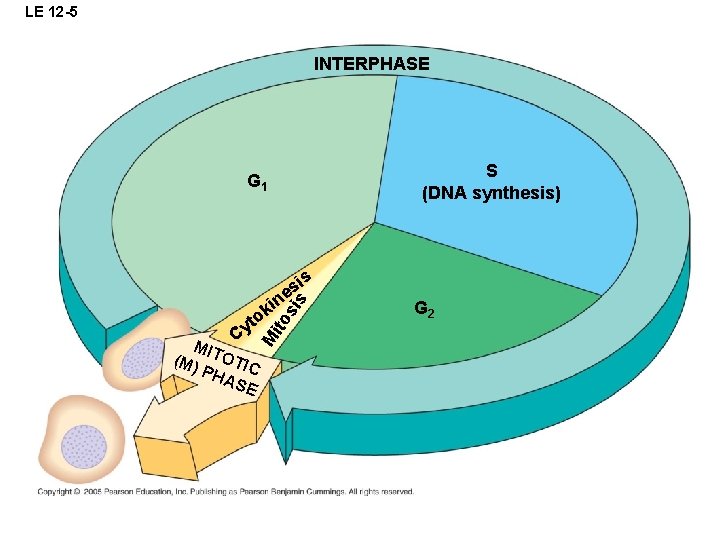
Phases of the Cell Cycle • The cell cycle consists of – Mitotic (M) phase (mitosis and cytokinesis) – Interphase (cell growth and copying of chromosomes in preparation for cell division) • Interphase (about 90% of the cell cycle) can be divided into subphases: – G 1 phase (“first gap”) – S phase (“synthesis”) – G 2 phase (“second gap”) Copyright © 2005 Pearson Education, Inc. publishing as Benjamin Cummings
LE 12 -5 INTERPHASE S (DNA synthesis) G 1 M M I (M) TOTIC PH AS E ito t y C si in k o s is s e G 2
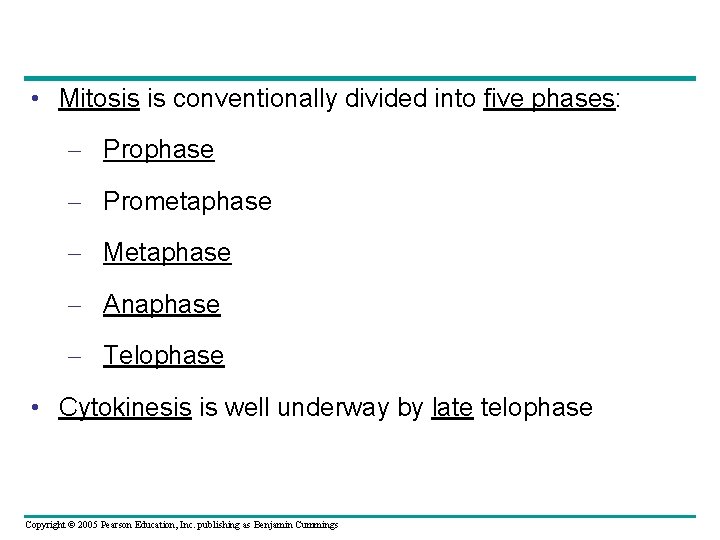
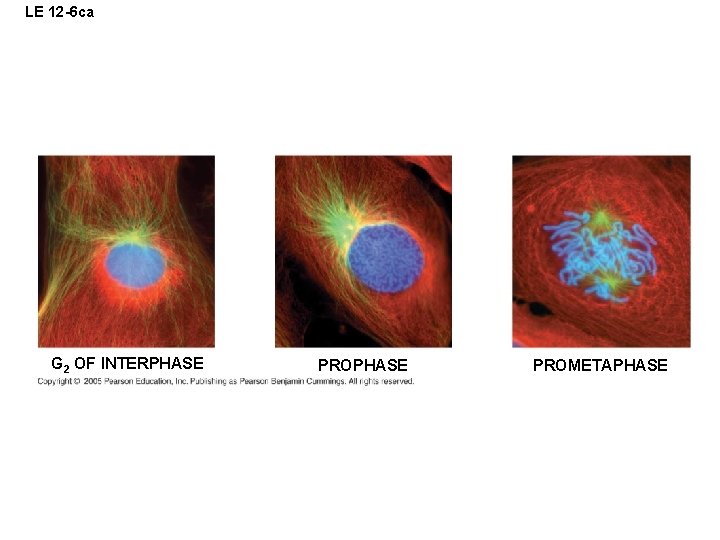
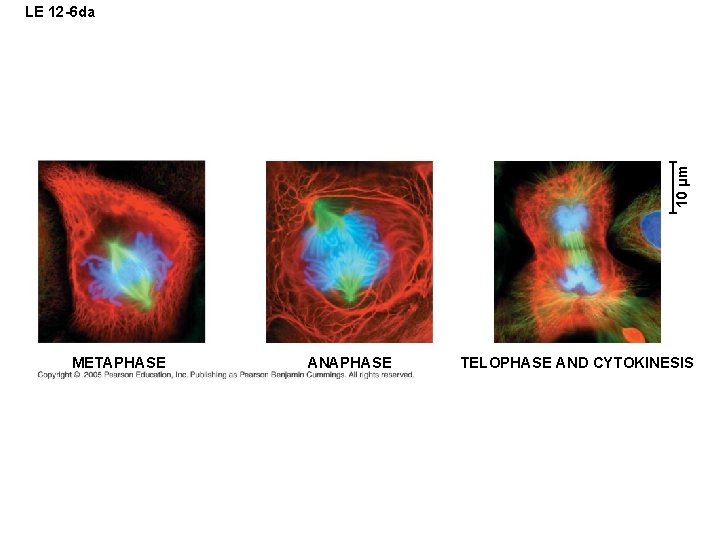
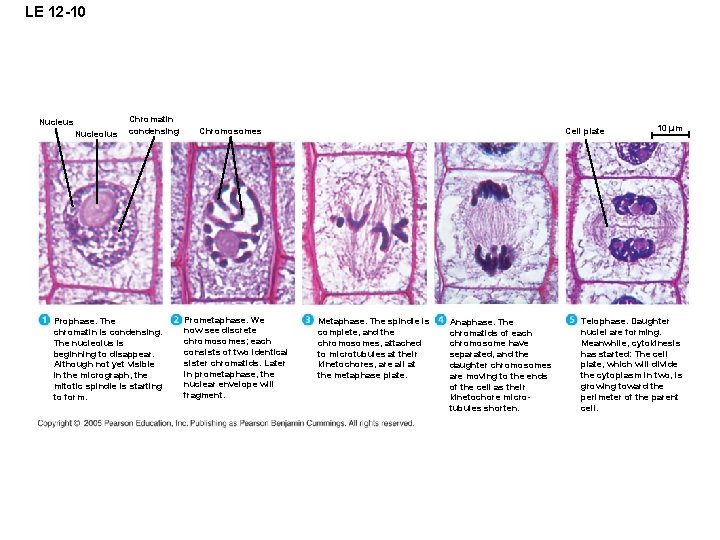
• Mitosis is conventionally divided into five phases: – Prophase – Prometaphase – Metaphase – Anaphase – Telophase • Cytokinesis is well underway by late telophase Copyright © 2005 Pearson Education, Inc. publishing as Benjamin Cummings
LE 12 -6 ca G 2 OF INTERPHASE PROMETAPHASE
10 µm LE 12 -6 da METAPHASE ANAPHASE TELOPHASE AND CYTOKINESIS
Video: Animal Mitosis Video: Sea Urchin (time lapse) Animation: Mitosis (All Phases) Animation: Mitosis Overview Animation: Late Interphase Animation: Prometaphase Animation: Metaphase Animation: Anaphase Animation: Telophase Copyright © 2005 Pearson Education, Inc. publishing as Benjamin Cummings
LE 12 -10 Nucleus Nucleolus Chromatin condensing Prophase. The chromatin is condensing. The nucleolus is beginning to disappear. Although not yet visible in the micrograph, the mitotic spindle is starting to form. Chromosomes Prometaphase. We now see discrete chromosomes; each consists of two identical sister chromatids. Later in prometaphase, the nuclear envelope will fragment. Cell plate Metaphase. The spindle is complete, and the chromosomes, attached to microtubules at their kinetochores, are all at the metaphase plate. Anaphase. The chromatids of each chromosome have separated, and the daughter chromosomes are moving to the ends of the cell as their kinetochore micro- tubules shorten. 10 µm Telophase. Daughter nuclei are forming. Meanwhile, cytokinesis has started: The cell plate, which will divide the cytoplasm in two, is growing toward the perimeter of the parent cell.
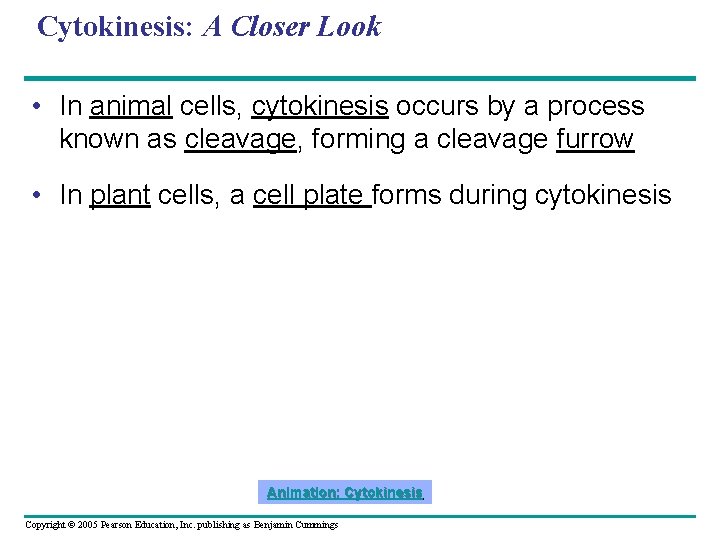
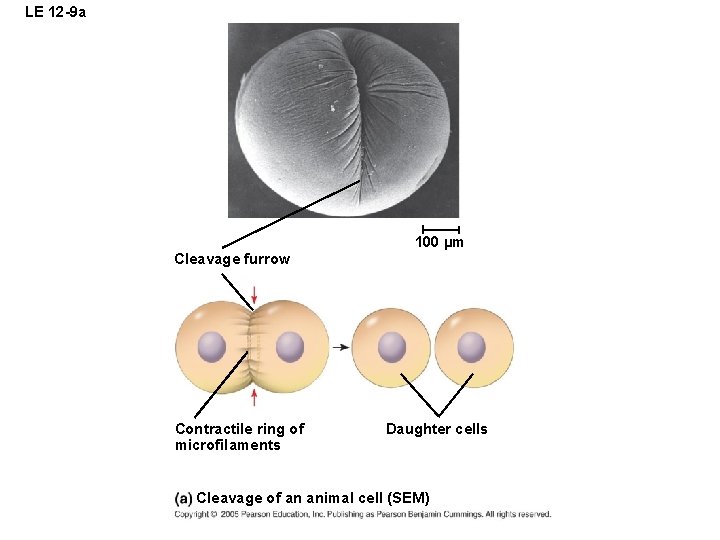
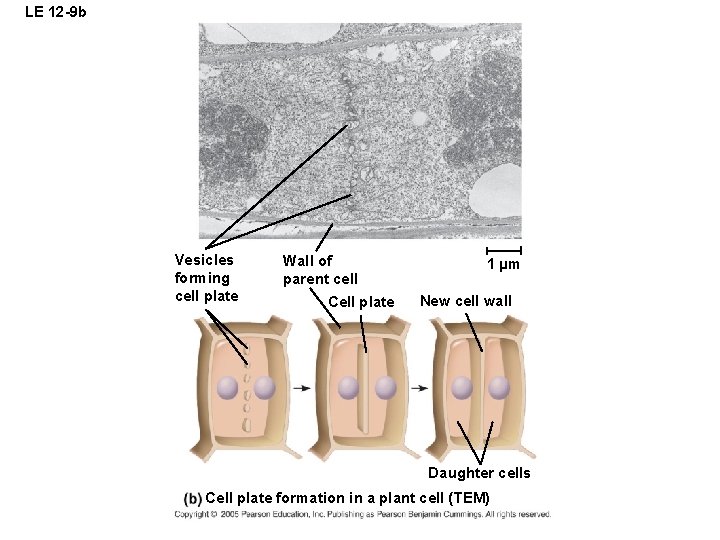
Cytokinesis: A Closer Look • In animal cells, cytokinesis occurs by a process known as cleavage, forming a cleavage furrow • In plant cells, a cell plate forms during cytokinesis Animation: Cytokinesis Copyright © 2005 Pearson Education, Inc. publishing as Benjamin Cummings
LE 12 -9 a 100 µm Cleavage furrow Contractile ring of microfilaments Daughter cells Cleavage of an animal cell (SEM)
LE 12 -9 b Vesicles forming cell plate Wall of parent cell Cell plate 1 µm New cell wall Daughter cells Cell plate formation in a plant cell (TEM)
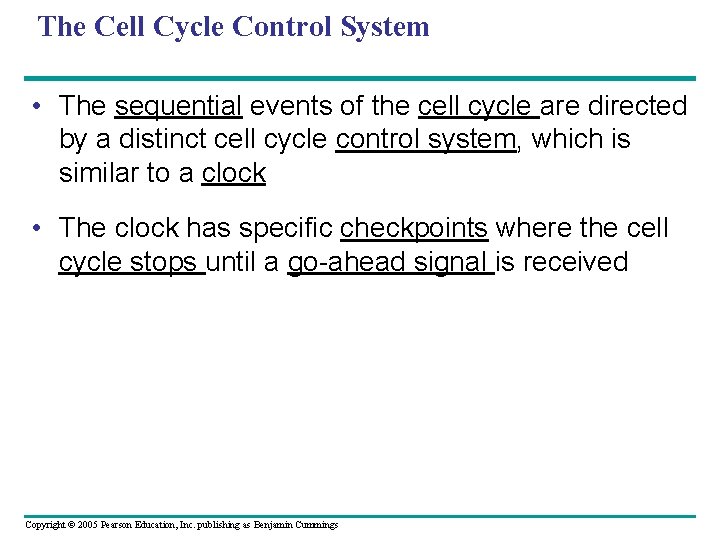
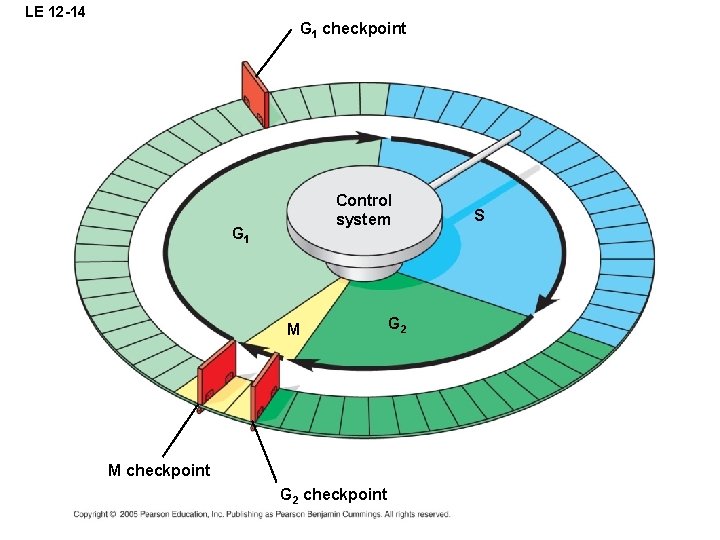
The Cell Cycle Control System • The sequential events of the cell cycle are directed by a distinct cell cycle control system, which is similar to a clock • The clock has specific checkpoints where the cell cycle stops until a go-ahead signal is received Copyright © 2005 Pearson Education, Inc. publishing as Benjamin Cummings
LE 12 -14 G 1 checkpoint Control system G 1 M M checkpoint G 2 S
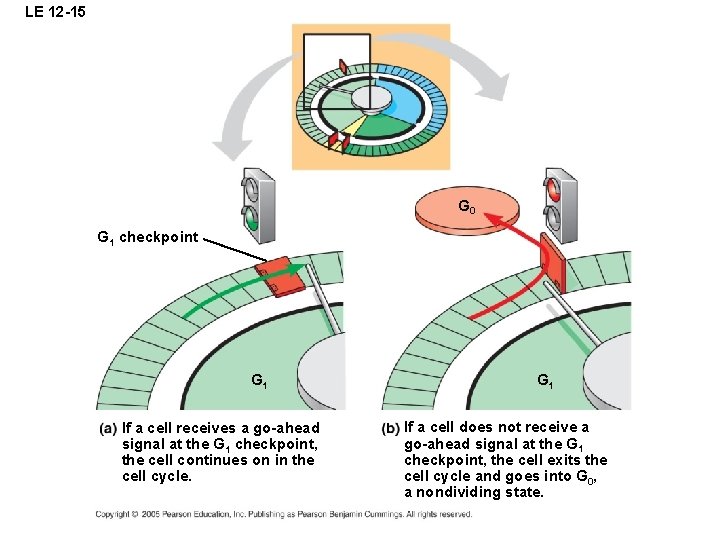
• For many cells, the G 1 checkpoint seems to be the most important one • If a cell receives a go-ahead signal at the G 1 checkpoint, it will usually complete the S, G 2, and M phases and divide • If the cell does not receive the go-ahead signal, it will exit the cycle, switching into a nondividing state called the G 0 phase Copyright © 2005 Pearson Education, Inc. publishing as Benjamin Cummings
LE 12 -15 G 0 G 1 checkpoint G 1 If a cell receives a go-ahead signal at the G 1 checkpoint, the cell continues on in the cell cycle. G 1 If a cell does not receive a go-ahead signal at the G 1 checkpoint, the cell exits the cell cycle and goes into G 0, a nondividing state.
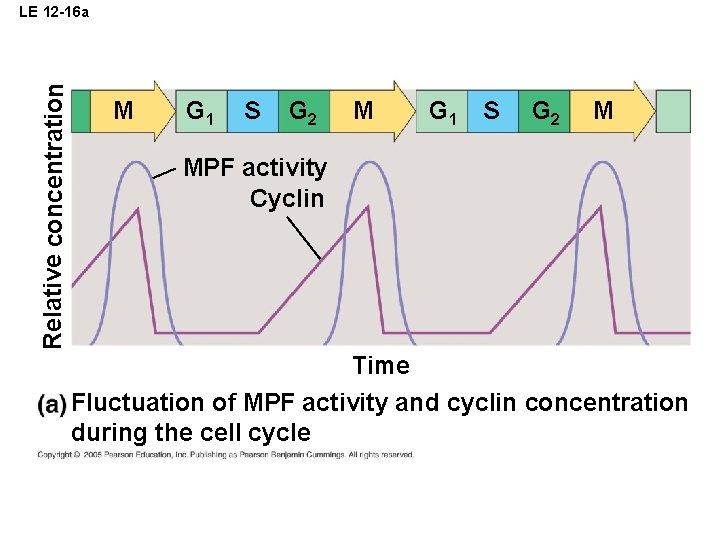
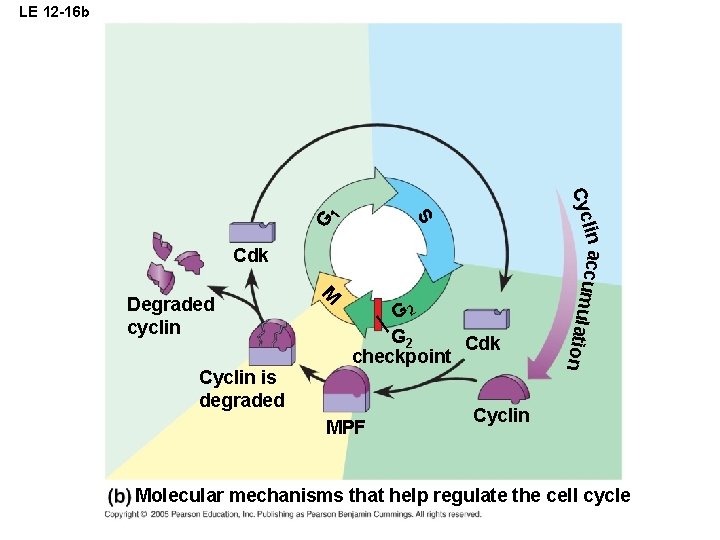
The Cell Cycle Clock: Cyclins and Cyclin-Dependent Kinases • Two types of regulatory proteins are involved in cell cycle control: cyclins and cyclin-dependent kinases (Cdks) • The activity of cyclins and Cdks fluctuates during the cell cycle Copyright © 2005 Pearson Education, Inc. publishing as Benjamin Cummings
Relative concentration LE 12 -16 a M G 1 S G 2 M MPF activity Cyclin Time Fluctuation of MPF activity and cyclin concentration during the cell cycle
G Cdk G 2 Cdk checkpoint MPF tion Cyclin is degraded M Degraded cyclin n accumul a li Cyc S 1 LE 12 -16 b Cyclin Molecular mechanisms that help regulate the cell cycle
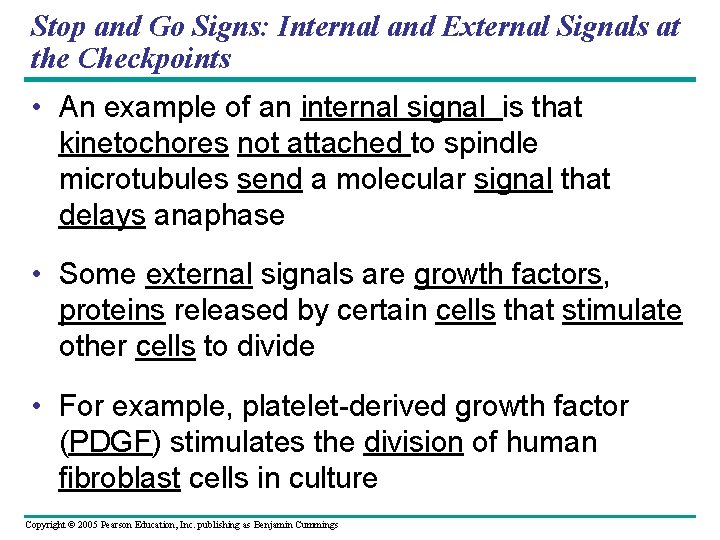
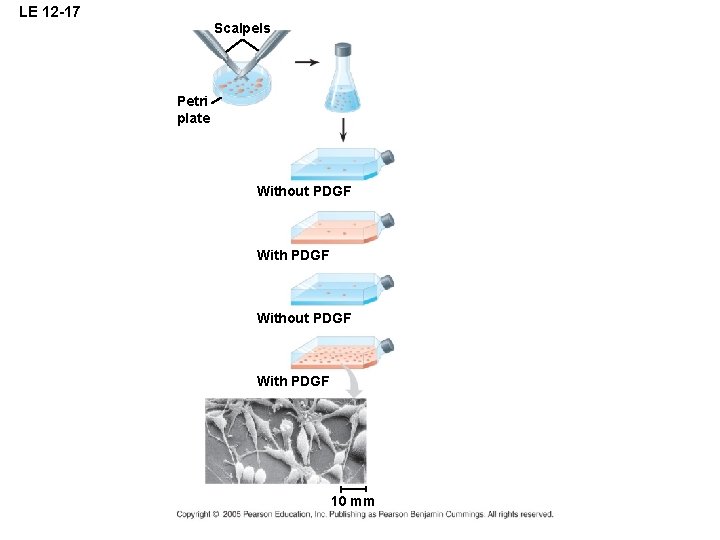
Stop and Go Signs: Internal and External Signals at the Checkpoints • An example of an internal signal is that kinetochores not attached to spindle microtubules send a molecular signal that delays anaphase • Some external signals are growth factors, proteins released by certain cells that stimulate other cells to divide • For example, platelet-derived growth factor (PDGF) stimulates the division of human fibroblast cells in culture Copyright © 2005 Pearson Education, Inc. publishing as Benjamin Cummings
LE 12 -17 Scalpels Petri plate Without PDGF With PDGF 10 mm
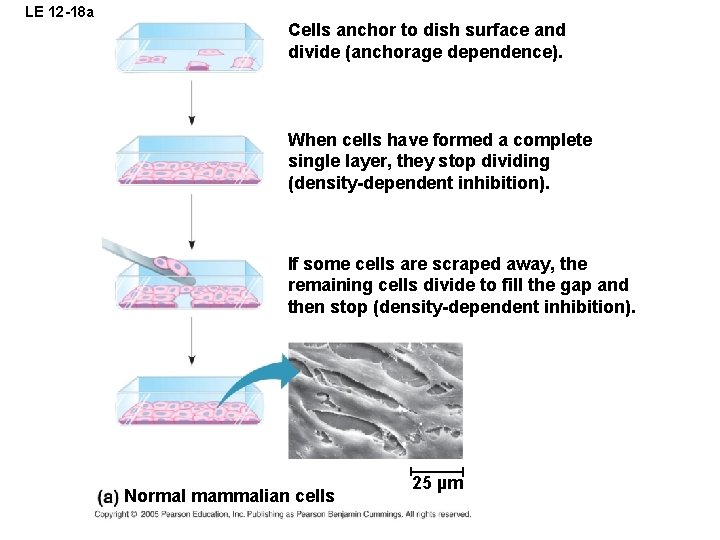
• Another example of external signals is densitydependent inhibition, in which crowded cells stop dividing • Most animal cells also exhibit anchorage dependence, in which they must be attached to a substratum in order to divide Copyright © 2005 Pearson Education, Inc. publishing as Benjamin Cummings
LE 12 -18 a Cells anchor to dish surface and divide (anchorage dependence). When cells have formed a complete single layer, they stop dividing (density-dependent inhibition). If some cells are scraped away, the remaining cells divide to fill the gap and then stop (density-dependent inhibition). Normal mammalian cells 25 µm
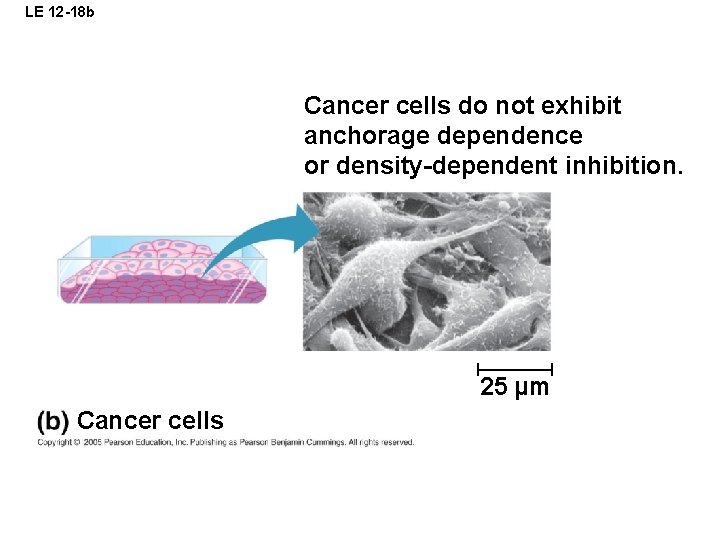
Cancer • Cancer cells exhibit neither density-dependent inhibition nor anchorage dependence Copyright © 2005 Pearson Education, Inc. publishing as Benjamin Cummings
LE 12 -18 b Cancer cells do not exhibit anchorage dependence or density-dependent inhibition. 25 µm Cancer cells
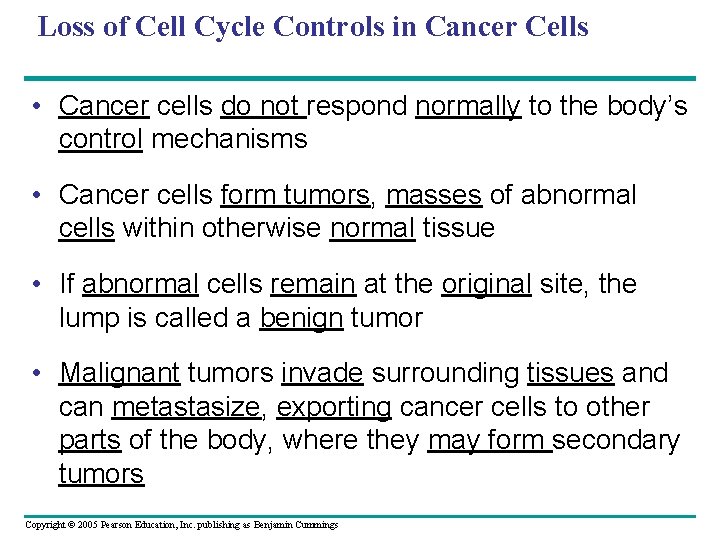
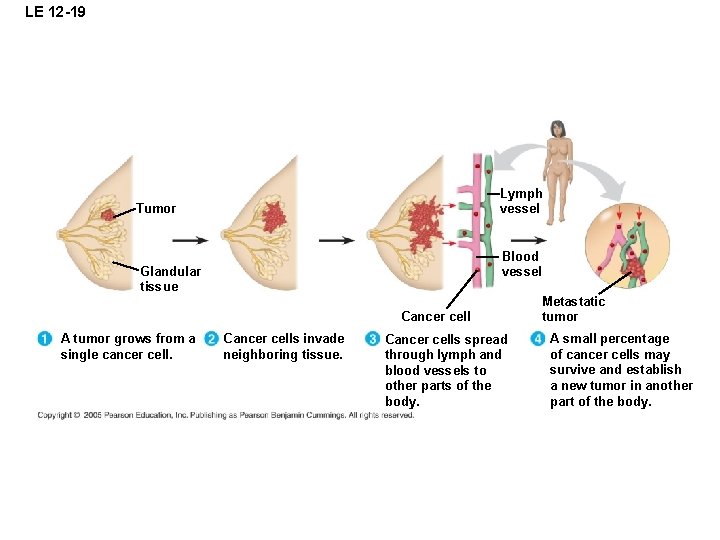
Loss of Cell Cycle Controls in Cancer Cells • Cancer cells do not respond normally to the body’s control mechanisms • Cancer cells form tumors, masses of abnormal cells within otherwise normal tissue • If abnormal cells remain at the original site, the lump is called a benign tumor • Malignant tumors invade surrounding tissues and can metastasize, exporting cancer cells to other parts of the body, where they may form secondary tumors Copyright © 2005 Pearson Education, Inc. publishing as Benjamin Cummings
LE 12 -19 Lymph vessel Tumor Blood vessel Glandular tissue Cancer cell A tumor grows from a single cancer cell. Cancer cells invade neighboring tissue. Cancer cells spread through lymph and blood vessels to other parts of the body. Metastatic tumor A small percentage of cancer cells may survive and establish a new tumor in another part of the body.
Genetic Malfunctions related to Cancer • There are three general genetic malfunctions related to cancer. • The regulation of the cell cycle can be likened to a car that runs properly – starts, stops, and steers properly. • Breakdown in these systems results in uncontrolled cell division - cancer Copyright © 2005 Pearson Education, Inc. publishing as Benjamin Cummings
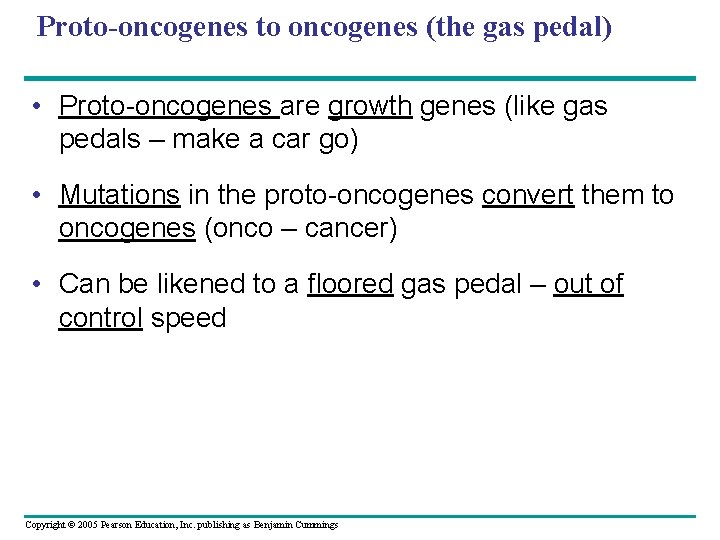
Proto-oncogenes to oncogenes (the gas pedal) • Proto-oncogenes are growth genes (like gas pedals – make a car go) • Mutations in the proto-oncogenes convert them to oncogenes (onco – cancer) • Can be likened to a floored gas pedal – out of control speed Copyright © 2005 Pearson Education, Inc. publishing as Benjamin Cummings
Tumor suppressor genes (the brake pedal) • Tumor suppressor genes code for proteins that act as check points and tend to slow or stop rapid cell division. • Mutations in the tumor suppressor genes leads to rapid uncontrolled cell division. • Can be likened to a brake pedal that is missing – out of control speed due to an inability to brake. • Roughly 1/3 of all cancers are due to a defect in a particular tumor suppressor gene called p 53. Copyright © 2005 Pearson Education, Inc. publishing as Benjamin Cummings
DNA repair genes (the steering wheel) • DNA repair genes scan the double helix and correct mistakes in base pairings (mutations) • Deletions in these DNA repair genes can be likened to a car without a steering wheel – cannot correct the swerving out of control. Copyright © 2005 Pearson Education, Inc. publishing as Benjamin Cummings
Xeroderma Pigmentosum • This condition is due to a faulty DNA repair gene that corrects the mistakes induced from UV light. • UV light causes Cytosine to bond with Thymine or itself or thymine to bond to itself. • This causes a pinching in of the double helix and is normally corrected. • People with XP lack this gene and therefore the enzyme to correct the error – they must avoid exposure to the sun, they tend to freckle very heavily and have a higher rate of skin cancer. Copyright © 2005 Pearson Education, Inc. publishing as Benjamin Cummings