
Chapter 8 System Implementation and Support Karen A
- Slides: 12
Chapter 8 System Implementation and Support Karen A. Wager | Frances Wickham Lee | John P. Glaser
Learning Objectives • Discuss the process that a HCO typically goes through in implementing a HCIS. • Appreciate the organizational factors that can affect system acceptance and strategies for managing change. • Develop a sample system implementation plan. • Gain insight into the things that can go wrong during implementation & strategies managers can employ to alleviate problems. • Discuss factors important to system support and evaluation. Health Care Information Systems: A Practical Approach for Health Care Management 3 rd Edition K. Wager, F. Lee, & J. Glaser 2
Outline § System implementation process § Managing the organizational aspects of system implementation § System support and evaluation Health Care Information Systems: A Practical Approach for Health Care Management 3 rd Edition K. Wager, F. Lee, & J. Glaser 3
System implementation § As defined here, process begins once organization has acquired the system and continues through the early stages following the go-live date. § Requires high level support and sufficient staff, time and resources Health Care Information Systems: A Practical Approach for Health Care Management 3 rd Edition K. Wager, F. Lee, & J. Glaser 4
System Implementation Process § Organize implementation team and identify system champion § Composition and size of implementation team § Primary role and functions of implementation team § Role of system champion Health Care Information Systems: A Practical Approach for Health Care Management 3 rd Edition K. Wager, F. Lee, & J. Glaser 5
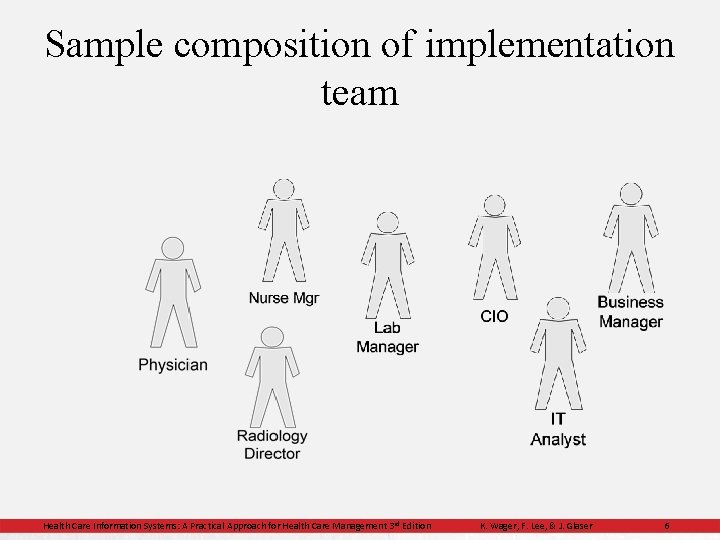
Sample composition of implementation team Health Care Information Systems: A Practical Approach for Health Care Management 3 rd Edition K. Wager, F. Lee, & J. Glaser 6
System champion § Characteristics— § Well respected, knowledgeable § Strong communication skills, interpersonal skills, good listening skills § Leadership skills—has clout and can make things happen § Role and functions § Sees system as necessary to organization’s achievement of goals § Serves as advocate § Assumes leadership role in gaining buy-in Health Care Information Systems: A Practical Approach for Health Care Management 3 rd Edition K. Wager, F. Lee, & J. Glaser 7
System Implementation Process § Determine project scope and expectations § What are the goals of the project? What is the project’s scope? § What does the organization hope to achieve as a result of the new system? How will it measure its success? § What are the risks of failing to define project goals and scope? And system goals? Health Care Information Systems: A Practical Approach for Health Care Management 3 rd Edition K. Wager, F. Lee, & J. Glaser 8
System Implementation Process § Establish project plan – Key components include: Major activities and tasks Major milestones Estimated duration of each activity Any dependencies among activities Resources and budget Individual or members responsible for completing each task § Target dates § Measures for evaluating completion and success § § § Health Care Information Systems: A Practical Approach for Health Care Management 3 rd Edition K. Wager, F. Lee, & J. Glaser 9
Strategies for managing project… and anticipating things that can go wrong § Create an environment where expectations are defined, met and managed § Know your culture and do not underestimate use resistance § Allocate sufficient resources, including technical support staff and IT infrastructure § Provide adequate initial and ongoing training § Manage unintended consequences Health Care Information Systems: A Practical Approach for Health Care Management 3 rd Edition K. Wager, F. Lee, & J. Glaser 10
After implementation… § Ensure that the system is sufficiently maintained and supported. Health Care Information Systems: A Practical Approach for Health Care Management 3 rd Edition K. Wager, F. Lee, & J. Glaser 11
Summary § Important to adequately plan for system implementation—need right set of people, skills, and resources § Things can and do go wrong, so it’s also important to address organizational aspects of implementing new system § Process doesn’t end when new system is installed; critical that system continually updated, supported and maintained Health Care Information Systems: A Practical Approach for Health Care Management 3 rd Edition K. Wager, F. Lee, & J. Glaser 12