
Chapter 8 Strengthening Developmentally Appropriate Programs Thought Family
- Slides: 17
Chapter 8: Strengthening Developmentally Appropriate Programs Thought Family Engagement By: Rosa Elena Mora
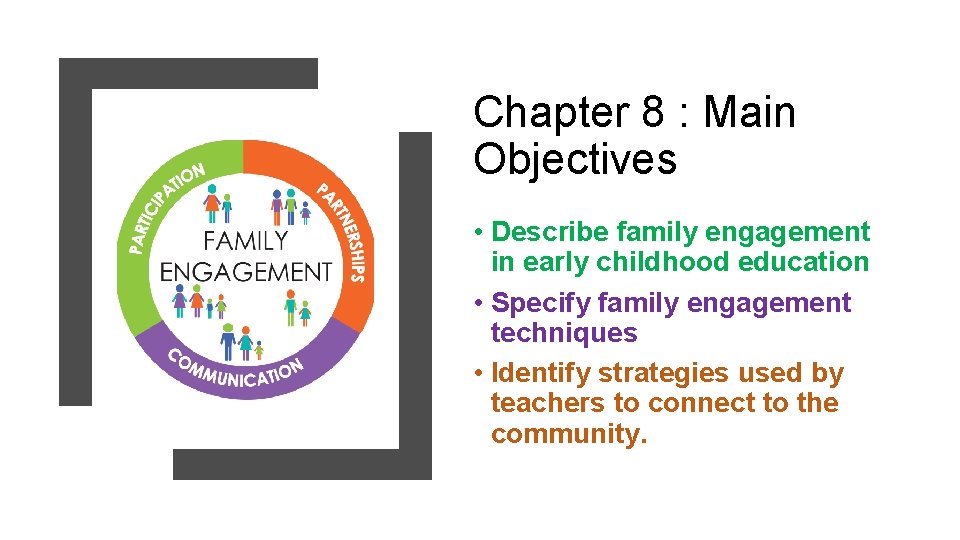
Chapter 8 : Main Objectives • Describe family engagement in early childhood education • Specify family engagement techniques • Identify strategies used by teachers to connect to the community.
Characteristics of Effective Family Engagement • Collaboration • Variety • Intensity • Individuation “Families are most likely to become partners in their children’s education when they take into account collaboration, variety, intensity, and individuation. ”
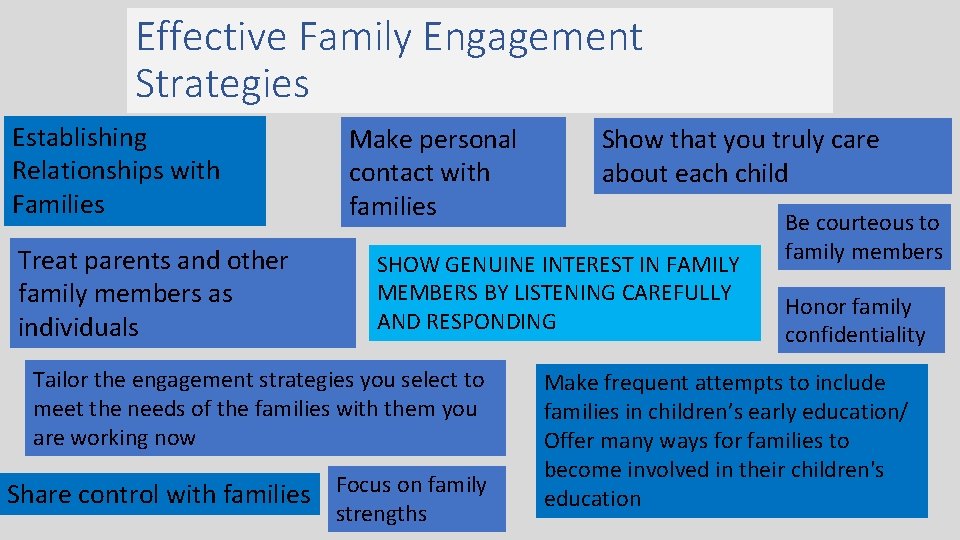
Effective Family Engagement Strategies Establishing Relationships with Families Treat parents and other family members as individuals Make personal contact with families Show that you truly care about each child SHOW GENUINE INTEREST IN FAMILY MEMBERS BY LISTENING CAREFULLY AND RESPONDING Tailor the engagement strategies you select to meet the needs of the families with them you are working now Share control with families Focus on family strengths Be courteous to family members Honor family confidentiality Make frequent attempts to include families in children’s early education/ Offer many ways for families to become involved in their children's education
SHOW GENUINE INTEREST IN FAMILY MEMBERS BY LISTENING CAREFULLY AND RESPONDING • Provide opening for family members to share their concerns or inquire about their child’s program experience • Ask questions relevant to family comments • Reflect back to concerns, goals, or ideas that the adult expresses • Ask relevant open-ended questions • Ask parents what he or she would like to have happen • Respond to family members’ questions honestly and directly “A real barrier occurs when family members form the impression that teachers are too busy or too distant to give much thought to what family members are thinking or feeling. ”
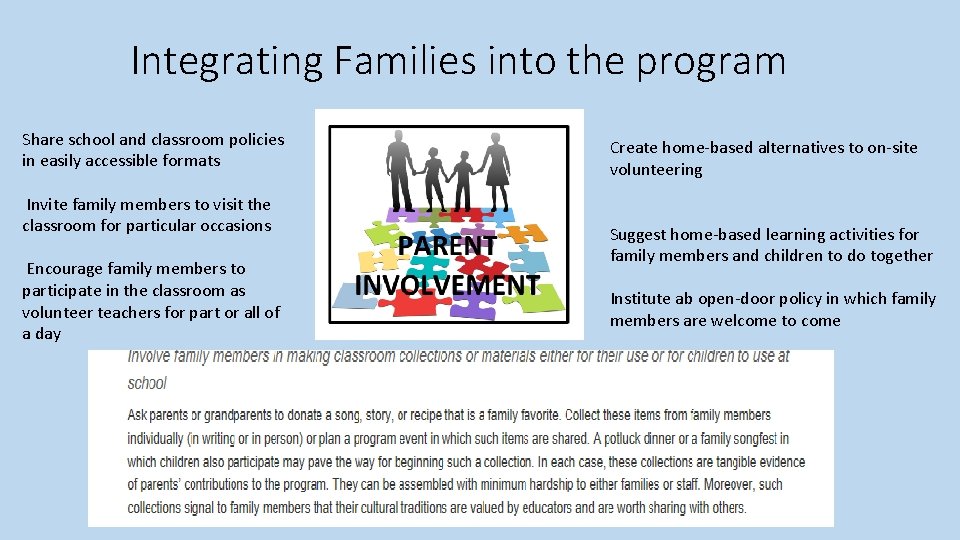
Integrating Families into the program Share school and classroom policies in easily accessible formats Invite family members to visit the classroom for particular occasions Encourage family members to participate in the classroom as volunteer teachers for part or all of a day Create home-based alternatives to on-site volunteering Suggest home-based learning activities for family members and children to do together Institute ab open-door policy in which family members are welcome to come
Although family engagement has many benefits, there is still a lack of family engagement. Barriers to Family Engagement • “They believe that their lack or formal teaching skills prevents them from making meaningful contributions. ” • “They get the message that their involvement is of little worth because they are asked to do only menial tasks (cutting string for an activity, putting out napkins, bringing the cupcakes to parties). ” • “They assume that the only thing programs want is help with fundraising. ” • “They believe no one in the program appreciate the time they put into children’s learning. ” * Other additional barriers are schedule conflicts
Family Information of Interest to Educators • Throughout the program year, invite family members to share anecdotes and information about their child. *This information might be used as the basic for classroom activities and to increase your knowledge of the child and his or her family. • Ask for input from family members about their learning goals for their children. *Collect the information and use it in designing classroom activities. • Find out about family interest and discover ways in which family members might like to become involved • Seek out cultural Information ( Read about the cultural heritage of the families you serve and then check with them to see if what you learned through reading accurately reflects their practices and beliefs. • Ask for evaluative feedback from families throughout the year • Read the individual education plans for children with special needs as well as conferring with family member as soon as possible.
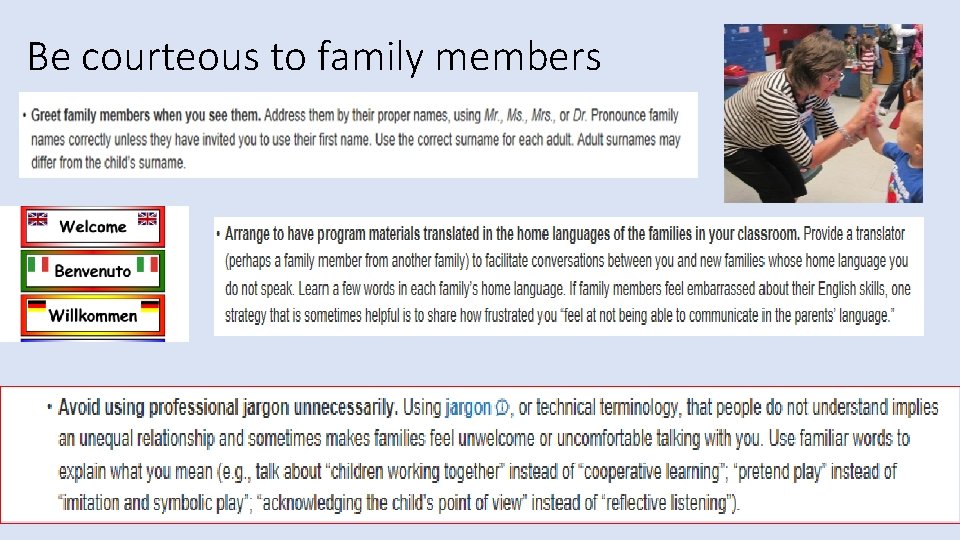
Be courteous to family members
Typical Questions • Is my child happy ? • Is my child learning ? • How are you addressing reading in the classroom? • I don’t understand my child’s new report card. • Where are the letter grades we used to get in school? Keep Families Informed !!!!!
Keeping Families Informed • Include all families in your plan for family engagement • Develop written materials for your classroom in which you make clear your desire to include families in their children’s early education early in the school year. • Acquaint family members with your education philosophy • Familiarize families with a typical day for children in the program • Periodically write one- or two-line notes regarding children’s positive program experiences. • Create a weekly or monthly newsletter • Use electronic communication whenever appropriate
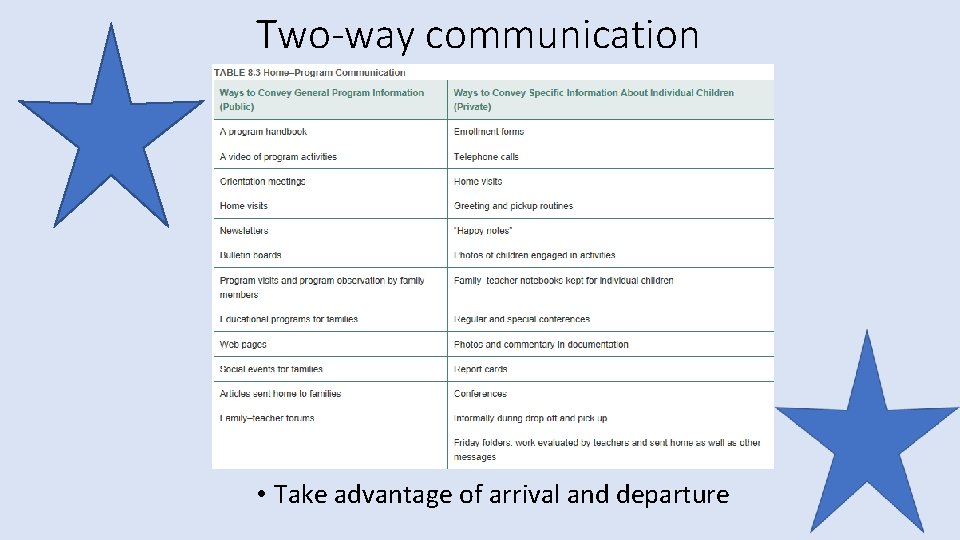
Two-way communication • Take advantage of arrival and departure
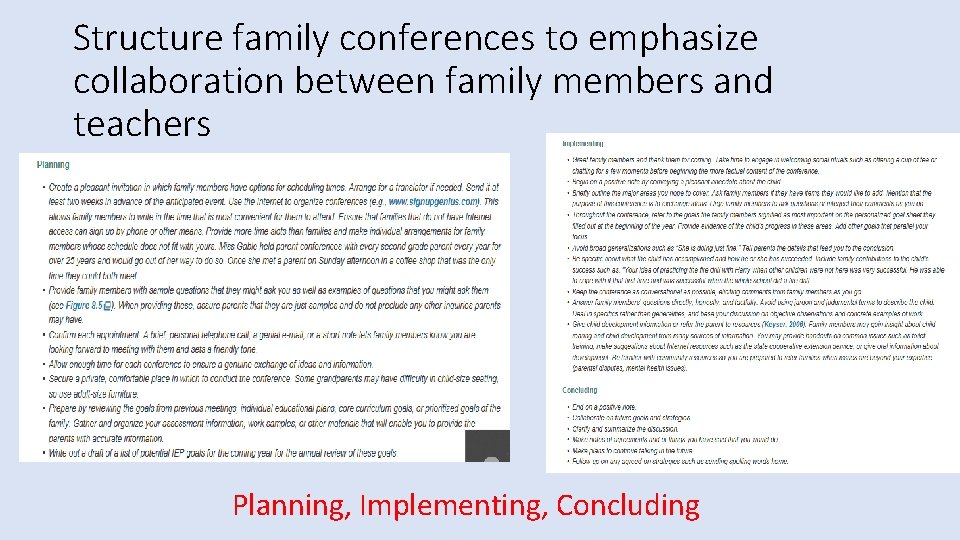
Structure family conferences to emphasize collaboration between family members and teachers Planning, Implementing, Concluding
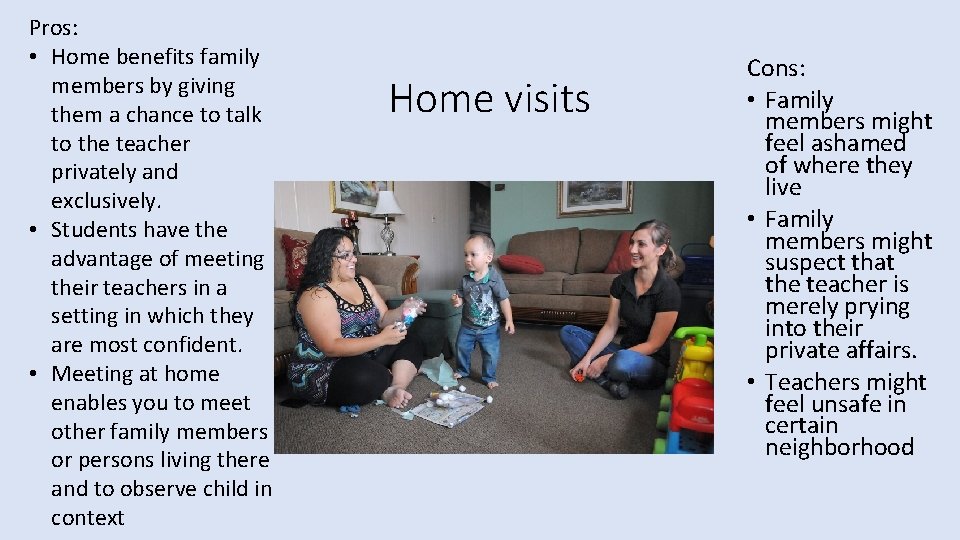
Pros: • Home benefits family members by giving them a chance to talk to the teacher privately and exclusively. • Students have the advantage of meeting their teachers in a setting in which they are most confident. • Meeting at home enables you to meet other family members or persons living there and to observe child in context Home visits Cons: • Family members might feel ashamed of where they live • Family members might suspect that the teacher is merely prying into their private affairs. • Teachers might feel unsafe in certain neighborhood
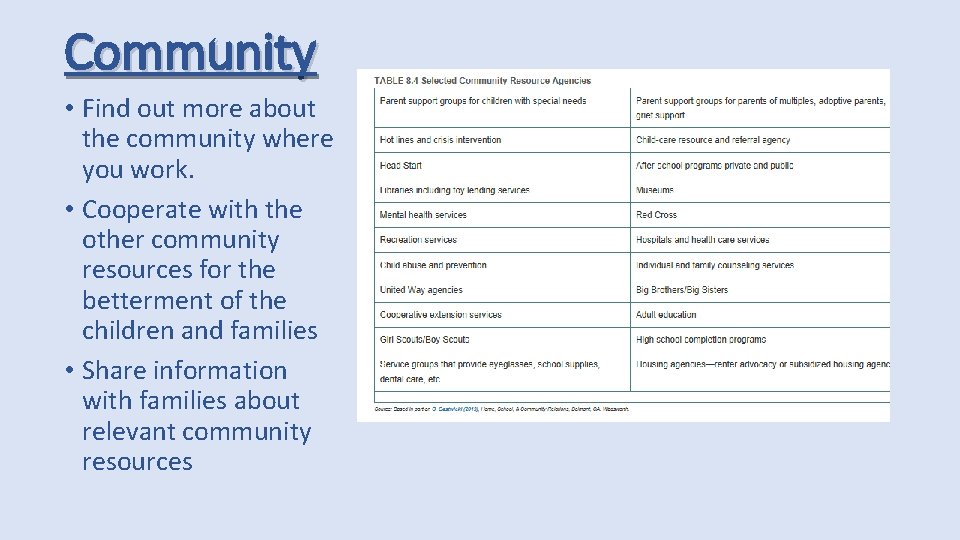
Community • Find out more about the community where you work. • Cooperate with the other community resources for the betterment of the children and families • Share information with families about relevant community resources
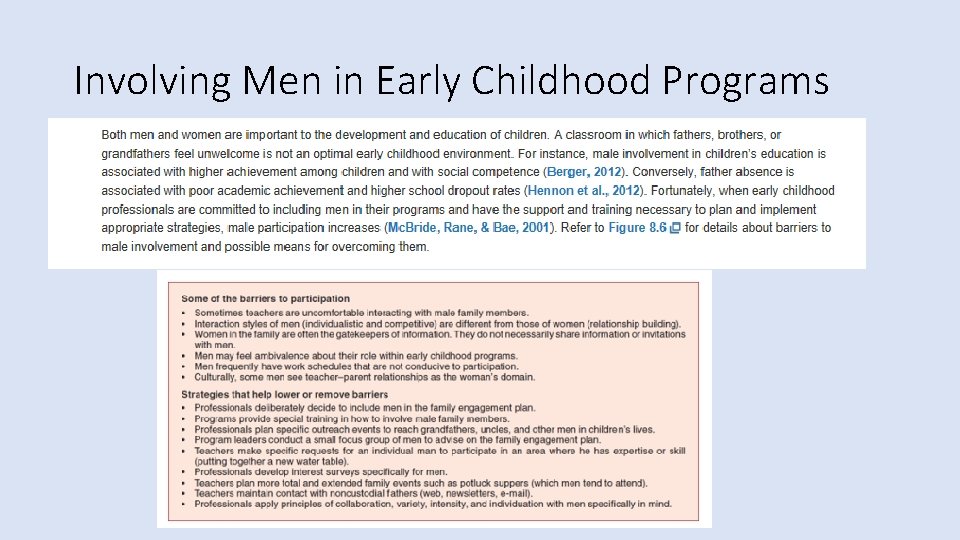
Involving Men in Early Childhood Programs
Reference • Kostelnik, M. , Soderman, A. , Whiren, A. , & Rupiper, M. (2011). Developmentally Appropriate , Curriculum: Best practices in early childhood education 6 th Edition). Boston, MA: Red Shelf