
Chapter 8 Social Influence and Persuasion Two Types
- Slides: 39
Chapter 8 - Social Influence and Persuasion • Two Types of Social Influence • Techniques of Social Influence • Persuasion • Resisting Persuasion
Social Influence and Persuasion • James Warren Jones – Jonestown (1978) • How could Jim Jones have influenced his followers to such a deep level that more than 900 committed revolutionary suicide?
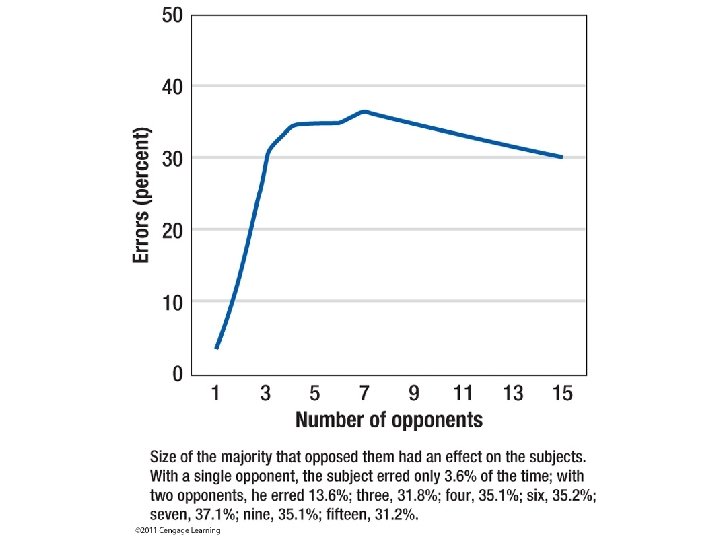
Normative Social Influence • Normative Influence – Going along with the crowd to be liked • Asch (1955) study of normative influence – Conformity increases as group size increases – Dissension reduces conformity • Deviating from the group – Social rejection
Informational Social Influence • Going along with the crowd because you • believe the crowd knows more than you do Strongest in: – Ambiguous situations – Crisis situations – When experts are present
Two Types of Social Influence • Informational influence produces private acceptance – Genuine inner belief that others are right • Normative influence produces public compliance – Inner belief that the group is wrong
Social Influence Principles 1. Reciprocity 2. Consistency 3. Social proof 4. Authority 5. Likeability 6. Scarcity Robert B. Cialdini, Influence: The Psychology of Persuasion (revised; New York: Quill, 1993)
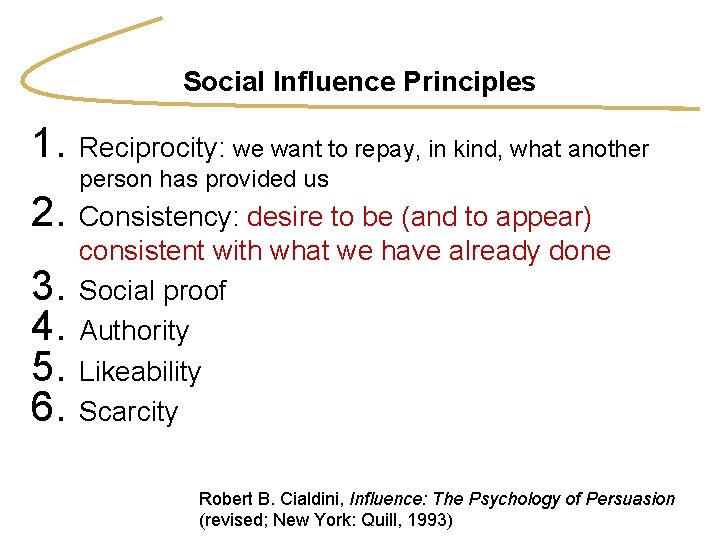
Social Influence Principles 1. Reciprocity: we want to repay, in kind, what 2. 3. 4. 5. 6. another person has provided us Consistency Social proof Authority Likeability Scarcity Robert B. Cialdini, Influence: The Psychology of Persuasion (revised; New York: Quill, 1993)
Social Influence Principles 1. Reciprocity: we want to repay, in kind, what another person has provided us 2. Consistency: desire to be (and to appear) 3. 4. 5. 6. consistent with what we have already done Social proof Authority Likeability Scarcity Robert B. Cialdini, Influence: The Psychology of Persuasion (revised; New York: Quill, 1993)
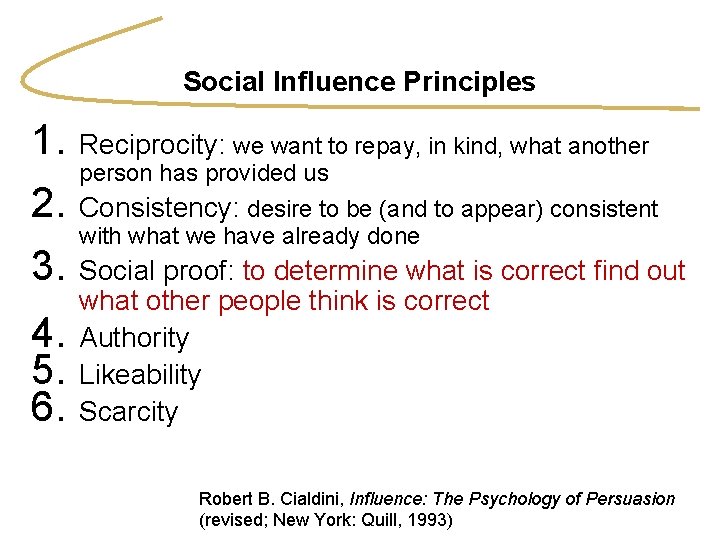
Social Influence Principles 1. Reciprocity: we want to repay, in kind, what another person has provided us 2. Consistency: desire to be (and to appear) consistent with what we have already done 3. Social proof: to determine what is correct find out 4. 5. 6. what other people think is correct Authority Likeability Scarcity Robert B. Cialdini, Influence: The Psychology of Persuasion (revised; New York: Quill, 1993)
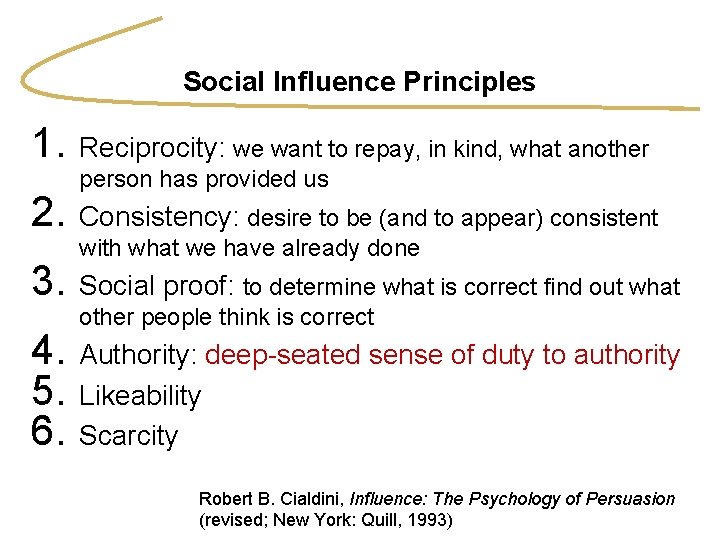
Social Influence Principles 1. Reciprocity: we want to repay, in kind, what another person has provided us 2. Consistency: desire to be (and to appear) consistent with what we have already done 3. Social proof: to determine what is correct find out what other people think is correct 4. Authority: deep-seated sense of duty to authority 5. Likeability 6. Scarcity Robert B. Cialdini, Influence: The Psychology of Persuasion (revised; New York: Quill, 1993)
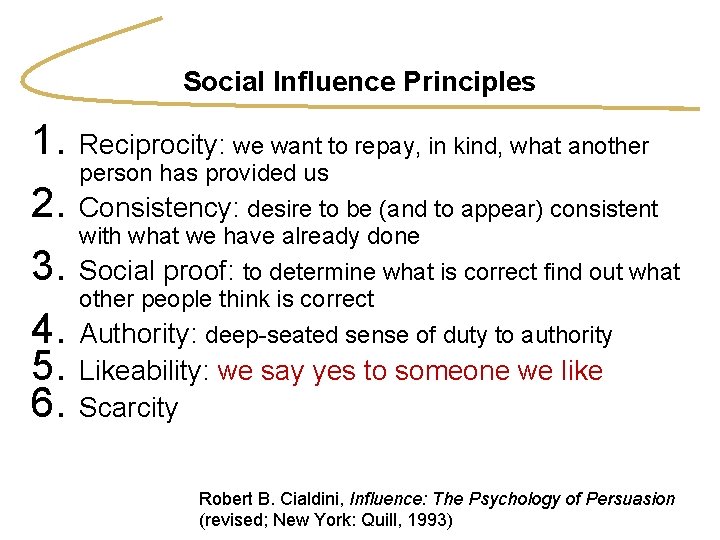
Social Influence Principles 1. Reciprocity: we want to repay, in kind, what another person has provided us 2. Consistency: desire to be (and to appear) consistent with what we have already done 3. Social proof: to determine what is correct find out what other people think is correct 4. Authority: deep-seated sense of duty to authority 5. Likeability: we say yes to someone we like 6. Scarcity Robert B. Cialdini, Influence: The Psychology of Persuasion (revised; New York: Quill, 1993)
Social Influence Principles 1. Reciprocity: we want to repay, in kind, what another person has provided us 2. Consistency: desire to be (and to appear) consistent with what we have already done 3. Social proof: to determine what is correct find out what other people think is correct 4. Authority: deep-seated sense of duty to authority 5. Likeability: we say yes to someone we like 6. Scarcity: limitation enhances desirability Robert B. Cialdini, Influence: The Psychology of Persuasion (revised; New York: Quill, 1993)
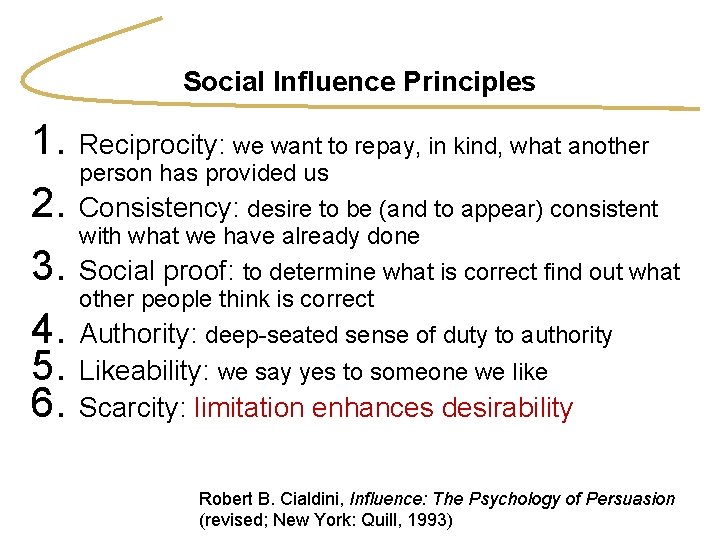
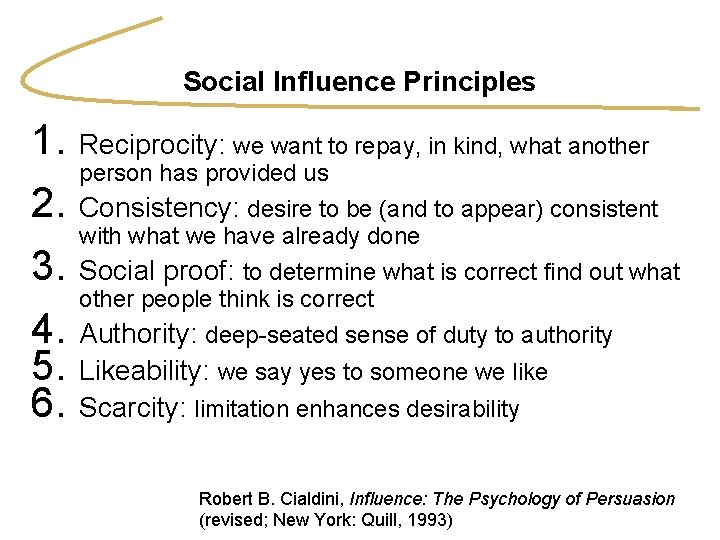
Social Influence Principles 1. Reciprocity: we want to repay, in kind, what another person has provided us 2. Consistency: desire to be (and to appear) consistent with what we have already done 3. Social proof: to determine what is correct find out what other people think is correct 4. Authority: deep-seated sense of duty to authority 5. Likeability: we say yes to someone we like 6. Scarcity: limitation enhances desirability Robert B. Cialdini, Influence: The Psychology of Persuasion (revised; New York: Quill, 1993)
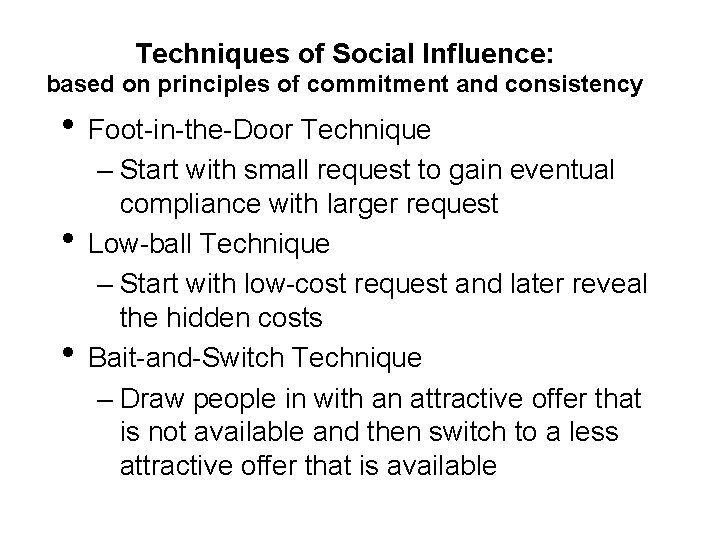
Techniques of Social Influence: based on principles of commitment and consistency • Foot-in-the-Door Technique • • – Start with small request to gain eventual compliance with larger request Low-ball Technique – Start with low-cost request and later reveal the hidden costs Bait-and-Switch Technique – Draw people in with an attractive offer that is not available and then switch to a less attractive offer that is available
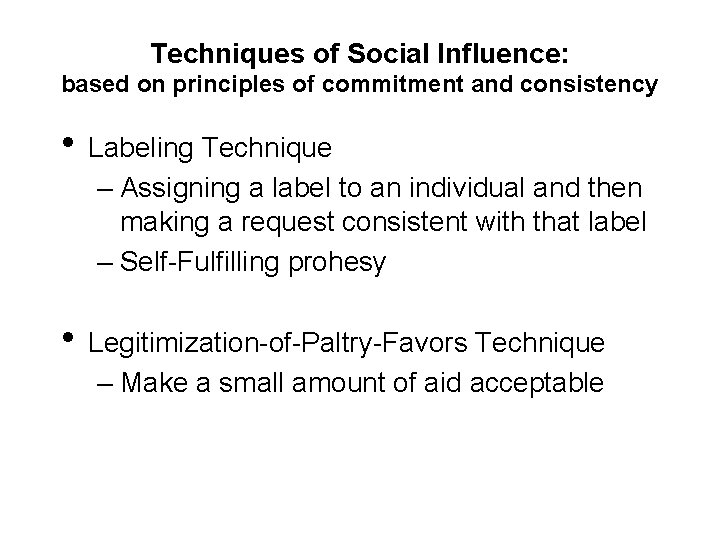
Techniques of Social Influence: based on principles of commitment and consistency • Labeling Technique – Assigning a label to an individual and then making a request consistent with that label – Self-Fulfilling prohesy • Legitimization-of-Paltry-Favors Technique – Make a small amount of aid acceptable
Techniques of Social Influence: based on principles of commitment and consistency • All of these relate to various theories: – Self-Perception – Cognitive Dissonance – Effort Justification • We have made a commitment in some way and we want to maintain a perception of consistency about ourselves.
• • Techniques Based on Reciprocation Door-in-the-Face Technique – Start with an inflated request and then retreat to a smaller one that appears to be a concession – Does not work if the first request is viewed as unreasonable or if requests are made by different people That’s-Not-All Technique – Begin with inflated request but immediately add to the deal by offering a bonus or discount
Techniques Based on Scarcity • Rare opportunities are more valuable than • • plentiful ones Scarcity heuristic in decision making Psychological reactance – When personal freedoms are threatened, we experience this unpleasant emotional response
Techniques Based on Capturing and Disrupting Attention • Pique Technique • – One captures people’s attention by making a novel request Disrupt-then-Reframe Technique – Introduce an unexpected element that disrupts critical thinking and then reframe the message in a positive light
Persuasion • Attempt to change a person’s mind • Three components of persuasion – Who – Source of the message – Say What – Actual message – To Whom – Audience
Who: The Source • Source credibility • – Expertise – Trustworthiness – Sleeper effect – over time, people separate the message from the messenger Source likability – Similarity – Physical attractiveness • - Halo effect – Assume other positive qualities
Say What: The Message • Reason Versus Emotion – Facts appeal to intellectual, analytical thinkers. – People in a good mood – more responsive to persuasive messages – Humor and Moderate fear have been shown to be persuasive
Say What: The Message • Stealing Thunder • – Revealing potentially incriminating evidence to negate its importance – Source appears more honest and credible Two-Sided Argument – More effective, especially for intelligent, thoughtful audience
Say What: The Message • Repetition – If neutral or positive response initially, repeated exposure = persuasive message – Repetition with variety • Advertisement wear-out – is a “condition of inattention and possible irritation that occurs after an audience or target market has encountered a specific advertisement too many times”
To Whom: The Audience • Moderately intelligent are easiest to persuade • People high in need for cognition are more • persuaded by strong arguments – Attitudes are more resistant to change People high in public self-consciousness are more persuaded by name brand styles
To Whom: The Audience • Impressionable years hypothesis • • – Middle-aged people most resistant to persuasion Attitudes formed in young adulthood remain fairly stable over time Messages consistent with cultural values are more persuasive
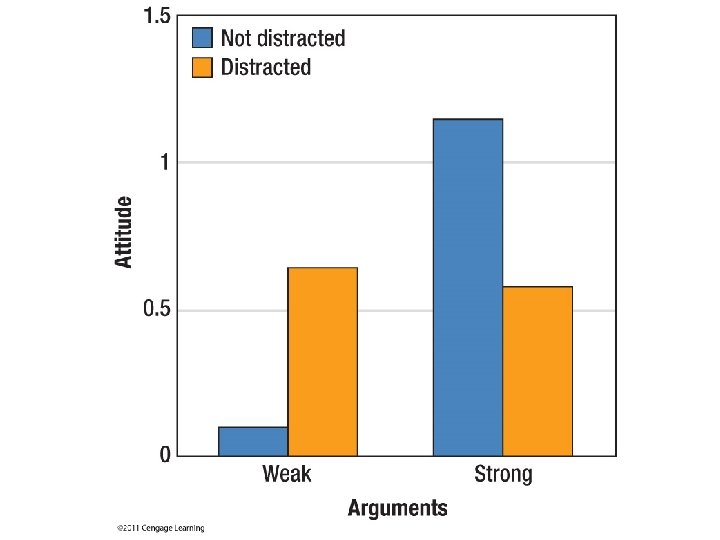
To Whom: The Audience • “Overheard” messages are more persuasive • – Product placements Distraction – Effective if the message is weak – Less effective with a strong message
Two Routes to Persuasion • Elaboration likelihood model • Heuristic/Systematic model – Both propose automatic and conscious processing are involved in persuasion
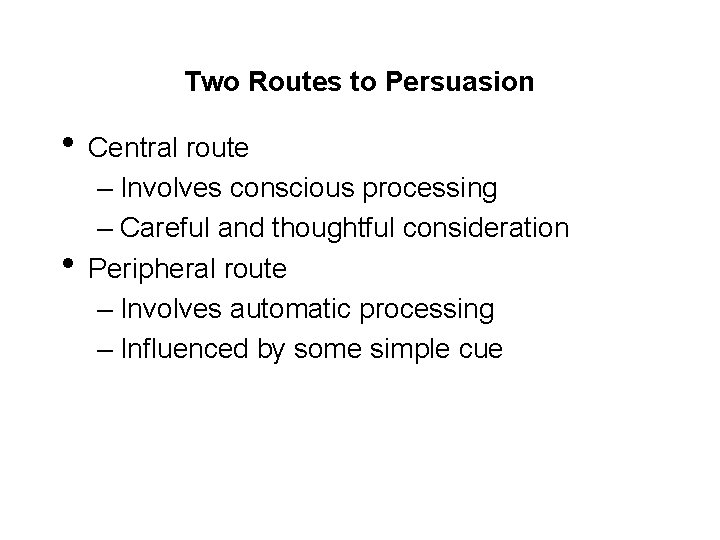
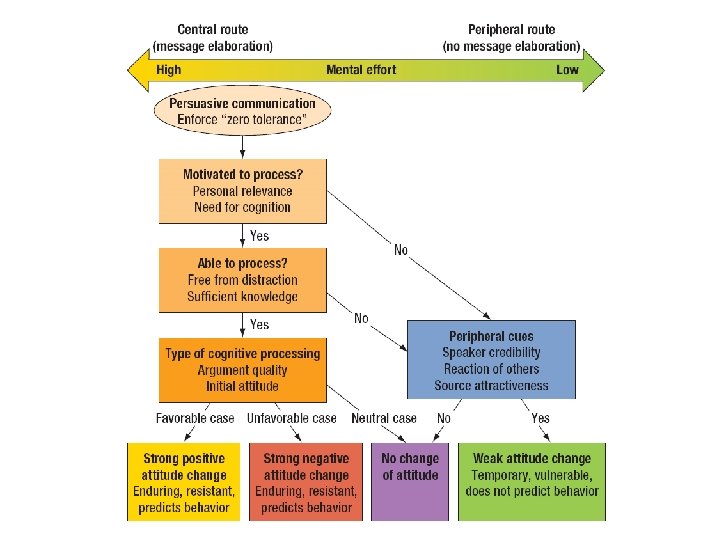
Two Routes to Persuasion • Central route • – Involves conscious processing – Careful and thoughtful consideration Peripheral route – Involves automatic processing – Influenced by some simple cue
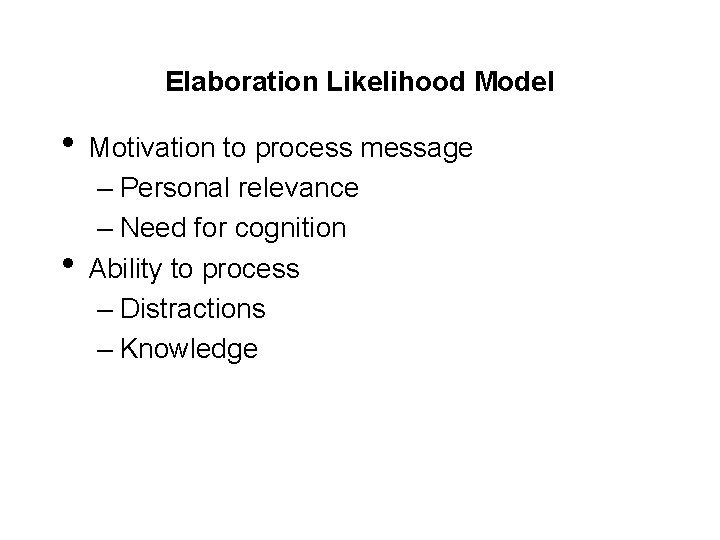
Elaboration Likelihood Model • Motivation to process message • – Personal relevance – Need for cognition Ability to process – Distractions – Knowledge
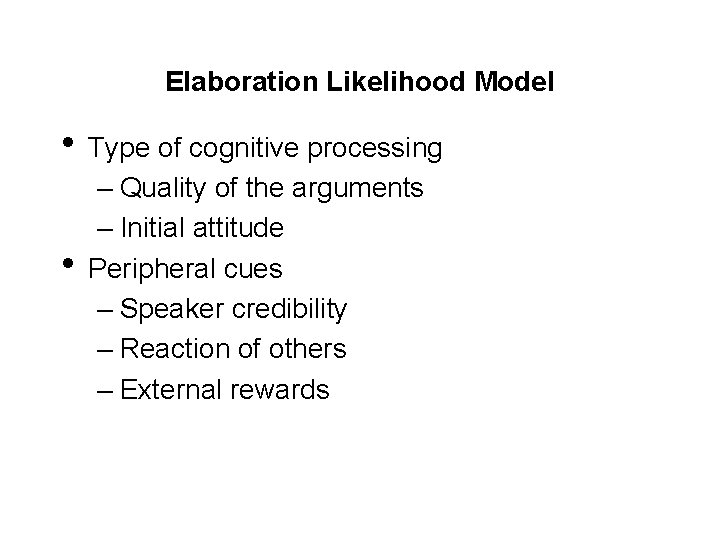
Elaboration Likelihood Model • Type of cognitive processing • – Quality of the arguments – Initial attitude Peripheral cues – Speaker credibility – Reaction of others – External rewards
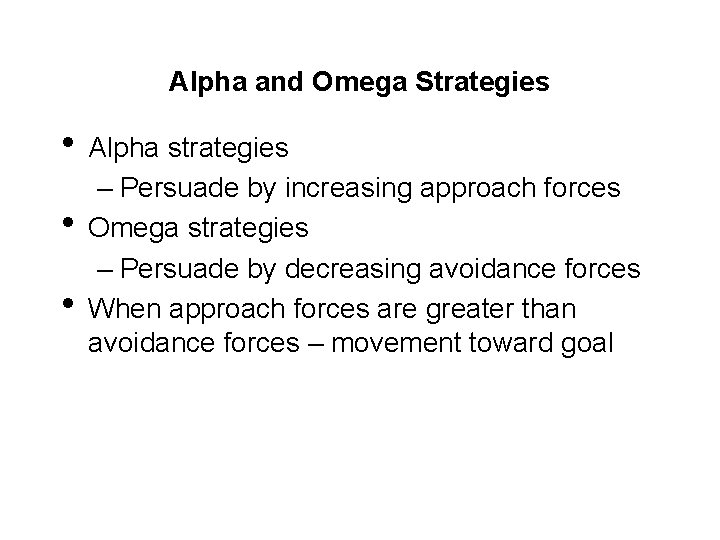
Alpha and Omega Strategies • Alpha strategies • • – Persuade by increasing approach forces Omega strategies – Persuade by decreasing avoidance forces When approach forces are greater than avoidance forces – movement toward goal
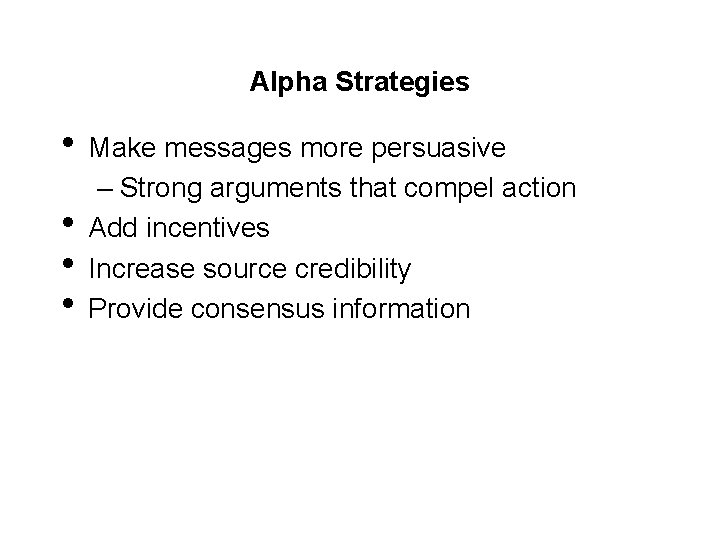
Alpha Strategies • Make messages more persuasive • • • – Strong arguments that compel action Add incentives Increase source credibility Provide consensus information
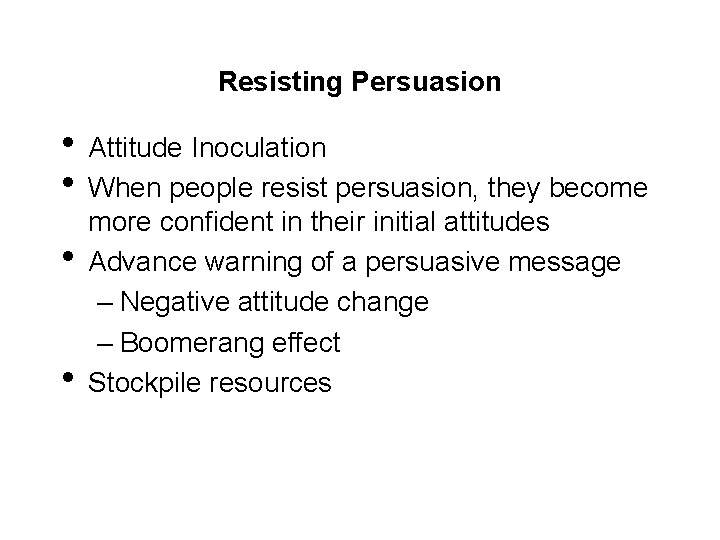
Resisting Persuasion • Attitude Inoculation • When people resist persuasion, they become • • more confident in their initial attitudes Advance warning of a persuasive message – Negative attitude change – Boomerang effect Stockpile resources
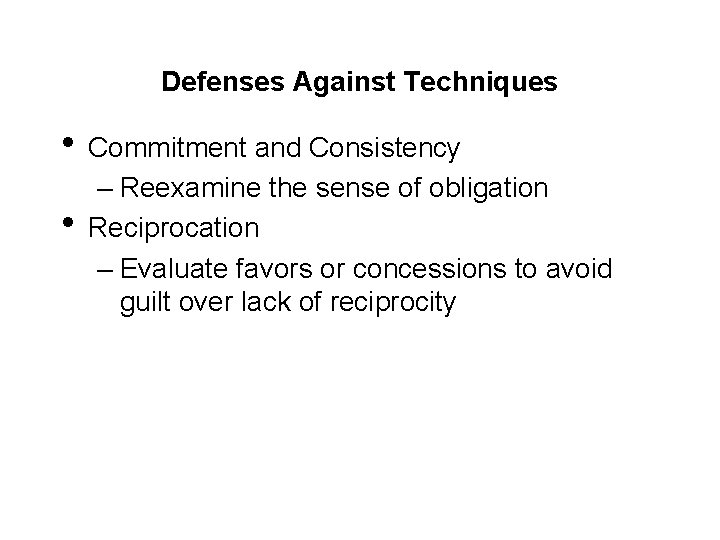
Defenses Against Techniques • Commitment and Consistency • – Reexamine the sense of obligation Reciprocation – Evaluate favors or concessions to avoid guilt over lack of reciprocity
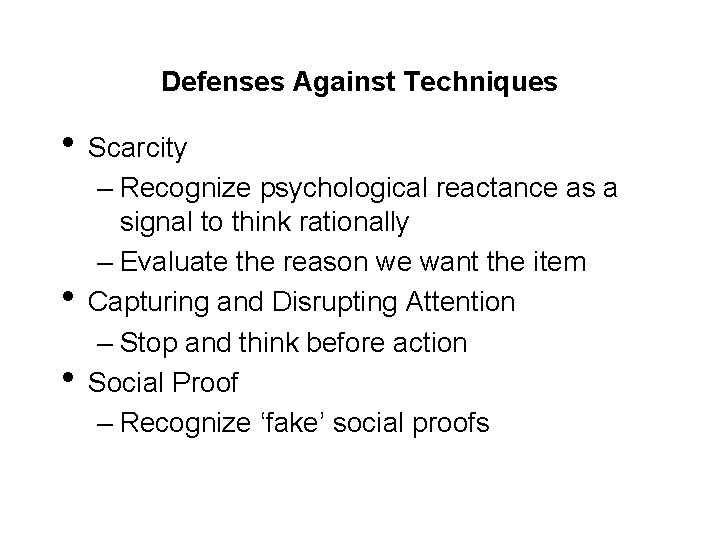
Defenses Against Techniques • Scarcity • • – Recognize psychological reactance as a signal to think rationally – Evaluate the reason we want the item Capturing and Disrupting Attention – Stop and think before action Social Proof – Recognize ‘fake’ social proofs