
Chapter 8 Quality management Capacity planning and control
- Slides: 12
Chapter 8 Quality management
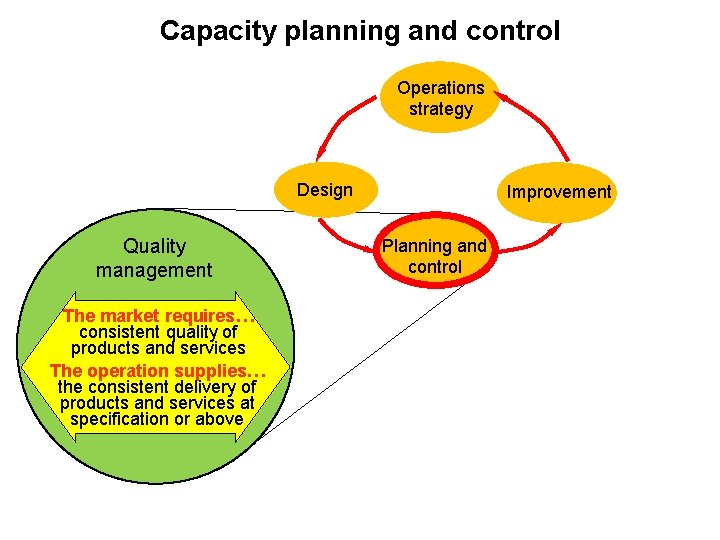
Capacity planning and control Operations strategy Design Quality management The market requires… consistent quality of products and services The operation supplies… the consistent delivery of products and services at specification or above Improvement Planning and control
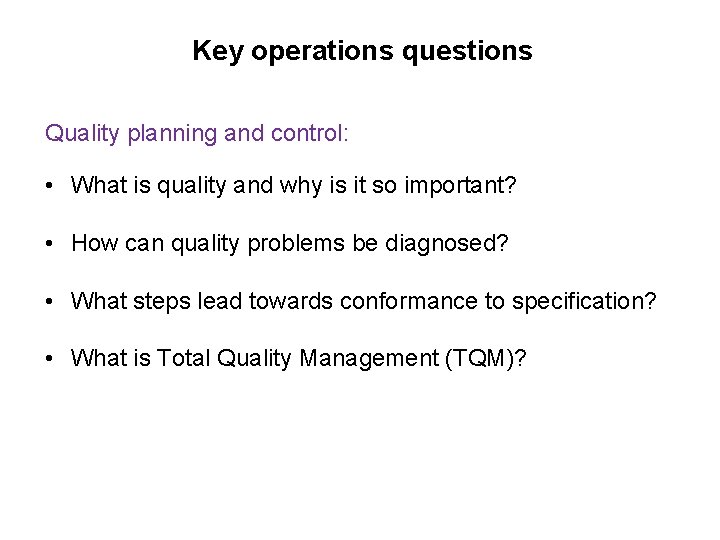
Key operations questions Quality planning and control: • What is quality and why is it so important? • How can quality problems be diagnosed? • What steps lead towards conformance to specification? • What is Total Quality Management (TQM)?
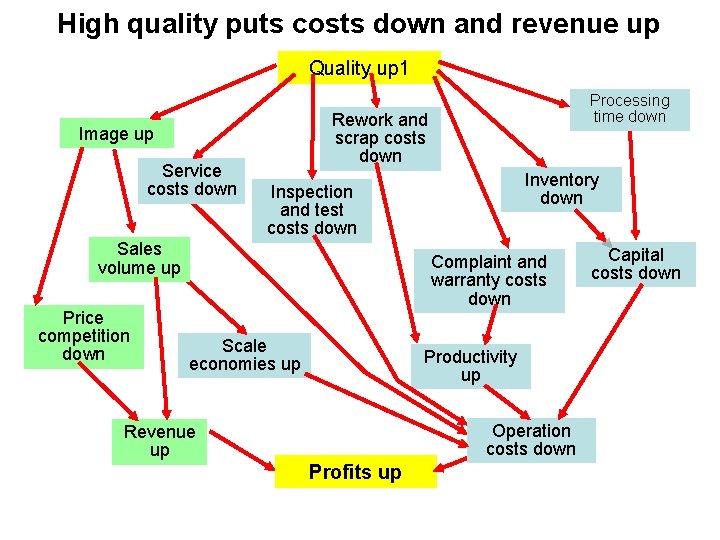
High quality puts costs down and revenue up Quality up 1 Rework and scrap costs down Image up Service costs down Inventory down Inspection and test costs down Sales volume up Price competition down Processing time down Complaint and warranty costs down Scale economies up Productivity up Operation costs down Revenue up Profits up Capital costs down
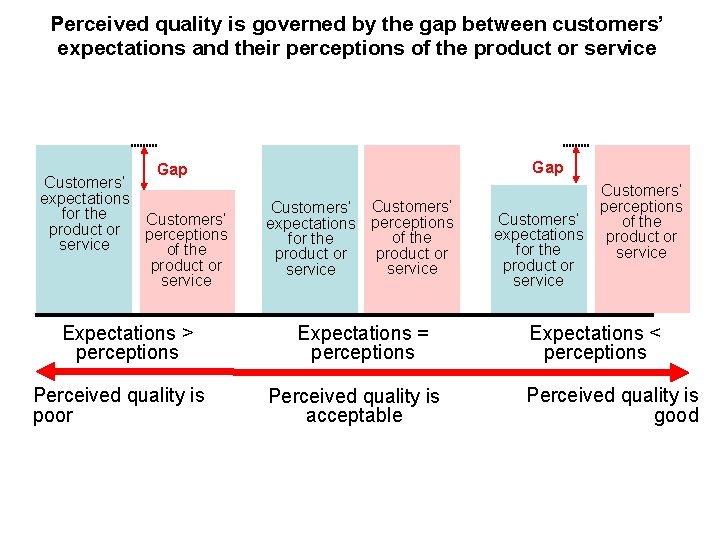
Perceived quality is governed by the gap between customers’ expectations and their perceptions of the product or service Gap Customers’ expectations for the Customers’ product or perceptions service of the product or service Expectations > perceptions Perceived quality is poor Customers’ expectations perceptions of the for the product or service Expectations = perceptions Perceived quality is acceptable Customers’ expectations for the product or service Customers’ perceptions of the product or service Expectations < perceptions Perceived quality is good
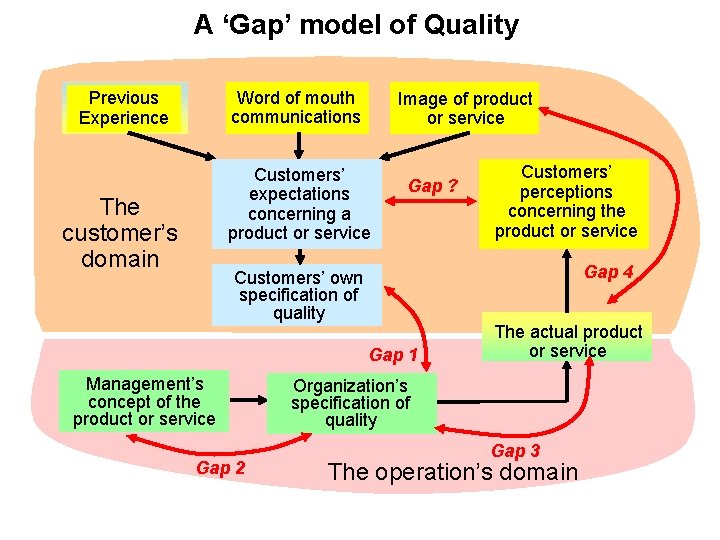
A ‘Gap’ model of Quality Word of mouth communications Previous Experience Image of product or service Customers’ expectations concerning a product or service The customer’s domain Gap ? Gap 4 Customers’ own specification of quality Gap 1 Management’s concept of the product or service Gap 2 Customers’ perceptions concerning the product or service The actual product or service Organization’s specification of quality Gap 3 The operation’s domain
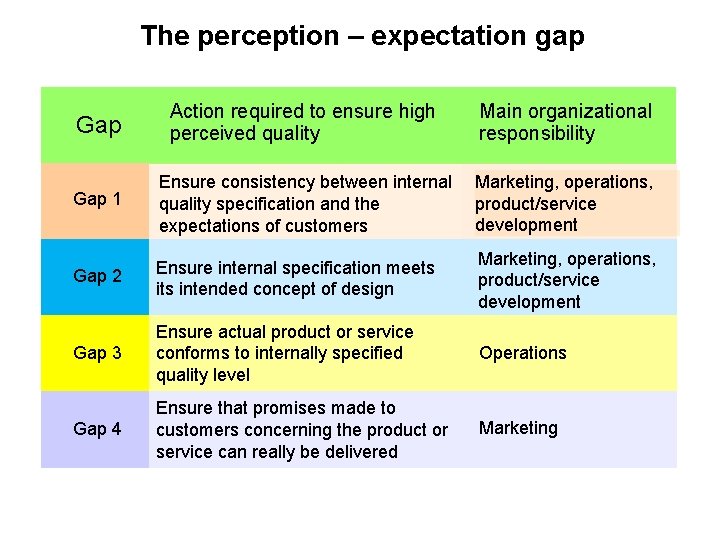
The perception – expectation gap Gap Action required to ensure high perceived quality Main organizational responsibility Gap 1 Ensure consistency between internal quality specification and the expectations of customers Marketing, operations, product/service development Gap 2 Ensure internal specification meets intended concept of design Marketing, operations, product/service development Gap 3 Ensure actual product or service conforms to internally specified quality level Operations Gap 4 Ensure that promises made to customers concerning the product or service can really be delivered Marketing
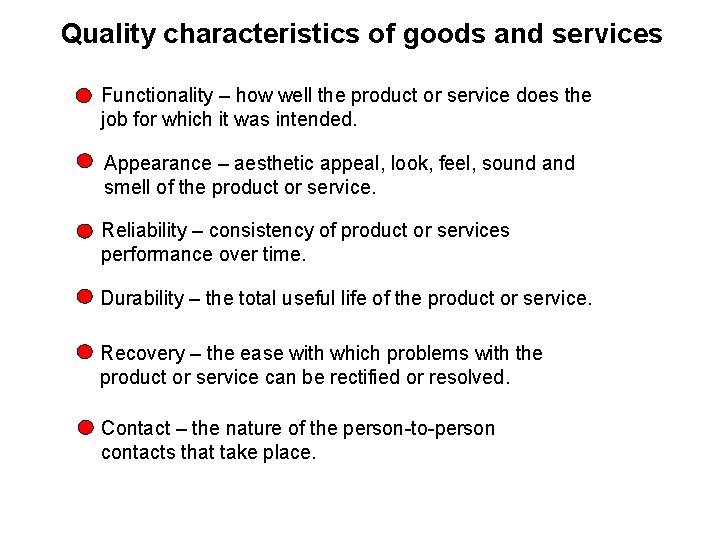
Quality characteristics of goods and services Functionality – how well the product or service does the job for which it was intended. Appearance – aesthetic appeal, look, feel, sound and smell of the product or service. Reliability – consistency of product or services performance over time. Durability – the total useful life of the product or service. Recovery – the ease with which problems with the product or service can be rectified or resolved. Contact – the nature of the person-to-person contacts that take place.
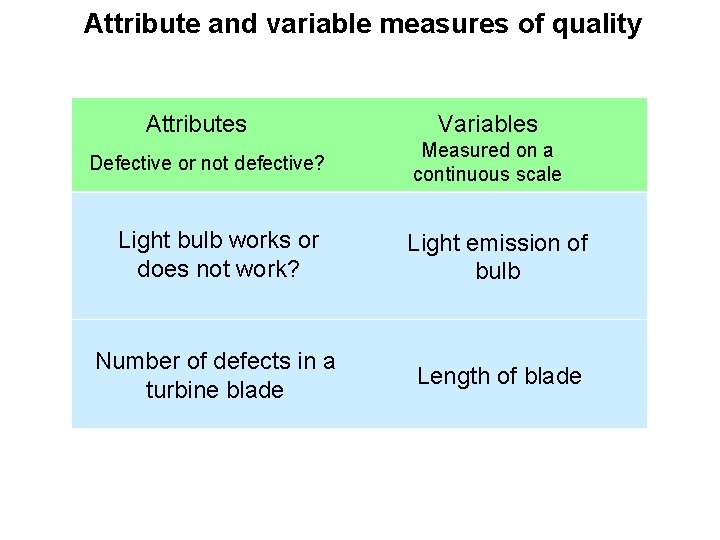
Attribute and variable measures of quality Attributes Defective or not defective? Variables Measured on a continuous scale Light bulb works or does not work? Light emission of bulb Number of defects in a. blade turbine Length of blade
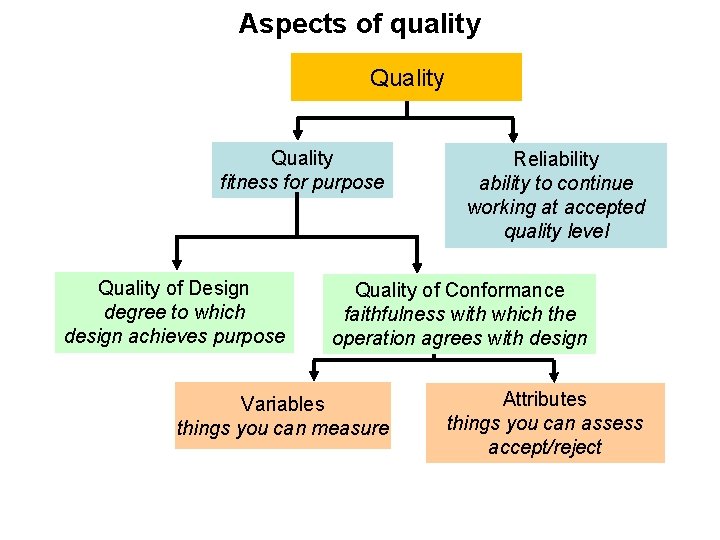
Aspects of quality Quality fitness for purpose Quality of Design degree to which design achieves purpose Reliability to continue working at accepted quality level Quality of Conformance faithfulness with which the operation agrees with design Variables things you can measure Attributes things you can assess accept/reject
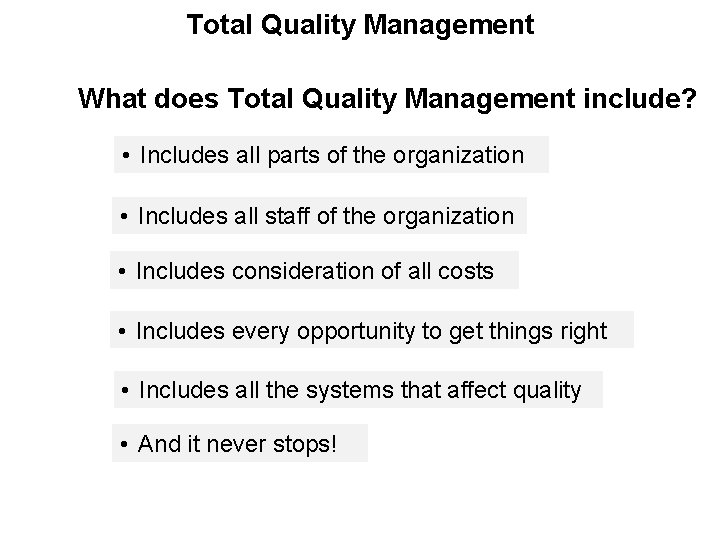
Total Quality Management What does Total Quality Management include? • Includes all parts of the organization • Includes all staff of the organization • Includes consideration of all costs • Includes every opportunity to get things right • Includes all the systems that affect quality • And it never stops!
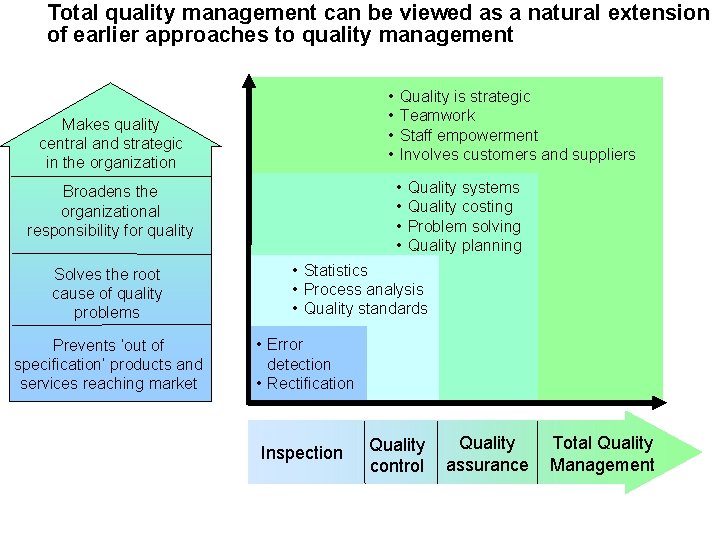
Total quality management can be viewed as a natural extension of earlier approaches to quality management • • Makes quality central and strategic in the organization • • Broadens the organizational responsibility for quality Solves the root cause of quality problems Prevents ‘out of specification’ products and services reaching market Quality is strategic Teamwork Staff empowerment Involves customers and suppliers Quality systems Quality costing Problem solving Quality planning • Statistics • Process analysis • Quality standards • Error detection • Rectification Inspection Quality control Quality assurance Total Quality Management