
Chapter 8 Plate Tectonics On the move http

- Slides: 68
Chapter 8 - Plate Tectonics On the move… http: //sos. noaa. gov/datasets/Land/paleo. html Animations
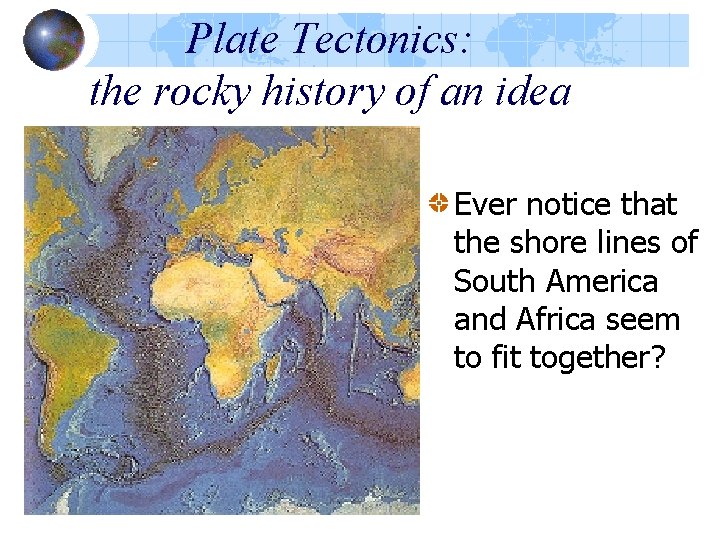
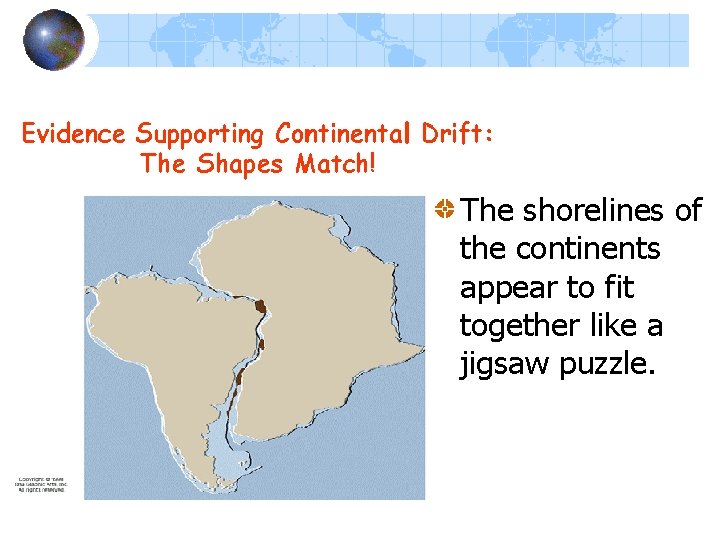
Plate Tectonics: the rocky history of an idea Ever notice that the shore lines of South America and Africa seem to fit together?
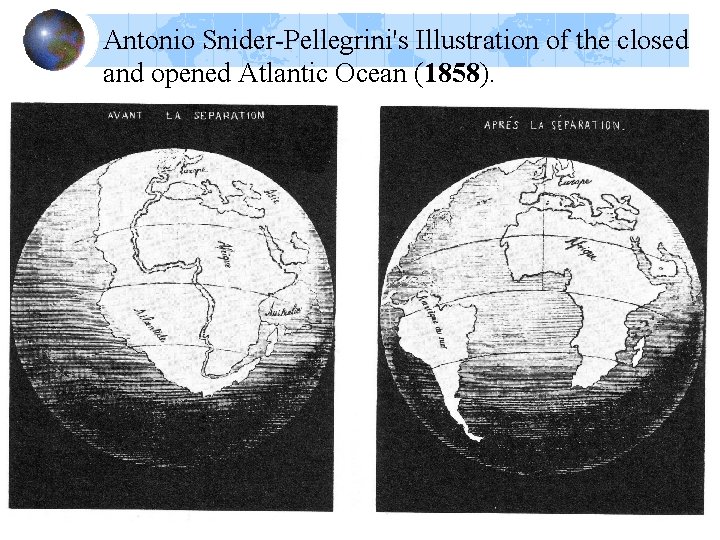
Antonio Snider-Pellegrini's Illustration of the closed and opened Atlantic Ocean (1858).
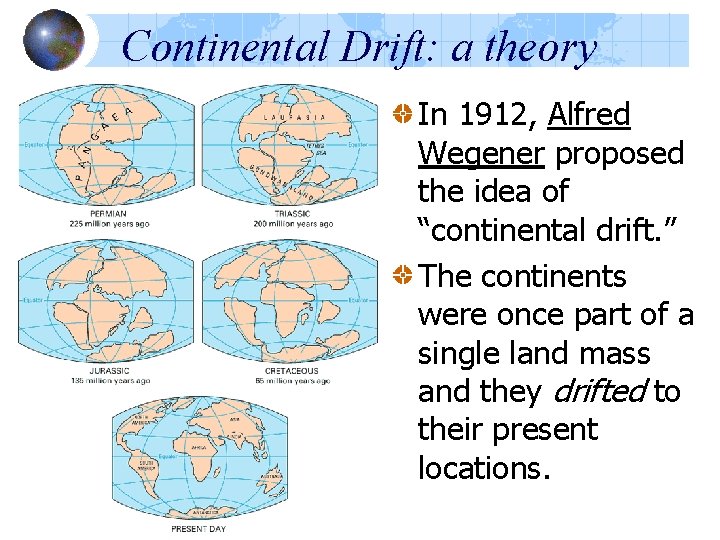
Continental Drift: a theory In 1912, Alfred Wegener proposed the idea of “continental drift. ” The continents were once part of a single land mass and they drifted to their present locations.
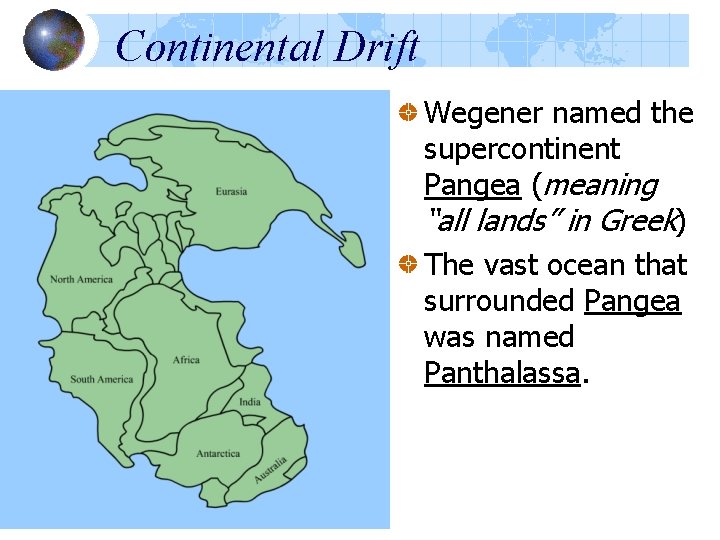
Continental Drift Wegener named the supercontinent Pangea (meaning “all lands” in Greek) The vast ocean that surrounded Pangea was named Panthalassa.
Evidence used to support the Continental Drift Theory The The The continents shapes match plants & animals (fossils) match rocks match ice matches climates don’t match
The shorelines of the continents appear to fit together like a jigsaw puzzle.
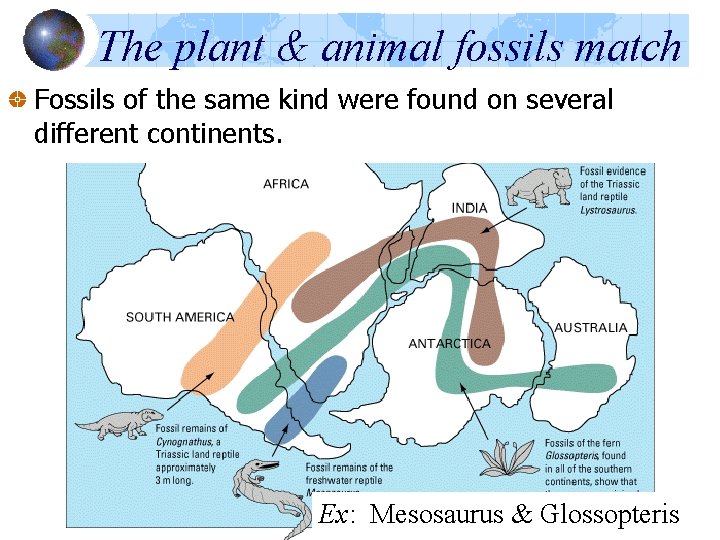
The plant & animal fossils match Fossils of the same kind were found on several different continents. Ex: Mesosaurus & Glossopteris
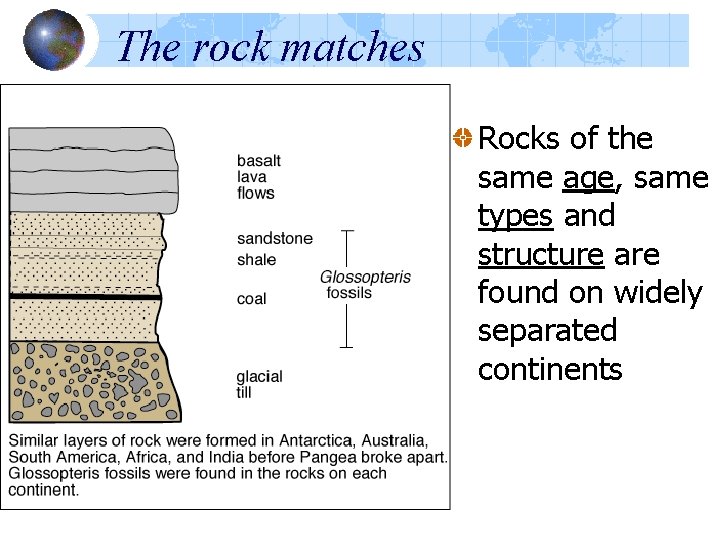
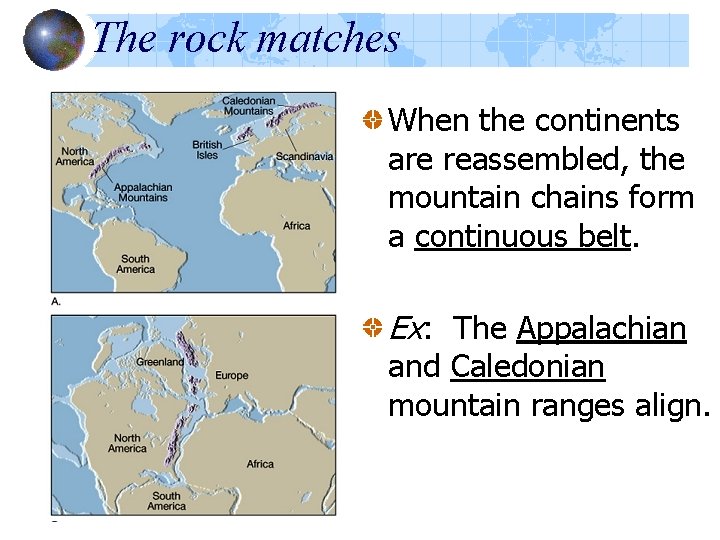
The rock matches Rocks of the same age, same types and structure are found on widely separated continents
The rock matches When the continents are reassembled, the mountain chains form a continuous belt. Ex: The Appalachian and Caledonian mountain ranges align.
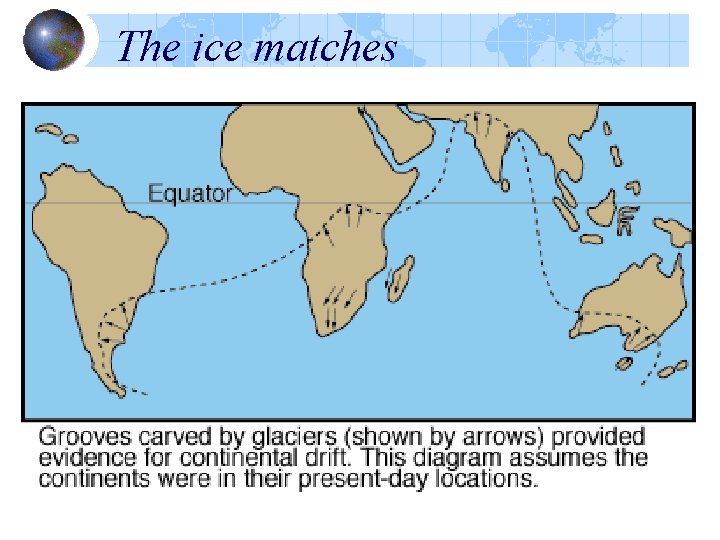
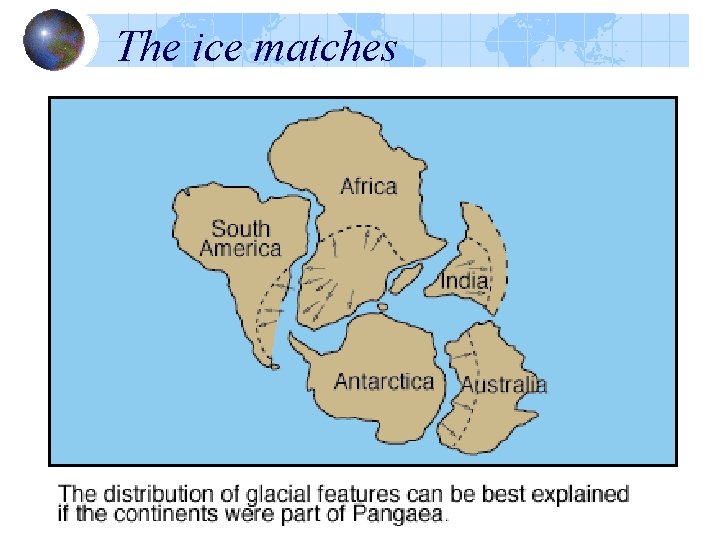
The ice matches
The ice matches
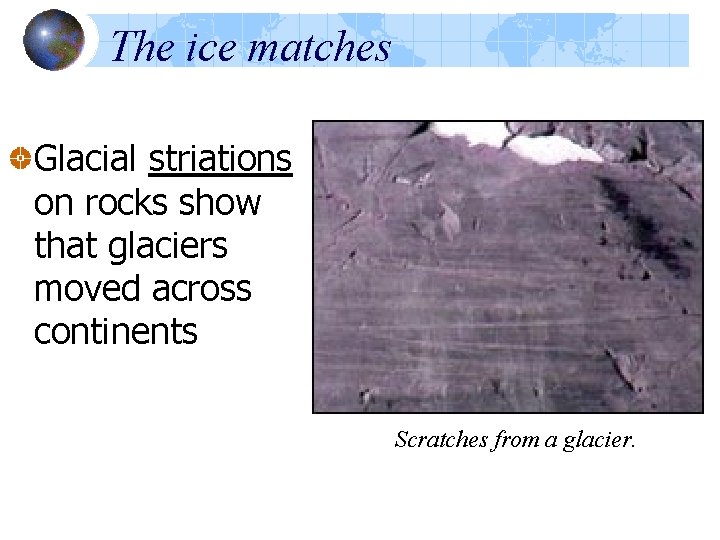
The ice matches Glacial striations on rocks show that glaciers moved across continents Scratches from a glacier.
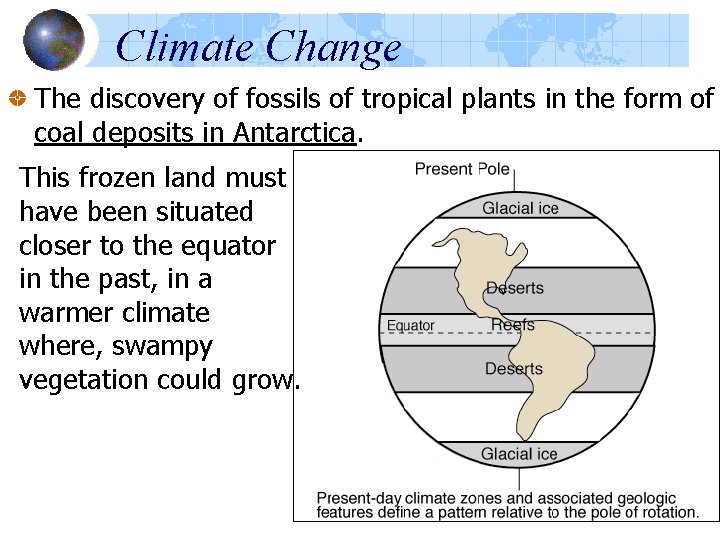
Climate Change The discovery of fossils of tropical plants in the form of coal deposits in Antarctica. This frozen land must have been situated closer to the equator in the past, in a warmer climate where, swampy vegetation could grow.
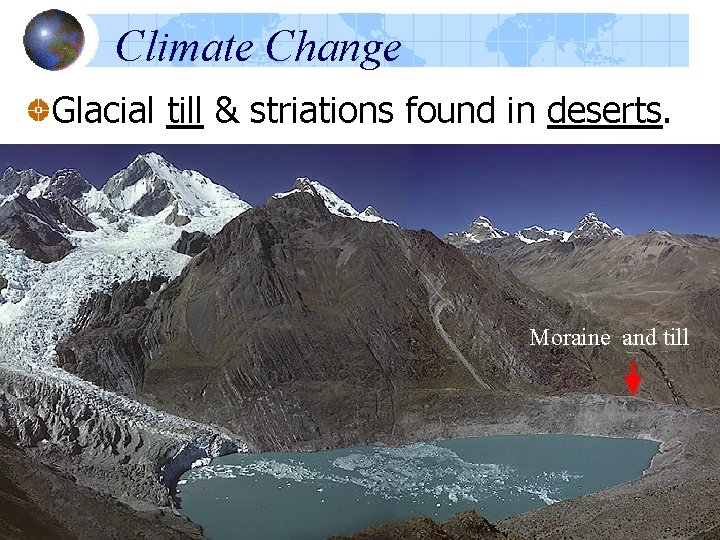
Climate Change Glacial till & striations found in deserts. Moraine and till
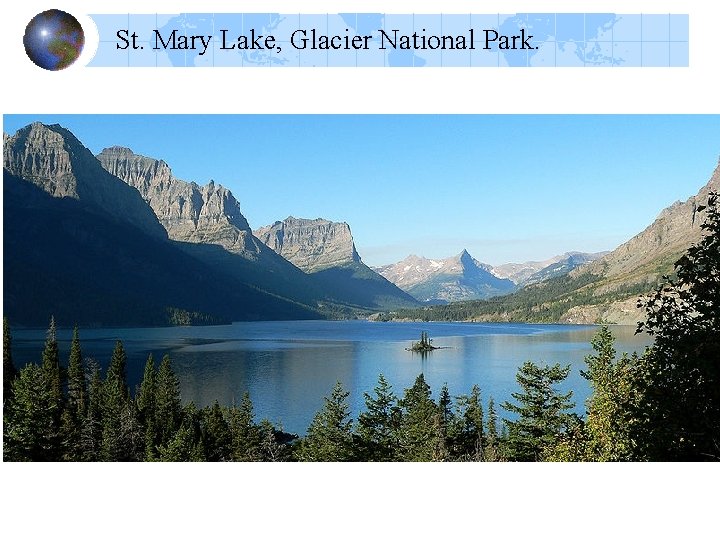
St. Mary Lake, Glacier National Park.
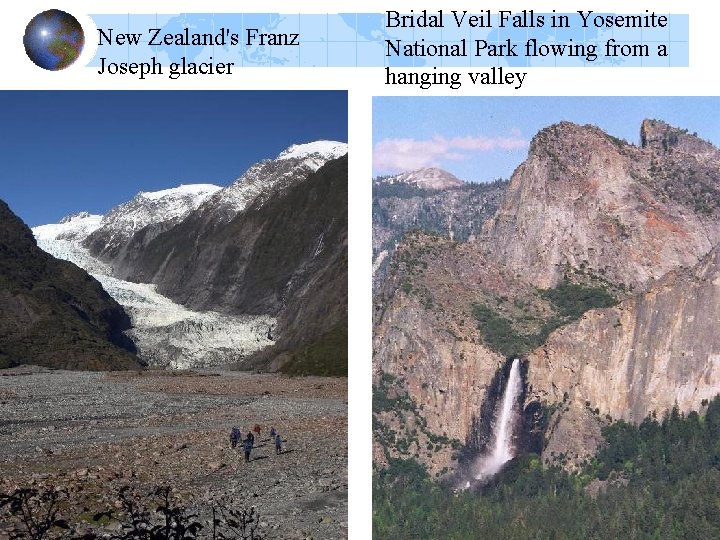
New Zealand's Franz Joseph glacier Bridal Veil Falls in Yosemite National Park flowing from a hanging valley
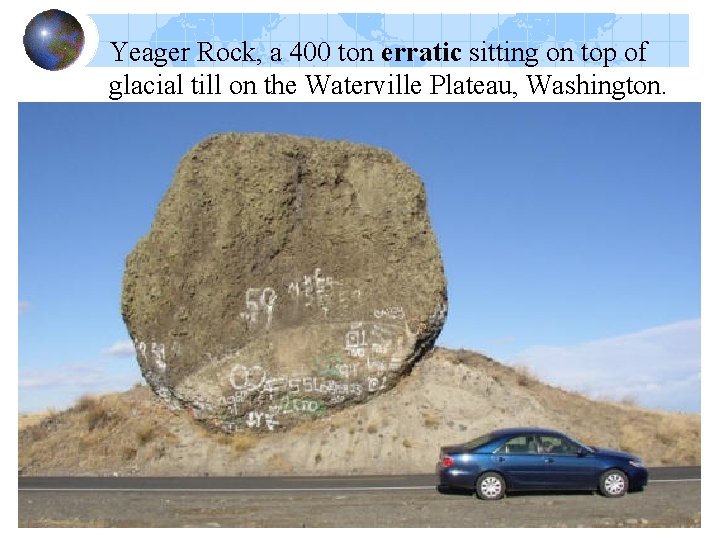
Yeager Rock, a 400 ton erratic sitting on top of glacial till on the Waterville Plateau, Washington.
Although plenty of evidence supports Wegener’s Continental Drift theory, it was not accepted by the scientific world at the time. Pretend you are a skeptical scientist. Would Wegener’s evidence be enough to convince you that the continents are moving? What could you argue against this theory? What is Wegener missing?
The mystery… How does it work? What causes the motion? Do continents just plow through the ocean? These questions weren’t answered until decades later after Wegener’s death.
…solved Beginning in the 1950’s new evidence emerged to support the old theory and helped develop a new one…
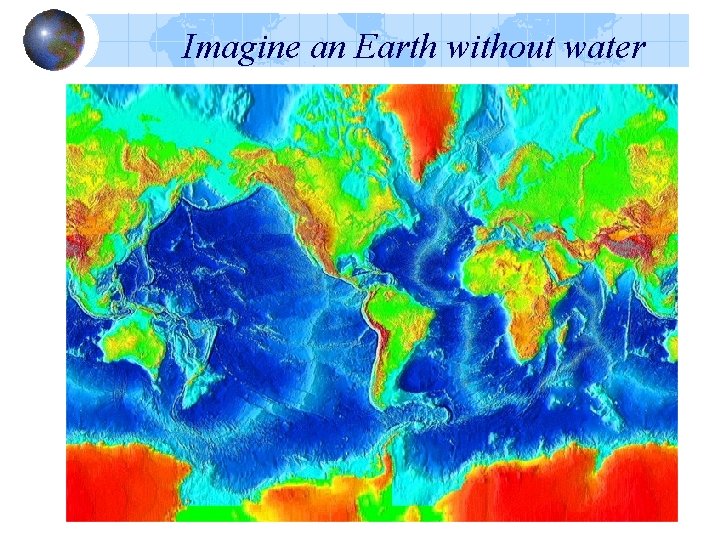
Imagine an Earth without water
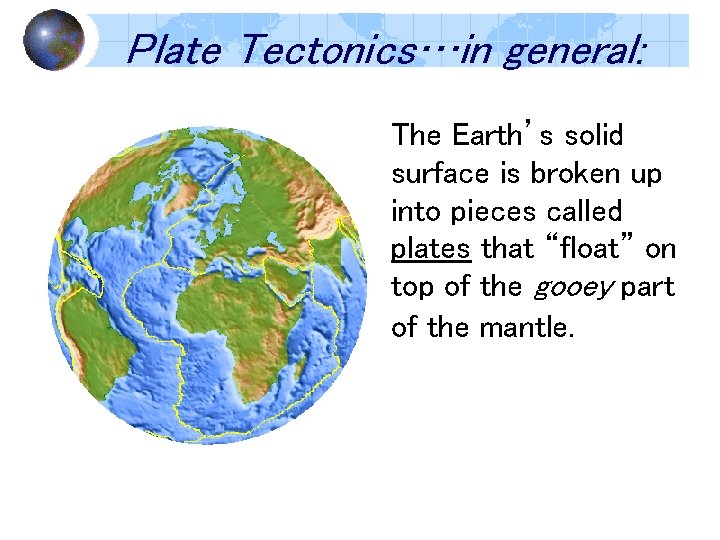
Plate Tectonics…in general: The Earth’s solid surface is broken up into pieces called plates that “float” on top of the gooey part of the mantle.
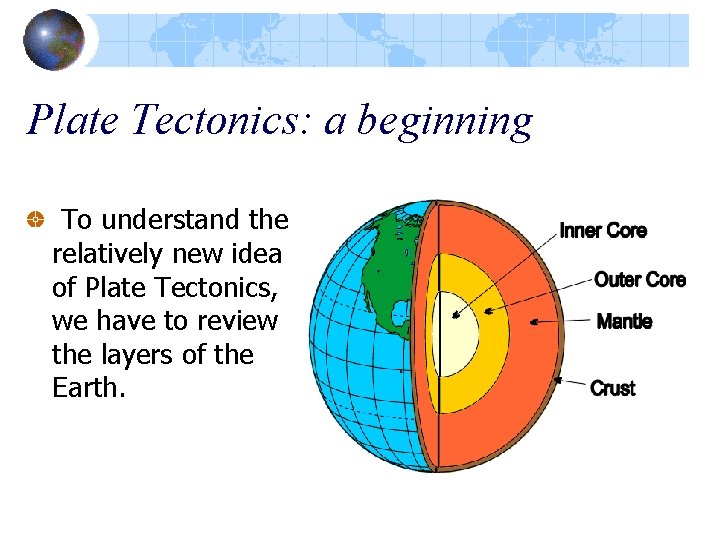
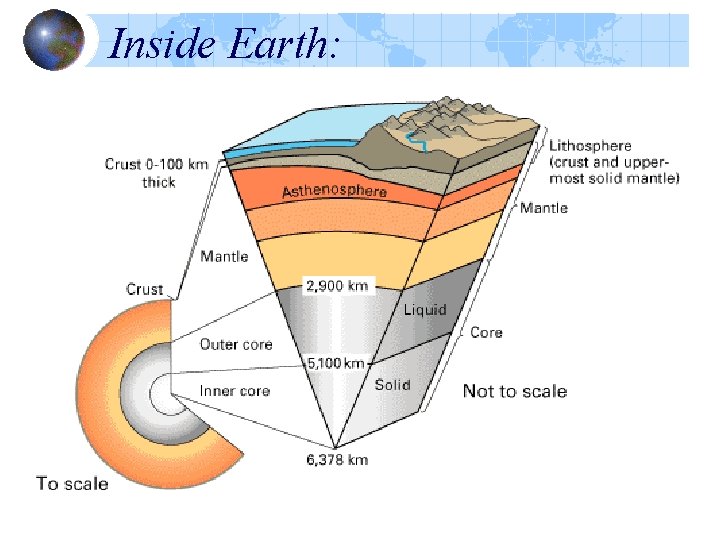
Plate Tectonics: a beginning To understand the relatively new idea of Plate Tectonics, we have to review the layers of the Earth.
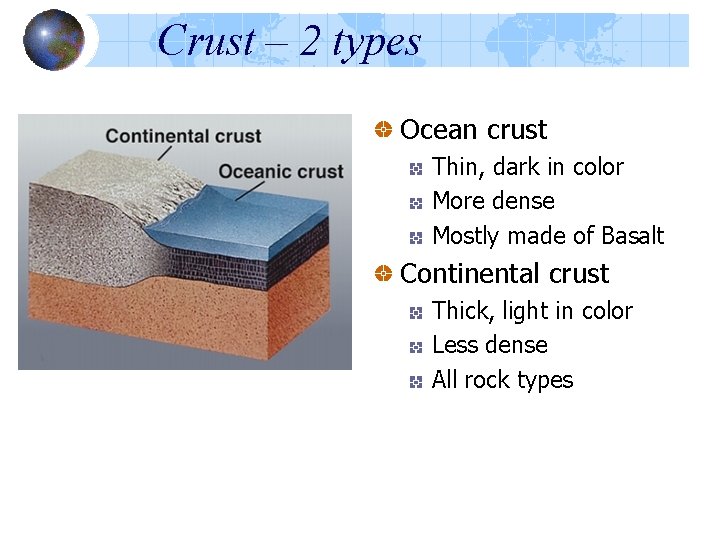
Crust – 2 types Ocean crust Thin, dark in color More dense Mostly made of Basalt Continental crust Thick, light in color Less dense All rock types
Inside Earth:
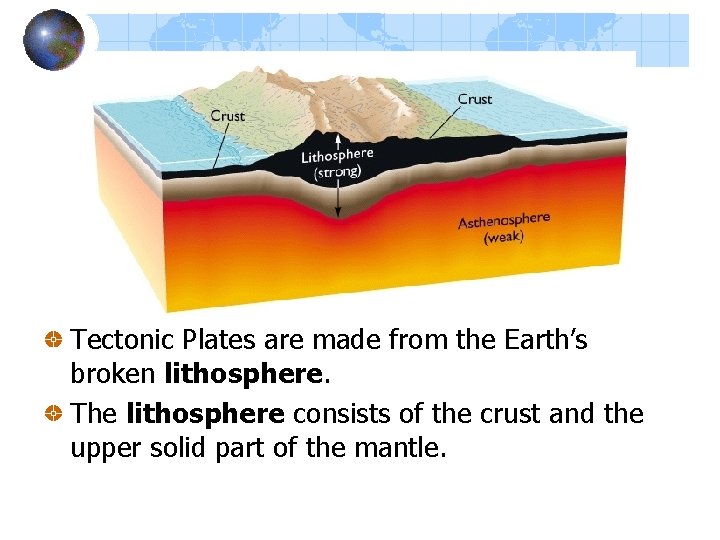
Tectonic Plates are made from the Earth’s broken lithosphere. The lithosphere consists of the crust and the upper solid part of the mantle.
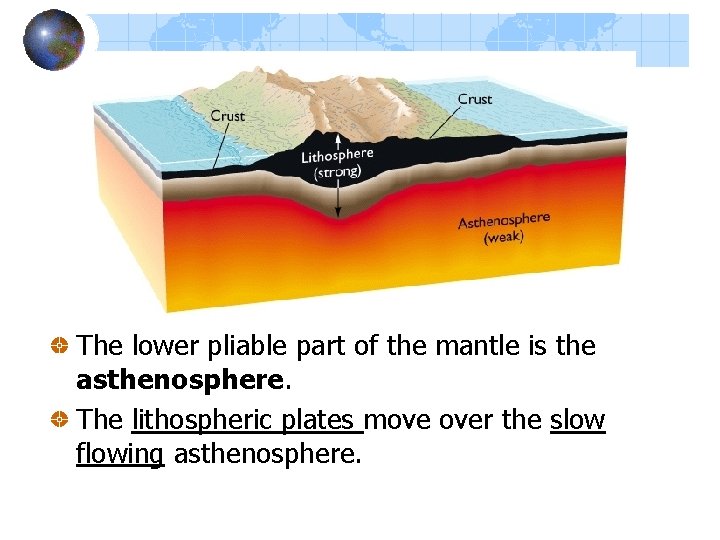
The lower pliable part of the mantle is the asthenosphere. The lithospheric plates move over the slow flowing asthenosphere.
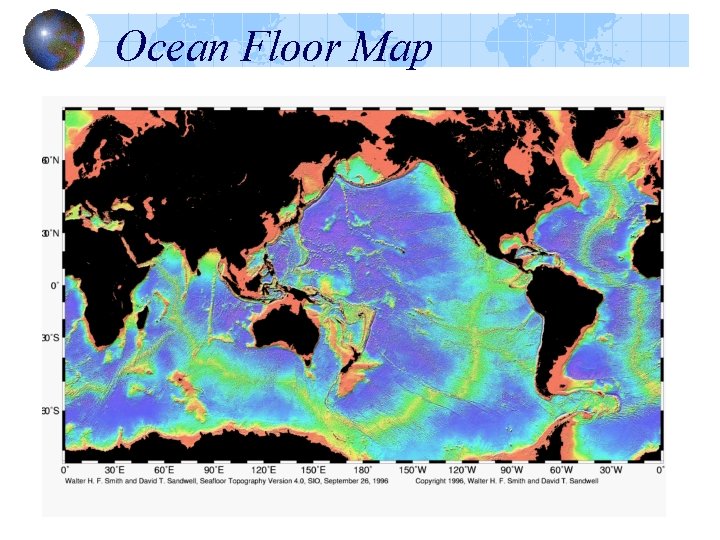
New Evidence used to develop Plate Tectonics Ocean floor mapping led to the discovery of… Seafloor spreading Magnetic Reversals Locations of Earthquakes and Volcanoes
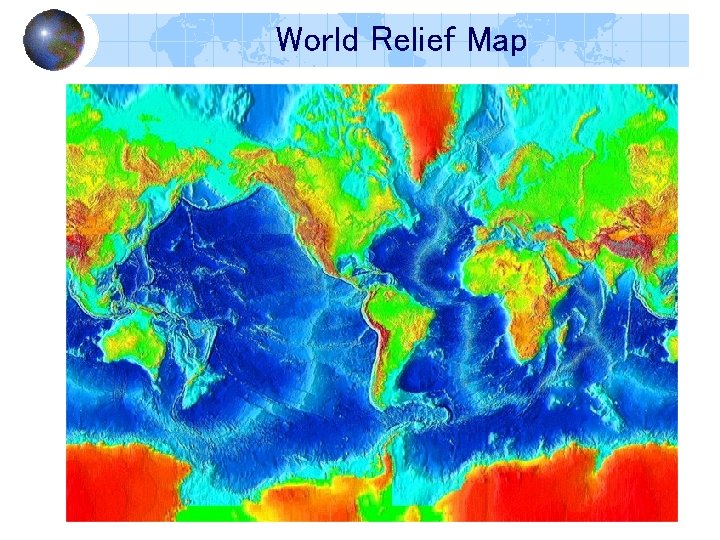
Ocean Floor Map
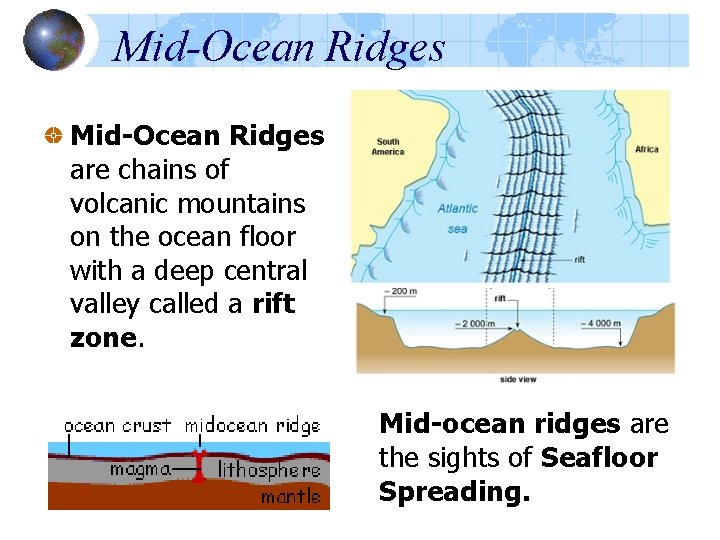
Mid-Ocean Ridges are chains of volcanic mountains on the ocean floor with a deep central valley called a rift zone. Mid-ocean ridges are the sights of Seafloor Spreading.
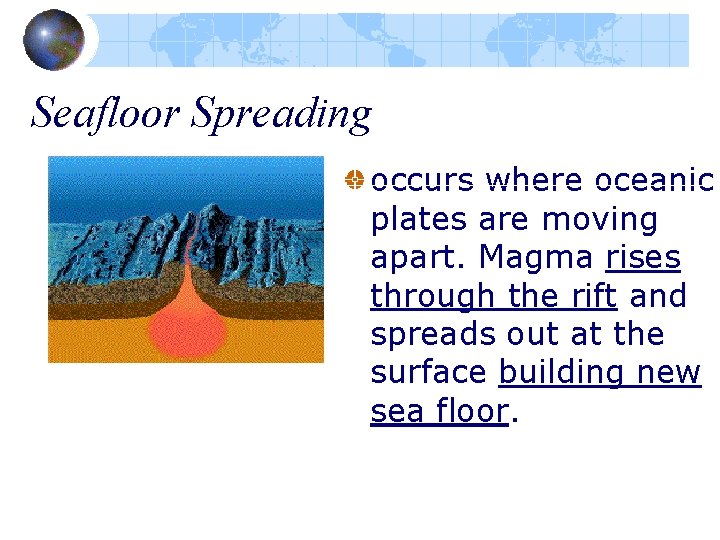
Seafloor Spreading occurs where oceanic plates are moving apart. Magma rises through the rift and spreads out at the surface building new sea floor.
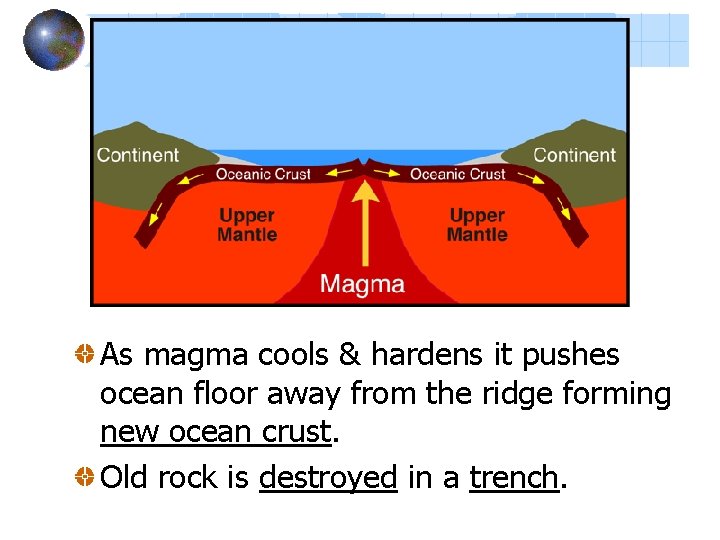
As magma cools & hardens it pushes ocean floor away from the ridge forming new ocean crust. Old rock is destroyed in a trench.
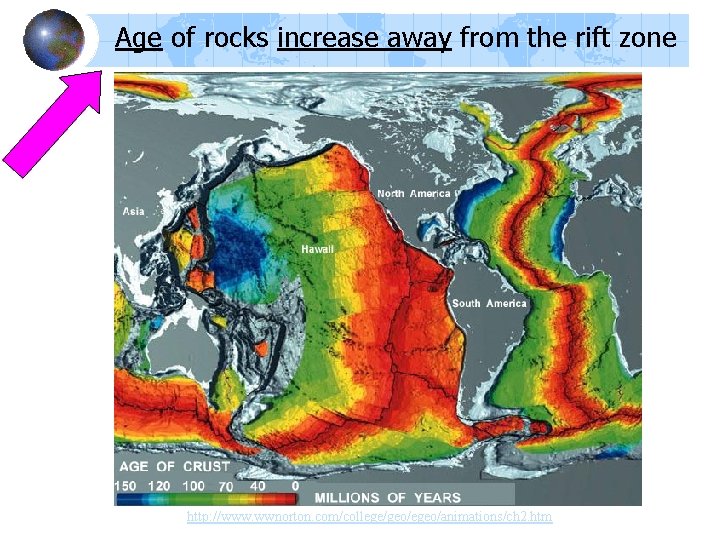
Age of rocks increase away from the rift zone http: //www. wwnorton. com/college/geo/egeo/animations/ch 2. htm
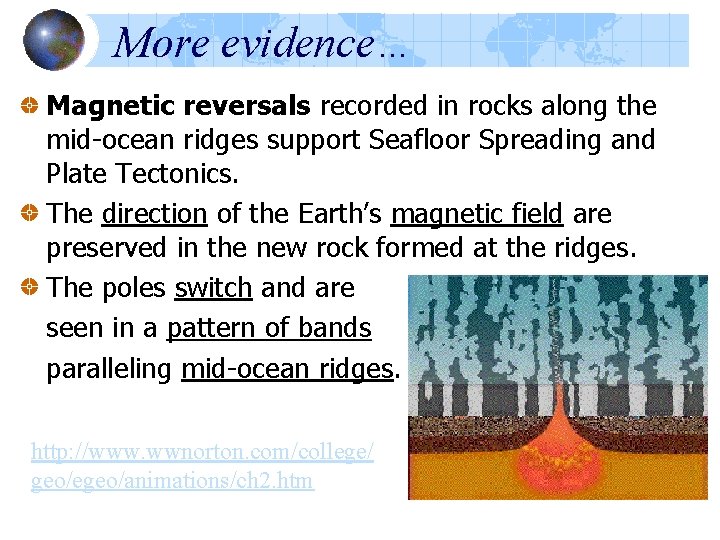
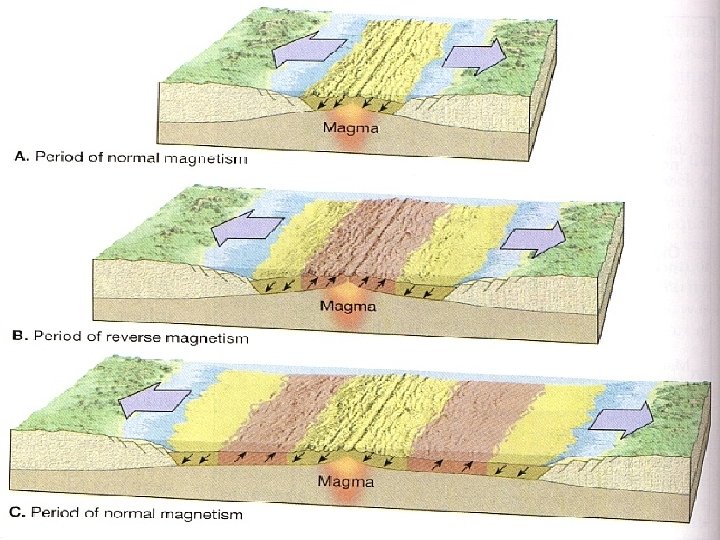
More evidence… Magnetic reversals recorded in rocks along the mid-ocean ridges support Seafloor Spreading and Plate Tectonics. The direction of the Earth’s magnetic field are preserved in the new rock formed at the ridges. The poles switch and are seen in a pattern of bands paralleling mid-ocean ridges. http: //www. wwnorton. com/college/ geo/egeo/animations/ch 2. htm
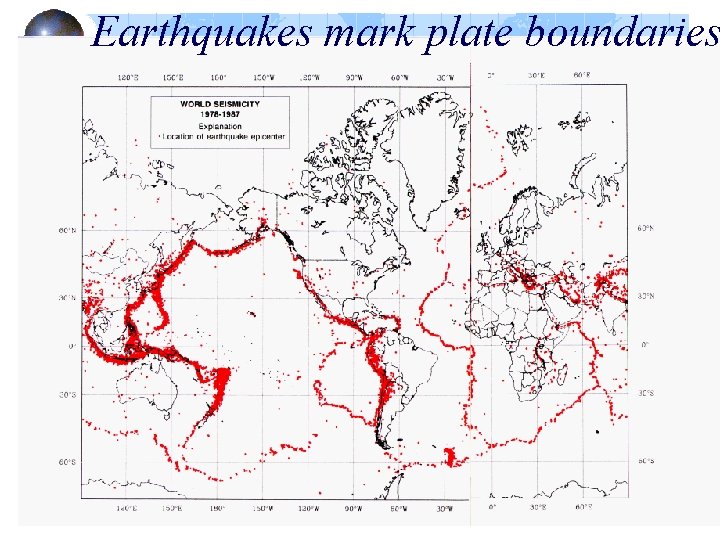
Earthquakes mark plate boundaries
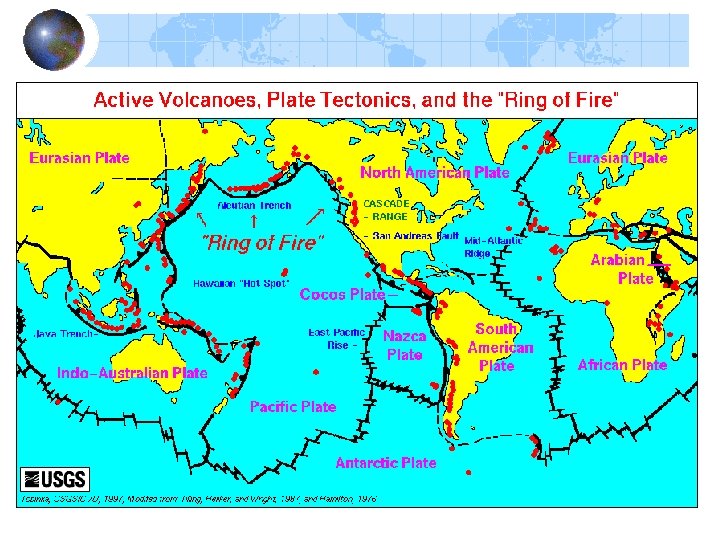
Locations of Earthquakes & Volcanoes Do not occur randomly. Actually mark the locations of plate boundaries. Occur when plates are pushing towards, pulling away, or sliding past each other.
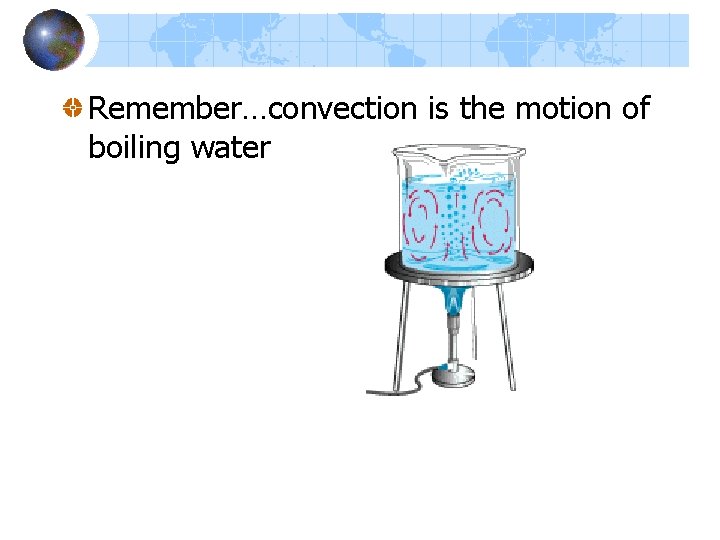
Remember…convection is the motion of boiling water
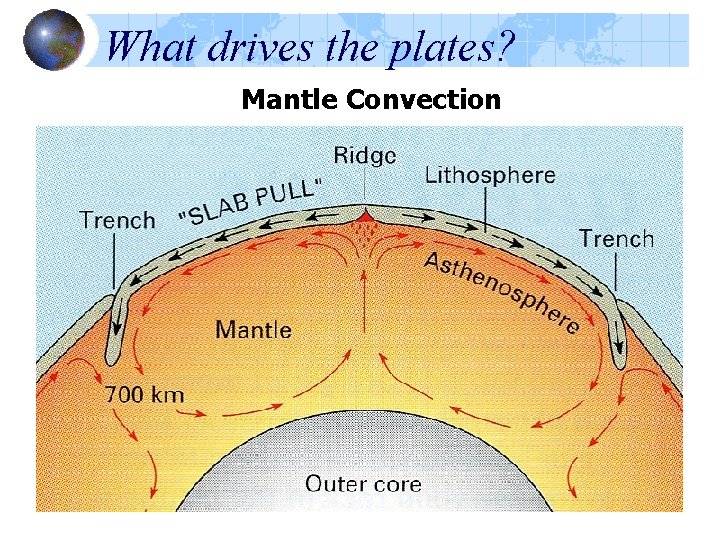
What drives the plates? Mantle Convection
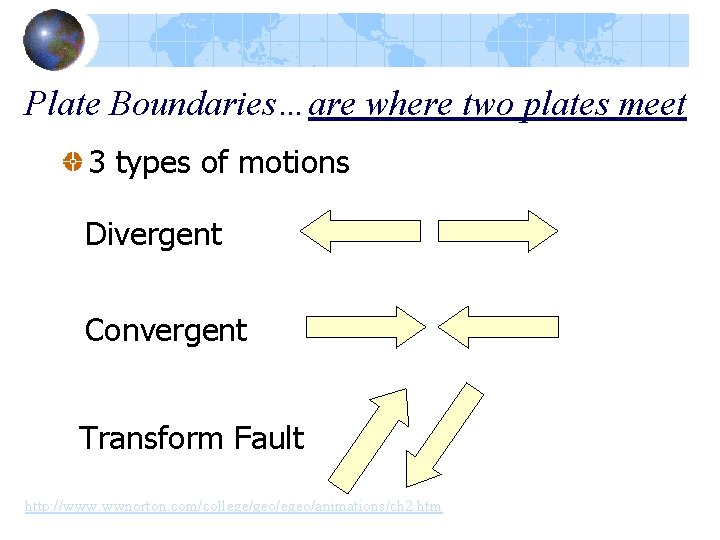
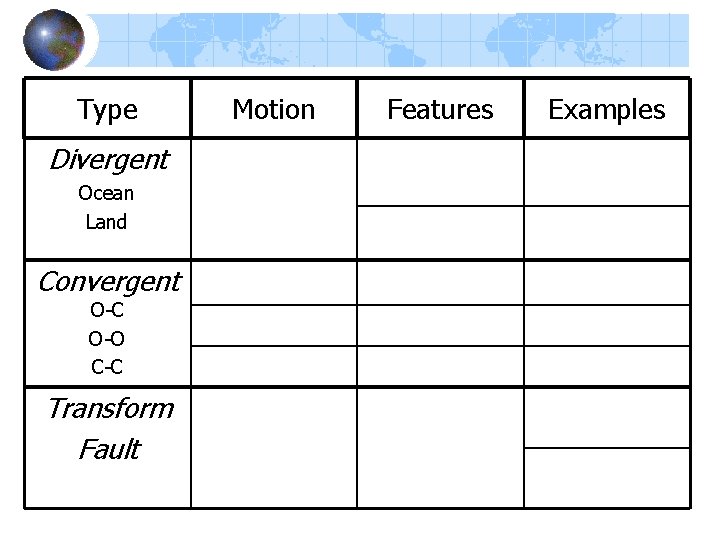
Plate Boundaries…are where two plates meet 3 types of motions Divergent Convergent Transform Fault http: //www. wwnorton. com/college/geo/egeo/animations/ch 2. htm
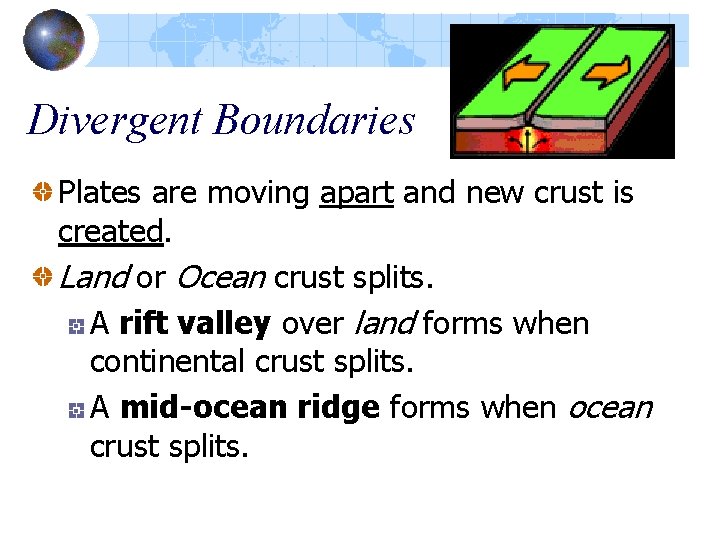
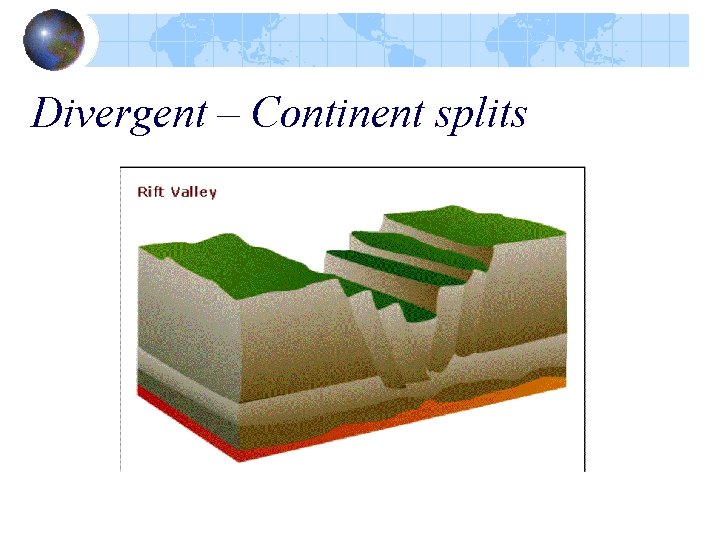
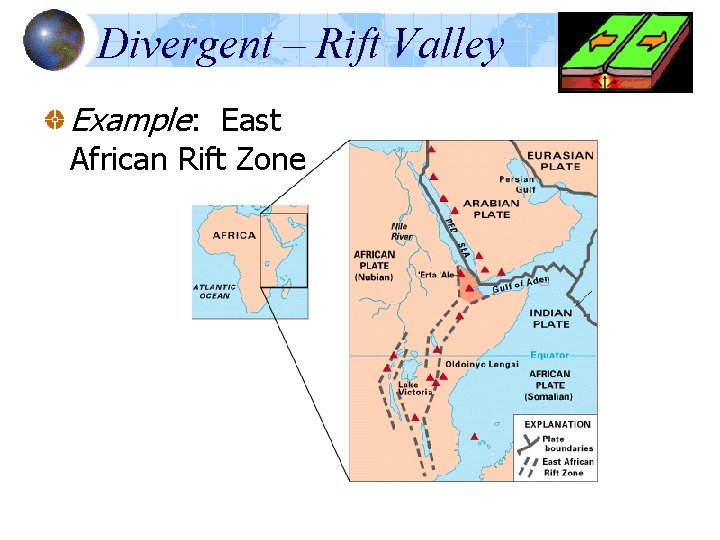
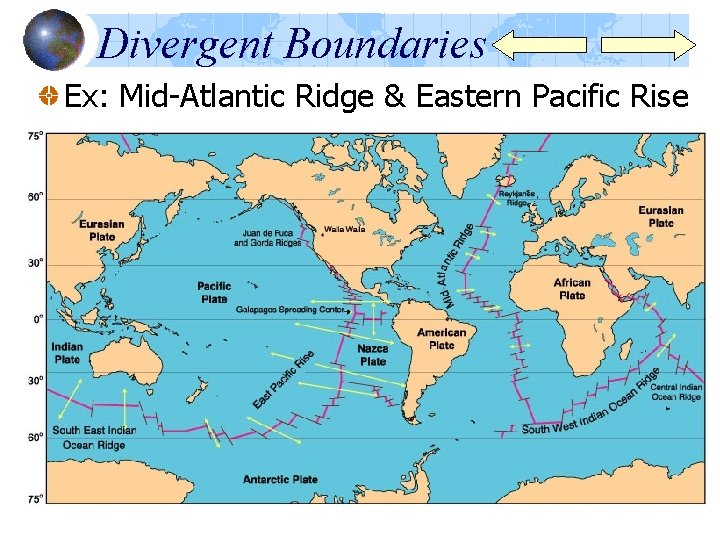
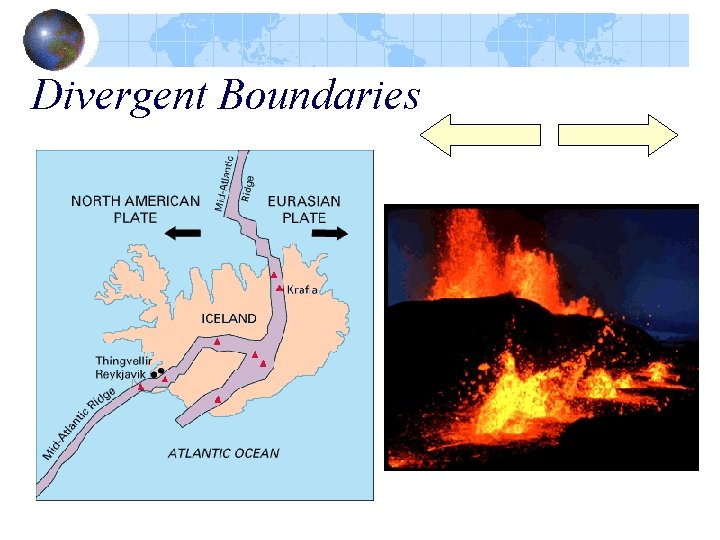
Divergent Boundaries Plates are moving apart and new crust is created. Land or Ocean crust splits. A rift valley over land forms when continental crust splits. A mid-ocean ridge forms when ocean crust splits.
Divergent – Continent splits
Divergent – Rift Valley Example: East African Rift Zone
Divergent Boundaries Ex: Mid-Atlantic Ridge & Eastern Pacific Rise
Divergent Boundaries
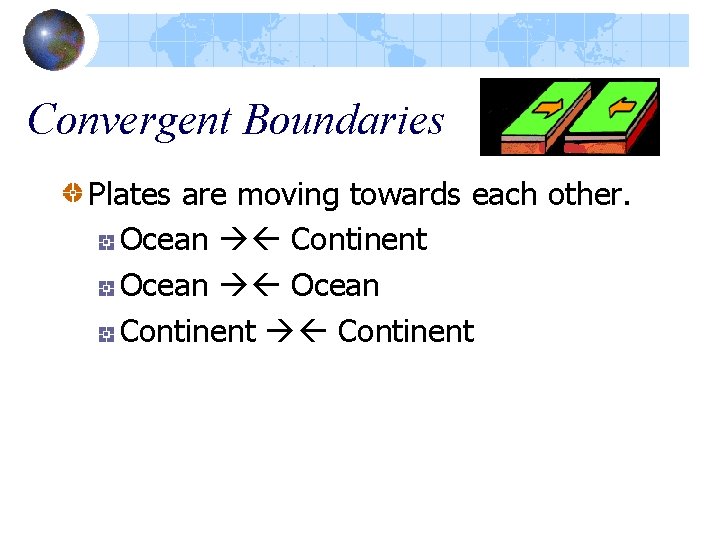
Convergent Boundaries Plates are moving towards each other. Ocean Continent Ocean Continent
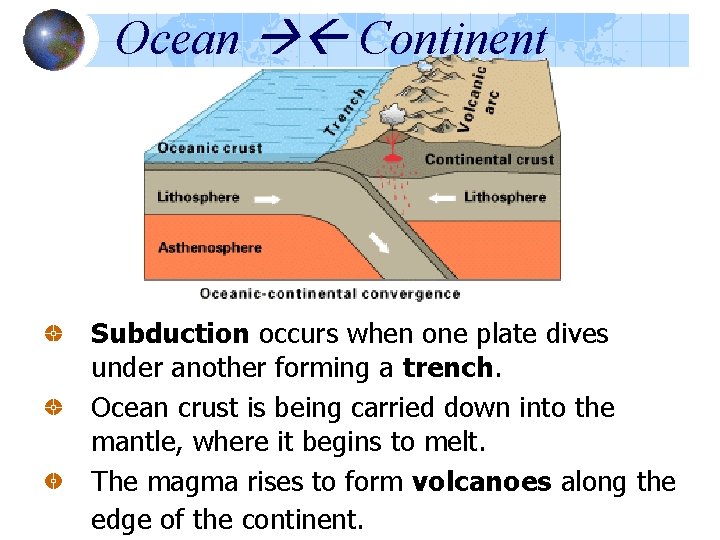
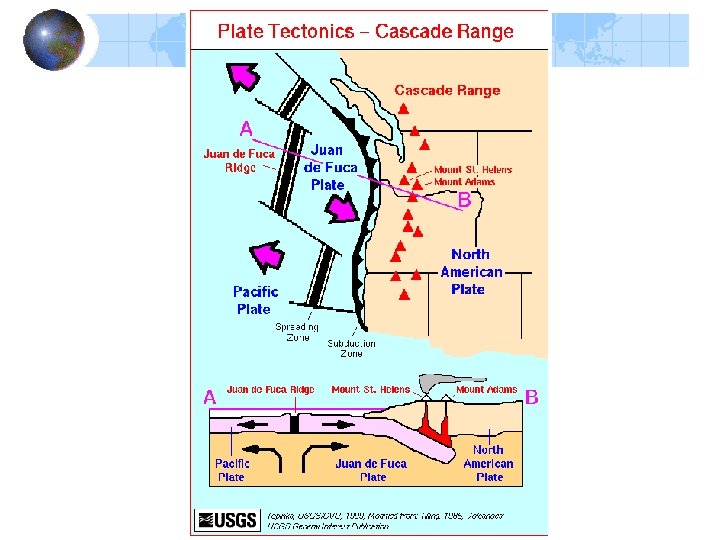
Ocean Continent Subduction occurs when one plate dives under another forming a trench. Ocean crust is being carried down into the mantle, where it begins to melt. The magma rises to form volcanoes along the edge of the continent.
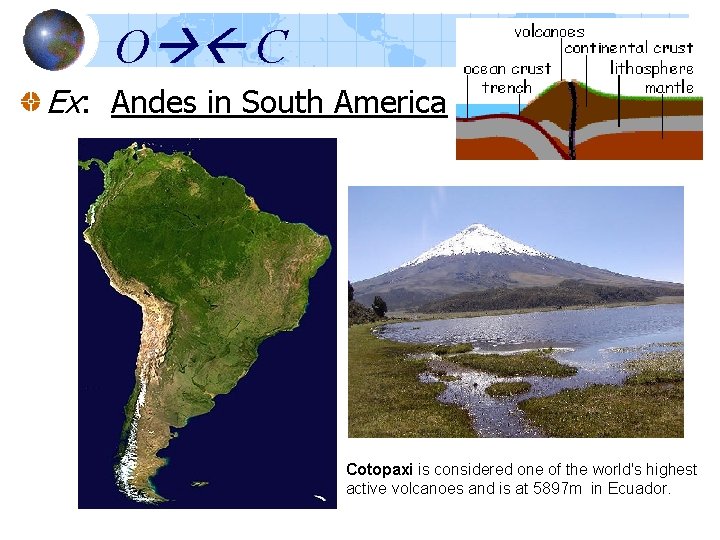
O C Ex: Andes in South America Cotopaxi is considered one of the world's highest active volcanoes and is at 5897 m in Ecuador.
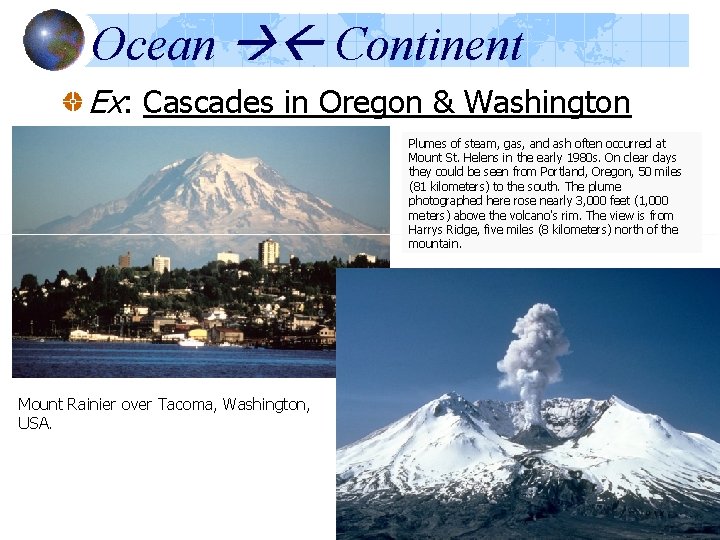
Ocean Continent Ex: Cascades in Oregon & Washington Plumes of steam, gas, and ash often occurred at Mount St. Helens in the early 1980 s. On clear days they could be seen from Portland, Oregon, 50 miles (81 kilometers) to the south. The plume photographed here rose nearly 3, 000 feet (1, 000 meters) above the volcano's rim. The view is from Harrys Ridge, five miles (8 kilometers) north of the mountain. Mount Rainier over Tacoma, Washington, USA.
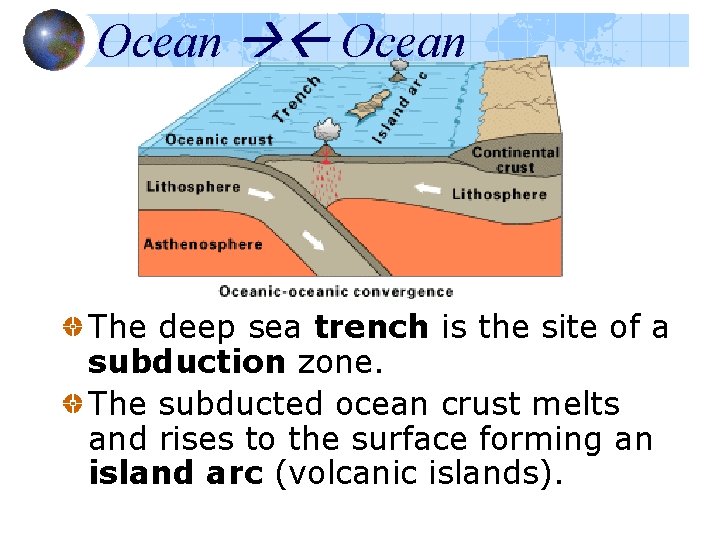
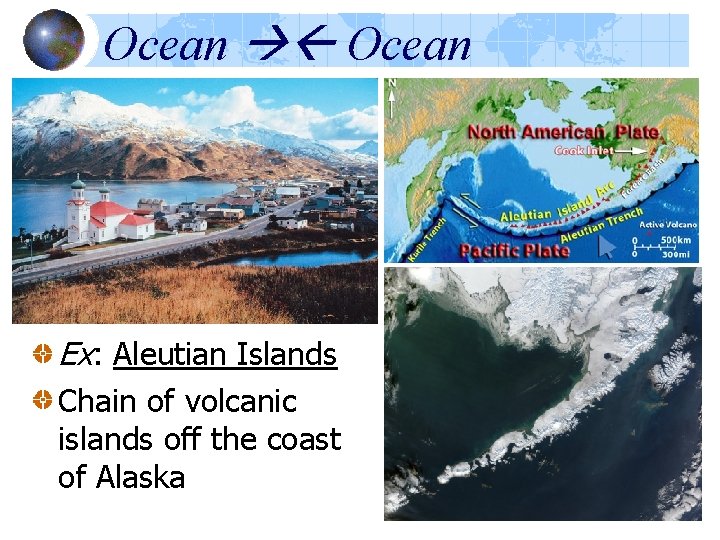
Ocean The deep sea trench is the site of a subduction zone. The subducted ocean crust melts and rises to the surface forming an island arc (volcanic islands).
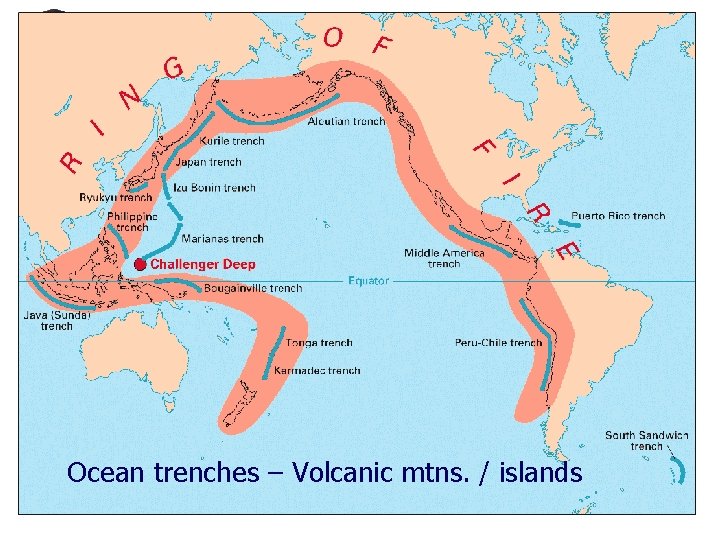
Ocean trenches – Volcanic mtns. / islands
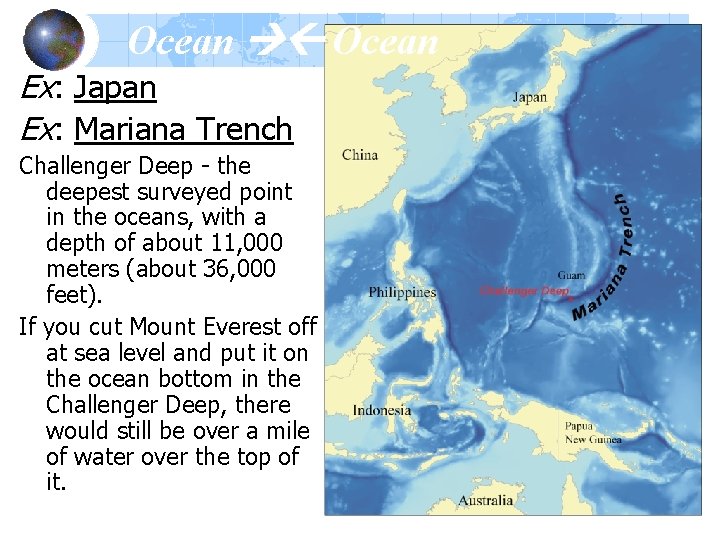
Ocean Ex: Japan Ex: Mariana Trench Challenger Deep - the deepest surveyed point in the oceans, with a depth of about 11, 000 meters (about 36, 000 feet). If you cut Mount Everest off at sea level and put it on the ocean bottom in the Challenger Deep, there would still be over a mile of water over the top of it.
Ocean Ex: Aleutian Islands Chain of volcanic islands off the coast of Alaska
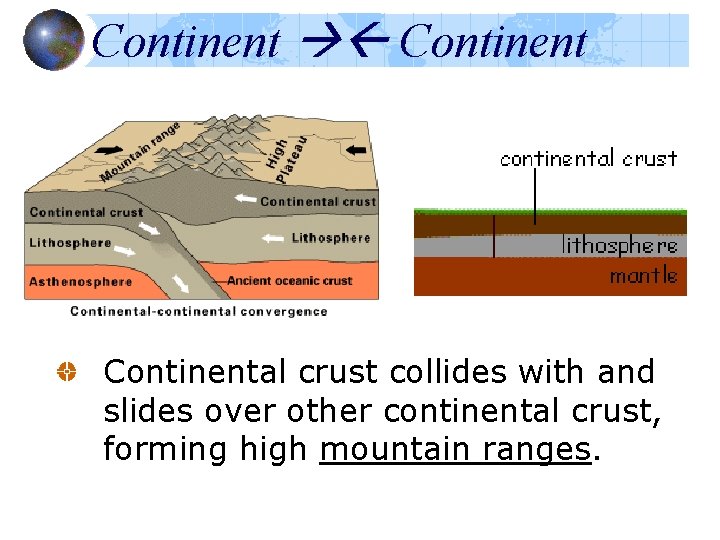
Continent Continental crust collides with and slides over other continental crust, forming high mountain ranges.
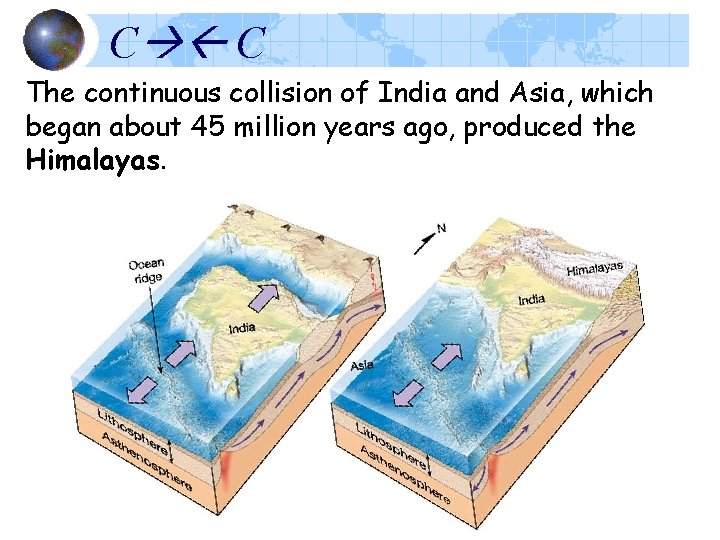
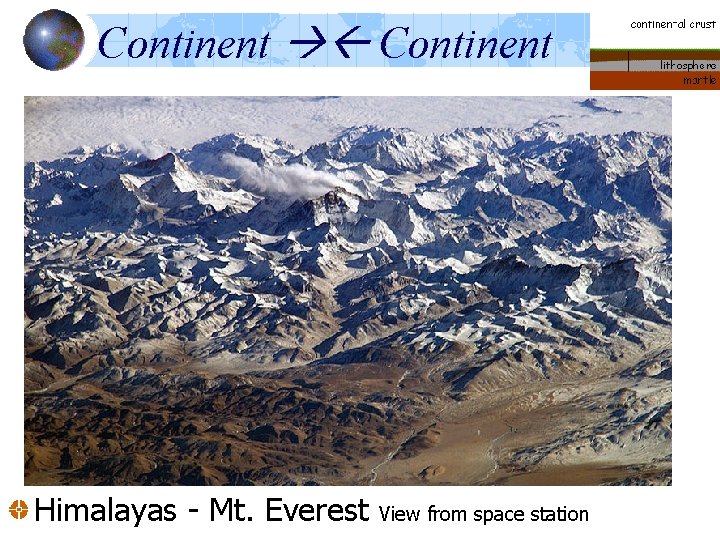
C C The continuous collision of India and Asia, which began about 45 million years ago, produced the Himalayas.
Continent Himalayas - Mt. Everest View from space station
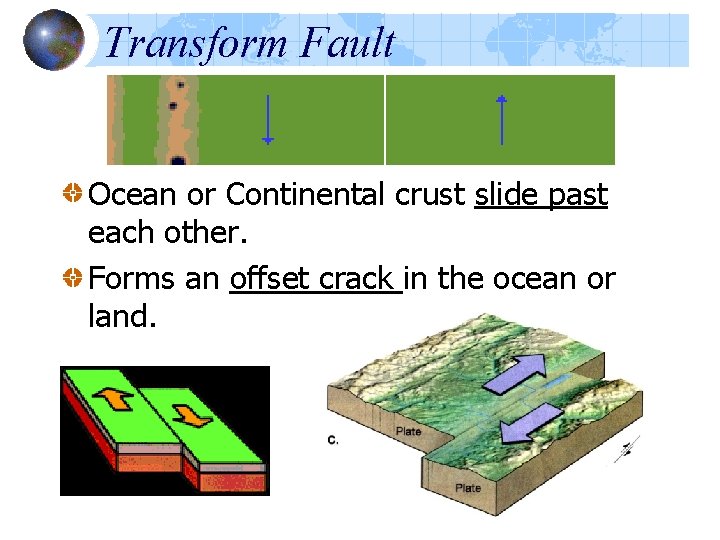
Transform Fault Ocean or Continental crust slide past each other. Forms an offset crack in the ocean or land.
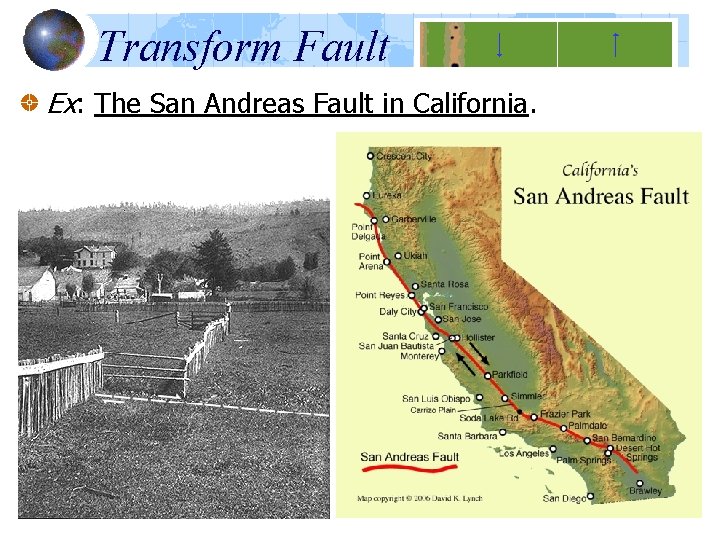
Transform Fault Ex: The San Andreas Fault in California.
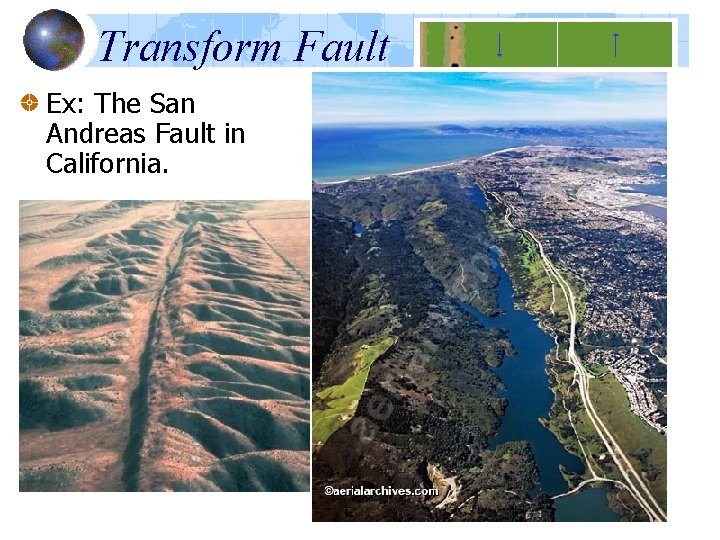
Transform Fault Ex: The San Andreas Fault in California.
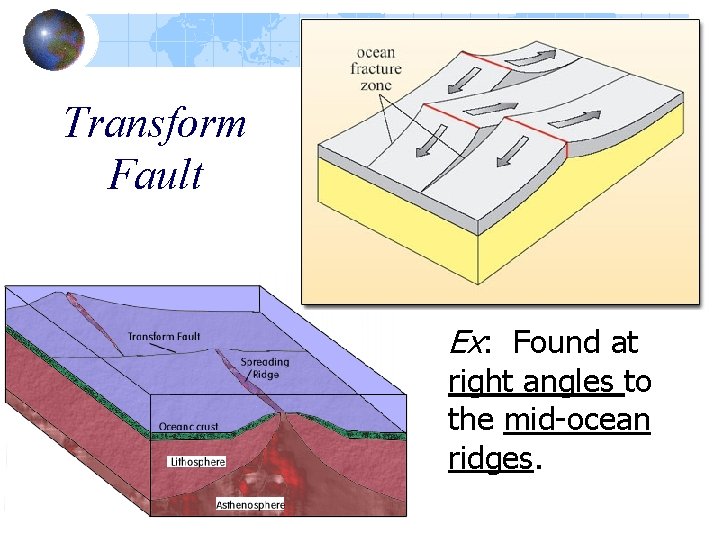
Transform Fault Ex: Found at right angles to the mid-ocean ridges.
World Relief Map
Type Divergent Ocean Land Convergent O-C O-O C-C Transform Fault Motion Features Examples
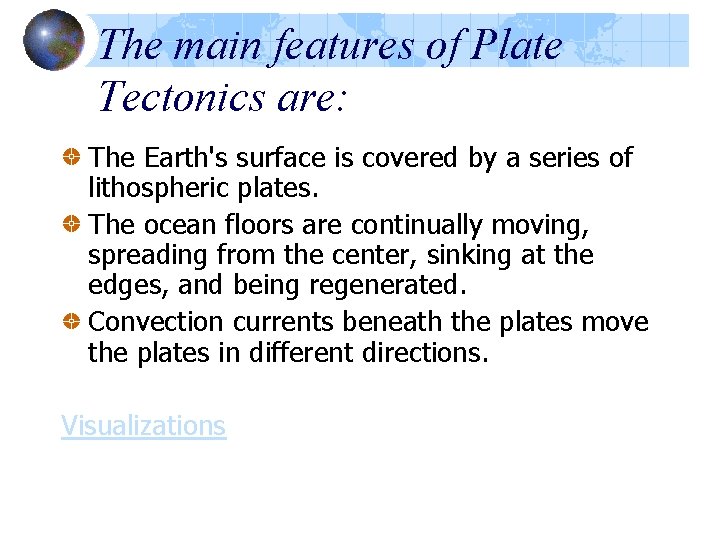
The main features of Plate Tectonics are: The Earth's surface is covered by a series of lithospheric plates. The ocean floors are continually moving, spreading from the center, sinking at the edges, and being regenerated. Convection currents beneath the plates move the plates in different directions. Visualizations