
Chapter 8 Plate Tectonics 8 2 Types of
- Slides: 16
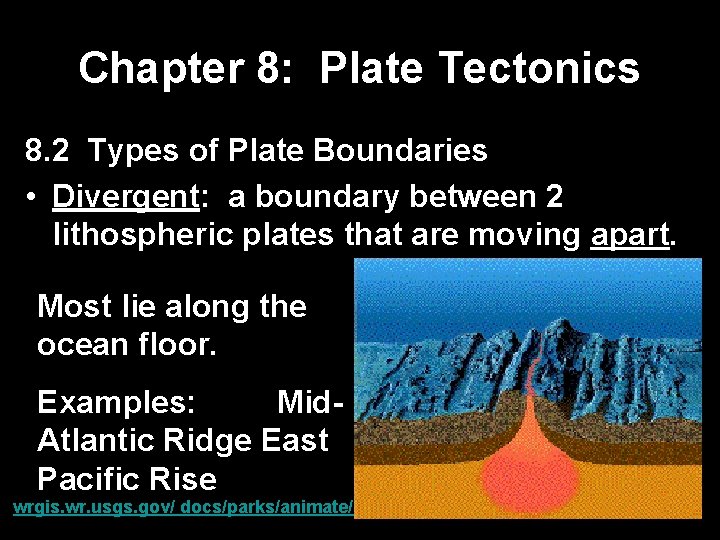
Chapter 8: Plate Tectonics 8. 2 Types of Plate Boundaries • Divergent: a boundary between 2 lithospheric plates that are moving apart. Most lie along the ocean floor. Examples: Mid. Atlantic Ridge East Pacific Rise wrgis. wr. usgs. gov/ docs/parks/animate/
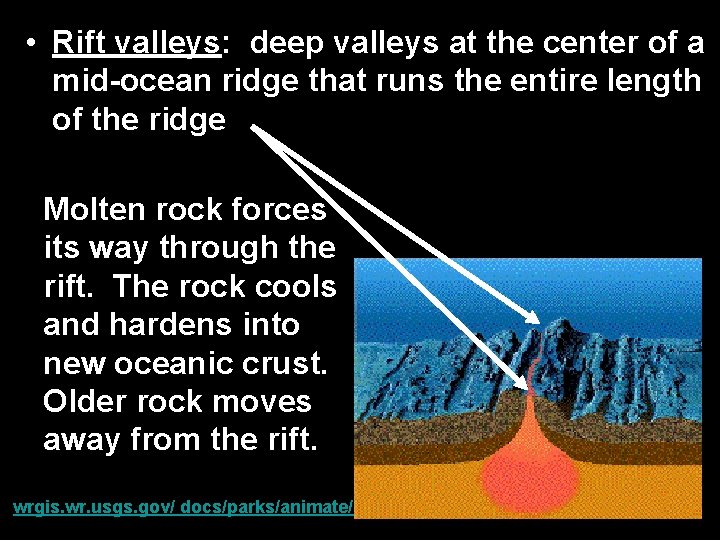
• Rift valleys: deep valleys at the center of a mid-ocean ridge that runs the entire length of the ridge Molten rock forces its way through the rift. The rock cools and hardens into new oceanic crust. Older rock moves away from the rift. wrgis. wr. usgs. gov/ docs/parks/animate/
Sea Floor Spreading • http: //www. youtube. com/watch? v=Gy. MLl. Lxbfa 4&feature=related
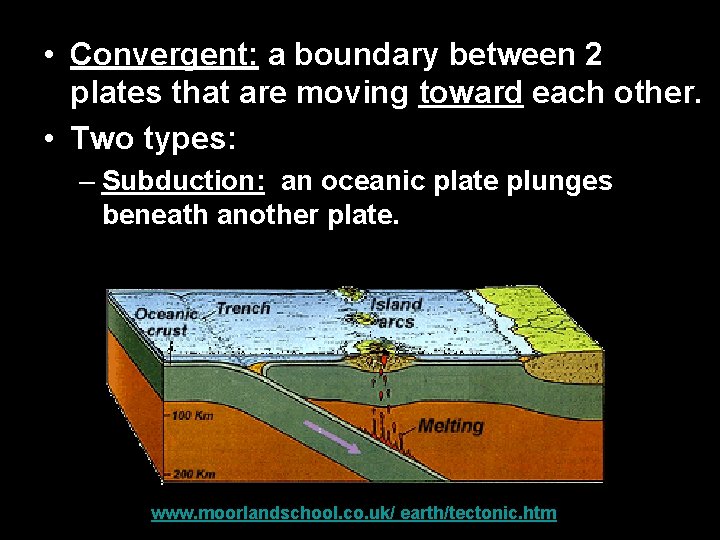
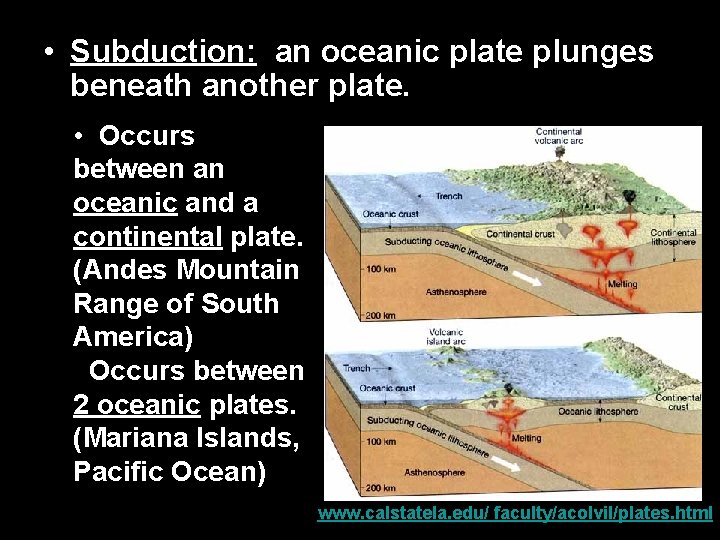
• Convergent: a boundary between 2 plates that are moving toward each other. • Two types: – Subduction: an oceanic plate plunges beneath another plate. www. moorlandschool. co. uk/ earth/tectonic. htm
• Subduction: an oceanic plate plunges beneath another plate. • Occurs between an oceanic and a continental plate. (Andes Mountain Range of South America) Occurs between 2 oceanic plates. (Mariana Islands, Pacific Ocean) www. calstatela. edu/ faculty/acolvil/plates. html
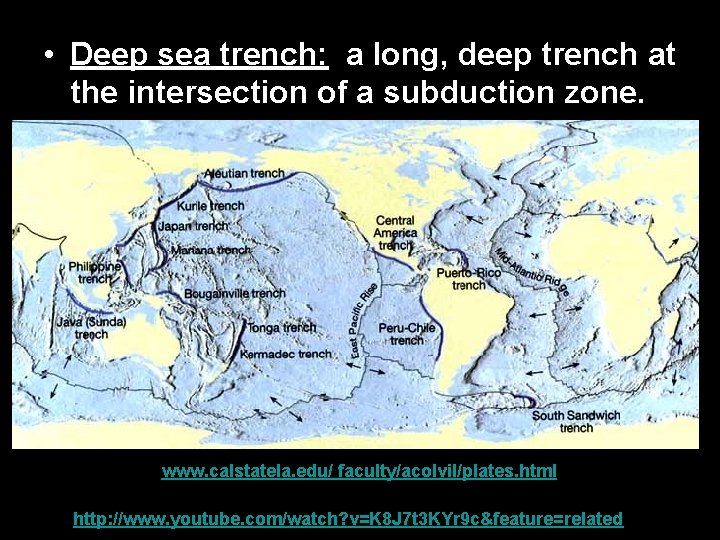
• Deep sea trench: a long, deep trench at the intersection of a subduction zone. www. calstatela. edu/ faculty/acolvil/plates. html http: //www. youtube. com/watch? v=K 8 J 7 t 3 KYr 9 c&feature=related
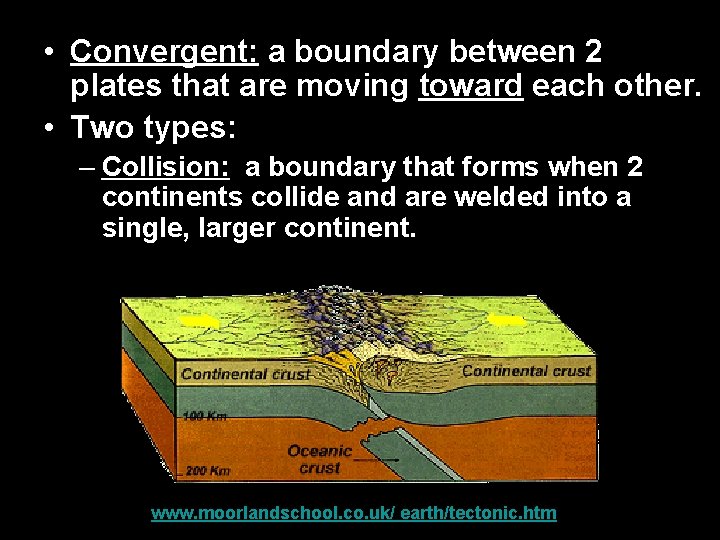
• Convergent: a boundary between 2 plates that are moving toward each other. • Two types: – Collision: a boundary that forms when 2 continents collide and are welded into a single, larger continent. www. moorlandschool. co. uk/ earth/tectonic. htm
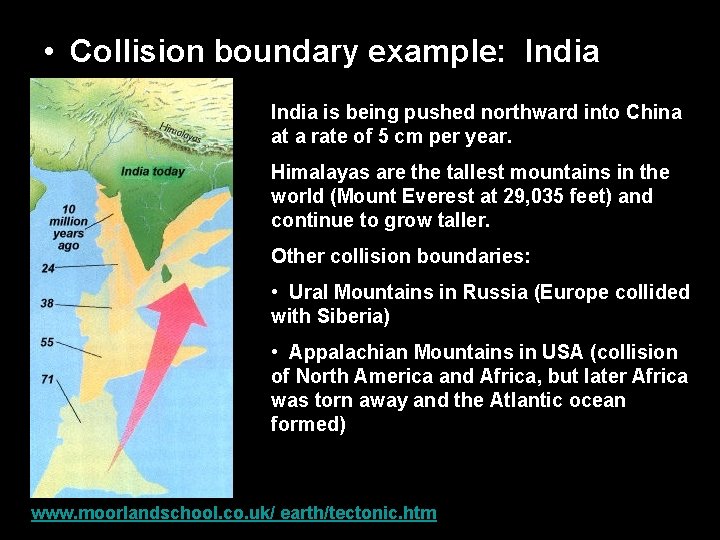
• Collision boundary example: India is being pushed northward into China at a rate of 5 cm per year. Himalayas are the tallest mountains in the world (Mount Everest at 29, 035 feet) and continue to grow taller. Other collision boundaries: • Ural Mountains in Russia (Europe collided with Siberia) • Appalachian Mountains in USA (collision of North America and Africa, but later Africa was torn away and the Atlantic ocean formed) www. moorlandschool. co. uk/ earth/tectonic. htm
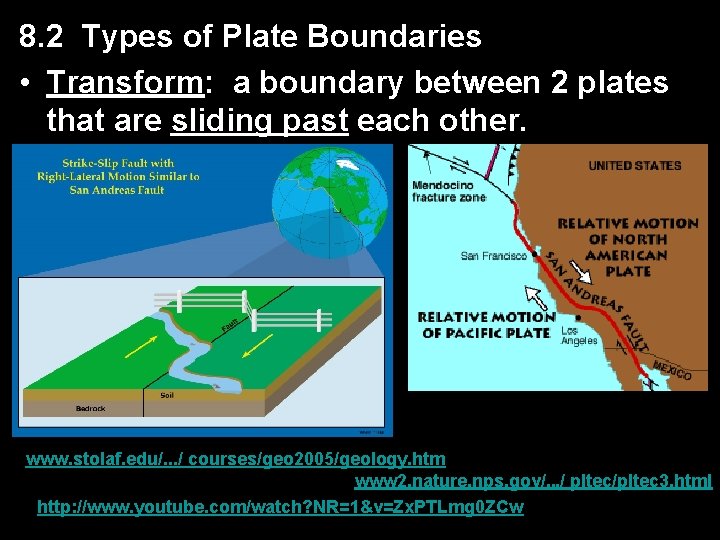
8. 2 Types of Plate Boundaries • Transform: a boundary between 2 plates that are sliding past each other. www. stolaf. edu/. . . / courses/geo 2005/geology. htm www 2. nature. nps. gov/. . . / pltec/pltec 3. html http: //www. youtube. com/watch? NR=1&v=Zx. PTLmg 0 ZCw
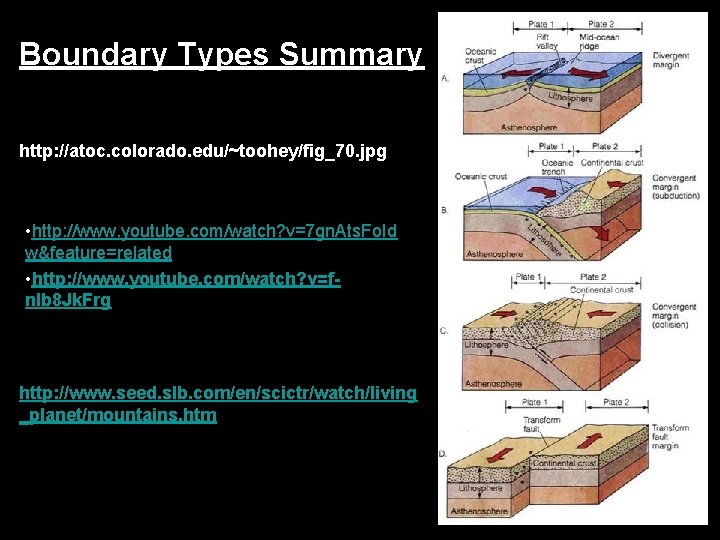
Boundary Types Summary http: //atoc. colorado. edu/~toohey/fig_70. jpg • http: //www. youtube. com/watch? v=7 gn. Ats. Fo. Id w&feature=related • http: //www. youtube. com/watch? v=fn. Ib 8 Jk. Frg http: //www. seed. slb. com/en/scictr/watch/living _planet/mountains. htm
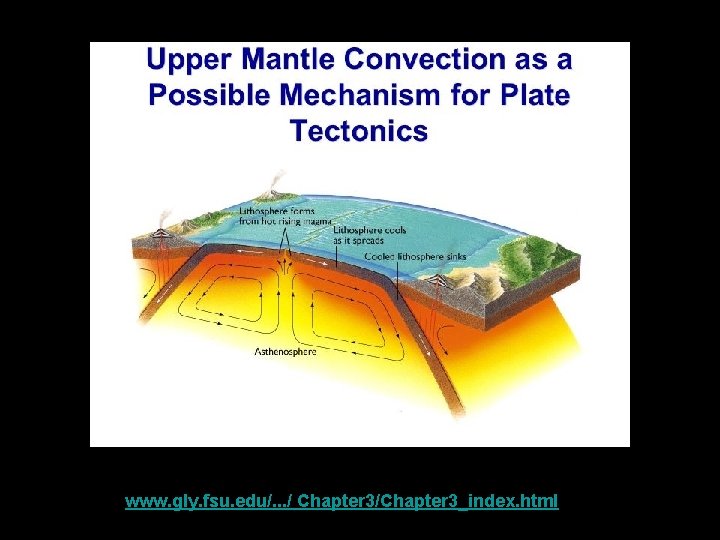
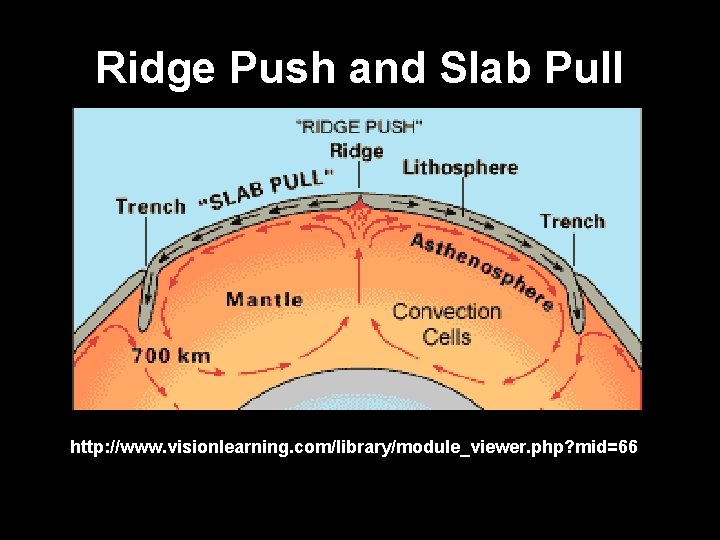
Chapter 8: Plate Tectonics 8. 3 Causes of Plate Movement • Mantle Convection: heat from Earth’s inner and outer cores is transferred through the mantle. The mantle moves the plates as it convects. • Ridge Push: Cooling, subsiding rock at midocean ridges exerts a force on spreading plates, causing plate movement. • Slab Pull: The denser, heavier plate at a subduction zone pulls the rest of the plate with it. • All three causes work together to move the plates, but slab pull is most important
www. gly. fsu. edu/. . . / Chapter 3/Chapter 3_index. html
Ridge Push and Slab Pull http: //www. visionlearning. com/library/module_viewer. php? mid=66
Chapter 8: Plate Tectonics 8. 4 Plate Movements • Plate tectonic theory has allowed geologists to reconstruct Earth’s surface in the past. Evidence: • Mountains (Ural, Appalachians) indicate convergence in the past, but not today. Why? – Because plate boundaries there no longer exist! • Fossil evidence: some existed in shallow ocean water are now found at mountaintops; tropical plant fossils found in polar regions. • Age of rocks and magnetic record. • All of this evidence points to a supercontinent that existed 250 million years ago: Pangaea • But how did it form?
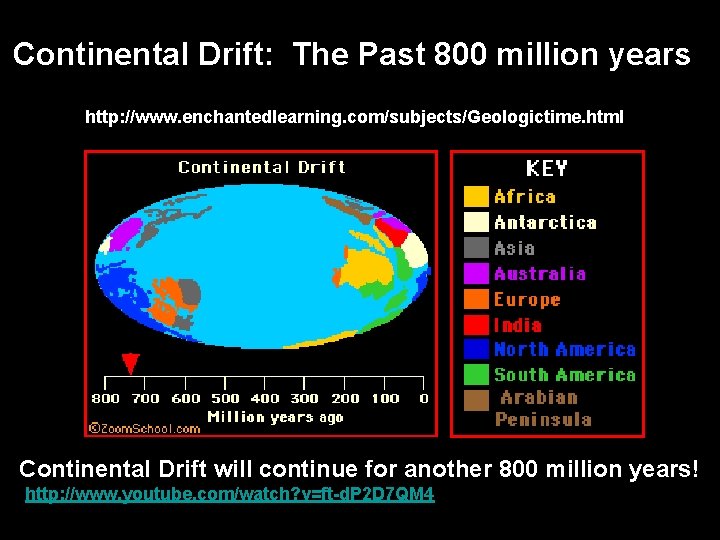
Continental Drift: The Past 800 million years http: //www. enchantedlearning. com/subjects/Geologictime. html Continental Drift will continue for another 800 million years! http: //www. youtube. com/watch? v=ft-d. P 2 D 7 QM 4
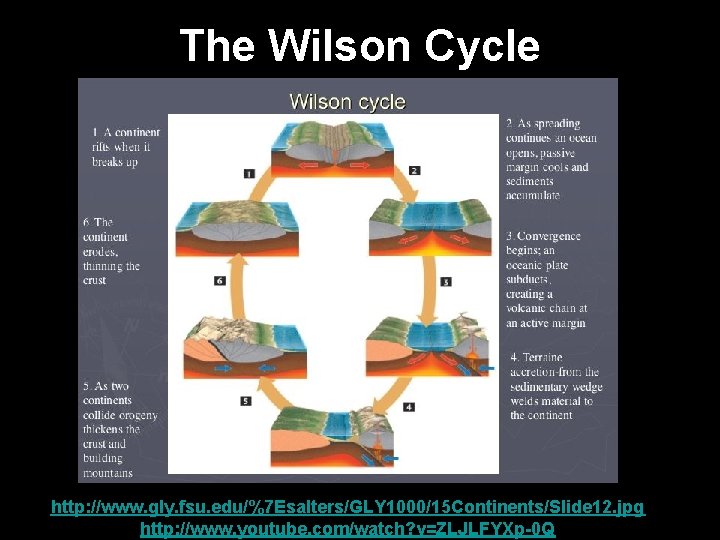
The Wilson Cycle http: //www. gly. fsu. edu/%7 Esalters/GLY 1000/15 Continents/Slide 12. jpg http: //www. youtube. com/watch? v=ZLJLFYXp-0 Q