
Chapter 8 People and the Process of Change
- Slides: 19
Chapter 8 People and the Process of Change
Change • A natural phenomenon • Macro- and micro-change
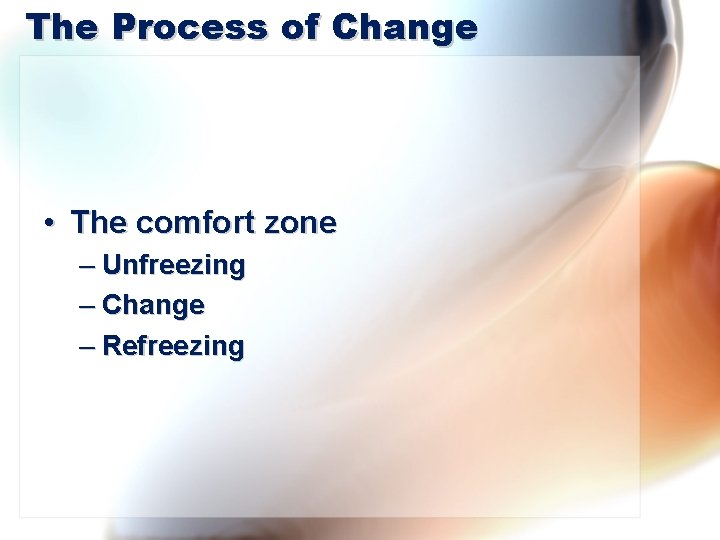
The Process of Change • The comfort zone – Unfreezing – Change – Refreezing
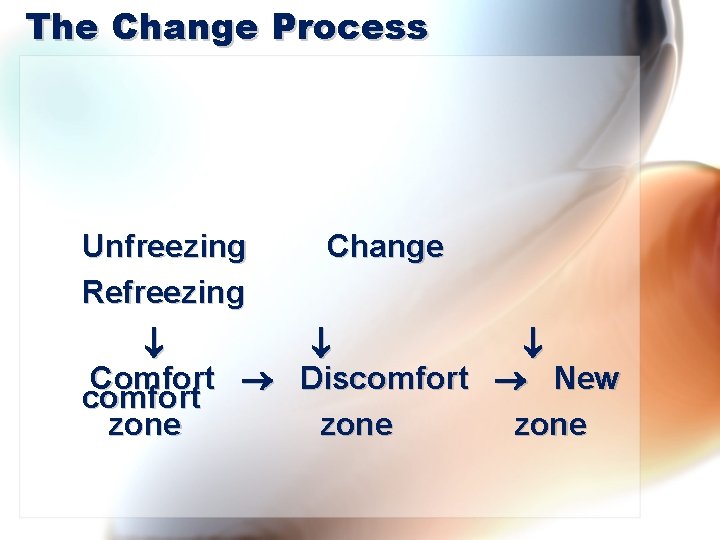
The Change Process Unfreezing Refreezing Change Comfort Discomfort New comfort zone
Sources of Resistance to Change • Sources of resistance – Technical concerns – Psychosocial needs – Position and power
Receptivity to Change • Recognize differences in preferences for certainty • Speak to people’s feelings Stories and Drama vs. Statistics
Resistance • Recognizing resistance • Lowering resistance – Information dissemination – Disconfirmation of currently held beliefs – Psychological safety – Command
Dictating Change • • • Effective in many situations Communicate a sense of urgency Change may be rapid but without a lasting commitment
Active Resistance to Change • • Attacking the idea Refusal to change Arguing against change Organizing resistance of other people
Passive Resistance to Change • • Avoiding discussion Ignoring the change Refusing to commit to the change Agreeing but not acting
Strategies to Overcome Resistance • • Point out similarities Express approval Recognize competence and skill Provide assurance
Strategies • • • Suggest new opportunities Express value of contributions Ensure involvement
Strategies (cont’d) • • • Provide opportunities for expression Allow time for practice Provide a climate of acceptance
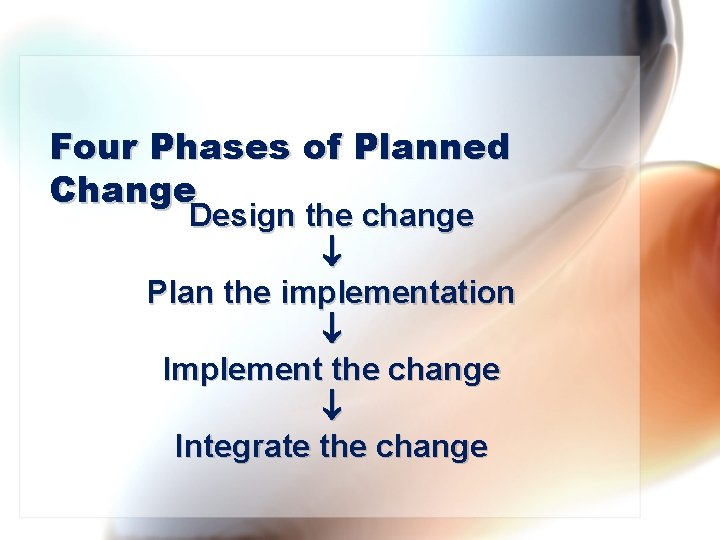
Four Phases of Planned Change Design the change Plan the implementation Implement the change Integrate the change
Design the Change • • • What is the purpose? Is the change necessary? Is the change technically correct? Will this work? Is there a better way?
Planning the Change • • • Why is there resistance? Is the resistance justified? What can be done to prevent or overcome resistance?
Implementing the Change • • What is the magnitude? What is the complexity? What is the pace? What is the current stress level?
Integrating the Change • Is the change integrated into everyday operations? • Are people comfortable with it? • Is it well accepted?
Conclusion • Your leadership will influence how change is handled • Change presents an opportunity for professional growth and development • View change in a positive way