
Chapter 8 Part 0 Hierarchical Design Procedures Hierarchy
- Slides: 21
Chapter 8 Part 0 – Hierarchical Design Procedures
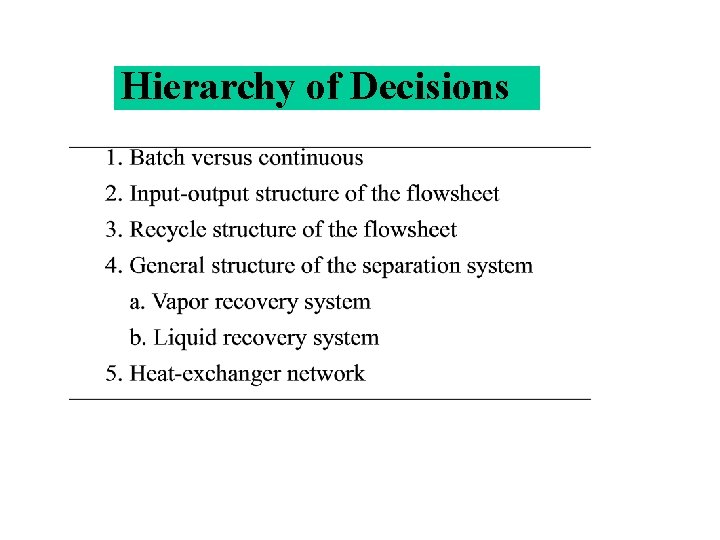
Hierarchy of Decisions
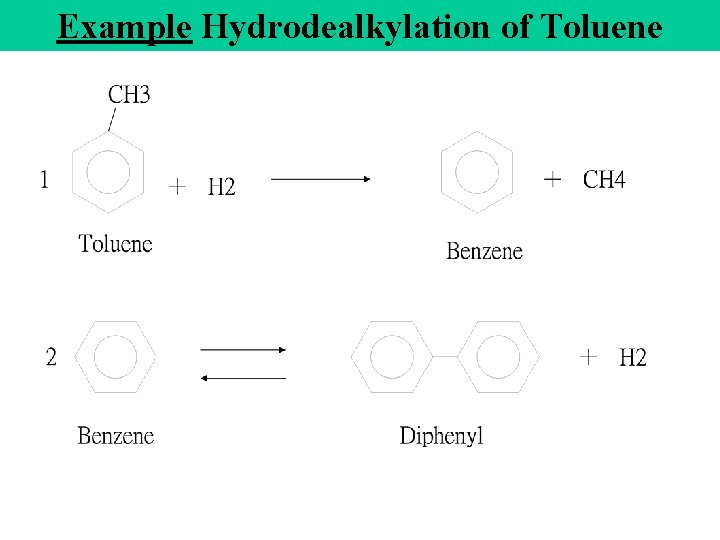
Example Hydrodealkylation of Toluene
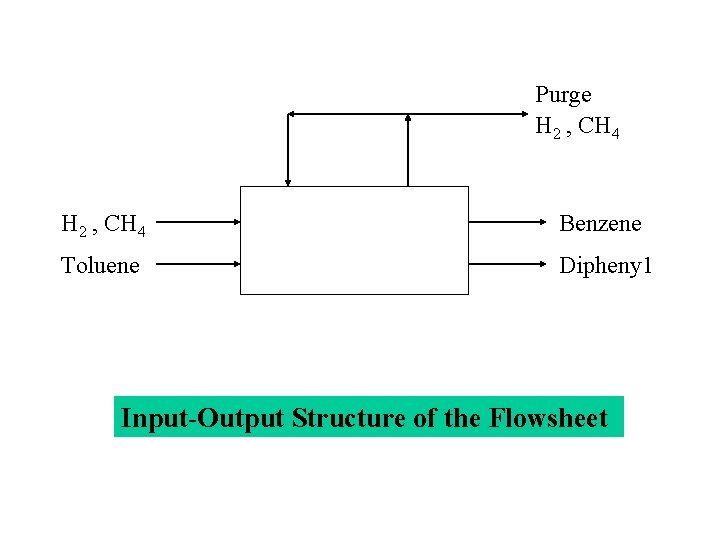
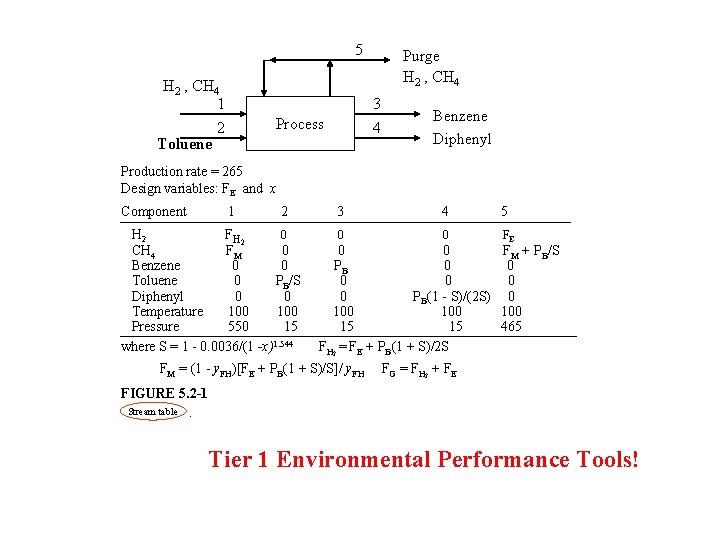
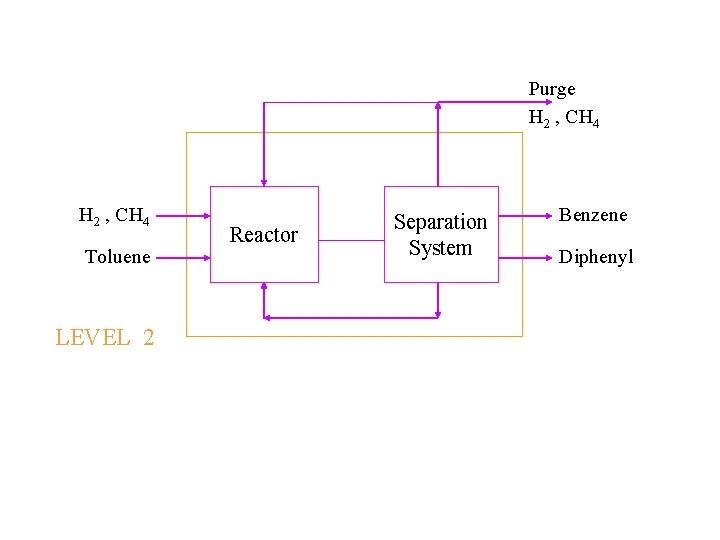
Purge H 2 , CH 4 Benzene Toluene Dipheny 1 Input-Output Structure of the Flowsheet
5 H 2 , CH 4 1 2 Toluene Purge H 2 , CH 4 3 4 Process Benzene Diphenyl Production rate = 265 Design variables: FE and x Component 1 2 H 2 F H 2 0 CH 4 FM 0 Benzene 0 0 Toluene 0 PB/S Diphenyl 0 0 Temperature 100 Pressure 550 15 where S = 1 - 0. 0036/(1 -x)1. 544 3 4 5 0 0 FE 0 0 FM + PB/S PB 0 0 0 PB(1 - S)/(2 S) 0 100 100 15 15 465 FH 2 = FE + PB(1 + S)/2 S FM = (1 - y. FH)[FE + PB(1 + S)/S]/ y. FH FG = FH 2 + FE FIGURE 5. 2 -1 Stream table . Tier 1 Environmental Performance Tools!
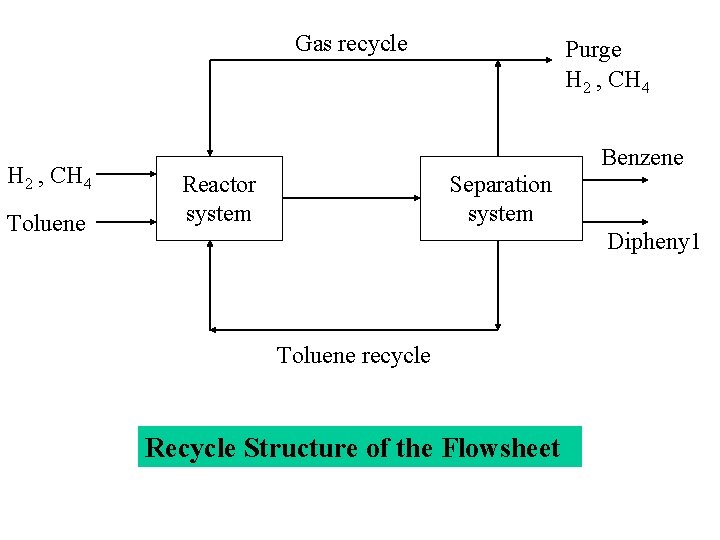
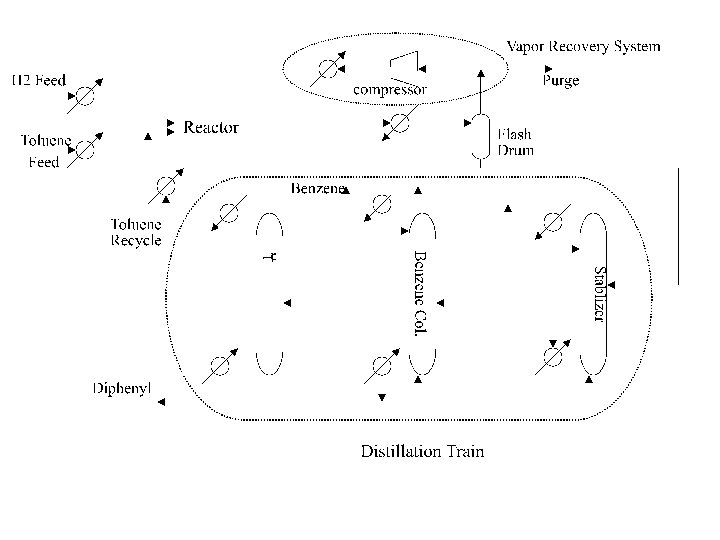
Gas recycle H 2 , CH 4 Toluene Purge H 2 , CH 4 Benzene Reactor system Separation system Dipheny 1 Toluene recycle Recycle Structure of the Flowsheet
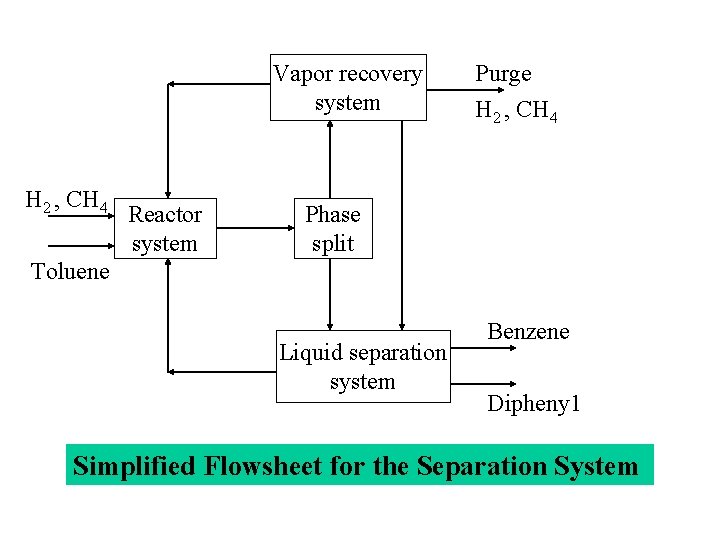
Vapor recovery system H 2 , CH 4 Reactor system Purge H 2 , CH 4 Phase split Toluene Liquid separation system Benzene Dipheny 1 Simplified Flowsheet for the Separation System
Toluene feed ENERGY INTEGRATION
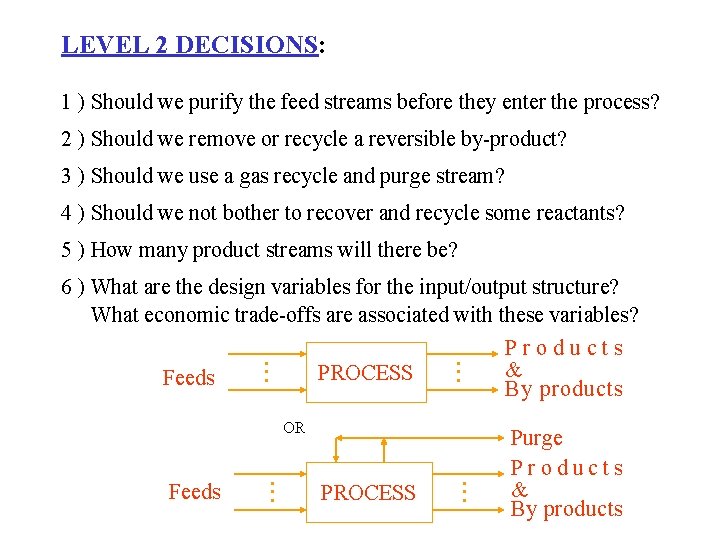
LEVEL 2 DECISIONS: 1 ) Should we purify the feed streams before they enter the process? 2 ) Should we remove or recycle a reversible by-product? 3 ) Should we use a gas recycle and purge stream? 4 ) Should we not bother to recover and recycle some reactants? 5 ) How many product streams will there be? 6 ) What are the design variables for the input/output structure? What economic trade-offs are associated with these variables? Products & PROCESS Feeds By products OR Feeds PROCESS Purge Products & By products
Purge H 2 , CH 4 Toluene LEVEL 2 Reactor Separation System Benzene Diphenyl
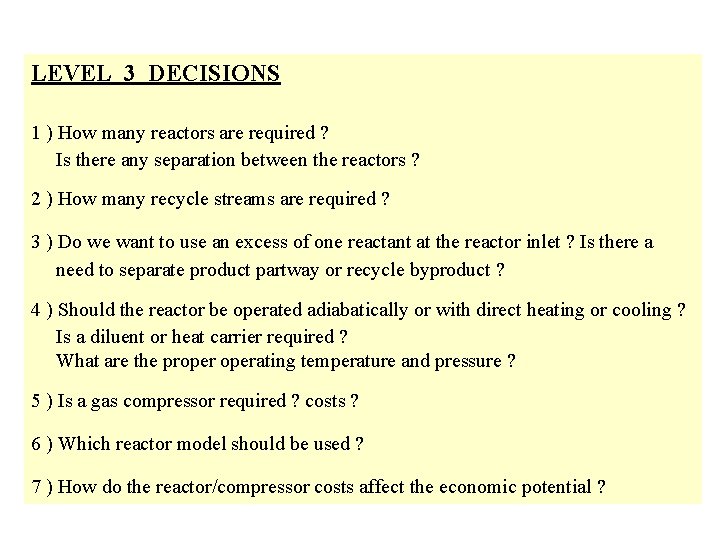
LEVEL 3 DECISIONS 1 ) How many reactors are required ? Is there any separation between the reactors ? 2 ) How many recycle streams are required ? 3 ) Do we want to use an excess of one reactant at the reactor inlet ? Is there a need to separate product partway or recycle byproduct ? 4 ) Should the reactor be operated adiabatically or with direct heating or cooling ? Is a diluent or heat carrier required ? What are the properating temperature and pressure ? 5 ) Is a gas compressor required ? costs ? 6 ) Which reactor model should be used ? 7 ) How do the reactor/compressor costs affect the economic potential ?
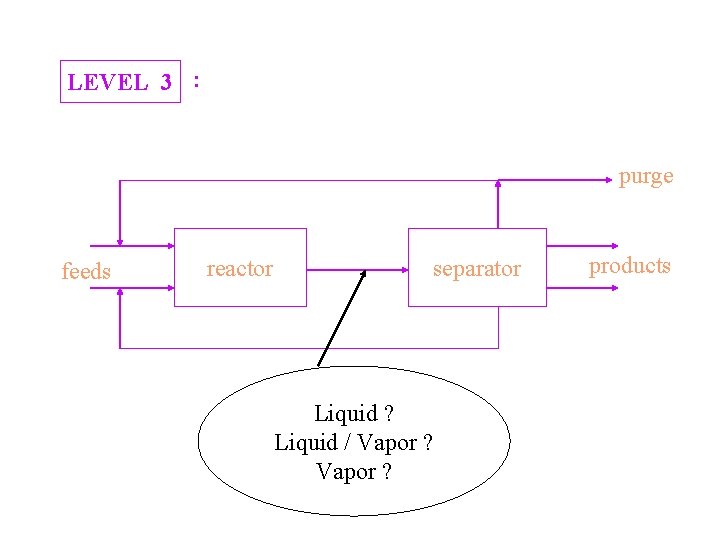
LEVEL 3 : purge feeds reactor separator Liquid ? Liquid / Vapor ? products
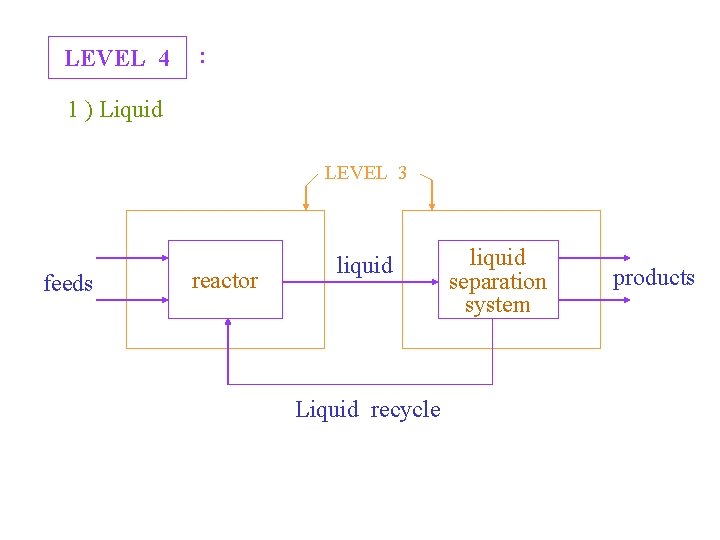
LEVEL 4 : 1 ) Liquid LEVEL 3 feeds reactor liquid Liquid recycle liquid separation system products
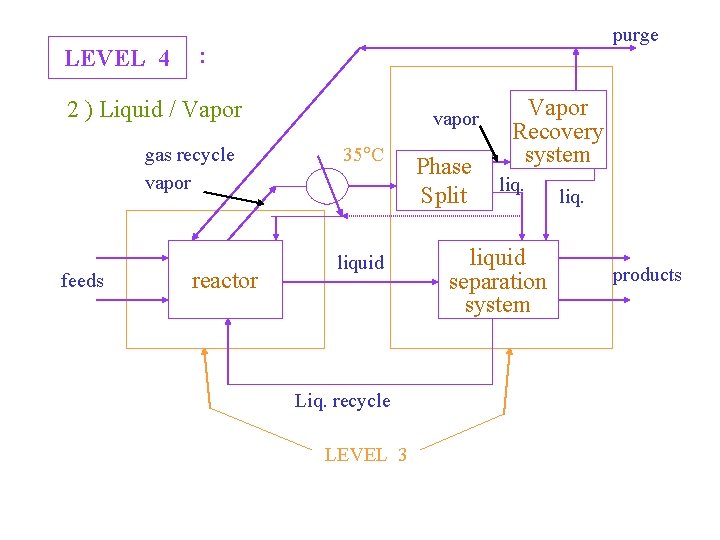
LEVEL 4 purge : 2 ) Liquid / Vapor gas recycle vapor feeds reactor vapor 35 C liquid Liq. recycle LEVEL 3 Phase Split Vapor Recovery system liquid separation system liq. products
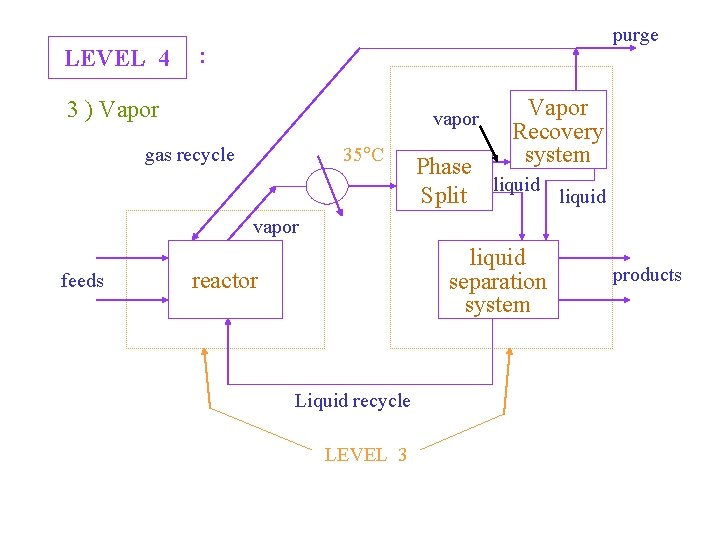
LEVEL 4 purge : 3 ) Vapor vapor gas recycle 35 C Vapor Recovery system Phase liquid Split vapor feeds liquid separation system reactor Liquid recycle LEVEL 3 products
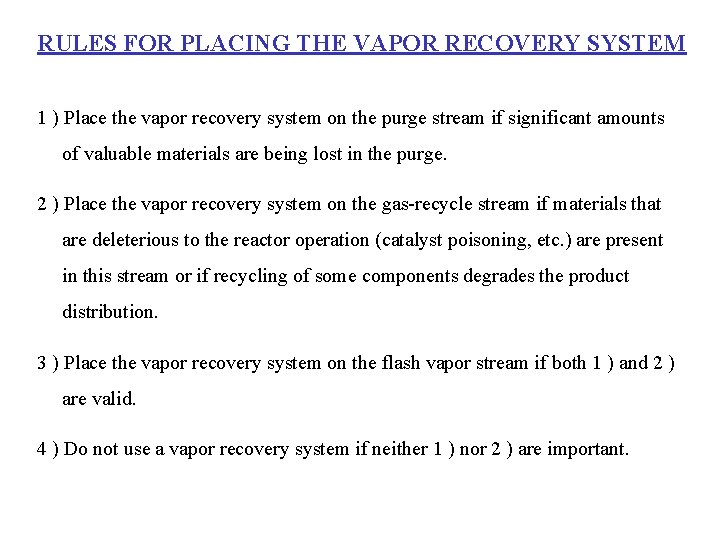
RULES FOR PLACING THE VAPOR RECOVERY SYSTEM 1 ) Place the vapor recovery system on the purge stream if significant amounts of valuable materials are being lost in the purge. 2 ) Place the vapor recovery system on the gas-recycle stream if materials that are deleterious to the reactor operation (catalyst poisoning, etc. ) are present in this stream or if recycling of some components degrades the product distribution. 3 ) Place the vapor recovery system on the flash vapor stream if both 1 ) and 2 ) are valid. 4 ) Do not use a vapor recovery system if neither 1 ) nor 2 ) are important.
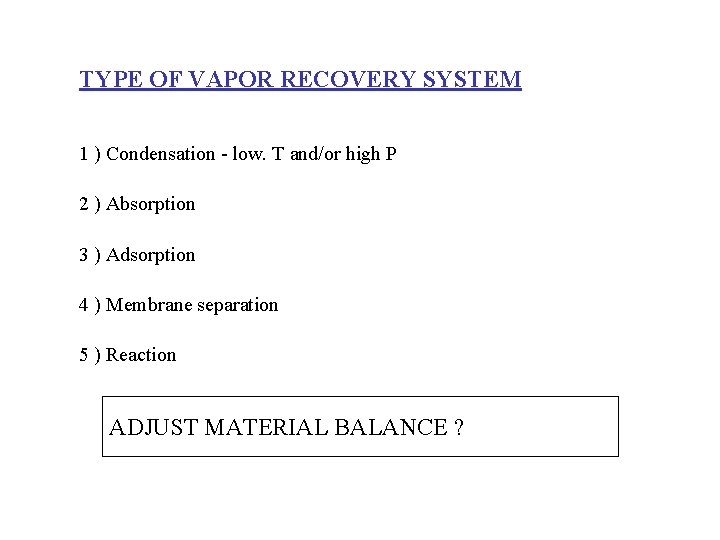
TYPE OF VAPOR RECOVERY SYSTEM 1 ) Condensation - low. T and/or high P 2 ) Absorption 3 ) Adsorption 4 ) Membrane separation 5 ) Reaction ADJUST MATERIAL BALANCE ?
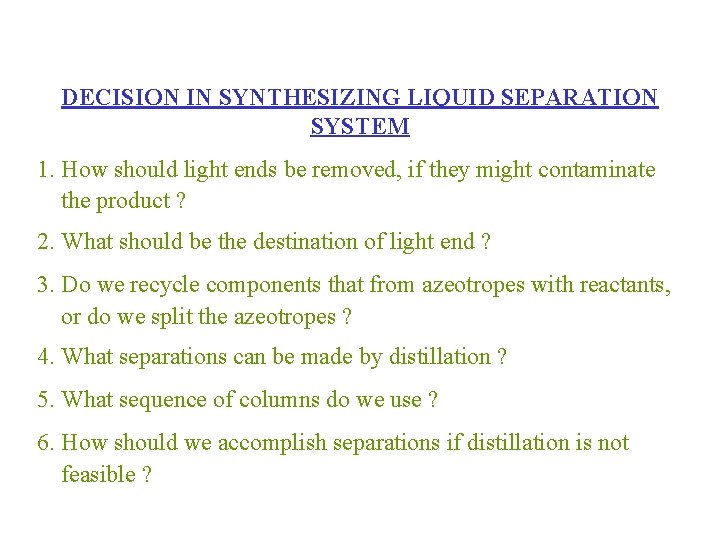
DECISION IN SYNTHESIZING LIQUID SEPARATION SYSTEM 1. How should light ends be removed, if they might contaminate the product ? 2. What should be the destination of light end ? 3. Do we recycle components that from azeotropes with reactants, or do we split the azeotropes ? 4. What separations can be made by distillation ? 5. What sequence of columns do we use ? 6. How should we accomplish separations if distillation is not feasible ?
P 2 Rationale • Some of the decisions made at each level might change the streams leaving the process. Some of the exit streams may cause pollution problems. • If we can make decisions that do not introduce exit streams to the flowsheet that have environmental impacts, the P 2 goal is achieved.