
Chapter 8 Observation Studies Mc GrawHillIrwin Business Research

Chapter 8 Observation Studies Mc. Graw-Hill/Irwin Business Research Methods, 10 e Copyright © 2008 by The Mc. Graw-Hill Companies, Inc. All Rights Reserved.
2 Learning Objectives Understand. . . • When observation studies are most useful. • Distinctions between monitoring. nonbehavioral and behavioral activities • Strengths of the observation approach in research design. • Weaknesses of the observation approach in research design.

3 Learning Objectives Understand. . . • Three perspectives from which the observer-participant relationship may be viewed. • Various designs of observation studies.
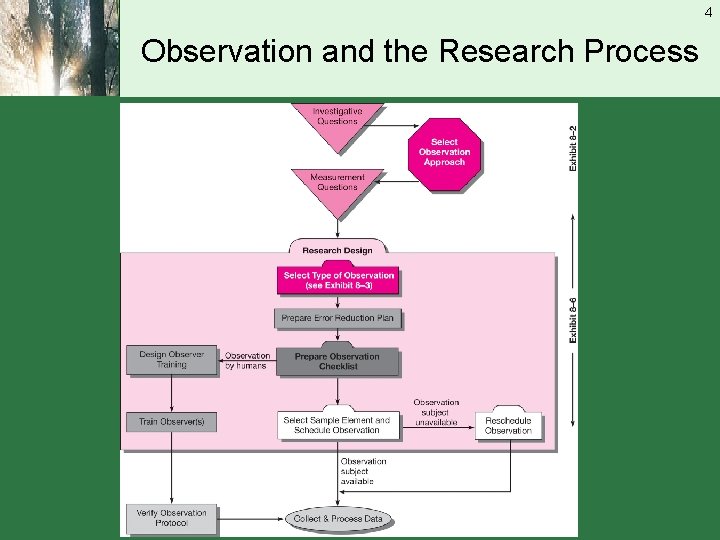
4 Observation and the Research Process
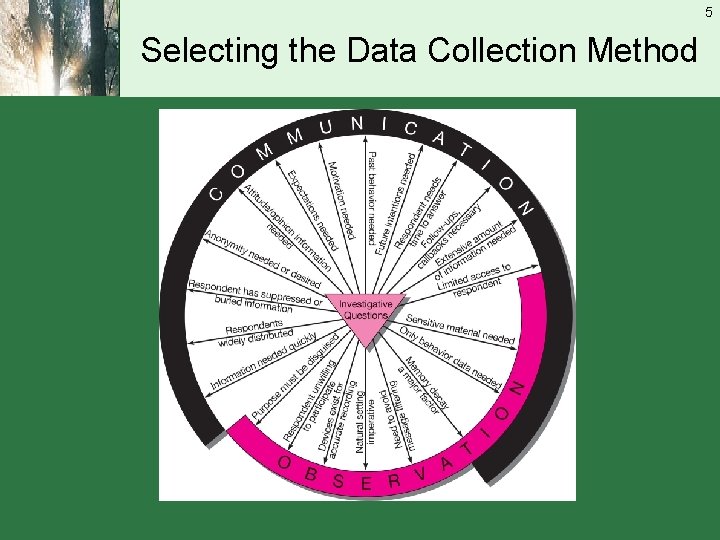
5 Selecting the Data Collection Method
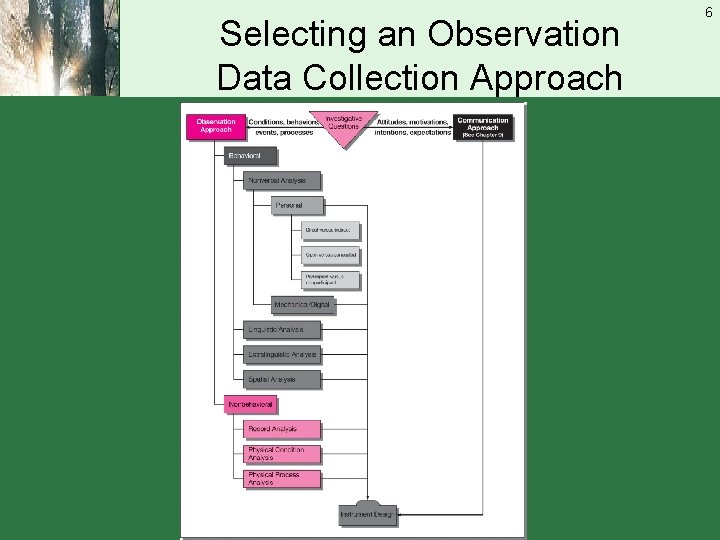
Selecting an Observation Data Collection Approach 6

7 Research Design Who? Where? Task Details How? What? (event or time) When?
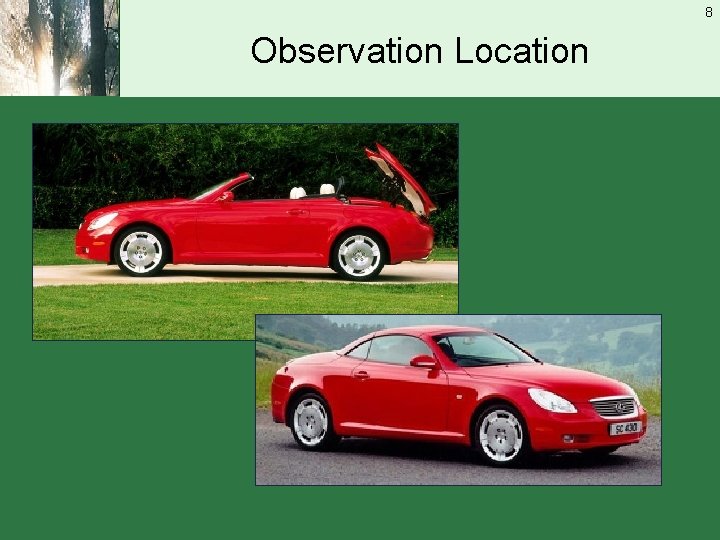
8 Observation Location
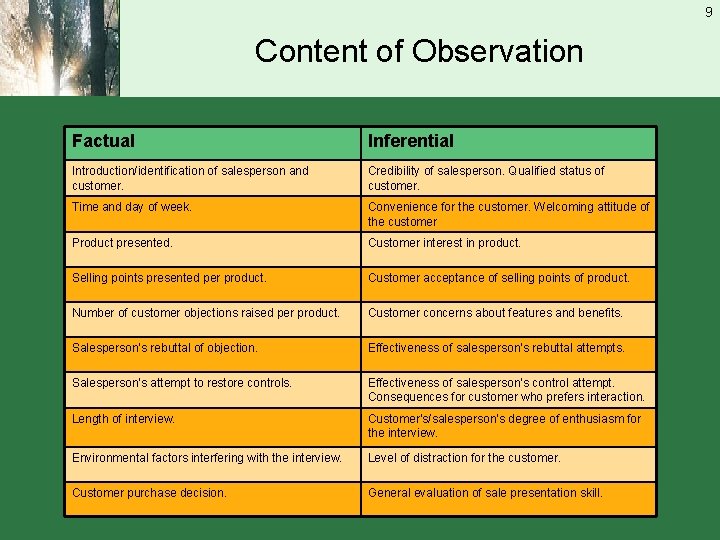
9 Content of Observation Factual Inferential Introduction/identification of salesperson and customer. Credibility of salesperson. Qualified status of customer. Time and day of week. Convenience for the customer. Welcoming attitude of the customer Product presented. Customer interest in product. Selling points presented per product. Customer acceptance of selling points of product. Number of customer objections raised per product. Customer concerns about features and benefits. Salesperson’s rebuttal of objection. Effectiveness of salesperson’s rebuttal attempts. Salesperson’s attempt to restore controls. Effectiveness of salesperson’s control attempt. Consequences for customer who prefers interaction. Length of interview. Customer’s/salesperson’s degree of enthusiasm for the interview. Environmental factors interfering with the interview. Level of distraction for the customer. Customer purchase decision. General evaluation of sale presentation skill.
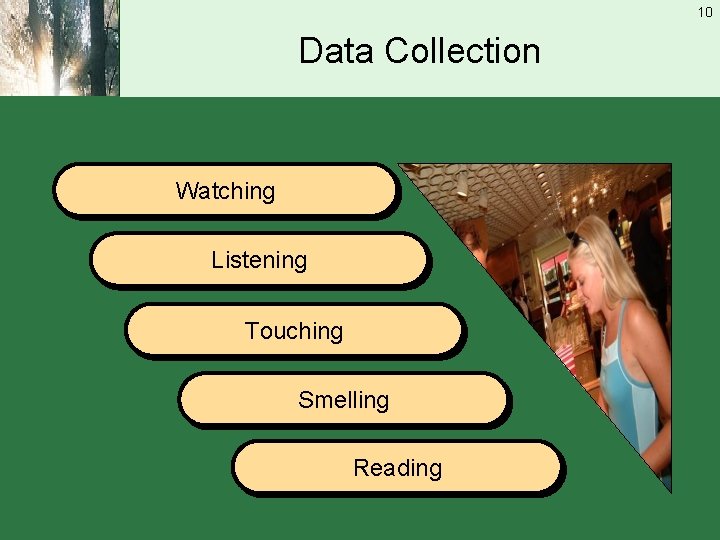
10 Data Collection Watching Listening Touching Smelling Reading
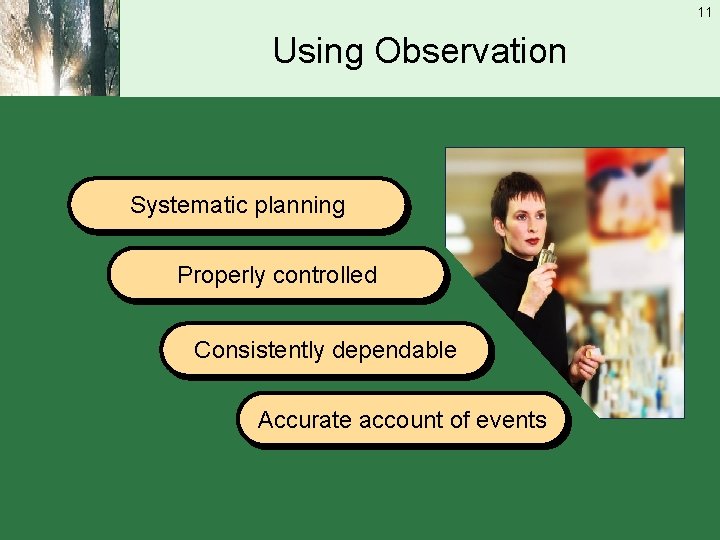
11 Using Observation Systematic planning Properly controlled Consistently dependable Accurate account of events
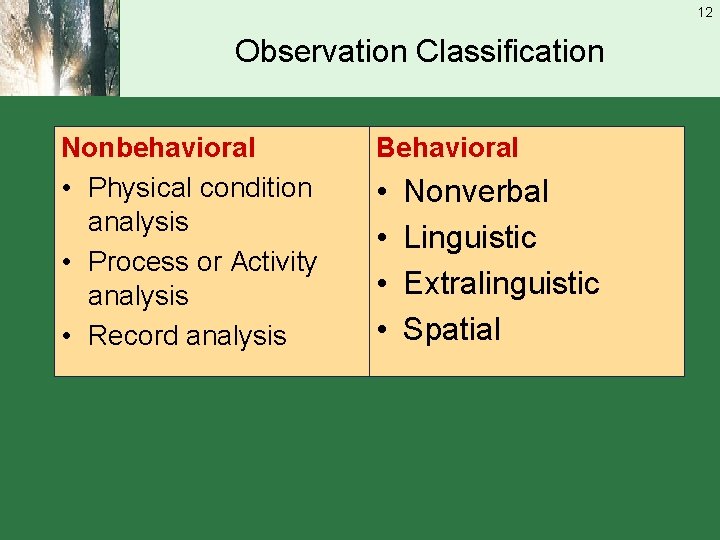
12 Observation Classification Nonbehavioral • Physical condition analysis • Process or Activity analysis • Record analysis Behavioral • • Nonverbal Linguistic Extralinguistic Spatial
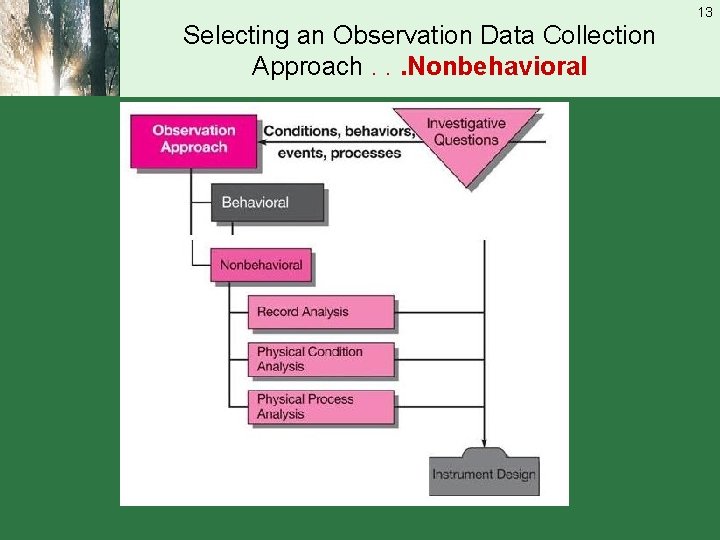
13 Selecting an Observation Data Collection Approach. . . Nonbehavioral
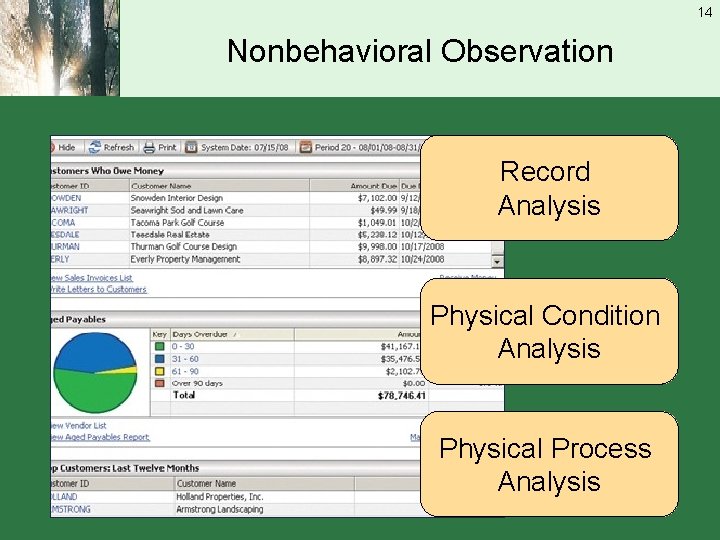
14 Nonbehavioral Observation Record Analysis Physical Condition Analysis Physical Process Analysis
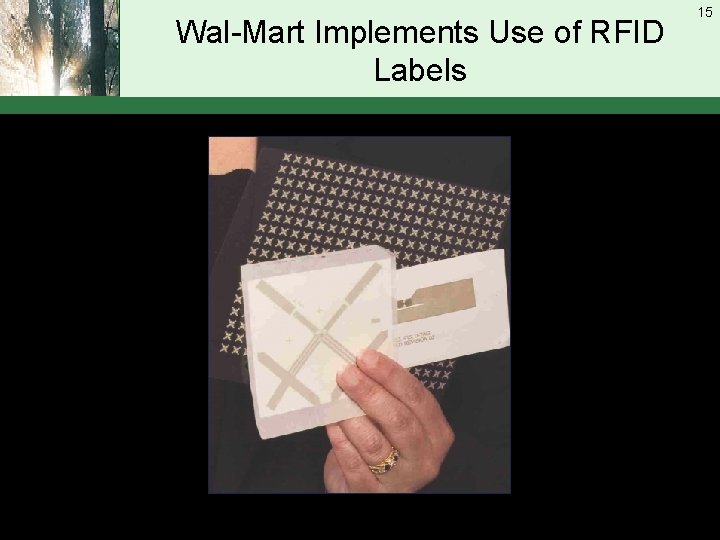
Wal-Mart Implements Use of RFID Labels 15
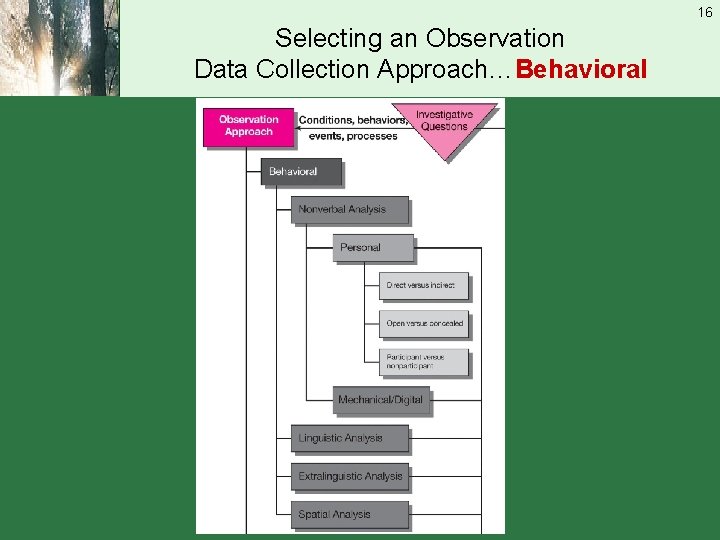
16 Selecting an Observation Data Collection Approach…Behavioral
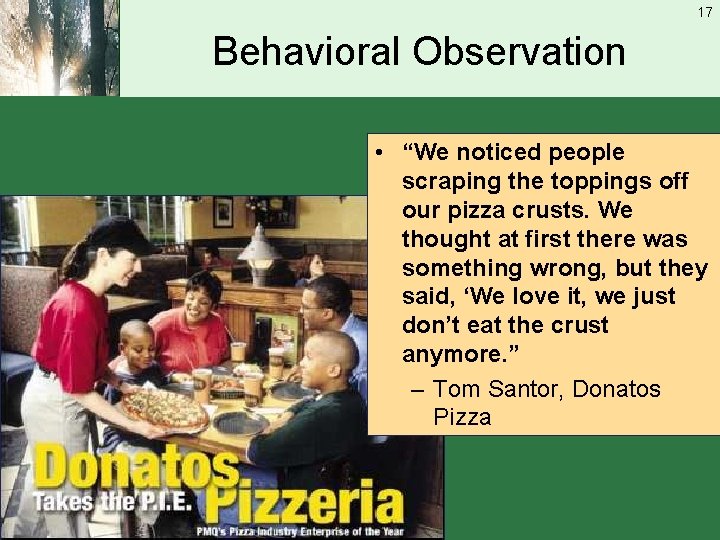
17 Behavioral Observation • “We noticed people scraping the toppings off our pizza crusts. We thought at first there was something wrong, but they said, ‘We love it, we just don’t eat the crust anymore. ” – Tom Santor, Donatos Pizza
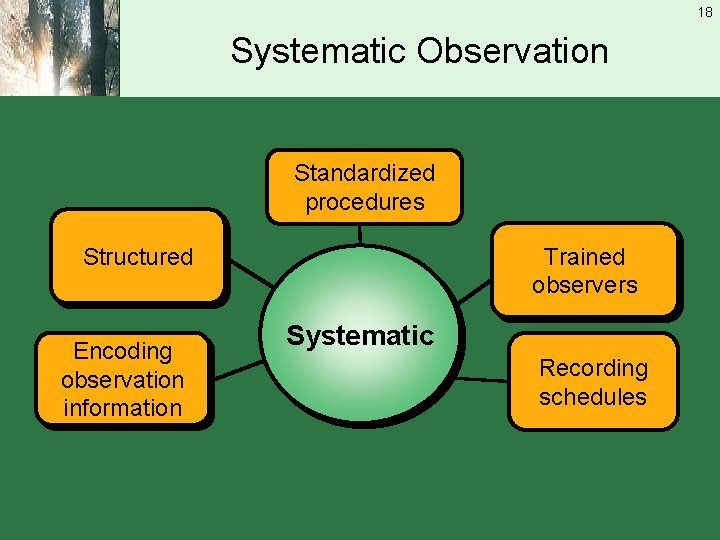
18 Systematic Observation Standardized procedures Trained observers Structured Encoding observation information Systematic Recording schedules
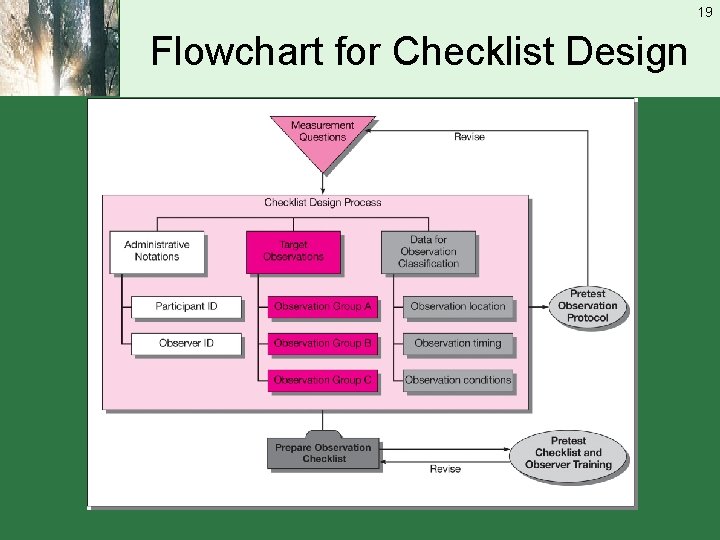
19 Flowchart for Checklist Design
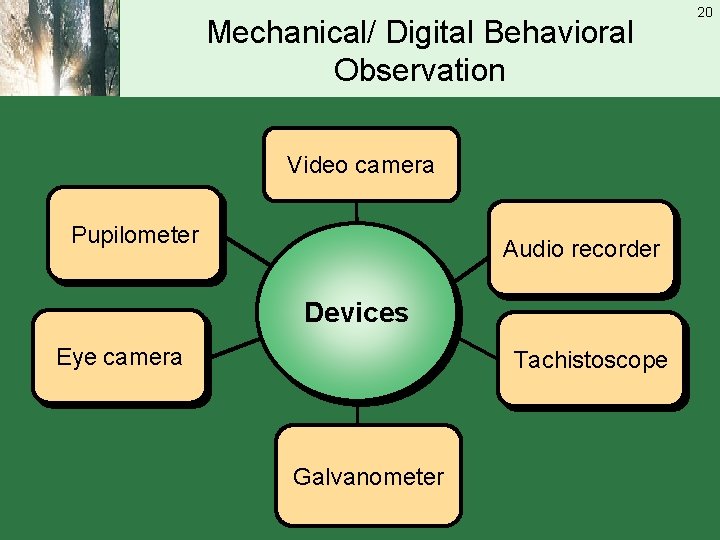
Mechanical/ Digital Behavioral Observation Video camera Pupilometer Audio recorder Devices Eye camera Tachistoscope Galvanometer 20
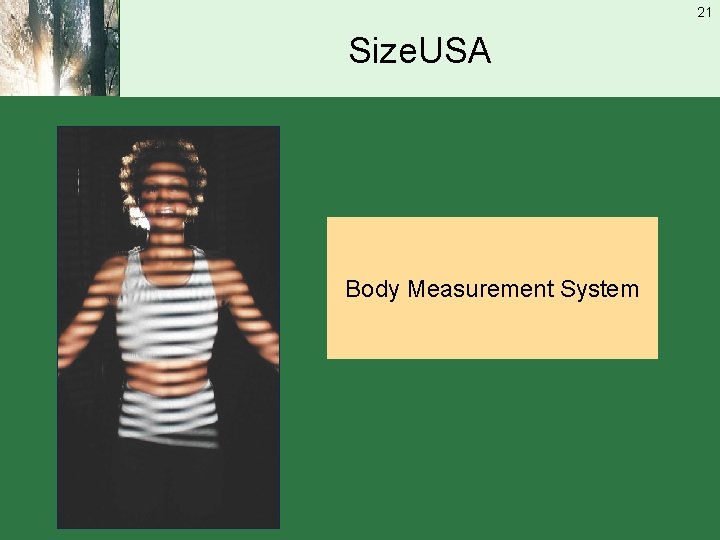
21 Size. USA Body Measurement System
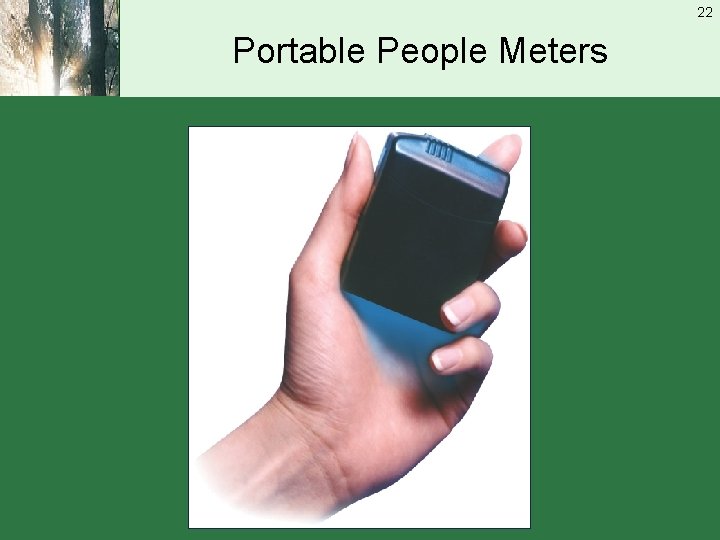
22 Portable People Meters
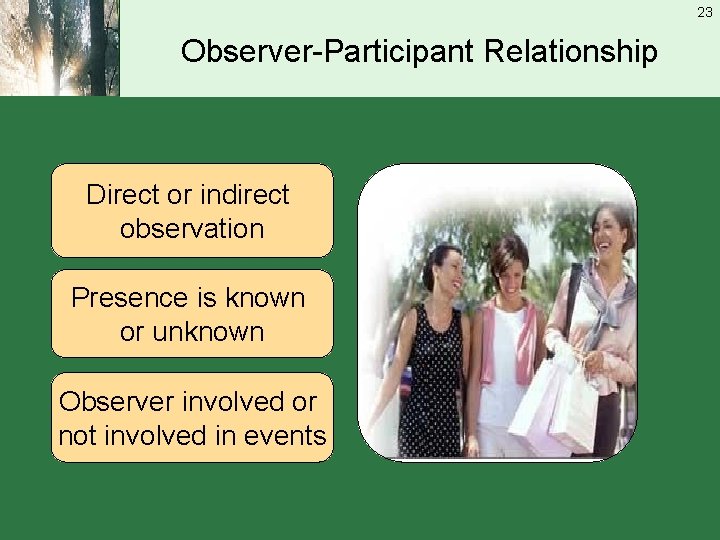
23 Observer-Participant Relationship Direct or indirect observation Presence is known or unknown Observer involved or not involved in events
24 Extralinguistic Observation Vocal Temporal Interaction Verbal Stylistic
25 Desired Characteristics for Observers Concentration Detail-oriented Unobtrusive Experience level
26 Errors Introduced by Observers Halo Effect Observer Drift
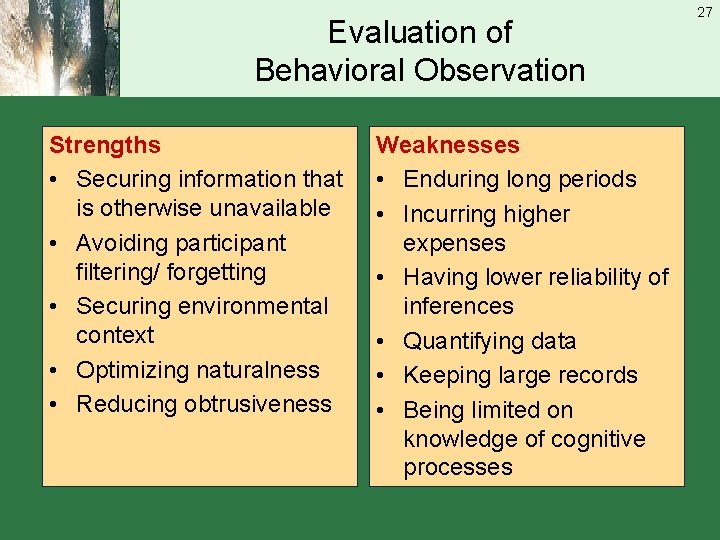
Evaluation of Behavioral Observation Strengths • Securing information that is otherwise unavailable • Avoiding participant filtering/ forgetting • Securing environmental context • Optimizing naturalness • Reducing obtrusiveness Weaknesses • Enduring long periods • Incurring higher expenses • Having lower reliability of inferences • Quantifying data • Keeping large records • Being limited on knowledge of cognitive processes 27
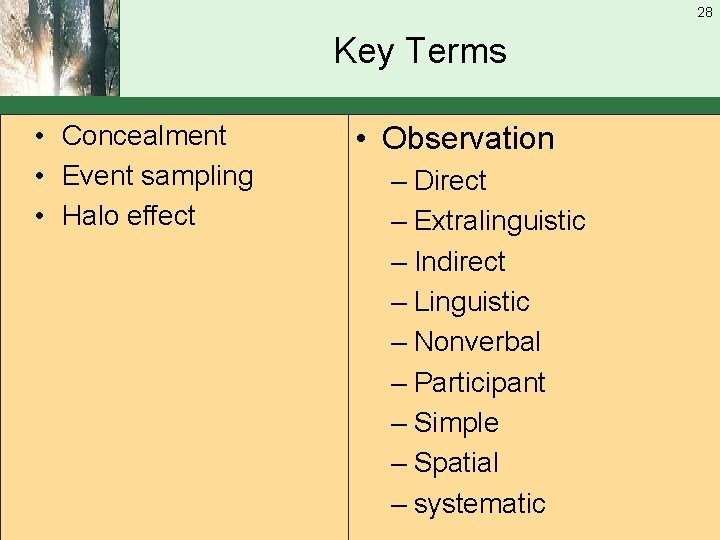
28 Key Terms • Concealment • Event sampling • Halo effect • Observation – Direct – Extralinguistic – Indirect – Linguistic – Nonverbal – Participant – Simple – Spatial – systematic
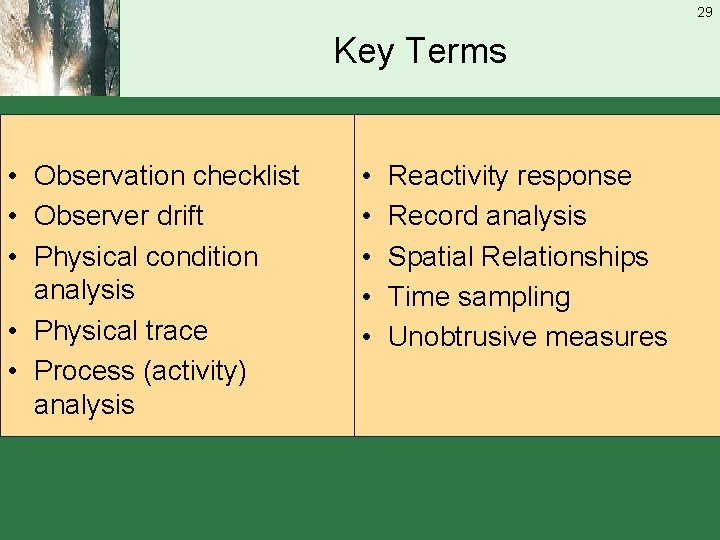
29 Key Terms • Observation checklist • Observer drift • Physical condition analysis • Physical trace • Process (activity) analysis • • • Reactivity response Record analysis Spatial Relationships Time sampling Unobtrusive measures
- Slides: 29