
Chapter 8 Observation CONTENTS Types of observational research

Chapter 8 Observation
CONTENTS • • • Types of observational research Possibilities Main elements of observational research Use of technology Just looking

Types of observational research (Fig. 8. 1) • • Structured or systematic Unstructured/naturalistic/qualitative Quasi-experimental Participant observation (see Ch. 9) A. J. Veal & S. Darcy (2014) Research Methods for Sport Studies and Sport Management: A practical guide. London: Routledge
Possibilities (Fig. 8. 2) • Children's play • Sport activity patterns (coaching, training, match behaviour) • Informal sport areas – – • • • counting heads spatial/functional patterns of use Visitor profiles Deviant behaviour Mystery shopping Complementary research Everyday life Social behaviour A. J. Veal & S. Darcy (2014) Research Methods for Sport Studies and Sport Management: A practical guide. London: Routledge
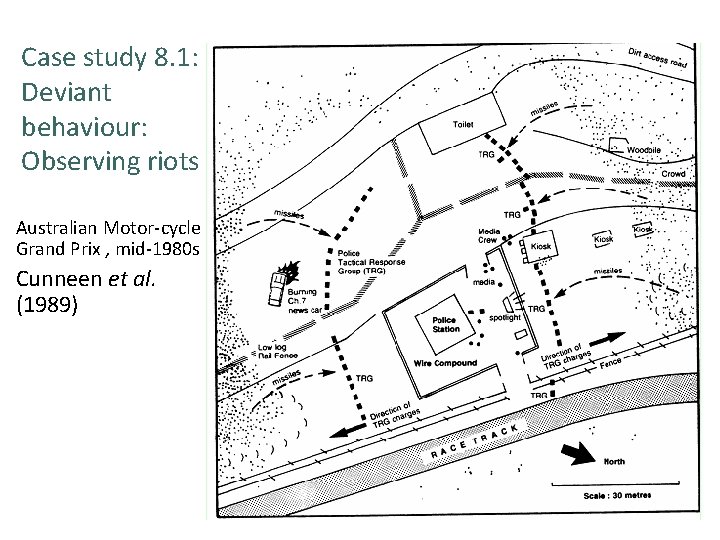
Case study 8. 1: Deviant behaviour: Observing riots Australian Motor-cycle Grand Prix , mid-1980 s Cunneen et al. (1989)
Steps in an observation project (Fig. 8. 4) 1. 2. 3. 4. 5. 6. 7. 8. 9. 10. Choice of site(s) Choice of observation point(s) Choice of observation time period(s) Continuous observation or sampling? Number and length of sampling periods Deciding what to observe Division of site into zones Determining information recording method Conducting the observation Analysing/interpreting data A. J. Veal & S. Darcy (2014) Research Methods for Sport Studies and Sport Management: A practical guide. London: Routledge
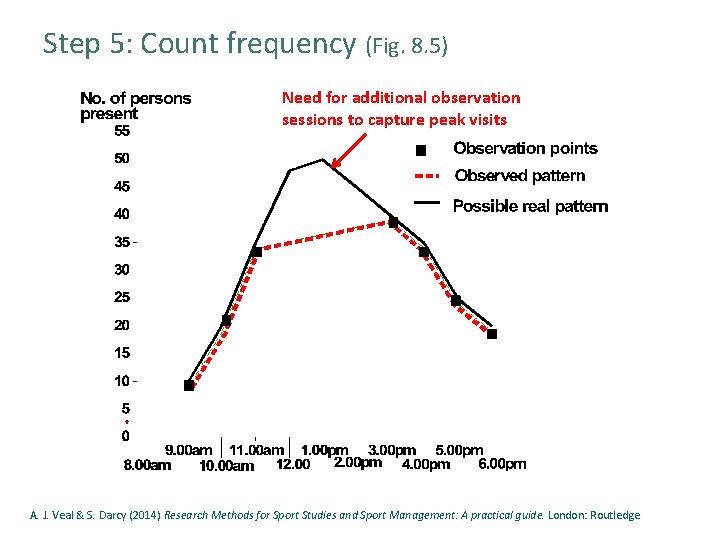
Step 5: Count frequency (Fig. 8. 5) Need for additional observation sessions to capture peak visits A. J. Veal & S. Darcy (2014) Research Methods for Sport Studies and Sport Management: A practical guide. London: Routledge
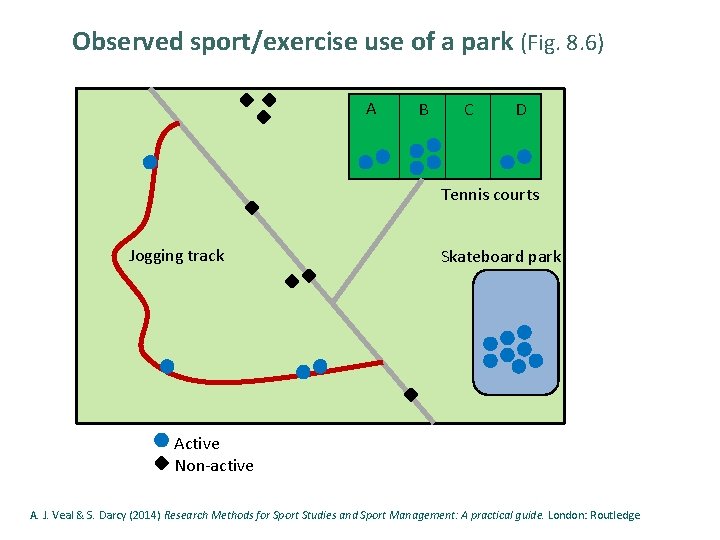
Observed sport/exercise use of a park (Fig. 8. 6) A B C D Tennis courts Jogging track Skateboard park Active Non-active A. J. Veal & S. Darcy (2014) Research Methods for Sport Studies and Sport Management: A practical guide. London: Routledge

Observation recording sheet: counts (Fig 8. 7) Site Observer Date Start time Finish time Track Tennis court A Tennis court C Zone Activity Skateboard park Tennis court B Tennis court D Participants Referees etc. Spectators Comments A. J. Veal & S. Darcy (2014) Research Methods for Sport Studies and Sport Management: A practical guide. London: Routledge
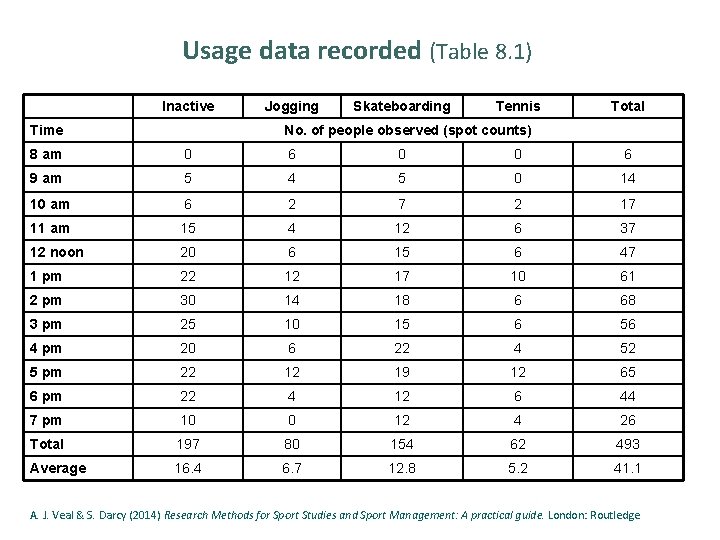
Usage data recorded (Table 8. 1) Inactive Time Jogging Skateboarding Tennis Total No. of people observed (spot counts) 8 am 0 6 0 0 6 9 am 5 4 5 0 14 10 am 6 2 7 2 17 11 am 15 4 12 6 37 12 noon 20 6 15 6 47 1 pm 22 12 17 10 61 2 pm 30 14 18 6 68 3 pm 25 10 15 6 56 4 pm 20 6 22 4 52 5 pm 22 12 19 12 65 6 pm 22 4 12 6 44 7 pm 10 0 12 4 26 Total 197 80 154 62 493 Average 16. 4 6. 7 12. 8 5. 2 41. 1 A. J. Veal & S. Darcy (2014) Research Methods for Sport Studies and Sport Management: A practical guide. London: Routledge
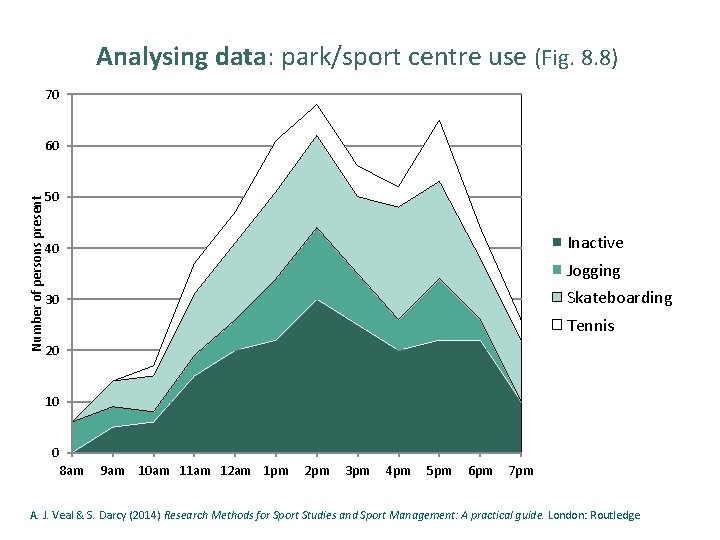
Analysing data: park/sport centre use (Fig. 8. 8) 70 Number of persons present 60 50 Inactive 40 Jogging Skateboarding 30 Tennis 20 10 0 8 am 9 am 10 am 11 am 12 am 1 pm 2 pm 3 pm 4 pm 5 pm 6 pm 7 pm A. J. Veal & S. Darcy (2014) Research Methods for Sport Studies and Sport Management: A practical guide. London: Routledge
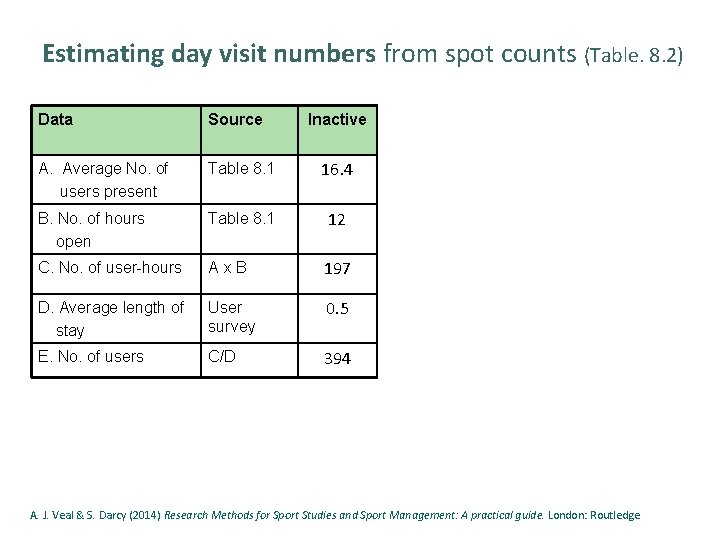
Estimating day visit numbers from spot counts (Table. 8. 2) Data Source Inactive A. Average No. of users present Table 8. 1 16. 4 B. No. of hours open Table 8. 1 12 C. No. of user-hours Ax. B 197 D. Average length of stay User survey 0. 5 E. No. of users C/D 394 A. J. Veal & S. Darcy (2014) Research Methods for Sport Studies and Sport Management: A practical guide. London: Routledge
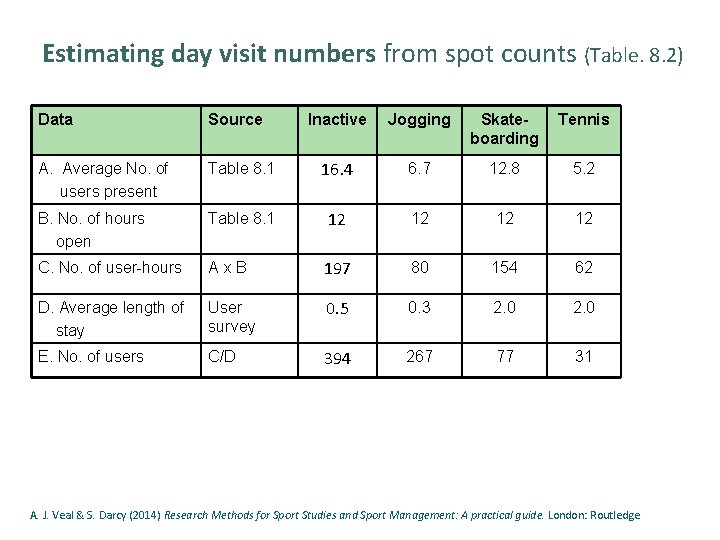
Estimating day visit numbers from spot counts (Table. 8. 2) Data Source Inactive Jogging Skateboarding Tennis A. Average No. of users present Table 8. 1 16. 4 6. 7 12. 8 5. 2 B. No. of hours open Table 8. 1 12 12 C. No. of user-hours Ax. B 197 80 154 62 D. Average length of stay User survey 0. 5 0. 3 2. 0 E. No. of users C/D 394 267 77 31 A. J. Veal & S. Darcy (2014) Research Methods for Sport Studies and Sport Management: A practical guide. London: Routledge
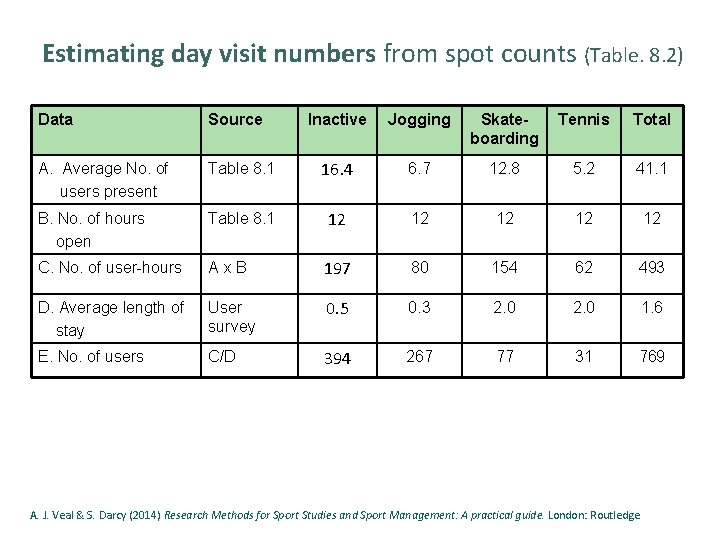
Estimating day visit numbers from spot counts (Table. 8. 2) Data Source Inactive Jogging Skateboarding Tennis Total A. Average No. of users present Table 8. 1 16. 4 6. 7 12. 8 5. 2 41. 1 B. No. of hours open Table 8. 1 12 12 12 C. No. of user-hours Ax. B 197 80 154 62 493 D. Average length of stay User survey 0. 5 0. 3 2. 0 1. 6 E. No. of users C/D 394 267 77 31 769 A. J. Veal & S. Darcy (2014) Research Methods for Sport Studies and Sport Management: A practical guide. London: Routledge
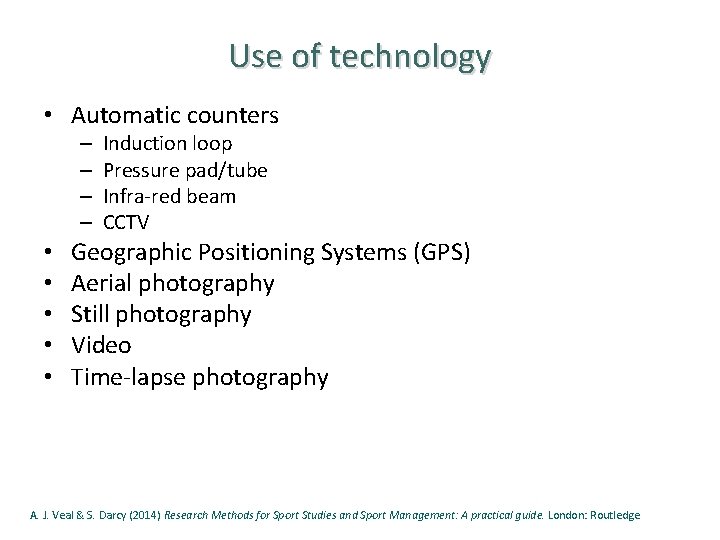
Use of technology • Automatic counters – – • • • Induction loop Pressure pad/tube Infra-red beam CCTV Geographic Positioning Systems (GPS) Aerial photography Still photography Video Time-lapse photography A. J. Veal & S. Darcy (2014) Research Methods for Sport Studies and Sport Management: A practical guide. London: Routledge
Just looking • Observation is important in all forms of empirical research. • Observing people’s behaviour at a site, in a destination, can reveal information not obtainable by any other means. • Time invested in simply observing the research site is often well rewarded. A. J. Veal & S. Darcy (2014) Research Methods for Sport Studies and Sport Management: A practical guide. London: Routledge
- Slides: 16