
Chapter 8 OBGYN Obstetrics OB is the branch
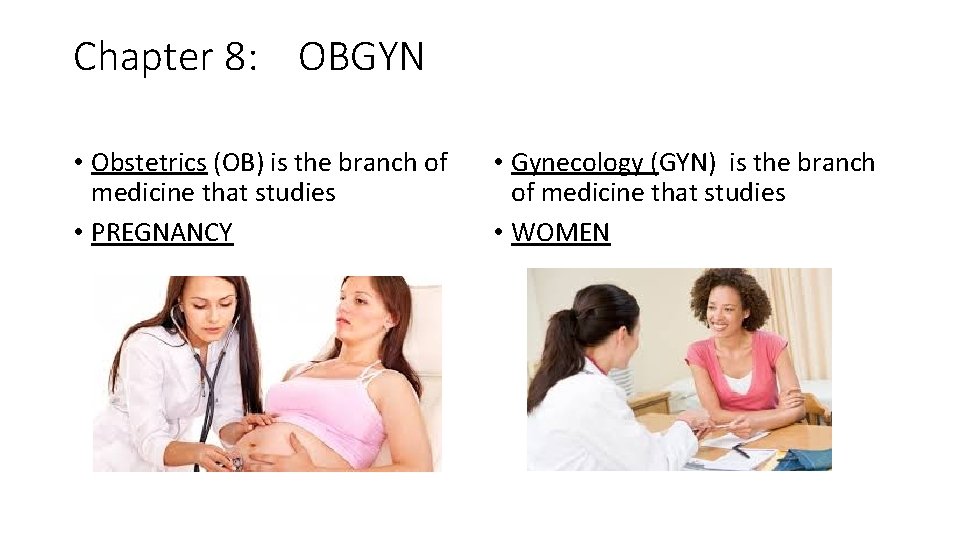
Chapter 8: OBGYN • Obstetrics (OB) is the branch of medicine that studies • PREGNANCY • Gynecology (GYN) is the branch of medicine that studies • WOMEN
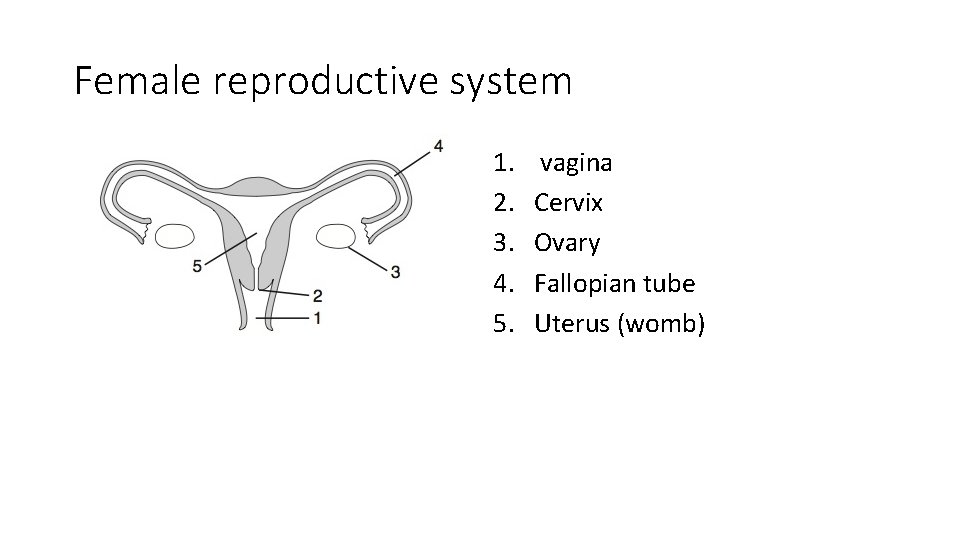
Female reproductive system 1. 2. 3. 4. 5. vagina Cervix Ovary Fallopian tube Uterus (womb)
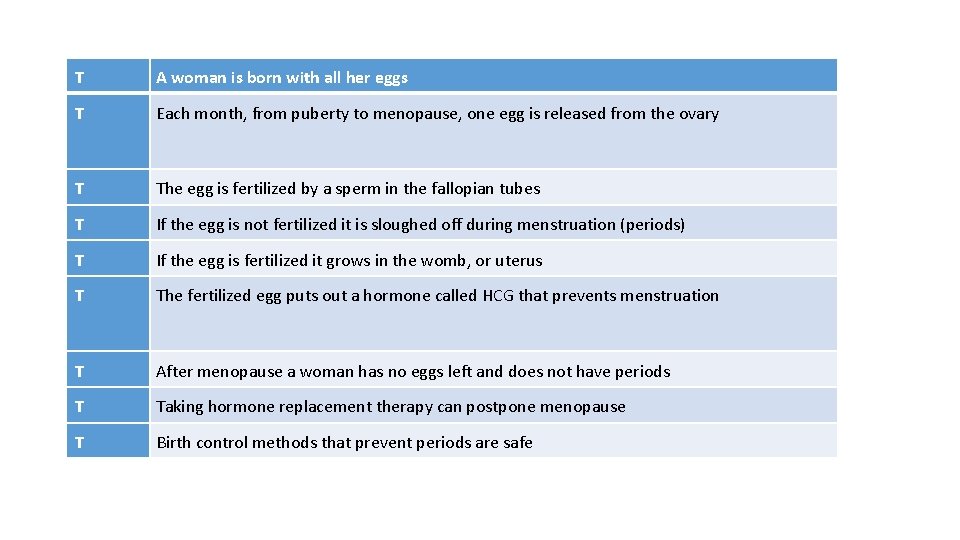
T A woman is born with all her eggs T Each month, from puberty to menopause, one egg is released from the ovary T The egg is fertilized by a sperm in the fallopian tubes T If the egg is not fertilized it is sloughed off during menstruation (periods) T If the egg is fertilized it grows in the womb, or uterus T The fertilized egg puts out a hormone called HCG that prevents menstruation T After menopause a woman has no eggs left and does not have periods T Taking hormone replacement therapy can postpone menopause T Birth control methods that prevent periods are safe
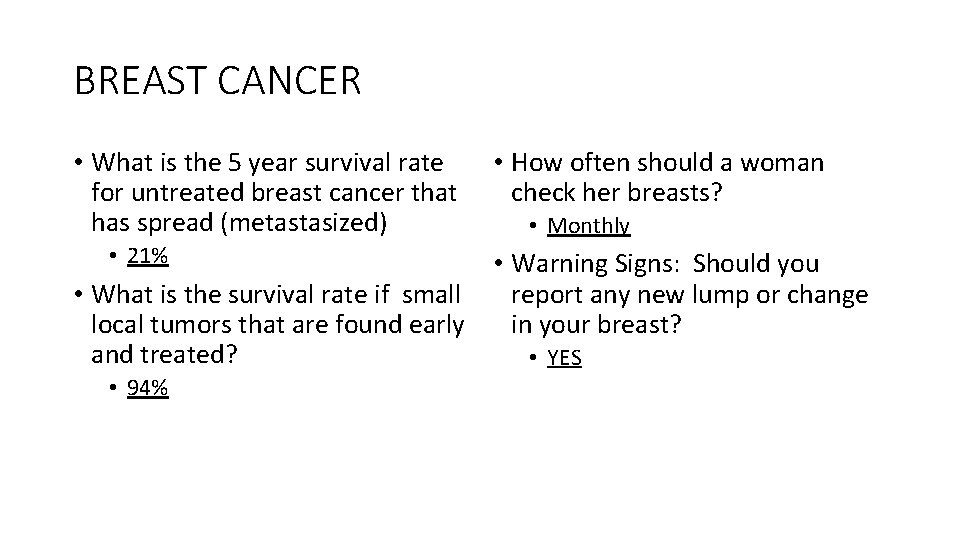
BREAST CANCER • What is the 5 year survival rate for untreated breast cancer that has spread (metastasized) • 21% • How often should a woman check her breasts? • Monthly • Warning Signs: Should you • What is the survival rate if small report any new lump or change local tumors that are found early in your breast? and treated? • YES • 94%

Well woman (pap) pelvic exam • Lithotomy position • For a pap. exam

Tray set-up for a pelvic exam Tissue Gauze • Hemoccult and developer Lab bag Thin prep pap test • Vaginal speculum • KY jelly • gloves

• A. Explain the procedure and get a urine sample • B. Swirl the sample in • The thin prep • C. break off the STD sample into the solution • D sent the samples to the lab • E. Remove the vaginal speculum • F. Let the doctor smear • the gloves with jelly • G. the bimanual exam
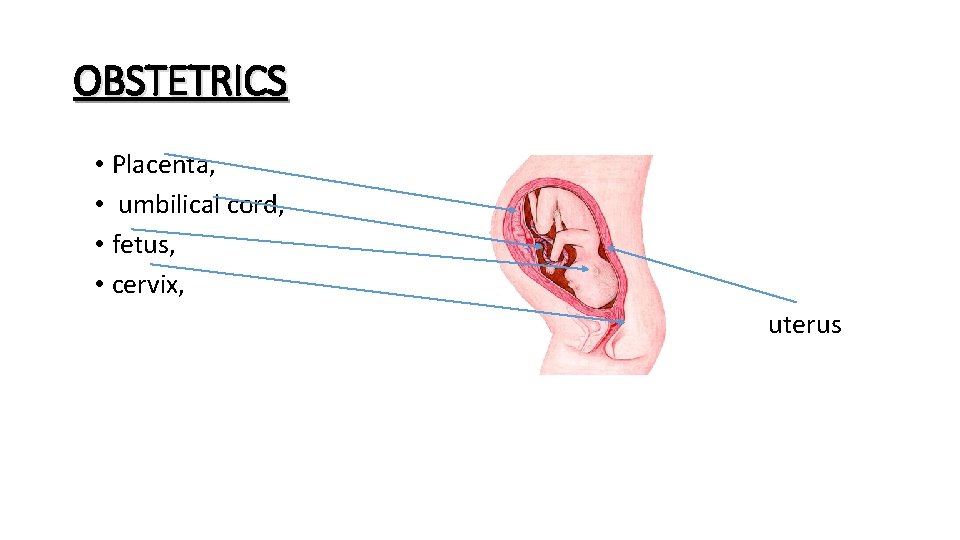
OBSTETRICS • Placenta, • umbilical cord, • fetus, • cervix, uterus
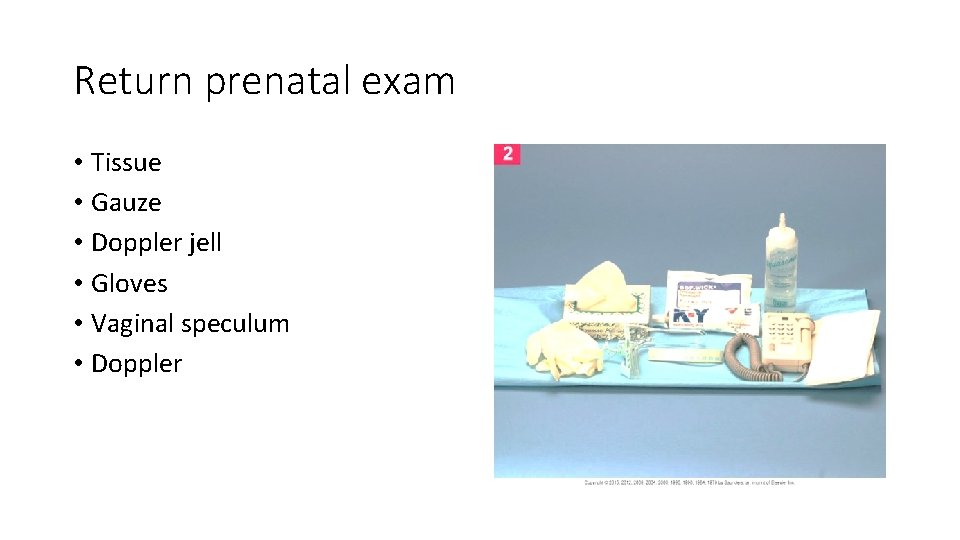
Return prenatal exam • Tissue • Gauze • Doppler jell • Gloves • Vaginal speculum • Doppler
Return visits • 1 to 28 weeks • Every month • After 28 weeks • Every other week • 6 week postpartum visit
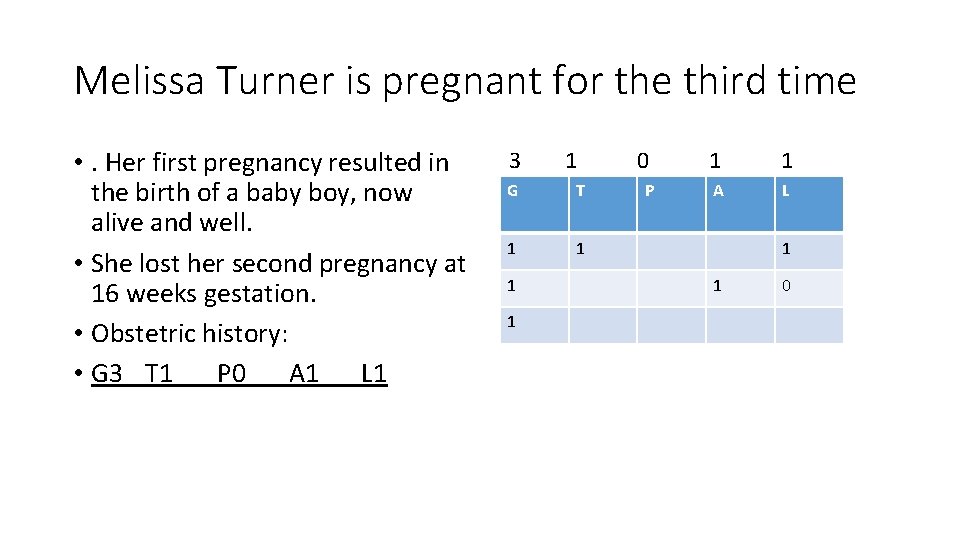
Melissa Turner is pregnant for the third time • . Her first pregnancy resulted in the birth of a baby boy, now alive and well. • She lost her second pregnancy at 16 weeks gestation. • Obstetric history: • G 3 T 1 P 0 A 1 L 1 3 1 G T 1 1 0 1 1 P A L 1 1 0
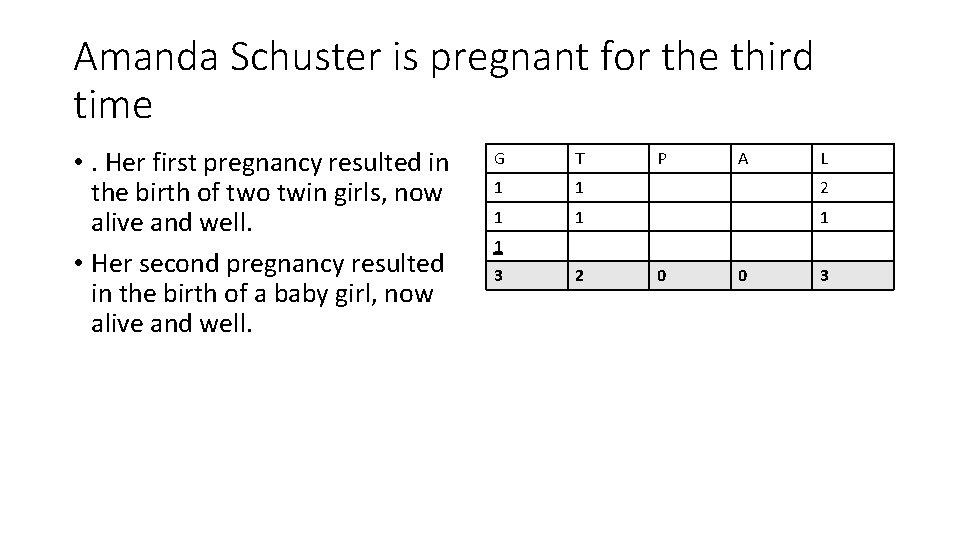
Amanda Schuster is pregnant for the third time • . Her first pregnancy resulted in the birth of two twin girls, now alive and well. • Her second pregnancy resulted in the birth of a baby girl, now alive and well. G T P A L 1 1 2 1 1 3 2 0 0 3
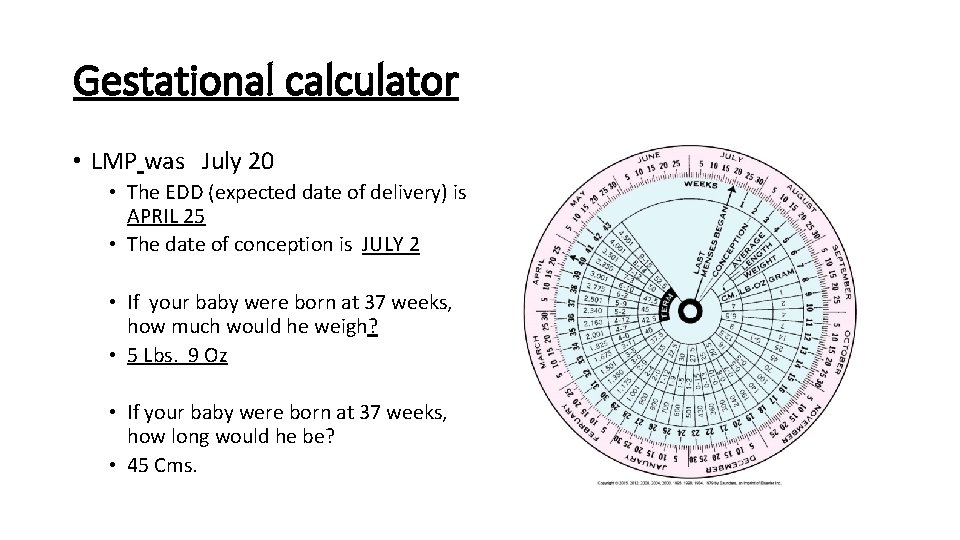
Gestational calculator • LMP was July 20 • The EDD (expected date of delivery) is APRIL 25 • The date of conception is JULY 2 • If your baby were born at 37 weeks, how much would he weigh? • 5 Lbs. 9 Oz • If your baby were born at 37 weeks, how long would he be? • 45 Cms.

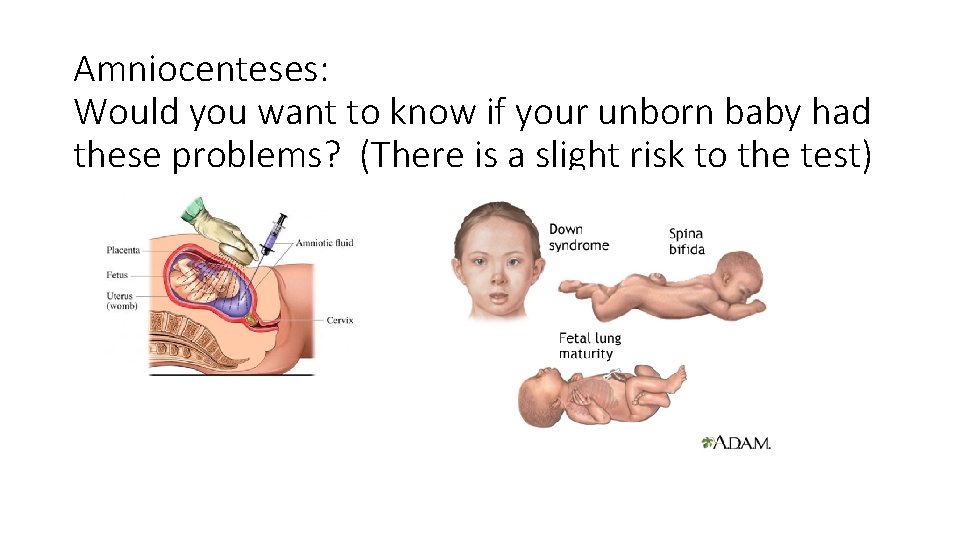
Amniocenteses: Would you want to know if your unborn baby had these problems? (There is a slight risk to the test)
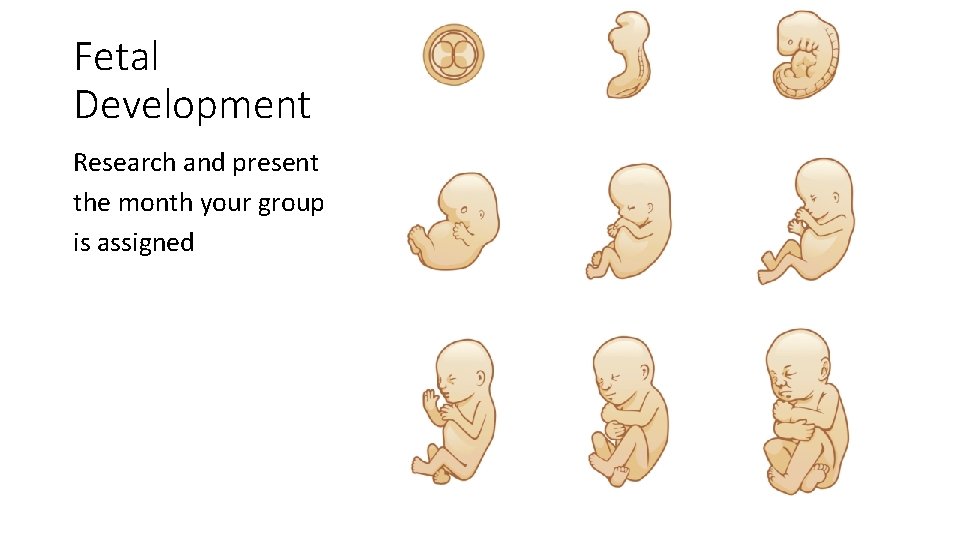
Fetal Development Research and present the month your group is assigned
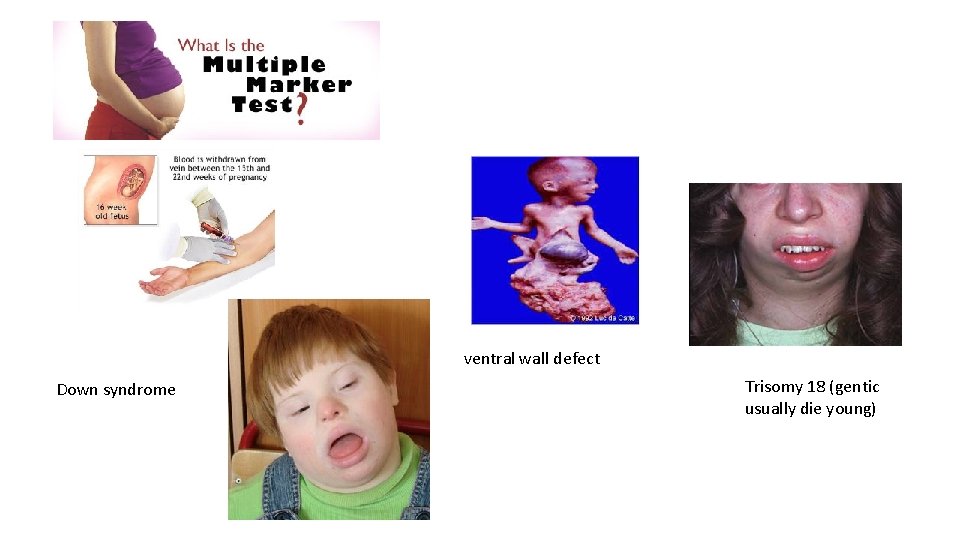
ventral wall defect Down syndrome Trisomy 18 (gentic usually die young)
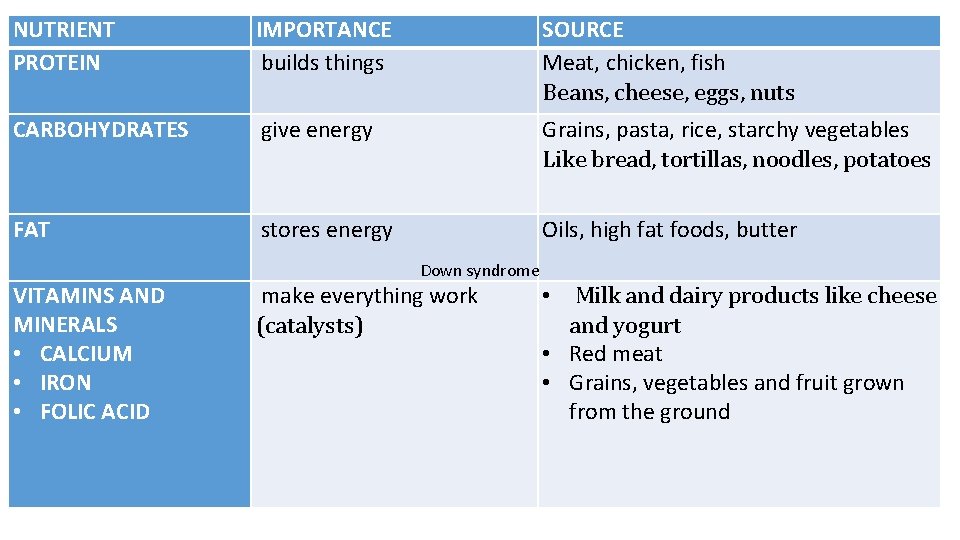
NUTRIENT PROTEIN IMPORTANCE builds things SOURCE Meat, chicken, fish Beans, cheese, eggs, nuts CARBOHYDRATES give energy Grains, pasta, rice, starchy vegetables Like bread, tortillas, noodles, potatoes FAT stores energy Oils, high fat foods, butter VITAMINS AND MINERALS • CALCIUM • IRON • FOLIC ACID Down syndrome make everything work (catalysts) • Milk and dairy products like cheese and yogurt • Red meat • Grains, vegetables and fruit grown from the ground
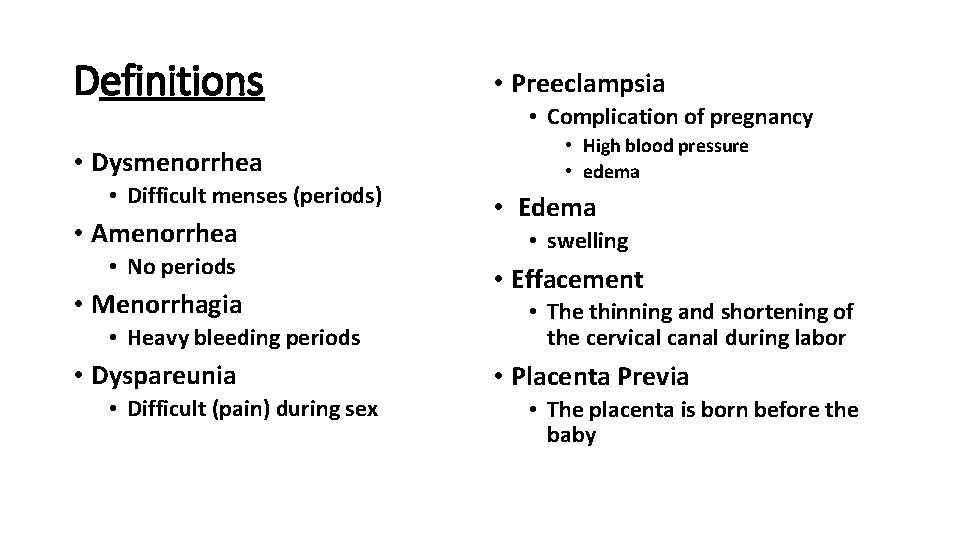
Definitions • Dysmenorrhea • Difficult menses (periods) • Amenorrhea • No periods • Menorrhagia • Heavy bleeding periods • Dyspareunia • Difficult (pain) during sex • Preeclampsia • Complication of pregnancy • High blood pressure • edema • Edema • swelling • Effacement • The thinning and shortening of the cervical canal during labor • Placenta Previa • The placenta is born before the baby
- Slides: 21