
Chapter 8 Nucleophilic Substitution at sp 3 C
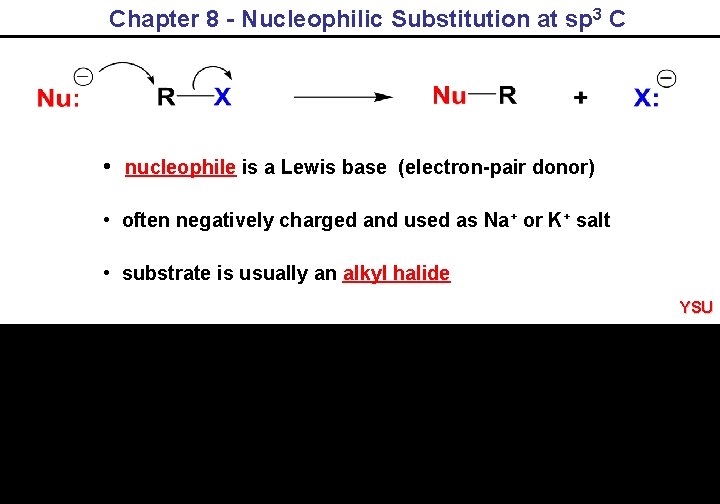
Chapter 8 - Nucleophilic Substitution at sp 3 C • nucleophile is a Lewis base (electron-pair donor) • often negatively charged and used as Na+ or K+ salt • substrate is usually an alkyl halide YSU
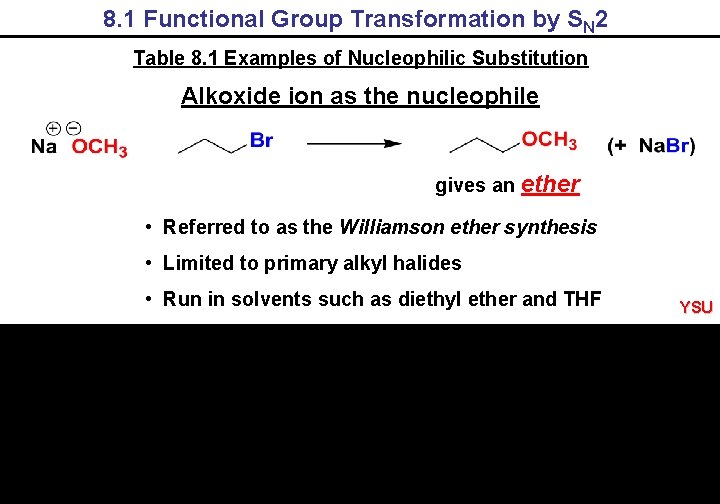
8. 1 Functional Group Transformation by SN 2 Table 8. 1 Examples of Nucleophilic Substitution Alkoxide ion as the nucleophile gives an ether • Referred to as the Williamson ether synthesis • Limited to primary alkyl halides • Run in solvents such as diethyl ether and THF YSU
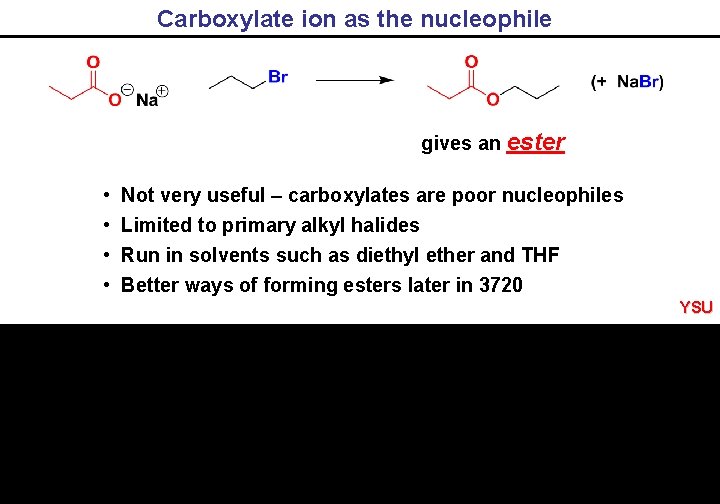
Carboxylate ion as the nucleophile gives an ester • • Not very useful – carboxylates are poor nucleophiles Limited to primary alkyl halides Run in solvents such as diethyl ether and THF Better ways of forming esters later in 3720 YSU

Cyanide as nucleophile Azide as nucleophile YSU
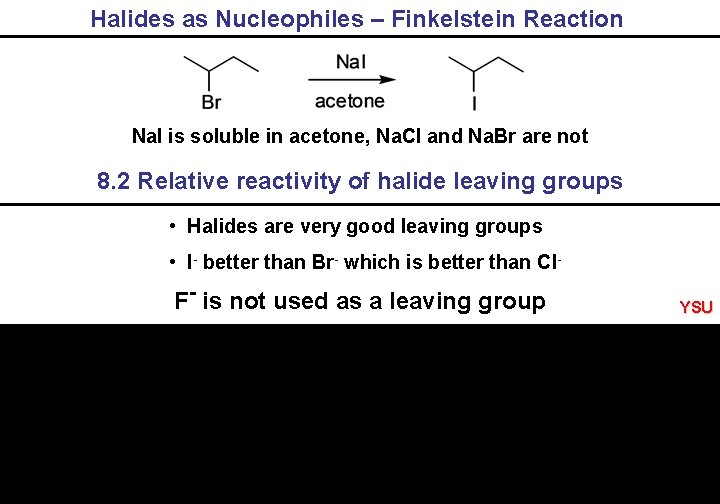
Halides as Nucleophiles – Finkelstein Reaction Na. I is soluble in acetone, Na. Cl and Na. Br are not 8. 2 Relative reactivity of halide leaving groups • Halides are very good leaving groups • I- better than Br- which is better than Cl. F- is not used as a leaving group YSU
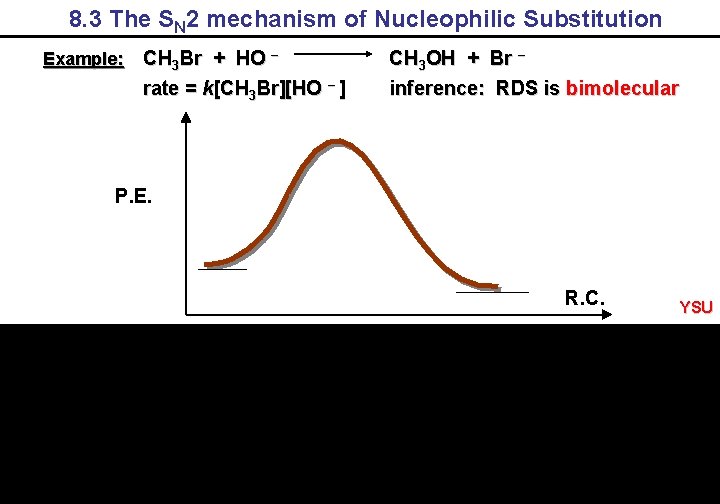
8. 3 The SN 2 mechanism of Nucleophilic Substitution Example: CH 3 Br + HO – rate = k[CH 3 Br][HO – ] CH 3 OH + Br – inference: RDS is bimolecular P. E. R. C. YSU
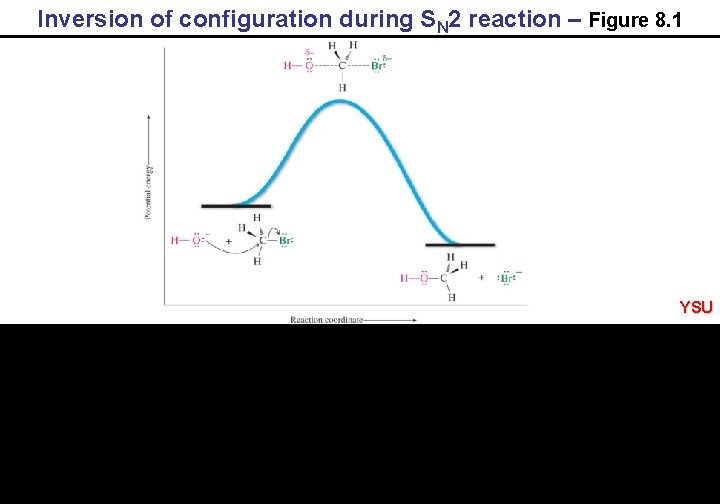
Inversion of configuration during SN 2 reaction – Figure 8. 1 YSU
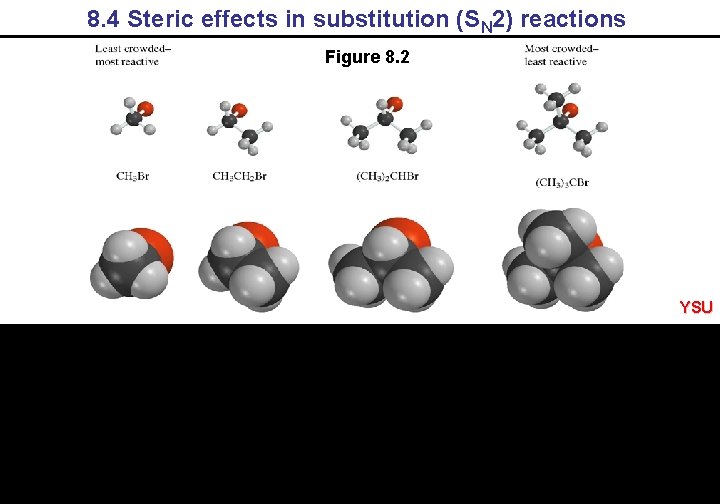
8. 4 Steric effects in substitution (SN 2) reactions Figure 8. 2 YSU
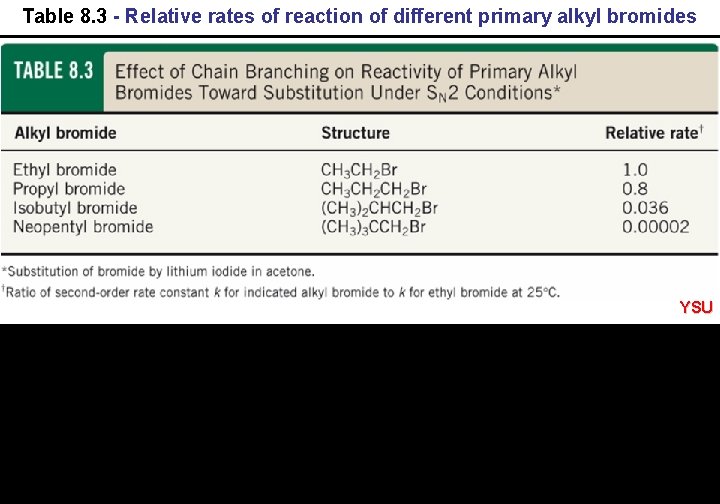
Table 8. 3 - Relative rates of reaction of different primary alkyl bromides YSU
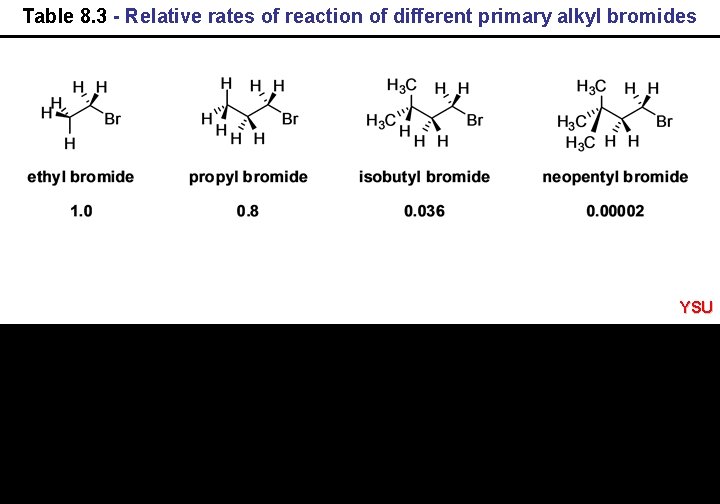
Table 8. 3 - Relative rates of reaction of different primary alkyl bromides YSU

8. 5 – Nucleophiles and Nucleophilicity – Table 8. 4 YSU
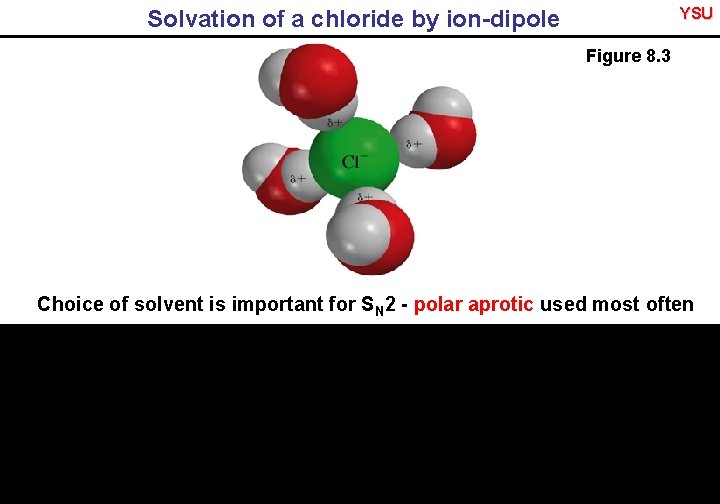
YSU Solvation of a chloride by ion-dipole Figure 8. 3 Choice of solvent is important for SN 2 - polar aprotic used most often
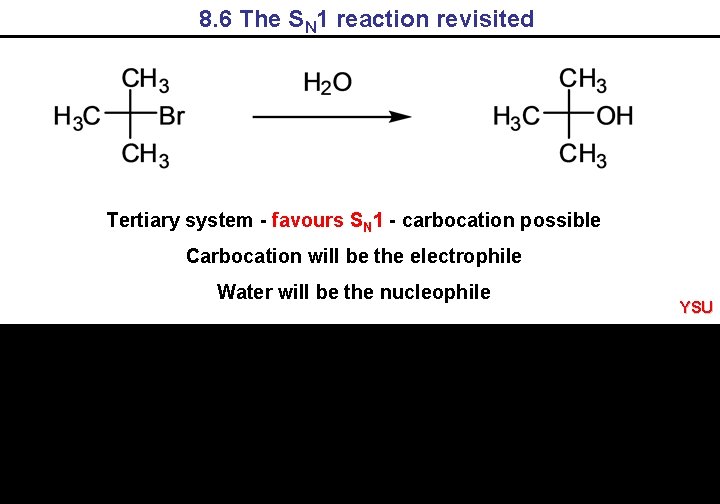
8. 6 The SN 1 reaction revisited Tertiary system - favours SN 1 - carbocation possible Carbocation will be the electrophile Water will be the nucleophile YSU
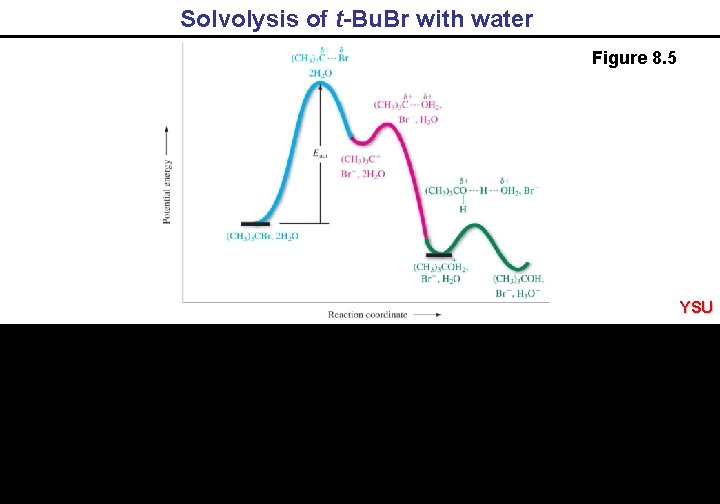
Solvolysis of t-Bu. Br with water Figure 8. 5 YSU
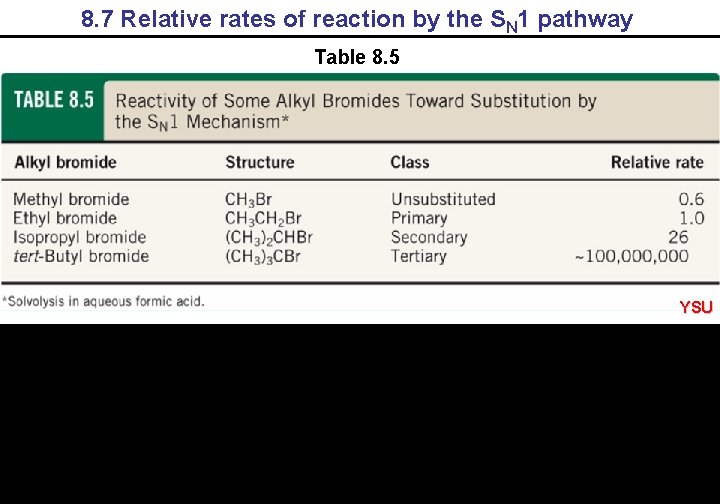
8. 7 Relative rates of reaction by the SN 1 pathway Table 8. 5 YSU
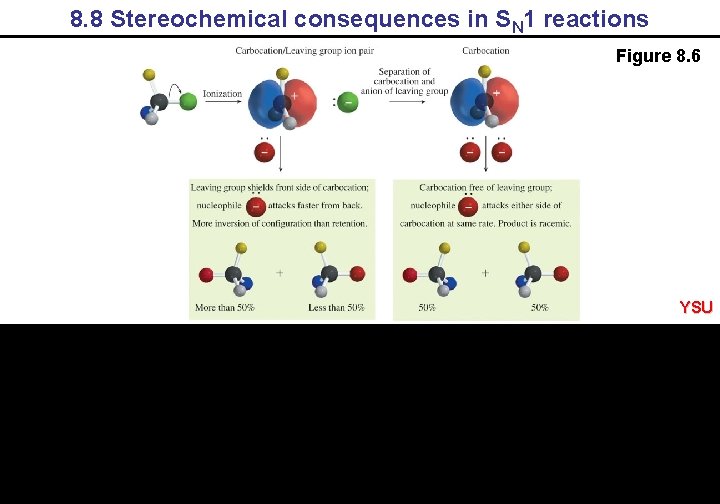
8. 8 Stereochemical consequences in SN 1 reactions Figure 8. 6 YSU
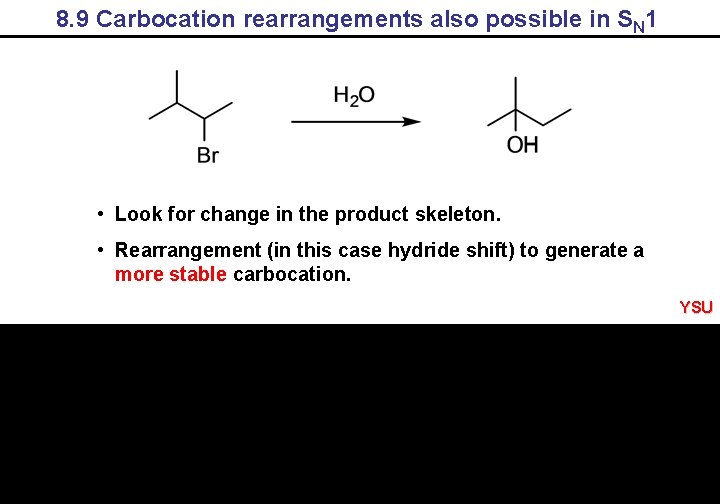
8. 9 Carbocation rearrangements also possible in SN 1 • Look for change in the product skeleton. • Rearrangement (in this case hydride shift) to generate a more stable carbocation. YSU
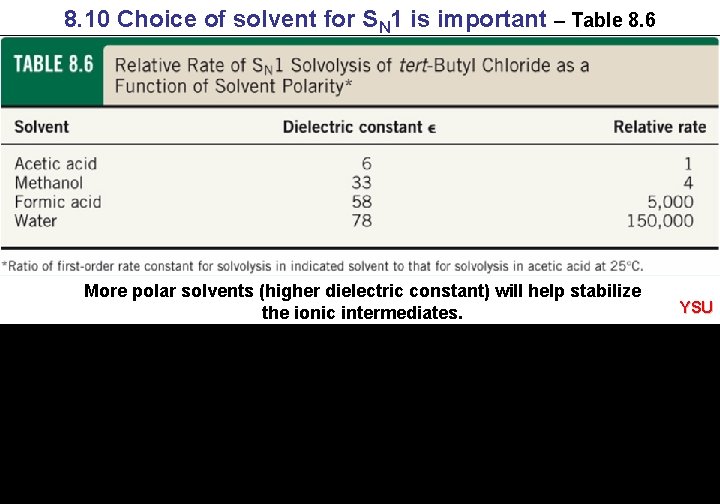
8. 10 Choice of solvent for SN 1 is important – Table 8. 6 More polar solvents (higher dielectric constant) will help stabilize the ionic intermediates. YSU
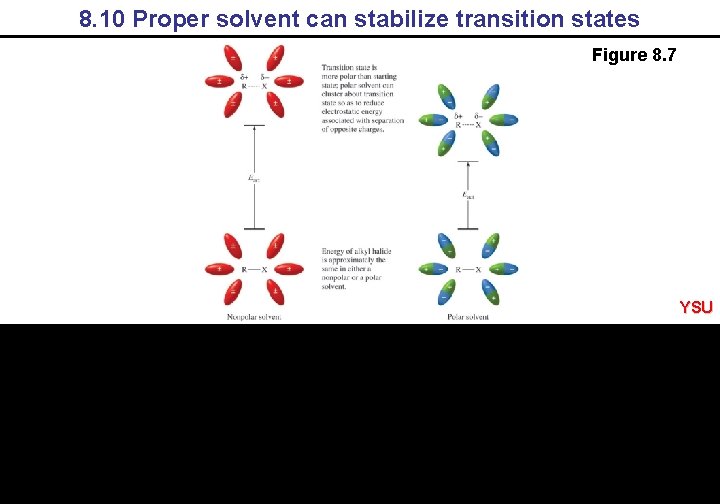
8. 10 Proper solvent can stabilize transition states Figure 8. 7 YSU
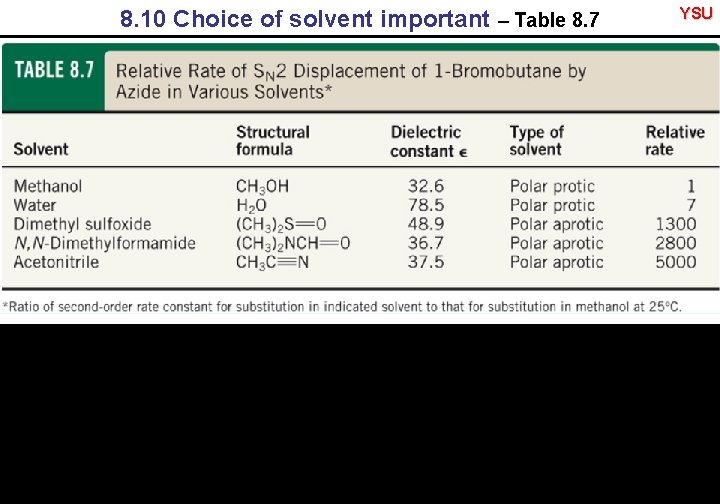
8. 10 Choice of solvent important – Table 8. 7 YSU
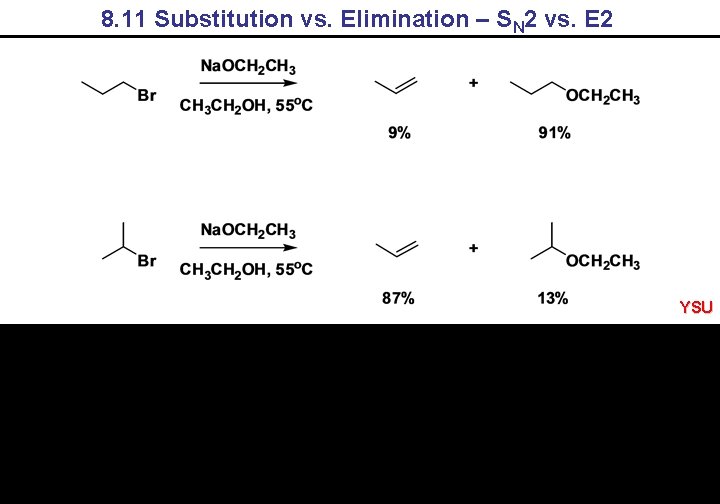
8. 11 Substitution vs. Elimination – SN 2 vs. E 2 YSU
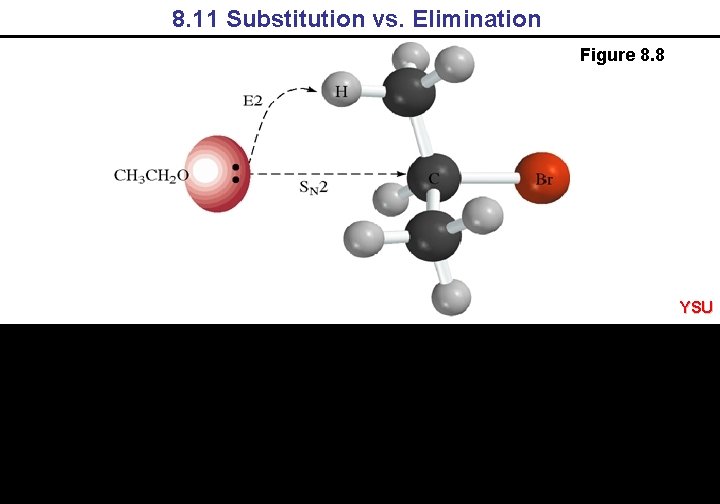
8. 11 Substitution vs. Elimination Figure 8. 8 YSU
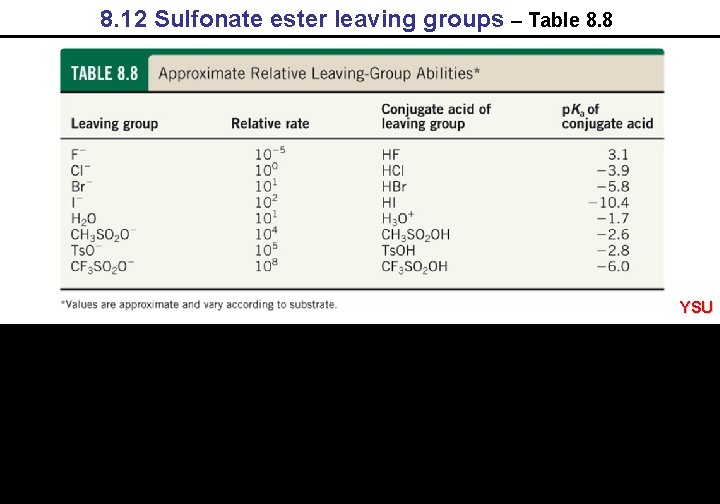
8. 12 Sulfonate ester leaving groups – Table 8. 8 YSU
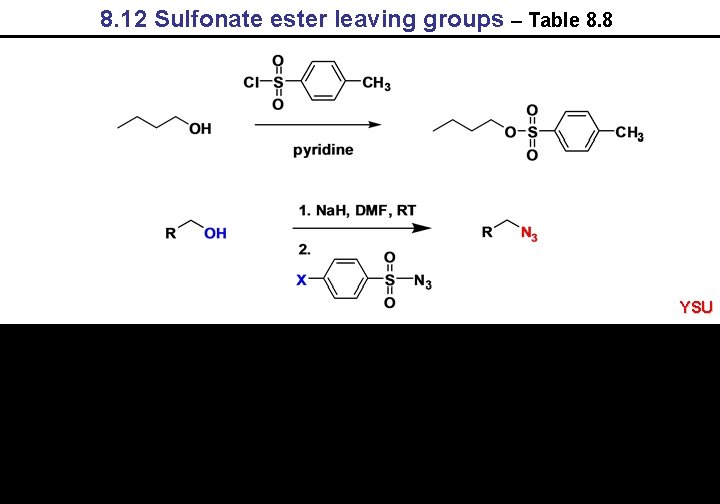
8. 12 Sulfonate ester leaving groups – Table 8. 8 YSU
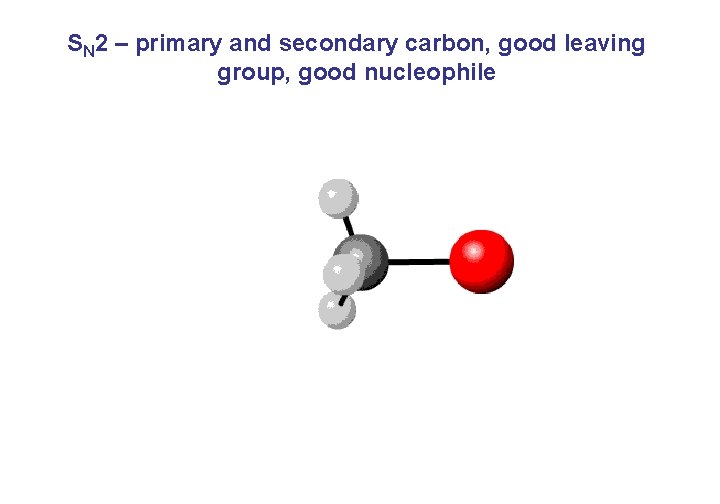
SN 2 – primary and secondary carbon, good leaving group, good nucleophile
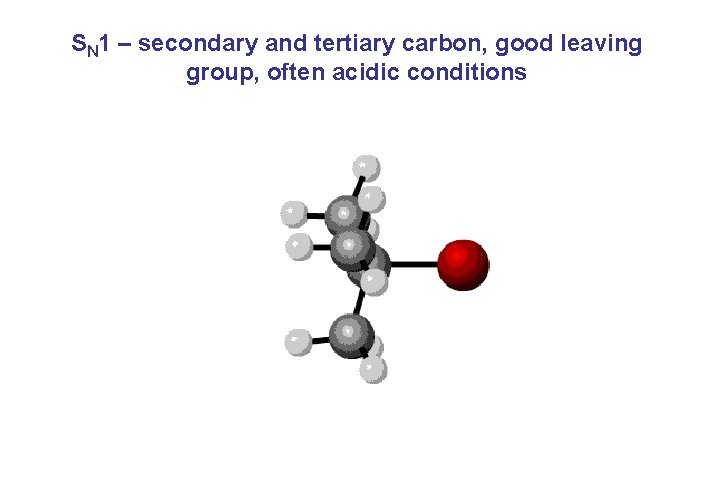
SN 1 – secondary and tertiary carbon, good leaving group, often acidic conditions
- Slides: 26