
Chapter 8 New Research Field in Molecular Biology
Chapter 8 New Research Field in Molecular Biology
8. 1 Bioinformatics
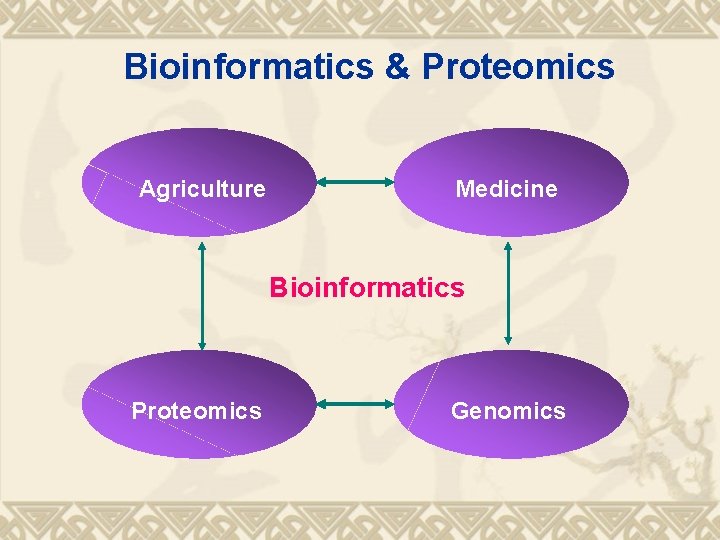
1. What is bioinformatics? Bioinformatics and computational biology involve the use of techniques including applied mathematics, informatics, statistics, computer science, artificial intelligence, chemistry, and biochemistry to solve biological problems usually on the molecular level.
2. Major research fields (1) Sequence analysis (3) Computational evolutionary biology (4) Measuring biodiversity (5) Analysis of gene expression (6) Analysis of regulation (7) Analysis of protein expression (8) Analysis of mutations in cancer (9) Prediction of protein structure (10) Comparative genomics (11) Modeling biological systems (12) High-throughput image analysis
3. Databases BLAST ACCESS db. EST / Expressed Sequence Tags database ce. DB databases Phenotypic databases LIMS BASE MOLCAS ……. .
8. 2 Proteome & Proteomics
1. What is Proteome? v Proteome - All the proteins expressed by a cell , tissue or organism at a particular time and under specific conditions.
2. What is Proteomics? v Proteomics is the systematic study of all of the proteins in a cell, tissue, or organism. The analysis includes the identification, expression, localizations, functions (physiological and pathophysiological functions), and interactions of proteomes.
4. Branches of Proteomics v Expressional Proteomics v Functional Proteomics v Structural Proteomics

Protein Microarrays


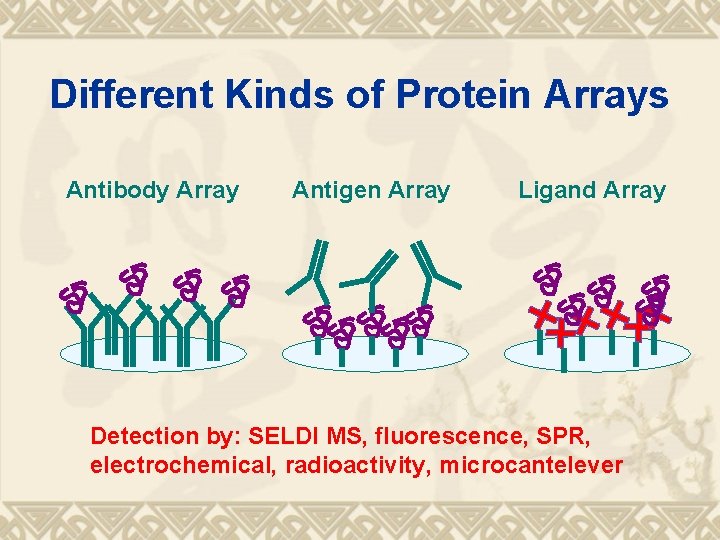
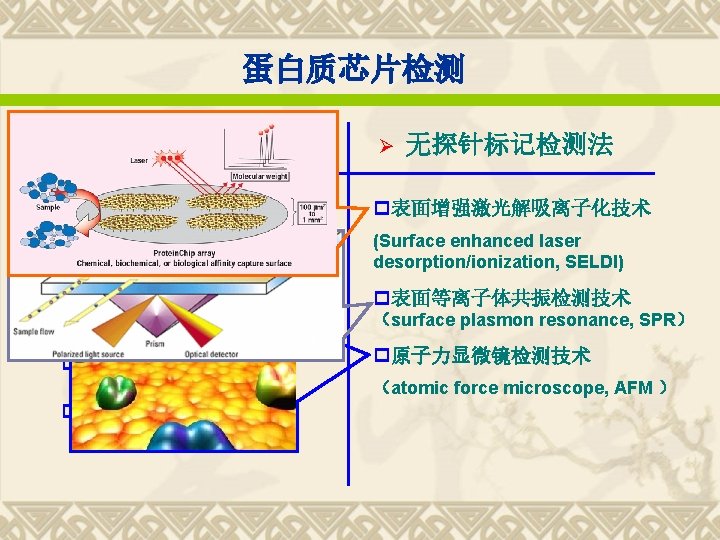
Different Kinds of Protein Arrays Antibody Array Antigen Array Ligand Array Detection by: SELDI MS, fluorescence, SPR, electrochemical, radioactivity, microcantelever
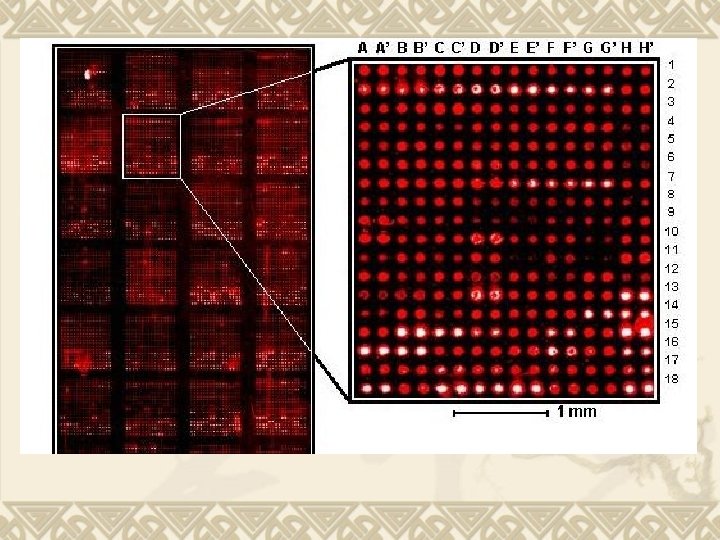

Problems n Expensive n Standard n Specificity n Sensitivity
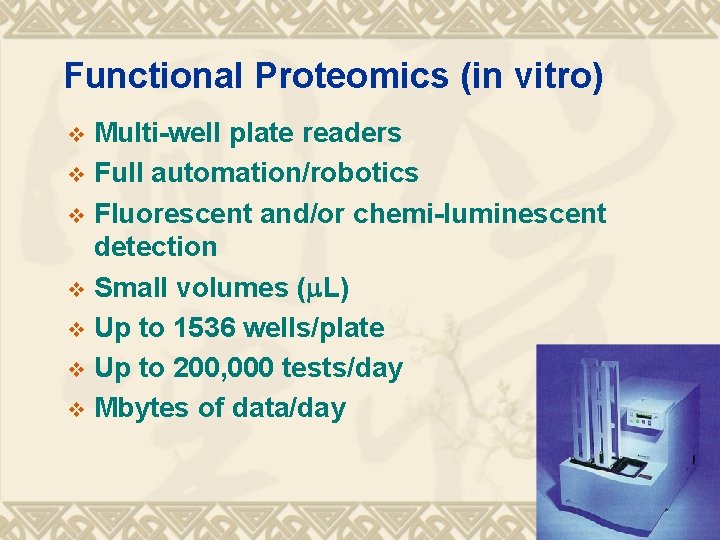
Functional Proteomics (in vitro) Multi-well plate readers v Full automation/robotics v Fluorescent and/or chemi-luminescent detection v Small volumes (m. L) v Up to 1536 wells/plate v Up to 200, 000 tests/day v Mbytes of data/day v
In silico methods (bioinformatics) v Genome-wide Protein Tagging v Genome-wide Gene Deletion or Knockouts v Random Tagged Mutagenisis or Transposon Insertion v Yeast two-hybrid Methods v Protein (Ligand) Chips v
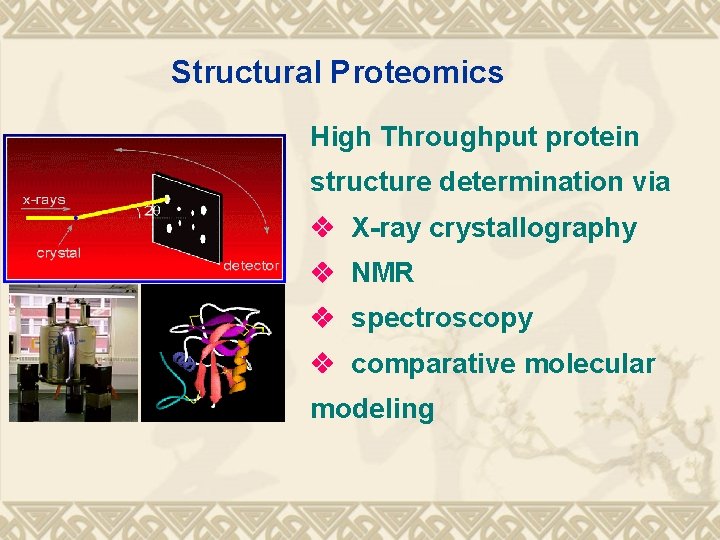
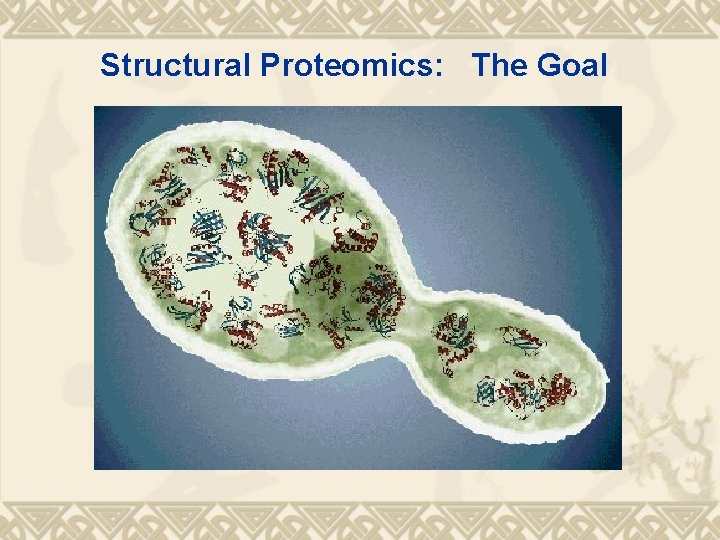
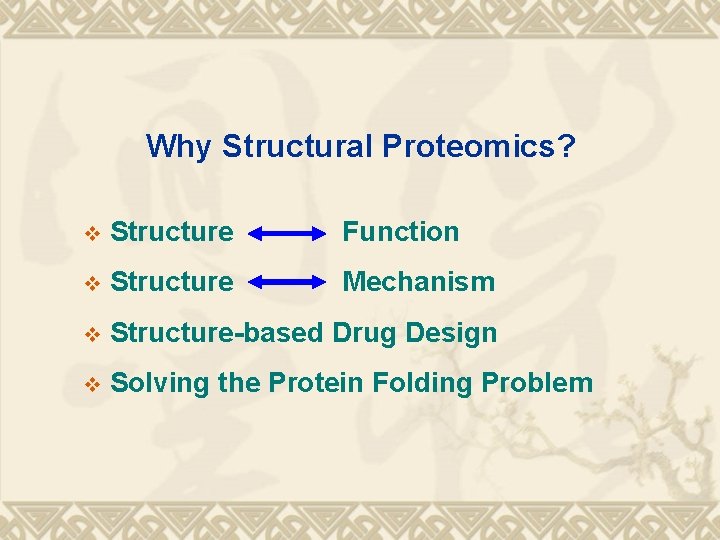
Structural Proteomics High Throughput protein structure determination via X-ray crystallography NMR spectroscopy comparative molecular modeling
Structural Proteomics: The Goal
Why Structural Proteomics? v Structure Function v Structure Mechanism v Structure-based Drug Design v Solving the Protein Folding Problem
Bioinformatics & Proteomics Agriculture Medicine Bioinformatics Proteomics Genomics
8. 3 Metabonome & Metabonomics
1. What is Metabonome ? - It refers the complete set of metabologically regulated elements in cells.
2. What is Metabonomics is the branch of science concerned with the quantitative understandings of the metabolite complement of integrated living systems and its dynamic responses to the changes of both endogenous factors and exogenous factors.


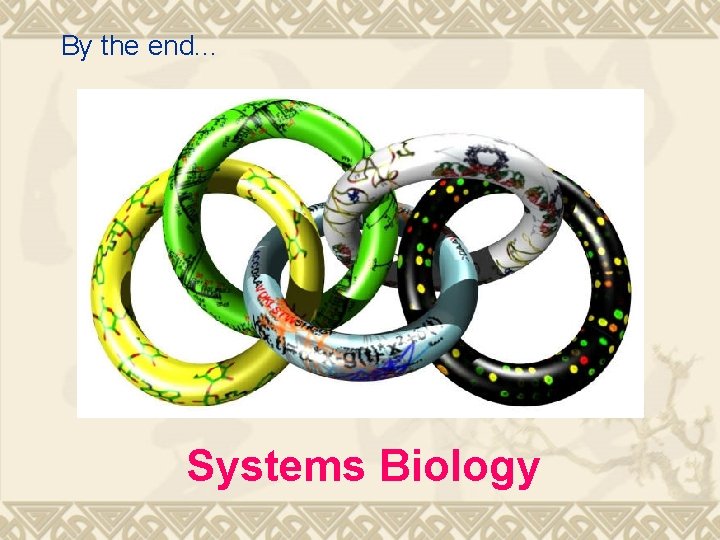
By the end. . . Systems Biology

Final Exam

- Slides: 32