
CHAPTER 8 Neural regulation in human body LEARNING
CHAPTER 8 Neural regulation in human body 人体的神经调节
LEARNING OBJECTIVE (29/4/20) Student knows: • Relation of stimuli and receptors • About stimuli and responses of the human body • Structure and types of neurone • nerve impulse transmission pathway • The composition of human nervous system • Reflex action and reflex arc
LEARNING OBJECTIVE • • • Structure and function of spinal cord Part of brain and functions Health care of nervous system Hazard of drinking alcohol Hazard of drugs on human body Equilibrium of water and inorganic salt

8. 1 Human responses to stimuli刺激 What is Stimulus刺激? Stimulus is environmental messages that induce responses 刺激是引起反应的环境信息 Pg 145
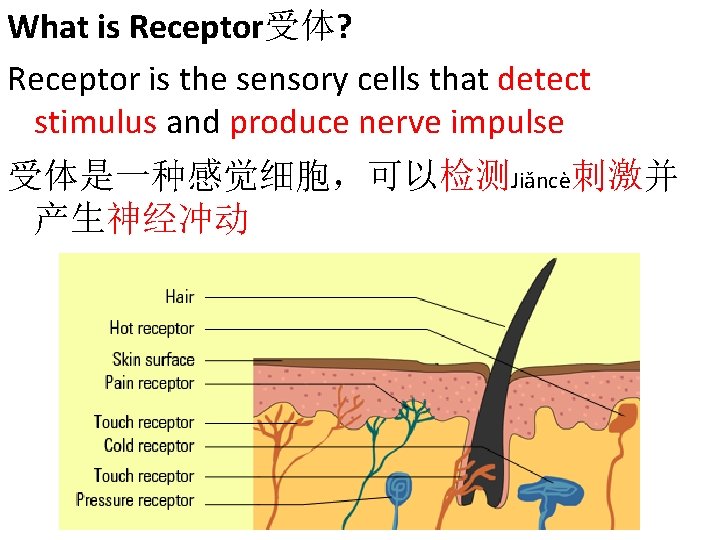
What is Receptor受体? Receptor is the sensory cells that detect stimulus and produce nerve impulse 受体是一种感觉细胞,可以检测Jiǎncè刺激并 产生神经冲动
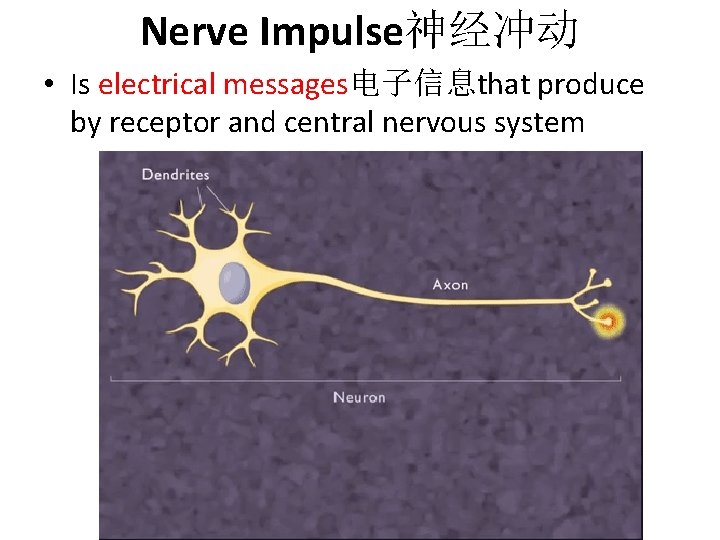
Nerve Impulse神经冲动 • Is electrical messages电子信息that produce by receptor and central nervous system
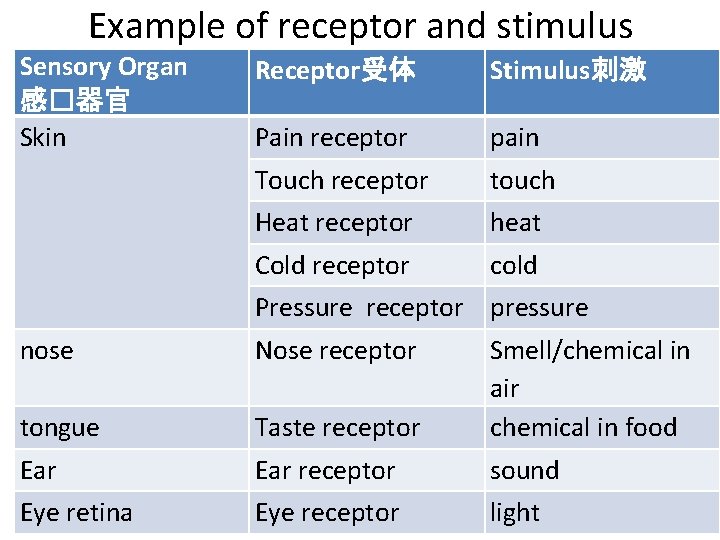
Example of receptor and stimulus Sensory Organ 感�器官 Skin Receptor受体 Stimulus刺激 Pain receptor pain Touch receptor touch Heat receptor heat Cold receptor cold Pressure receptor pressure nose Nose receptor tongue Taste receptor Smell/chemical in air chemical in food Ear receptor sound Eye retina Eye receptor light
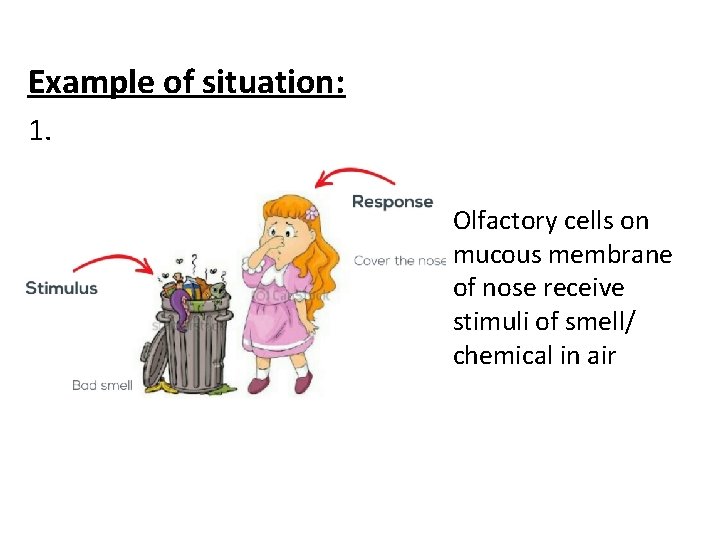
Example of situation: 1. Olfactory cells on mucous membrane of nose receive stimuli of smell/ chemical in air
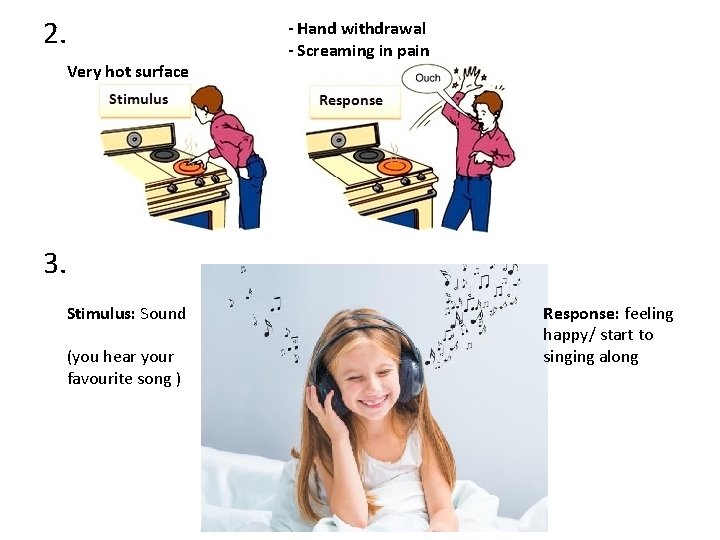
2. Very hot surface - Hand withdrawal - Screaming in pain 3. Stimulus: Sound (you hear your favourite song ) Response: feeling happy/ start to singing along
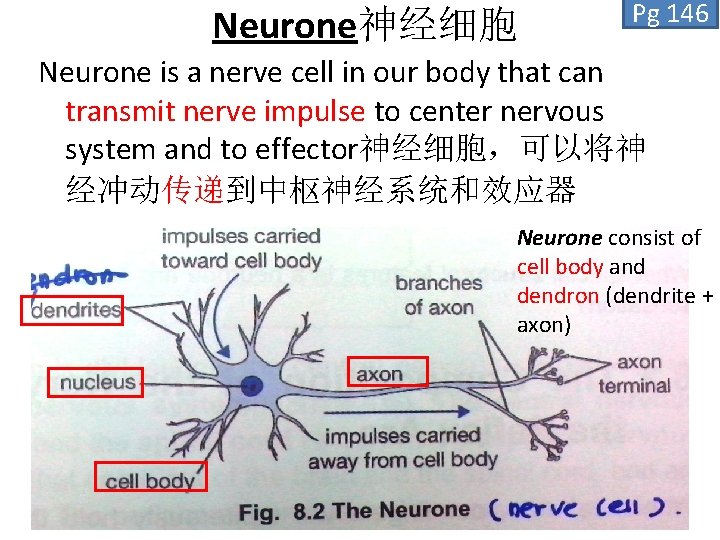
Neurone神经细胞 Pg 146 Neurone is a nerve cell in our body that can transmit nerve impulse to center nervous system and to effector神经细胞,可以将神 经冲动传递到中枢神经系统和效应器 Neurone consist of cell body and dendron (dendrite + axon)
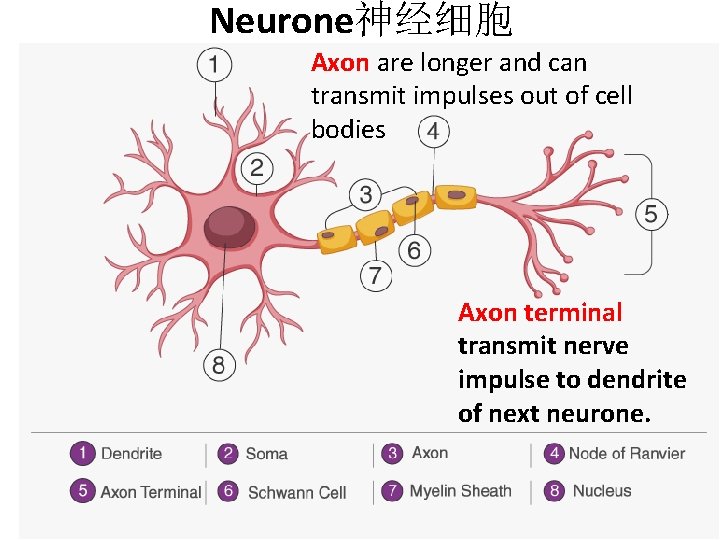
Neurone神经细胞 Axon are longer and can transmit impulses out of cell bodies Axon terminal transmit nerve impulse to dendrite of next neurone.
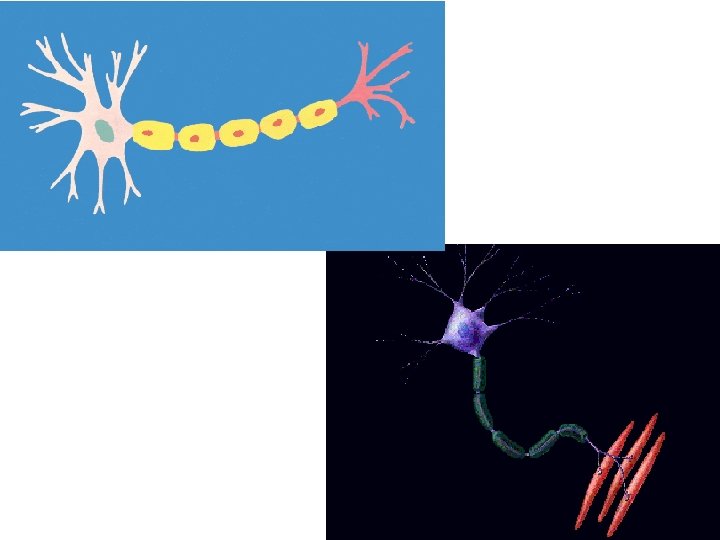

Three type of neurone Afferent neurone /sensory neurone Relay/inter neuron or neurone Efferent neurone /motor neurone Efferent neuron
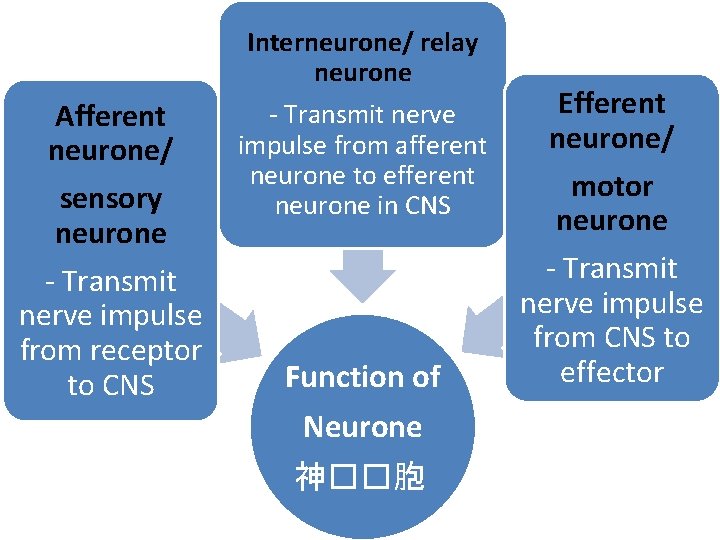
Interneurone/ relay neurone Afferent neurone/ sensory neurone - Transmit nerve impulse from receptor to CNS - Transmit nerve impulse from afferent neurone to efferent neurone in CNS Function of Neurone 神��胞 Efferent neurone/ motor neurone - Transmit nerve impulse from CNS to effector
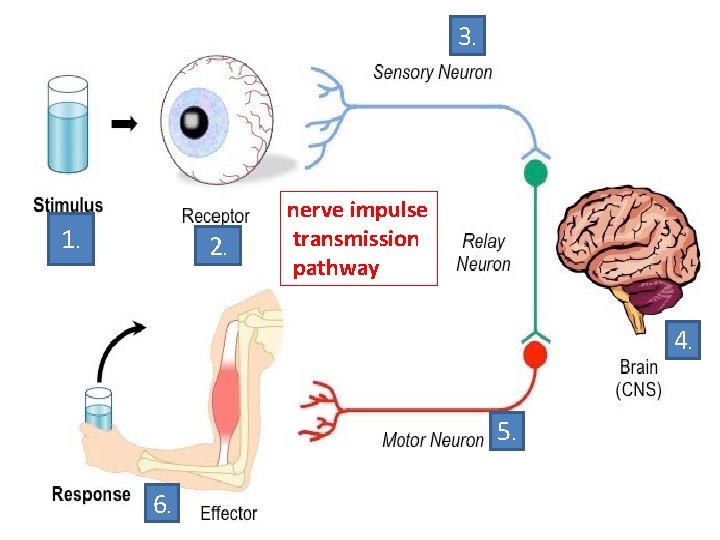
3. 1. 2. nerve impulse transmission pathway 4. 5. 6.
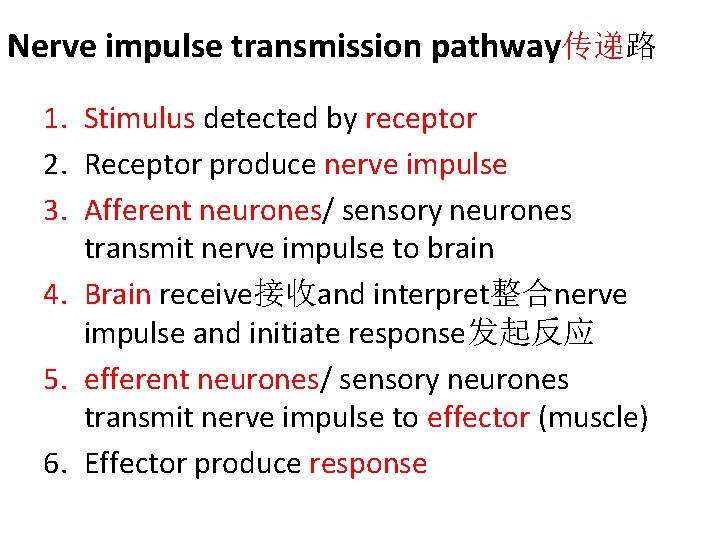
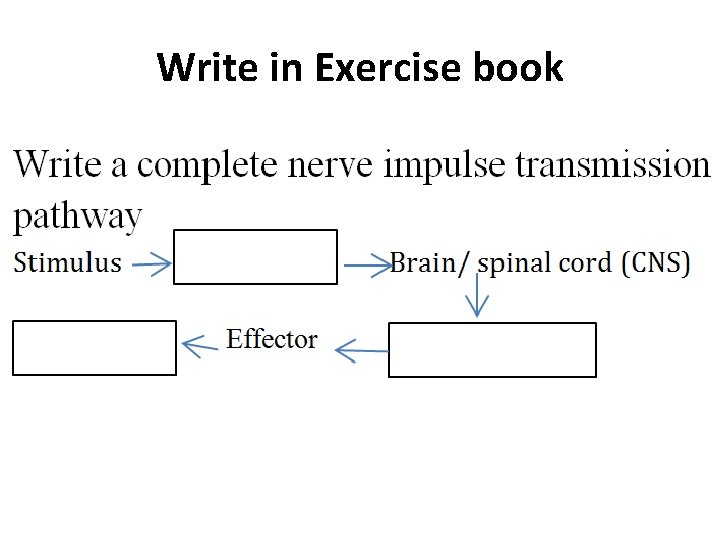
Nerve impulse transmission pathway传递路 1. Stimulus detected by receptor 2. Receptor produce nerve impulse 3. Afferent neurones/ sensory neurones transmit nerve impulse to brain 4. Brain receive接收and interpret整合nerve impulse and initiate response发起反应 5. efferent neurones/ sensory neurones transmit nerve impulse to effector (muscle) 6. Effector produce response
Write in Exercise book
8. 2 The composition of nervous system and reflex arc
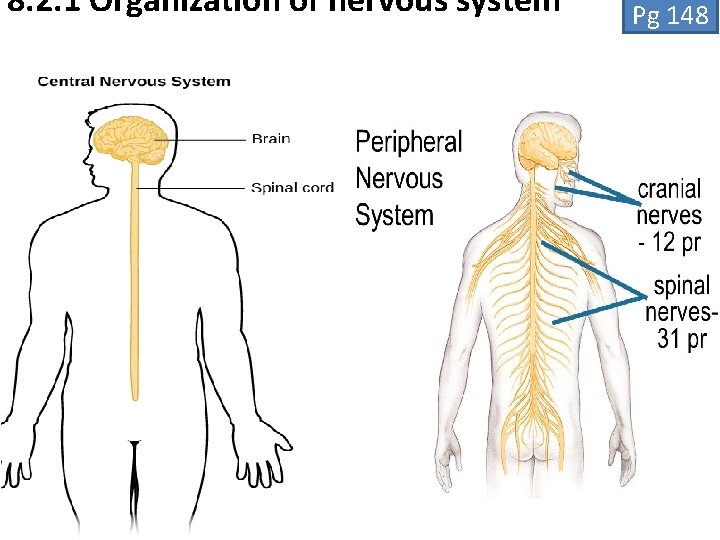
8. 2. 1 Organization of nervous system 神经系统 Pg 148
Human nervous system divided into central nervous system and peripheral system Pg 148 Central nervous system: brain and spinal cord脊髓Jǐsuǐ Function: receive and integrate different messages, make decisions and initiate reaction接收和整合不同的信息, 做出决定并发起反应 Peripheral nervous system is made of nerve that come out of the brain and the spinal cord and are distributed all over the body Function: responsible for the communication between the central nervous system and other part of body负责中 枢神经系统与身体其他部位之间的通讯xùn
Pg 148 Main function of nervous system 神经系统的主要功能 • To regulate all the life activities in human body调Tiáo节人体所有生命活动 • Human body able to respond to all kinds of external stimuli and also respond quickly and exactly to any slight change in body internal environment. 人体能够对各种外部刺激做出 反应,并对身体内部环境的任何细微变化 也能迅速做出反应。
8. 2. 2 the reflex actions and reflex arc Reflex action反射动作 : is an immediate response of nervous Pg 149 system, to specific stimulus without conscious control是神经系统对特定刺 激的立即jí反应,无自觉地控制 Example: hand withdrawal reflex退缩反射, knee jerking reflex膝反射动作, blinking eye 眨眼, secretion saliva

Pg 149 Hand withdrawal reflex
Reflex arc: consist of receptor, afferent neurone, spinal cord, efferent neurone, effector Characteristic特性of reflex action: Inborn天生的行动, quick, done unconsciously无 自觉, Importance重要性of reflex action: to avoid damage/further pain/injury 避免伤害/进一步的痛苦/伤害
Figure reading (write in exercise book) PAGE 149 As shown in Fig 8. 4, when a hand touches a hot object, the heat is detected by _______. The nerve impulse produced is carried by ________ into ________. The nerve impulse then passes through the _______ to __________. The hand will then ________.
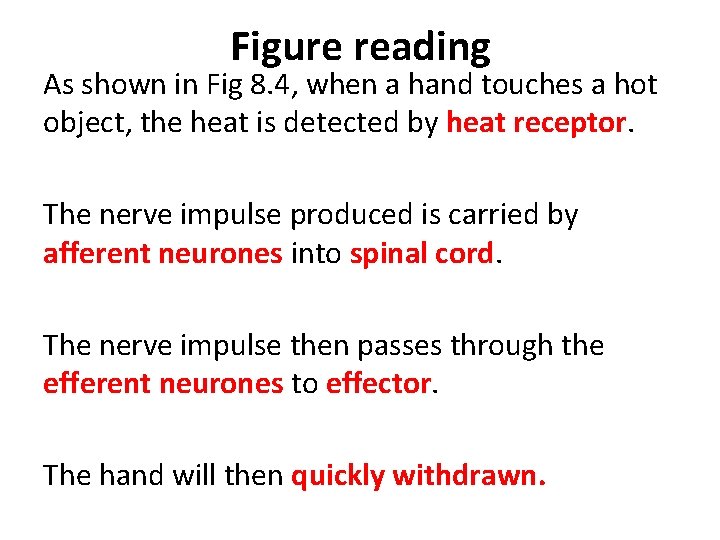
Figure reading As shown in Fig 8. 4, when a hand touches a hot object, the heat is detected by heat receptor. The nerve impulse produced is carried by afferent neurones into spinal cord. The nerve impulse then passes through the efferent neurones to effector. The hand will then quickly withdrawn.
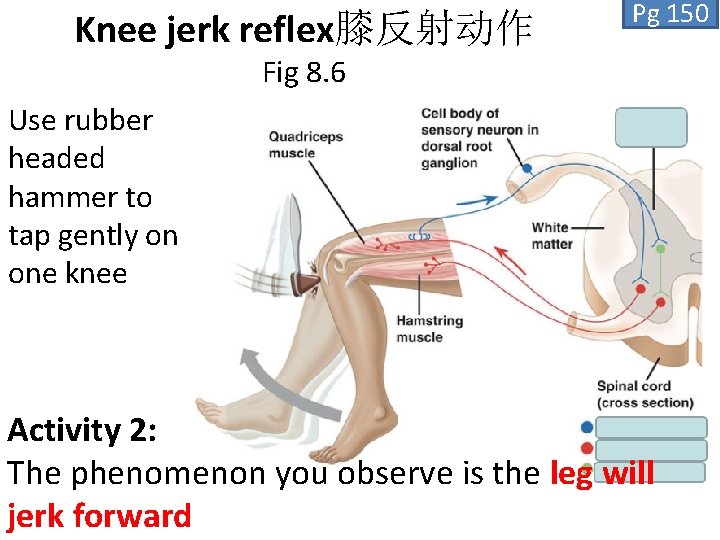
Knee jerk reflex膝反射动作 Pg 150 Fig 8. 6 Use rubber headed hammer to tap gently on one knee Activity 2: The phenomenon you observe is the leg will jerk forward
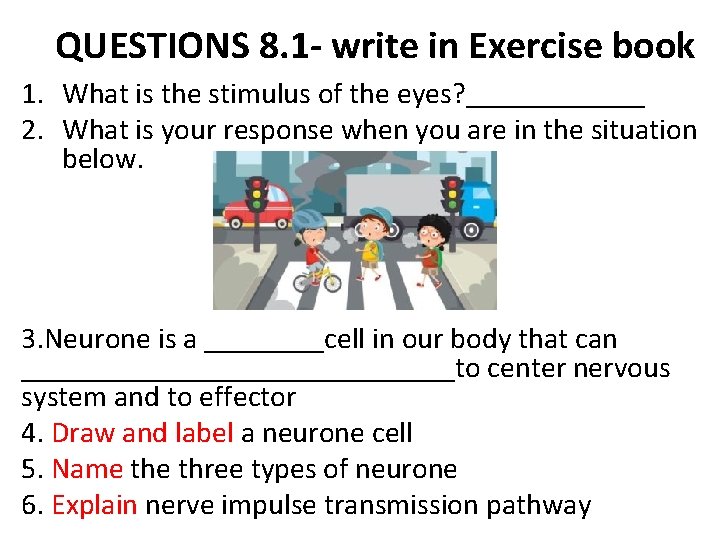
QUESTIONS 8. 1 - write in Exercise book 1. What is the stimulus of the eyes? ______ 2. What is your response when you are in the situation below. 3. Neurone is a ____cell in our body that can _______________to center nervous system and to effector 4. Draw and label a neurone cell 5. Name three types of neurone 6. Explain nerve impulse transmission pathway
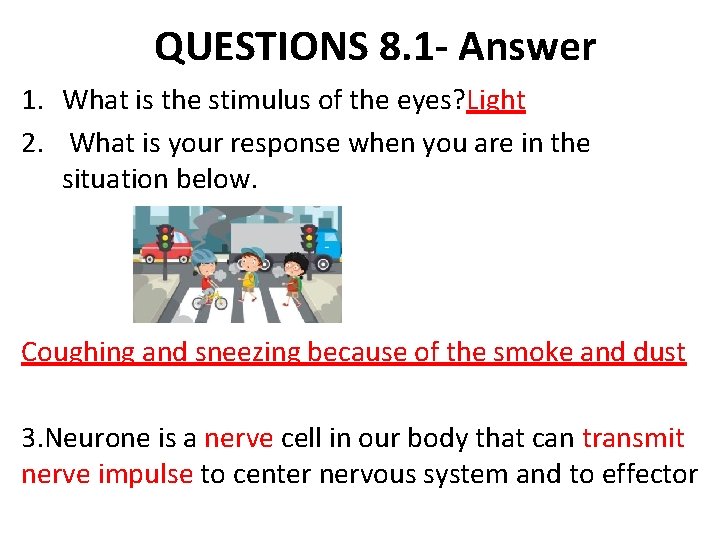
QUESTIONS 8. 1 - Answer 1. What is the stimulus of the eyes? Light 2. What is your response when you are in the situation below. Coughing and sneezing because of the smoke and dust 3. Neurone is a nerve cell in our body that can transmit nerve impulse to center nervous system and to effector
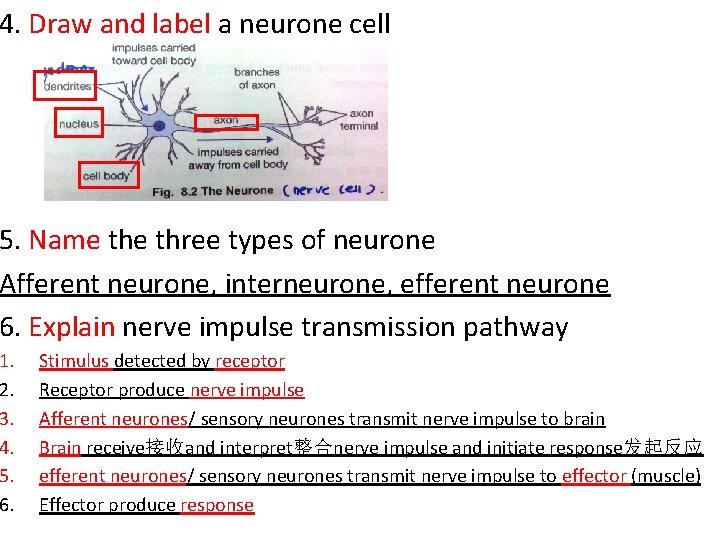
4. Draw and label a neurone cell 5. Name three types of neurone Afferent neurone, interneurone, efferent neurone 6. Explain nerve impulse transmission pathway 1. 2. 3. 4. 5. 6. Stimulus detected by receptor Receptor produce nerve impulse Afferent neurones/ sensory neurones transmit nerve impulse to brain Brain receive接收and interpret整合nerve impulse and initiate response发起反应 efferent neurones/ sensory neurones transmit nerve impulse to effector (muscle) Effector produce response
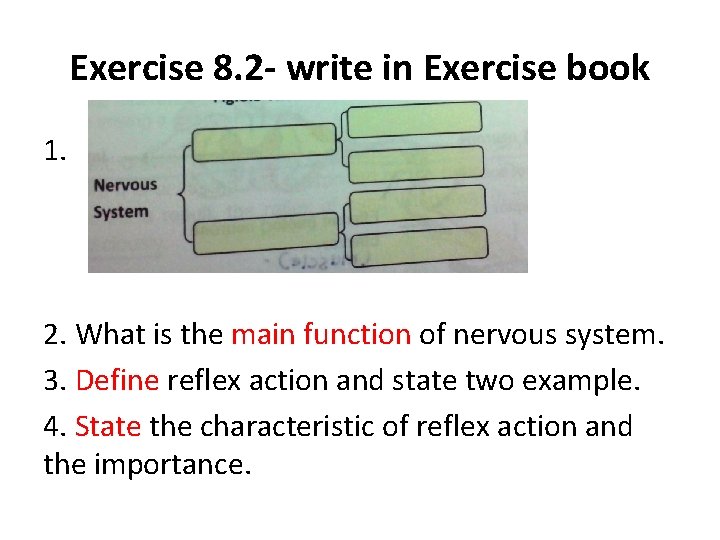
Exercise 8. 2 - write in Exercise book 1. 2. What is the main function of nervous system. 3. Define reflex action and state two example. 4. State the characteristic of reflex action and the importance.
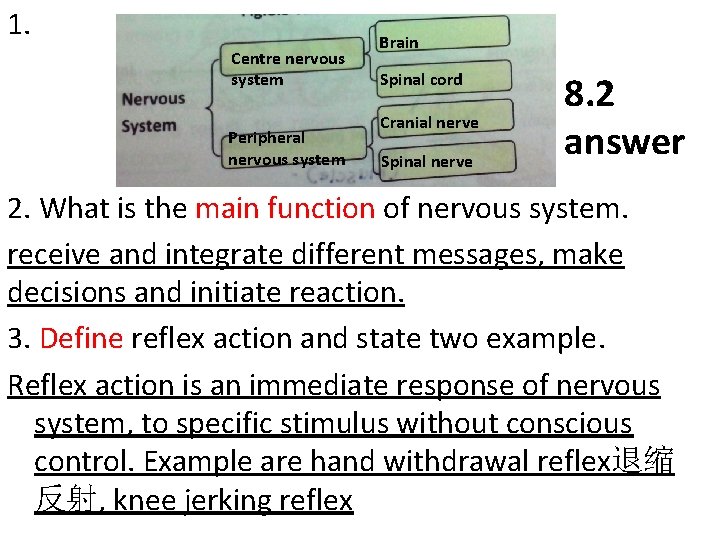
1. Centre nervous system Peripheral nervous system Brain Spinal cord Cranial nerve Spinal nerve 8. 2 answer 2. What is the main function of nervous system. receive and integrate different messages, make decisions and initiate reaction. 3. Define reflex action and state two example. Reflex action is an immediate response of nervous system, to specific stimulus without conscious control. Example are hand withdrawal reflex退缩 反射, knee jerking reflex
4. State the characteristic of reflex action and the importance Inborn天生的行动, quick, done unconsciously 无自觉. It is to avoid damage/further pain/injury 避免伤害/进一步的痛苦/伤害
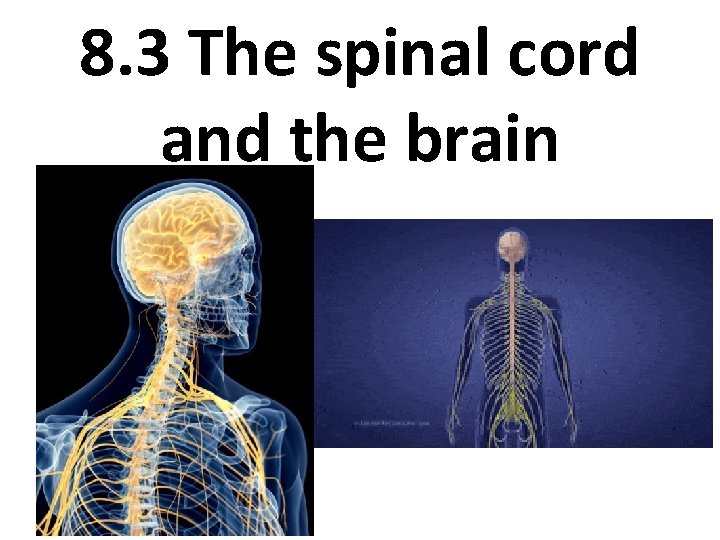
8. 3 The spinal cord and the brain
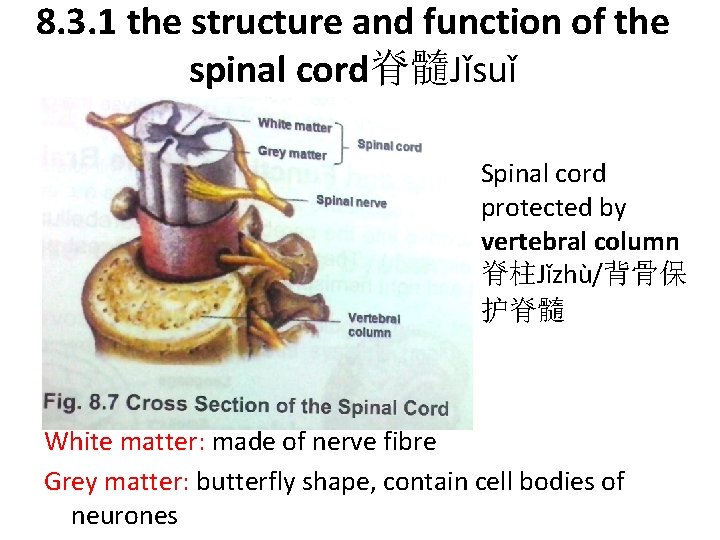
8. 3. 1 the structure and function of the spinal cord脊髓Jǐsuǐ Spinal cord protected by vertebral column 脊柱Jǐzhù/背骨保 护脊髓 White matter: made of nerve fibre Grey matter: butterfly shape, contain cell bodies of neurones
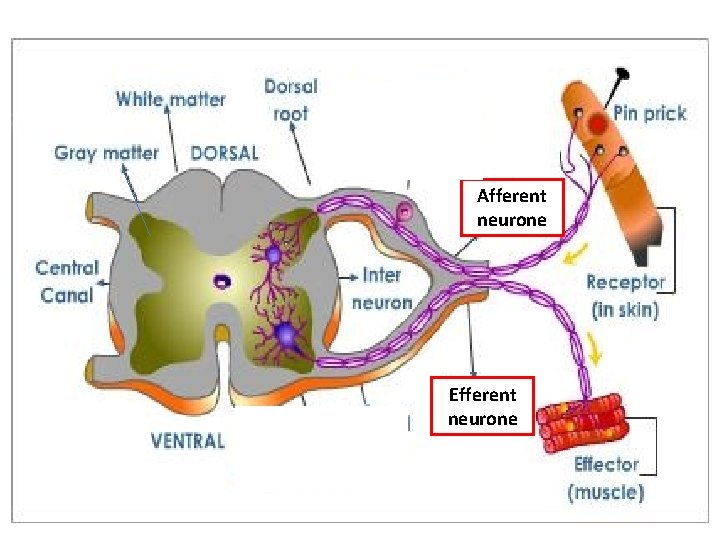
Afferent neurone Efferent neurone
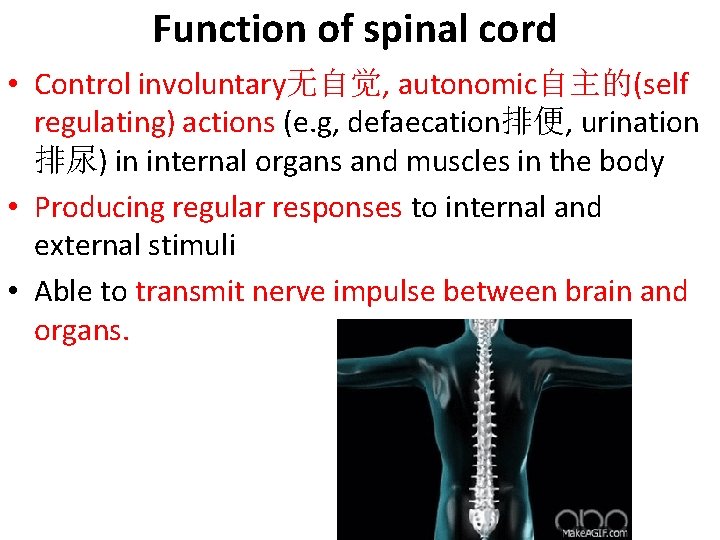
Function of spinal cord • Control involuntary无自觉, autonomic自主的(self regulating) actions (e. g, defaecation排便, urination 排尿) in internal organs and muscles in the body • Producing regular responses to internal and external stimuli • Able to transmit nerve impulse between brain and organs.
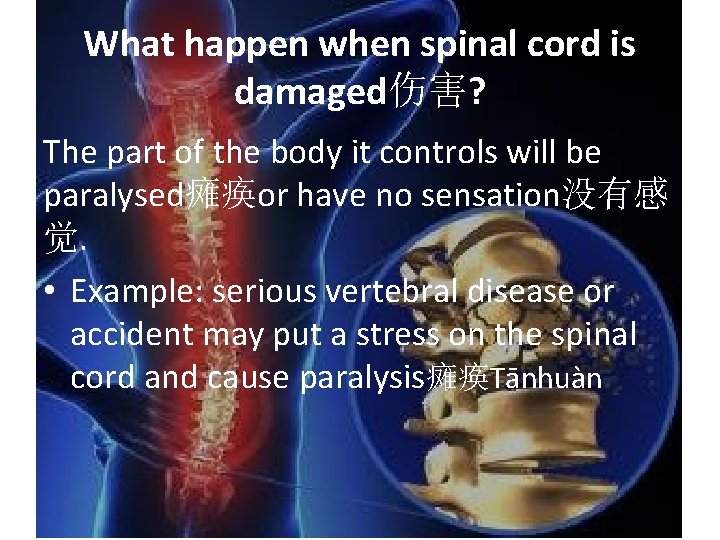
What happen when spinal cord is damaged伤害? The part of the body it controls will be paralysed瘫痪or have no sensation没有感 觉. • Example: serious vertebral disease or accident may put a stress on the spinal cord and cause paralysis瘫痪Tānhuàn
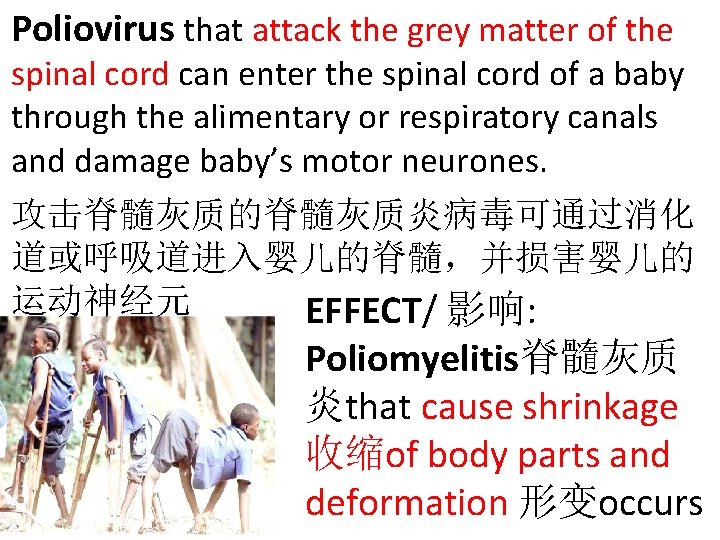
Poliovirus that attack the grey matter of the spinal cord can enter the spinal cord of a baby through the alimentary or respiratory canals and damage baby’s motor neurones. 攻击脊髓灰质的脊髓灰质炎病毒可通过消化 道或呼吸道进入婴儿的脊髓,并损害婴儿的 运动神经元 EFFECT/ 影响: Poliomyelitis脊髓灰质 炎that cause shrinkage 收缩of body parts and deformation 形变occurs
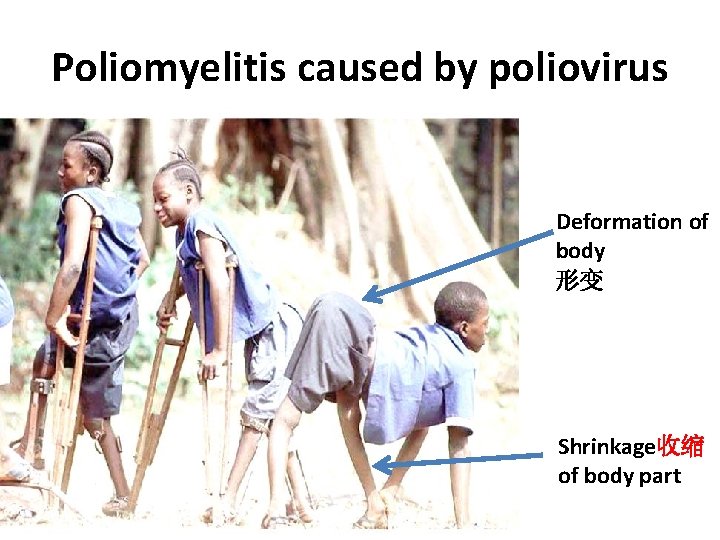
Poliomyelitis caused by poliovirus Deformation of body 形变 Shrinkage收缩 of body part
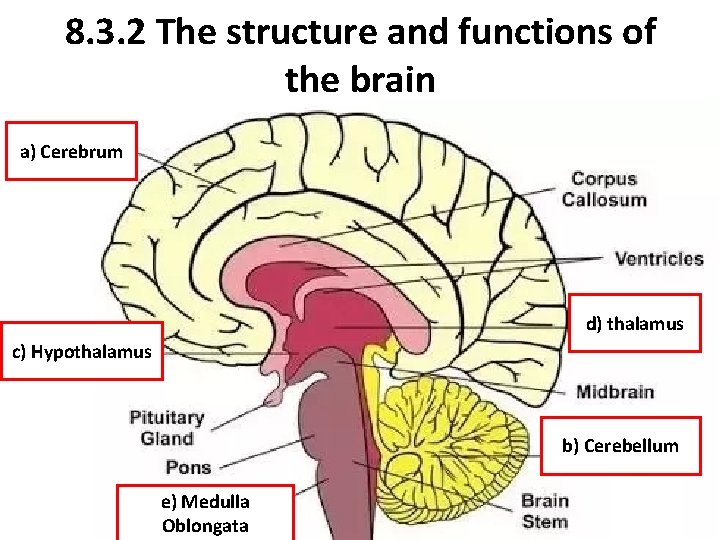
8. 3. 2 The structure and functions of the brain a) Cerebrum d) thalamus c) Hypothalamus b) Cerebellum e) Medulla Oblongata
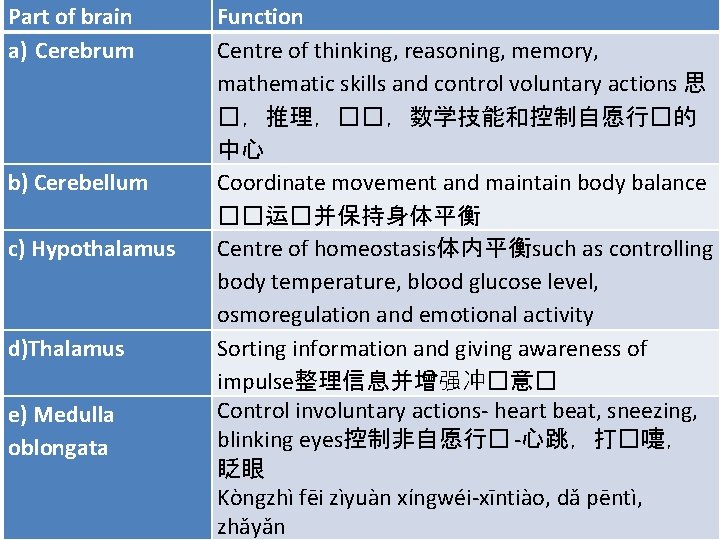
Part of brain a) Cerebrum b) Cerebellum c) Hypothalamus d)Thalamus e) Medulla oblongata Function Centre of thinking, reasoning, memory, mathematic skills and control voluntary actions 思 �,推理,��,数学技能和控制自愿行�的 中心 Coordinate movement and maintain body balance ��运�并保持身体平衡 Centre of homeostasis体内平衡such as controlling body temperature, blood glucose level, osmoregulation and emotional activity Sorting information and giving awareness of impulse整理信息并增强冲�意� Control involuntary actions- heart beat, sneezing, blinking eyes控制非自愿行� -心跳,打�嚏, 眨眼 Kòngzhì fēi zìyuàn xíngwéi-xīntiào, dǎ pēntì, zhǎyǎn
8. 4 Health care of the Nervous system
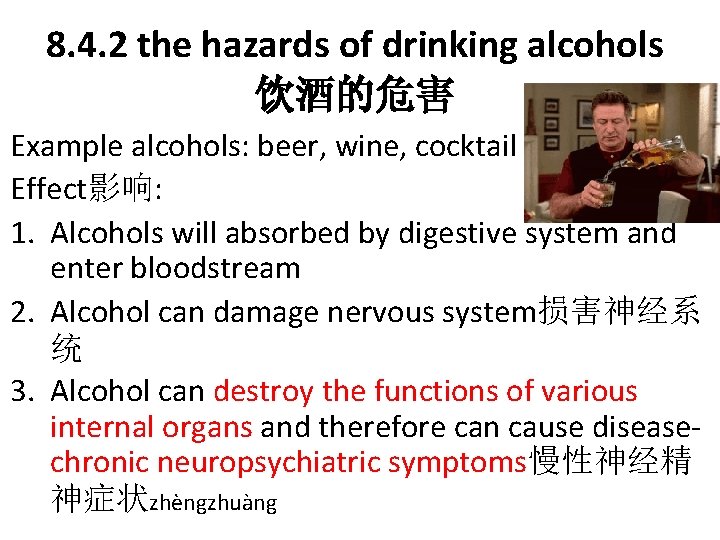
8. 4. 2 the hazards of drinking alcohols 饮酒的危害 Example alcohols: beer, wine, cocktail Effect影响: 1. Alcohols will absorbed by digestive system and enter bloodstream 2. Alcohol can damage nervous system损害神经系 统 3. Alcohol can destroy the functions of various internal organs and therefore can cause diseasechronic neuropsychiatric symptoms慢性神经精 神症状zhèngzhuàng
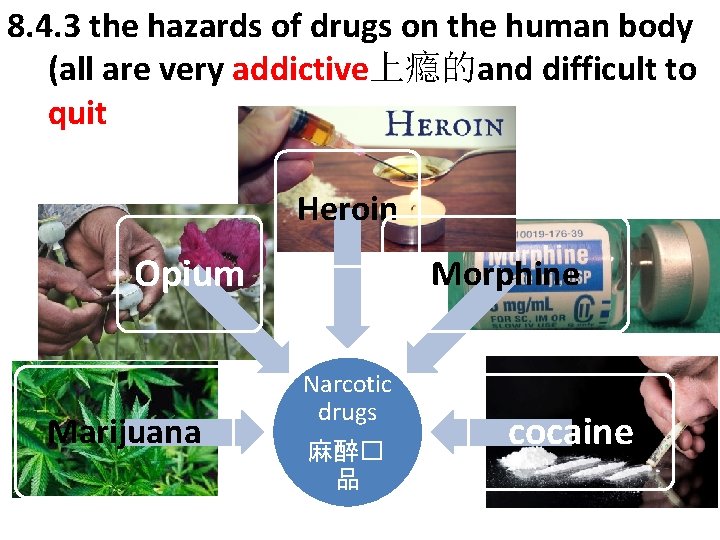
8. 4. 3 the hazards of drugs on the human body (all are very addictive上瘾的and difficult to quit Heroin Opium Marijuana Morphine Narcotic drugs 麻醉� 品 cocaine
Homeostasis体内平衡 • Is the stable condition of internal environment of human or organism 是人类或生物体内环境的稳定条件 • It is achieved through the coordination of nervous system and endocrine system in our body通过体 内神经系统和内分泌系统的协调来 实现
Example of homeostasis 1. Blood sugar level血糖水 平 2. Body temperature体温 3. Osmoregulation (urination)( 排尿)
Osmoregulation Situation: a) When water excreted is increased, what ways does a human body use to maintain water balance? 当排泄的水增 加时,人体将通过什么方式维持水的平衡 ? - More water reabsorbed into blood, less water excreted through urination. 更多的水 被重吸收到血液中,通过排尿排出的水更少
b) Why human need to replenish water but at the same time, a fixed volume of water is excreted? 为什么人类需要补充水,但 同时排泄出一定量的水? The water balance in human body is regulated by drinking water and urinating so the water absorbed is balanced out by water excreted. 人体中的水分平衡通过饮用水和排尿来调节,因此 吸收的水分通过排泄的水分得以平衡。
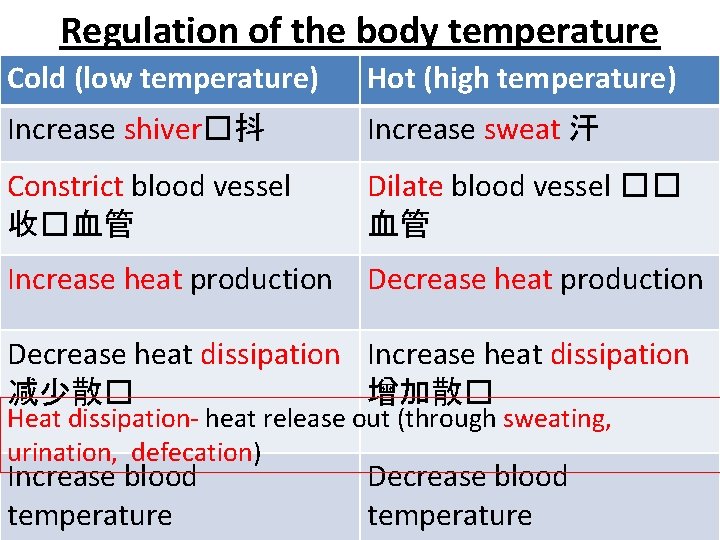
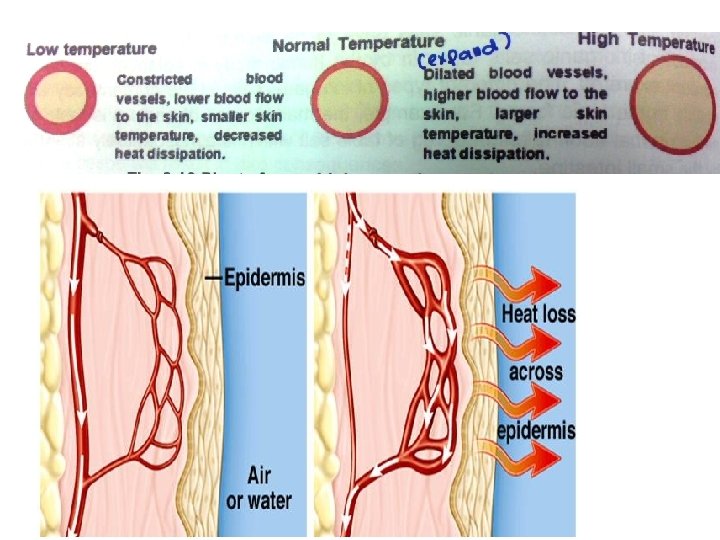
Regulation of the body temperature Cold (low temperature) Hot (high temperature) Increase shiver�抖 Increase sweat 汗 Constrict blood vessel 收�血管 Dilate blood vessel �� 血管 Increase heat production Decrease heat dissipation Increase heat dissipation 减少散� 增加散� Heat dissipation- heat release out (through sweating, urination, defecation) Increase blood temperature Decrease blood temperature
- Slides: 51