
Chapter 8 Multiple Processors A Network An OS
- Slides: 17
Chapter 8 Multiple Processors, A Network, An OS, and Middleware 8. 1 Multiprocessors 8. 2 Multicomputers 8. 3 Distributed systems 1
Multicomputers • Definition: Tightly-coupled CPUs that do not share memory • Also known as – cluster computers – clusters of workstations (COWs) CS 1550, cs. pitt. edu (originaly modified from MOS 2 slides by A. Tanenbaum) 2
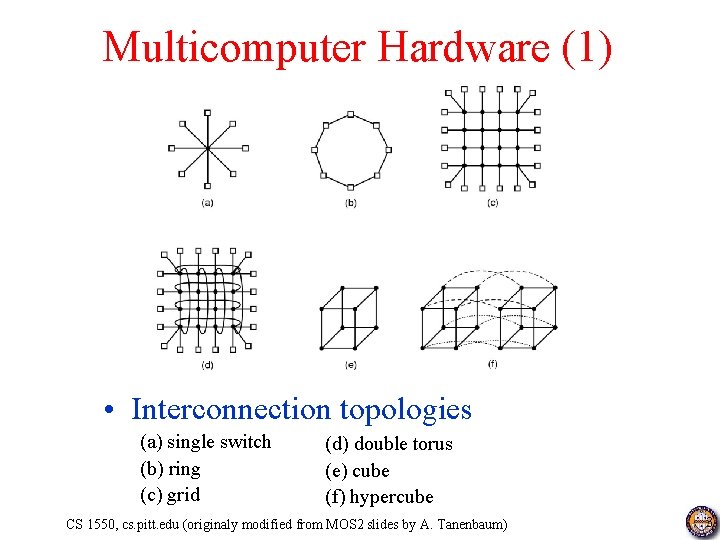
Multicomputer Hardware (1) • Interconnection topologies (a) single switch (b) ring (c) grid (d) double torus (e) cube (f) hypercube CS 1550, cs. pitt. edu (originaly modified from MOS 2 slides by A. Tanenbaum) 3
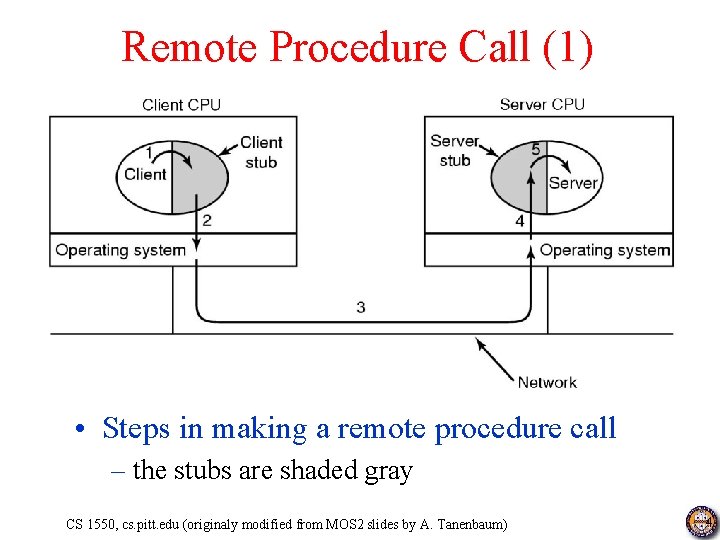
Remote Procedure Call (1) • Steps in making a remote procedure call – the stubs are shaded gray CS 1550, cs. pitt. edu (originaly modified from MOS 2 slides by A. Tanenbaum) 4
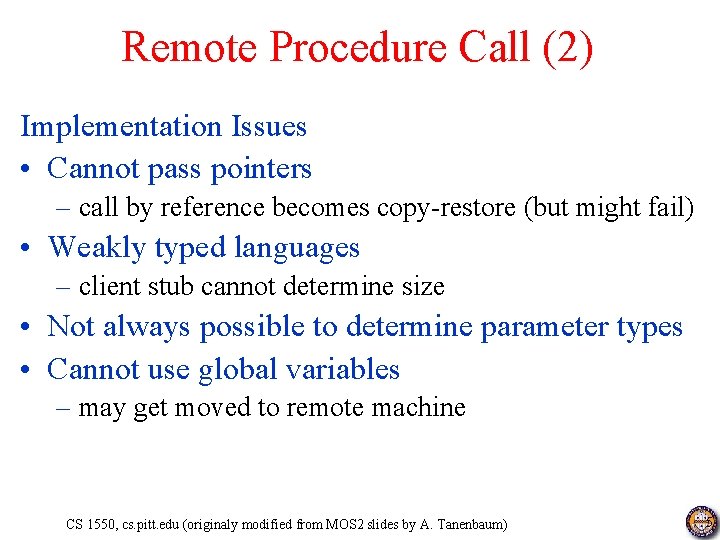
Remote Procedure Call (2) Implementation Issues • Cannot pass pointers – call by reference becomes copy-restore (but might fail) • Weakly typed languages – client stub cannot determine size • Not always possible to determine parameter types • Cannot use global variables – may get moved to remote machine CS 1550, cs. pitt. edu (originaly modified from MOS 2 slides by A. Tanenbaum) 5
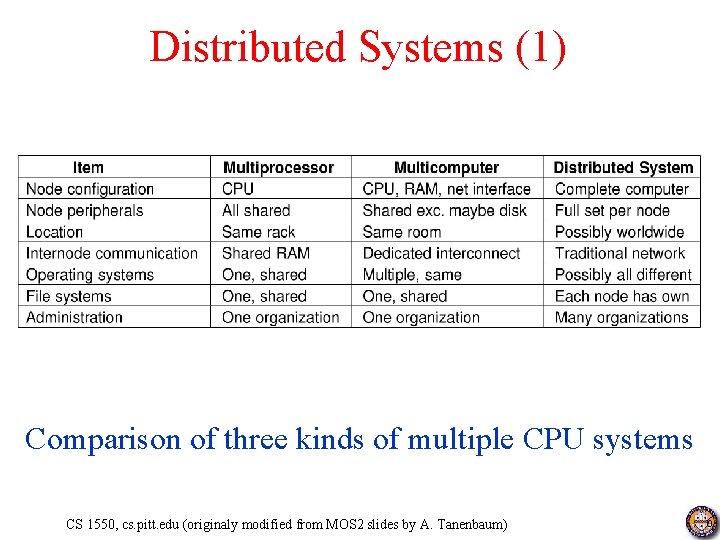
Distributed Systems (1) Comparison of three kinds of multiple CPU systems CS 1550, cs. pitt. edu (originaly modified from MOS 2 slides by A. Tanenbaum) 6
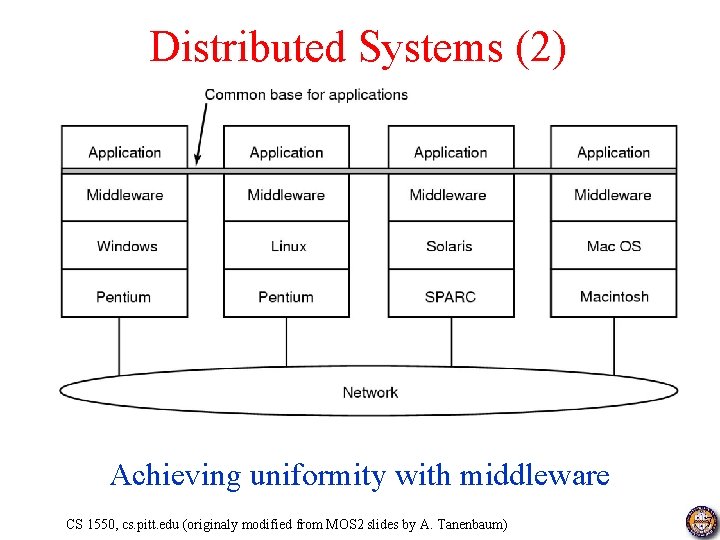
Distributed Systems (2) Achieving uniformity with middleware CS 1550, cs. pitt. edu (originaly modified from MOS 2 slides by A. Tanenbaum) 7
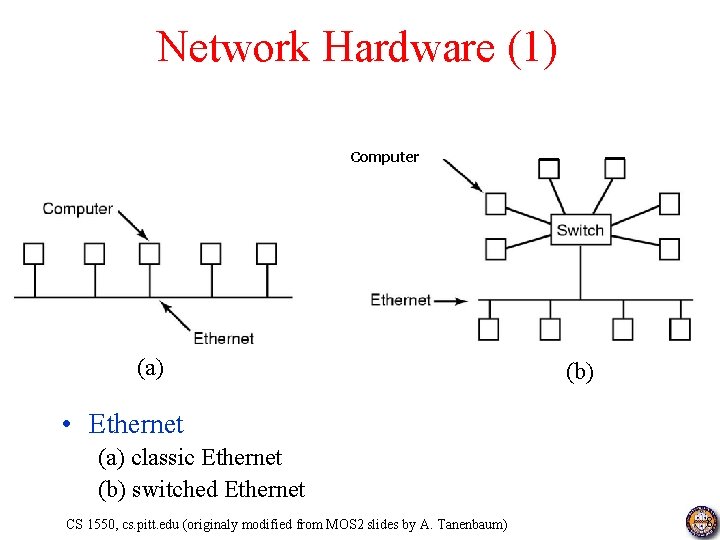
Network Hardware (1) Computer (a) (b) • Ethernet (a) classic Ethernet (b) switched Ethernet CS 1550, cs. pitt. edu (originaly modified from MOS 2 slides by A. Tanenbaum) 8
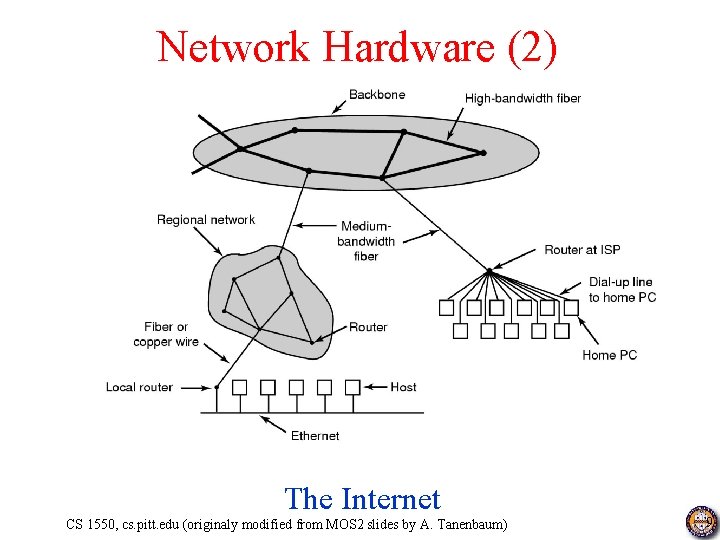
Network Hardware (2) The Internet CS 1550, cs. pitt. edu (originaly modified from MOS 2 slides by A. Tanenbaum) 9
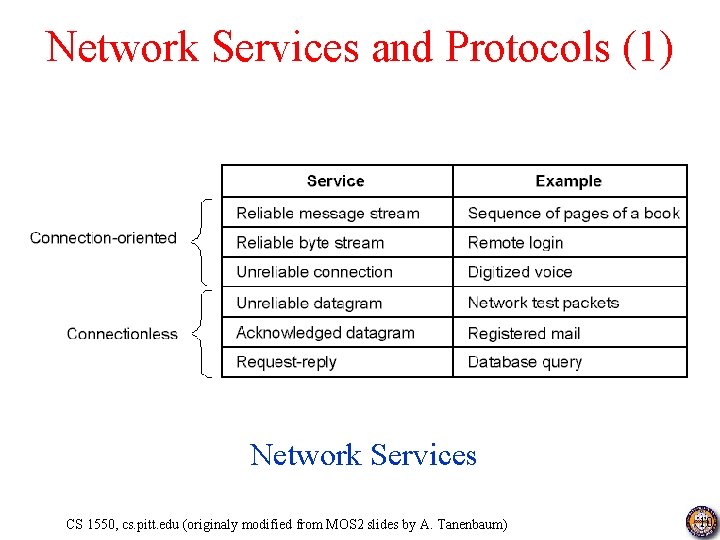
Network Services and Protocols (1) Network Services CS 1550, cs. pitt. edu (originaly modified from MOS 2 slides by A. Tanenbaum) 10
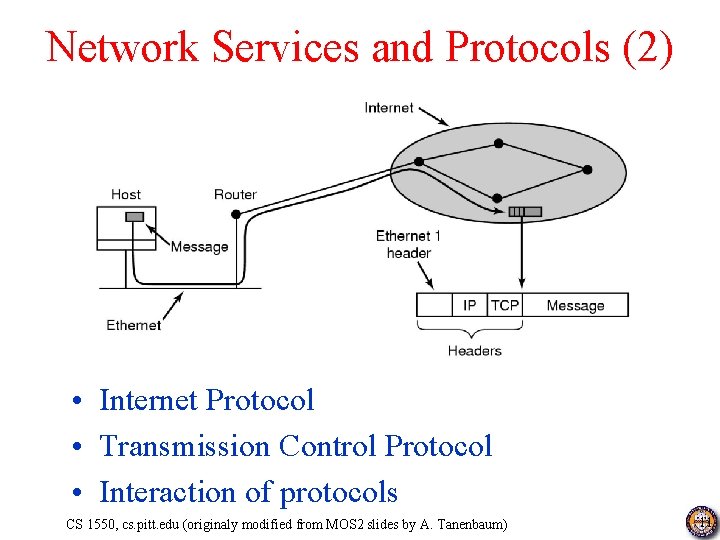
Network Services and Protocols (2) • Internet Protocol • Transmission Control Protocol • Interaction of protocols CS 1550, cs. pitt. edu (originaly modified from MOS 2 slides by A. Tanenbaum) 11
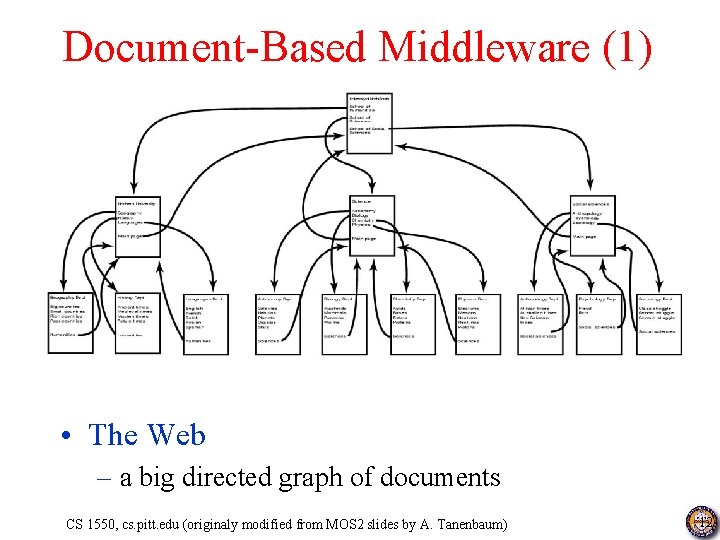
Document-Based Middleware (1) • The Web – a big directed graph of documents CS 1550, cs. pitt. edu (originaly modified from MOS 2 slides by A. Tanenbaum) 12
Document-Based Middleware (2) How the browser gets a page 1. Asks DNS for IP address 2. DNS replies with IP address 3. Browser makes connection 4. Sends request for specified page 5. Server sends file 6. TCP connection released 7. Browser displays text 8. Browser fetches, displays images CS 1550, cs. pitt. edu (originaly modified from MOS 2 slides by A. Tanenbaum) 13
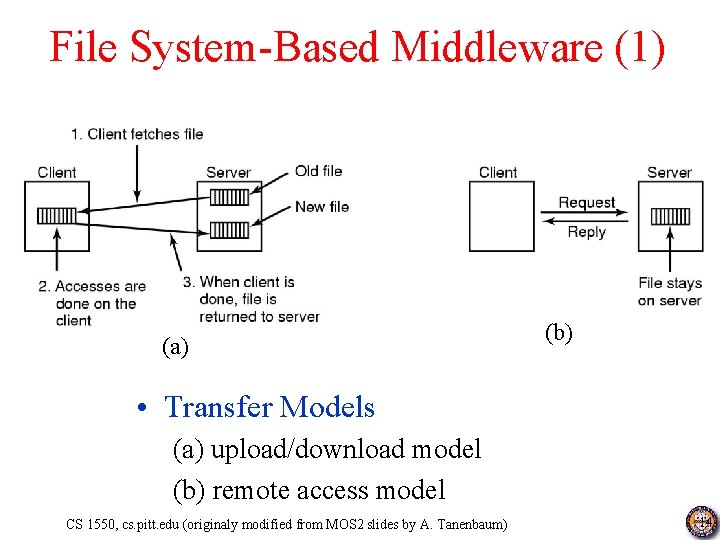
File System-Based Middleware (1) (a) (b) • Transfer Models (a) upload/download model (b) remote access model CS 1550, cs. pitt. edu (originaly modified from MOS 2 slides by A. Tanenbaum) 14
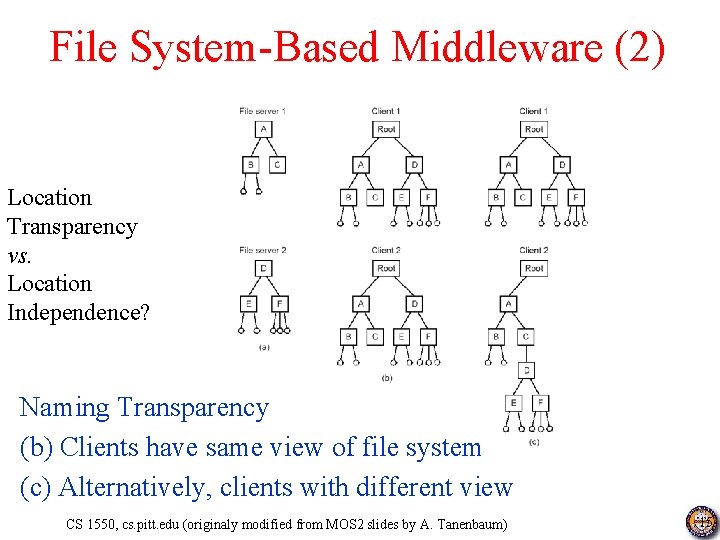
File System-Based Middleware (2) Location Transparency vs. Location Independence? Naming Transparency (b) Clients have same view of file system (c) Alternatively, clients with different view CS 1550, cs. pitt. edu (originaly modified from MOS 2 slides by A. Tanenbaum) 15
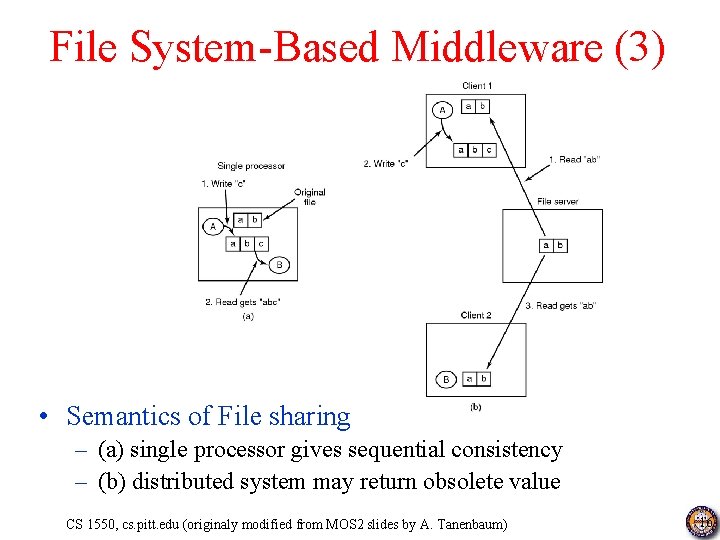
File System-Based Middleware (3) • Semantics of File sharing – (a) single processor gives sequential consistency – (b) distributed system may return obsolete value CS 1550, cs. pitt. edu (originaly modified from MOS 2 slides by A. Tanenbaum) 16
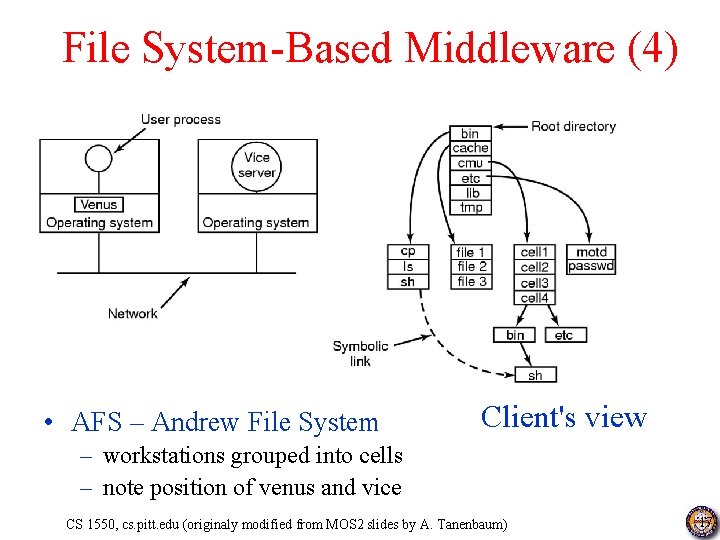
File System-Based Middleware (4) • AFS – Andrew File System Client's view – workstations grouped into cells – note position of venus and vice CS 1550, cs. pitt. edu (originaly modified from MOS 2 slides by A. Tanenbaum) 17