
Chapter 8 Motivation Psychology The Science of Behavior
Chapter 8: Motivation Psychology: The Science of Behavior, 5 th Edition Ettinger © 2014 BVT Publishing Better textbooks, better prices.
Defining Motivation: a condition or state that energizes and directs an organism’s actions � Hunger � Thirst � Tiredness Psychology: The Science of Behavior, 5 th Edition Ettinger © 2014 BVT Publishing Better textbooks, better prices.
Instinct Theory (Slide 1 of 2) Instincts: innate patterns of behavior that occur in every normally functioning member of a species under a certain set of conditions � William James argued that humans are even more influenced by instincts than are lower animals because they are motivated not only by biological instincts, but also by a variety of psychosocial instincts, such as jealousy, sympathy, and sociability. Psychology: The Science of Behavior, 5 th Edition Ettinger © 2014 BVT Publishing Better textbooks, better prices.
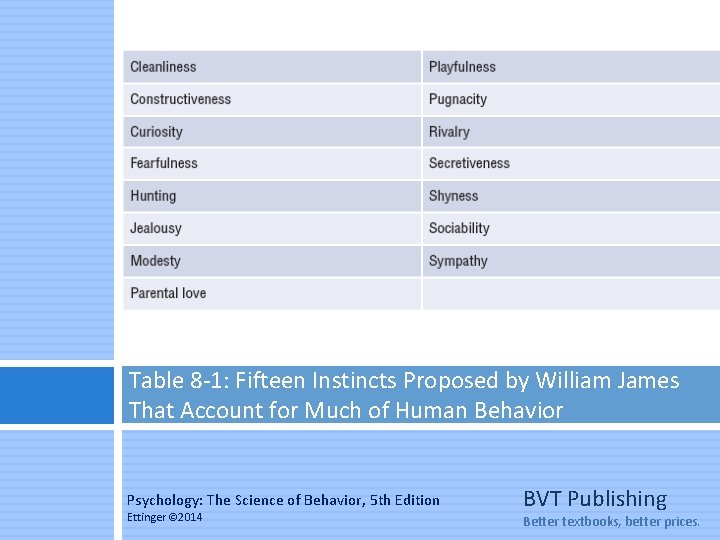
Table 8 -1: Fifteen Instincts Proposed by William James That Account for Much of Human Behavior Psychology: The Science of Behavior, 5 th Edition Ettinger © 2014 BVT Publishing Better textbooks, better prices.
Instinct Theory (Slide 2 of 2) Psychologists realized there was a basic flaw to instinct theory. Instincts did not explain behavior, they simply provided another way of labeling it. Today, psychologists do not totally discount the idea that there are inborn or inherited factors in human behavior. The concept that genetic factors influence our behaviors is very much alive. Psychology: The Science of Behavior, 5 th Edition Ettinger © 2014 BVT Publishing Better textbooks, better prices.
Drive-Reduction Theory (Slide 1 of 2) Drive-reduction theory: Motivation originates with a need or drive, such as hunger or thirst, that is experienced as an unpleasant, aversive condition. � This internal need motivates us to act in a way that will reduce the aversive condition. � Primary and secondary drives Incentive: any external stimulus that can motivate behavior even when no internal drive state exists Psychology: The Science of Behavior, 5 th Edition Ettinger © 2014 BVT Publishing Better textbooks, better prices.
Drive-Reduction Theory (Slide 2 of 2) Problems with the drive-reduction theory � Sometimes stimuli in our environment can energize or motivate us to behave in a certain way in the absence of an internal drive state. � Many motivated behaviors do not decrease as they are expressed. � Sometimes a motivated behavior seems to be selfperpetuating. � Theory is inadequate in explaining the wide range of human and animal behaviors we observe. Psychology: The Science of Behavior, 5 th Edition Ettinger © 2014 BVT Publishing Better textbooks, better prices.
Cognitive Theories of Motivation (Slide 1 of 2) Need for Achievement (n. Ach): complex psychosocial motive to accomplish difficult goals, attain high standards, surpass the achievements of others, and increase self-regard by succeeding in exercising talent � Defined by Henry Murray, developer of the Thematic Apperception Test (TAT) � Since the achievement need is a cognitive motivation, it is highly influenced by learning and experience. Psychology: The Science of Behavior, 5 th Edition Ettinger © 2014 BVT Publishing Better textbooks, better prices.
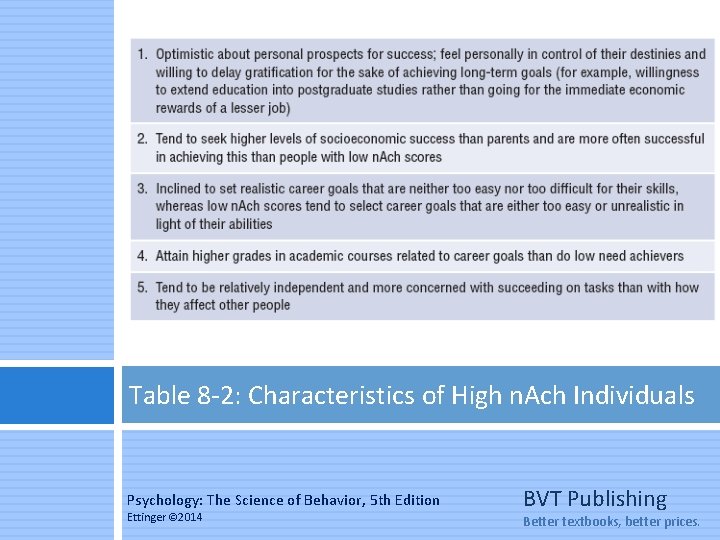
Table 8 -2: Characteristics of High n. Ach Individuals Psychology: The Science of Behavior, 5 th Edition Ettinger © 2014 BVT Publishing Better textbooks, better prices.
Cognitive Theories of Motivation (Slide 2 of 2) Cognitive expectancies: a learned expectancy of relationships between stimuli (in Pavlovian conditioning) and between responses and outcomes (in operant conditioning) Cognitive dissonance theory: theory that people experience psychological discomfort or dissonance whenever two related cognitions or behaviors are in conflict � When cognitions are inconsistent, a negative motivational state results, which activates us to resolve the inconsistency. Psychology: The Science of Behavior, 5 th Edition Ettinger © 2014 BVT Publishing Better textbooks, better prices.
Biological Bases of Motivation (Slide 1 of 3) Biologically-based motives: motives, such as hunger and thirst, that are rooted primarily in body tissue needs and sometimes referred to as drives Drives: term commonly used to describe motives that are based on tissue needs, such as hunger and thirst � Hunger performs a critical biological function. It tells us when our bodies require more nutrition. Psychology: The Science of Behavior, 5 th Edition Ettinger © 2014 BVT Publishing Better textbooks, better prices.
Biological Bases of Motivation (Slide 2 of 3) Ventromedial hypothalamus (VMH): a region of the hypothalamus in which damage results in faster gastric emptying and an increase in insulin production � The VMH is also important for female sexual behavior. � If the VMH is destroyed, it results in overeating, known as hyperphagia. Lateral hypothalamus (LH): an area of the hypothalamus that is important for taste sensation, mediating digestive processes, and salivation � If the LH is destroyed, it results in reduced food consumption, known as aphagia. Psychology: The Science of Behavior, 5 th Edition BVT Publishing Ettinger © 2014 Better textbooks, better prices.
Biological Bases of Motivation (Slide 3 of 3) Arcuate nucleus: an area of the hypothalamus, adjacent to the ventromedial nucleus, which regulates the secretion of neuropeptide Y and insulin � Neuropeptide Y (NPY): a potent stimulator of appetite and a regulatory of insulin secretion � Glucostatic hypothesis: theory that hunger results when glucoreceptors detect a lack of glucose, either because blood levels of glucose are low or because insulin is not available in sufficient quantity Psychology: The Science of Behavior, 5 th Edition Ettinger © 2014 BVT Publishing Better textbooks, better prices.
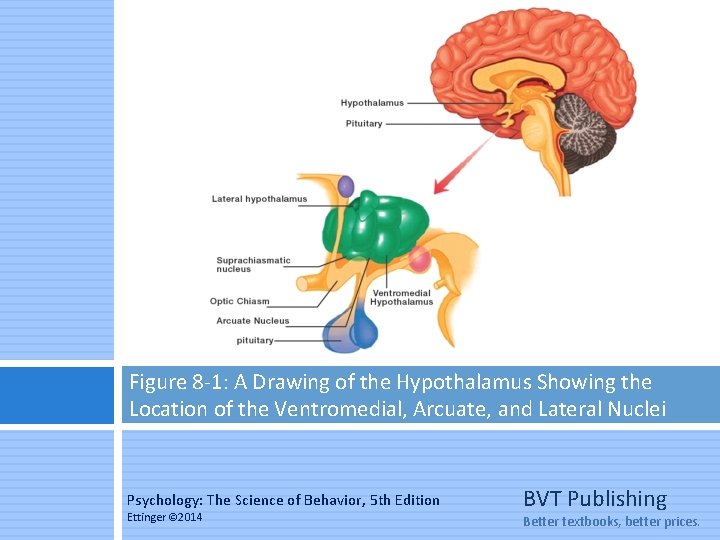
Figure 8 -1: A Drawing of the Hypothalamus Showing the Location of the Ventromedial, Arcuate, and Lateral Nuclei Psychology: The Science of Behavior, 5 th Edition Ettinger © 2014 BVT Publishing Better textbooks, better prices.
Hormones Controlling Hunger (Slide 1 of 2) Cholecystokinin (CCK): a hormone that regulates the rate of food digestion and decreases appetite by affecting neurons in the hypothalamus � Animals that lack sensitivity to CCK eat excessively and become obese. � As we eat, CCK is released and foods become less and less palatable. Psychology: The Science of Behavior, 5 th Edition Ettinger © 2014 BVT Publishing Better textbooks, better prices.
Hormones Controlling Hunger (Slide 2 of 2) Leptin: a hormone that appears to signal satiety � It is secreted by fat cells and counters the effects of neuropeptide Y in the arcuate nucleus of the hypothalamus � Injections of leptin have been shown to inhibit eating and increase metabolic rate. There is no single psychological state or hormone that signals hunger or satiety. Psychology: The Science of Behavior, 5 th Edition Ettinger © 2014 BVT Publishing Better textbooks, better prices.
Eating Disorders (Slide 1 of 4) Obesity: condition in which an individual weighs 20% or more above their desired weight � Over 60% of adult Americans are overweight, and 36% are obese. � Economic impact is $100 billion each year in direct and indirect expenses, as well as in losses of productivity � Increases risk of high blood pressure, stroke, heart disease, diabetes, cancer, gall bladder disease, respiratory problems, and arthritis � Psychological burden of obesity Psychology: The Science of Behavior, 5 th Edition Ettinger © 2014 BVT Publishing Better textbooks, better prices.
Eating Disorders (Slide 2 of 4) Genetic causes of obesity: � When one or both parents are overweight, the child has approximately two out of five and four out of five chances of being overweight, respectively. � Obesity may not be entirely attributable to genetic factors, as environment plays a role. Early childhood experience: Obese people have a greater number of fat cells. Metabolic factors Reactions to emotional stress: � Tendency to overeat when stressed � Conditioned to eat when stresses; associate pleasure or acceptance Psychology: The Science of Behavior, 5 th Edition Ettinger © 2014 food with BVT Publishing Better textbooks, better prices.
Eating Disorders (Slide 3 of 4) Some suggestions for overcoming obesity: � Determine your caloric intake. � Reduce food intake. � Exercise. � Keep records and reward yourself. Psychology: The Science of Behavior, 5 th Edition Ettinger © 2014 BVT Publishing Better textbooks, better prices.
Eating Disorders (Slide 4 of 4) Anorexia nervosa: eating disorder characterized by prolonged refusal to eat adequate amounts of food; most common among young adults � May affect as many as 5 in ever 100 teenage women Bulimia: eating disorder characterized by periodic episodes of binge eating followed by deliberate purging, using either vomiting or laxatives � Estimated women incidence is as high as 20% in college Psychology: The Science of Behavior, 5 th Edition Ettinger © 2014 BVT Publishing Better textbooks, better prices.
Sensation-Seeking Motivation Sensation-seeking motivation: an explanation for the apparent need for certain levels of stimulation, including the need to explore the environment and the need for sensory stimulation We seek out stimulation; it has survival value. The brains of sensation seekers have lower numbers of dopamine receptors in several midbrain regions. Psychology: The Science of Behavior, 5 th Edition Ettinger © 2014 BVT Publishing Better textbooks, better prices.
Optimum Level of Arousal Arousal: a physiological state in which an individual is able to process information effectively and engage in motivated behavior Optimum level of arousal: level of arousal at which an individual’s performance on a specific task is most efficient Yerkes-Dodson law: principle that the optimum level of arousal for peak performance will vary somewhat depending on the nature of the task Psychology: The Science of Behavior, 5 th Edition Ettinger © 2014 BVT Publishing Better textbooks, better prices.
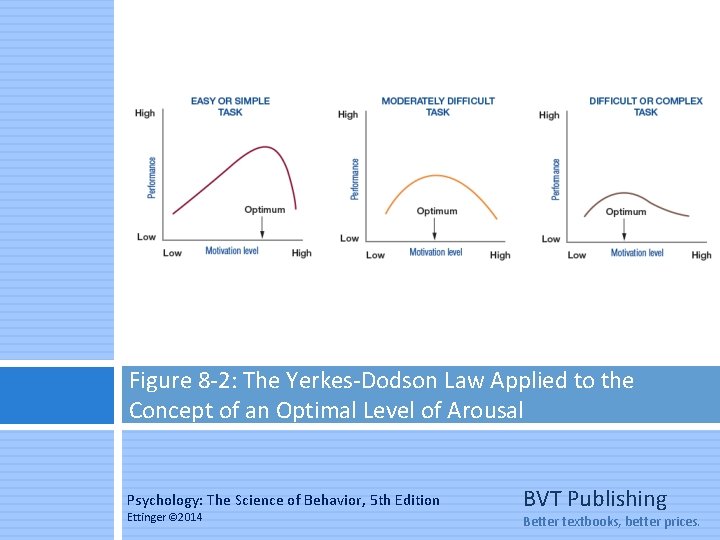
Figure 8 -2: The Yerkes-Dodson Law Applied to the Concept of an Optimal Level of Arousal Psychology: The Science of Behavior, 5 th Edition Ettinger © 2014 BVT Publishing Better textbooks, better prices.
Sexual Motivation and Behavior Our sexuality is richly varied, highly individualized, and a potentially enriching aspect of our lives. We express our sexuality in many ways. Our feelings, thoughts, and attitudes in this area of human experience vary widely. Psychology: The Science of Behavior, 5 th Edition Ettinger © 2014 BVT Publishing Better textbooks, better prices.
Biological Bases of Sexual Behavior Androgens: male sex hormones, the most common of which is testosterone � The testes secrete about 95% of these in the form of testosterone; the remaining 5% are produced by the adrenal glands Estrogens: hormones that influence female sexual development � Play a major role in female sexual motivation and behavior � Help to maintain elasticity of the vaginal lining and contributes to vaginal lubrication Psychology: The Science of Behavior, 5 th Edition Ettinger © 2014 BVT Publishing Better textbooks, better prices.
Psychosocial Factors in Sexual Behavior Hormones are far from the only important factor influencing human sexuality. It is likely that psychological and cultural conditions play a greater role in human sexual arousal and expression. Sexual activity is reinforcing. � Influences self-esteem from being loved � Erotic pleasure and gratification � Reduction of feelings of anxiety � Sense of closeness to another person Psychology: The Science of Behavior, 5 th Edition Ettinger © 2014 BVT Publishing Better textbooks, better prices.
Societal Influences on Sexual Behavior Cultural mores: established customs or beliefs in a particular culture � Mangaia � Inis Beag � The Dani of New Guinea Psychology: The Science of Behavior, 5 th Edition Ettinger © 2014 BVT Publishing Better textbooks, better prices.
Sexual Orientation: Homosexuality (Slide 1 of 2) Sexual orientation: sex to which an individual is attracted Homosexuality: primary erotic, psychological, and social interest in members of the same sex; even though that interest may not be expressed overtly � Can refer to sexual behavior, emotional affiliation, ond one’s self-definition Psychology: The Science of Behavior, 5 th Edition Ettinger © 2014 BVT Publishing Better textbooks, better prices.
Sexual Orientation: Homosexuality (Slide 2 of 2) Homosexuality is accepted in 190 societies throughout the world. The Judeo-Christian tradition has had a far more negative view In recent years, there has been a shift in attitudes as evidenced by the large number of states that have legalized gay marriages. Sexual orientation is influenced by a variety of environmental and biological factors that are unique for each person rather than a single cause. Psychology: The Science of Behavior, 5 th Edition Ettinger © 2014 BVT Publishing Better textbooks, better prices.
- Slides: 29