
CHAPTER 8 MOTION AND FORCES 8 1 MOTION
- Slides: 31
CHAPTER 8 MOTION AND FORCES
8. 1 MOTION
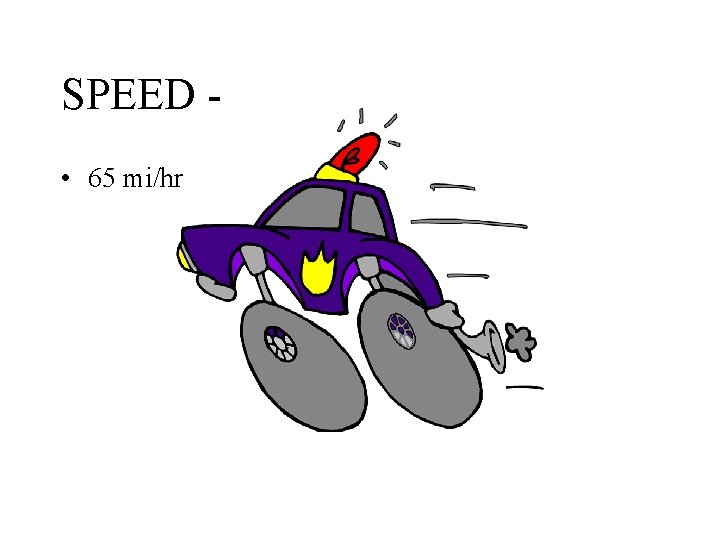
SPEED • 65 mi/hr
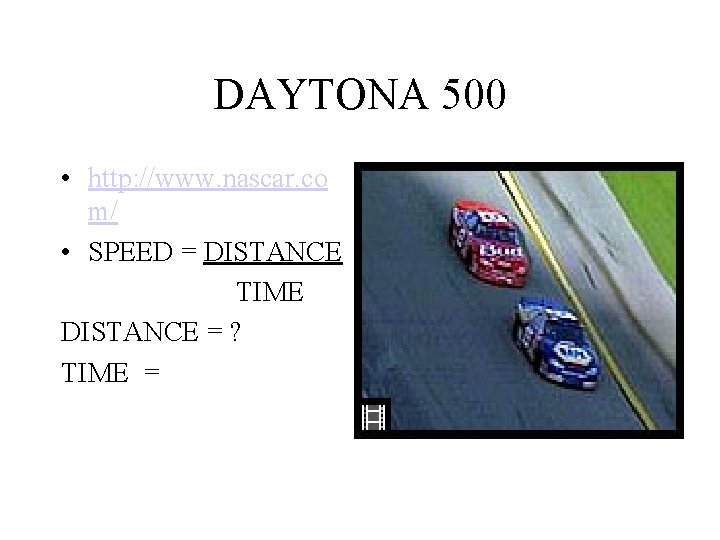
DAYTONA 500 • http: //www. nascar. co m/ • SPEED = DISTANCE TIME DISTANCE = ? TIME =
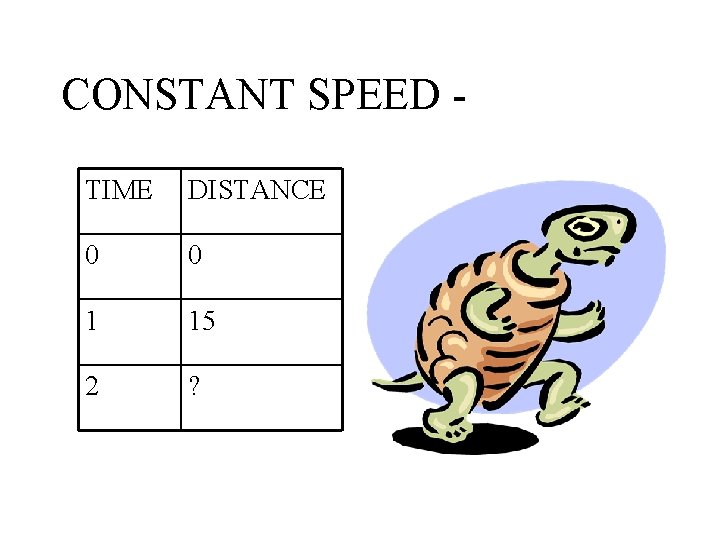
CONSTANT SPEED TIME DISTANCE 0 0 1 15 2 ?
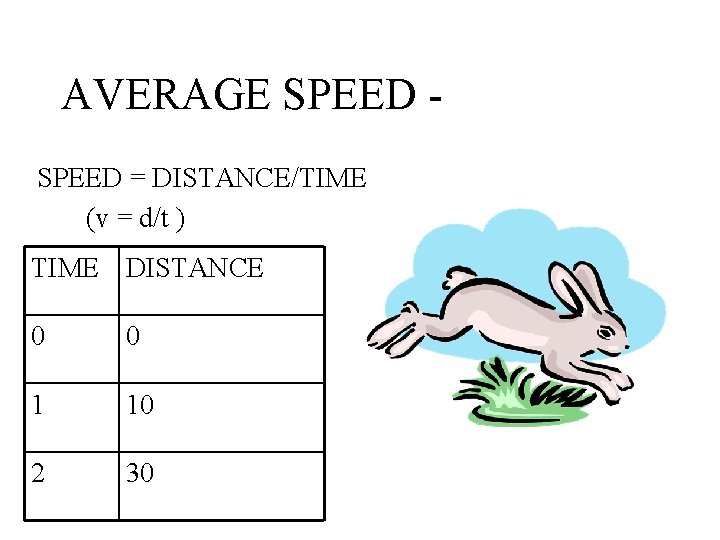
AVERAGE SPEED = DISTANCE/TIME (v = d/t ) TIME DISTANCE 0 0 1 10 2 30
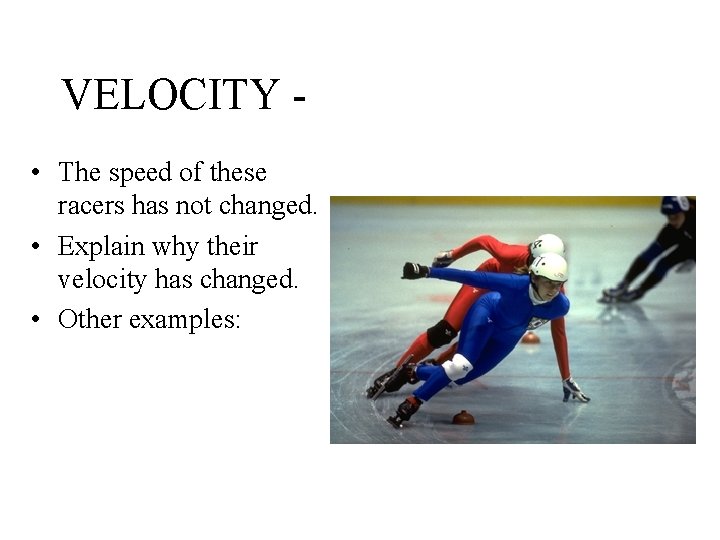
VELOCITY • The speed of these racers has not changed. • Explain why their velocity has changed. • Other examples:
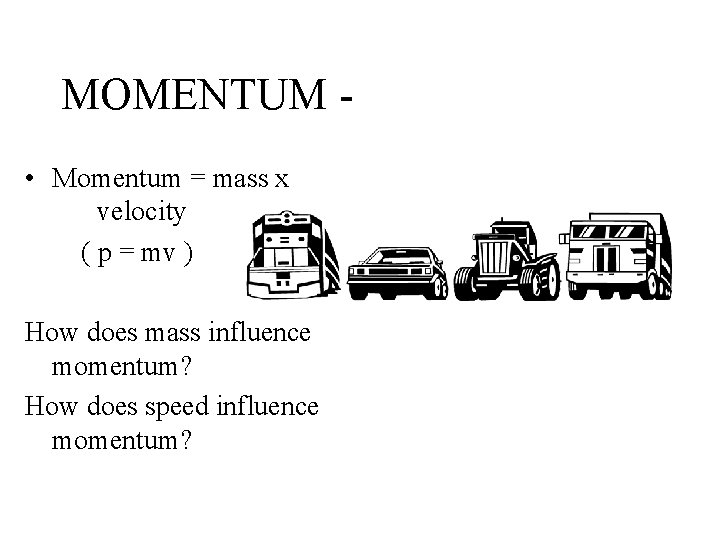
MOMENTUM • Momentum = mass x velocity ( p = mv ) How does mass influence momentum? How does speed influence momentum?
8. 2 ACCELERATION AND FORCE
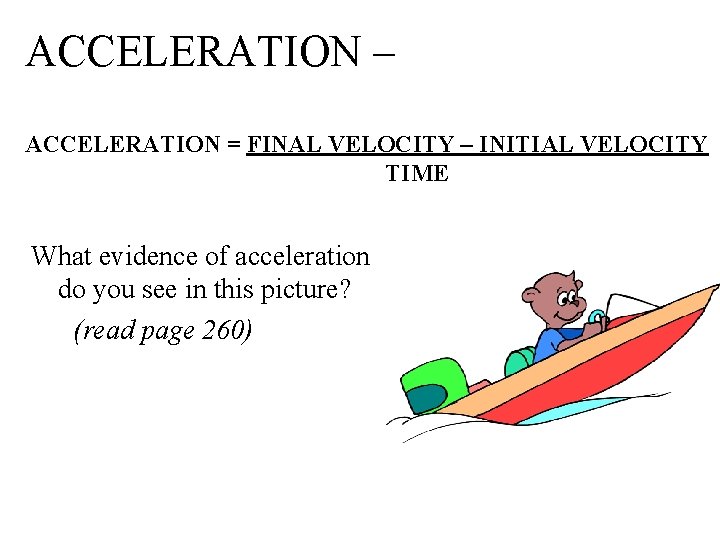
ACCELERATION – ACCELERATION = FINAL VELOCITY – INITIAL VELOCITY TIME What evidence of acceleration do you see in this picture? (read page 260)
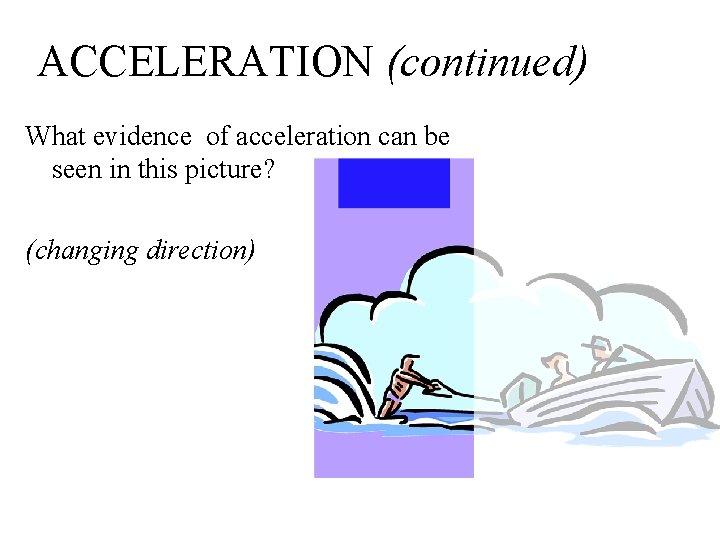
ACCELERATION (continued) What evidence of acceleration can be seen in this picture? (changing direction)
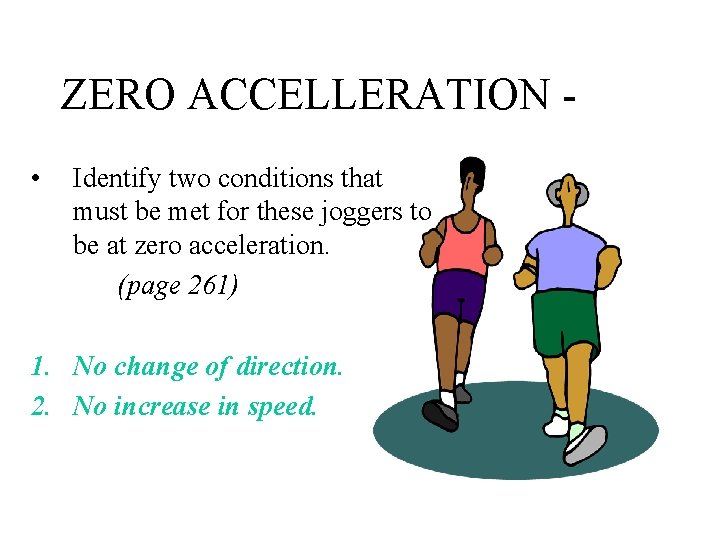
ZERO ACCELLERATION • Identify two conditions that must be met for these joggers to be at zero acceleration. (page 261) 1. No change of direction. 2. No increase in speed.
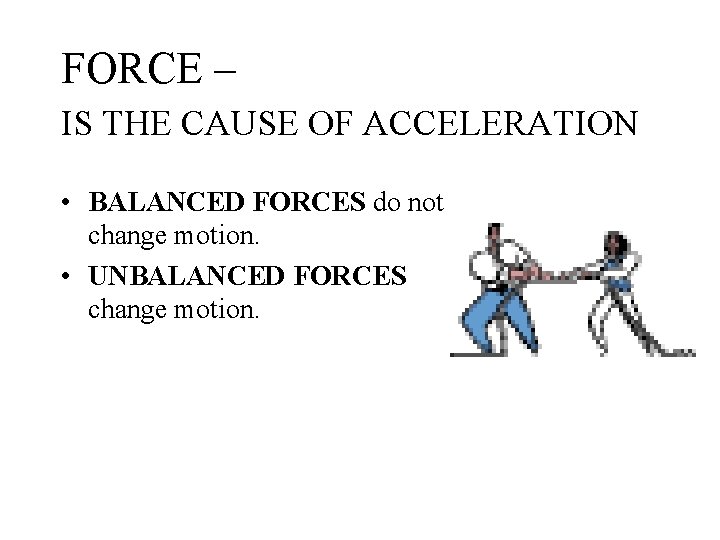
FORCE – IS THE CAUSE OF ACCELERATION • BALANCED FORCES do not change motion. • UNBALANCED FORCES change motion.
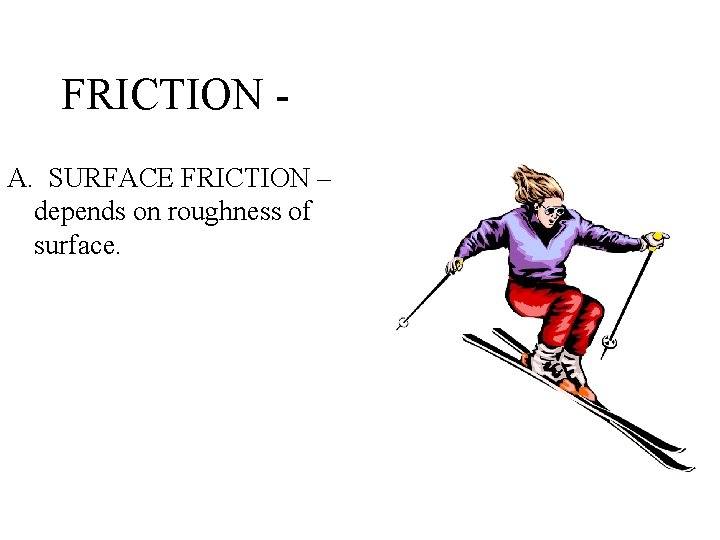
FRICTION A. SURFACE FRICTION – depends on roughness of surface.
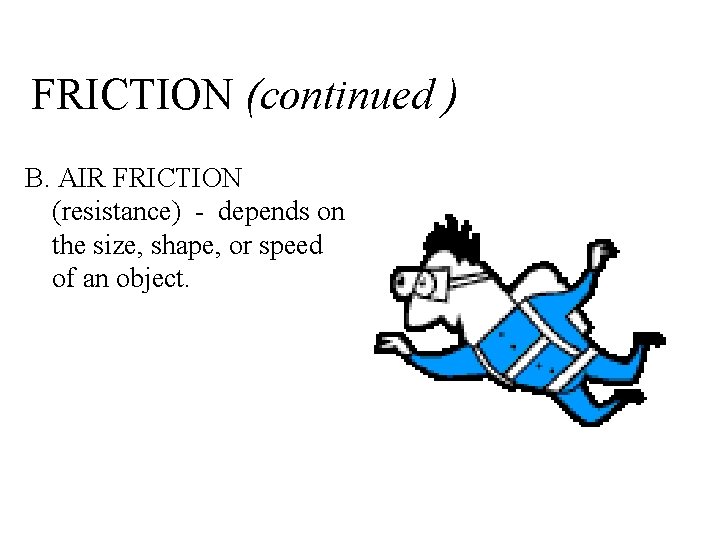
FRICTION (continued ) B. AIR FRICTION (resistance) - depends on the size, shape, or speed of an object.
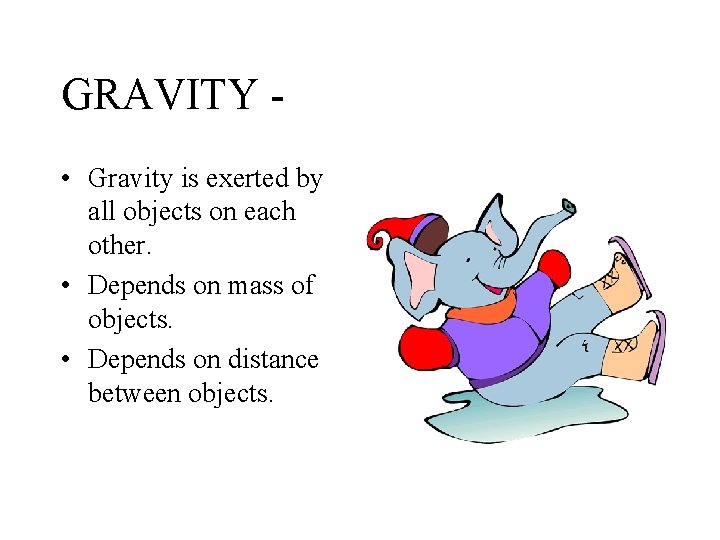
GRAVITY • Gravity is exerted by all objects on each other. • Depends on mass of objects. • Depends on distance between objects.
8. 3 NEWTON’S LAWS OF MOTION
FIRST LAW ( INERTIA) Objects at rest stay at rest and objects in motion stay in motion unless acted upon by an outside force. (Objects like to keep on doing what they already are doing. ) EXAMPLES:
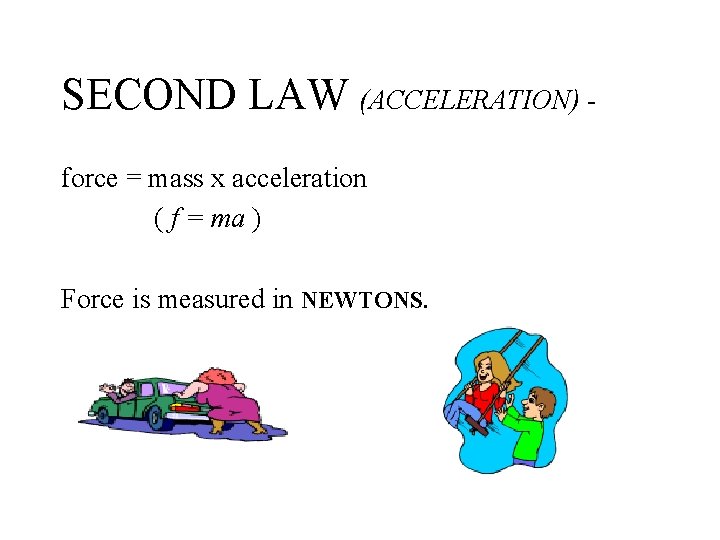
SECOND LAW (ACCELERATION) force = mass x acceleration ( f = ma ) Force is measured in NEWTONS.
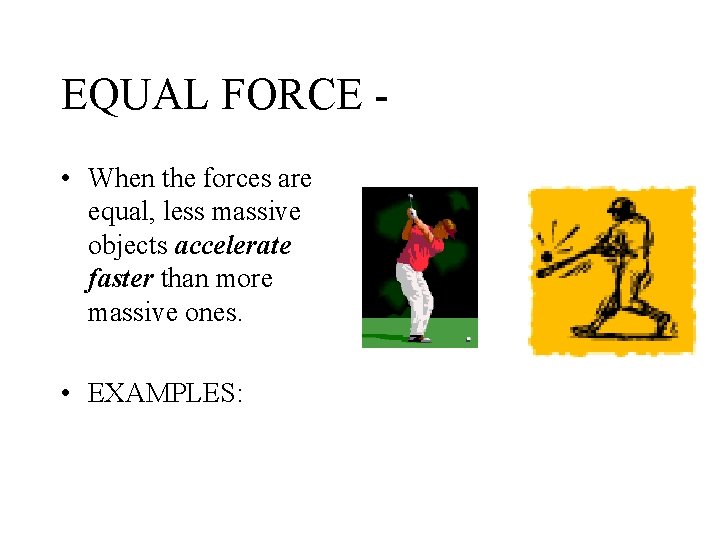
EQUAL FORCE • When the forces are equal, less massive objects accelerate faster than more massive ones. • EXAMPLES:
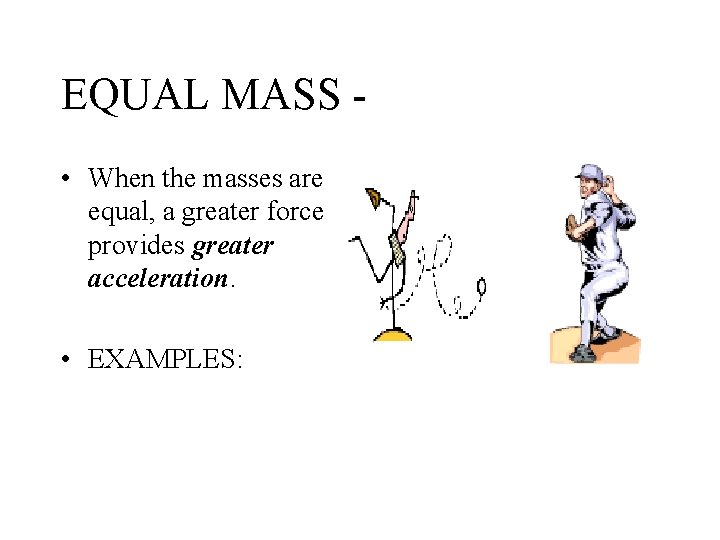
EQUAL MASS • When the masses are equal, a greater force provides greater acceleration. • EXAMPLES:
FREE FALL • Acceleration due to gravity is 9. 8 m/s/s ( g = 9. 8 m/s 2 )
GRAVITY ACCELERATES ALL OBJECTS AT THE SAME RATE
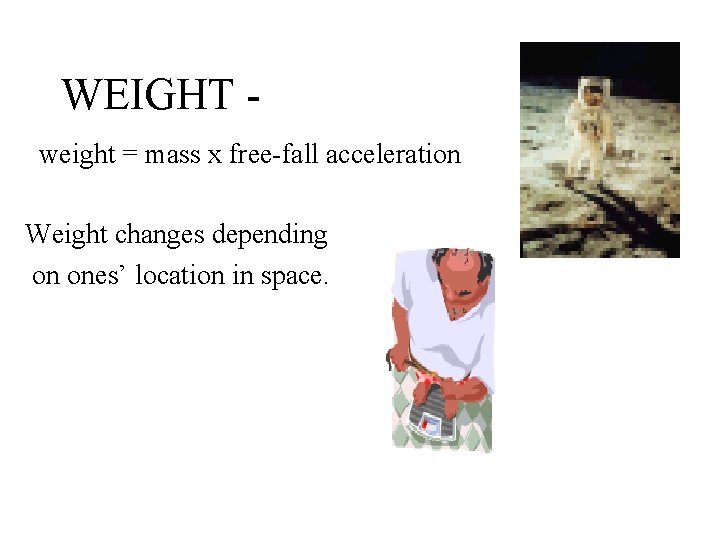
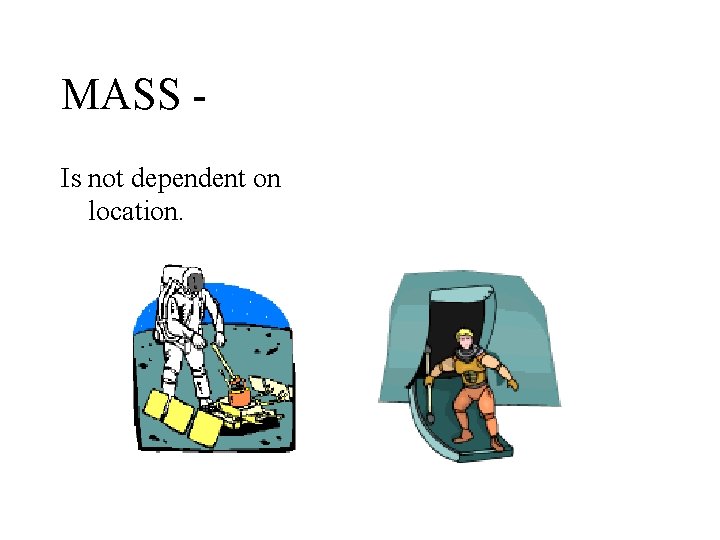
WEIGHT weight = mass x free-fall acceleration Weight changes depending on ones’ location in space.
MASS Is not dependent on location.
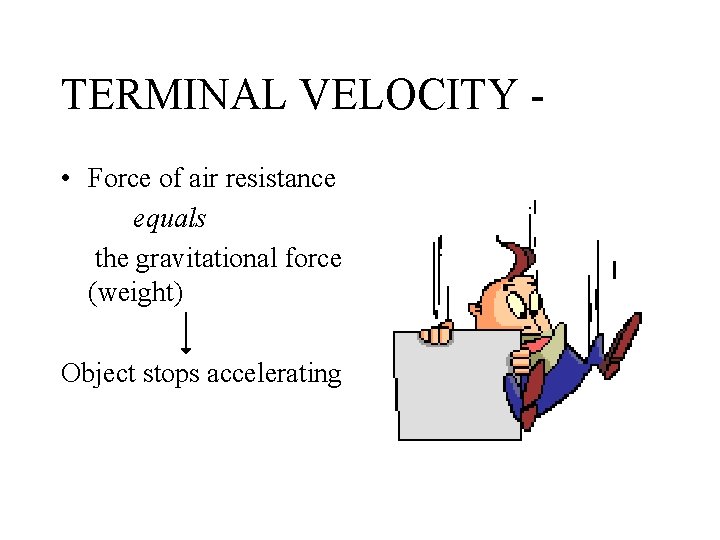
TERMINAL VELOCITY • Force of air resistance equals the gravitational force (weight) Object stops accelerating
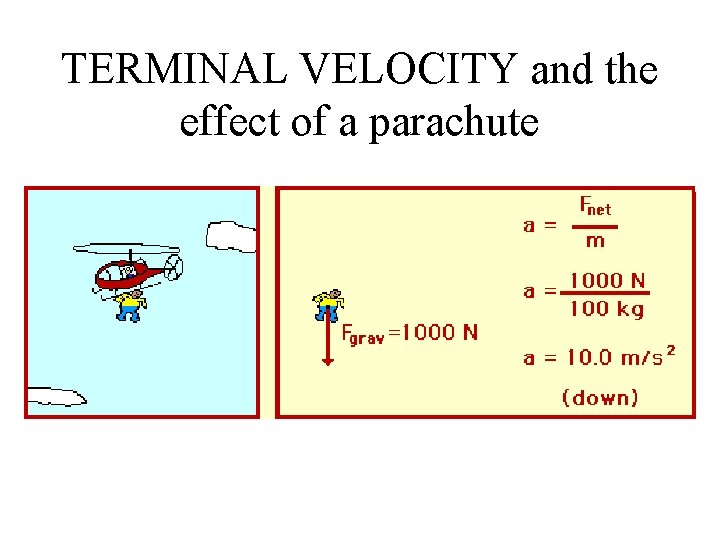
TERMINAL VELOCITY and the effect of a parachute
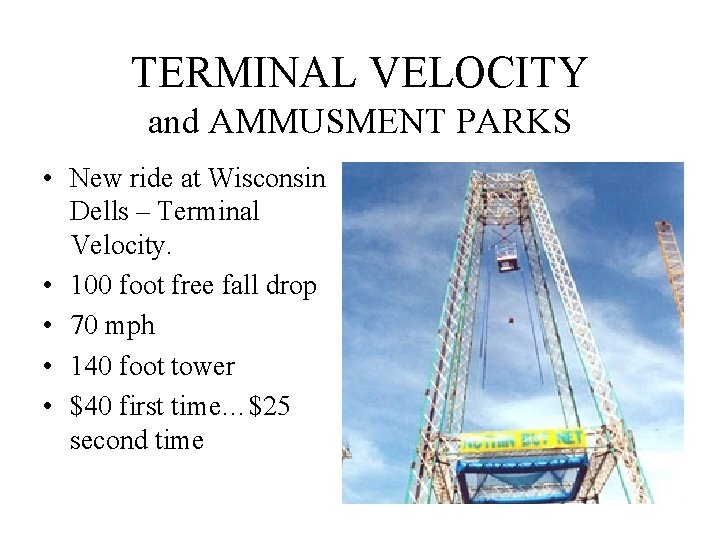
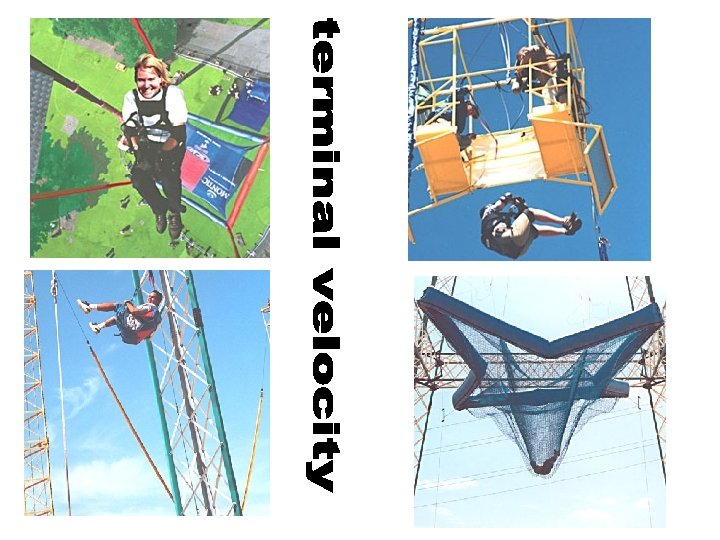
TERMINAL VELOCITY and AMMUSMENT PARKS • New ride at Wisconsin Dells – Terminal Velocity. • 100 foot free fall drop • 70 mph • 140 foot tower • $40 first time…$25 second time
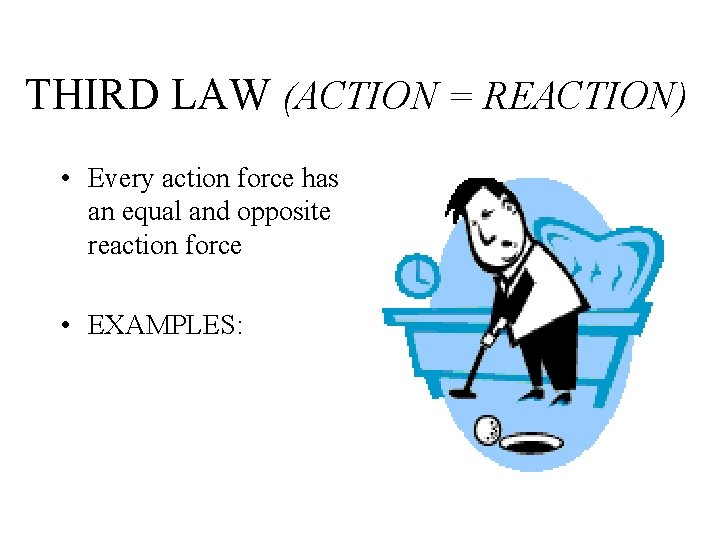
THIRD LAW (ACTION = REACTION) • Every action force has an equal and opposite reaction force • EXAMPLES:
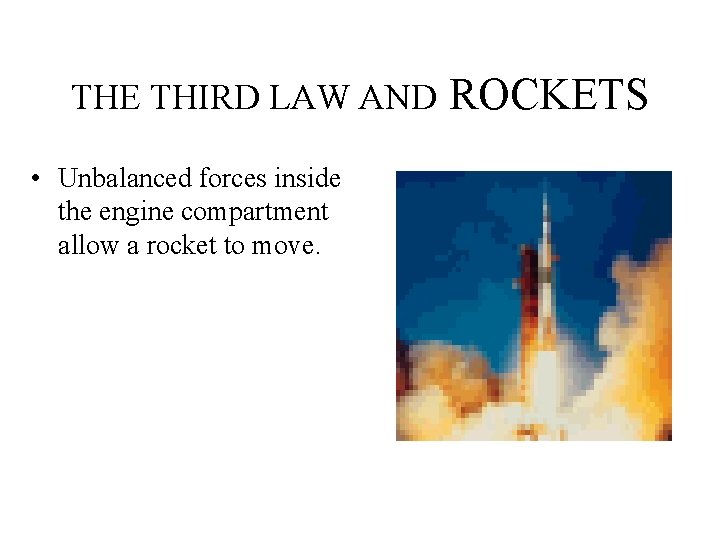
THE THIRD LAW AND • Unbalanced forces inside the engine compartment allow a rocket to move. ROCKETS