
CHAPTER 8 Managing Stress and Anxiety Lesson 1
- Slides: 35
CHAPTER 8 Managing Stress and Anxiety Lesson 1: Effects of Stress Lesson 2: Managing Stress Lesson 3: Anxiety and Teen Depression Lesson 4: Being a Resilient Teen
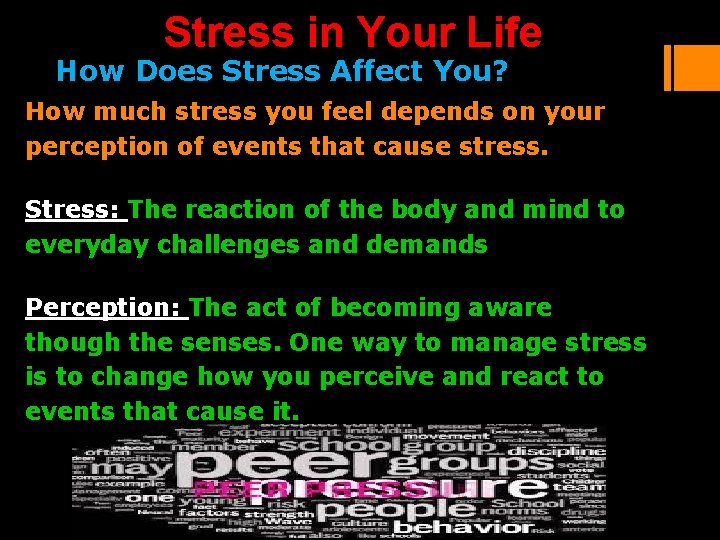
Stress in Your Life How Does Stress Affect You? How much stress you feel depends on your perception of events that cause stress. Stress: The reaction of the body and mind to everyday challenges and demands Perception: The act of becoming aware though the senses. One way to manage stress is to change how you perceive and react to events that cause it.
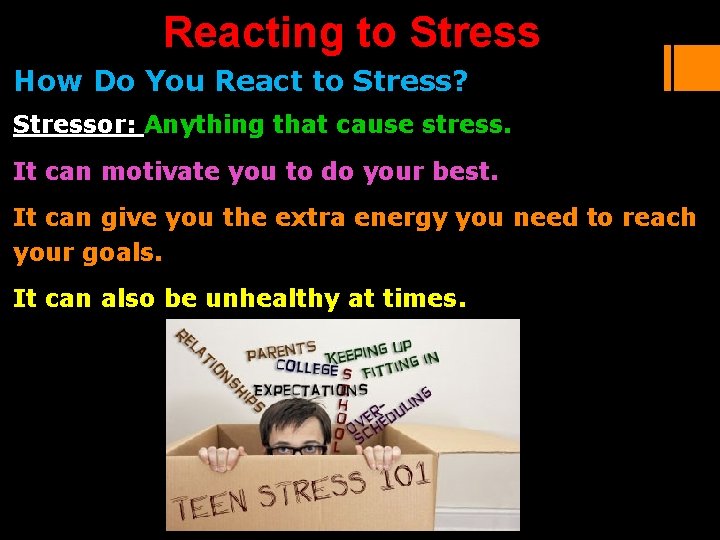
Reacting to Stress How Do You React to Stress? Stressor: Anything that cause stress. It can motivate you to do your best. It can give you the extra energy you need to reach your goals. It can also be unhealthy at times.
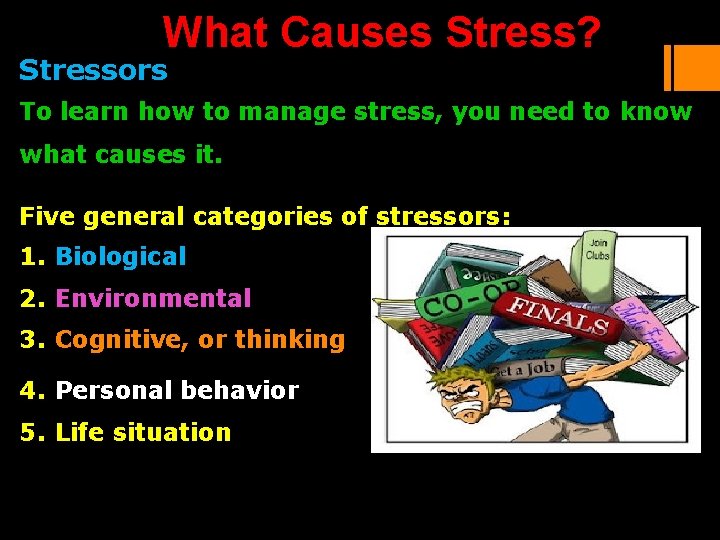
What Causes Stress? Stressors To learn how to manage stress, you need to know what causes it. Five general categories of stressors: 1. Biological 2. Environmental 3. Cognitive, or thinking 4. Personal behavior 5. Life situation
The Body’s Stress Response How the Body Responds to Stress When you perceive a situation to be a threat, your body begins a stress response. Two body systems, the nervous system and the endocrine system, are active. This response is largely involuntary, or automatic.
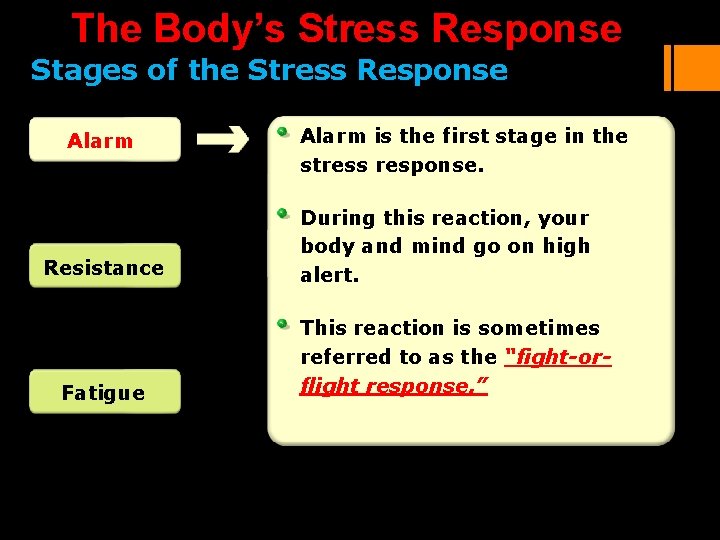
The Body’s Stress Response Stages of the Stress Response Alarm Resistance Fatigue Alarm is the first stage in the stress response. During this reaction, your body and mind go on high alert. This reaction is sometimes referred to as the “fight-orflight response. ”
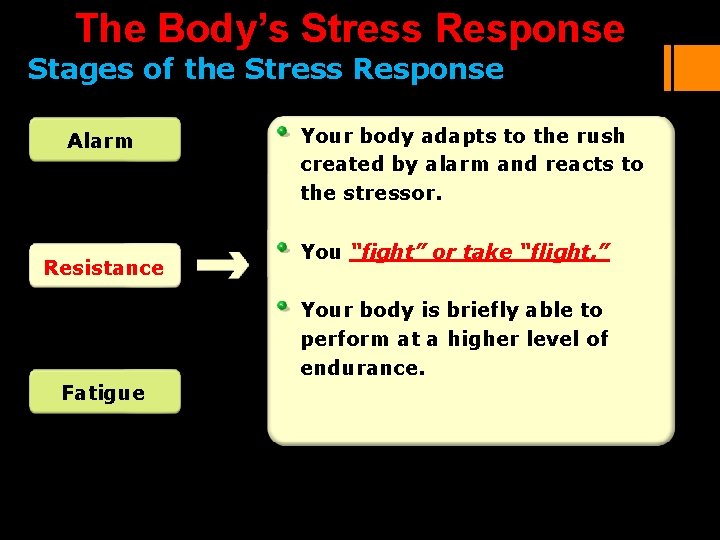
The Body’s Stress Response Stages of the Stress Response Alarm Resistance Your body adapts to the rush created by alarm and reacts to the stressor. You “fight” or take “flight. ” Your body is briefly able to perform at a higher level of endurance. Fatigue
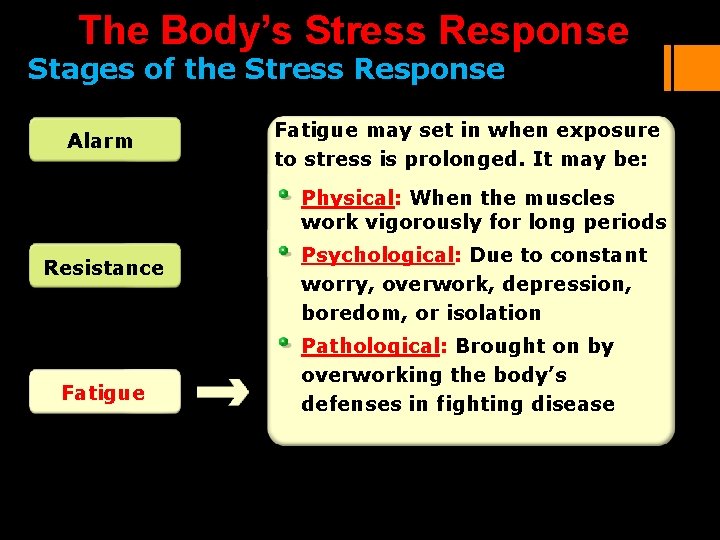
The Body’s Stress Response Stages of the Stress Response Alarm Fatigue may set in when exposure to stress is prolonged. It may be: Physical: When the muscles work vigorously for long periods Resistance Fatigue Psychological: Due to constant worry, overwork, depression, boredom, or isolation Pathological: Brought on by overworking the body’s defenses in fighting disease
Stress and Your Health Physical Effects Stress can lead to a psychosomatic response. Some stress-related health problems: Headache Asthma High blood pressure Weakened immune system
Stress and Your Health Mental/Emotional and Social Effects Psychosomatic Response: A physical reaction from the results from stress rather than from an injury or illness. Difficulty concentrating. Mood swings. Risks of substance abuse.
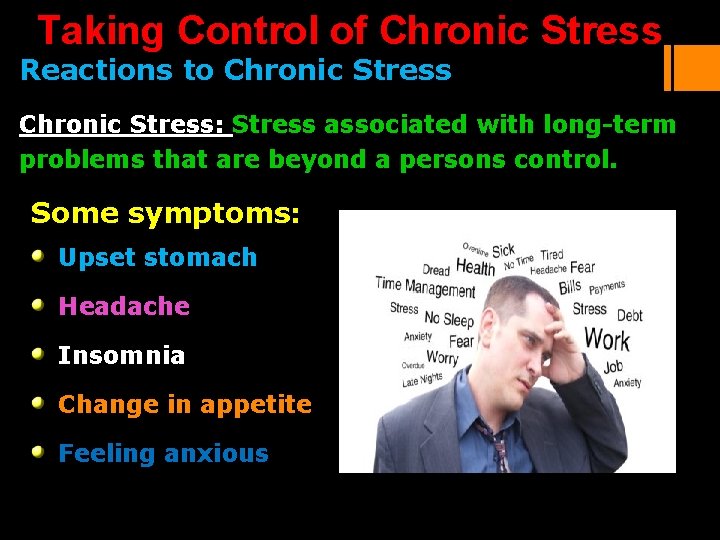
Taking Control of Chronic Stress Reactions to Chronic Stress: Stress associated with long-term problems that are beyond a persons control. Some symptoms: Upset stomach Headache Insomnia Change in appetite Feeling anxious
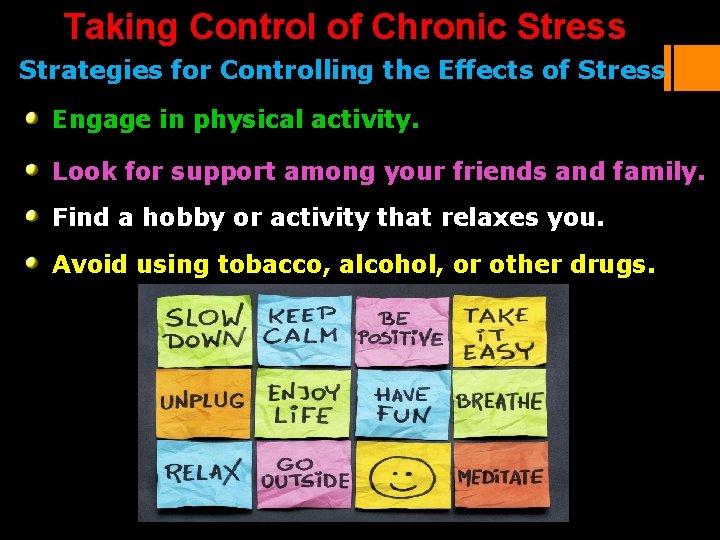
Taking Control of Chronic Stress Strategies for Controlling the Effects of Stress Engage in physical activity. Look for support among your friends and family. Find a hobby or activity that relaxes you. Avoid using tobacco, alcohol, or other drugs.
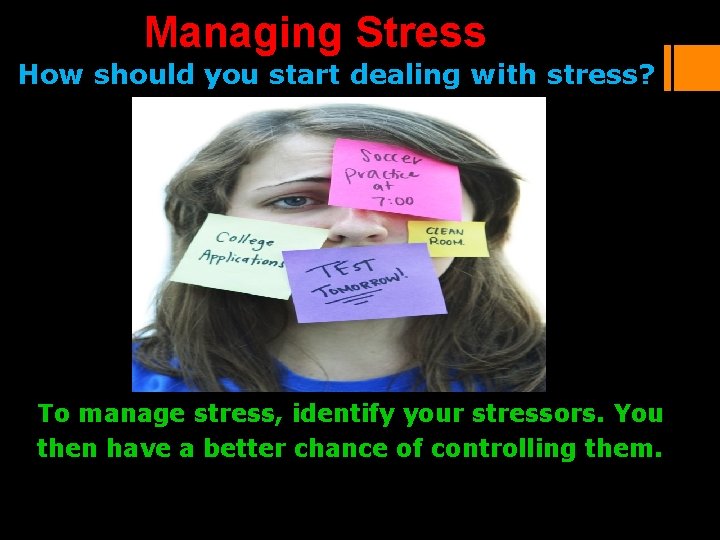
Managing Stress How should you start dealing with stress? To manage stress, identify your stressors. You then have a better chance of controlling them.
Identifying Personal Causes of Stress The first step in stress management is to identify the causes of stress: • Life events • Physical stressors • Daily hassles
Avoiding Stress with Refusal Strategies Using Refusal Skills to Avoid Stress Demonstrating refusal strategies helps You avoid stressful situations. Walk away from a tense situation. Say no when you see the possibility of stress, conflict, or threat.
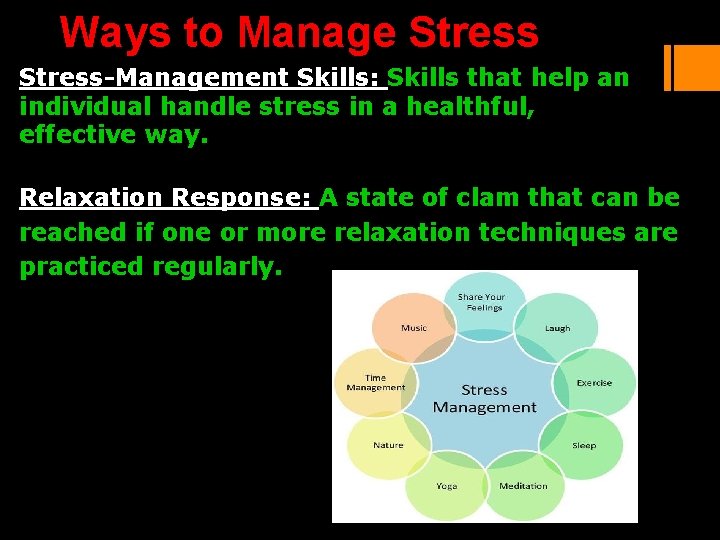
Ways to Manage Stress-Management Skills: Skills that help an individual handle stress in a healthful, effective way. Relaxation Response: A state of clam that can be reached if one or more relaxation techniques are practiced regularly.
Ways to Manage Stress Plan Ahead A well-thought-out plan is a flexible map that shows many ways of reaching your goal. When you plan ahead: You decide in advance what you want to accomplish and what steps you’ll take. You recognize where variations to your plan may occur. It better prepares you for unexpected changes.
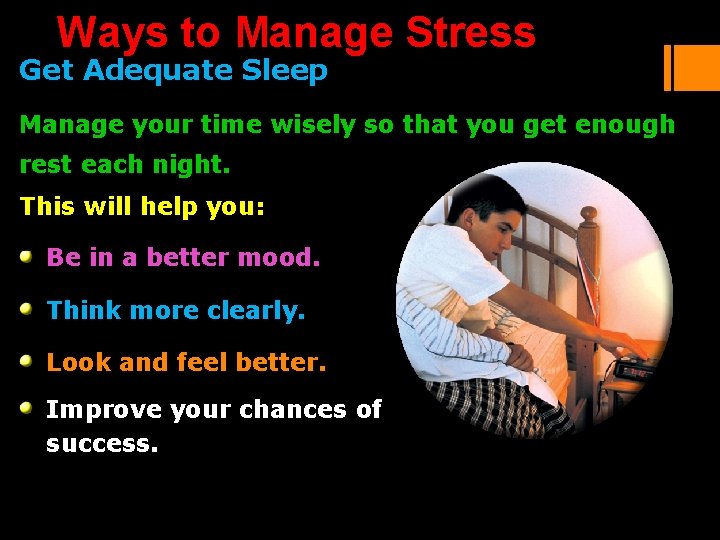
Ways to Manage Stress Get Adequate Sleep Manage your time wisely so that you get enough rest each night. This will help you: Be in a better mood. Think more clearly. Look and feel better. Improve your chances of success.
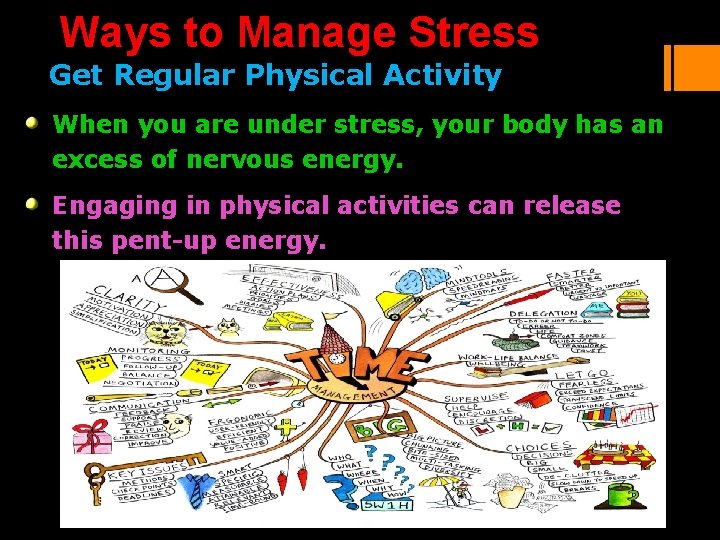
Ways to Manage Stress Get Regular Physical Activity When you are under stress, your body has an excess of nervous energy. Engaging in physical activities can release this pent-up energy.
Ways to Manage Stress Eat Nutritious Food Balanced nutrition is important for overall health. Poor eating habits cause fatigue, weakness, and a reduced ability to concentrate. Inappropriate dieting and over- or undereating can also put the body under additional stress. Too much stress can cause poor absorption of vitamins and minerals. Eat a variety of different foods, drink plenty of water, and eat fresh food whenever possible.
Ways to Manage Stress Avoid Tobacco, Alcohol, and Other Drugs Using tobacco, alcohol, or other drugs does not relieve stress. Substance use makes the body more prone to diseases and has dangerous long-term effects.
Anxiety and Teen Depression The teen years bring new pressures, challenges, and responsibilities that can sometimes seem overwhelming. Anxiety: The condition of feeling uneasy or worried about what may happen.
Anxiety What Is Anxiety? Everyone feels anxious from time to time. Occasional anxiety in life is natural. Sometimes anxious feelings can have positive results. Other times, anxiety can get in the way of a person’s performance.
What Is Anxiety? Symptoms of Anxiety Feelings of fear or dread Perspiration, trembling, restlessness, or muscle tension Rapid heart rate, lightheadedness, or shortness of breath
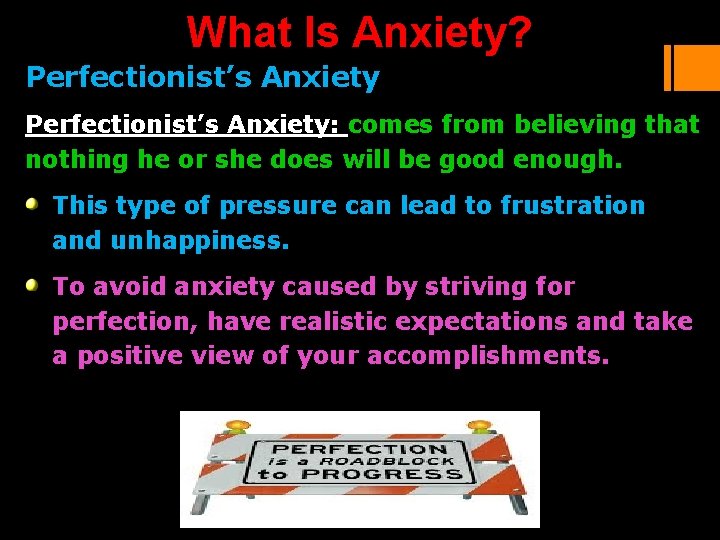
What Is Anxiety? Perfectionist’s Anxiety: comes from believing that nothing he or she does will be good enough. This type of pressure can lead to frustration and unhappiness. To avoid anxiety caused by striving for perfection, have realistic expectations and take a positive view of your accomplishments.
What Is Depression? Depression: Prolonged feeling of helplessness, hopelessness, and sadness. To manage such feelings, follow these suggestions: Write your feelings in a private journal. Draw, dance, or engage in some other creative activity. Talk about your feelings with your family and friends. Do something nice for someone else.
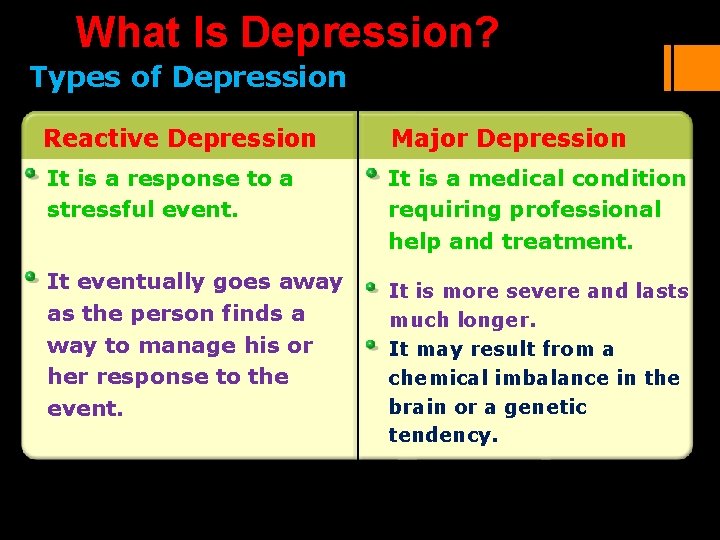
What Is Depression? Types of Depression Reactive Depression Major Depression It is a response to a stressful event. It is a medical condition requiring professional help and treatment. It eventually goes away as the person finds a way to manage his or her response to the event. It is more severe and lasts much longer. It may result from a chemical imbalance in the brain or a genetic tendency.
What Is Depression? Symptoms of Teen Depression An irritable or restless mood Withdrawal from friends and activities A change in appetite or weight Feelings of guilt or worthlessness A sense of hopelessness
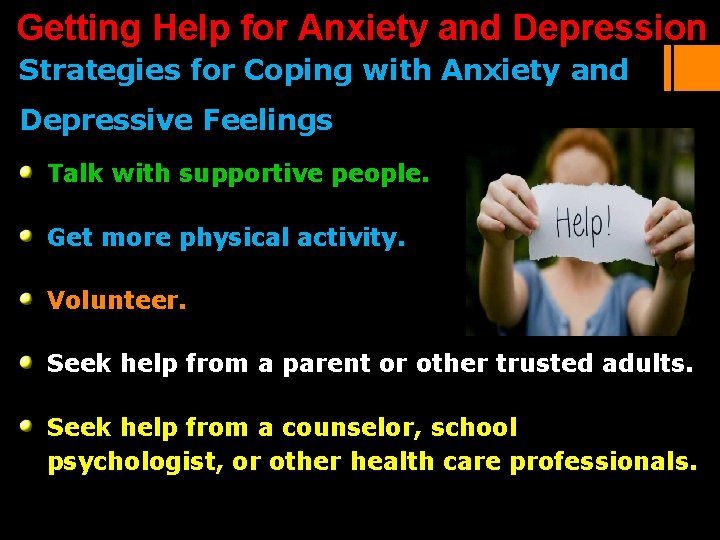
Getting Help for Anxiety and Depression Strategies for Coping with Anxiety and Depressive Feelings Talk with supportive people. Get more physical activity. Volunteer. Seek help from a parent or other trusted adults. Seek help from a counselor, school psychologist, or other health care professionals.
What Is Resiliency? Resiliency: The ability to adapt effectively and recover from disappointment, difficulty, or crisis. Resilient people can handle adversity in healthful ways and achieve long-term success.
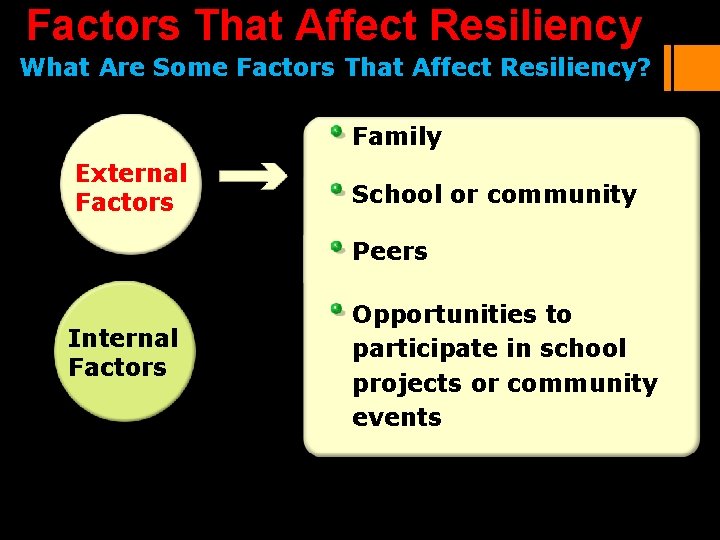
Factors That Affect Resiliency What Are Some Factors That Affect Resiliency? Family External Factors School or community Peers Internal Factors Opportunities to participate in school projects or community events
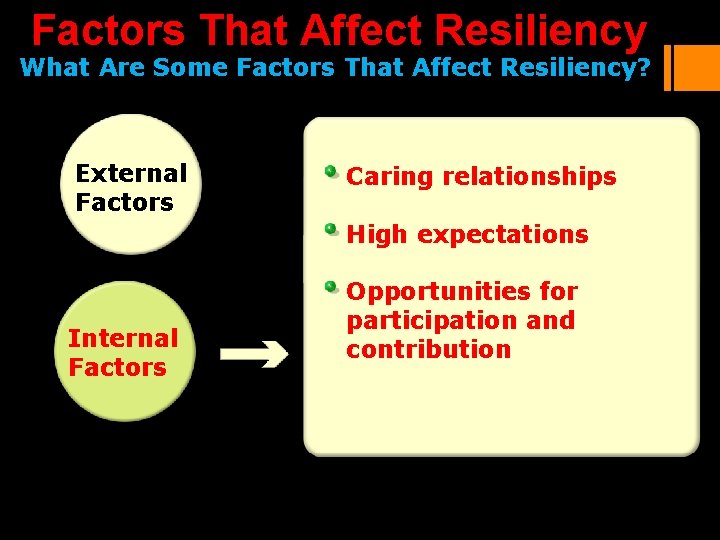
Factors That Affect Resiliency What Are Some Factors That Affect Resiliency? External Factors Caring relationships High expectations Internal Factors Opportunities for participation and contribution
Resiliency and Your Protective Factors: Conditions that shield individuals from negative consequences of exposure to risk. These assets are protective factors, which can reduce the harmful effects of a difficult or risky situation. They may also influence a person to respond to a situation in a healthy way.
Resiliency and Your Protective Factors Building Resiliency by Strengthening Your Protective Factors Teens who do not have all their external protective factors in place can strengthen the ones they do have. Develop a better relationship with the adult members of your family. Find support from teachers, coaches, clergy, or other caring adults.
Resiliency and Your Protective Factors Actions for Strengthening Your Internal Protective Factors Become involved in extra-curricular activities. Read for pleasure at least three hours per week. Stand up for your beliefs. Be honest with yourself and others. Resist negative peer pressure. Learn about people from other cultures. Develop a sense of purpose and positive outlook.