
Chapter 8 Managing Misbehavior Mc GrawHillIrwin Copyright 2014
Chapter 8 Managing Misbehavior Mc. Graw-Hill/Irwin Copyright © 2014 by The Mc. Graw-Hill Companies, Inc. All rights reserved.
Learning Objectives n Explain why the management of misbehavior is an important responsibility that managers must address. n Describe some of the outcomes of misbehavior in terms of property, politics, performance, interpersonal relations, and intrapersonal relations. n Compare how sexual harassment, bullying, and incivility can affect employee productivity and performance. n Discuss the contrasting views that companies and employees have toward privacy at work. 8 -2
Introduction Managers are responsible for identifying, solving, and correcting problems • Managing employee misbehavior (MEM) must be organized and systematic Issues related to problem behaviors • Reduced performance • Negative impacts on the entire organization 8 -3
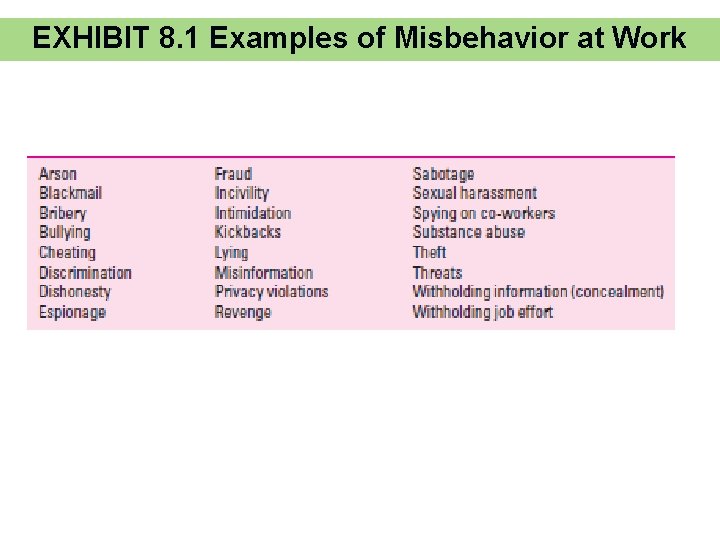
EXHIBIT 8. 1 Examples of Misbehavior at Work 8 -4

The Study of Misbehavior (MEM) Researchers tend to focus on the positive things that happen at work Sutherland & Coleman introduced “white-collar crime” Illegal acts Identification of a beneficiary of the acts The social status of the criminal 8 -5
Types of Organizational Crime ■ Occupational crimes benefit the criminal and are conducted without organizational support ■ Organizational crimes are conducted with the support of the organization 8 -6

EXHIBIT 8. 2 A Model of Organizational Misbehavior 8 -7

Factors in Organizational Misbehavior Mediators Outcomes Costs Antecedents Organizational Misbehavior 8 -8
Management Interventions Steps Management Can Take to Intervene A B C • Carefully • Reduce the screen possibility of applicants and job, group, or the intention to refuse to hire organizational misbehave “risky” antecedent individuals that can trigger misbehavior 8 -9
Sexual Harassment n Unwelcome sexual advances ■ ■ Requests for sexual favors Verbal or physical conduct of a sexual nature 8 -10
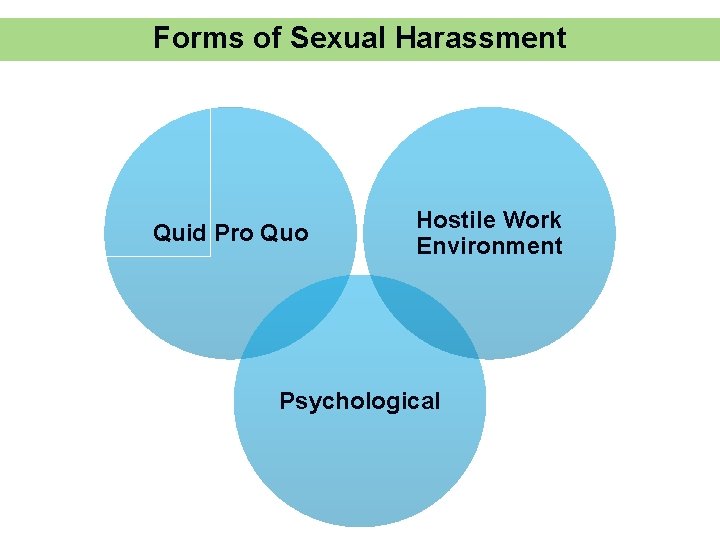
Forms of Sexual Harassment Quid Pro Quo Hostile Work Environment Psychological 8 -11
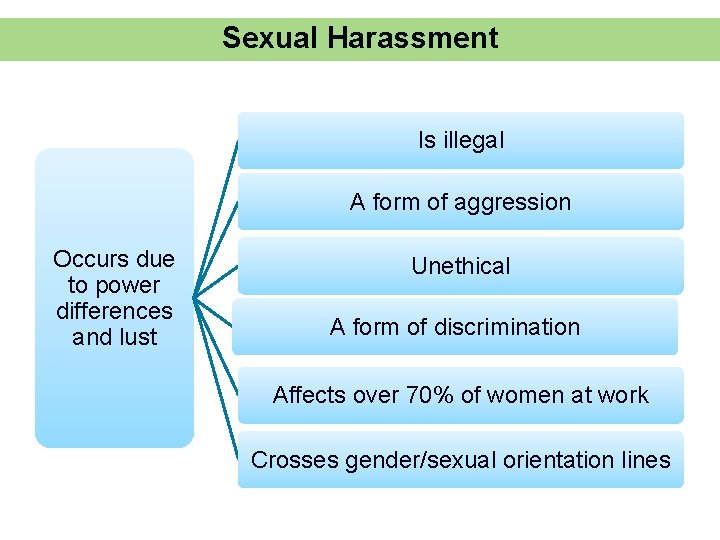
Sexual Harassment Is illegal A form of aggression Occurs due to power differences and lust Unethical A form of discrimination Affects over 70% of women at work Crosses gender/sexual orientation lines 8 -12
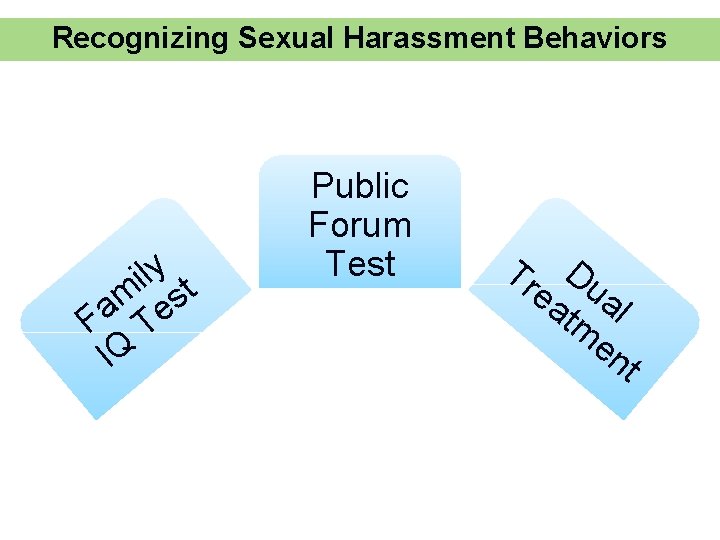
Recognizing Sexual Harassment Behaviors ily t m es a F T IQ Public Forum Test Tr Du ea a tm l en t 8 -13
Aggression and Violence n The effort of an individual to bring harm to others at an organization ■ Includes both psychological and physical injury 8 -14
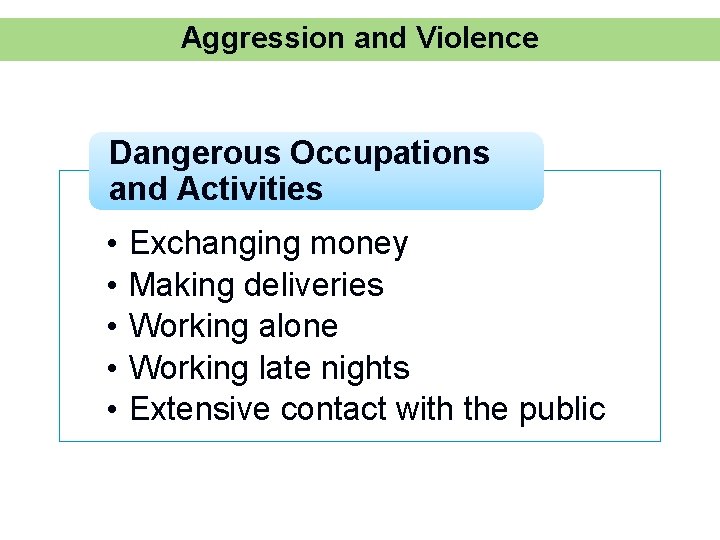
Aggression and Violence Dangerous Occupations and Activities • • • Exchanging money Making deliveries Working alone Working late nights Extensive contact with the public 8 -15
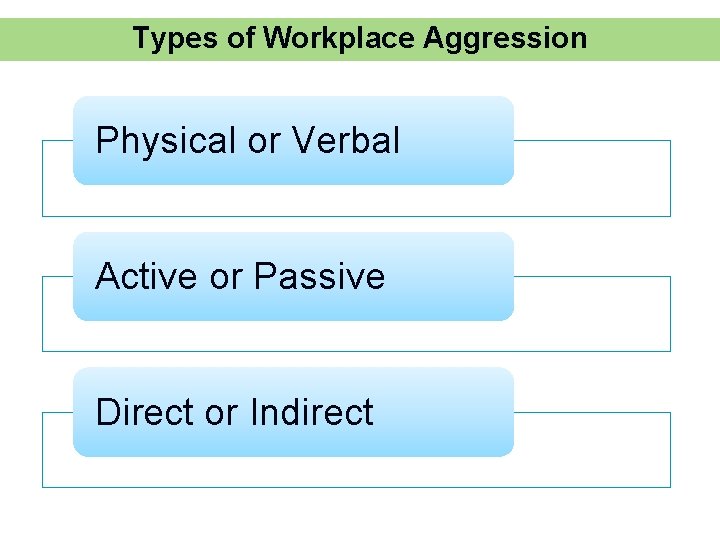
Types of Workplace Aggression Physical or Verbal Active or Passive Direct or Indirect 8 -16
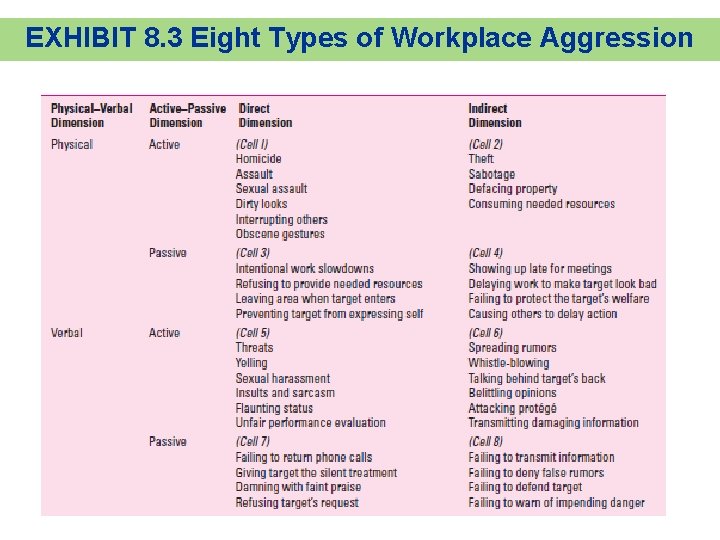
EXHIBIT 8. 3 Eight Types of Workplace Aggression 8 -17
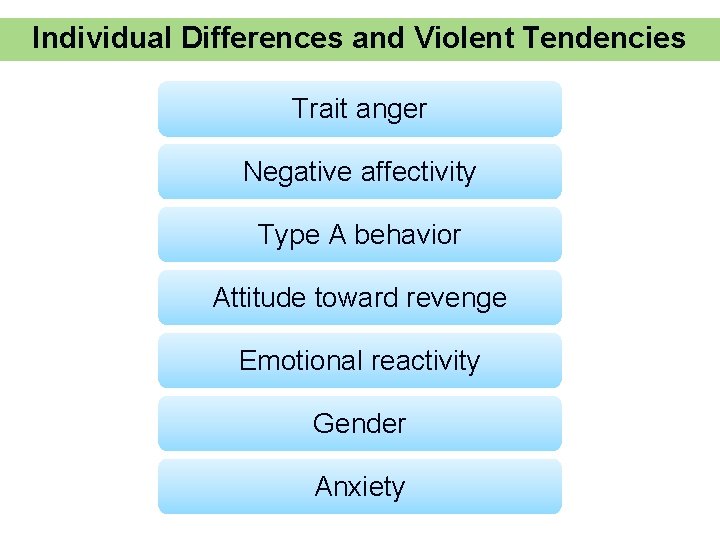
Individual Differences and Violent Tendencies Trait anger Negative affectivity Type A behavior Attitude toward revenge Emotional reactivity Gender Anxiety 8 -18
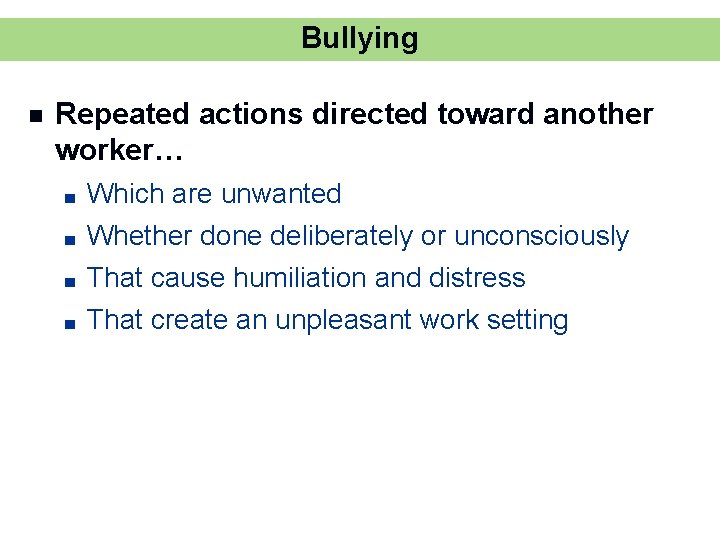
Bullying n Repeated actions directed toward another worker… ■ ■ Which are unwanted Whether done deliberately or unconsciously That cause humiliation and distress That create an unpleasant work setting 8 -19
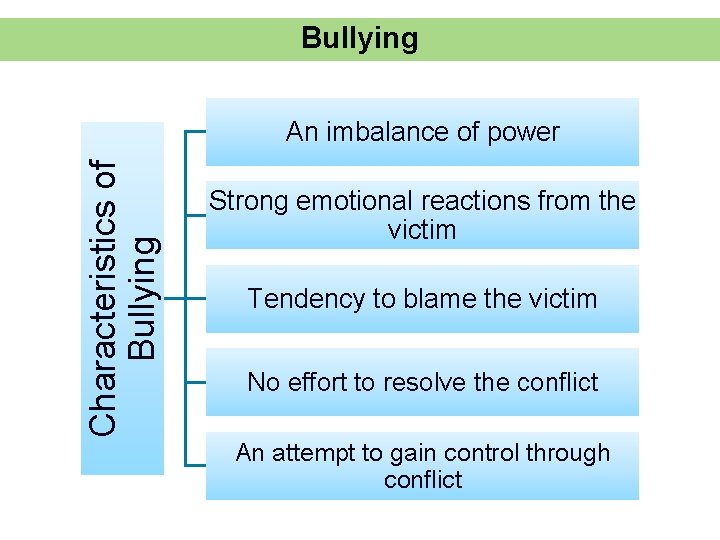
Bullying Characteristics of Bullying An imbalance of power Strong emotional reactions from the victim Tendency to blame the victim No effort to resolve the conflict An attempt to gain control through conflict 8 -20
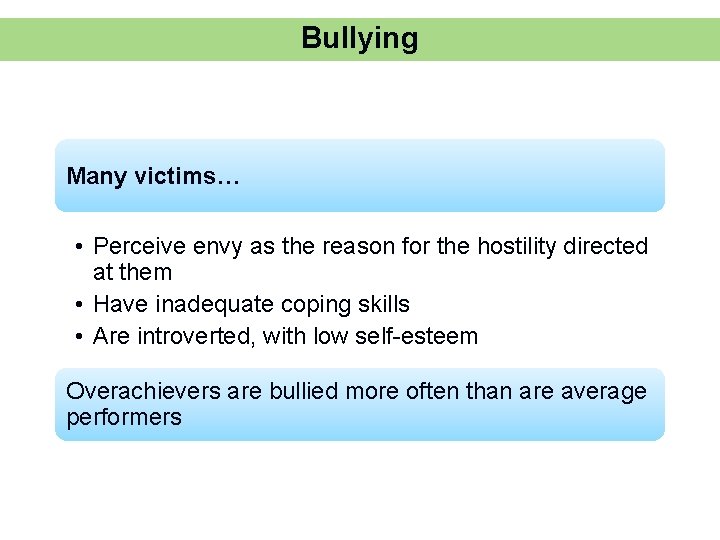
Bullying Many victims… • Perceive envy as the reason for the hostility directed at them • Have inadequate coping skills • Are introverted, with low self-esteem Overachievers are bullied more often than are average performers 8 -21
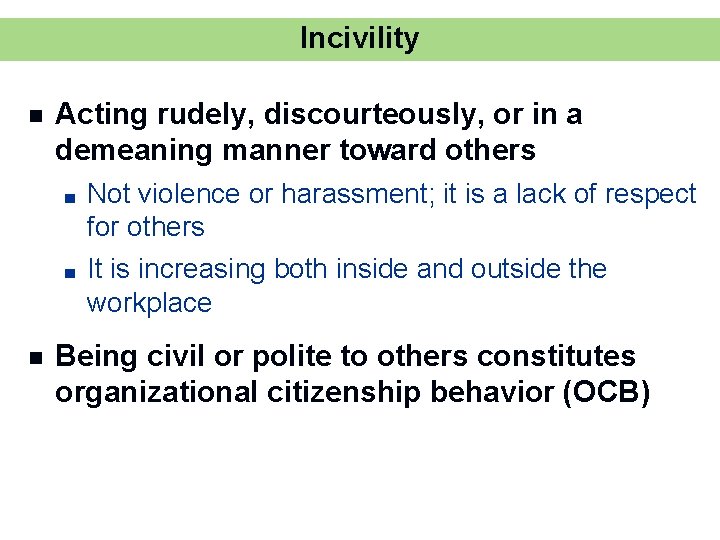
Incivility n Acting rudely, discourteously, or in a demeaning manner toward others ■ ■ n Not violence or harassment; it is a lack of respect for others It is increasing both inside and outside the workplace Being civil or polite to others constitutes organizational citizenship behavior (OCB) 8 -22
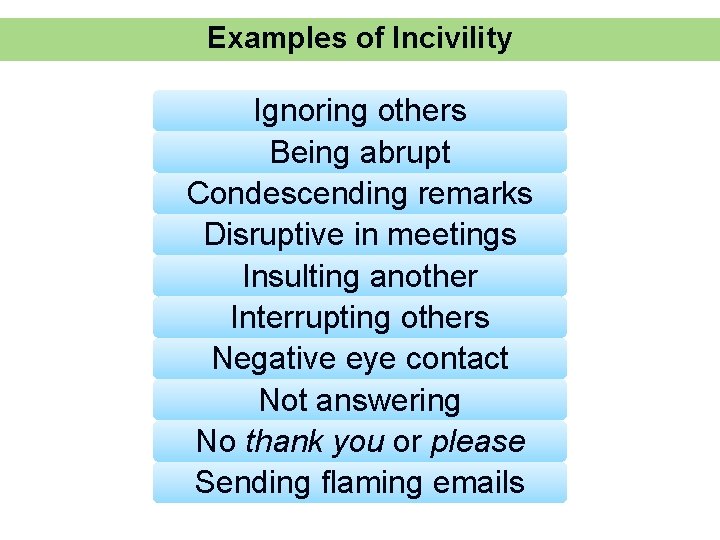
Examples of Incivility Ignoring others Being abrupt Condescending remarks Disruptive in meetings Insulting another Interrupting others Negative eye contact Not answering No thank you or please Sending flaming emails 8 -23
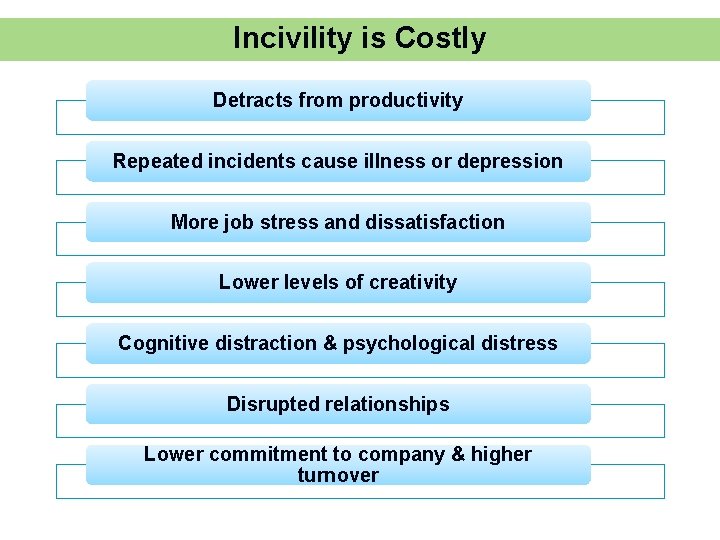
Incivility is Costly Detracts from productivity Repeated incidents cause illness or depression More job stress and dissatisfaction Lower levels of creativity Cognitive distraction & psychological distress Disrupted relationships Lower commitment to company & higher turnover 8 -24

Combating incivility Incivility 1. Create and enforce a zero-tolerance policy. 2. Manage proactively the climate of the organization. 3. Have leaders set the tone and serve as role models. 4. Train employees on what is acceptable (and unacceptable) behavior. 5. Punish those individuals who engage in uncivil behaviors. 8 -25
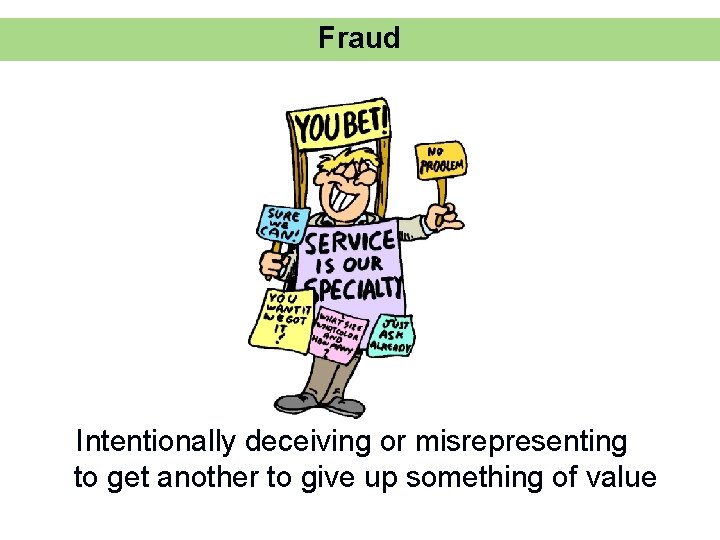
Fraud Intentionally deceiving or misrepresenting to get another to give up something of value 8 -26
Fraud n n Employee behaviors… ■ 90%. . . goldbricking, abusing sick time, fraud ■ 33%. . . stole money or merchandise on the job The more dissatisfied the employee, the more motivation to commit fraud ■ Fraud requires both motive and opportunity 8 -27
Substance Abuse n Illicit drug use costs over $193 billion annually ■ ■ Lost productivity Premature and preventable health problems Increased workers’ compensation claims Behavioral problems 8 -28
Substance Abuse n Some substances may cause danger to non-users ■ n Assembly-line workers, transportation workers, physicians, pharmacists Substance abuse is a personal characteristic ■ ■ ■ Has little to do with working conditions Work overload and job insecurity contribute to abuse Knowledge about drug dangers may not deter their use 8 -29
Cyberslacking Using the Internet for personal reasons is “virtual goldbricking” that results in… • Lost time and energy • Additional burden on a company’s computer network • Possible contribution to sexual harassment behaviors 8 -30
Cyberslacking n As cyberslacking has increased, so has workplace surveillance ■ ■ n Electronic monitoring is now common Monitoring covers e-mail, computer files, and interactions with customers Organizations have fired employees who mix personal and organizational business 8 -31
Sabotage n Damaging an organization’s or colleague’s equipment, workspace, operations, or data ■ ■ ■ To get even or take revenge To correct a perceived wrong To make a statement to others 8 -32
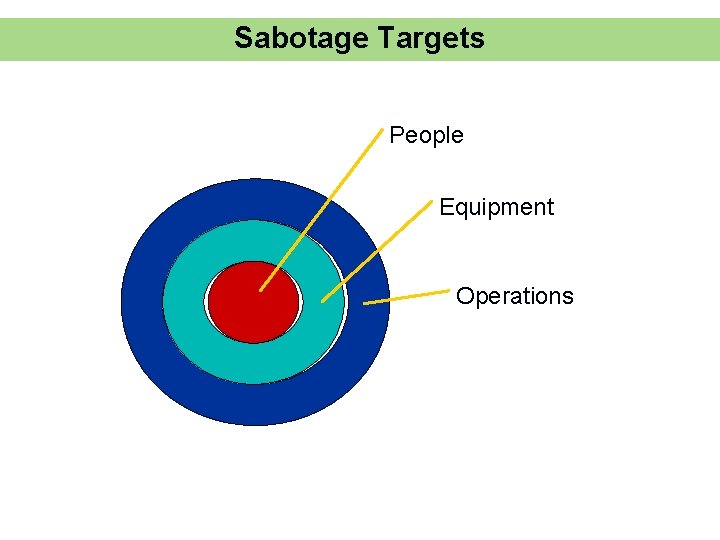
Sabotage Targets People Equipment Operations 8 -33
Theft n The unauthorized taking, consuming, or transfer of money or goods ■ n Stealing is not limited to tangible property Catching thieves includes using… ■ ■ Electronic surveillance Honesty or integrity tests 8 -34
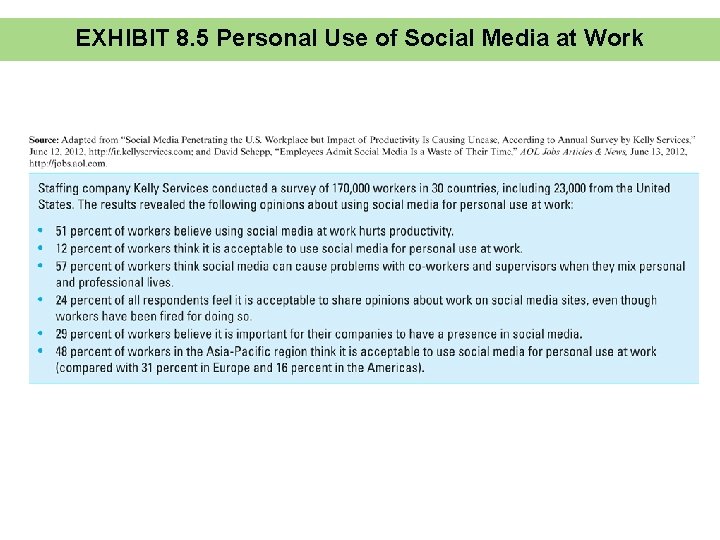
EXHIBIT 8. 5 Personal Use of Social Media at Work 8 -35
The STEAL Model n Refers to the motives behind theft ■ Support ■ Thwart Even the Score Approval ■ ■ 8 -36
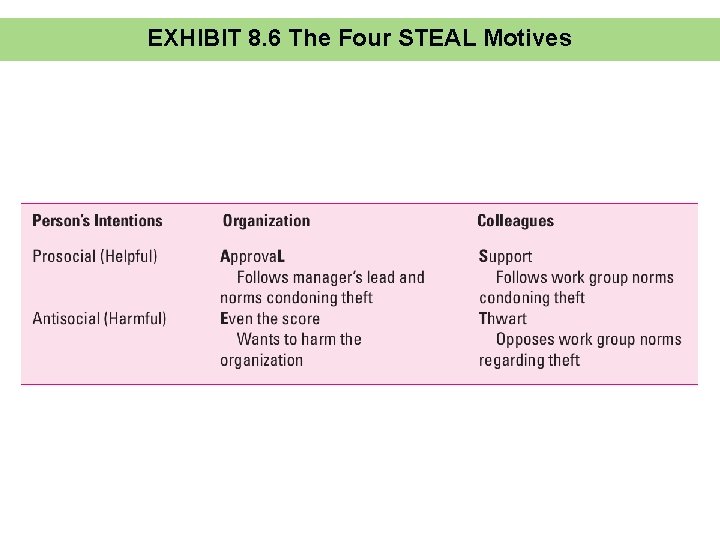
EXHIBIT 8. 6 The Four STEAL Motives 8 -37
The STEAL Model Ideas for weakening STEAL motives • Rotate group membership • Communicate the personal costs of theft • Treat employees equitably There is no total solution to employee theft 8 -38
Privacy in the Workplace n The managerial perspective on privacy ■ Drug testing ■ Electronic workplace searches Surveillance by tape recording or video Monitoring of off-duty conduct ■ ■ 8 -39
Privacy in the Workplace n Privacy rights for public employees are found in the U. S. Constitution ■ ■ First Amendment of the Bill of Rights: protects freedom of speech and association Fourth Amendment: prohibits unreasonable searches and seizures Fifth Amendment: ensures against self-incrimination Fourteenth Amendment: guarantees due process and equal protection 8 -40
Privacy in the Workplace n Privacy violation through computer hacking ■ n A worldwide problem E-Mail Privacy ■ ■ E-mail does not have the same protection as telephone calls and written documents Accessing e-emails can damage the reciprocal relationship between management and employees 8 -41
Organizational Threshold Do you give up all civil liberties when you cross the threshold into an organization? 8 -42
Testing Policies n Medical, drug, lie detector, or psychological testing can be used if the test is… ■ ■ n Designed to predict one’s ability to perform Relatively noninvasive The Americans with Disability Act prohibits medical tests until after a job offer is made ■ ■ ■ Tests may determine “fitness to perform” Results are limited to those with “need to know” Must be a strong work-related reason for the testing 8 -43
In Review, Did We… n Explain why the management of misbehavior is an important responsibility that managers must address. n Describe some of the outcomes of misbehavior in terms of property, politics, performance, interpersonal relations, and intrapersonal relations. n Compare how sexual harassment, bullying, and incivility can affect employee productivity and performance. n Discuss the contrasting views that companies and employees have toward privacy at work. 8 -44
- Slides: 44