
Chapter 8 Listen to Early Religious Music Mass
- Slides: 17
Chapter 8 Listen to Early Religious Music
Mass • “Ite missa est” “it is finished” • Spiritual recreation of the crucifixion of Jesus Christ (very sacred) • Josquin des Prez • Giovanni Pierluigi da Palestrina
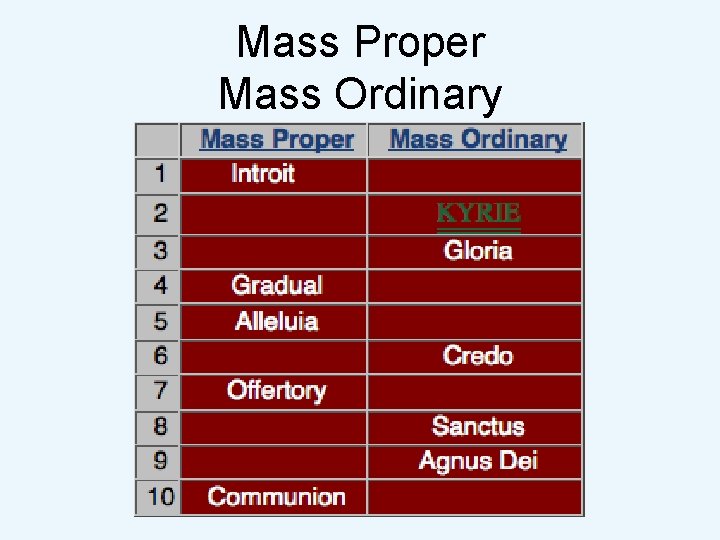
Mass Proper Mass Ordinary
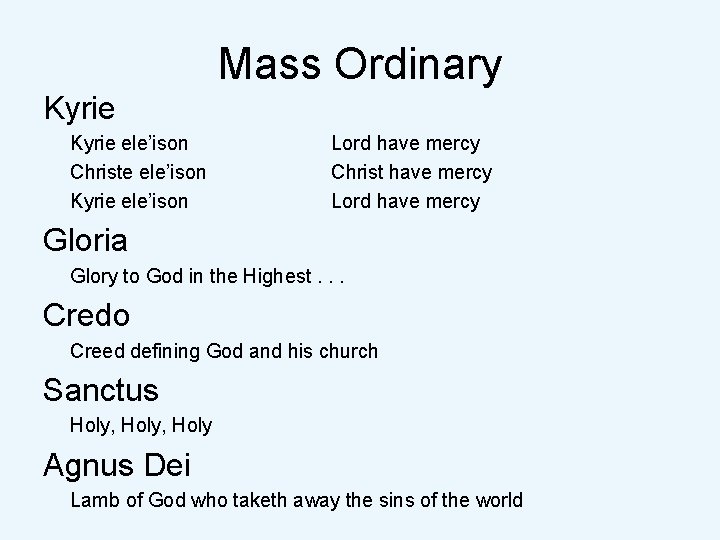
Mass Ordinary Kyrie ele’ison Christe ele’ison Kyrie ele’ison Lord have mercy Christ have mercy Lord have mercy Gloria Glory to God in the Highest. . . Credo Creed defining God and his church Sanctus Holy, Holy Agnus Dei Lamb of God who taketh away the sins of the world
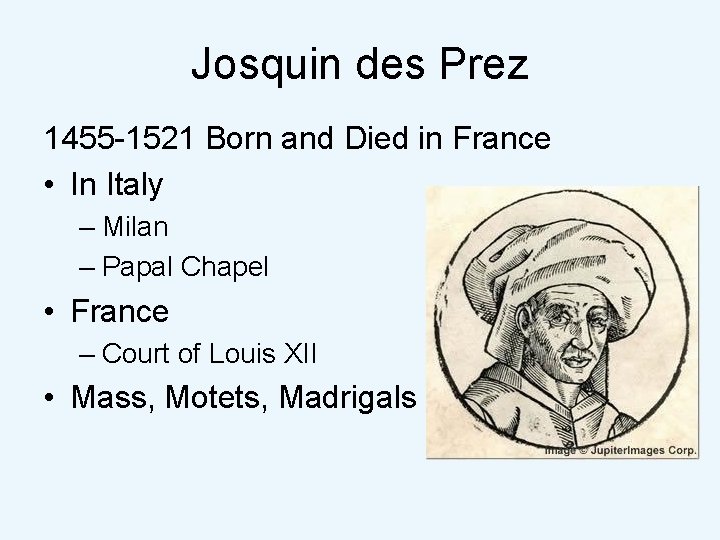
Josquin des Prez 1455 -1521 Born and Died in France • In Italy – Milan – Papal Chapel • France – Court of Louis XII • Mass, Motets, Madrigals
Missa Pange Lingua: Kyrie • Built on Plainchant Hymn “Pange Lingua” – Thomas Aquinas (1225 -1274) – The Hymn: • Strophic • Syllabic • Phrygian mode • Text: – Kyrie ele’ison, – Christe ele’ison, – Kyrie ele’ison, Lord have mercy, Christ have mercy, Lord have mercy.
Missa Pange Lingua: Kyrie • Timbre: – Four voices: Soprano, Alto, Tenor, Bass – a capella • Rhythm: – Meter: Triple Simple? – Pulse: One pulse per second • Melody: – Modified Arch – Conjunct • Texture: – Polyphonic (Imitative Counterpoint)
Missa Pange Lingua: Kyrie ele’ison 0: 00 0: 04 0: 15 0: 18 0: 29 0: 46 0: 58 Lord have mercy Tenor Bass Imitation Consonant Soprano Imitation: S to A. Also S/A to T/B Alto Bass, then tenor, then soprano, then alto in imitation Bass, then soprano (5 note ascending run) Ends open 5 ths, openness (holiness? )
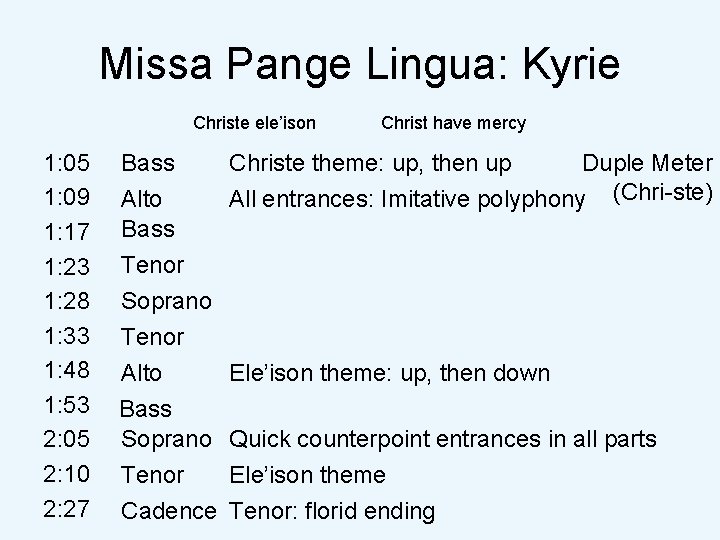
Missa Pange Lingua: Kyrie Christe ele’ison 1: 05 1: 09 1: 17 1: 23 1: 28 1: 33 1: 48 1: 53 2: 05 2: 10 2: 27 Bass Alto Bass Tenor Soprano Tenor Alto Bass Soprano Tenor Cadence Christ have mercy Christe theme: up, then up Duple Meter All entrances: Imitative polyphony (Chri-ste) Ele’ison theme: up, then down Quick counterpoint entrances in all parts Ele’ison theme Tenor: florid ending
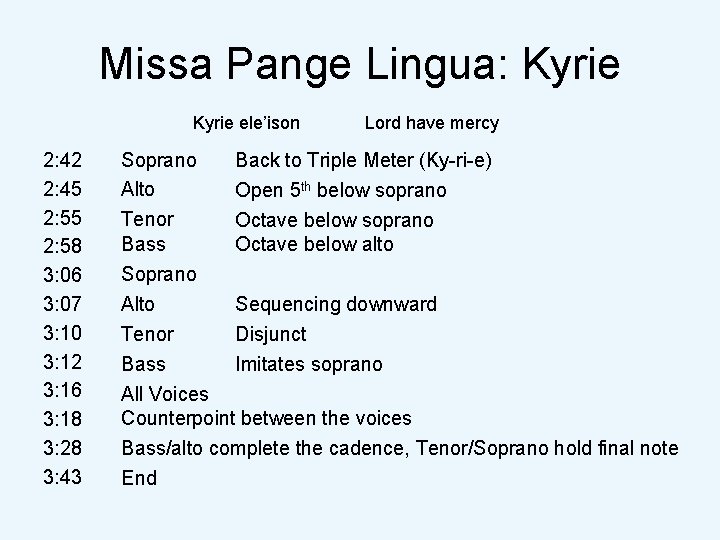
Missa Pange Lingua: Kyrie ele’ison 2: 42 2: 45 2: 58 3: 06 3: 07 3: 10 3: 12 3: 16 3: 18 3: 28 3: 43 Lord have mercy Soprano Back to Triple Meter (Ky-ri-e) Alto Open 5 th below soprano Tenor Octave below soprano Bass Octave below alto Soprano Alto Sequencing downward Tenor Disjunct Bass Imitates soprano All Voices Counterpoint between the voices Bass/alto complete the cadence, Tenor/Soprano hold final note End
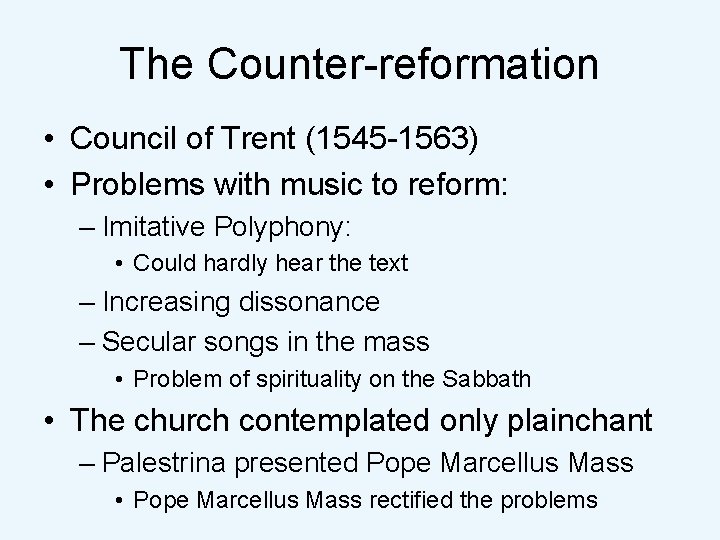
The Counter-reformation • Council of Trent (1545 -1563) • Problems with music to reform: – Imitative Polyphony: • Could hardly hear the text – Increasing dissonance – Secular songs in the mass • Problem of spirituality on the Sabbath • The church contemplated only plainchant – Palestrina presented Pope Marcellus Mass • Pope Marcellus Mass rectified the problems
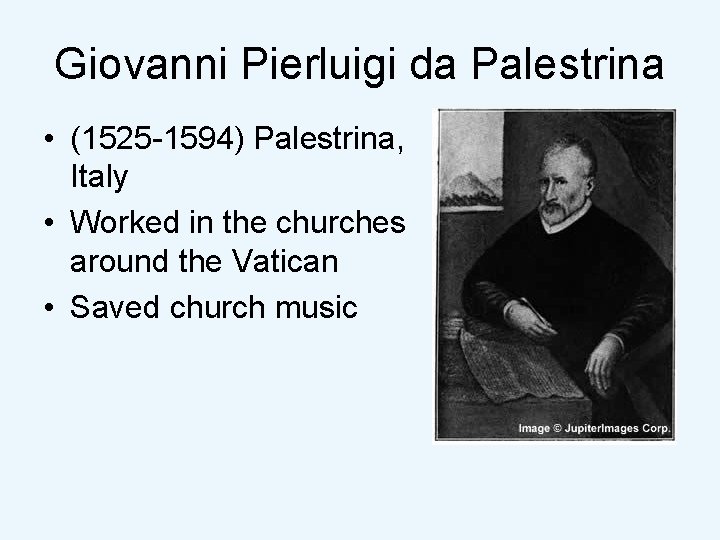
Giovanni Pierluigi da Palestrina • (1525 -1594) Palestrina, Italy • Worked in the churches around the Vatican • Saved church music
Pope Marcellus Mass: Gloria • Voices: – Soprano; Alto; Tenor II; Bass 2 • Texture: – Homorhythmic polyphonic movement between voices. • Text: Rhythmically together – Easy to hear words of text (problem 1 solved) – Maybe some variety on repeated word
Pope Marcellus Mass: Gloria • Melodies: – Conjunct • Smooth and inoffensive • Harmony: – Controlled dissonance (problem 2 solved) • Original material: – Not a secular song foundation (problem 3 solved)
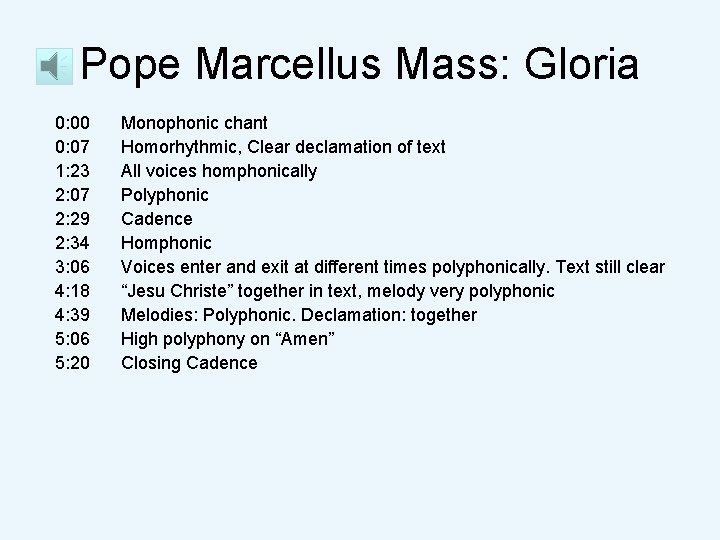
Pope Marcellus Mass: Gloria 0: 00 0: 07 1: 23 2: 07 2: 29 2: 34 3: 06 4: 18 4: 39 5: 06 5: 20 Monophonic chant Homorhythmic, Clear declamation of text All voices homphonically Polyphonic Cadence Homphonic Voices enter and exit at different times polyphonically. Text still clear “Jesu Christe” together in text, melody very polyphonic Melodies: Polyphonic. Declamation: together High polyphony on “Amen” Closing Cadence
Early Music: Conclusion • Middle Ages: – Monophonic Chant – Organum • Renaissance – Imitative Counterpoint – High Polyphony • Text together • Melodic lines interactive
Early Music: Conclusion • Leading into the Baroque – Clarity of text – Homophonic tendencies