
Chapter 8 Lesson 4 Metamorphic Rock Introduction Every

- Slides: 13
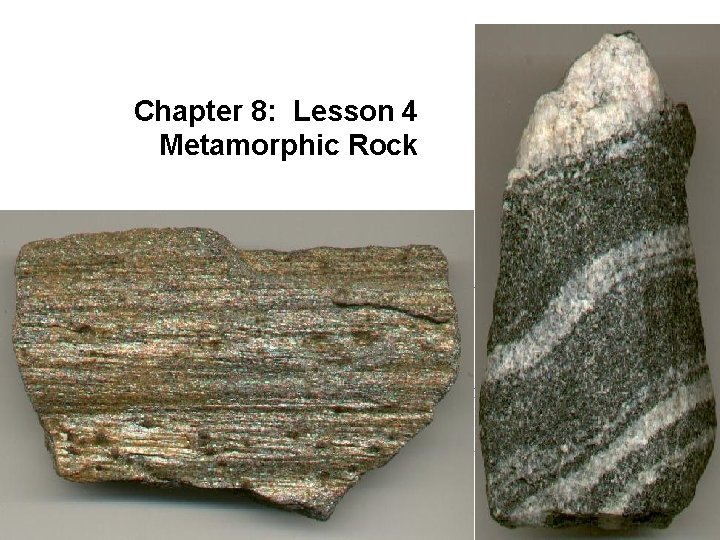
Chapter 8: Lesson 4 Metamorphic Rock
Introduction � Every metamorphic rock is a rock that has changed its form. � In fact, the word metamorphic comes from the Greek words meta, meaning “change, ” and morphosis, meaning “form. ”
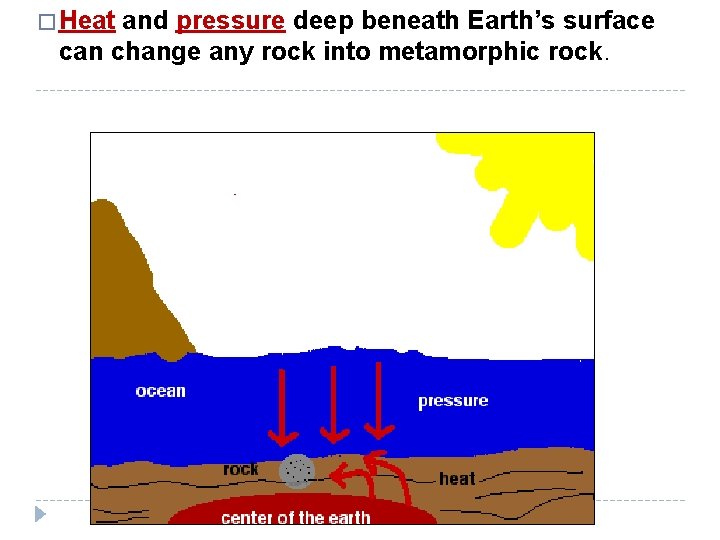
� Heat and pressure deep beneath Earth’s surface can change any rock into metamorphic rock.
When rock changes into metamorphic rock, it changes the rock’s: � appearance � texture � crystal structure � mineral content
Types of Metamorphic Rock � 1. Foliated Rocks � foliated rocks: metamorphic rocks in which minerals have been rearranged into visible bands
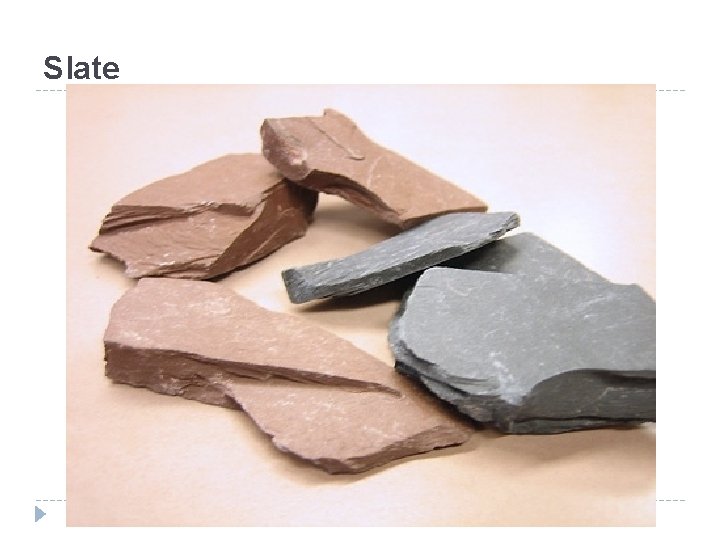
Example: Slate Heat and pressure change the sedimentary rock shale into slate. Slate is basically a denser, more compact version of shale. § During the change, new minerals such as mica form in the slate. § Since mica has good cleavage, slate splits easily along its bands into sheets of rock. § § This property makes slate a good material for tiles.
Slate
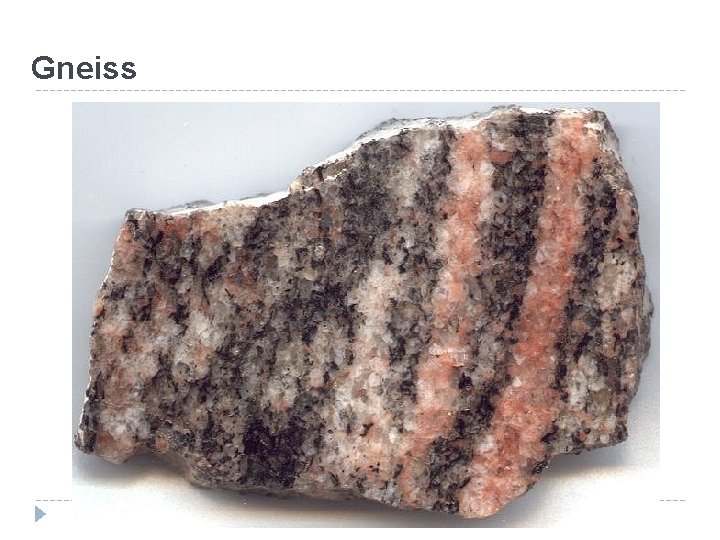
Not all foliated rocks split easily along the bands: � Example: Gneiss � When granite is exposed to heat and pressure, the crystals are flattened to create the foliated texture of gneiss. � Gneiss does not have as much mica as slate and does not split as well.
Gneiss
2. Non. Foliated Rocks � nonfoliated rocks: metamorphic rock that does NOT show bands. � Rocks that are made largely of only one material, such as limestone and sandstone, create metamorphic rocks without bands. � Metamorphic into layers. rocks that are nonfoliated do NOT split
Example: Marble � When limestone is exposed to intense heat and pressure, it forms marble. � Pure marble is white, but some marble contains small amounts of various minerals that may produce colorful streaks and swirls.
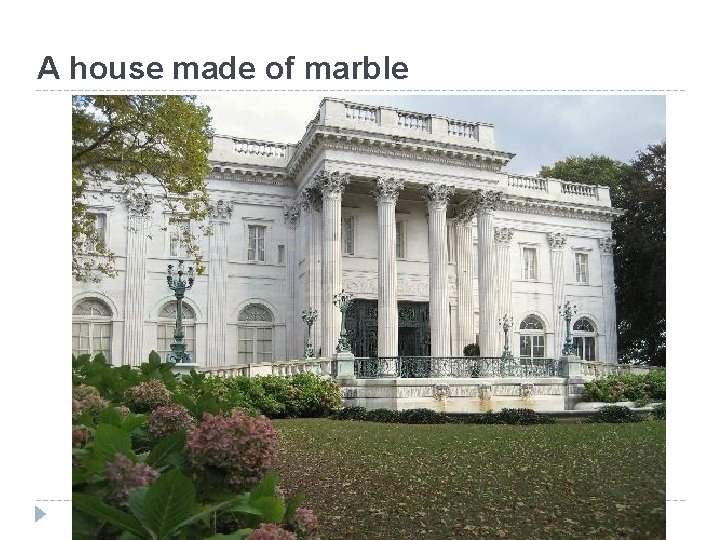
A house made of marble
Video links � http: //video. yahoo. com/watch/1424896/4892779 � http: //video. yahoo. com/watch/1444279