
Chapter 8 Lesson 3 The Solar System Pgs
- Slides: 18
Chapter 8 Lesson 3 The Solar System Pgs. 212 -221
Taking turns and without talking, write down everything you know about the solar system.
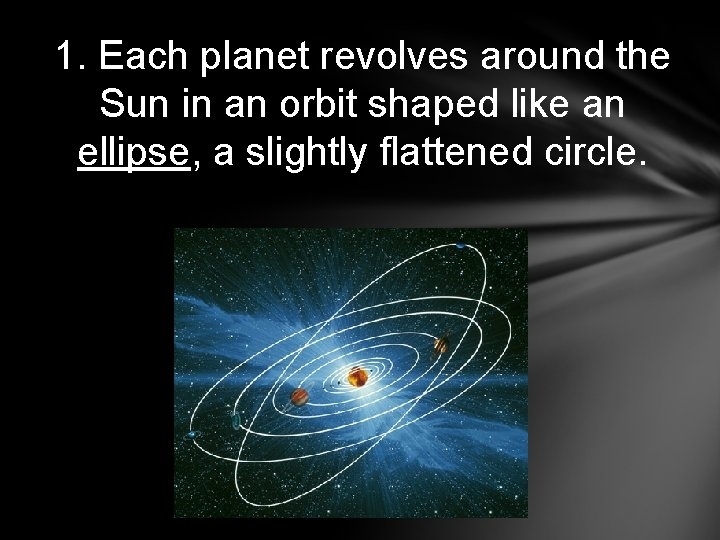
1. Each planet revolves around the Sun in an orbit shaped like an ellipse, a slightly flattened circle.
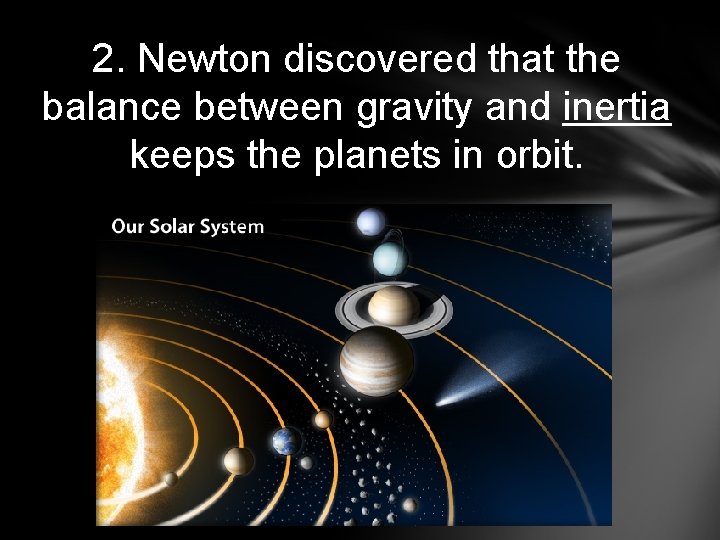
2. Newton discovered that the balance between gravity and inertia keeps the planets in orbit.
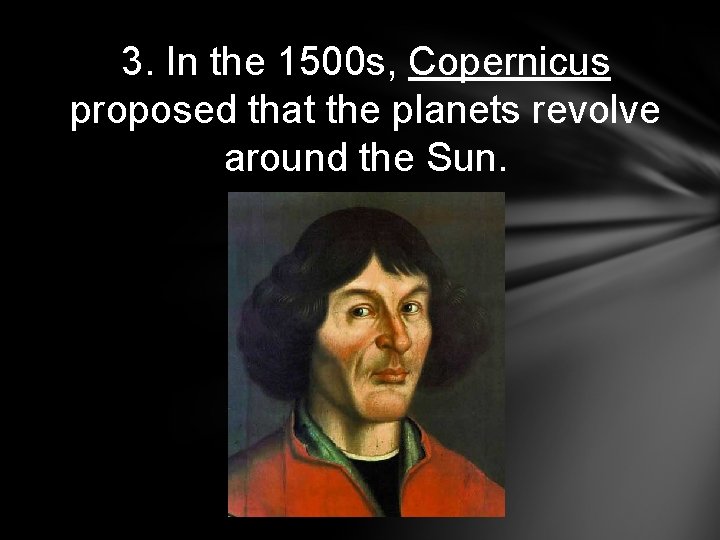
3. In the 1500 s, Copernicus proposed that the planets revolve around the Sun.
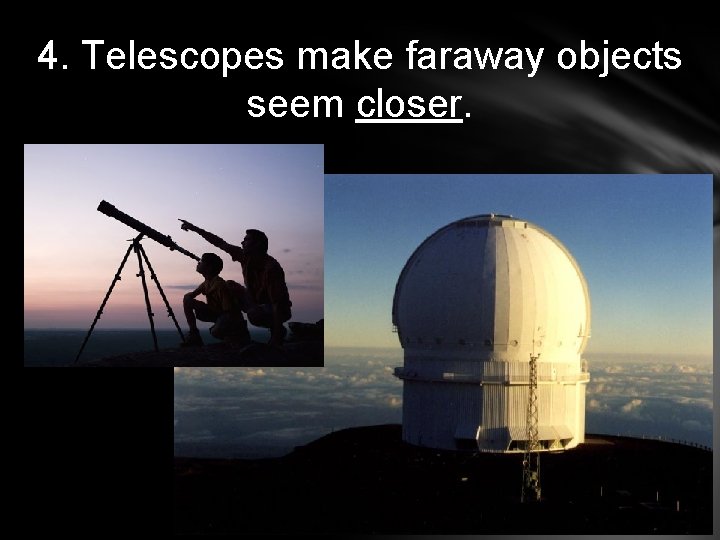
4. Telescopes make faraway objects seem closer.
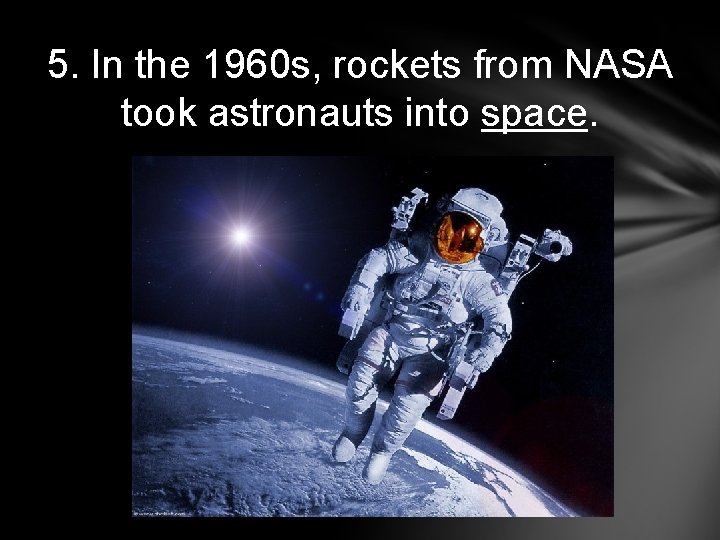
5. In the 1960 s, rockets from NASA took astronauts into space.
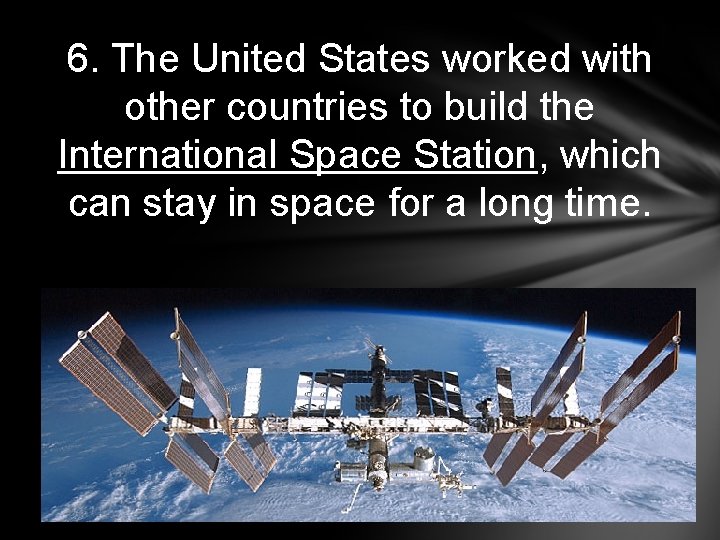
6. The United States worked with other countries to build the International Space Station, which can stay in space for a long time.
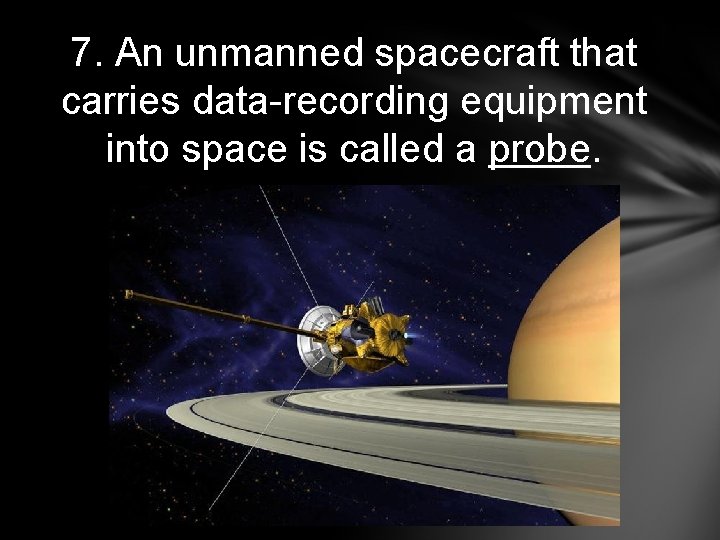
7. An unmanned spacecraft that carries data-recording equipment into space is called a probe.
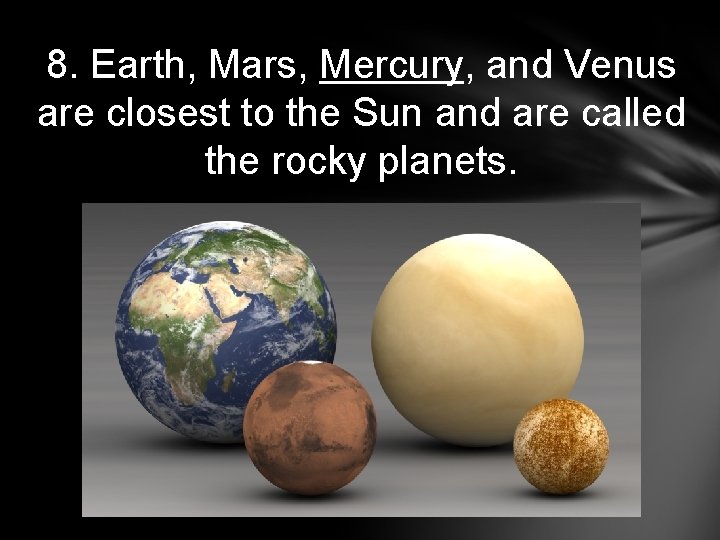
8. Earth, Mars, Mercury, and Venus are closest to the Sun and are called the rocky planets.
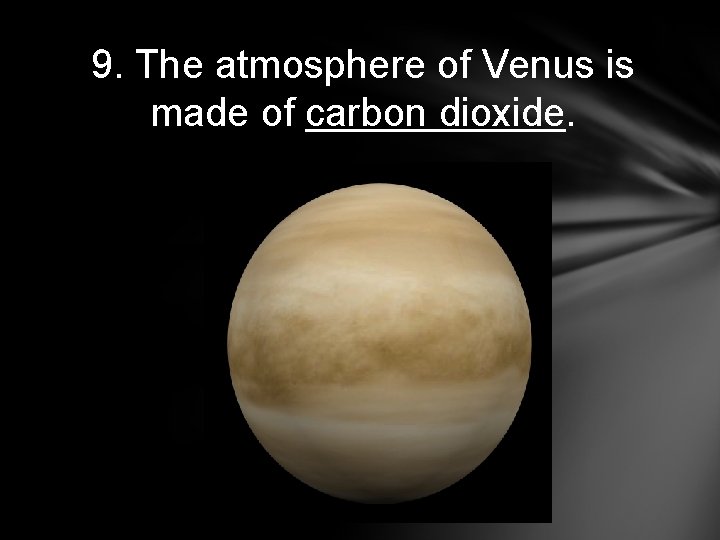
9. The atmosphere of Venus is made of carbon dioxide.
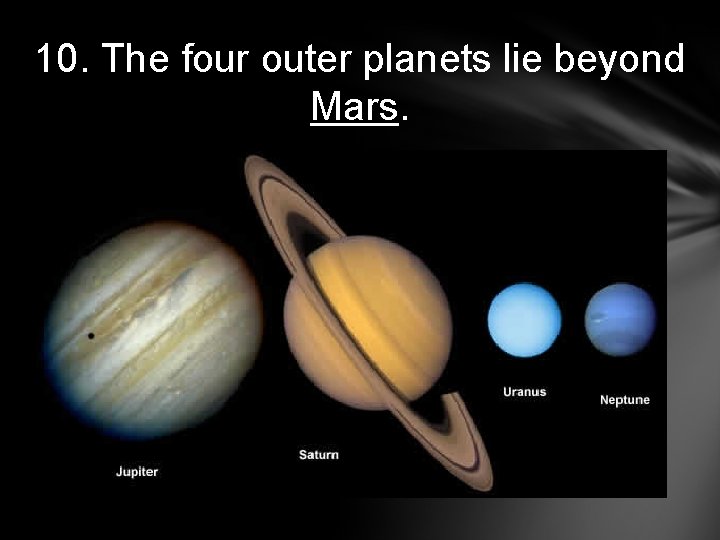
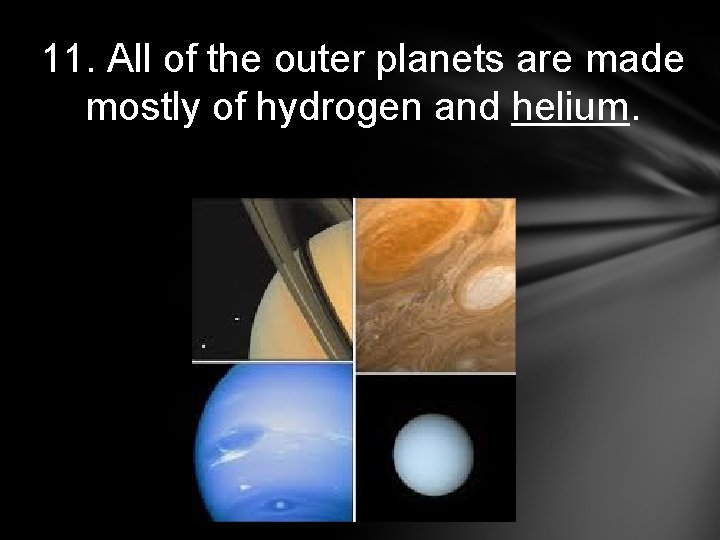
10. The four outer planets lie beyond Mars.
11. All of the outer planets are made mostly of hydrogen and helium.
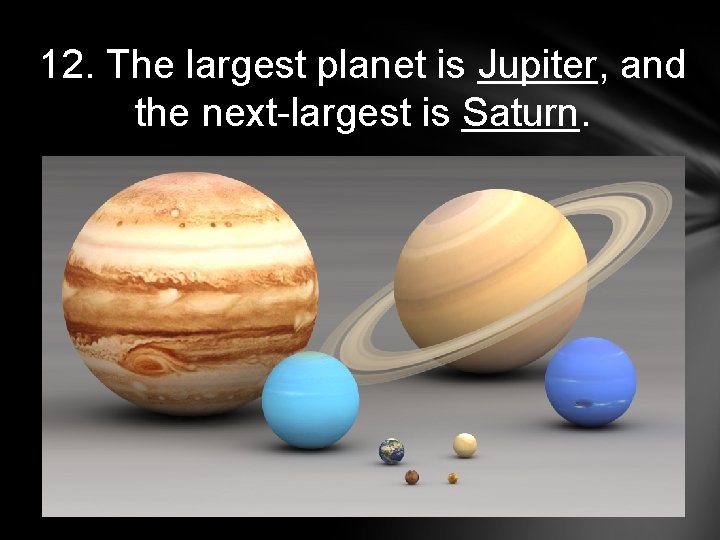
12. The largest planet is Jupiter, and the next-largest is Saturn.
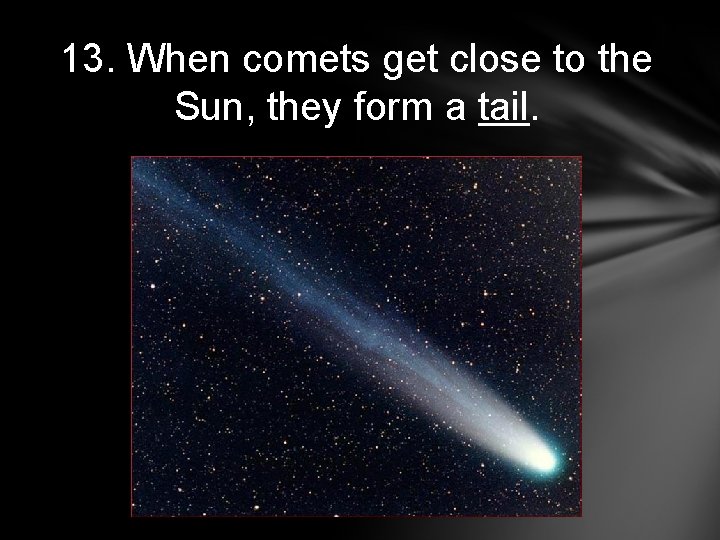
13. When comets get close to the Sun, they form a tail.
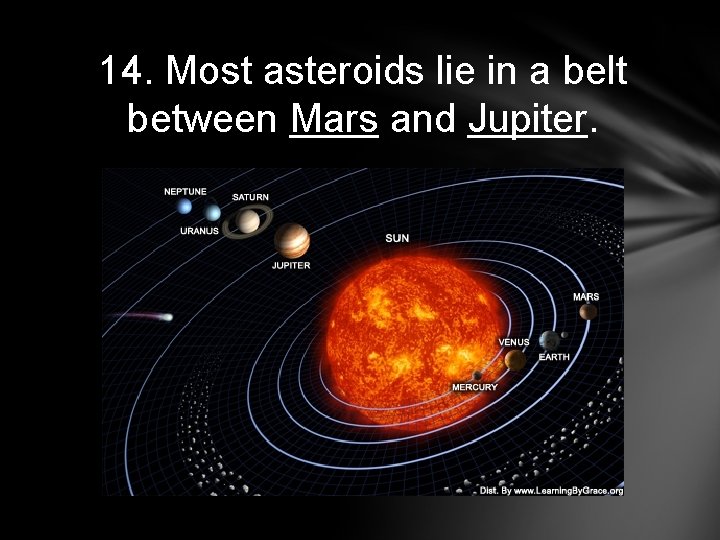
14. Most asteroids lie in a belt between Mars and Jupiter.
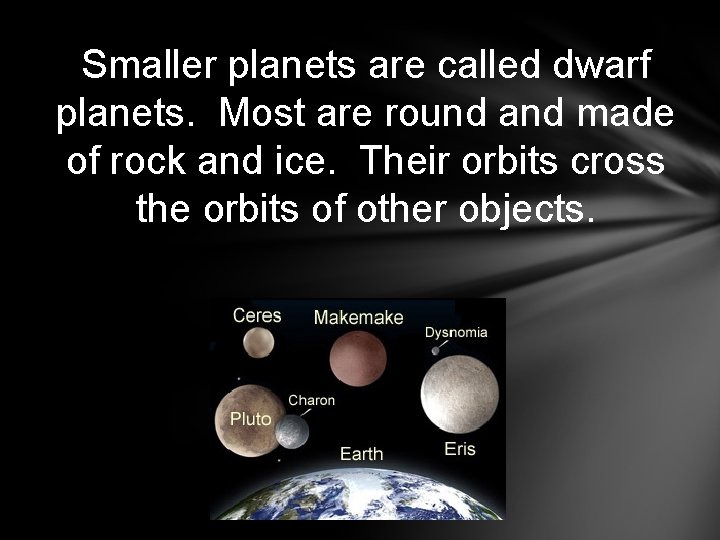
Smaller planets are called dwarf planets. Most are round and made of rock and ice. Their orbits cross the orbits of other objects.
3 -2 -1 On a separate sheet of paper, please complete a 3 -2 -1 on today’s lesson. Please write: 3 - Three things you learned today. 2 - Two more questions you still have. 1 - The most interesting thing about the lesson.