
Chapter 8 Lesson 2 The Respiratory System Teachers
- Slides: 25
Chapter 8 Lesson 2 The Respiratory System Teacher’s notes are available in the notes section of this presentation. Next >>
In this lesson, you will be able to explain why you need oxygen to live. name the parts of the respiratory system. describe the breathing process. identify problems of the respiratory system.
respiratory The organs that supply your blood with oxygen system trachea A passageway in your throat that takes air into and out of your lungs epiglottis A flap of tissues in the back of your mouth that keeps food out of your trachea
bronchi Two passageways that branch from the trachea, one to each lungs Two large organs that exchange oxygen and carbon dioxide diaphragm A large, dome-shaped muscle below the lungs that expands and compresses the lungs, enabling breathing
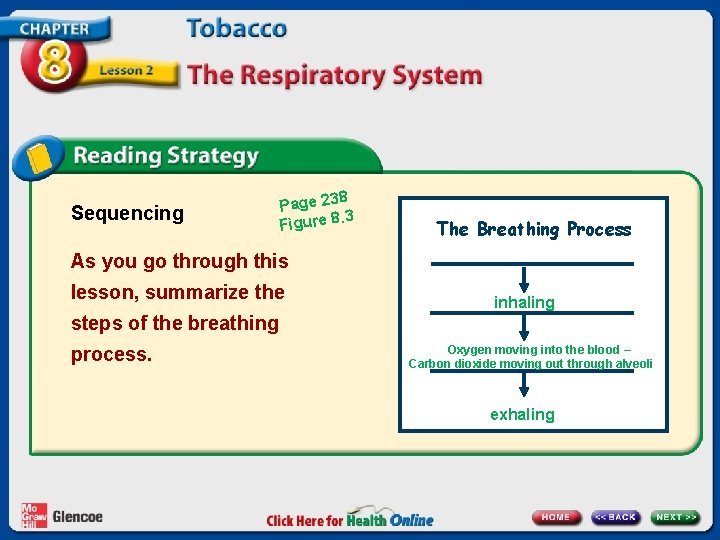
Sequencing 8 Page 23. 3 Figure 8 The Breathing Process As you go through this lesson, summarize the inhaling steps of the breathing process. Oxygen moving into the blood – Carbon dioxide moving out through alveoli exhaling
You Need Oxygen to Live Your respiratory system ensures that your body gets the oxygen it needs. Oxygen gets into the body by breathing in respiratory system The organs that supply your blood with oxygen Body cells use oxygen to make energy from food.
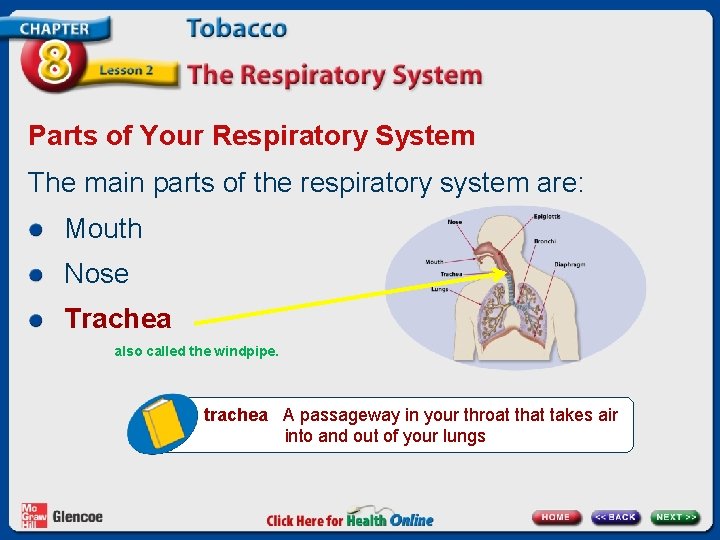
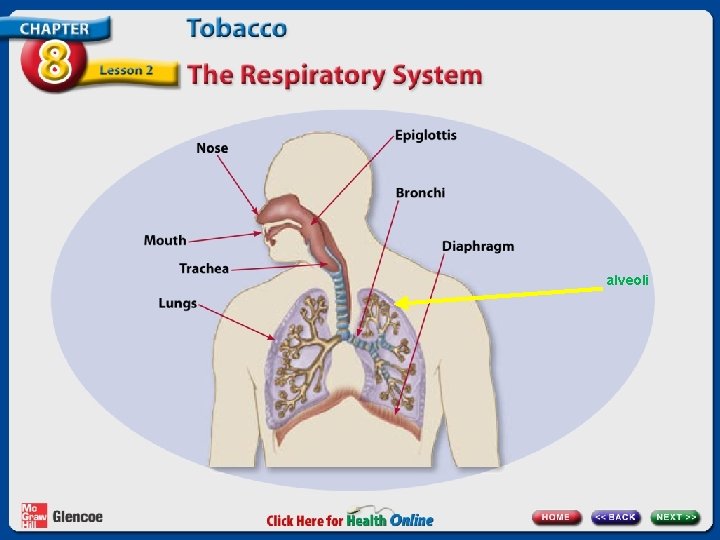
Parts of Your Respiratory System The main parts of the respiratory system are: Mouth Nose Trachea also called the windpipe. trachea A passageway in your throat that takes air into and out of your lungs
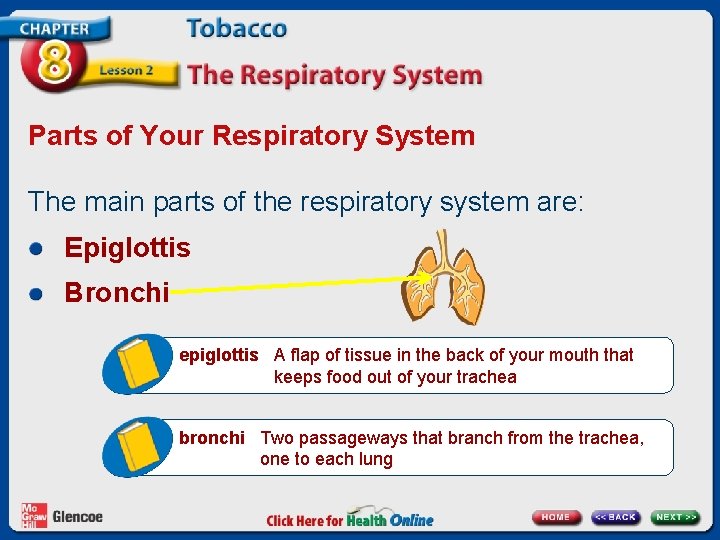
Parts of Your Respiratory System The main parts of the respiratory system are: Epiglottis Bronchi epiglottis A flap of tissue in the back of your mouth that keeps food out of your trachea bronchi Two passageways that branch from the trachea, one to each lung
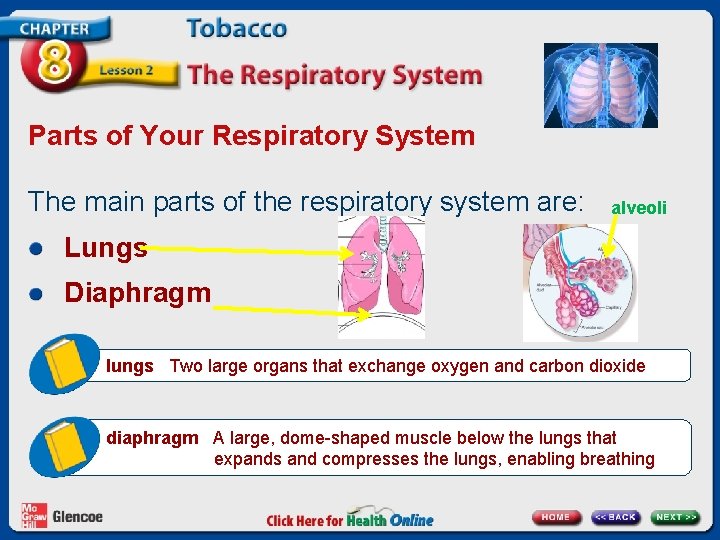
Parts of Your Respiratory System The main parts of the respiratory system are: alveoli Lungs Diaphragm lungs Two large organs that exchange oxygen and carbon dioxide diaphragm A large, dome-shaped muscle below the lungs that expands and compresses the lungs, enabling breathing
alveoli
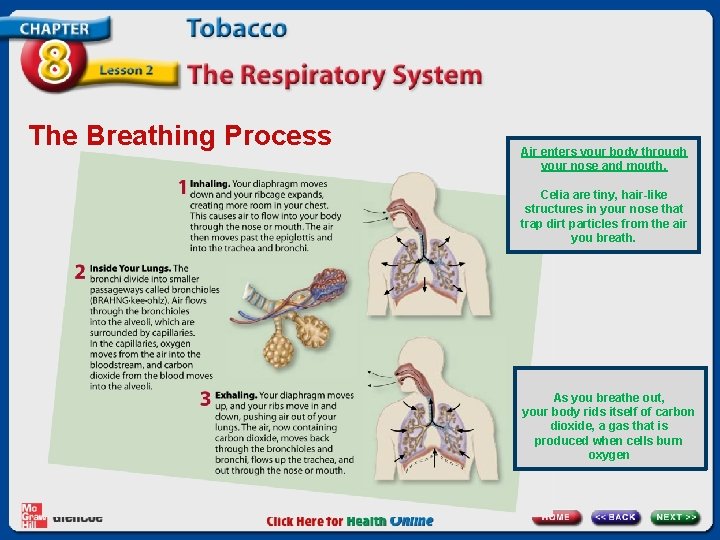
The Breathing Process Air enters your body through your nose and mouth. Celia are tiny, hair-like structures in your nose that trap dirt particles from the air you breath. As you breathe out, your body rids itself of carbon dioxide, a gas that is produced when cells burn oxygen
Problems of the Respiratory System Tobacco smoke, chemicals, germs, and air pollution are all harmful to your health because they can damage the many parts of the respiratory system.
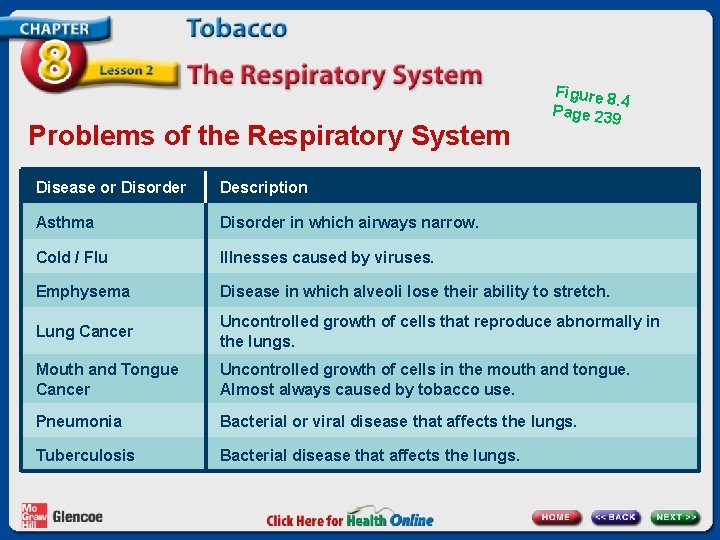
Problems of the Respiratory System Figure 8. 4 Page 23 9 Disease or Disorder Description Asthma Disorder in which airways narrow. Cold / Flu Illnesses caused by viruses. Emphysema Disease in which alveoli lose their ability to stretch. Lung Cancer Uncontrolled growth of cells that reproduce abnormally in the lungs. Mouth and Tongue Cancer Uncontrolled growth of cells in the mouth and tongue. Almost always caused by tobacco use. Pneumonia Bacterial or viral disease that affects the lungs. Tuberculosis Bacterial disease that affects the lungs.
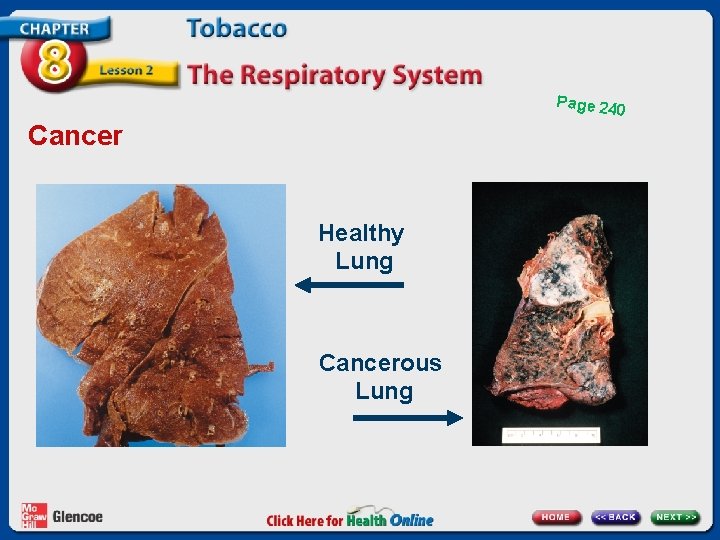
Page 24 0 Cancer Healthy Lung Cancerous Lung
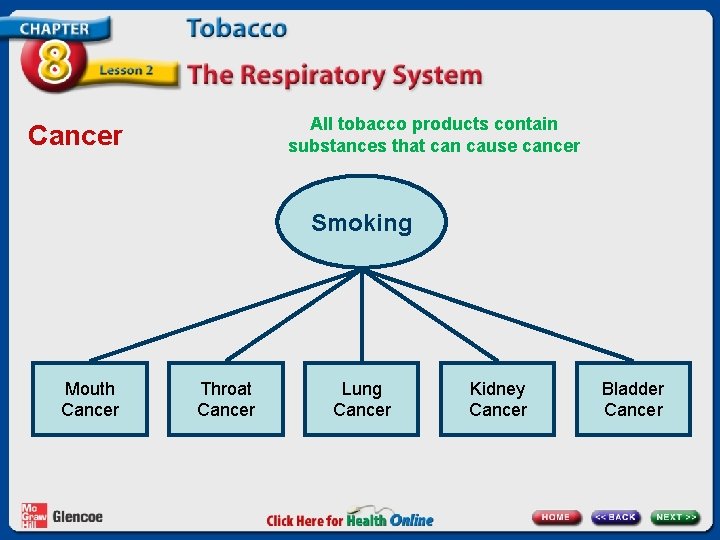
All tobacco products contain substances that can cause cancer Cancer Smoking Mouth Cancer Throat Cancer Lung Cancer Kidney Cancer Bladder Cancer
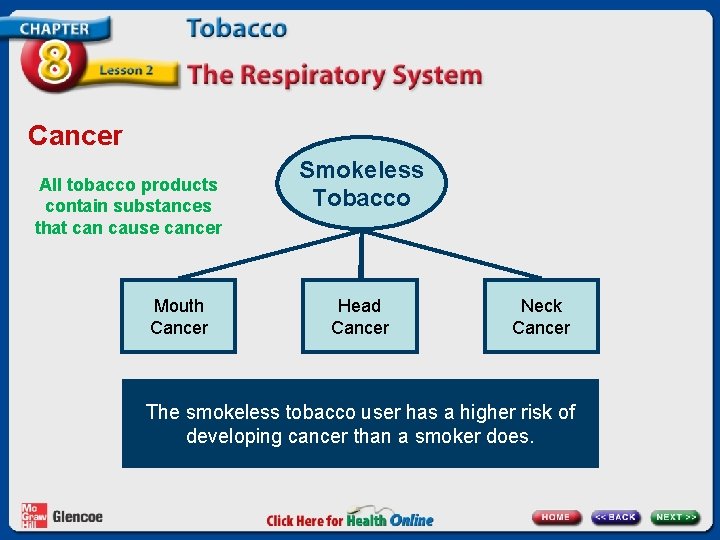
Cancer All tobacco products contain substances that can cause cancer Mouth Cancer Smokeless Tobacco Head Cancer Neck Cancer The smokeless tobacco user has a higher risk of developing cancer than a smoker does.
Tips for Taking Care of Your Respiratory System Avoid tobacco use. Stay away from people who smoke. Don’t go places where the air is smoky. Take care of your body when you have a cold, the flu, or any respiratory illness. Drink plenty of fluids. Take deep, full breaths. Eat a healthful diet. Get outside and breathe fresh air. Pay attention to any allergy alerts, ozone alerts, and pollution alerts in your area. Be physically active on a regular basis.
Lesson 2 Review What I Learned Vocabulary Define trachea. The trachea is a passageway in the throat that takes air into and out of the lungs.
Lesson 2 Review What I Learned Explain Why do you need oxygen to live? Your body needs oxygen to work properly. Your cells use oxygen to make energy from the food you eat. You use energy for activity.
Lesson 2 Review What I Learned Identify Name the different parts of the respiratory system. The respiratory system includes the mouth, nose, trachea, lungs, and diaphragm.
Lesson 2 Review What I Learned List Name four respiratory illnesses. Students should name four of the diseases or disorders listed in Figure 8. 4. Sample answer: asthma, cold/flu, emphysema, lung cancer
Lesson 2 Review Thinking Critically Describe How might quitting smokeless tobacco use affect the health of the mouth? Quitting the use of smokeless tobacco reduces the risk of developing mouth cancer.
Lesson 2 Review Thinking Critically Analyze Why is it important to take care of your respiratory system when you have a cold or flu? Your body depends on the health of your respiratory system.
How do the respiratory and circulatory systems work together to keep the body functioning properly? The respiratory system provides oxygen to the blood. The circulatory system transports the oxygen to the body’s cells and transports the waste, carbon dioxide back to the lungs. The respiratory system gets rid of the carbon dioxide.
End of Chapter 8 Tobacco Lesson 2 The Respiratory System Click for: >> Main Menu >> Chapter 8 Assessment