
Chapter 8 Kinship and Marriage Objectives l l
Chapter 8: Kinship and Marriage Objectives: l l Articulate the importance of kinship and marriage in social organization Compare and contrast the various descent systems Understand anthropological approaches to the study of marriage Describe the variety of family systems present in the Bible
Kinship Definition Examples: The ways in which people selectively interpret the common human experiences of reproduction and nurturance ¡ ¡ Who can marry whom? To whom do children belong? Where should husbands/wives/ children/others live? Who is in my family?
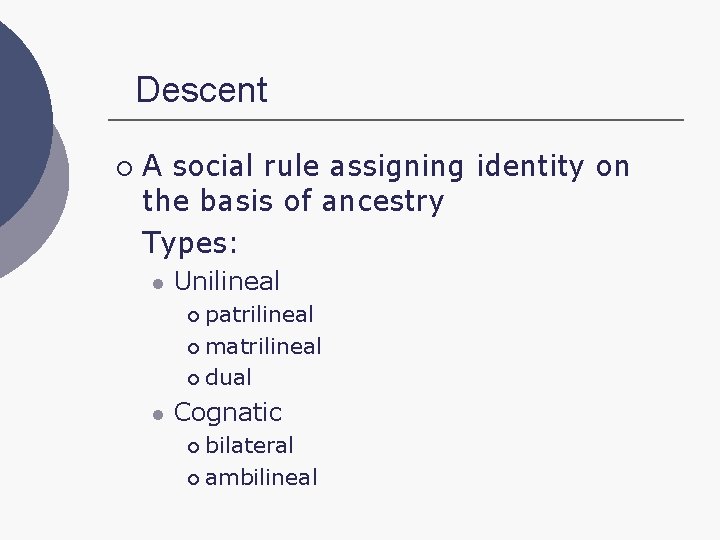
Descent ¡ A social rule assigning identity on the basis of ancestry Types: l Unilineal patrilineal ¡ matrilineal ¡ dual ¡ l Cognatic bilateral ¡ ambilineal ¡
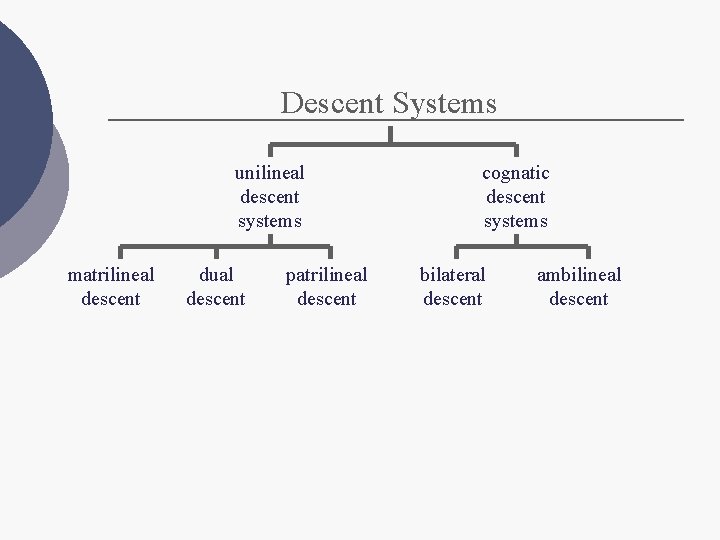
Descent Systems unilineal descent systems matrilineal descent dual descent patrilineal descent cognatic descent systems bilateral descent ambilineal descent
Unilineal Descent Patrilineal Descent traced through the male line ¡ ¡ ¡ typically marks distinction of lines in kinship terminology example of patrilineality: ancient Israel not equated with patriarchy
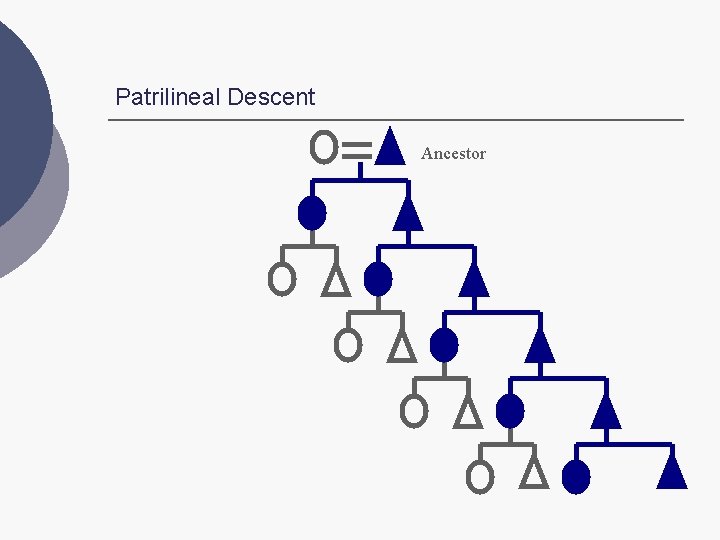
Patrilineal Descent Ancestor
Unilineal Descent Matrilineal Descent traced through the female line ¡ ¡ ¡ not equated with matriarchy authority may remain with male family member (e. g. , mother’s brother) inheritance, marital residence, other social expectations generally fall to women
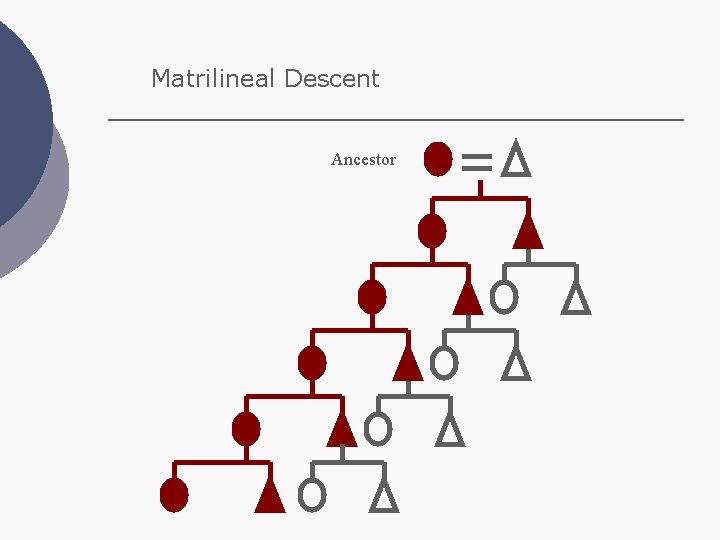
Matrilineal Descent Ancestor
Unilineal Descent Dual Descent Two lines of descent serve different purposes ¡ ¡ least common system of unilineal descent two lines of descent may govern various sorts of inheritance, alliance, and so on
Cognatic Descent Bilateral ¡ ¡ Children seen as related to both parents equally Kinship terms may differentiate by generation, gender, and relative age, but do not tend to distinguish between mother’s and father’s kin Ambilineal ¡ ¡ Individuals choose a lineage upon reaching adulthood (e. g. , marriage) Children seen as equally related to both lineages, though one is eventually chosen as primary
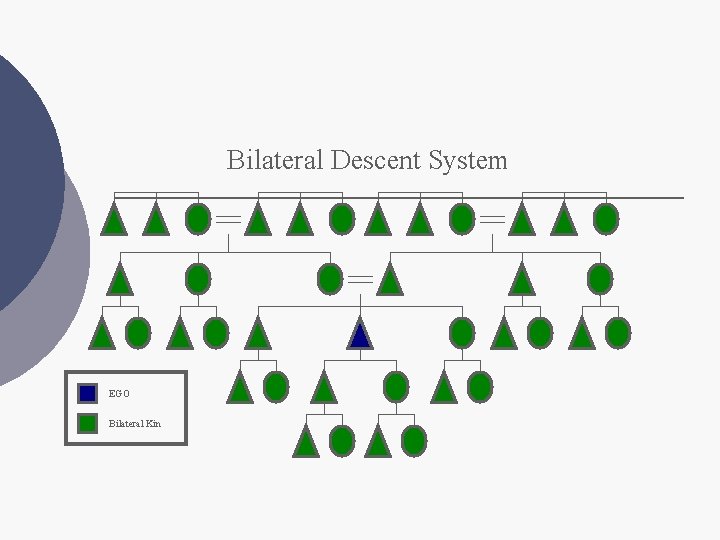
Bilateral Descent System EGO Bilateral Kin
Functions of Descent Systems ¡ Inheritance l ¡ Distribution of territory l ¡ ¡ Example: Jacob’s twelve sons and the distribution of the clans (or segments) in the book of Joshua Regulation of social conflict Land ownership Political representation Ritual observance l ¡ Example: Jacob and Esau and the rule of primogeniture (Genesis 27: 1– 28: 9) Example: Levites described in Num. 3– 4 Cognatic systems generally serve fewer functions in society than unilineal systems
Marriage Definition: A publicly recognized social or legal union that creates a socially sanctioned context for sexual intimacy, establishes (in whole or in part) the parentage of children, and creates kinship. ¡ ¡ ¡ produces affinal kin through marriage produces consanguinial kin through birth universal existence of incest taboos (incest is defined differently in different societies)
Cousin Marriage ¡ Cross or parallel cousin marriage may be the preferred form of marriage l l Keeps families together, including inheritance and land Preexisting trust and knowledge makes a good match easier
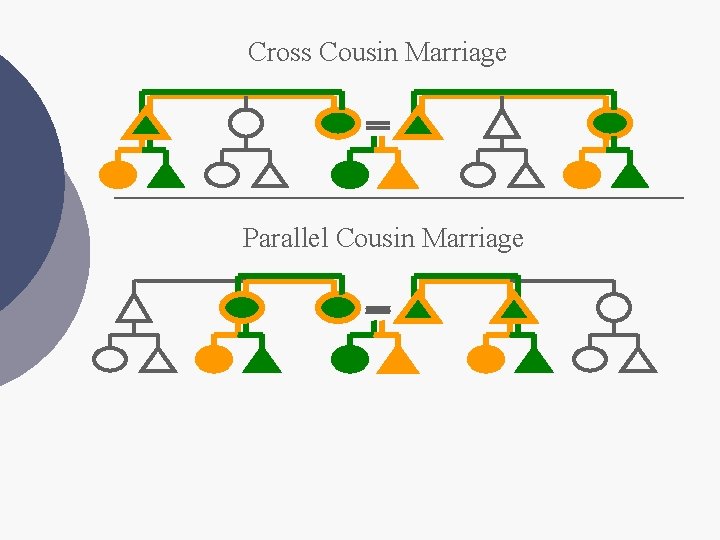
Cross Cousin Marriage Parallel Cousin Marriage
Marriage and Economic Exchange Bridewealth/service ¡ Involves exchange of goods or services from family of groom to family of bride l l Symbolizes loss of bride’s labor, companionship, and affection by natal family Creates bonds of indebtedness between families ¡ Example: Jacob’s brideservice for his marriages to Leah and Rachel Dowry ¡ ¡ Exchange of goods from bride’s family to groom’s family or to the bride as a gift to bring into the marriage Reflects the ideal of the groom’s family taking on the financial responsibility to support the bride
Plural Marriage/Polygamy Polygyny ¡ ¡ ¡ Union of one man to two or more women in marriage Provides for larger households, more labor, and larger lineages Can serve to create multiple alliances Polyandry ¡ ¡ ¡ Union of one woman to two or more men in marriage More rare Typically involves brothers marrying one woman
Family in the Bible ¡ Multiple family forms depicted in Scripture l l ¡ polygyny cousin marriage adoptive fictive kin Emphasis on kinship behavior rather than on kinship systems and rules
- Slides: 18