
Chapter 8 Jovian Planet Systems Worlds A Different
- Slides: 31
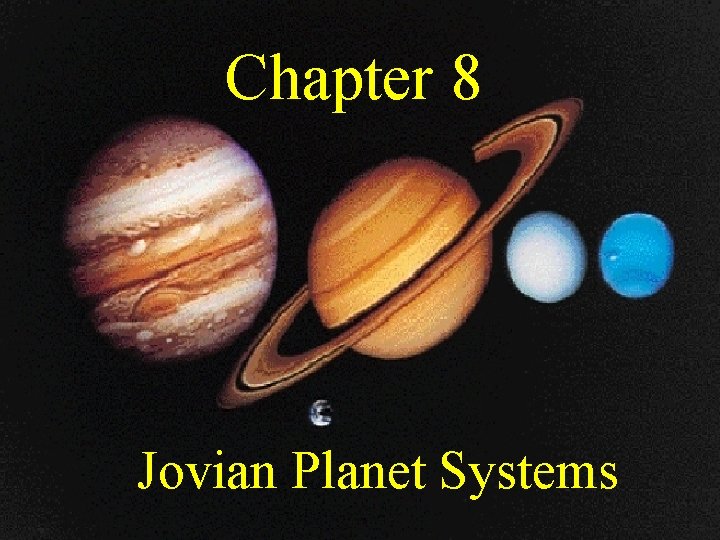
Chapter 8 Jovian Planet Systems
Worlds: A Different • The. Jovian Overall composition Kind of Planet of the Jovian planetsparticulary Jupiter and Saturn-is more similar to that of the Sun than to any of the terrestrial worlds.
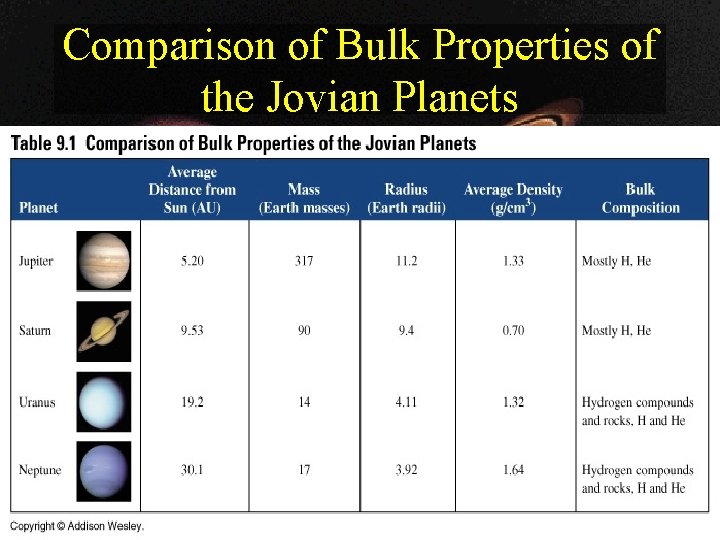
Comparison of Bulk Properties of the Jovian Planets
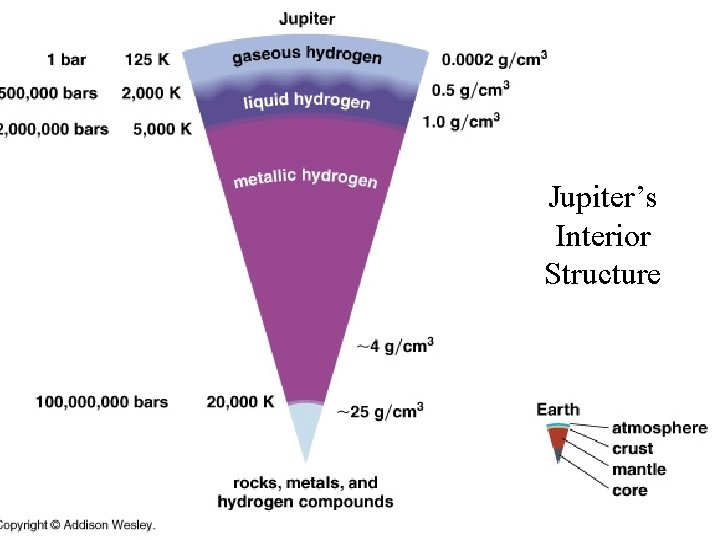
Jupiter’s Interior Structure
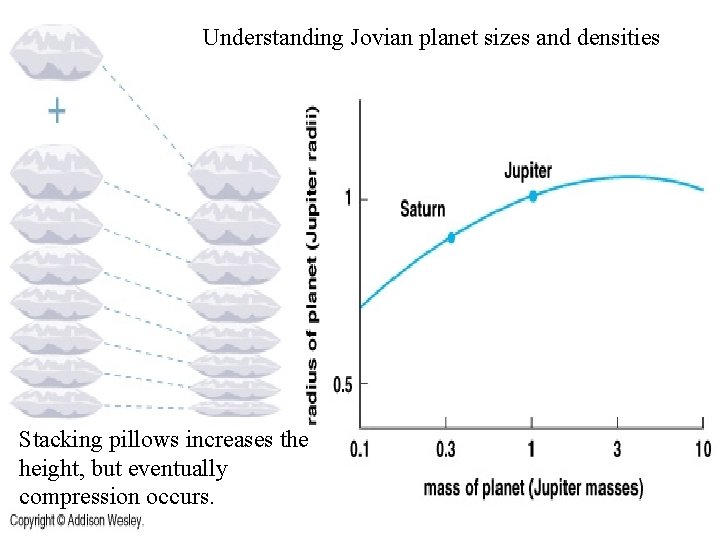
Understanding Jovian planet sizes and densities Stacking pillows increases the height, but eventually compression occurs.
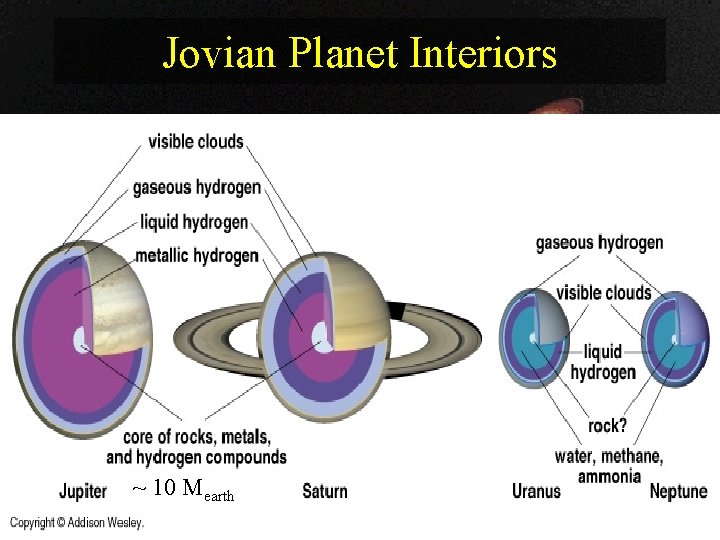
Jovian Planet Interiors ~ 10 Mearth
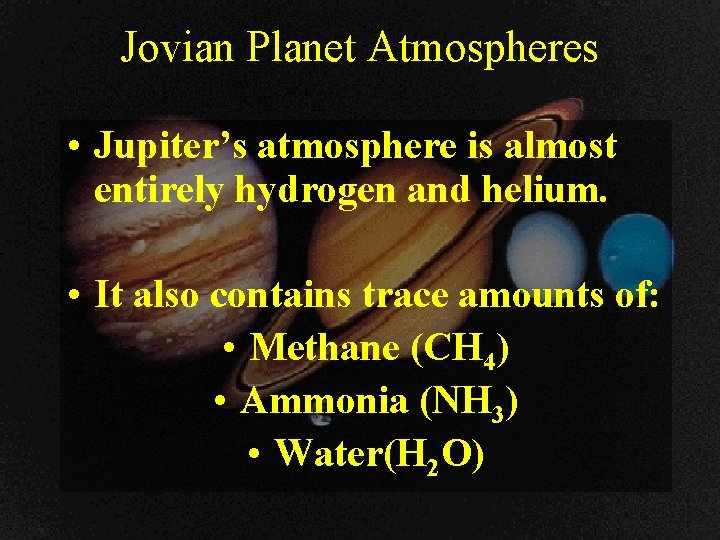
Jovian Planet Atmospheres • Jupiter’s atmosphere is almost entirely hydrogen and helium. • It also contains trace amounts of: • Methane (CH 4) • Ammonia (NH 3) • Water(H 2 O)
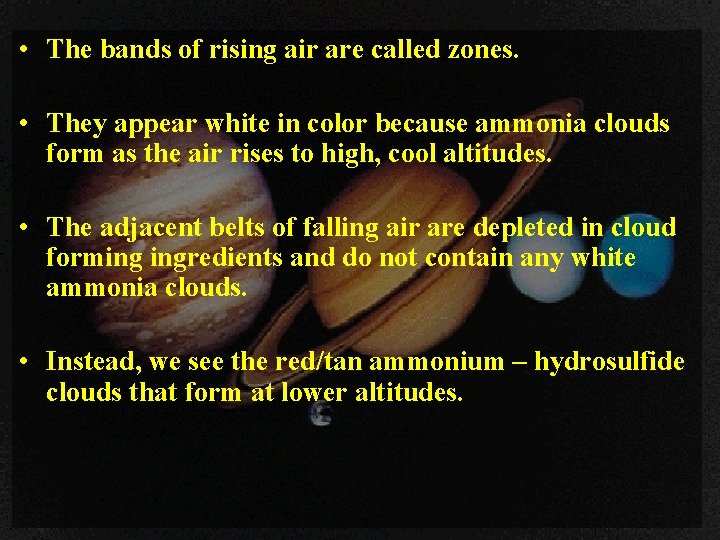
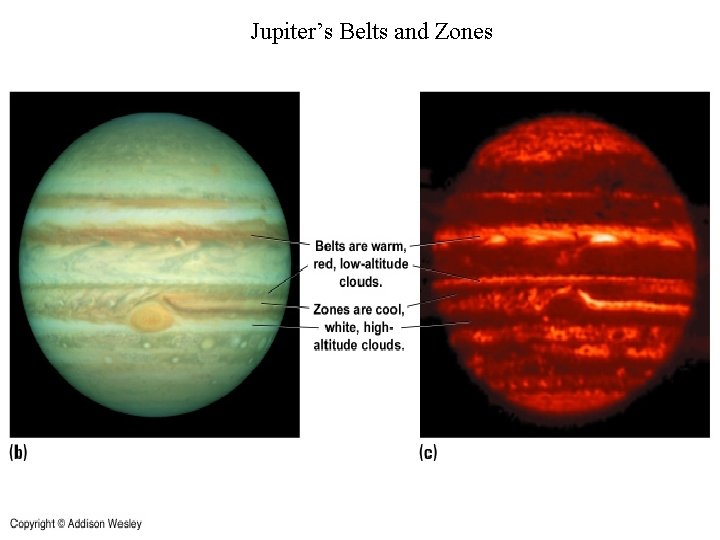
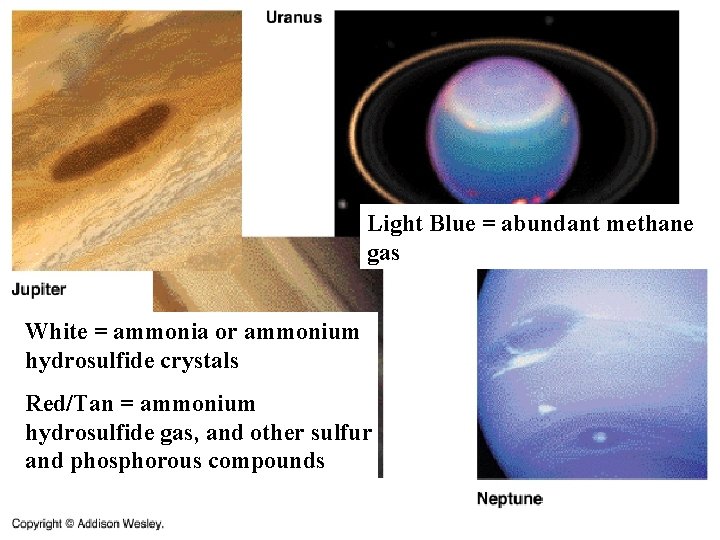
• The bands of rising air are called zones. • They appear white in color because ammonia clouds form as the air rises to high, cool altitudes. • The adjacent belts of falling air are depleted in cloud forming ingredients and do not contain any white ammonia clouds. • Instead, we see the red/tan ammonium – hydrosulfide clouds that form at lower altitudes.
Jupiter’s Belts and Zones
Light Blue = abundant methane gas White = ammonia or ammonium hydrosulfide crystals Red/Tan = ammonium hydrosulfide gas, and other sulfur and phosphorous compounds
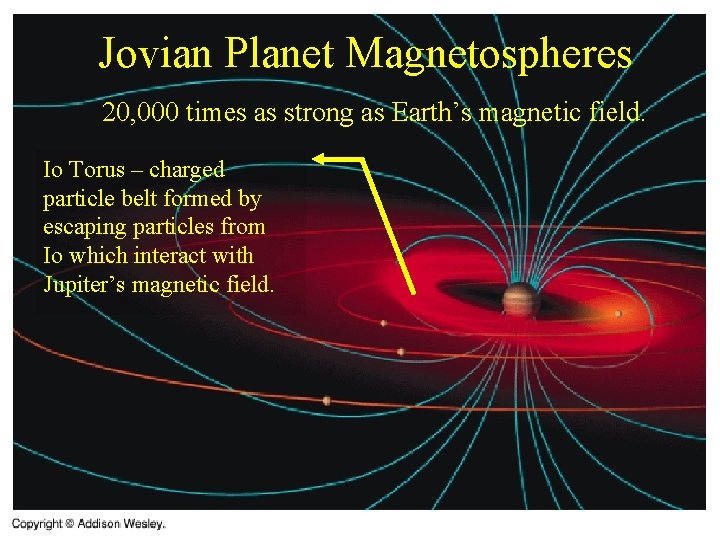
Jovian Planet Magnetospheres 20, 000 times as strong as Earth’s magnetic field. Io Torus – charged particle belt formed by escaping particles from Io which interact with Jupiter’s magnetic field.
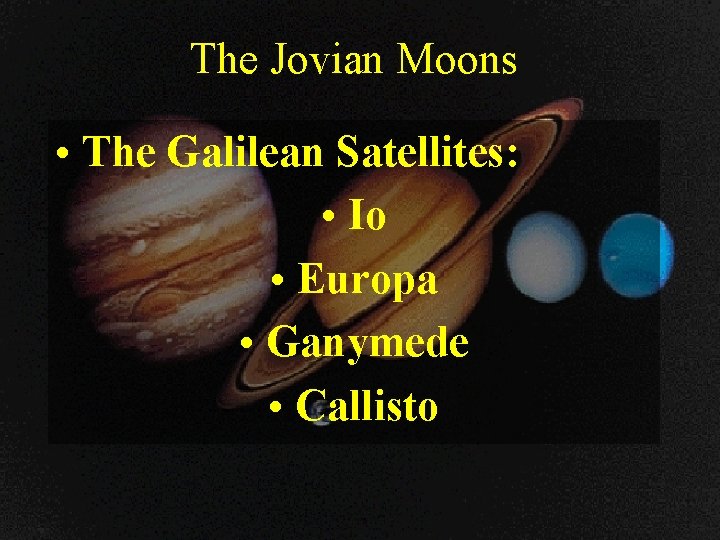
The Jovian Moons • The Galilean Satellites: • Io • Europa • Ganymede • Callisto
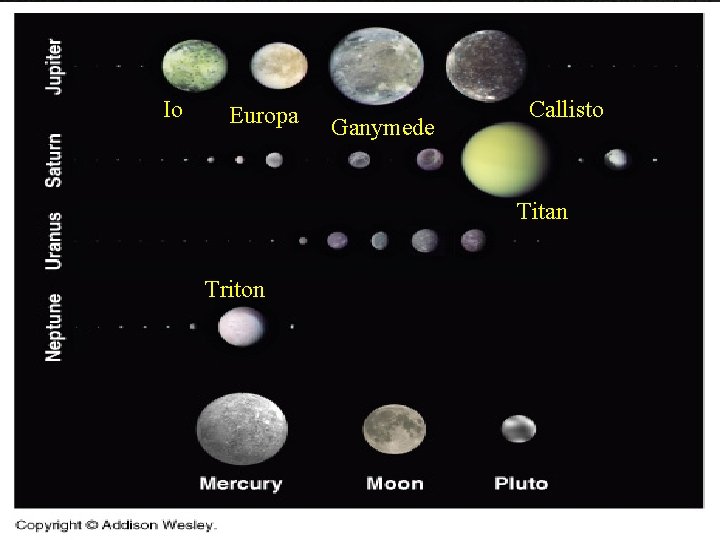
Io Europa Ganymede Callisto Titan Triton
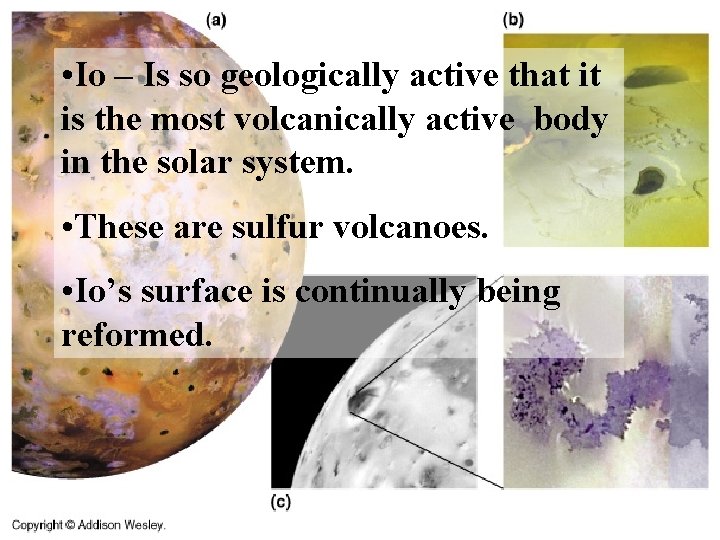
• Io – Is so geologically active that it is the most volcanically active body in the solar system. • These are sulfur volcanoes. • Io’s surface is continually being reformed.
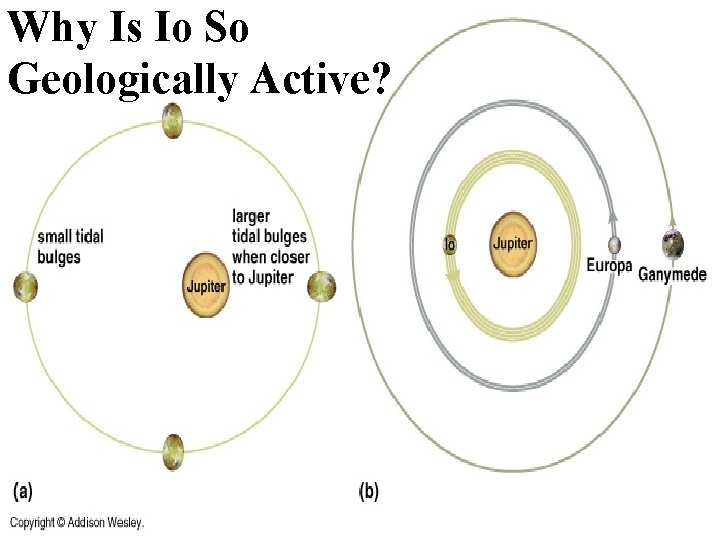
Why Is Io So Geologically Active?
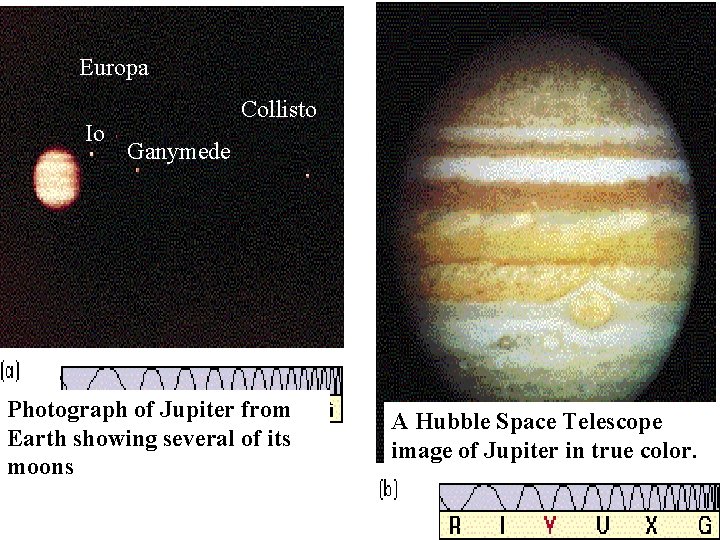
Europa Io Collisto Ganymede Photograph of Jupiter from Earth showing several of its moons A Hubble Space Telescope image of Jupiter in true color.
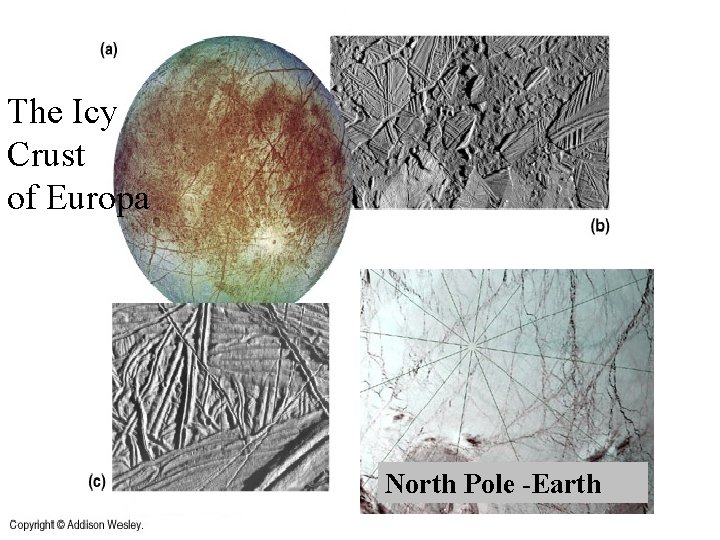
The Icy Crust of Europa North Pole -Earth
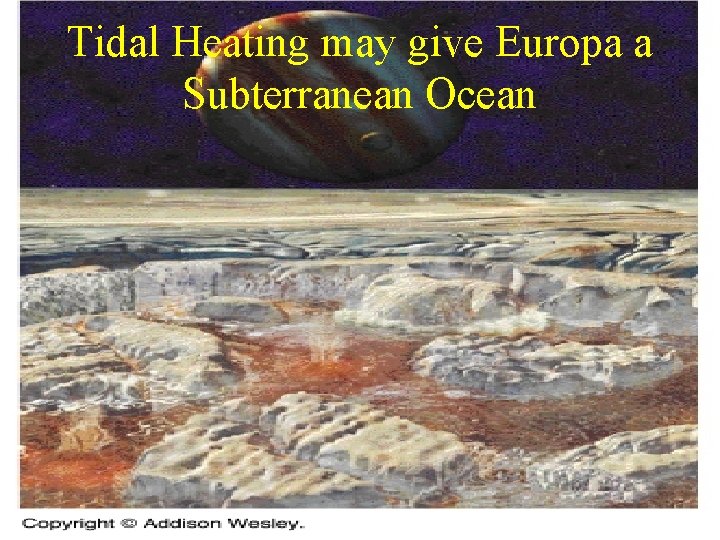
Tidal Heating may give Europa a Subterranean Ocean
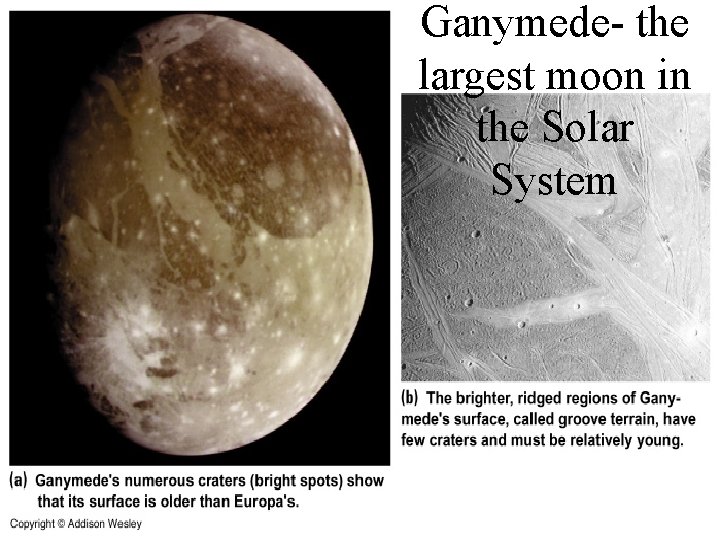
Ganymede- the largest moon in the Solar System
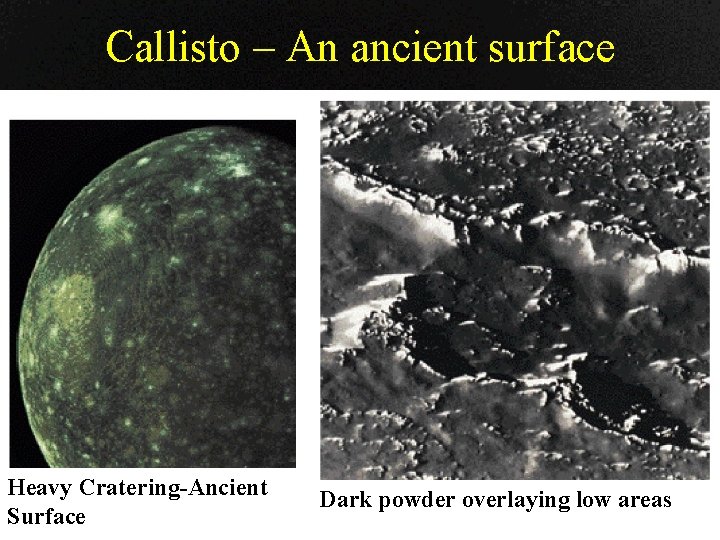
Callisto – An ancient surface Heavy Cratering-Ancient Surface Dark powder overlaying low areas
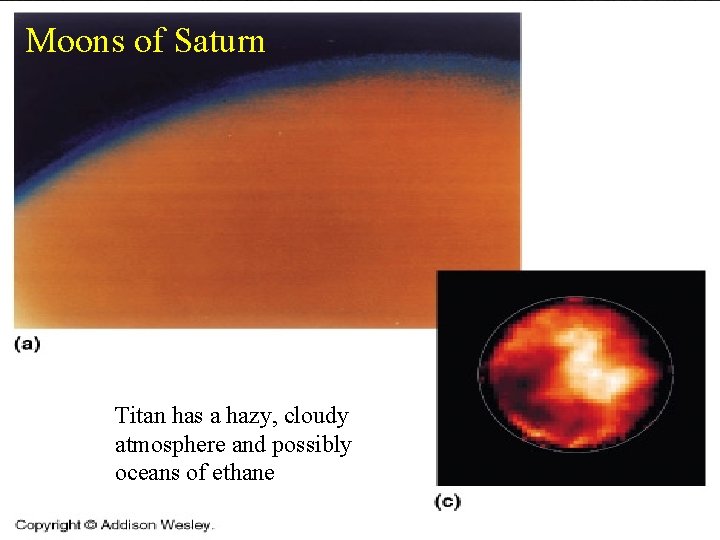
Moons of Saturn Titan has a hazy, cloudy atmosphere and possibly oceans of ethane
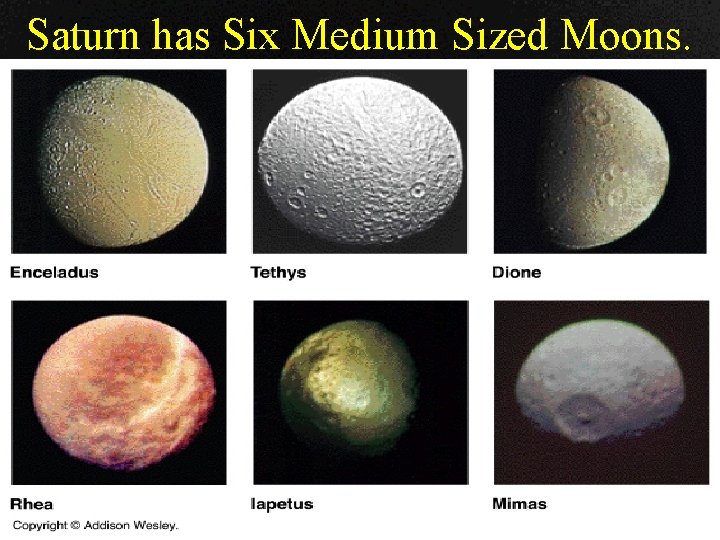
Saturn has Six Medium Sized Moons.
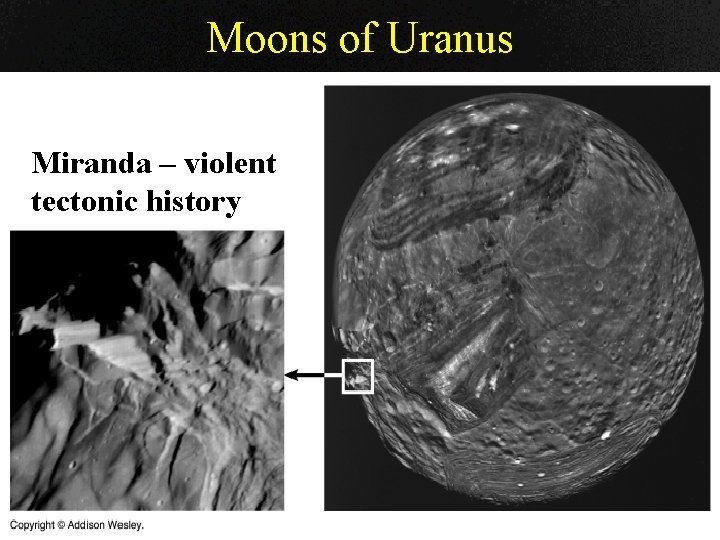
Moons of Uranus Miranda – violent tectonic history
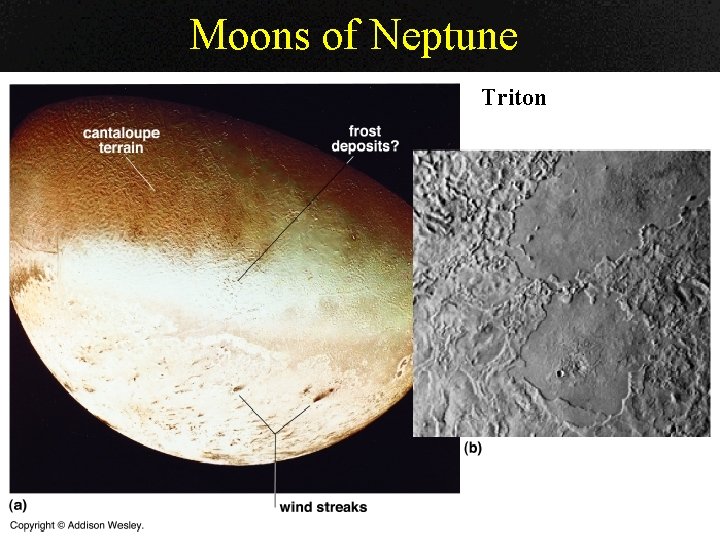
Moons of Neptune Triton
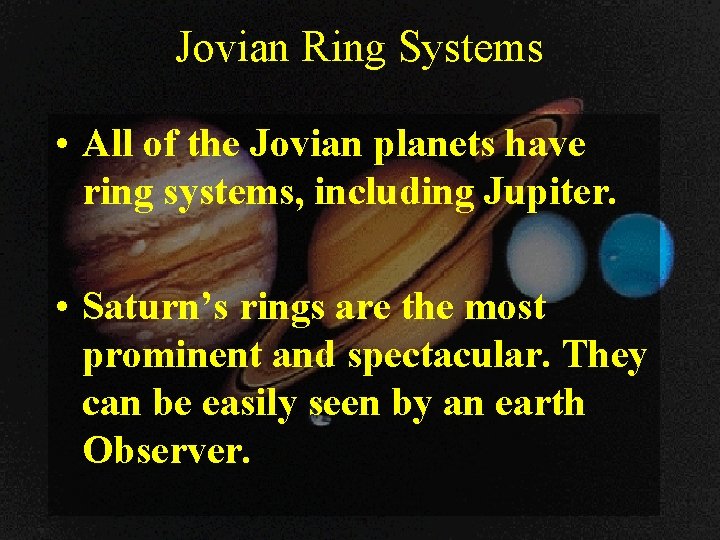
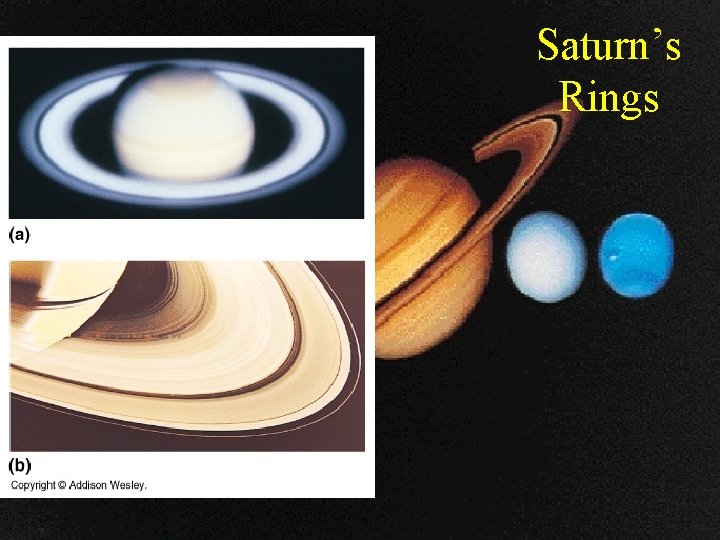
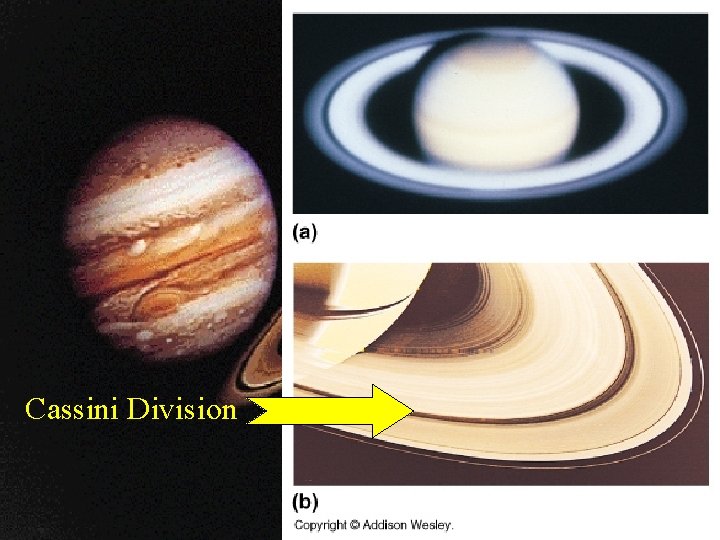
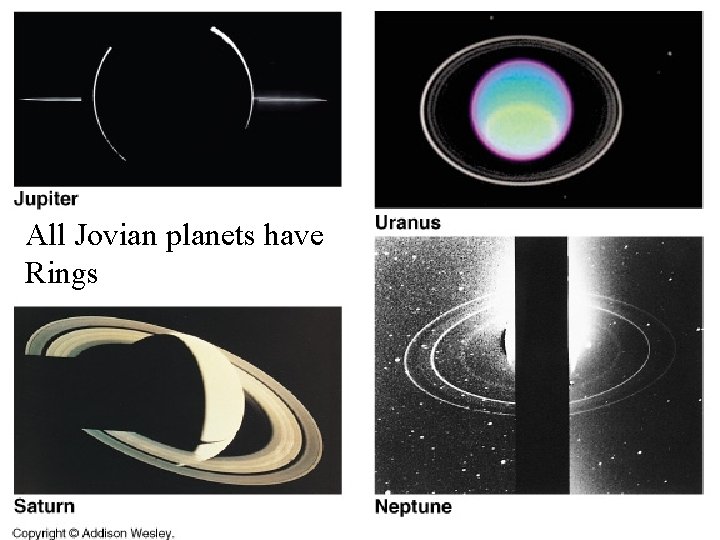
Jovian Ring Systems • All of the Jovian planets have ring systems, including Jupiter. • Saturn’s rings are the most prominent and spectacular. They can be easily seen by an earth Observer.
Saturn’s Rings
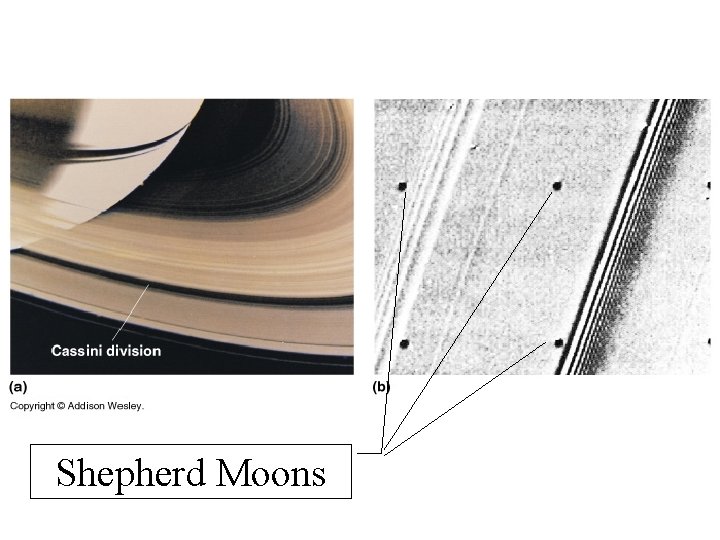
Shepherd Moons
Cassini Division
All Jovian planets have Rings
The End