
Chapter 8 Joints Synovial Joints Objectives 1 Know
Chapter 8: Joints Synovial Joints Objectives: 1) Know structures of a synovial joint 2) Know the types of synovial joints Reminders: HW due today Quiz Monday
Quiz • What are the 3 funtional classifications of joints? • List where you would find the following: – Gomphoses – Syndesmosis – Synostosis
Quiz • What are the 3 funtional classifications of joints? Synarthrosis Amphiarthrosis Diarthrosis • List where you would find the following: – Gomphoses: Teeth to maxilla or mandible – Syndesmosis: Tibia to Fibula – Synostosis: Epiphyseal Lines of Long Bones
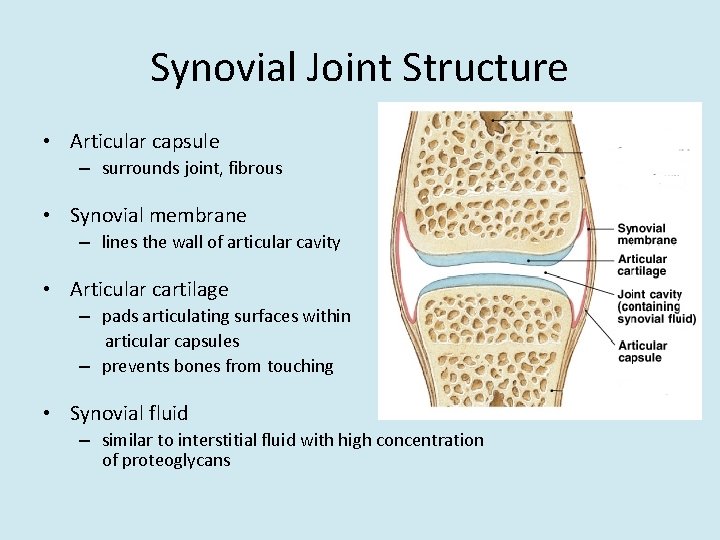
Synovial Joint Structure • Articular capsule – surrounds joint, fibrous • Synovial membrane – lines the wall of articular cavity • Articular cartilage – pads articulating surfaces within articular capsules – prevents bones from touching • Synovial fluid – similar to interstitial fluid with high concentration of proteoglycans
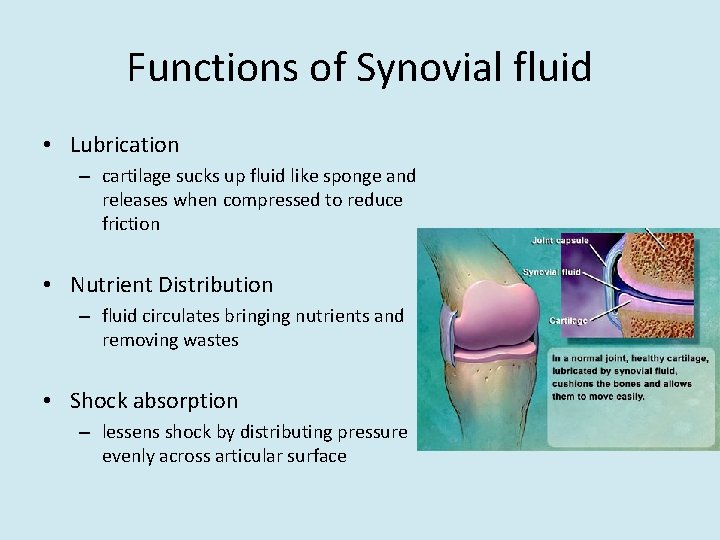
Functions of Synovial fluid • Lubrication – cartilage sucks up fluid like sponge and releases when compressed to reduce friction • Nutrient Distribution – fluid circulates bringing nutrients and removing wastes • Shock absorption – lessens shock by distributing pressure evenly across articular surface
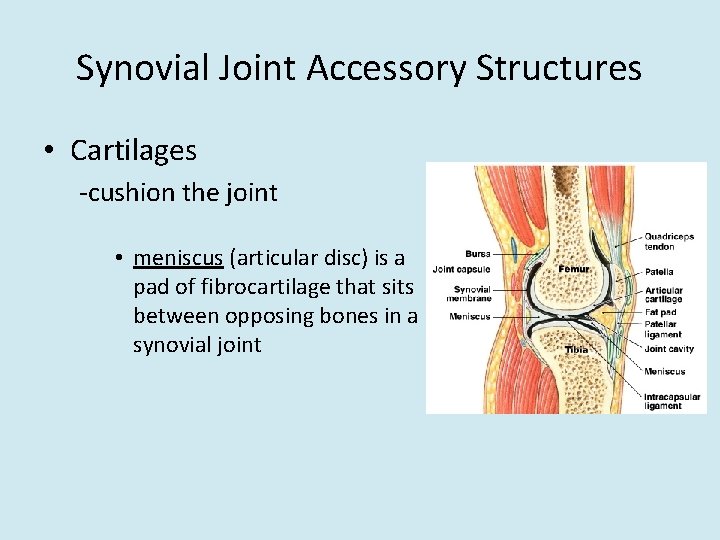
Synovial Joint Accessory Structures • Cartilages -cushion the joint • meniscus (articular disc) is a pad of fibrocartilage that sits between opposing bones in a synovial joint
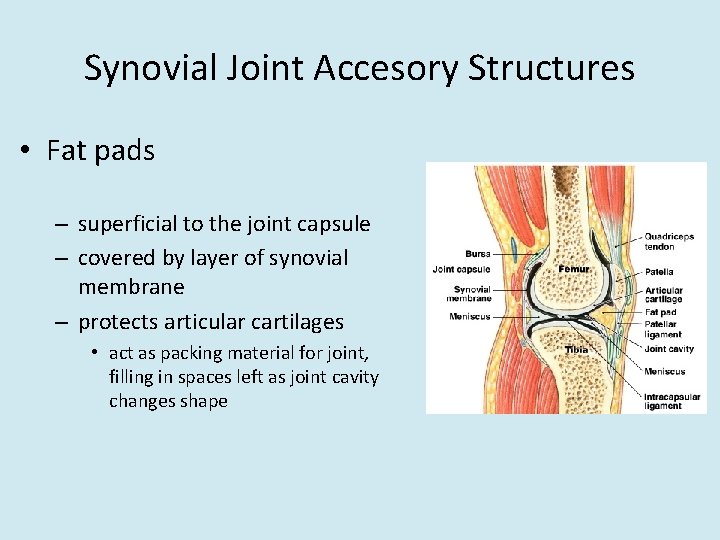
Synovial Joint Accesory Structures • Fat pads – superficial to the joint capsule – covered by layer of synovial membrane – protects articular cartilages • act as packing material for joint, filling in spaces left as joint cavity changes shape
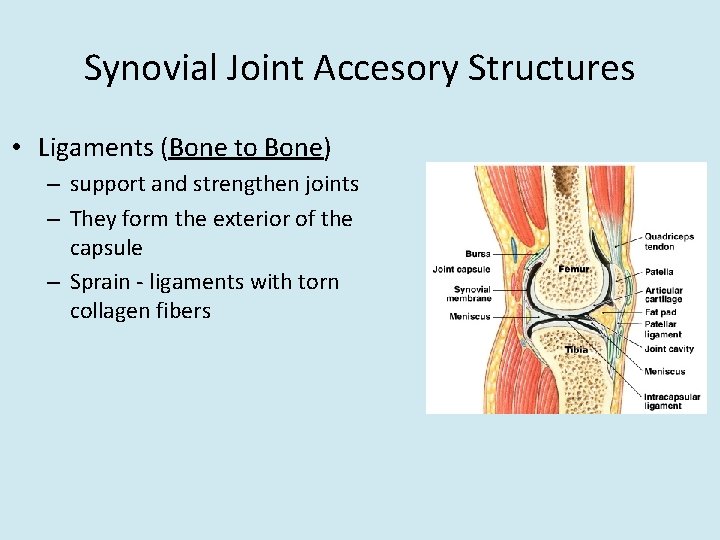
Synovial Joint Accesory Structures • Ligaments (Bone to Bone) – support and strengthen joints – They form the exterior of the capsule – Sprain - ligaments with torn collagen fibers
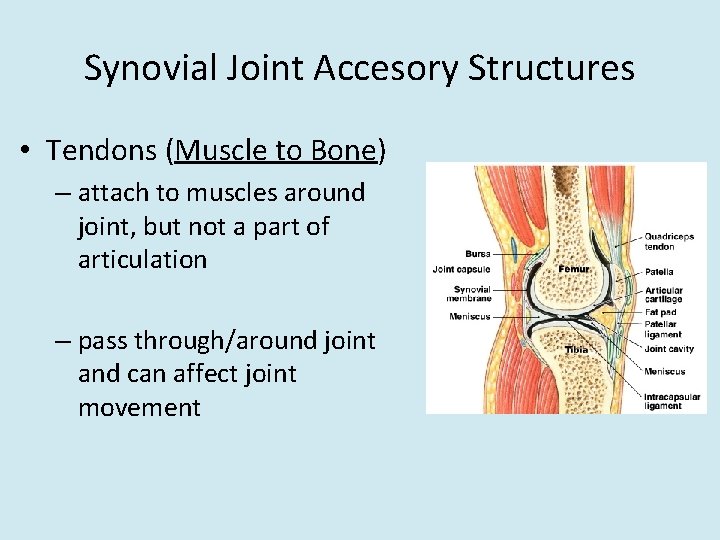
Synovial Joint Accesory Structures • Tendons (Muscle to Bone) – attach to muscles around joint, but not a part of articulation – pass through/around joint and can affect joint movement
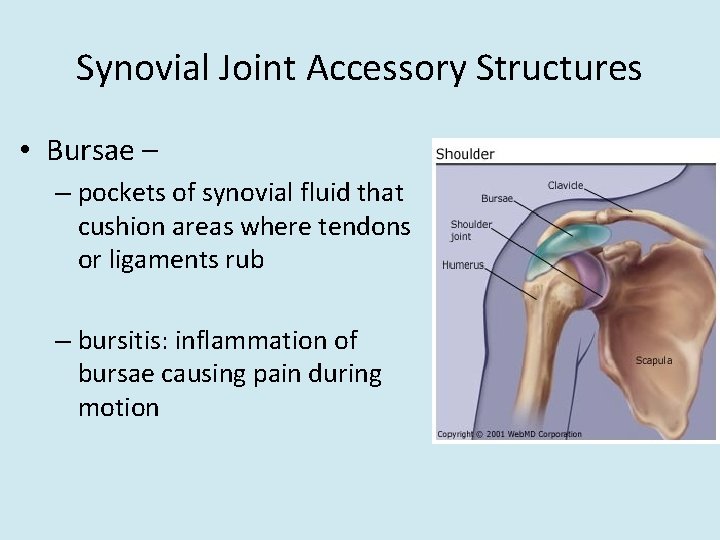
Synovial Joint Accessory Structures • Bursae – – pockets of synovial fluid that cushion areas where tendons or ligaments rub – bursitis: inflammation of bursae causing pain during motion
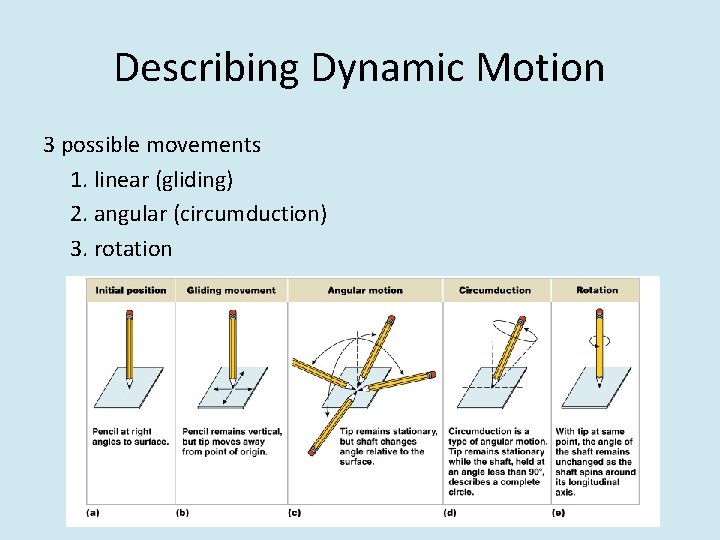
Describing Dynamic Motion 3 possible movements 1. linear (gliding) 2. angular (circumduction) 3. rotation
Synovial Joint Classification Based on Dynamic Motion • Nonaxial – gliding movements only • Uniaxial – angular movement in one plane • Biaxial – angular movement in two planes – (i. e. , forward/backward and left/right) • triaxial – angular and rotational movement
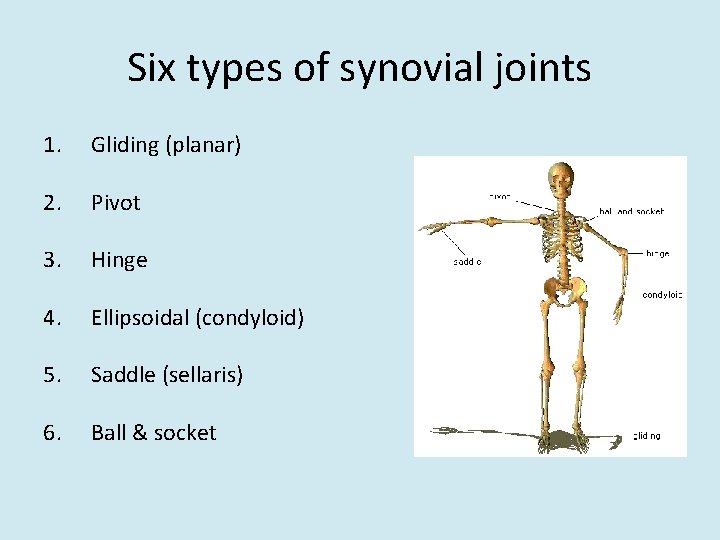
Six types of synovial joints 1. Gliding (planar) 2. Pivot 3. Hinge 4. Ellipsoidal (condyloid) 5. Saddle (sellaris) 6. Ball & socket
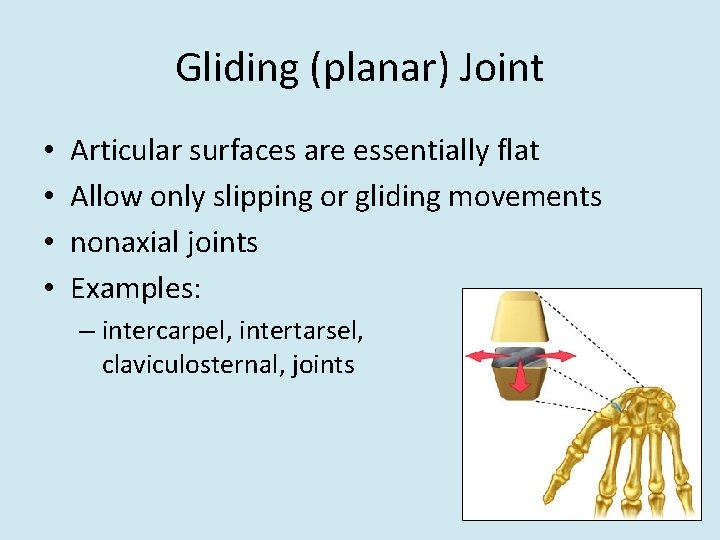
Gliding (planar) Joint • • Articular surfaces are essentially flat Allow only slipping or gliding movements nonaxial joints Examples: – intercarpel, intertarsel, claviculosternal, joints
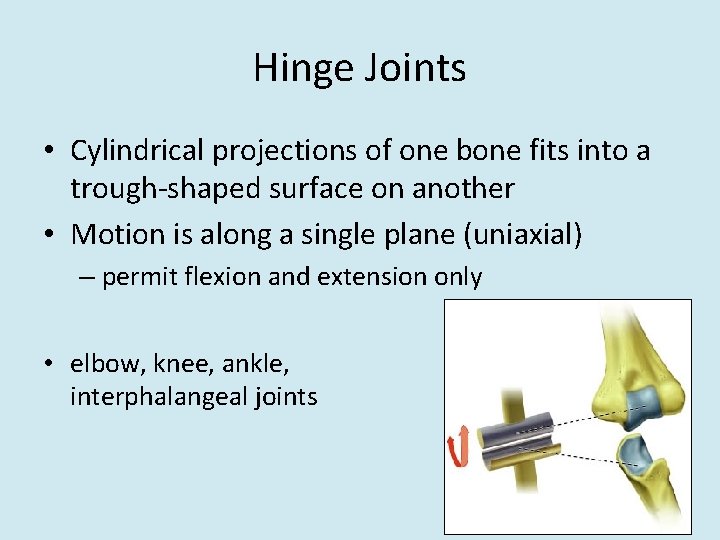
Hinge Joints • Cylindrical projections of one bone fits into a trough-shaped surface on another • Motion is along a single plane (uniaxial) – permit flexion and extension only • elbow, knee, ankle, interphalangeal joints
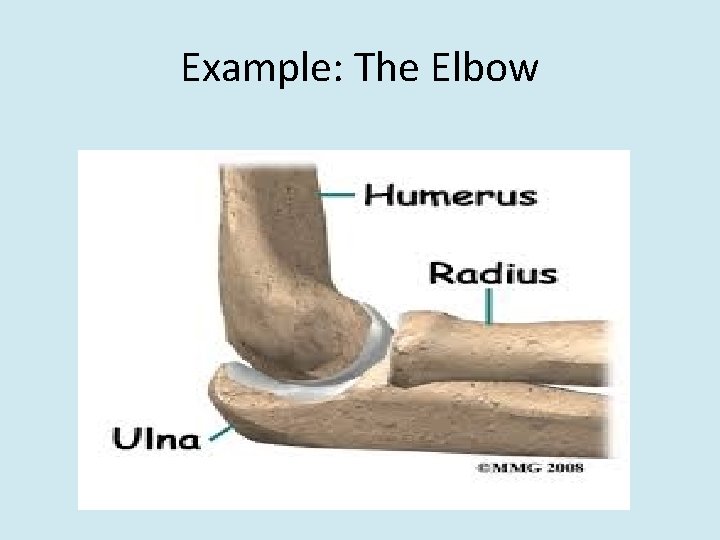
Example: The Elbow
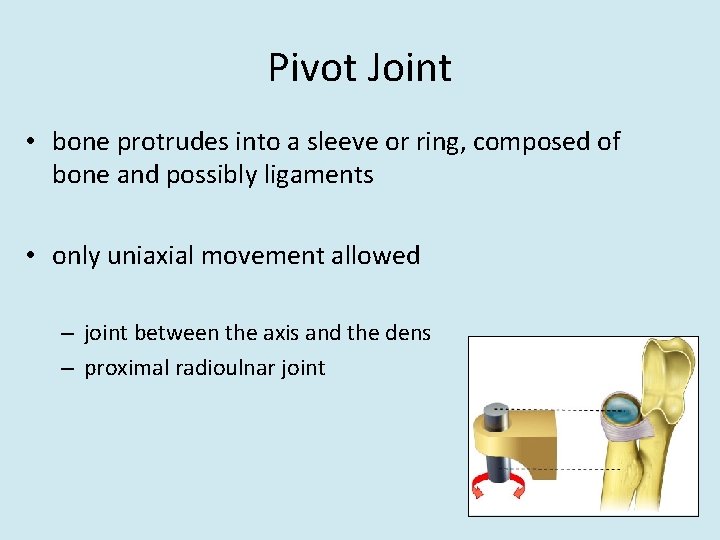
Pivot Joint • bone protrudes into a sleeve or ring, composed of bone and possibly ligaments • only uniaxial movement allowed – joint between the axis and the dens – proximal radioulnar joint
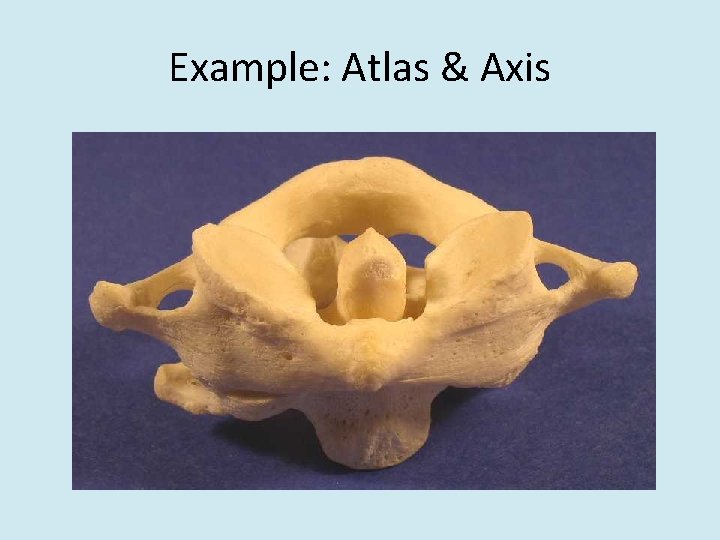
Example: Atlas & Axis
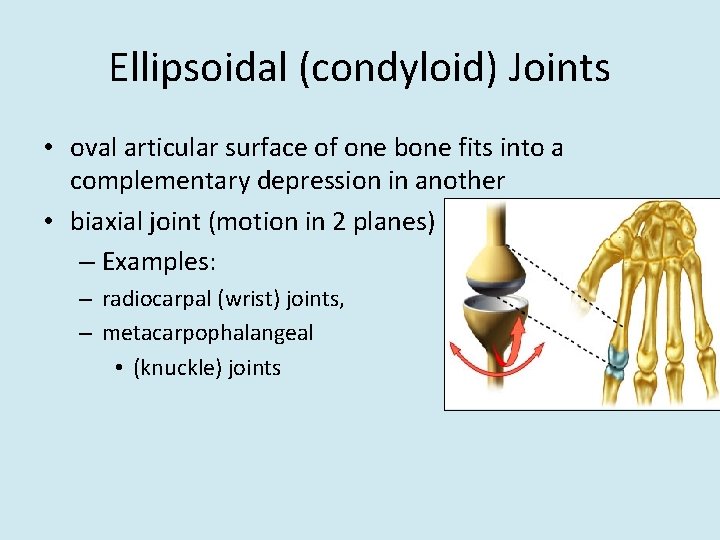
Ellipsoidal (condyloid) Joints • oval articular surface of one bone fits into a complementary depression in another • biaxial joint (motion in 2 planes) – Examples: – radiocarpal (wrist) joints, – metacarpophalangeal • (knuckle) joints
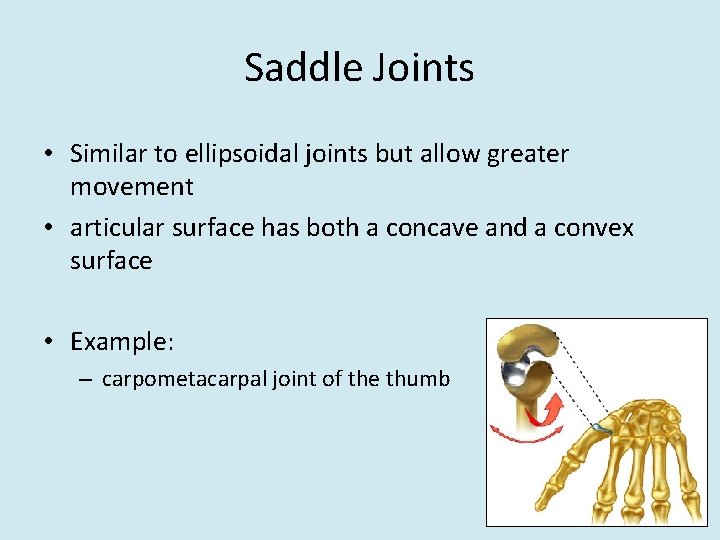
Saddle Joints • Similar to ellipsoidal joints but allow greater movement • articular surface has both a concave and a convex surface • Example: – carpometacarpal joint of the thumb
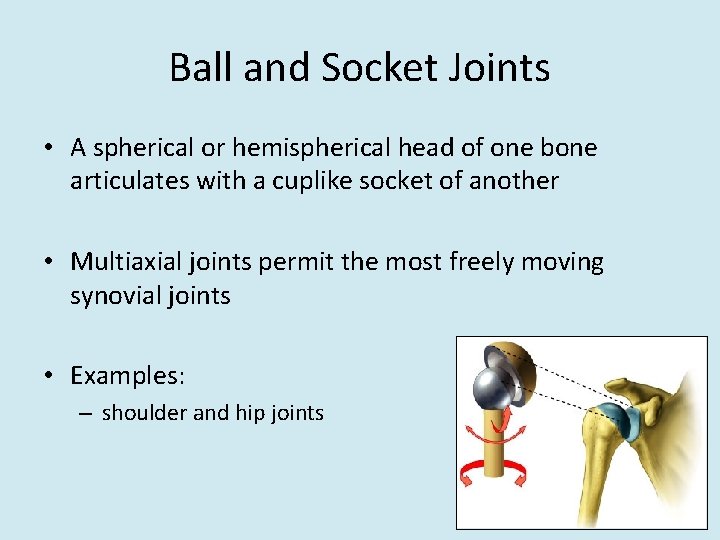
Ball and Socket Joints • A spherical or hemispherical head of one bone articulates with a cuplike socket of another • Multiaxial joints permit the most freely moving synovial joints • Examples: – shoulder and hip joints
- Slides: 21