
Chapter 8 Internationalization and Globalization John S Hill

Chapter 8 Internationalization and Globalization John S. Hill
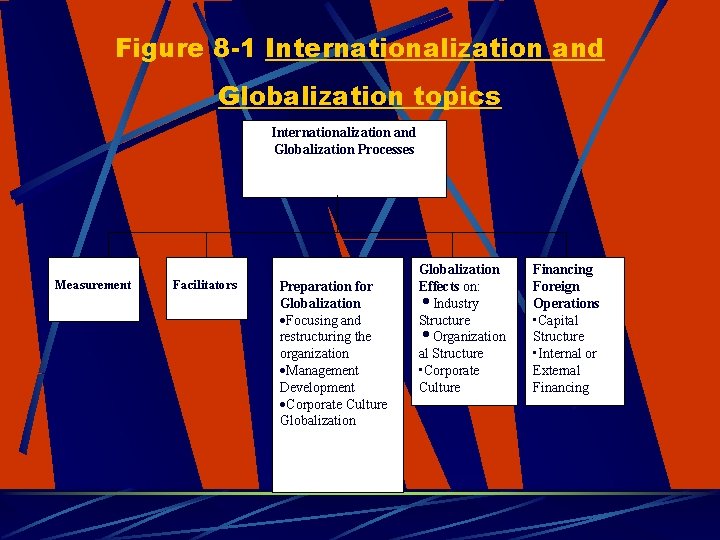
Figure 8 -1 Internationalization and Globalization topics Internationalization and Globalization Processes Definition & Measurement Drivers and Facilitators Corporate Preparation for Globalization ·Focusing and restructuring the organization ·Management Development ·Corporate Culture Globalization Effects on: Industry Structure Organization al Structure • Corporate Culture Financing Foreign Operations • Capital Structure • Internal or External Financing
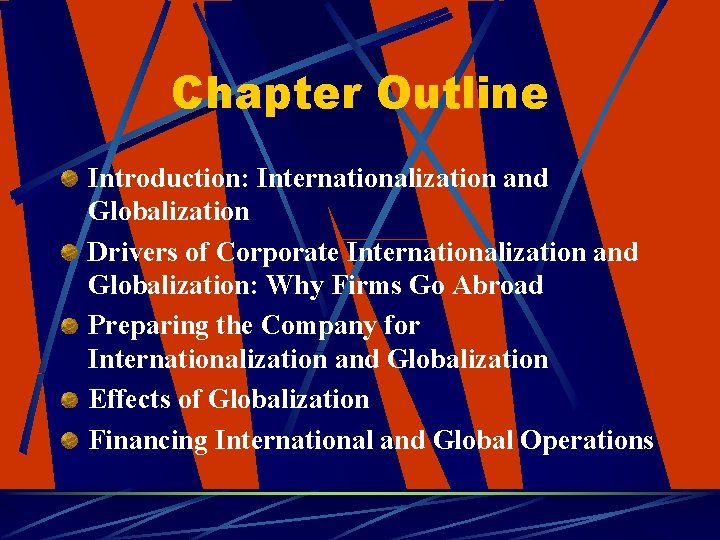
Chapter Outline Introduction: Internationalization and Globalization Drivers of Corporate Internationalization and Globalization: Why Firms Go Abroad Preparing the Company for Internationalization and Globalization Effects of Globalization Financing International and Global Operations
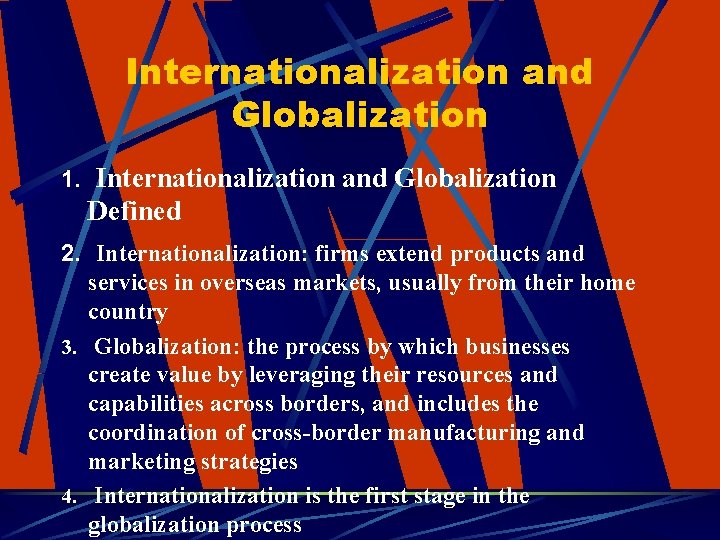
Internationalization and Globalization 1. Internationalization and Globalization Defined 2. Internationalization: firms extend products and services in overseas markets, usually from their home country 3. Globalization: the process by which businesses create value by leveraging their resources and capabilities across borders, and includes the coordination of cross-border manufacturing and marketing strategies 4. Internationalization is the first stage in the globalization process
Internationalization and Globalization Measuring Internationalization and Globalization Objective measures l Corporate measures l
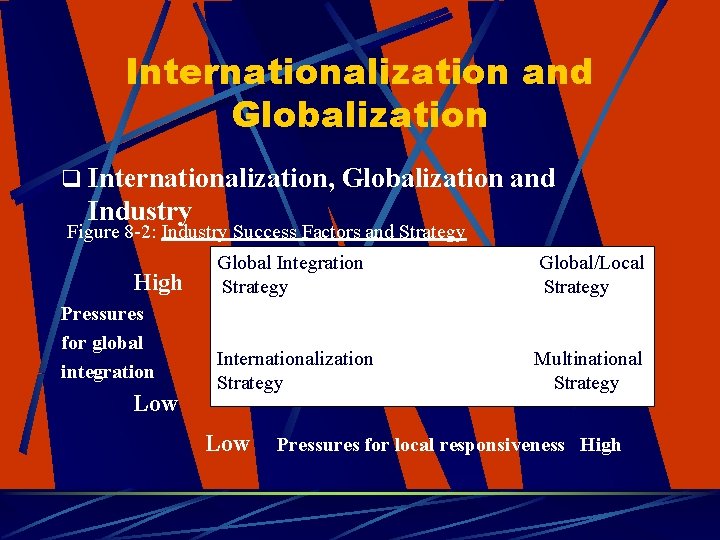
Internationalization and Globalization q Internationalization, Globalization and Industry Figure 8 -2: Industry Success Factors and Strategy High Pressures for global integration Low Global Integration Strategy Global/Local Strategy Internationalization Strategy Multinational Strategy Low Pressures for local responsiveness High
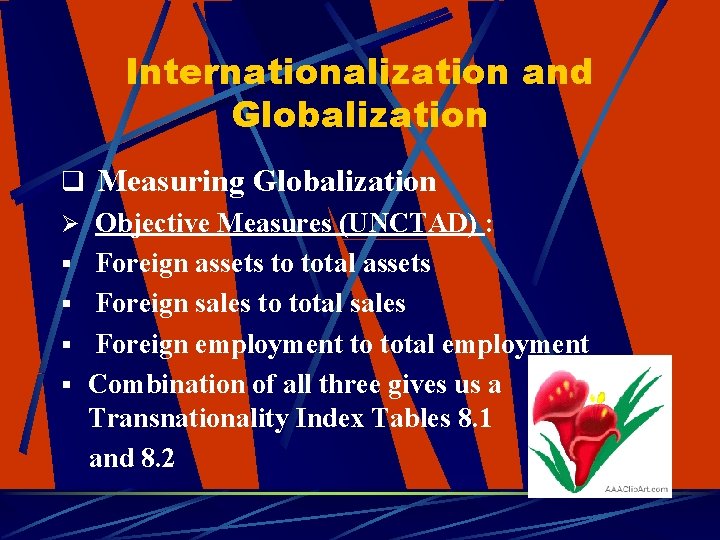
Internationalization and Globalization q Measuring Globalization Ø Objective Measures (UNCTAD) : § Foreign assets to total assets § Foreign sales to total sales § Foreign employment to total employment § Combination of all three gives us a Transnationality Index Tables 8. 1 and 8. 2
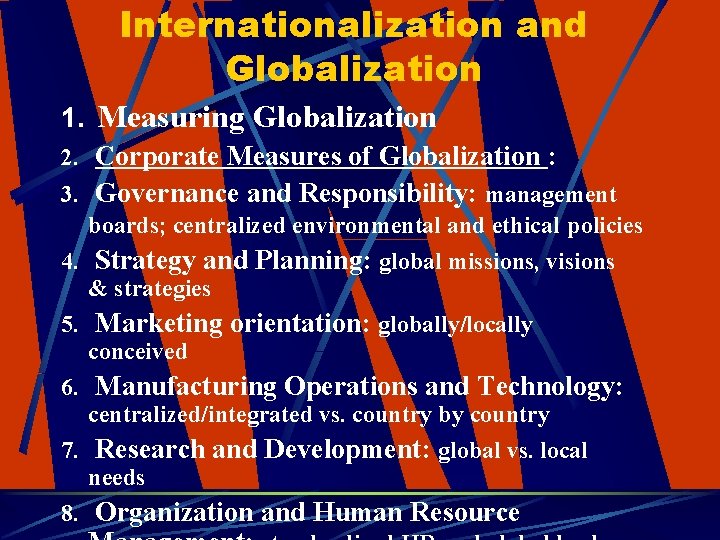
Internationalization and Globalization 1. Measuring Globalization 2. Corporate Measures of Globalization : 3. Governance and Responsibility: management boards; centralized environmental and ethical policies 4. Strategy and Planning: global missions, visions & strategies 5. Marketing orientation: globally/locally conceived 6. Manufacturing Operations and Technology: centralized/integrated vs. country by country 7. Research and Development: global vs. local needs 8. Organization and Human Resource
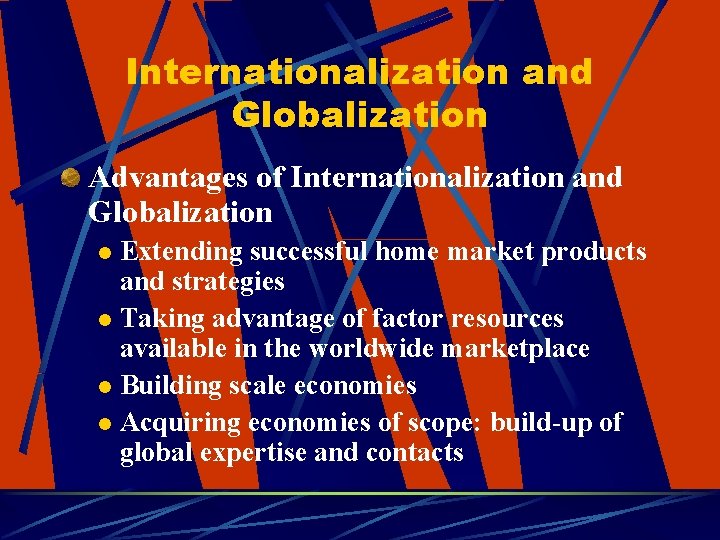
Internationalization and Globalization Advantages of Internationalization and Globalization Extending successful home market products and strategies l Taking advantage of factor resources available in the worldwide marketplace l Building scale economies l Acquiring economies of scope: build-up of global expertise and contacts l
Internationalization and Globalization Disadvantages of Internationalization and Globalization l l Significant resource allocations are necessary Internationalization and globalization are learning processes: ‘learning by doing’ Internationalization, Globalization, and Industry Strategies: internationalization, multinational, globally integrated and global-local strategies

Drivers of Corporate Internationalization and Globalization q Market Drivers q Cost Drivers q Competitive Drivers q Government Drivers q Globalization and Information Technologies
Drivers of Corporate Internationalization and Globalization 1. Market Drivers 2. Common customer needs: Coca-Cola, Mc. Donalds 3. Global channels: Carrefour, Toys R Us, Wal -Mart 4. Marketing Transfers and Global Branding: IBM, Toyota, Bic, Kodak 5. Lead Countries: Japan for consumer electronics, Switzerland for watches, USA for computer software

Drivers of Corporate Internationalization and Globalization q Cost Drivers Ø Economies of scale: steel and microprocessors Ø Steep Experience Curves: knowledge and technology intensive sectors: aircraft Ø Low Cost Production: textiles Ø Favorable Logistics: transportation costs important) lumber, chemicals Ø New Product Development Costs: airlines, telecommunications, chips, pharmaceuticals
Drivers of Corporate Internationalization and Globalization q Competitive Drivers q Competing with imports and other global rivals have placed increasing pressures on both domestic and international companies to be competitive in national and international markets. q Government Drivers q United Nations, and its agencies like the IMF, World Bank and WTO: free trade, privatization (but can retard also)
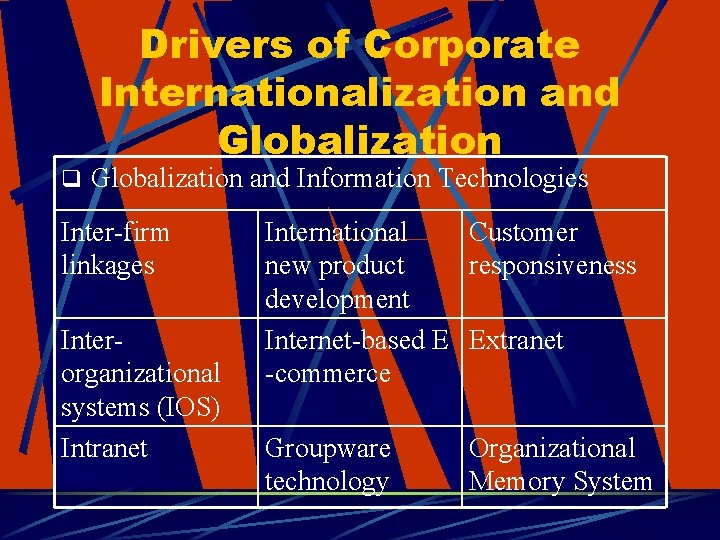
Drivers of Corporate Internationalization and Globalization q Globalization and Information Technologies Inter-firm linkages Interorganizational systems (IOS) Intranet International Customer new product responsiveness development Internet-based E Extranet -commerce Groupware technology Organizational Memory System
Preparing the Company for Internationalization & Globalization q Focusing the Organization: Corporate Competencies q Focusing the Organization: Supply Chain Restructuring q Developing Leadership and Management Capabilities q Globalizing the Corporate Culture
Preparing the Company for Globalization q Focusing the Organization Ø Corporate Competencies Ø – those activities that have proven international potential Ø – hard decisions must be made on activities that do not add value to the globalization move
Preparing the Company for Globalization q Focusing the Organization Ø Supply Chain Restructuring § Delayer corporate hierarchies for quicker decisions § Rethink manufacturing systems to close unproductive plants and consolidate production § Reevaluate supplier relationships to focus on a few, wellpositioned providers § Reassess distributor capabilities for the global arena
Preparing the Company for Globalization q Developing Leadership and Management Capabilities Ø Global Leadership Characteristics § Unbridled Inquisitiveness : the desire to learn and the ability to enjoy the constant stimulation and challenges § Personal characteristics: The ability to connect socially and emotionally with wide varieties of individuals § Duality: senior management’s ability to balance global and local considerations in making § Savvy: Management leaders have instinctive recognitions of strategic tradeoffs
Preparing the Company for Globalization q Developing Leadership and Management Capabilities Ø Developing Global Leaders § International travel § Global team experiences § Cross-cultural training § Overseas assignments
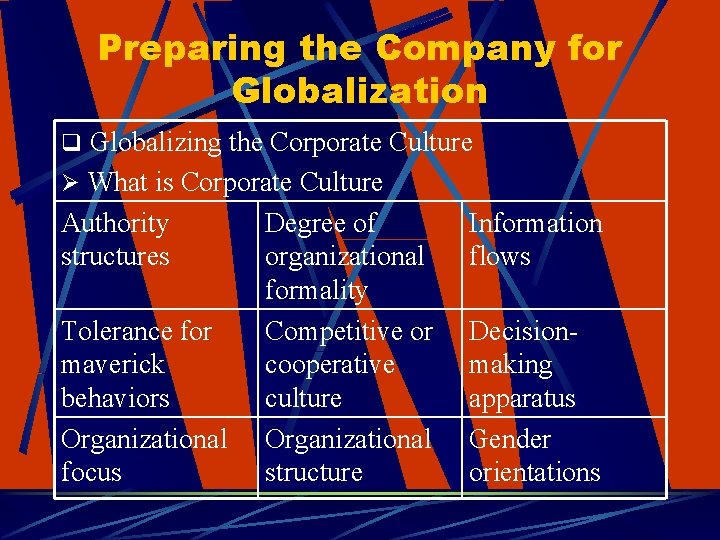
Preparing the Company for Globalization q Globalizing the Corporate Culture Ø What is Corporate Culture Authority structures Tolerance for maverick behaviors Organizational focus Degree of organizational formality Competitive or cooperative culture Organizational structure Information flows Decisionmaking apparatus Gender orientations
Preparing the Company for Globalization q. Globalizing the Corporate Culture Ø Deciding on Corporate Cultures in Foreign Markets: no ‘right’ or wrong answers Ø Global Standardization of Corporate Cultures is the trend but caution is always required
Preparing the Company for Globalization q Globalizing the Corporate Culture Ø Adapting Corporate Cultures to National Culture Influences depends on: § Societal competitiveness: the amount of competition within societies—political, economic, social class systems § Shareholder-Stakeholder Orientations: the specific objectives or audiences corporate cultures oriented toward: spread of capitalism vs. local needs § National culture influences on corporate cultures
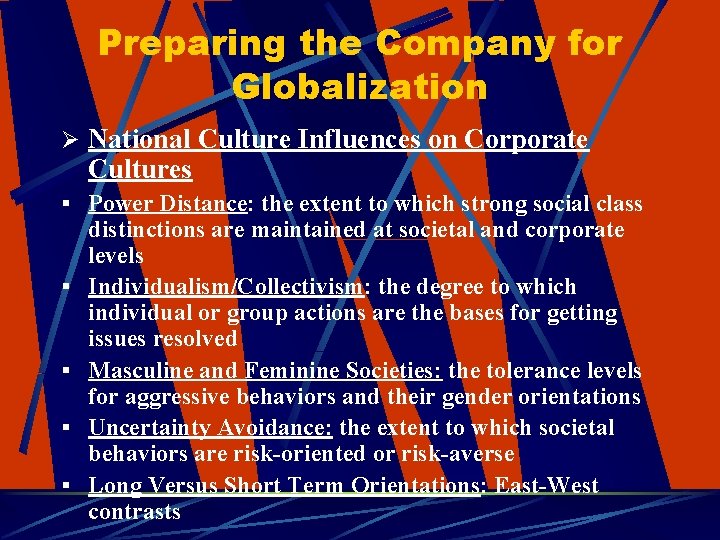
Preparing the Company for Globalization Ø National Culture Influences on Corporate Cultures § Power Distance: the extent to which strong social class § § distinctions are maintained at societal and corporate levels Individualism/Collectivism: the degree to which individual or group actions are the bases for getting issues resolved Masculine and Feminine Societies: the tolerance levels for aggressive behaviors and their gender orientations Uncertainty Avoidance: the extent to which societal behaviors are risk-oriented or risk-averse Long Versus Short Term Orientations: East-West contrasts

Effects of Globalization q Industry Structure Effects q Organizational Structure Effects q Corporate Culture Effects q Relationships Among Strategies, Structures and Corporate Cultures

Effects of Globalization q Industry Structure Effects Ø At the national level, domestic firms must attain critical mass size to deal with foreign competitors Ø At the regional level, firms need to attain regional market coverage and scale economies to compete against other global producers Ø At the worldwide level, industry structures have been affected by a series of ‘megamergers’ between large international companies

Effects of Globalization q Organizational Structure Effects Ø International department Ø Worldwide functional structure Ø Worldwide product structure Ø Geographic structures
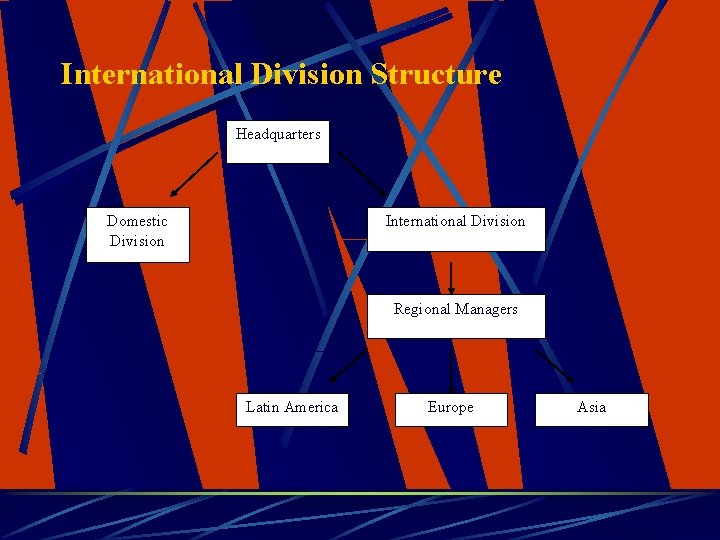
International Division Structure Headquarters Domestic Division International Division Regional Managers Latin America Europe Asia
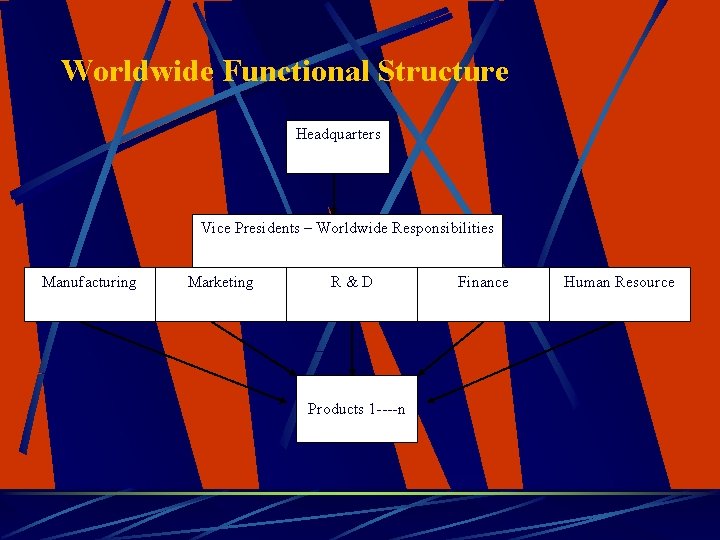
Worldwide Functional Structure Headquarters Vice Presidents – Worldwide Responsibilities Manufacturing Marketing R&D Markets 1 ----n Products 1 ----n Finance Human Resource
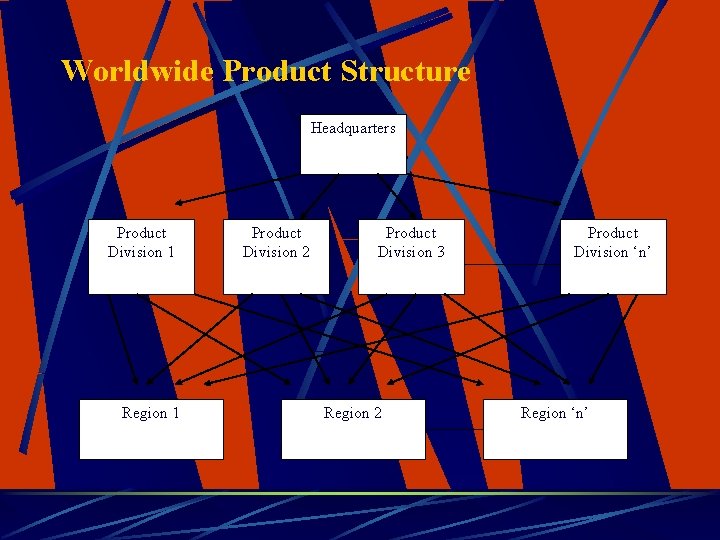
Worldwide Product Structure Headquarters Product Division 1 Region 1 Product Division 2 Product Division 3 Region 2 Product Division ‘n’ Region ‘n’
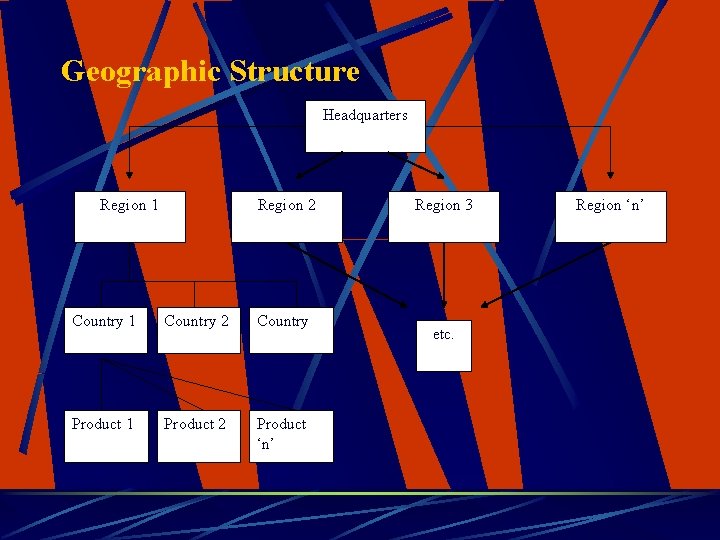
Geographic Structure Headquarters Region 1 Region 2 Region 3 etc. Country 1 Country 2 Country ‘n’ Product 1 Product 2 Product ‘n’ Region ‘n’
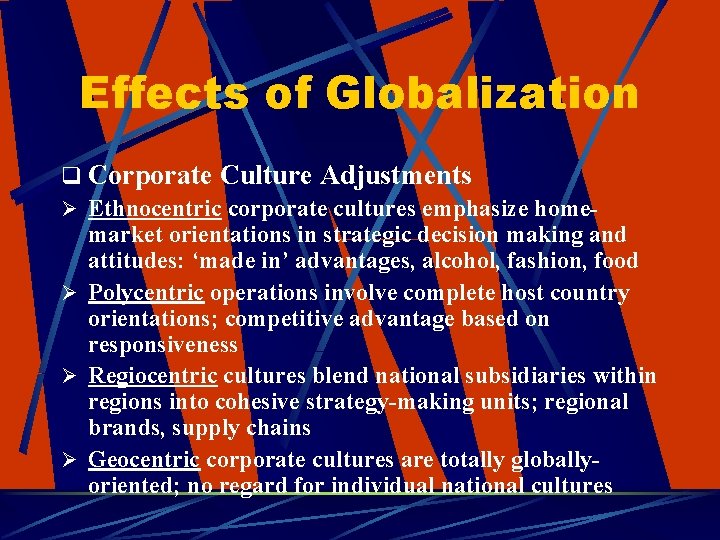
Effects of Globalization q Corporate Culture Adjustments Ø Ethnocentric corporate cultures emphasize homemarket orientations in strategic decision making and attitudes: ‘made in’ advantages, alcohol, fashion, food Ø Polycentric operations involve complete host country orientations; competitive advantage based on responsiveness Ø Regiocentric cultures blend national subsidiaries within regions into cohesive strategy-making units; regional brands, supply chains Ø Geocentric corporate cultures are totally globallyoriented; no regard for individual national cultures

Effects of Globalization q Relationships Among Strategies, Structures, and Corporate Cultures Ø Causes of Change: marketplace change and new strategy; new structure (M & A, JVs); leadership changes Ø Relationships among international strategies, structures, and corporate cultures: ethnocentric and exporting; polycentric and consumer goods; regional, global products=regiocentric/geocentric
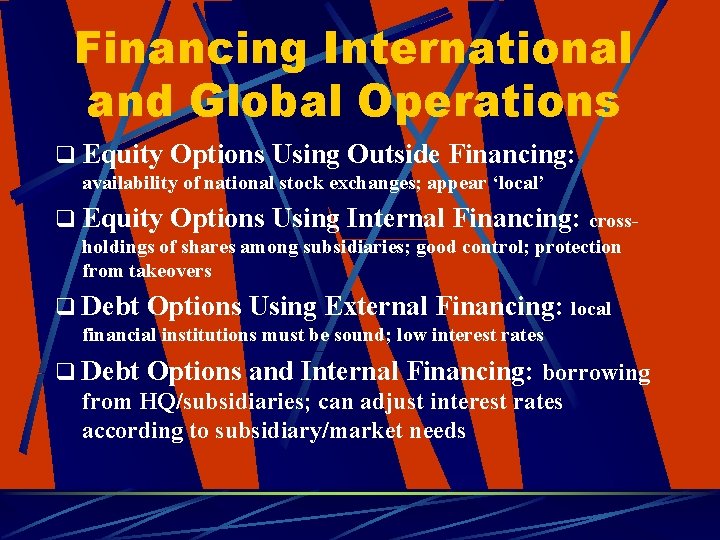
Financing International and Global Operations q Equity Options Using Outside Financing: availability of national stock exchanges; appear ‘local’ q Equity Options Using Internal Financing: crossholdings of shares among subsidiaries; good control; protection from takeovers q Debt Options Using External Financing: local financial institutions must be sound; low interest rates q Debt Options and Internal Financing: borrowing from HQ/subsidiaries; can adjust interest rates according to subsidiary/market needs
Key Points q Defining internationalization q Defining globalization q Measuring them? q Globalization drivers q Preparing for globalization q Globalizing corporate cultures q Effects of globalization on industries, organizations, corporate cultures q Financing foreign operations
Key Points q Internationalization occurs as firms extend products and services into foreign markets. q As companies globalize, they must balance pressures to globally integrate their operations with pressures to localize output. q Globalization can be measured objectively through foreign percentages of assets, sales, and employment.
Key Points q Globalization drivers can be based on market, cost, competitor, or government factors. q Companies prepare for globalization by assessing corporate competencies, supply chains, leadership capabilities, and corporate cultures.
Key Points q Globalizing corporate cultures involves defining and critically examining organizational relationships, communication patterns, and employee behaviors. q Effects of globalization must be assessed for industry structure, organizational structure, and corporate culture q International firms have a number of options in financing their internationalization and globalization efforts.
- Slides: 38