
Chapter 8 International Strategic Alliances Design and Management
- Slides: 44
Chapter 8 International Strategic Alliances: Design and Management Copyright© 2004 Thomson Learning All rights
Learning Objectives • Know the steps for implementation of successful international strategic alliances • Understand how to link value chains in international strategic alliances • Understand the importance of choosing the right partners for alliances • Know the important characteristics to look for in potential alliance partners Copyright© 2005 South-Western/Thomson Learning All rights
Learning Objectives • Know the differences between equity-based international joint ventures and other types of international cooperative alliances • Know the basic components of an international strategic alliance contract • Understand the control systems and management structures used in alliance organization Copyright© 2005 South-Western/Thomson Learning All rights
Learning Objectives • Appreciate the unique problems in human resource management • Realize the importance of interfirm commitment and trust • Understand how companies assess the performance of their international strategic alliances • Know when companies should continue or dissolve their international strategic alliances Copyright© 2005 South-Western/Thomson Learning All rights
Strategic Alliances Issues • Increasingly popular strategy to develop new product and to expand into new markets • However, strategic alliances are very risky and unstable • Failure rate of 30% to 60% • Even profitable alliances can be torn by conflict Copyright© 2005 South-Western/Thomson Learning All rights
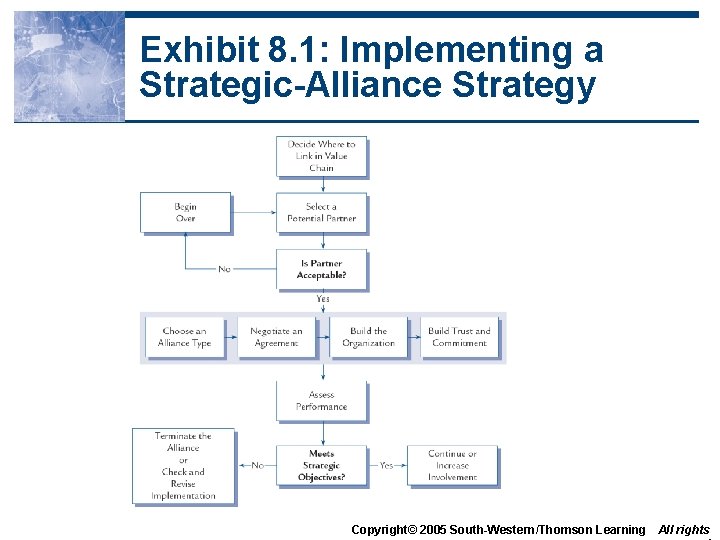
Exhibit 8. 1: Implementing a Strategic-Alliance Strategy Copyright© 2005 South-Western/Thomson Learning All rights
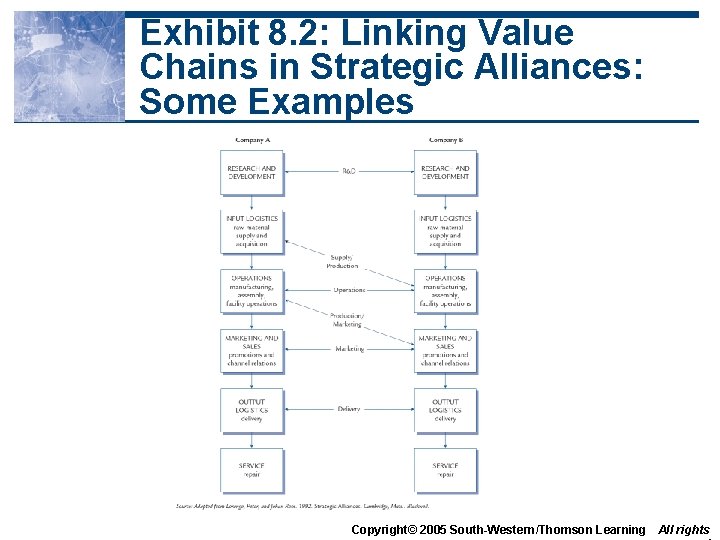
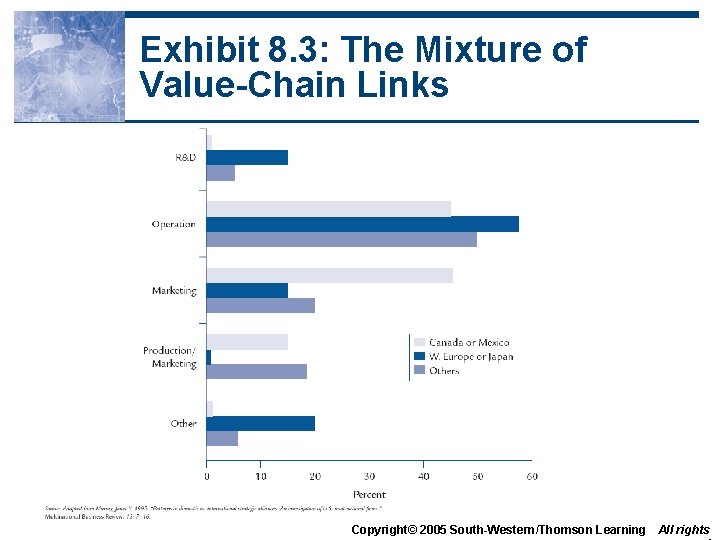
Where to Link in the Value Chain • Alliance combining same value-chain activities are to gain efficiencies, merge talents, or share risks • Upstream/downstream alliances serve the objective of low-cost supply/manufacturing • Operations/marketing alliances provide access to markets • Depends on the objective that the firm seeks to achieve Copyright© 2005 South-Western/Thomson Learning All rights
Exhibit 8. 2: Linking Value Chains in Strategic Alliances: Some Examples Copyright© 2005 South-Western/Thomson Learning All rights
Exhibit 8. 3: The Mixture of Value-Chain Links Copyright© 2005 South-Western/Thomson Learning All rights
Choosing a Partner: The Most Important Choice? • Key criteria for picking an appropriate alliance partner • Seek strategic complementarity • Understand objectives and seek complementarity • Pick a partner with complementary skills • One that enhances but does not necessarily duplicate an alliance partner’s skills Copyright© 2005 South-Western/Thomson Learning All rights
Criteria for Choosing Partners • Seek out companies with compatible management styles • Seek a partner that will provide the “right” level of mutual dependency • Avoid the “anchor” partner • Anchor partner: a partner that holds back the strategic alliance because it cannot or will not provide its share of the funding Copyright© 2005 South-Western/Thomson Learning All rights
Criteria for Choosing Partners (cont. ) • Be cautious of the “elephant-and-ant” complex • Occurs when two companies are greatly unequal in size • Assess operating-policy differences with potential partners • Assess the difficulty of cross-cultural communication with a likely partner Copyright© 2005 South-Western/Thomson Learning All rights
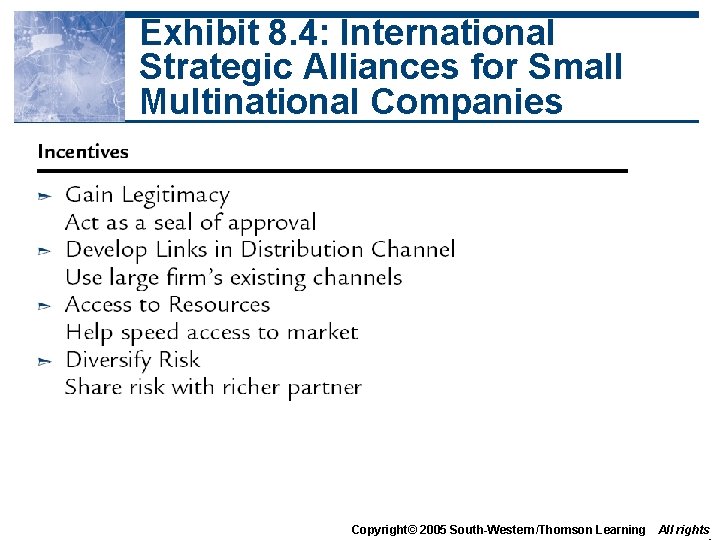
Exhibit 8. 4: International Strategic Alliances for Small Multinational Companies Copyright© 2005 South-Western/Thomson Learning All rights
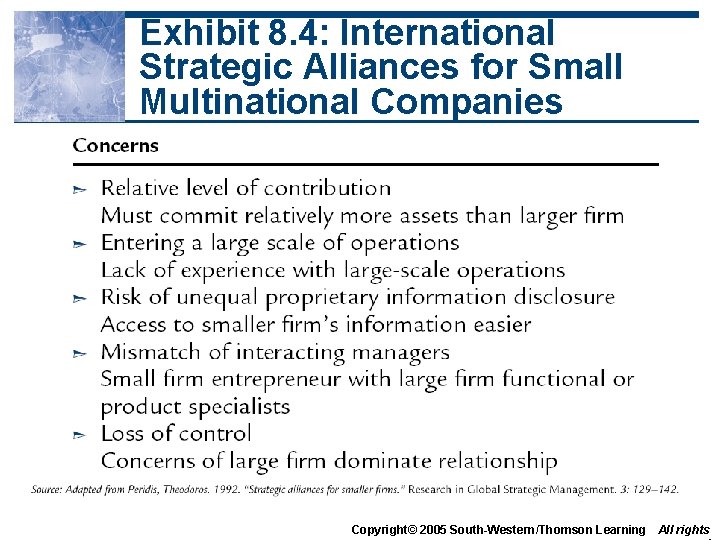
Exhibit 8. 4: International Strategic Alliances for Small Multinational Companies Copyright© 2005 South-Western/Thomson Learning All rights
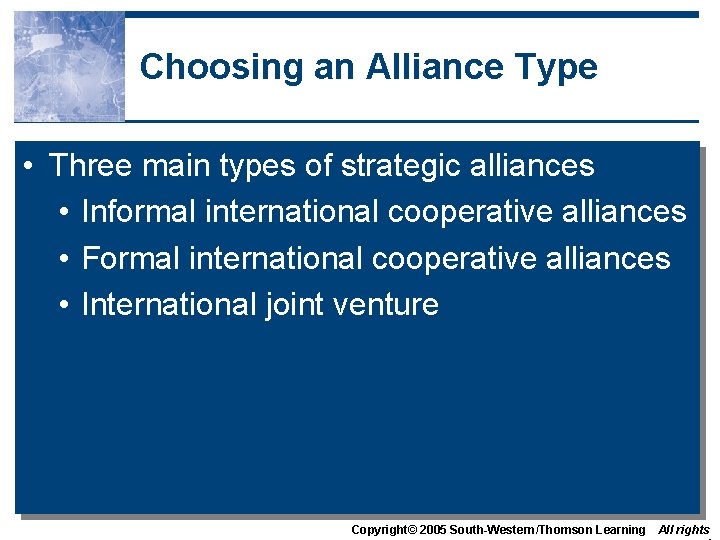
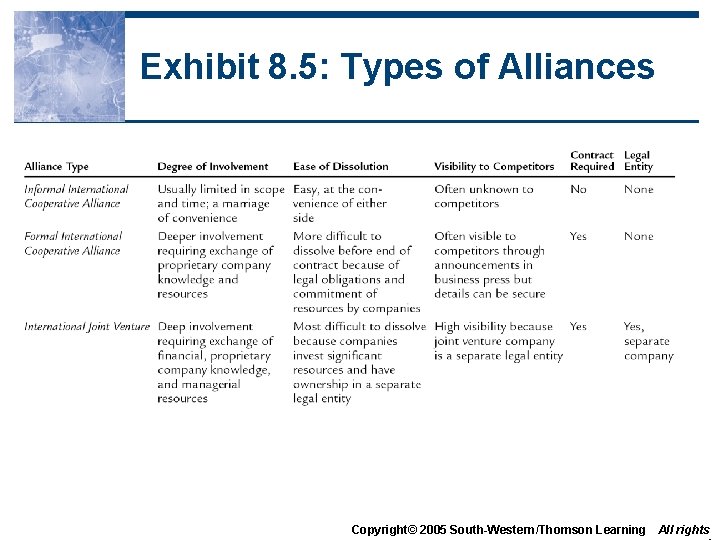
Choosing an Alliance Type • Three main types of strategic alliances • Informal international cooperative alliances • Formal international cooperative alliances • International joint venture Copyright© 2005 South-Western/Thomson Learning All rights
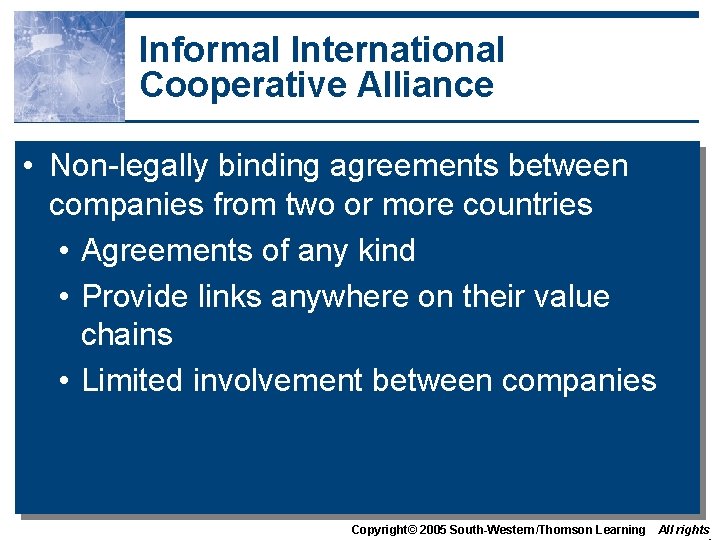
Informal International Cooperative Alliance • Non-legally binding agreements between companies from two or more countries • Agreements of any kind • Provide links anywhere on their value chains • Limited involvement between companies Copyright© 2005 South-Western/Thomson Learning All rights
Formal Cooperative Alliances • Higher degree of involvement than informal alliances • Formal contract • Popular in high tech industries because of high costs and risks Copyright© 2005 South-Western/Thomson Learning All rights
International Joint Ventures (IJV) • Separate legal entity owned by two or more parent companies from different countries • No need for equal ownership • Equity based on cash or other contributions • Ex. : One partner brings technology while other partner brings financial contributions Copyright© 2005 South-Western/Thomson Learning All rights
Exhibit 8. 5: Types of Alliances Copyright© 2005 South-Western/Thomson Learning All rights
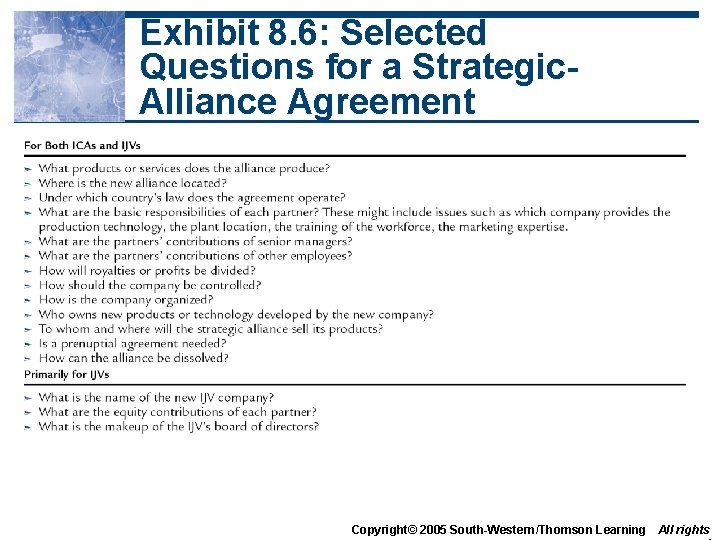
Negotiating the Agreement • IJV negotiation issues • equity contributions • management structure • “prenuptial” agreements Copyright© 2005 South-Western/Thomson Learning All rights
Exhibit 8. 6: Selected Questions for a Strategic. Alliance Agreement Copyright© 2005 South-Western/Thomson Learning All rights
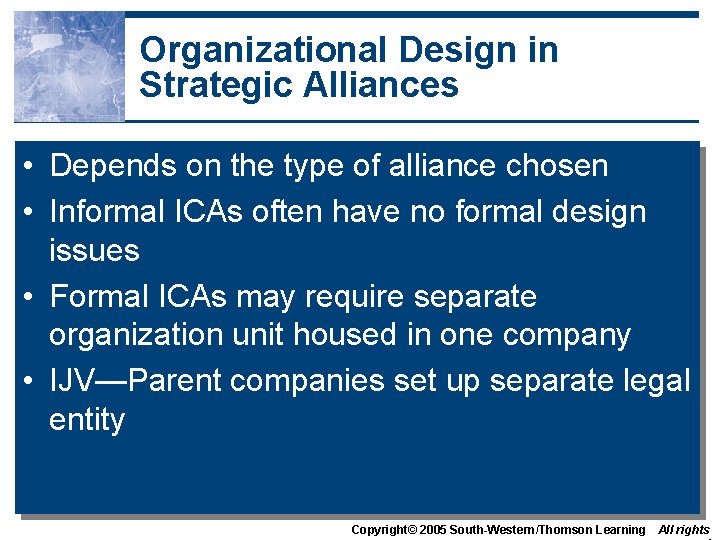
Organizational Design in Strategic Alliances • Depends on the type of alliance chosen • Informal ICAs often have no formal design issues • Formal ICAs may require separate organization unit housed in one company • IJV—Parent companies set up separate legal entity Copyright© 2005 South-Western/Thomson Learning All rights
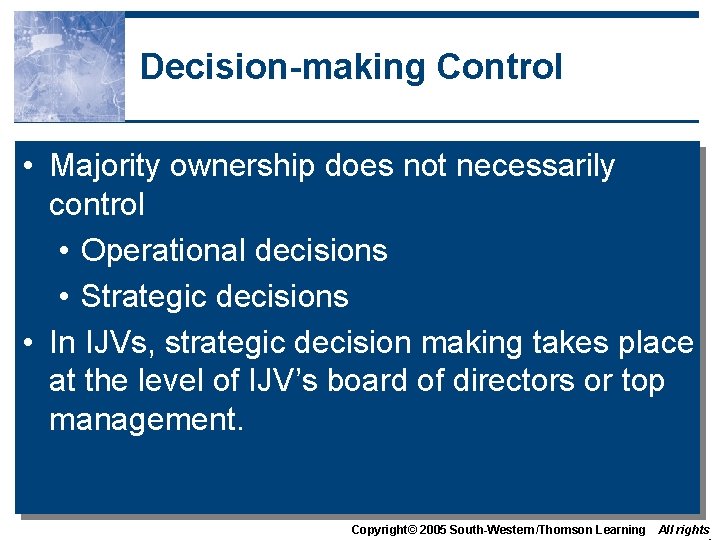
Decision-making Control • Majority ownership does not necessarily control • Operational decisions • Strategic decisions • In IJVs, strategic decision making takes place at the level of IJV’s board of directors or top management. Copyright© 2005 South-Western/Thomson Learning All rights
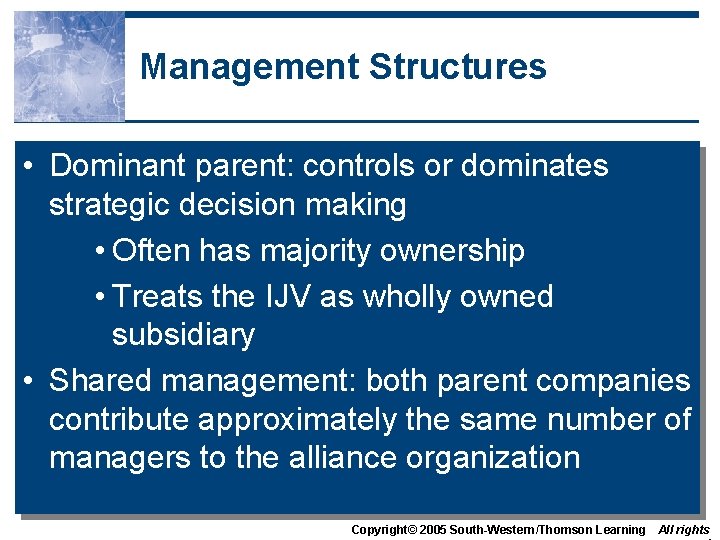
Management Structures • Dominant parent: controls or dominates strategic decision making • Often has majority ownership • Treats the IJV as wholly owned subsidiary • Shared management: both parent companies contribute approximately the same number of managers to the alliance organization Copyright© 2005 South-Western/Thomson Learning All rights
Management Structures • Split control management control: partners usually share strategic decision making and split functional decision making • Independent management structure: alliance managers act more like managers from a separate company • IJVs often recruit managers from outside the parent companies Copyright© 2005 South-Western/Thomson Learning All rights
Management Structures • Rotating management: key positions rotate among partners • Popular in developing countries • Trains management talent and transfers expertise Copyright© 2005 South-Western/Thomson Learning All rights
Choosing a Strategic Alliance Management Structure • If partners have similar technologies or knowhow and contribute equally • Shared management structure preferred • If partners have different technologies but contribute equally • Split management structure preferred • If one partner has dominant equity position • Dominant management structure more likely Copyright© 2005 South-Western/Thomson Learning All rights
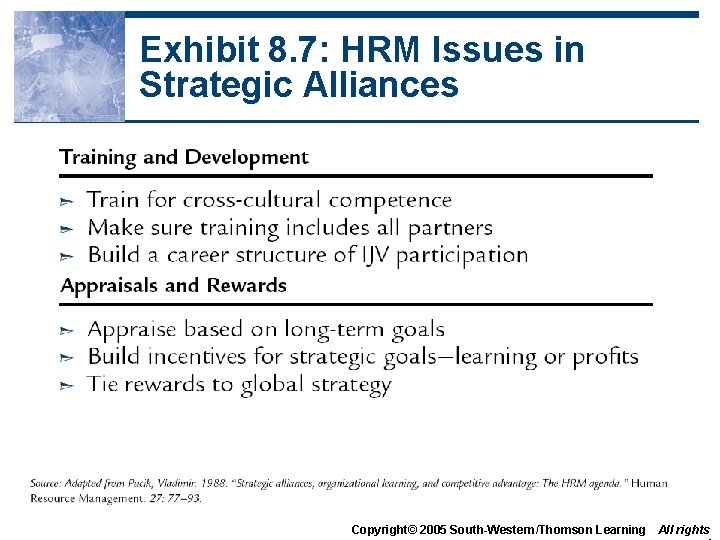
Human Resource Management in Strategic Alliances • HRM functions include recruiting and staffing for alliance positions • The HRM functions of an IJV are more complex • Managers (and sometimes workers) come from two or more firms or from two or more cultures Copyright© 2005 South-Western/Thomson Learning All rights
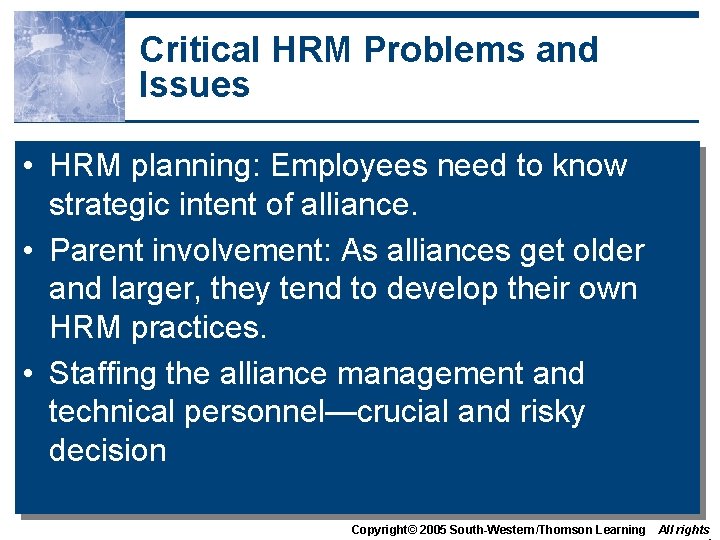
Critical HRM Problems and Issues • HRM planning: Employees need to know strategic intent of alliance. • Parent involvement: As alliances get older and larger, they tend to develop their own HRM practices. • Staffing the alliance management and technical personnel—crucial and risky decision Copyright© 2005 South-Western/Thomson Learning All rights
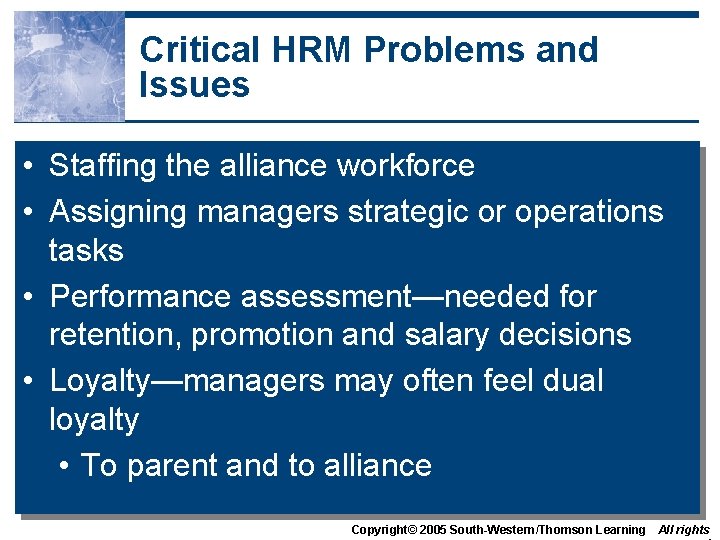
Critical HRM Problems and Issues • Staffing the alliance workforce • Assigning managers strategic or operations tasks • Performance assessment—needed for retention, promotion and salary decisions • Loyalty—managers may often feel dual loyalty • To parent and to alliance Copyright© 2005 South-Western/Thomson Learning All rights
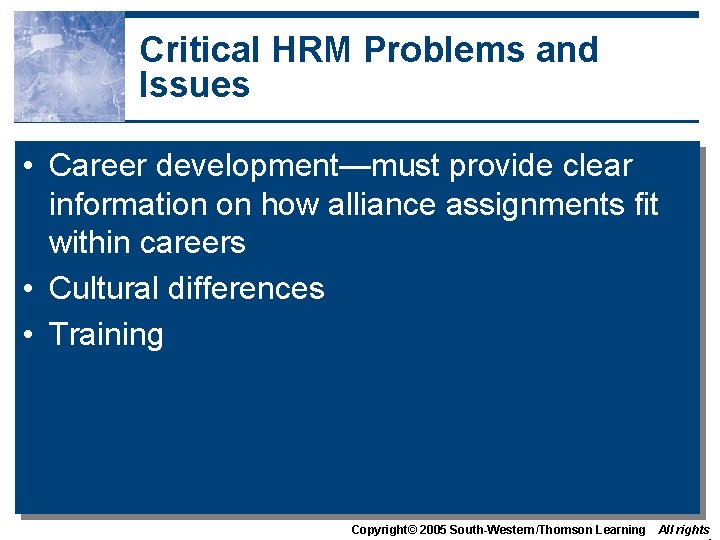
Critical HRM Problems and Issues • Career development—must provide clear information on how alliance assignments fit within careers • Cultural differences • Training Copyright© 2005 South-Western/Thomson Learning All rights
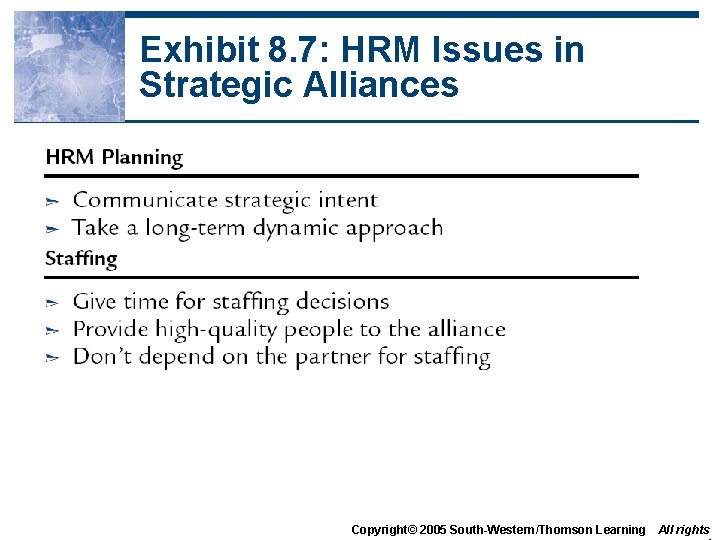
Exhibit 8. 7: HRM Issues in Strategic Alliances Copyright© 2005 South-Western/Thomson Learning All rights
Exhibit 8. 7: HRM Issues in Strategic Alliances Copyright© 2005 South-Western/Thomson Learning All rights
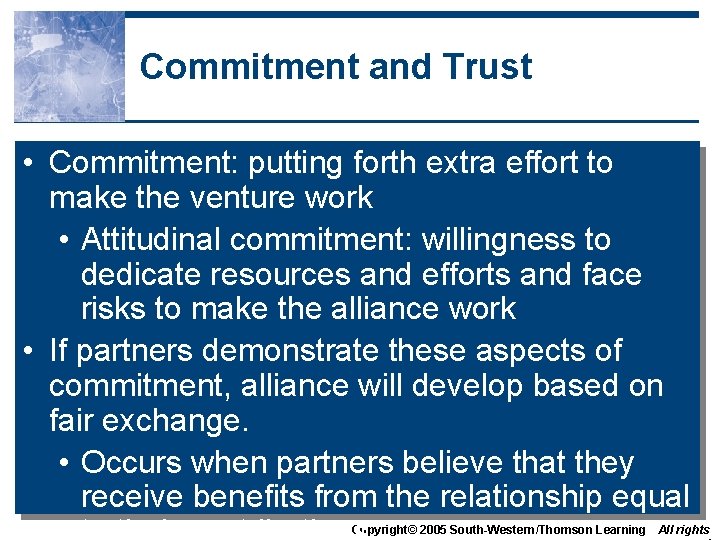
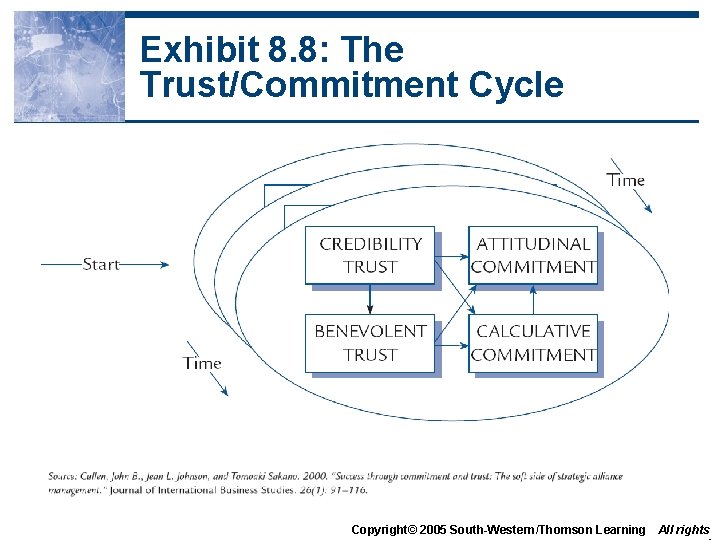
Commitment and Trust • Commitment: putting forth extra effort to make the venture work • Attitudinal commitment: willingness to dedicate resources and efforts and face risks to make the alliance work • If partners demonstrate these aspects of commitment, alliance will develop based on fair exchange. • Occurs when partners believe that they receive benefits from the relationship equal Copyright© 2005 South-Western/Thomson Learning All rights
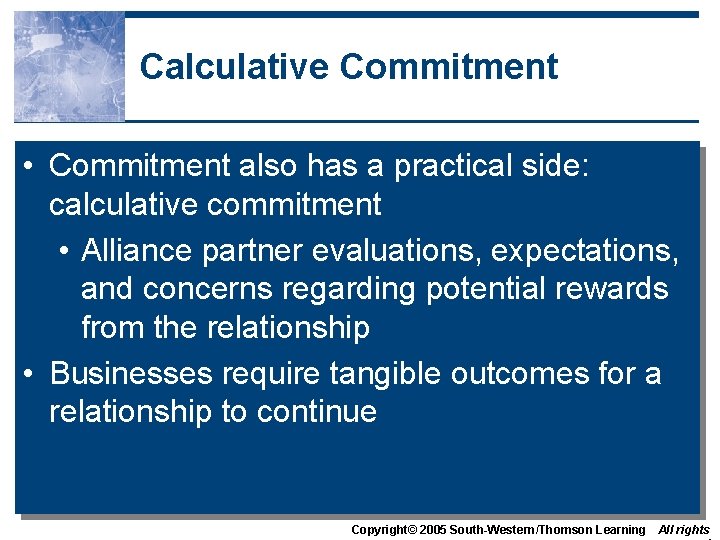
Calculative Commitment • Commitment also has a practical side: calculative commitment • Alliance partner evaluations, expectations, and concerns regarding potential rewards from the relationship • Businesses require tangible outcomes for a relationship to continue Copyright© 2005 South-Western/Thomson Learning All rights
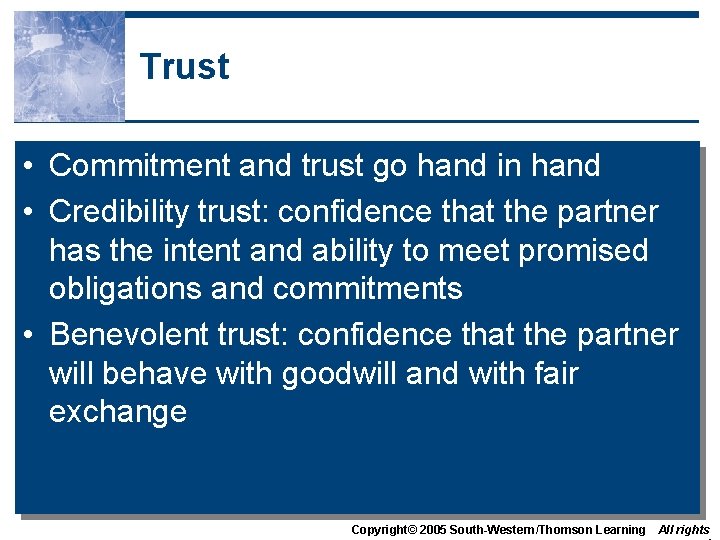
Trust • Commitment and trust go hand in hand • Credibility trust: confidence that the partner has the intent and ability to meet promised obligations and commitments • Benevolent trust: confidence that the partner will behave with goodwill and with fair exchange Copyright© 2005 South-Western/Thomson Learning All rights
Exhibit 8. 8: The Trust/Commitment Cycle Copyright© 2005 South-Western/Thomson Learning All rights
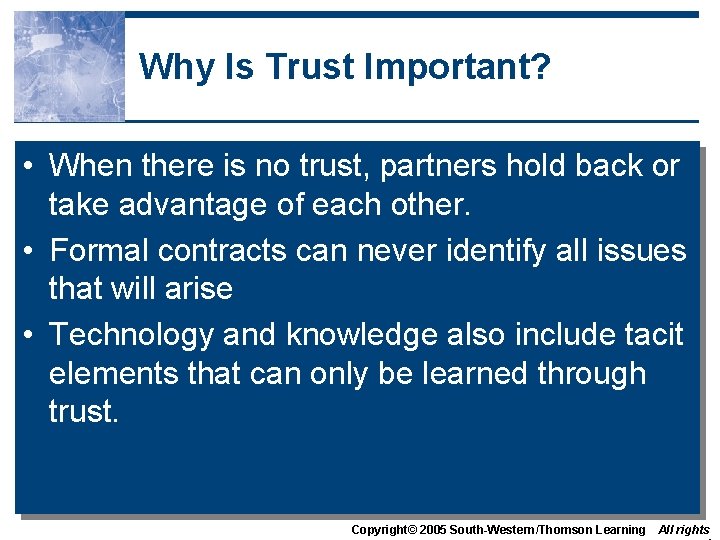
Why Is Trust Important? • When there is no trust, partners hold back or take advantage of each other. • Formal contracts can never identify all issues that will arise • Technology and knowledge also include tacit elements that can only be learned through trust. Copyright© 2005 South-Western/Thomson Learning All rights
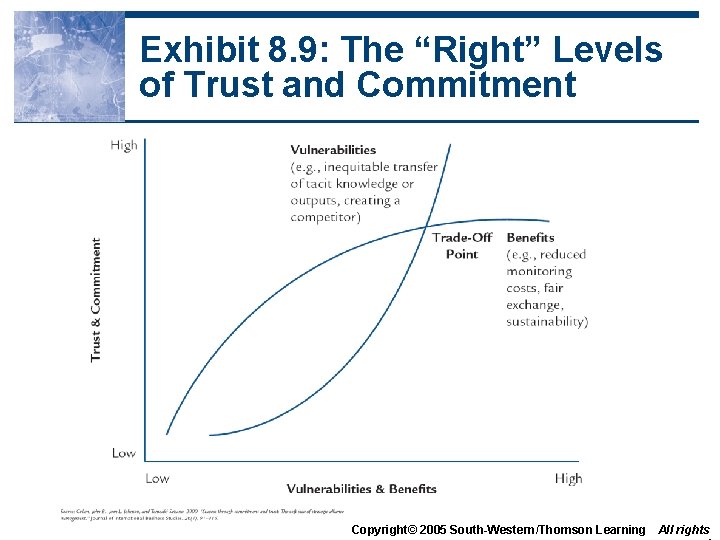
Building and Sustaining Trust and Commitment • • Pick your partner carefully Know each side’s strategic goals Seek win-win situations Go slowly Invest in cross-cultural training Invest in direct communication Find the right levels of trust and commitment Copyright© 2005 South-Western/Thomson Learning All rights
Exhibit 8. 9: The “Right” Levels of Trust and Commitment Copyright© 2005 South-Western/Thomson Learning All rights
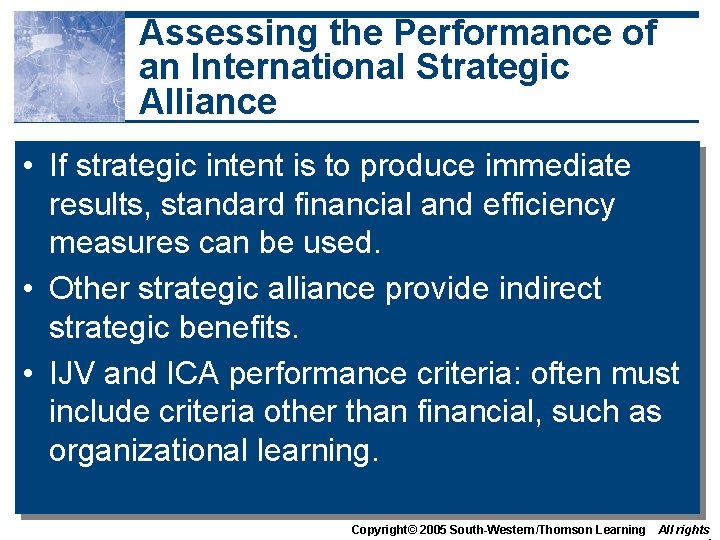
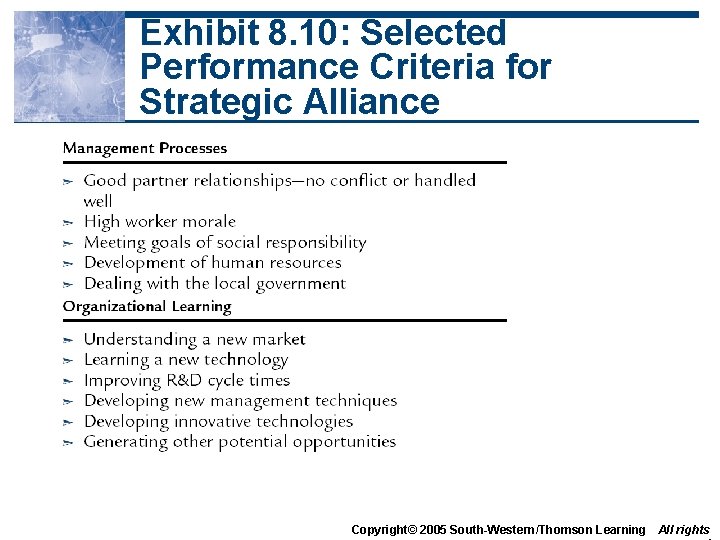
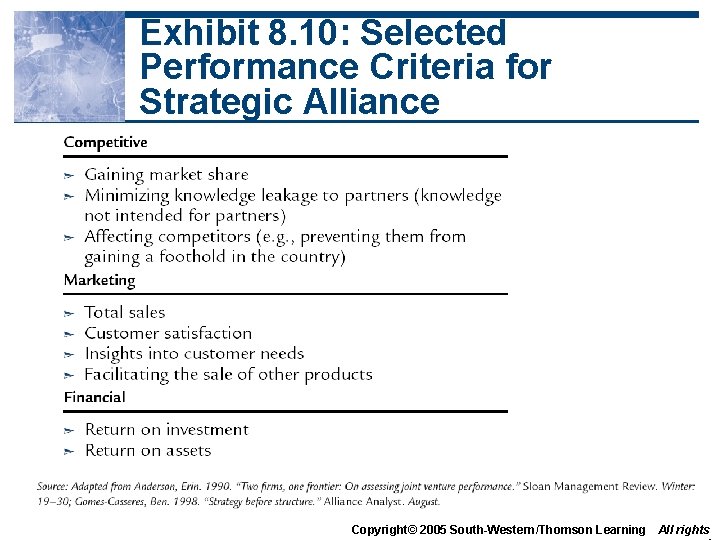
Assessing the Performance of an International Strategic Alliance • If strategic intent is to produce immediate results, standard financial and efficiency measures can be used. • Other strategic alliance provide indirect strategic benefits. • IJV and ICA performance criteria: often must include criteria other than financial, such as organizational learning. Copyright© 2005 South-Western/Thomson Learning All rights
Exhibit 8. 10: Selected Performance Criteria for Strategic Alliance Copyright© 2005 South-Western/Thomson Learning All rights
Exhibit 8. 10: Selected Performance Criteria for Strategic Alliance Copyright© 2005 South-Western/Thomson Learning All rights
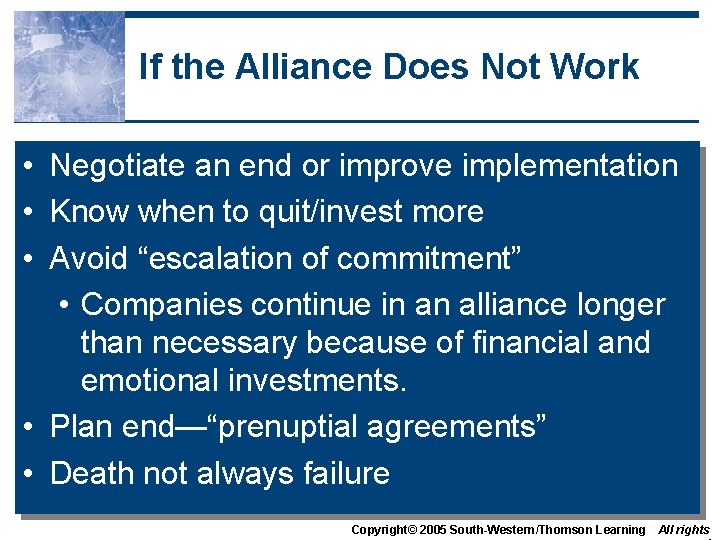
If the Alliance Does Not Work • Negotiate an end or improve implementation • Know when to quit/invest more • Avoid “escalation of commitment” • Companies continue in an alliance longer than necessary because of financial and emotional investments. • Plan end—“prenuptial agreements” • Death not always failure Copyright© 2005 South-Western/Thomson Learning All rights