
Chapter 8 InformationProcessing Approaches to Cognitive Development Module
- Slides: 23
Chapter 8: Information-Processing Approaches to Cognitive Development Module 8. 1 An Introduction to Information Processing Module 8. 2 Memory Module 8. 3 Academic Skills Children and Their Development, 3/e by Robert Kail
8. 1 An Introduction to Information Processing Basic Features of the Information-Processing Approach How Information Processing Changes with Development Comparing Information Processing and Piaget’s Theory
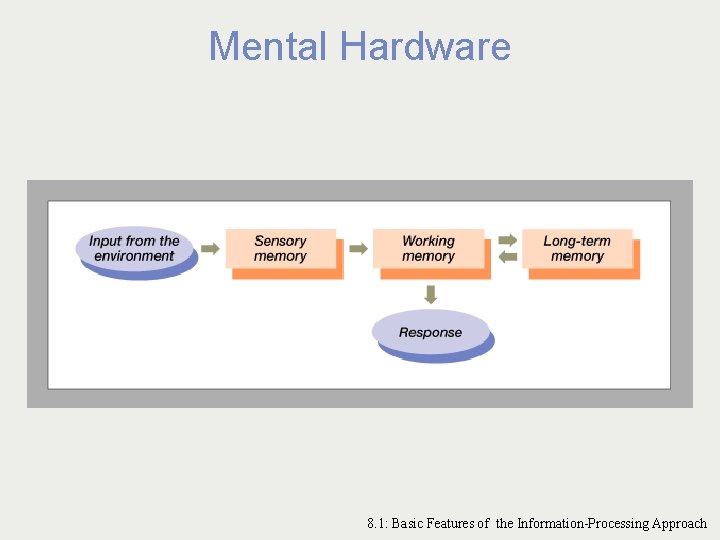
8. 1 Basic Features of the Information-Processing Approach • People and computers are both symbol processors • Distinction between hardware and software • Hardware includes sensory, working, and long-term memory • Software is task specific
Mental Hardware 8. 1: Basic Features of the Information-Processing Approach
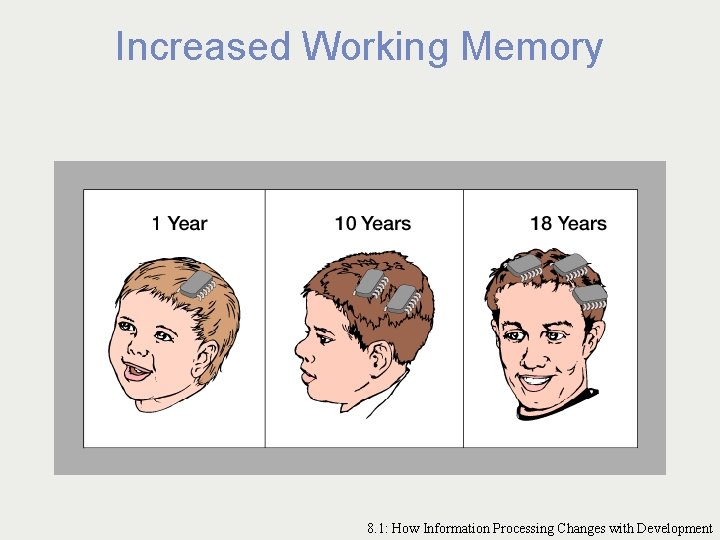
8. 1 How Information Processing Changes with Development • More efficient strategies • Increased working memory capacity • More effective inhibitory and executive processes • Increased automatic processing • Increased speed of processing
Increased Working Memory 8. 1: How Information Processing Changes with Development
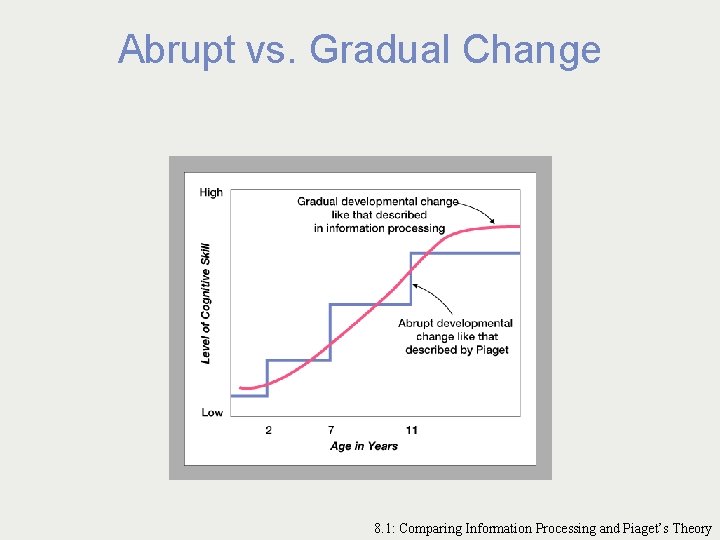
8. 1 Comparing Information Processing and Piaget’s Theory • Piaget presented a single, comprehensive theory • Information processing is a general approach that encompasses many specific theories • Piaget emphasized qualitative change • Information processing emphasizes gradual change
Abrupt vs. Gradual Change 8. 1: Comparing Information Processing and Piaget’s Theory
8. 2 Memory Origins of Memory Strategies for Remembering Knowledge and Memory
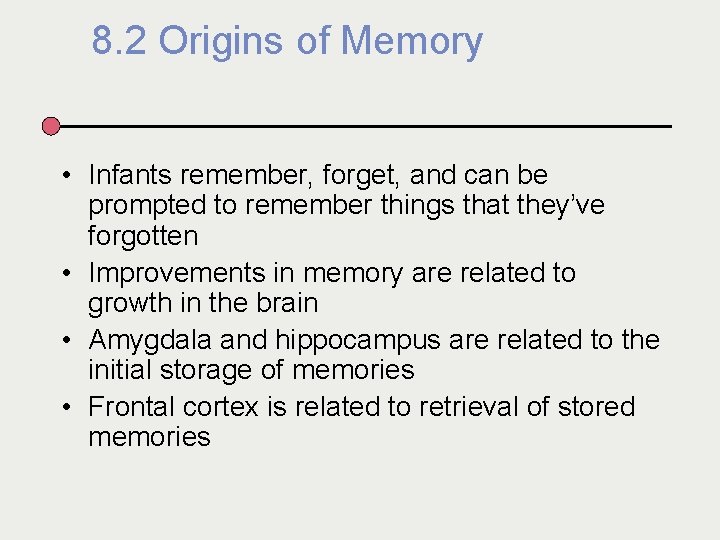
8. 2 Origins of Memory • Infants remember, forget, and can be prompted to remember things that they’ve forgotten • Improvements in memory are related to growth in the brain • Amygdala and hippocampus are related to the initial storage of memories • Frontal cortex is related to retrieval of stored memories
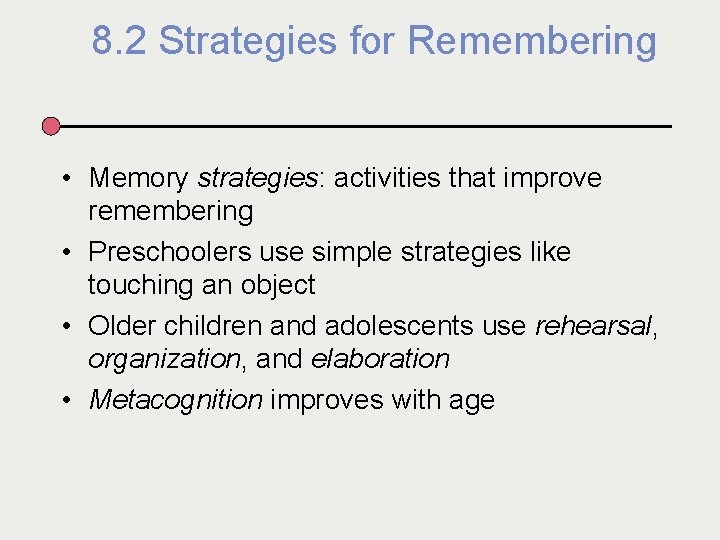
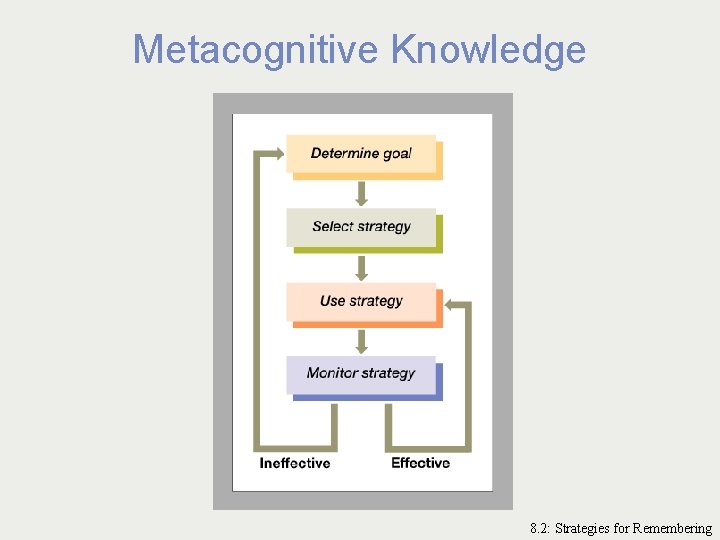
8. 2 Strategies for Remembering • Memory strategies: activities that improve remembering • Preschoolers use simple strategies like touching an object • Older children and adolescents use rehearsal, organization, and elaboration • Metacognition improves with age
Metacognitive Knowledge 8. 2: Strategies for Remembering
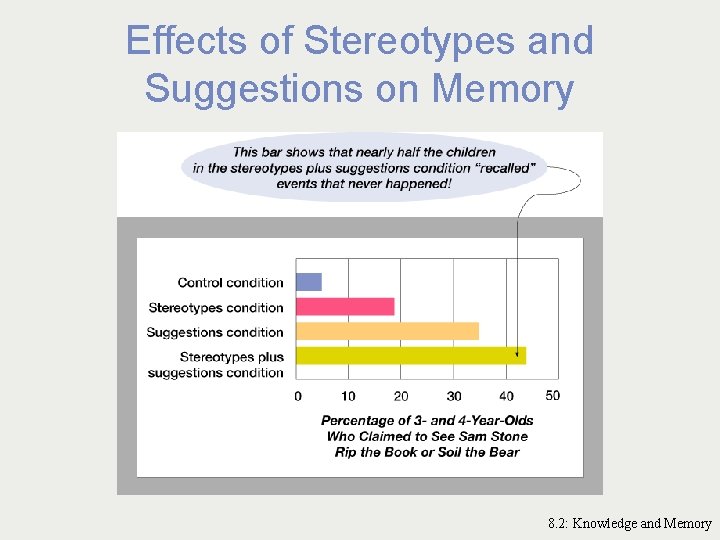
8. 2 Knowledge and Memory • Knowledge helps to organize memory but can distort our recall • Scripts are memory structures that describe the sequence in which events occur • People’s memory of their own lives is autobiographical memory • Infantile amnesia denotes forgetting of events from early in life • Preschoolers’ testimony can be distorted by adults’ suggestions
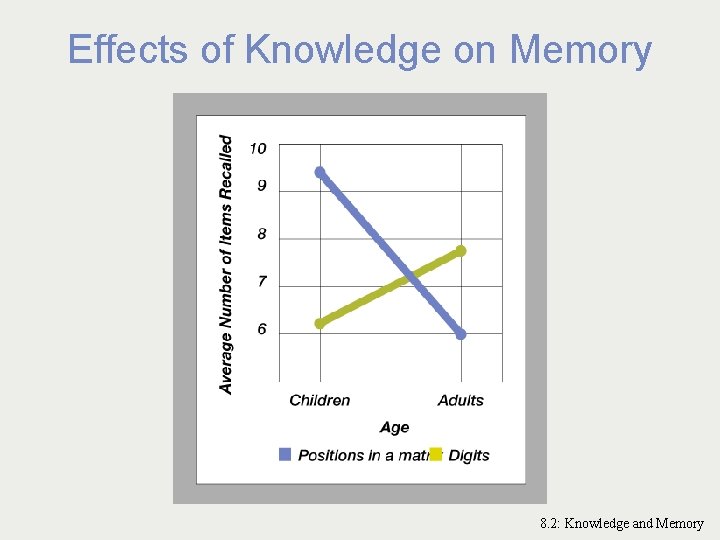
Effects of Knowledge on Memory 8. 2: Knowledge and Memory
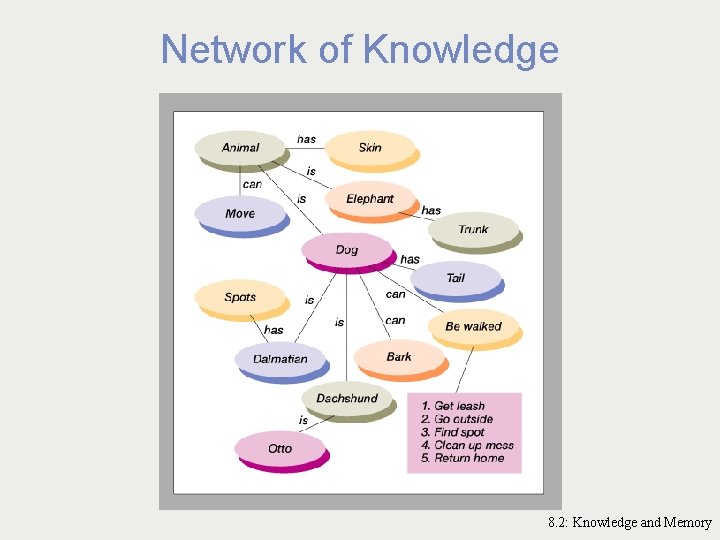
Network of Knowledge 8. 2: Knowledge and Memory
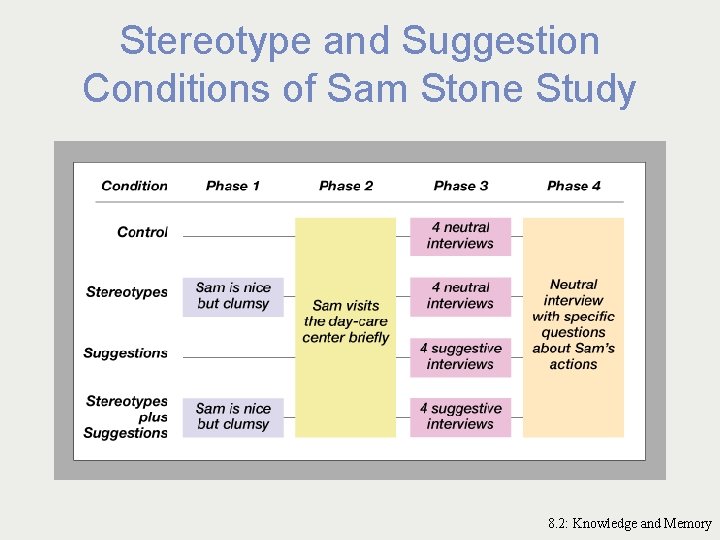
Stereotype and Suggestion Conditions of Sam Stone Study 8. 2: Knowledge and Memory
Effects of Stereotypes and Suggestions on Memory 8. 2: Knowledge and Memory
8. 3 Academic Skills Reading Writing Knowing and Using Numbers
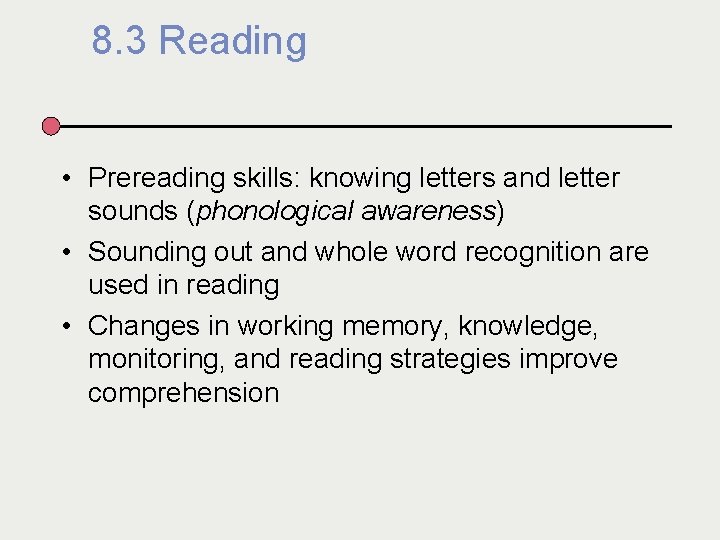
8. 3 Reading • Prereading skills: knowing letters and letter sounds (phonological awareness) • Sounding out and whole word recognition are used in reading • Changes in working memory, knowledge, monitoring, and reading strategies improve comprehension
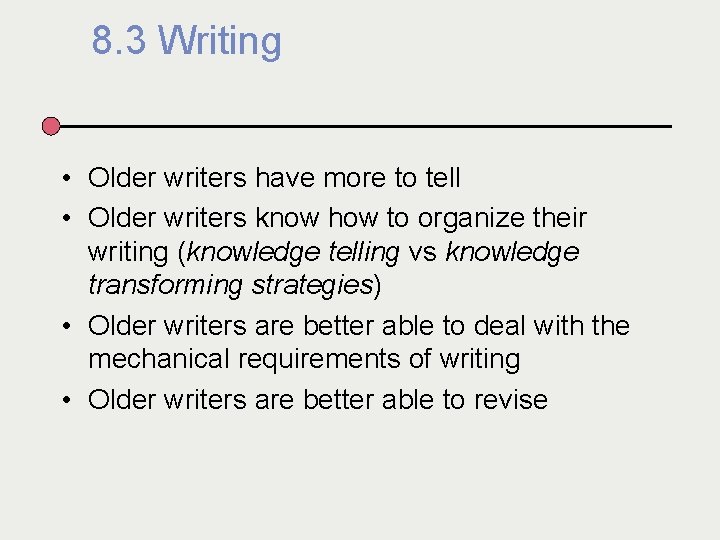
8. 3 Writing • Older writers have more to tell • Older writers know how to organize their writing (knowledge telling vs knowledge transforming strategies) • Older writers are better able to deal with the mechanical requirements of writing • Older writers are better able to revise
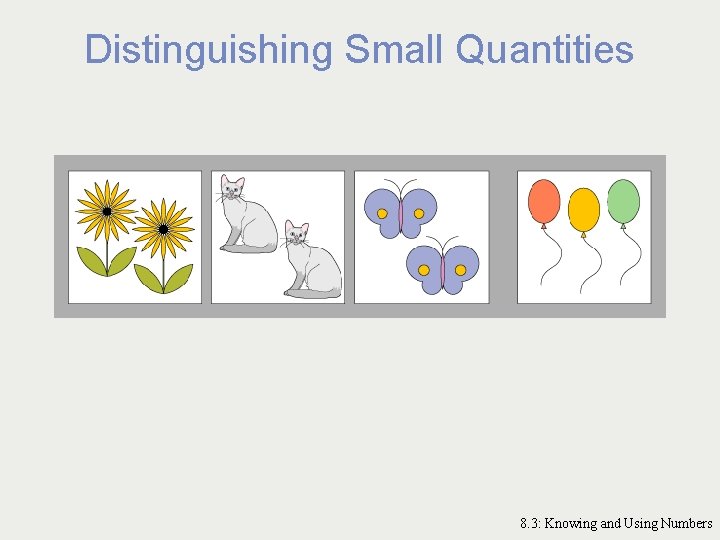
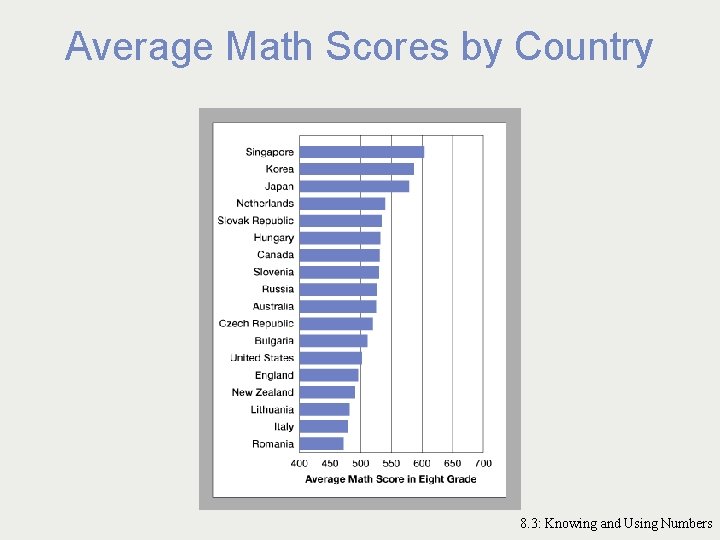
8. 3 Knowing and Using Numbers • Infants can distinguish small quantities such as two and three • Early counting follows 3 basic principles • Children use many different strategies to add and subtract • Math skills lower in US than other countries • In other countries, children spend more time in school, have more homework, parents have higher standards, & parents emphasize effort
Distinguishing Small Quantities 8. 3: Knowing and Using Numbers
Average Math Scores by Country 8. 3: Knowing and Using Numbers