
Chapter 8 History Physical Examination and the Preoperative





















- Slides: 63
Chapter 8: History, Physical Examination, and the Preoperative Evaluation Ali Razfar MD 10 -1 -14
• Gout: tophi of the pinna. Hard uric acid deposits under the skin that signify cartilage destruction.
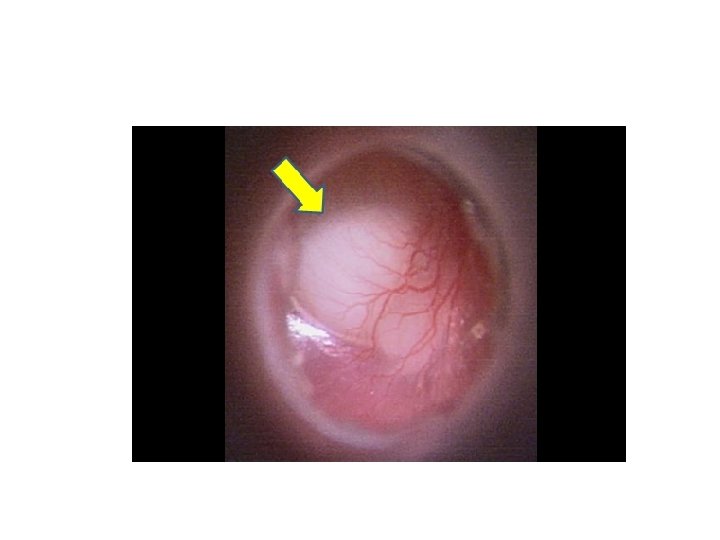
• Congenital cholesteatoma: TM intact, white mass usually in the anterior superior quadrant
• Fordyce spots: sebaceous glands of the buccal mucosa.
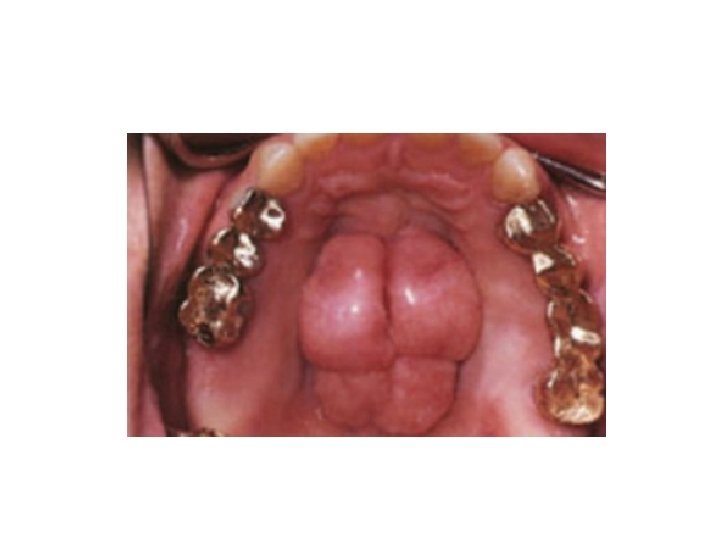
• Torus palatinus: benign bony outgrowth of the palate
Thornwaldt’s cyst
Preoperative Evaluation: Cardiovascular • Periop MI has 50% mortality • Risk factors JVD, 3 rd heart sounds, recent MI within 6 months, nonsinus heart rhythm, frequent PVC (>5 per minute), age > 70 years, valvular AS, previous vascular or thoracic surgery, and poor overall medical status. • Patients are maintained on their antihypertensive, antianginal, and antiarrhythmic regimens up to the time of surgery
• Patients with prosthetic valves, hx RF, endocarditis, congenital heart defects, MV prolapse with regurgitation should be abx prophylaxis as follows: – Low risk: 2 g amp 30 min before, 1 g 6 hours later – High risk: IV gent and IV amp, repeat dose 8 hours later
Respiratory • Patients with an arterial oxygen tension less than 60 mm Hg or an arterial carbon dioxide tension greater than 50 mm Hg are more likely to have postoperative pulmonary complications. • Spirometry: forced expiratory volume in 1 second/forced vital capacity ratio of less than 75% is considered abnormal, whereas a ratio of less than 50% carries a significant risk of perioperative pulmonary complications
Hematologic Disorders • Hemophilia A (Factor VIII: C) requires cryoprecipitate every 8 hours • Patients with type II von Willebrand’s disease should be transfused with cryo up to 24 hours before surgery with repeat infusion every 24 to 48 hours • Patients with type I will require an additional boost right before surgery • Type III management is similar to hemophilia A
Anticoagulants • Warfarin should be stopped at least 3 days prior to surgery • If very high risk for thromboembolism , can admit prior to surgery for heparinzation • Vitamin K can reverse warfarin in 6 hours, FFP much quicker • No strong evidence with ASA use and intraoperative bleeding, however most should stop at least 1 week before surgery
Chapter 9: General Considerations of Anesthesia and Management of the Difficult Airway
Patient Identification • Some predictors of anticipated difficulty with conventional DL: large overbite, large tongue, narrow mouth opening, or short chin • Still an incidence of 1 -3% of unanticipated difficulty
Induction Agents and Volatile Anesthetics • Thiopental and propofol both have negative ionotropic effect • Etomidate more hemodynamically stable, but potential for adrenal suppression and myoclonic activity • Ketamine does not produce apnea, can be given IM but may have emergence delirium and sympathomimetic effect
Sedatives and Opioids • Opioids help blunt sympathetic response to laryngoscopy and intubation • Opioids work synergistically with benzos to depress respiratory drive • Opioids and benzos can be antagonized by naloxone and flumazenil, respectively
Paralytic Agents • Succinylcholine is a depolarizing agent occupies acetylcholine receptor prolonging refractory period – – Can cause post-operative myalgia and transient increase in K levels Fast acting, short duration Most common muscle relaxant trigger of MH Contraindicated in pts with increased intracranial pressure, increased intraocular pressure, elevated K • Non-depoloraizing agents like rocuronium prevent binding of Ach are longer acting and slower onset of action
Standard vs Rapid Sequence Induction • Preoperative fasting times: – 2 hours for clear liquids – 4 hours for breask milk – 6 hours for other food or beverage • RSI done for patients with increased risk of aspiration – No mask ventilation done – Paralytic agent given immediately, cricoid pressure held throughout – Proper preoxygenation allows apneic pt to maintain saturation during this minute
Formulation of Intraop and Post-op Plans • What is the surgical expectation at the end of the procedure? – – – If and when tracheostomy will be done? MMF? Procedure involves severe manipulation of airway/VCs? Will patient positing cause airway edema? Keep intubated vs exubation? If extubated, location? • What makes this patient a “difficult” airway? – Difficult mask vs difficult intubation? – Awake techniques needed?
Predictors of difficult MV • Grade 3 MV (inadequate, unstable, or requiring two providers): BMI >30, a beard, Mallampati 3 or 4, age > 57, limited jaw protrusion, and snoring. • Grade 4 MV (impossible to MV): Snoring and thyromental distance < 6 cm • Grade 3 or 4 MV and difficult intubation: sleep apnea, BMI > 30, snoring, limited mandibular protrusion, and abnormal neck anatomy
Planning continued • Should intubation be awake, oral, nasal, or surgical? • What type of ETT will be used? – Smaller size necessary-MLT vs pediatric ETT? MLT is longer than standard ETT of same diameter, high-volume low pressure cuff. – RAE (Ring, Adair, and Elwyn or Right-Angled ETT): mandibles, T&A – Laser tube: tube is wrapped with a protective metal foil. Methylene blue-colored saline helps prevent fire in case of rupture – Armour tubes: resist kinking
Case 1 • 25 F with hx of hemangioma of tongue s/p numerous embolizations • 5 years earlier, procedure was canceled 2/2 inability to intubate orally or nasally. • Mouth opening 3 fingerbreadths, OC filled with hemangioma with extension into NP • Contemplating uterine surgery for fibroids? • Options?
• Awake tracheostomy
Case 2 • 66 F, left VC polyp with ball-valving pedunculated polyp. On expiration, the polyp blocked airway in the OP. • Comorbidities: morbid obesity, asthma, emphysema, OSA, GERD
• Awake nasal fiberoptic intubation
Case 3 • 36 F, evaluation for trismus and oral lesion biopsy • Unable to open mouth on exam, citing pain as the reason • No other co-morbidities
• Awake nasal fiberoptic • Main issues: distinguishing between masseter muscle spasm/pain and TMJ limited opening • Minimizing post-op nausea in patients with difficulty opening mouth • Leaving bougie in place on extubation?
Case 4 • 41 F about to undergo lap chole • IV sedation with sodium pentothal. Inability to mask. • Oral airway placed with two-handed bag/mask ventilation, patient desat to 80 s • Next step?
• #4 LMA placed and ventilation established
Case 5 • 50 M about to undergo lumbar laminectomy. • PE 6’ 2”, 98 kg. Mallampati II, good mouth opening, poor dentition. Significant GERD so plan for RSI. Denies hx of difficult intubation. • After induction, MAC 4 and then Miller 3 fail to visualize larynx • Mask ventilation attempted but failed. • Code called, next step?
• Anesthesiologist asked surgeon to perform cricothyrotomy – Surgeon “I haven’t done in years” • Attempted jet ventilation with 18 -guage needle resulting in significant bilaterally sub. Q emphysema • CPR initiated • Anesthesiologist then performs cric, 5 -mm ETT passed • HNS arrives, bougie placed followed by intubation with 7. 5 mm ETT • Prior records indicate that patient was difficult intubation
Case 6 • 35 M with Prader-Willi in OR for ventral hernia repair. • 4’ 11, 117 kg. Anesthesia not available. • Medical co-morbidities: OSA, GERD, asthma, seizure disorder, renal insufficiency • Small, thin nose. Mouth opening is 2 fingerbreadths. Mallampati Class IV. • Limited neck extension. Unable to lie flat. Prior emergent trach for bypass surgery
• Awake nasal fiberoptic • Hollinger revealed entire glottic opening without difficulty. • Mac/Miller blade did not reveal the complete glottic opening. • Patient was left intubated overnight. • How would you extubate this patient?
Fire in the Hole!
Airway Fire • Steps to be taken in the event of an airway fire: • Stop flow of O 2 to ETT and remove ETT • Flood field with fluids if needed • Mask ventilate with 100% O 2 • Reintubate • Evaluate extent of injury with endoscopy
COCLIA • What is Ludwig’s angina?
• Connective tissue infection of the FOM. It involves submandibular, sublingual, and submental spaces bilaterally • In one series, 75% of patients with ludwig’s angina required intubation or tracheotomy. In about 50%, intubation is unsuccessful resulting in emergent tracheotomy.
• You are paged stat to the OR. Upon induction, the anesthesiologist has lost the airway.
• LMA • Esophagotracheal combibtube • Anterior commisure scope and bougie placement then seldinger • Surgical airway
• Discuss stridor and its relation to the site of obstruction. Can it predict degree of obstruction?
• Inspiratory stridor suggests an extrathoracic lesion with laryngeal or subglottic obstruction • Expiratory stridor implies tracheobronchial obstruction • Biphasic stridor suggests a subglottic or glottic anomaly • Type of sound does not necessarily predict degree of obstruction
• Describe the role of helium in the treatment of airway obstruction.
• Effective for upper airway obstruction, post-extubation stridor and croup • Decreased density of Helium allows for faster flow • May decrease need for intubation • He/O 2 ranges from 80/20 or 60/40.
• Review the etiology and treatment of angioedema.
• Angioedema involves vascular leakage beneath the dermis and subcuticular tissues • Painless, nonpitting, well-demarcated edema occurring in the face, OC, OP, or larynx. • ACE inhibitor induced, hereditary, Ig. E mediated • Humidified O 2, IV benadryl, IV steroids, IV H 2 receptor antagonist, epi, low threshold to intubate
• Should a cricothyroidotomy be converted to a tracheostomy? When?
• In general cric converted to trach within 24 to 48 hours in a stable patient • In a large series of crics, complication rate was 6. 1% similar to trach patients • Used routinely in cardiac surgery, short intubation time, proximity to sternotomy
• The ER doc calls you to evaluate an adult patient for epiglottitis. What would you expect to find on PE/FFOL? What investigations would you order?
• Adults: less acute, pt less toxic appearing, airway compromise less common • CBC, blood cultures, lateral x-ray in kids • Flex: edematous supraglottis, should not flex children • Start abx 2 nd/3 rd gen ceph • Adults can be admitted for airway obs and conservative management • Children should be taken to OR for laryngoscopy/intubation, possible bronch, possible trach
• Discuss the indications for an emergent surgical airway.
• • Failure to Intubate Patients where oral/nasal ET intubation is contraindicated Apneic with Suspected C-spine Injury Facial Trauma with Su spected C-spine Injury Severe Facial + Neck Trauma, altered anatomy Relief of upper airway obstruction