
Chapter 8 Health Problems of Newborns Copyright 2015
Chapter 8 Health Problems of Newborns Copyright © 2015, 2011, 2007, 2003, 1999 by Mosby, Inc. , an imprint of Elsevier Inc. All rights reserved.
Birth Injuries Soft tissue injuries Usually a result of dystocia Ø Includes petechiae, ecchymoses, or lacerations Ø Nursing management Maintain asepsis Ø Provide explanation and reassurance to parent Ø Record accurate description of injury Ø Facilitate subsequent nursing evaluation Ø Copyright © 2015, 2011, 2007, 2003, 1999 by Mosby, Inc. , an imprint of Elsevier Inc. All rights reserved. 2
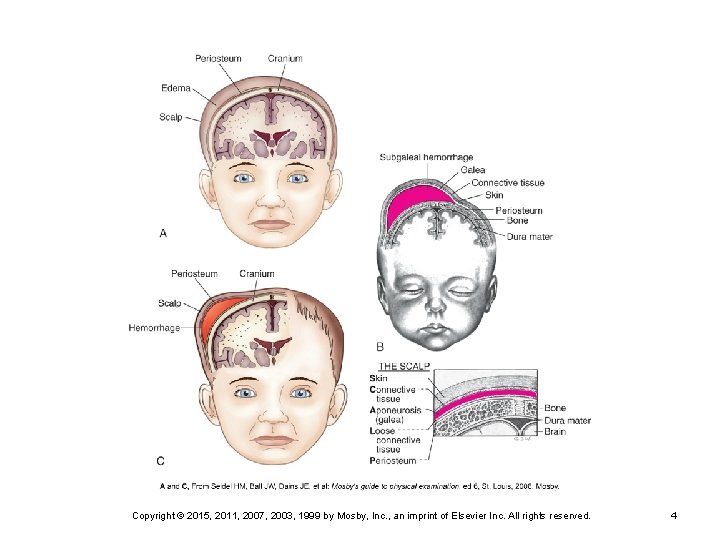
Birth Injuries (Cont. ) Head trauma: Caput succedaneum Ø Cephalhematoma Ø Subgaleal hemorrhage Ø Nursing Management Assessment of injury Ø Observation for possible associated complications Ø Reassurance to parents Ø Copyright © 2015, 2011, 2007, 2003, 1999 by Mosby, Inc. , an imprint of Elsevier Inc. All rights reserved. 3
Copyright © 2015, 2011, 2007, 2003, 1999 by Mosby, Inc. , an imprint of Elsevier Inc. All rights reserved. 4
Birth Injuries (Cont. ) Fractures (Clavicle most common) Nerve Injuries Facial paralysis Ø Brachial palsy Ø Phrenic nerve paralysis Ø Nursing Management: Assist with feeding techniques, positioning Ø Support family Ø Copyright © 2015, 2011, 2007, 2003, 1999 by Mosby, Inc. , an imprint of Elsevier Inc. All rights reserved. 5
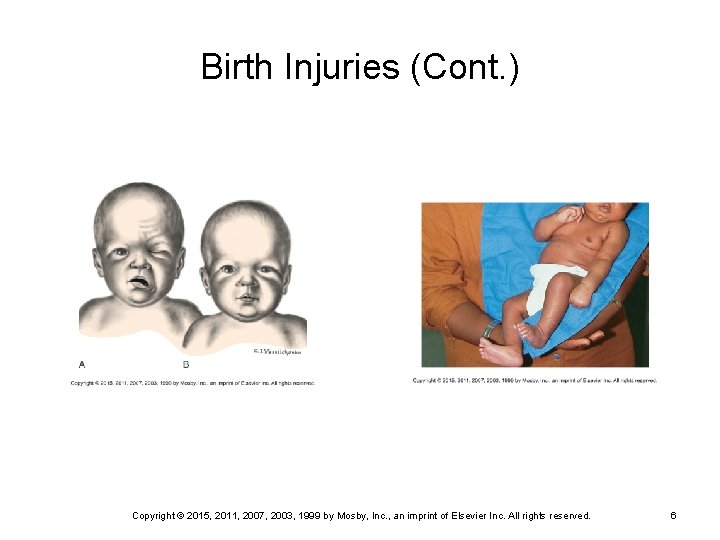
Birth Injuries (Cont. ) FIG. 8 -2 A, Paralysis of right side of face 15 minutes after forceps delivery. Absence of movement on affected side is especially noticeable when infant cries. B, The same infant 24 hours later. Copyright © 2015, 2011, 2007, 2003, 1999 by Mosby, Inc. , an imprint of Elsevier Inc. All rights reserved. 6
Cranial Deformities Microcephaly Craniosynostosis Nursing Management: Supportive care for infant and family Ø Early identification of persistent cranial molding Ø Monitoring of hematocrit and hemoglobin after surgery Ø Helmet following surgery and close follow-up Ø Copyright © 2015, 2011, 2007, 2003, 1999 by Mosby, Inc. , an imprint of Elsevier Inc. All rights reserved. 7

Craniofacial Abnormalities Pierre Robin sequence Cleft lip Cleft palate Copyright © 2015, 2011, 2007, 2003, 1999 by Mosby, Inc. , an imprint of Elsevier Inc. All rights reserved. 8
Nursing Management Support to family Feeding techniques Positioning Ø Supporting the lip seal with breastfeeding or bottlefed systems or modified nipples Ø Support the cheeks and chin Ø Post-op care: • Ensure proper airway and positioning • PROTECT THE SUTURE SITE • Manage pain • Support family Ø Copyright © 2015, 2011, 2007, 2003, 1999 by Mosby, Inc. , an imprint of Elsevier Inc. All rights reserved. 9

Dermatologic Problems in the Newborn Erythema toxicum neonatorum Candidiasis Herpes simplex virus Bullous impetigo Birthmarks Copyright © 2015, 2011, 2007, 2003, 1999 by Mosby, Inc. , an imprint of Elsevier Inc. All rights reserved. 10
Problems Related to Physiologic Factors Hyperbilirubinemia Pathophysiology Complications Diagnostic evaluation Therapeutic management Ø Phototherapy Prognosis Nursing management Copyright © 2015, 2011, 2007, 2003, 1999 by Mosby, Inc. , an imprint of Elsevier Inc. All rights reserved. 11
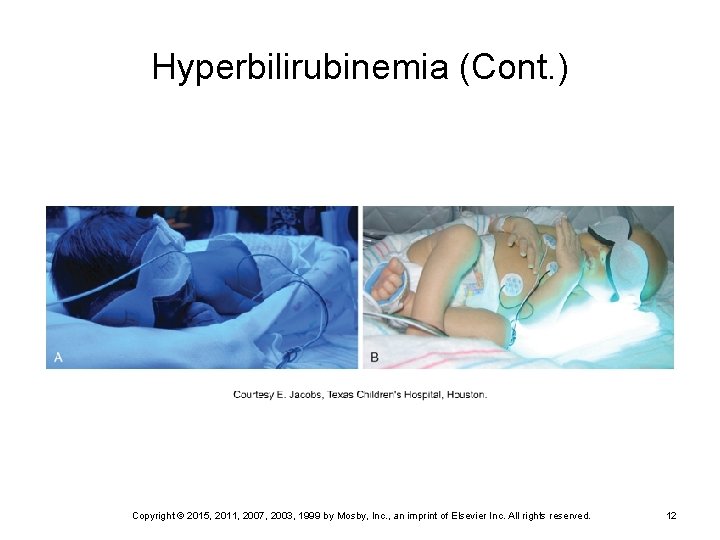
Hyperbilirubinemia (Cont. ) FIG. 8 -12 A, Infant receiving phototherapy; note nested boundaries for comfort and eye protection. B, Newborn laying on Bili. Blanket, which may be used with overhead lights to provide intensive phototherapy. (Courtesy E. Jacobs, Texas Children’s Hospital, Houston. ) Copyright © 2015, 2011, 2007, 2003, 1999 by Mosby, Inc. , an imprint of Elsevier Inc. All rights reserved. 12
Hemolytic Disease of the Newborn Blood incompatibility Rh incompatibility ABO incompatibility Treatment Exchange transfusions Ø Intrauterine transfusion Ø Prevention of Rh isoimmunization Ø Rho. GAM Nursing management Copyright © 2015, 2011, 2007, 2003, 1999 by Mosby, Inc. , an imprint of Elsevier Inc. All rights reserved. 13
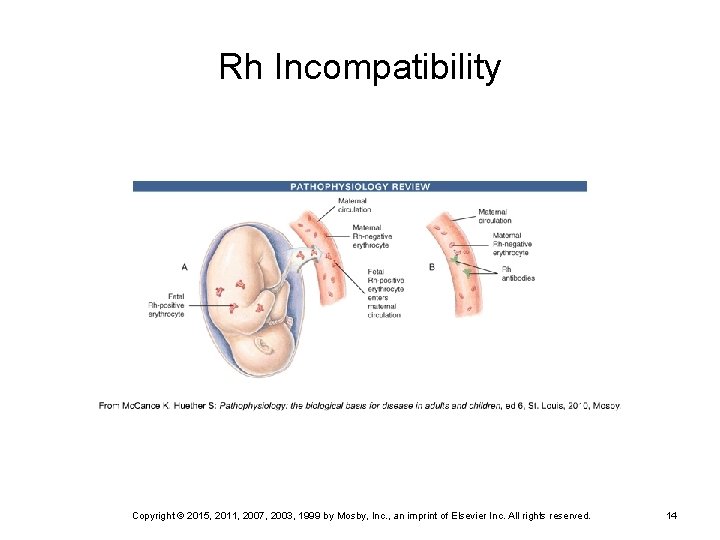
Rh Incompatibility FIG. 8 -13 Development of maternal sensitization to Rh antigens. A, Fetal Rh-positive erythrocytes enter maternal system. Maternal anti-Rh antibodies are formed. B, Anti-Rh antibodies cross placenta and attack fetal erythrocytes. Copyright © 2015, 2011, 2007, 2003, 1999 by Mosby, Inc. , an imprint of Elsevier Inc. All rights reserved. 14
Hypoglycemia Pathophysiology Clinical manifestations Diagnostic evaluation Therapeutic management Nursing management Identification of the etiology Ø Reduction of environmental factors Ø Help mother and infant establish successful breastfeeding Ø Assess for comorbidity Ø Copyright © 2015, 2011, 2007, 2003, 1999 by Mosby, Inc. , an imprint of Elsevier Inc. All rights reserved. 15
Hyperglycemia (Transient) Pathophysiology Diagnosis Blood glucose >125 mg/dl in full-term infant Ø Blood glucose >150 mg/dl in preterm infant Ø Nursing management Frequent blood glucose monitoring (atraumatic) and observation Ø Monitor urinary output Ø Support parents Ø Copyright © 2015, 2011, 2007, 2003, 1999 by Mosby, Inc. , an imprint of Elsevier Inc. All rights reserved. 16
Hypocalcemia Pathophysiology Early onset Ø Late onset Ø Diagnostic evaluation Therapeutic management Nursing management Identifying those at risk and observation Ø Calcium, Vitamin D, and phosphorous administration Ø Prevention and anticipatory guidance Ø Institute seizure precautions Ø Copyright © 2015, 2011, 2007, 2003, 1999 by Mosby, Inc. , an imprint of Elsevier Inc. All rights reserved. 17
Hemorrhagic Disease Pathophysiology (Vitamin K deficiency) Clinical signs and symptoms Early onset Ø Late onset Ø Diagnostic evaluation Therapeutic management Nursing management Assessment Ø Prevention through administration Vitamin K Ø Copyright © 2015, 2011, 2007, 2003, 1999 by Mosby, Inc. , an imprint of Elsevier Inc. All rights reserved. 18
Problems Caused by Perinatal Environmental Factors Chemical Agents Maternal alcohol, medications, drugs Infectious disease Radiation or other Teratogenic effects Nursing management Prevention and education Ø Assessment and support of infants Ø Copyright © 2015, 2011, 2007, 2003, 1999 by Mosby, Inc. , an imprint of Elsevier Inc. All rights reserved. 19
Perinatal Environmental factors (Cont. ) Radiation Mutagenic and teratogenic effects to fetus Therapeutic intervention: avoid unnecessary radiation exposure during pregnancy Copyright © 2015, 2011, 2007, 2003, 1999 by Mosby, Inc. , an imprint of Elsevier Inc. All rights reserved. 20
- Slides: 20