
Chapter 8 Group Behavior Learning Objectives How are

Chapter 8: Group Behavior
Learning Objectives How are people changed through their group membership, and how is the group changed by members' ideas and actions? How do groups sometimes lower the inhibitions of members, causing them to impulsively engage in such antisocial behavior as vandalism, aggression, and rioting? Social Psychology, 7 th Edition Stephen Franzoi © 2016 Are group decisions more or less cautious than individual decisions? What is more important in determining the effectiveness of leaders— their personalities or the factors they encounter? BVT Publishing Better textbooks, better prices.
Groups and Their Purpose Group: several interdependent people who have emotional ties and interact regularly Groups accomplish instrumental tasks. � People often join groups because they desire to achieve task-oriented goals they cannot attain alone. Groups meet socioemotional needs. � Becoming a group member helps to satisfy affiliative motives, such as the desire for approval, belonging, prestige, friendship, and even love. Social Psychology, 7 th Edition Stephen Franzoi © 2016 BVT Publishing Better textbooks, better prices.

Temporal Model of Group Membership Group membership changes in predictable ways over time. Stages � Investigation � Socialization � Maintenance � Resocialization � Remembrance Social Psychology, 7 th Edition Stephen Franzoi © 2016 BVT Publishing Better textbooks, better prices.

Figure 8. 1 A Temporal Model of Group Membership Social Psychology, 7 th Edition Stephen Franzoi © 2016 BVT Publishing Better textbooks, better prices.
Group Structure Social norms � Expected standards of behavior � Stable over time Social roles � Expectations for group members Status systems � Distribution of power among members Social Psychology, 7 th Edition Stephen Franzoi © 2016 BVT Publishing Better textbooks, better prices.

Group Success Fosters Social Identification When groups succeed, we Bask In Reflected Glory (BIRG) � "We won!" When groups fail, we Cut Off Reflected Failure (CORF) � "They lost!" Social Psychology, 7 th Edition Stephen Franzoi © 2016 BVT Publishing Better textbooks, better prices.
Social Cohesiveness Cohesion affected by � Group size Most groups < 4 people. More than 150 people strains innate capacity. � Member similarity/diversity Embracing diversity enhances problem solving. � Perceived subversion of group's identity Allowing moderate dissent can maintain cohesion. Social Psychology, 7 th Edition Stephen Franzoi © 2016 BVT Publishing Better textbooks, better prices.
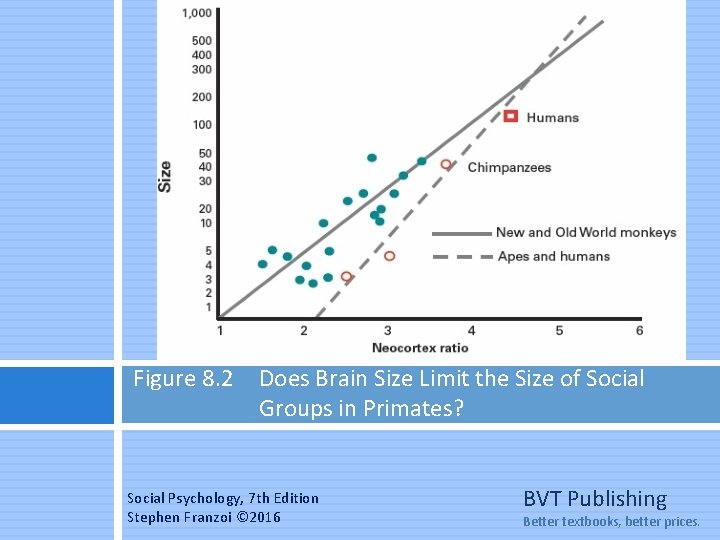
Figure 8. 2 Does Brain Size Limit the Size of Social Groups in Primates? Social Psychology, 7 th Edition Stephen Franzoi © 2016 BVT Publishing Better textbooks, better prices.

Social Facilitation The presence of others enhances the performance of easy tasks, but interferes with difficult tasks. Possible explanations: � The mere presence of conspecifics increases arousal. � Evaluation apprehension diverts cognitive resources. � Distraction-conflict: Presence of conspecifics raises the question of what to attend to—others or the task. Social Psychology, 7 th Edition Stephen Franzoi © 2016 BVT Publishing Better textbooks, better prices.

Figure 8. 3 Zajonc’s Drive Theory of Social Facilitation Social Psychology, 7 th Edition Stephen Franzoi © 2016 BVT Publishing Better textbooks, better prices.
Social Loafing When individual efforts are pooled, each person contributes less than when they are alone. Seen in behavior and cognitive tasks Likely cause: diffusion of responsibility Social Psychology, 7 th Edition Stephen Franzoi © 2016 BVT Publishing Better textbooks, better prices.

Figure 8. 4 Distraction-Conflict Theory Social Psychology, 7 th Edition Stephen Franzoi © 2016 BVT Publishing Better textbooks, better prices.
Reducing Social Loafing Makes individual effort identifiable Provides potential for evaluation Social ostracism of loafers � Decreased loafing among the emotionally expressive � Had no effect on the emotionally unexpressive Social Psychology, 7 th Edition Stephen Franzoi © 2016 BVT Publishing Better textbooks, better prices.
When Do Groups Help? Group settings often lower motivation to perform. However, highly motivated, competent people may work harder in group settings. Low-skilled people may experience less evaluation apprehension and improve performance. Social Psychology, 7 th Edition Stephen Franzoi © 2016 BVT Publishing Better textbooks, better prices.
Deindividuation In groups, people experience: � Arousal � Diffusion of responsibility � Feelings of anonymity As a result: � Inhibitions are lowered � Self-awareness decreases Social Psychology, 7 th Edition Stephen Franzoi © 2016 BVT Publishing Better textbooks, better prices.

Figure 8. 5 Effects of Deindividuation on Stealing Among Halloween Trick-or-Treaters Social Psychology, 7 th Edition Stephen Franzoi © 2016 BVT Publishing Better textbooks, better prices.
Group Decision-Making Stages Orientation � Discussion � Gather information and evaluate possible solutions. Decision � Identify task and strategy. Make a choice based on decision rules. Implementation � Carry out the decision and evaluate it. Social Psychology, 7 th Edition Stephen Franzoi © 2016 BVT Publishing Better textbooks, better prices.

Figure 8. 6 The Stages of Group Decision Making Social Psychology, 7 th Edition Stephen Franzoi © 2016 BVT Publishing Better textbooks, better prices.
Factors Influencing Group Decisions Type of issue � Intellectual vs. judgmental Type of social influence � Informational vs. normative Type of decision rule � Unanimity, majority wins, or plurality wins Social Psychology, 7 th Edition Stephen Franzoi © 2016 BVT Publishing Better textbooks, better prices.
Group Polarization Initially called "risky shift" Discussion enhances group members' original opinions. More likely on important issues Mechanisms � Social comparison (normative influence) � Persuasive arguments (informational influence) Social Psychology, 7 th Edition Stephen Franzoi © 2016 BVT Publishing Better textbooks, better prices.

Figure 8. 7 The Process of Group Polarization Social Psychology, 7 th Edition Stephen Franzoi © 2016 BVT Publishing Better textbooks, better prices.
Groupthink An extreme form of group polarization � Decreased mental efficiency � Lack of reality testing � Deteriorated moral judgment Risk factors for groupthink � High group cohesiveness � Threatening situational context � Structural and procedural faults Social Psychology, 7 th Edition Stephen Franzoi © 2016 BVT Publishing Better textbooks, better prices.
Symptoms of Groupthink Overestimation of the ingroup � Perceived invulnerability � Unquestioned belief in own groups' morality Close-mindedness � Rationalized judgments � Stereotypes of opponents Increased conformity pressure � Self-censorship � Suppression of internal criticism Social Psychology, 7 th Edition Stephen Franzoi © 2016 BVT Publishing Better textbooks, better prices.
Leadership Two kinds of leadership activities � Task leadership � Socioemotional leadership Leaders who combine both in a flexible style get high marks from followers. Few personality traits are common to effective leadership. Social Psychology, 7 th Edition Stephen Franzoi © 2016 BVT Publishing Better textbooks, better prices.
Transformational Leaders Change the outlook of followers, allowing them to move beyond self-interest to group interest. Three components � Charismatic communication � Convey a vision � Implement a vision Social Psychology, 7 th Edition Stephen Franzoi © 2016 BVT Publishing Better textbooks, better prices.
Contingency Model of Leadership Leaders are effective when their traits match the situation. Leaders can be task-oriented or relationshiporiented. When situational control is: � Low or high, a task-oriented leader is preferred � Moderate, a relationship-oriented leader is preferred Social Psychology, 7 th Edition Stephen Franzoi © 2016 BVT Publishing Better textbooks, better prices.
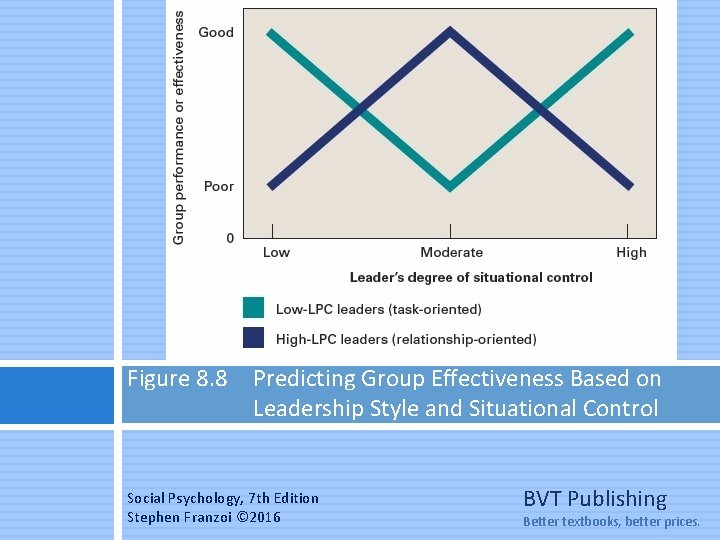
Figure 8. 8 Predicting Group Effectiveness Based on Leadership Style and Situational Control Social Psychology, 7 th Edition Stephen Franzoi © 2016 BVT Publishing Better textbooks, better prices.
Gender, Culture, and Leadership There are more gender similarities than differences. � � � Female leaders are as task-oriented as male leaders. Females tend toward a more democratic leadership style. Leader prototype is associated with male stereotype. An ideal leader varies by culture. � Members of individualist cultures are more responsive to task-oriented leaders than members of collectivist cultures. Social Psychology, 7 th Edition Stephen Franzoi © 2016 BVT Publishing Better textbooks, better prices.
Social Dilemmas The best short-term choice for individuals leads to a poor outcome for the group in the long run. Examples: � Problem of the commons (resource dilemma) � Free rider problem � Prisoner's dilemma Social Psychology, 7 th Edition Stephen Franzoi © 2016 BVT Publishing Better textbooks, better prices.
Ways to Resolve Social Dilemmas Sanctioning systems to promote cooperative behavior Education about social dilemmas Making group identification salient Promoting a cooperative orientation Promoting group discussion about the dilemma Social Psychology, 7 th Edition Stephen Franzoi © 2016 BVT Publishing Better textbooks, better prices.
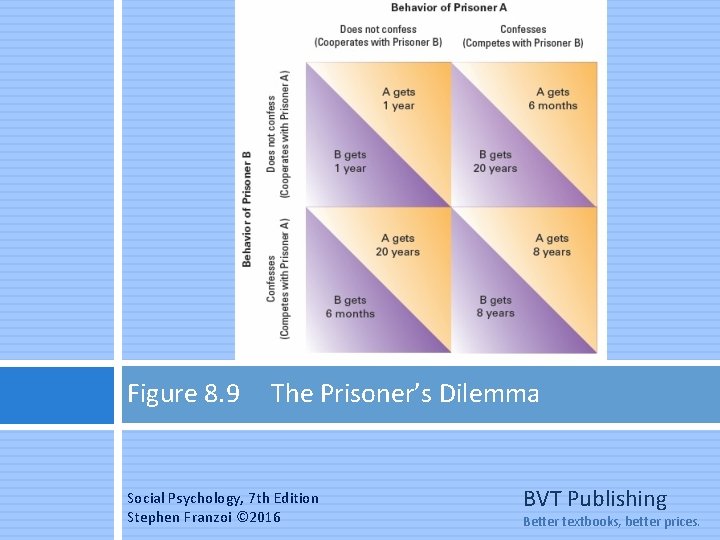
Figure 8. 9 The Prisoner’s Dilemma Social Psychology, 7 th Edition Stephen Franzoi © 2016 BVT Publishing Better textbooks, better prices.
- Slides: 32