
Chapter 8 Geologic Time Historical Notes Catastrophism Landscape
- Slides: 31
Chapter 8 Geologic Time
Historical Notes § Catastrophism § Landscape developed by catastrophes § James Ussher, mid-1600 s, concluded Earth was only a few thousand years old § Abraham Gottlob Werner § “Neptunist”
Historical Notes § Modern geology § Uniformitarianism § Fundamental principle of geology § "The present is the key to the past" § James Hutton – “Plutonist/Vulcanist” § Theory of the Earth, 1795 § “no vestige of a beginning – no prospect of an end” § Charles Lyell § Principles of Geology § Mentor of Charles Darwin
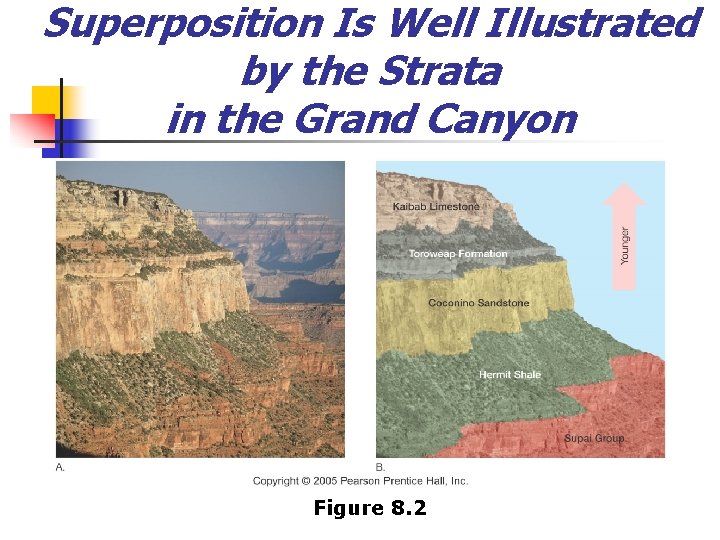
Relative Dating n Law of superposition Developed by Nicolaus Steno in 1669 n In an undeformed sequence of sedimentary rocks (or layered igneous rocks), the oldest rocks are on the bottom n
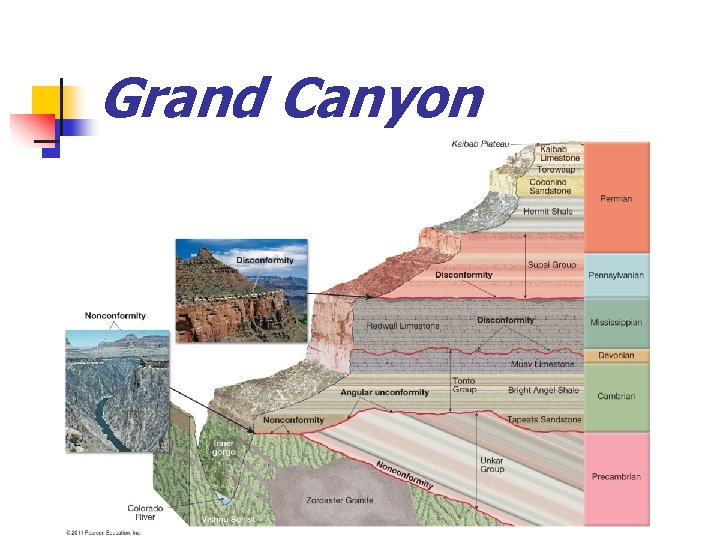
Superposition Is Well Illustrated by the Strata in the Grand Canyon Figure 8. 2
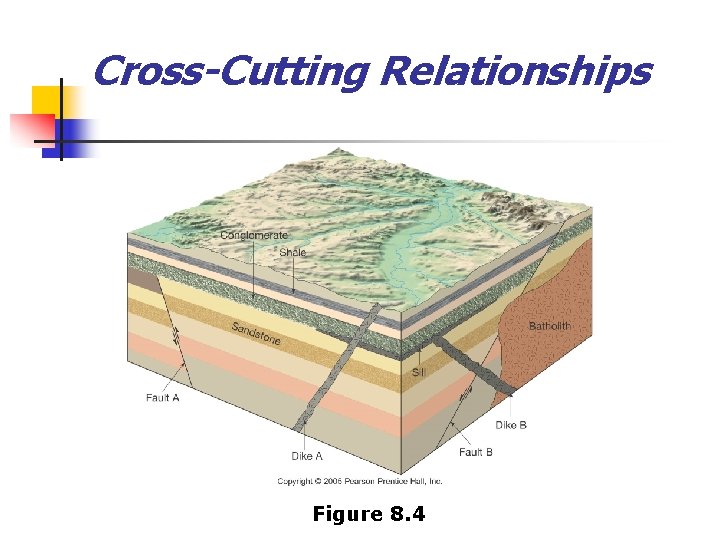
Relative Dating n Principle of original horizontality Layers of sediment are generally deposited in a horizontal position n Rock layers that are flat have not been disturbed n n Principle of cross-cutting relationships n Younger features cut across older features
Cross-Cutting Relationships Figure 8. 4
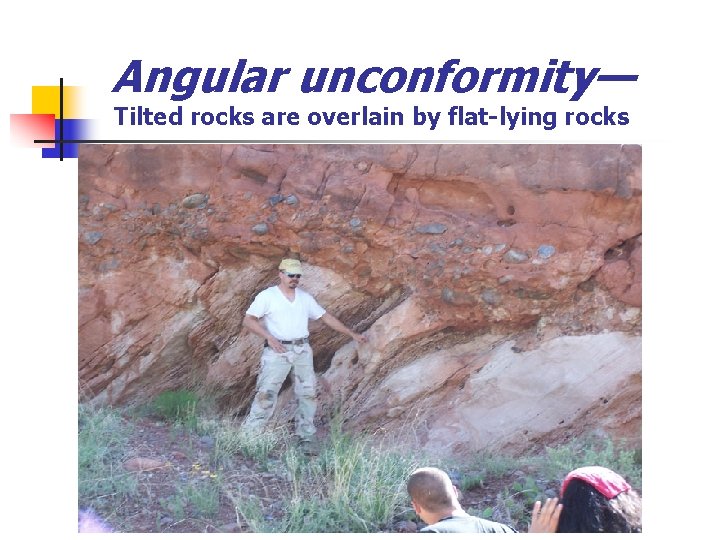
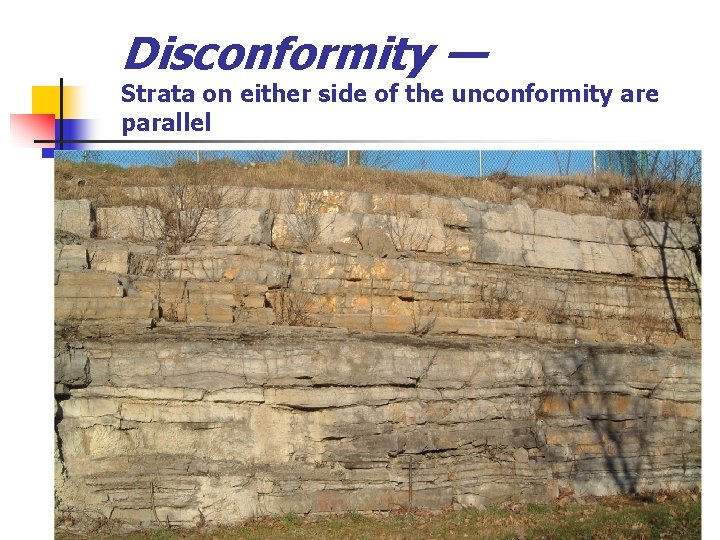
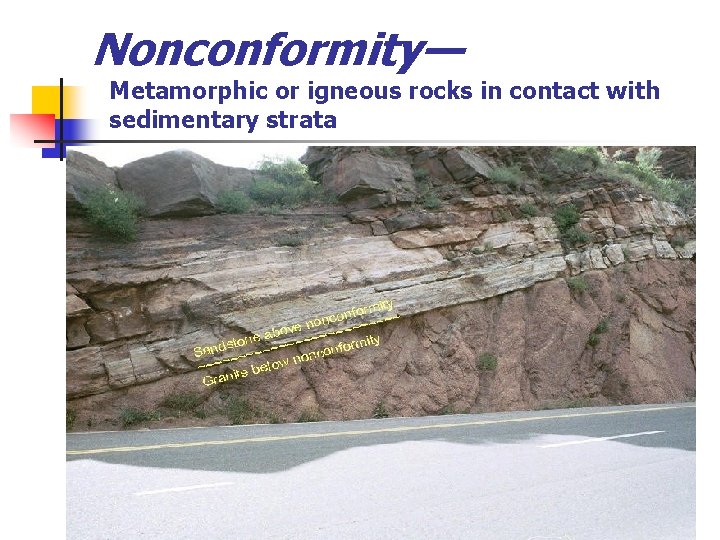
Relative Dating n Inclusions An inclusion is a piece of rock that is enclosed within another rock n Rock containing the inclusion is younger n n Unconformity n An unconformity is a break in the rock record produced by erosion and/or nondeposition of rock units
Angular unconformity— Tilted rocks are overlain by flat-lying rocks
Disconformity — Strata on either side of the unconformity are parallel
Nonconformity— Metamorphic or igneous rocks in contact with sedimentary strata
Grand Canyon
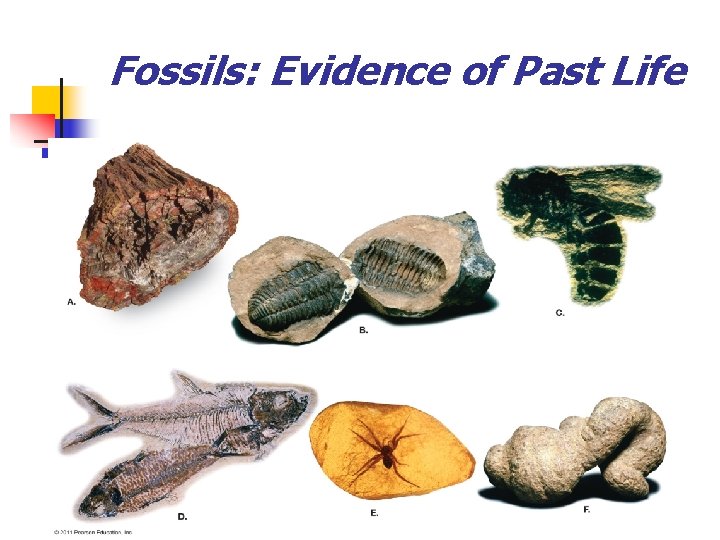
Fossils: Evidence of Past Life n n n Fossil = traces or remains of prehistoric life now preserved in rock Fossils are generally found in sediment or sedimentary rock (rarely in metamorphic and never in igneous rock) Paleontology = study of fossils
Fossils: Evidence of Past Life n Geologically fossils are important because they Aid in interpretation of the geologic past n Serve as important time indicators n Allow for correlation of rocks from different places n
Fossils: Evidence of Past Life n Conditions favoring preservation Rapid burial n Possession of hard parts (skeleton, shell, etc. ) n
Fossils: Evidence of Past Life
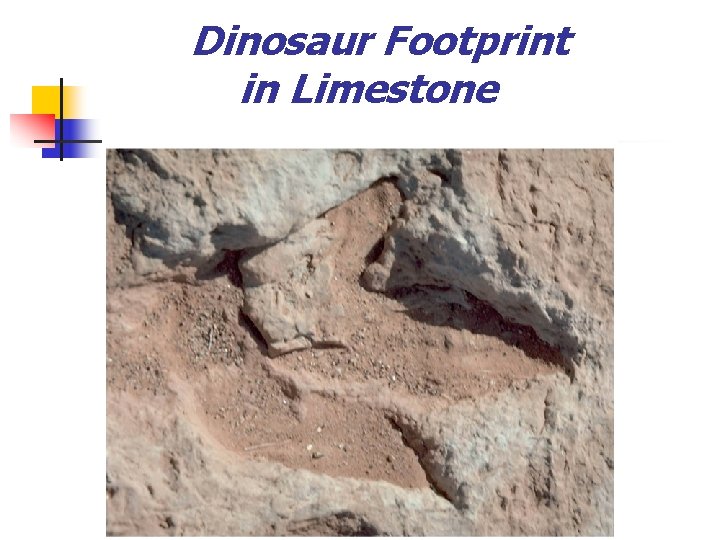
Dinosaur Footprint in Limestone
Fossils and Correlation n Matching of rocks of similar ages in different regions is known as correlation n Correlation often relies upon fossils n William Smith (late 1700 s) noted that sedimentary strata in widely separated area could be identified and correlated by their distinctive fossil content
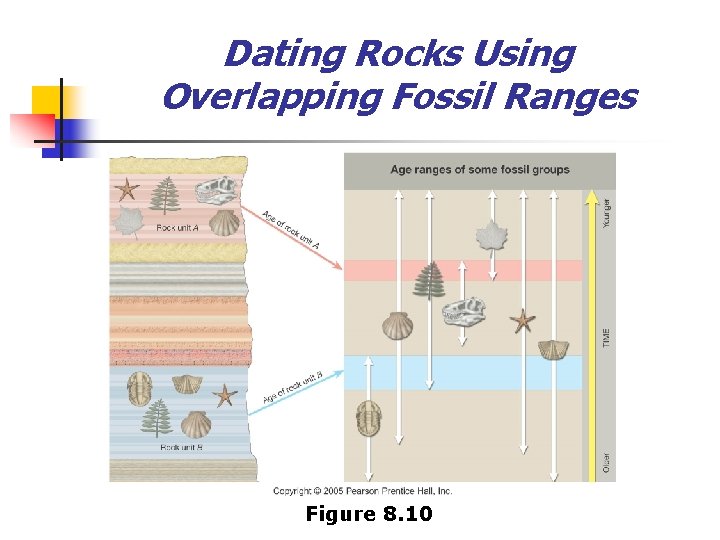
Fossils and Correlation n Principle of fossil succession— Fossil organisms succeed one another in a definite and determinable order, and therefore any time period can be recognized by its fossil content n Index fossil—Geographically widespread fossil that is limited to a short span of geologic time
Dating Rocks Using Overlapping Fossil Ranges Figure 8. 10
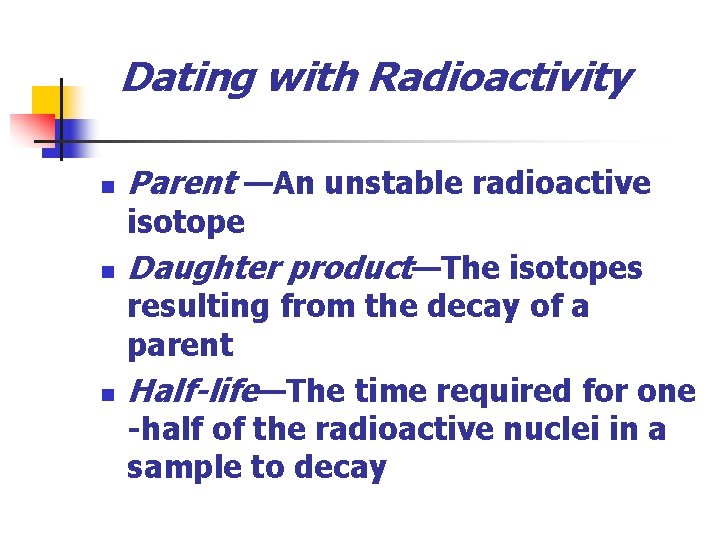
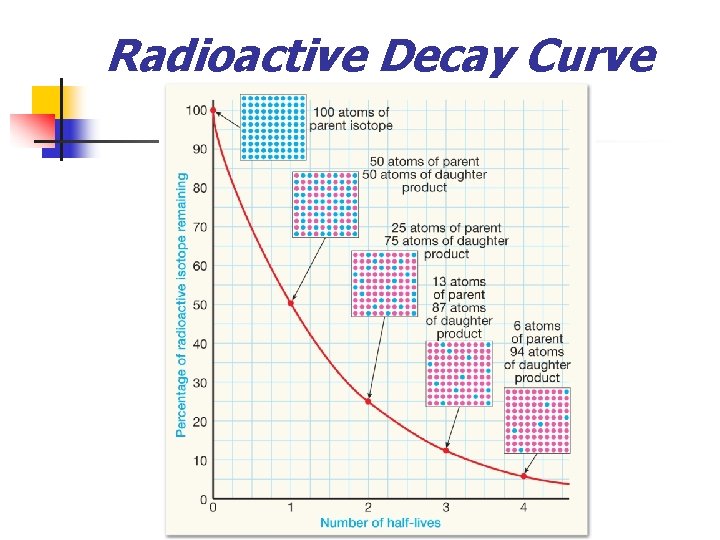
Dating with Radioactivity n Parent —An unstable radioactive isotope n n Daughter product—The isotopes resulting from the decay of a parent Half-life—The time required for one -half of the radioactive nuclei in a sample to decay
Radioactive Decay Curve
Dating with Radioactivity n Importance of radiometric dating Rocks from several localities have been dated at more than 3 billion years n Confirms the idea that geologic time is immense n
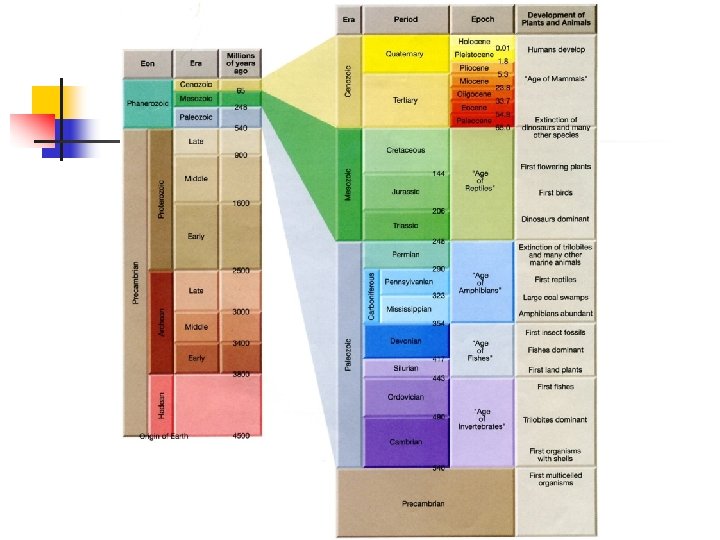
The Geologic Time Scale n The geologic time scale—A “calendar” of Earth history Subdivides geologic history into units n Originally created using relative dates n n Structure of the geologic time scale n Eon—The greatest expanse of time
The Geologic Time Scale n Structure of the geologic time scale n Names of the eons n Phanerozoic (“visible life”)—The most recent eon, began about 540 million years ago n n n Proterozoic Archean Hadean—The oldest eon
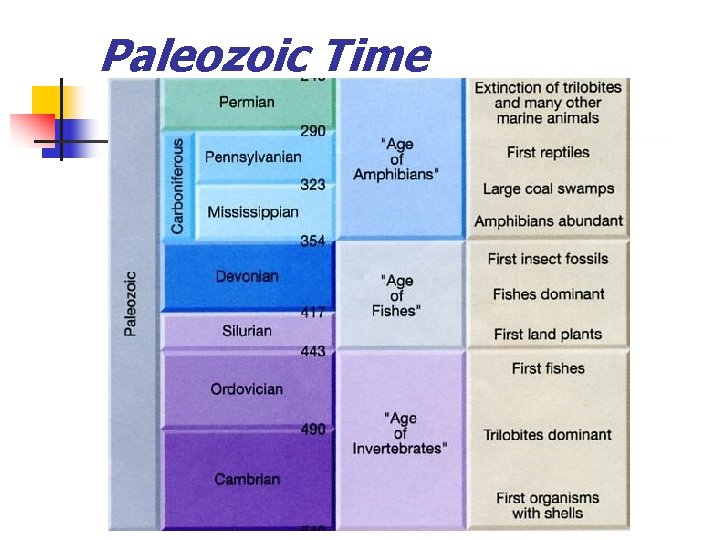
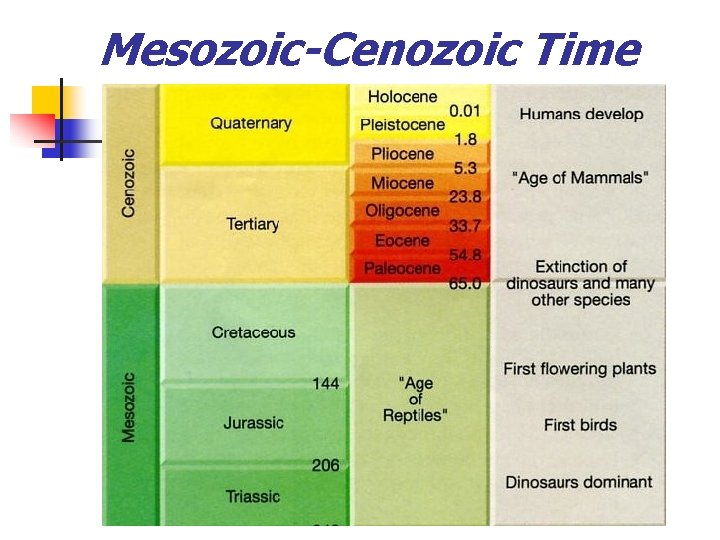
The Geologic Time Scale n Structure of the geologic time scale n n Precambrian (all of geologic time before the Paleozoic) Eras of the Phanerozoic eon n n Cenozoic (“recent life”) Mesozoic (“middle life”) Paleozoic (“ancient life”) Eras are subdivided into periods
The Geologic Time Scale n Precambrian time Nearly 4 billion years prior to the Cambrian period n Not divided into smaller time units because the events of Precambrian history are not known in great enough detail n n First abundant fossil evidence does not appear until the beginning of the Cambrian
Paleozoic Time
Mesozoic-Cenozoic Time
End of Chapter 8