
Chapter 8 Failure of Metals ISSUES TO ADDRESS

- Slides: 39
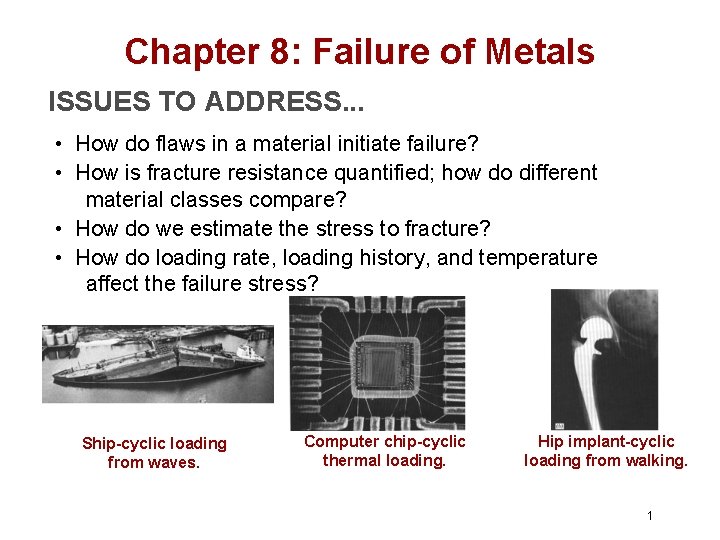
Chapter 8: Failure of Metals ISSUES TO ADDRESS. . . • How do flaws in a material initiate failure? • How is fracture resistance quantified; how do different material classes compare? • How do we estimate the stress to fracture? • How do loading rate, loading history, and temperature affect the failure stress? Ship-cyclic loading from waves. Computer chip-cyclic thermal loading. Hip implant-cyclic loading from walking. 1
Fracture mechanisms • Ductile fracture – Occurs with plastic deformation • Brittle fracture – Little or no plastic deformation – Catastrophic 2
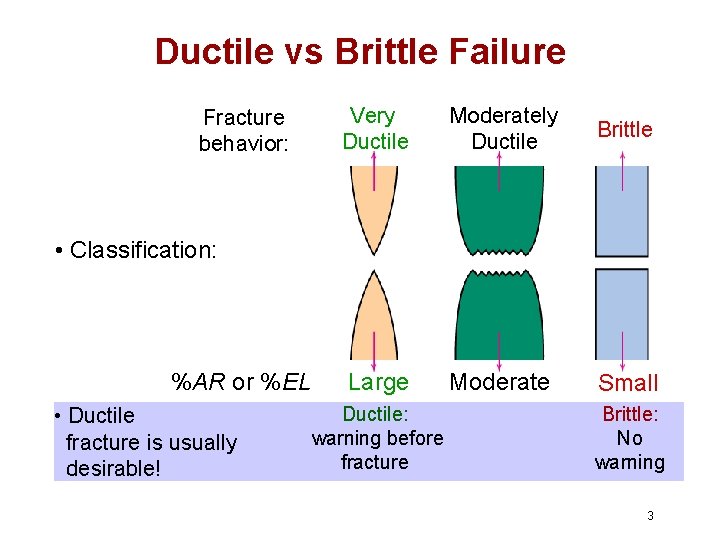
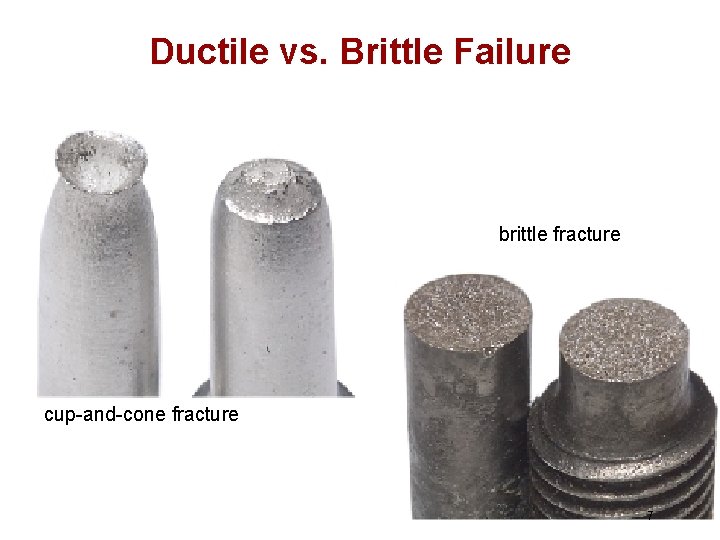
Ductile vs Brittle Failure Fracture behavior: Very Ductile Moderately Ductile Brittle Large Moderate Small • Classification: %AR or %EL • Ductile fracture is usually desirable! Ductile: warning before fracture Brittle: No warning 3
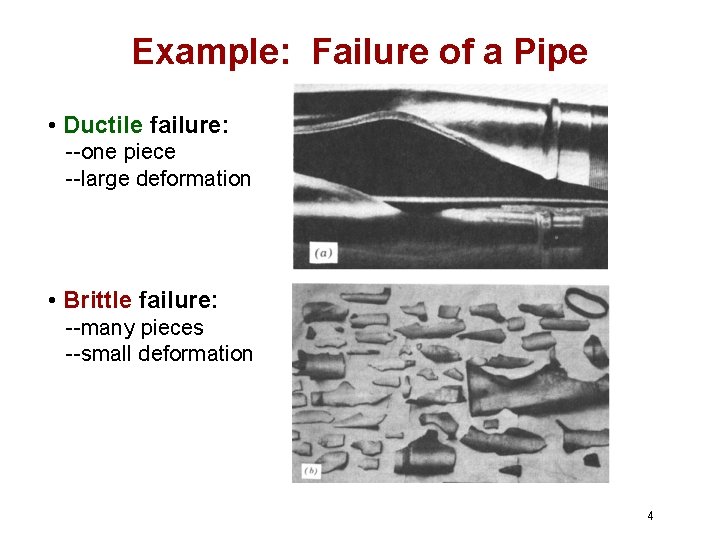
Example: Failure of a Pipe • Ductile failure: --one piece --large deformation • Brittle failure: --many pieces --small deformation 4
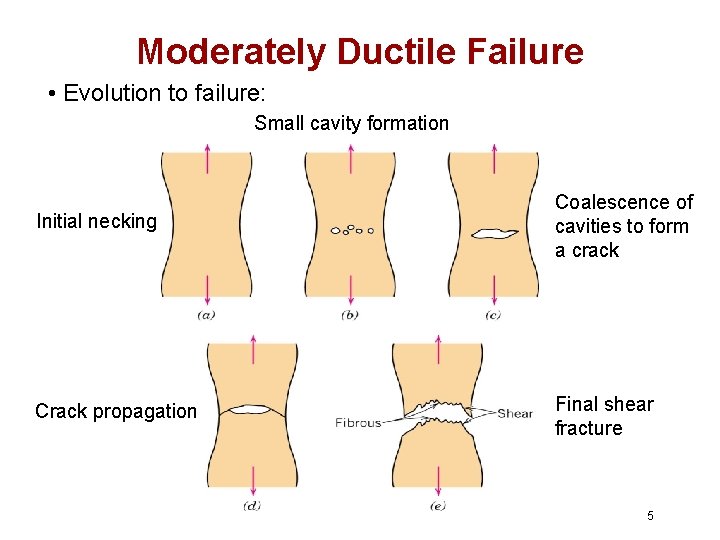
Moderately Ductile Failure • Evolution to failure: Small cavity formation Initial necking Coalescence of cavities to form a crack Crack propagation Final shear fracture 5
Moderately Ductile Failure • Resulting fracture surfaces (steel) 50 50 mm mm 100 mm Fracture surface of tire cord wire loaded in tension. Particles serve as void nucleation sites. 6
Ductile vs. Brittle Failure brittle fracture cup-and-cone fracture 7
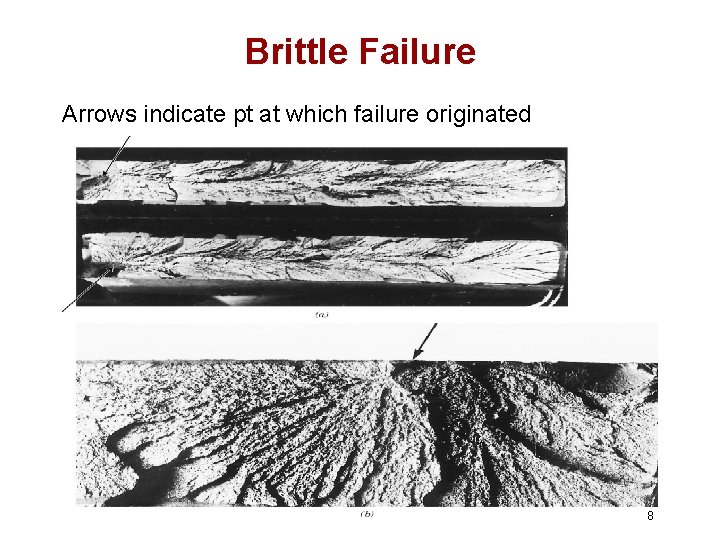
Brittle Failure Arrows indicate pt at which failure originated 8
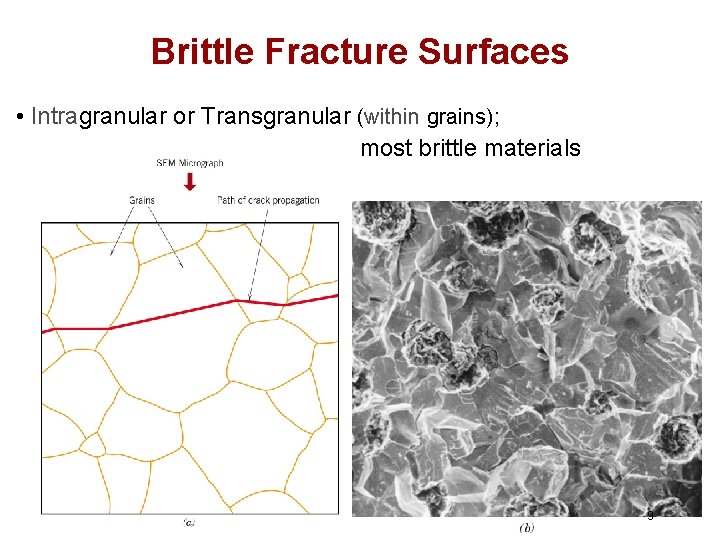
Brittle Fracture Surfaces • Intragranular or Transgranular (within grains); most brittle materials 9
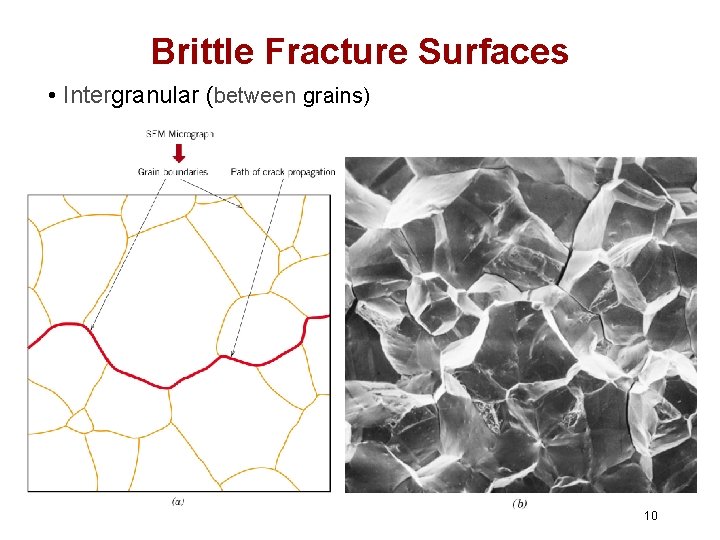
Brittle Fracture Surfaces • Intergranular (between grains) 10
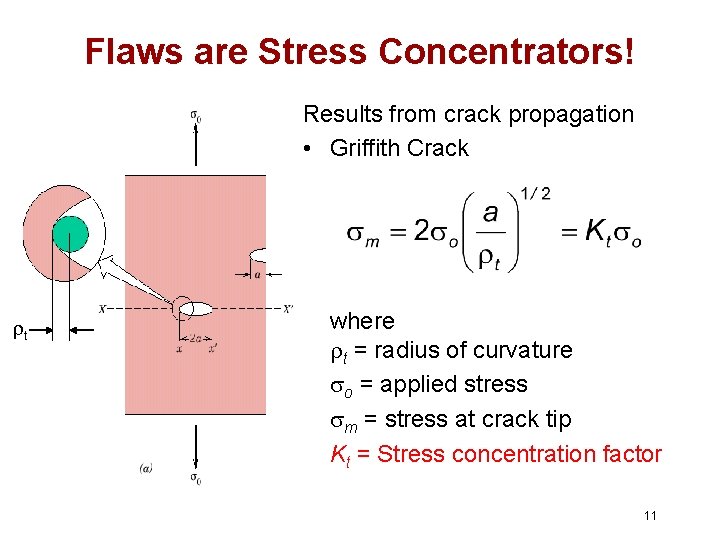
Flaws are Stress Concentrators! Results from crack propagation • Griffith Crack t where t = radius of curvature so = applied stress sm = stress at crack tip Kt = Stress concentration factor 11
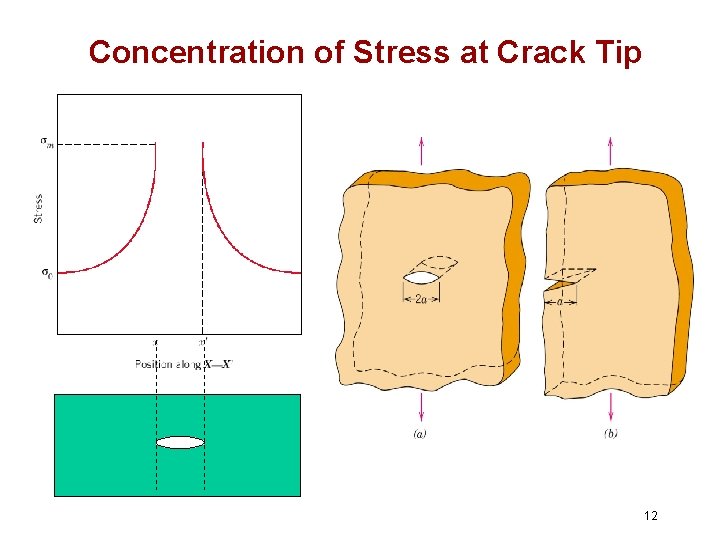
Concentration of Stress at Crack Tip 12
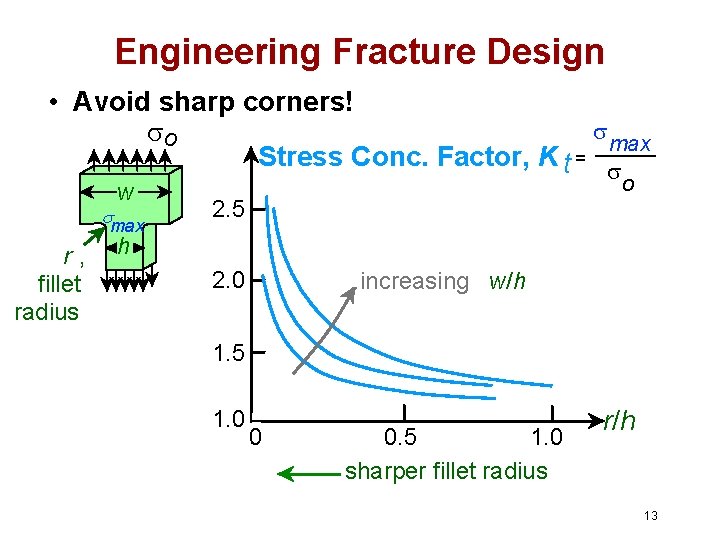
Engineering Fracture Design • Avoid sharp corners! s so max Stress Conc. Factor, K t = s w smax r, fillet radius o 2. 5 h 2. 0 increasing w/h 1. 5 1. 0 0 0. 5 1. 0 sharper fillet radius r/h 13
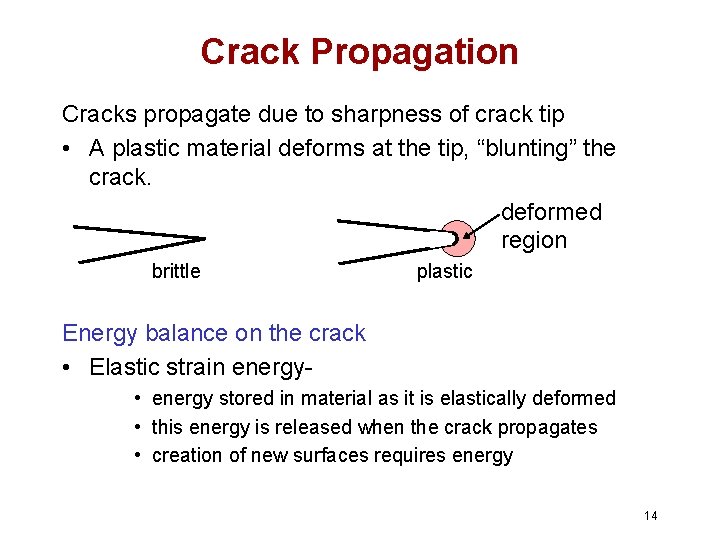
Crack Propagation Cracks propagate due to sharpness of crack tip • A plastic material deforms at the tip, “blunting” the crack. deformed region brittle plastic Energy balance on the crack • Elastic strain energy • energy stored in material as it is elastically deformed • this energy is released when the crack propagates • creation of new surfaces requires energy 14
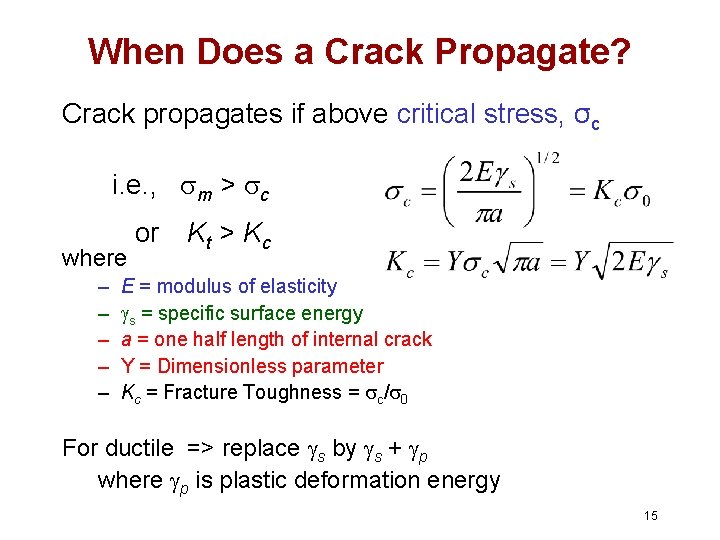
When Does a Crack Propagate? Crack propagates if above critical stress, σc i. e. , sm > sc where – – – or Kt > Kc E = modulus of elasticity s = specific surface energy a = one half length of internal crack Y = Dimensionless parameter Kc = Fracture Toughness = sc/s 0 For ductile => replace s by s + p where p is plastic deformation energy 15
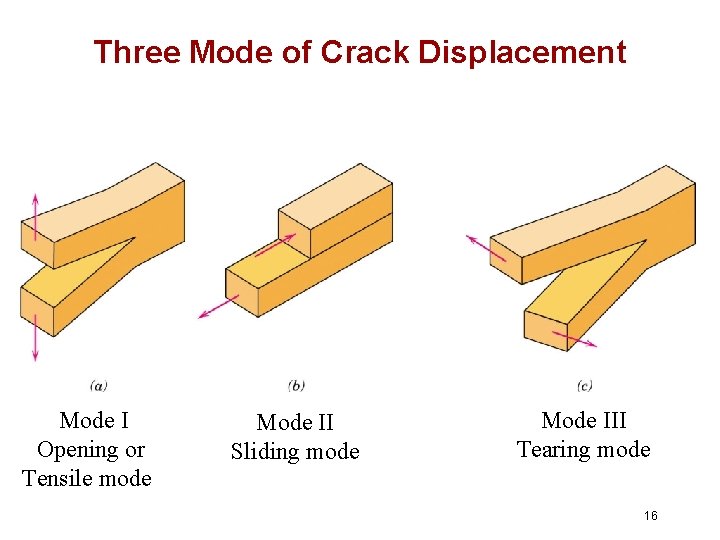
Three Mode of Crack Displacement Mode I Opening or Tensile mode Mode II Sliding mode Mode III Tearing mode 16
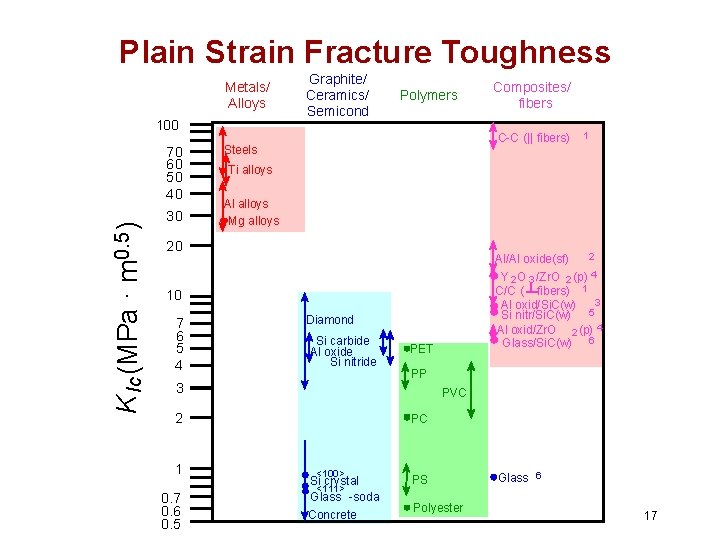
Plain Strain Fracture Toughness Metals/ Alloys 100 K Ic (MPa · m 0. 5 ) 70 60 50 40 30 Graphite/ Ceramics/ Semicond Polymers C-C (|| fibers) Steels Al alloys Mg alloys Al/Al oxide(sf) Diamond Si carbide Al oxide Si nitride 3 PET PP PVC 2 0. 7 0. 6 0. 5 2 Y 2 O 3 /Zr. O 2 (p) 4 C/C ( fibers) 1 3 Al oxid/Si. C(w) 5 Si nitr/Si. C(w) Al oxid/Zr. O 2 (p) 4 Glass/Si. C(w) 6 10 1 1 Ti alloys 20 7 6 5 4 Composites/ fibers PC <100> Si crystal <111> Glass -soda Concrete PS Polyester Glass 6 17
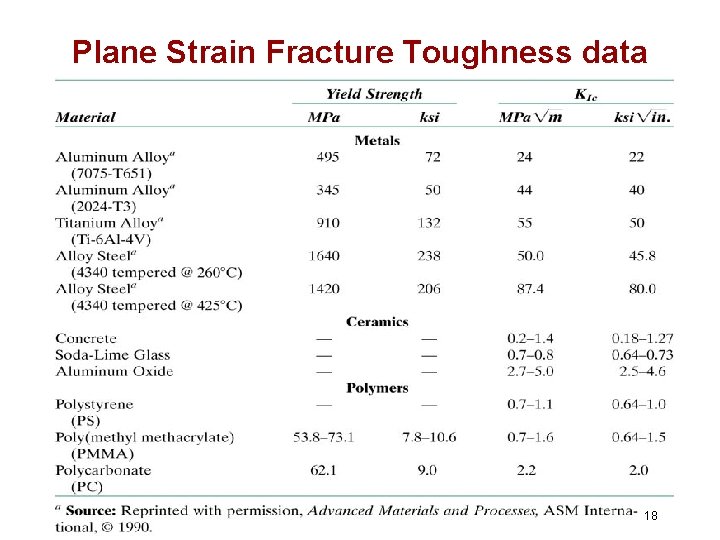
Plane Strain Fracture Toughness data 18
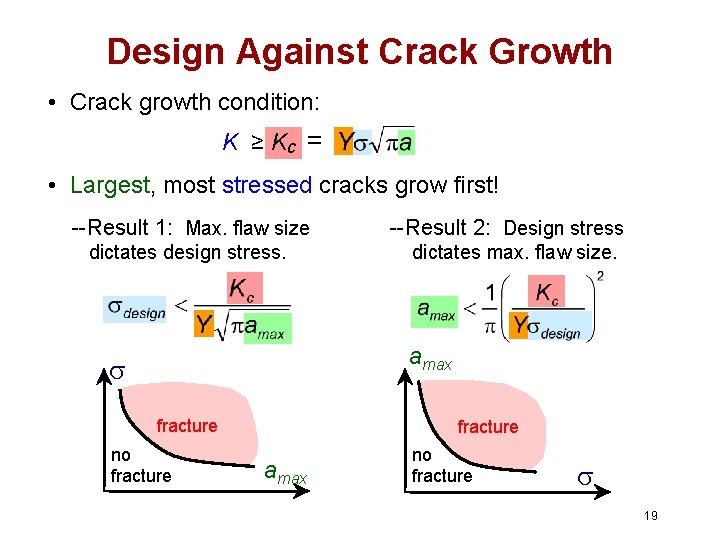
Design Against Crack Growth • Crack growth condition: K ≥ Kc = • Largest, most stressed cracks grow first! --Result 1: Max. flaw size dictates design stress. --Result 2: Design stress dictates max. flaw size. amax s fracture no fracture amax no fracture s 19
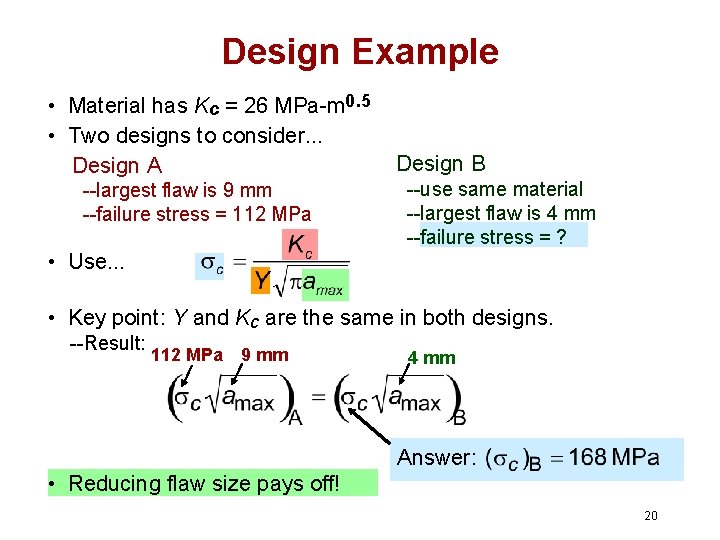
Design Example • Material has Kc = 26 MPa-m 0. 5 • Two designs to consider. . . Design A --largest flaw is 9 mm --failure stress = 112 MPa Design B --use same material --largest flaw is 4 mm --failure stress = ? • Use. . . • Key point: Y and Kc are the same in both designs. --Result: 112 MPa 9 mm 4 mm Answer: • Reducing flaw size pays off! 20
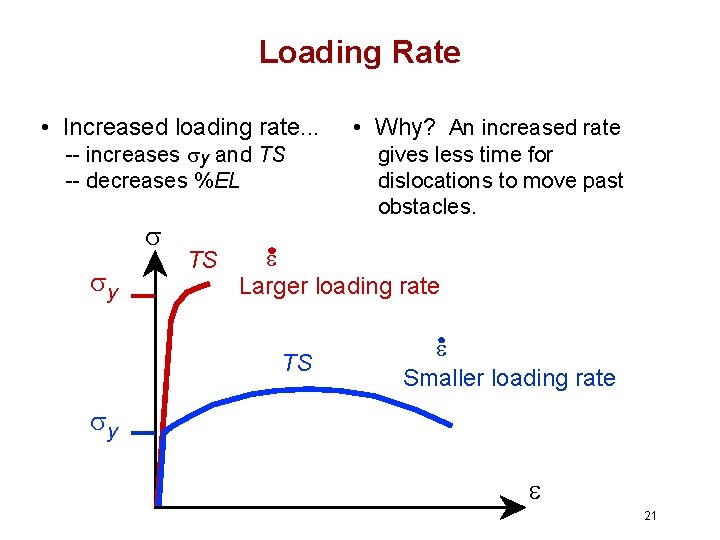
Loading Rate • Increased loading rate. . . -- increases sy and TS -- decreases %EL s sy TS • Why? An increased rate gives less time for dislocations to move past obstacles. e Larger loading rate TS e Smaller loading rate sy e 21
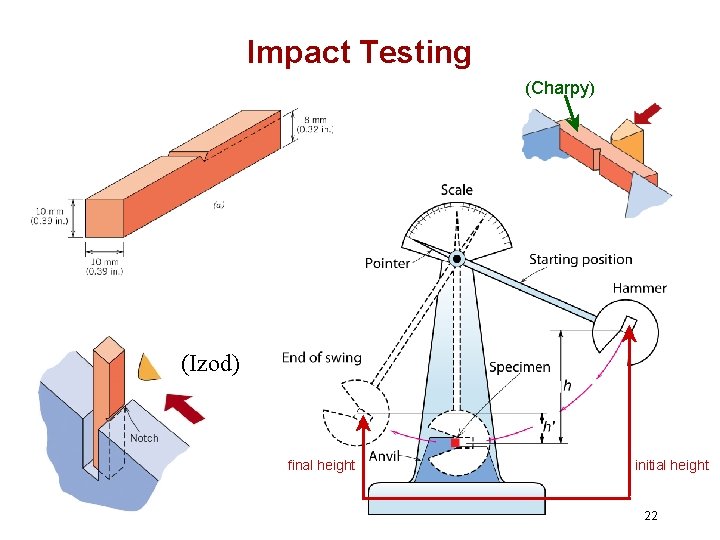
Impact Testing (Charpy) (Izod) final height initial height 22
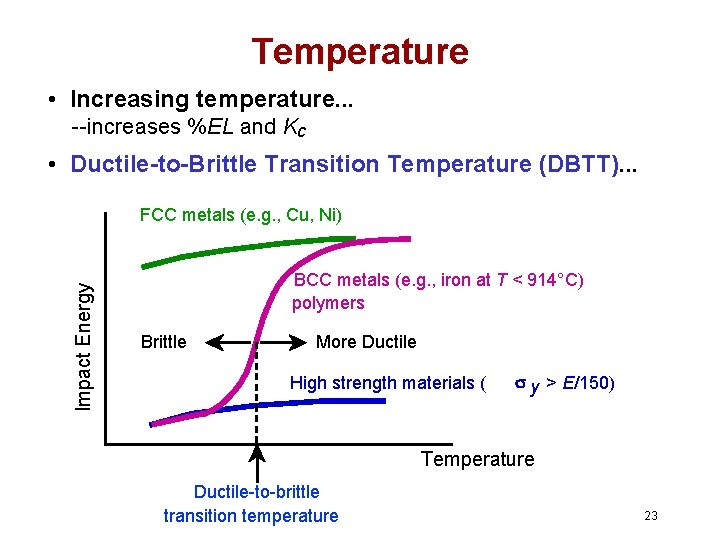
Temperature • Increasing temperature. . . --increases %EL and Kc • Ductile-to-Brittle Transition Temperature (DBTT). . . Impact Energy FCC metals (e. g. , Cu, Ni) BCC metals (e. g. , iron at T < 914°C) polymers Brittle More Ductile High strength materials ( y > E/150) Temperature Ductile-to-brittle transition temperature 23
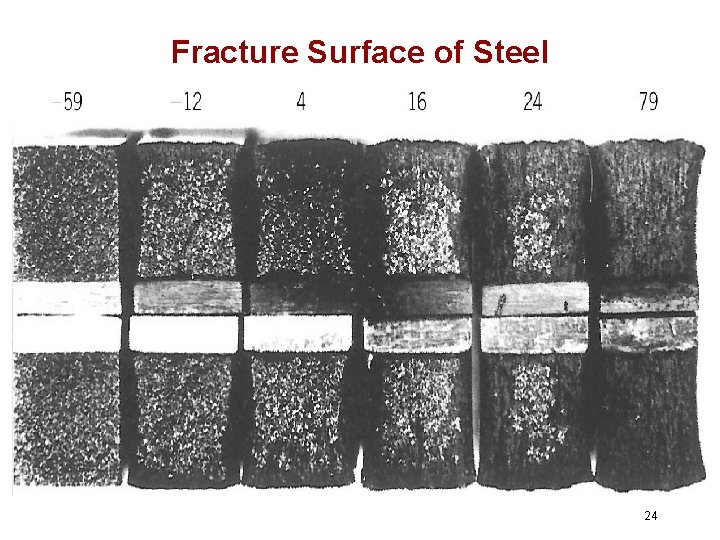
Fracture Surface of Steel 24
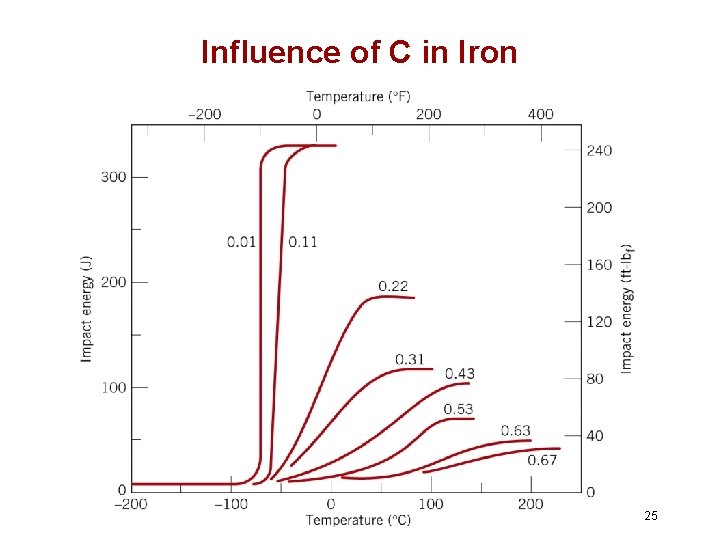
Influence of C in Iron 25
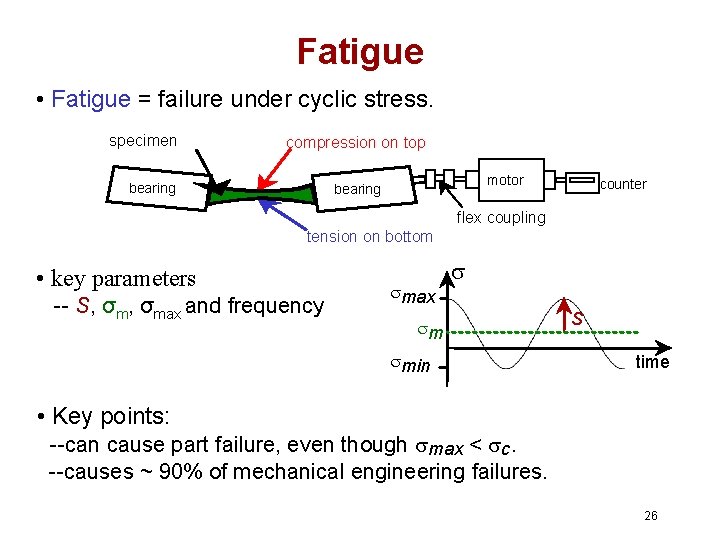
Fatigue • Fatigue = failure under cyclic stress. specimen compression on top bearing motor bearing counter flex coupling tension on bottom • key parameters -- S, σmax and frequency smax s sm smin S time • Key points: --can cause part failure, even though smax < sc. --causes ~ 90% of mechanical engineering failures. 26
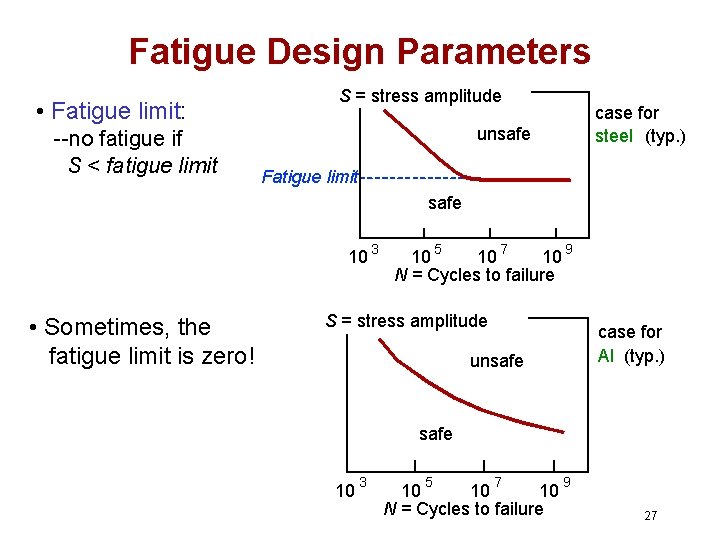
Fatigue Design Parameters • Fatigue limit: --no fatigue if S < fatigue limit S = stress amplitude case for steel (typ. ) unsafe Fatigue limit safe 10 • Sometimes, the fatigue limit is zero! 3 5 7 10 10 10 N = Cycles to failure 9 S = stress amplitude case for Al (typ. ) unsafe 10 3 5 7 10 10 10 N = Cycles to failure 9 27
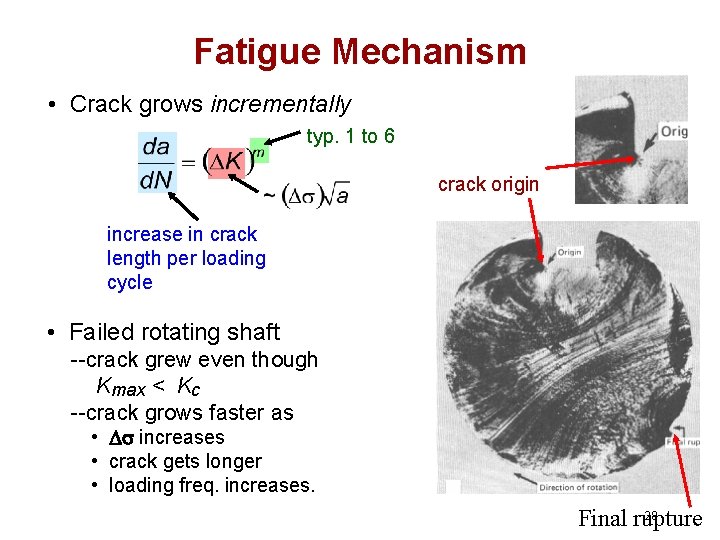
Fatigue Mechanism • Crack grows incrementally typ. 1 to 6 crack origin increase in crack length per loading cycle • Failed rotating shaft --crack grew even though Kmax < Kc --crack grows faster as • D increases • crack gets longer • loading freq. increases. 28 Final rupture
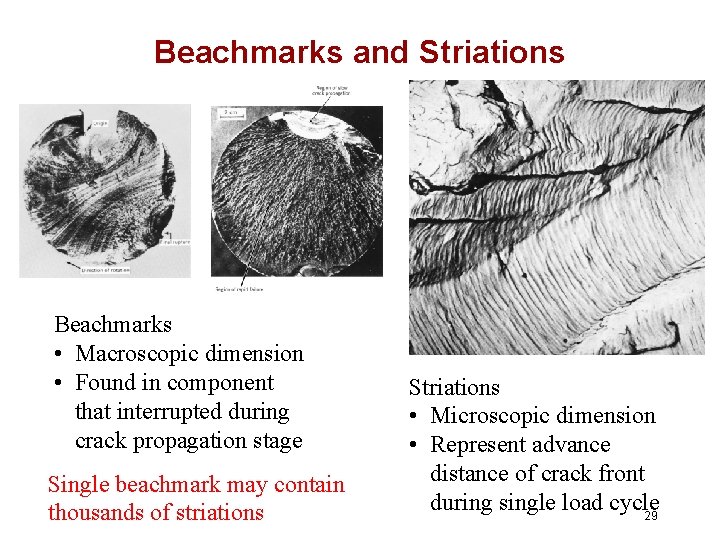
Beachmarks and Striations Beachmarks • Macroscopic dimension • Found in component that interrupted during crack propagation stage Single beachmark may contain thousands of striations Striations • Microscopic dimension • Represent advance distance of crack front during single load cycle 29
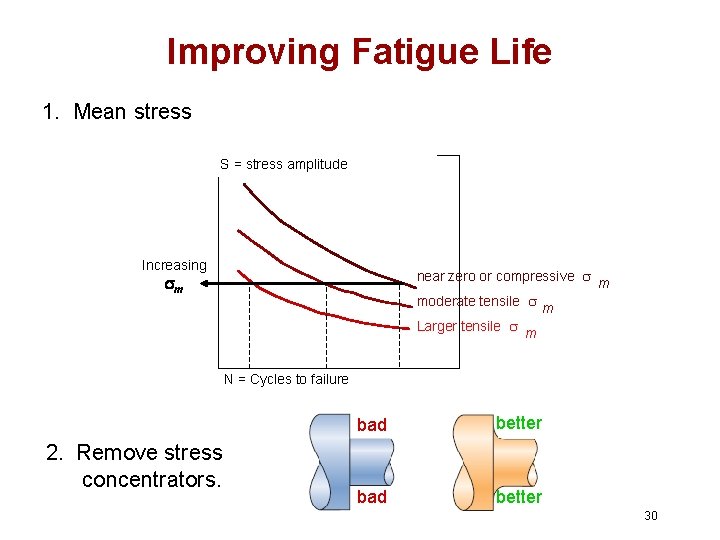
Improving Fatigue Life 1. Mean stress S = stress amplitude Increasing near zero or compressive s m moderate tensile s m Larger tensile s m m N = Cycles to failure 2. Remove stress concentrators. bad better 30
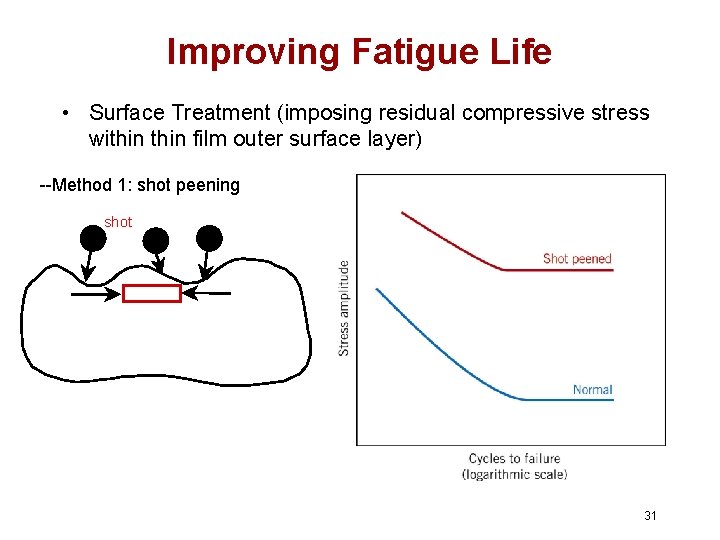
Improving Fatigue Life • Surface Treatment (imposing residual compressive stress within film outer surface layer) --Method 1: shot peening shot 31
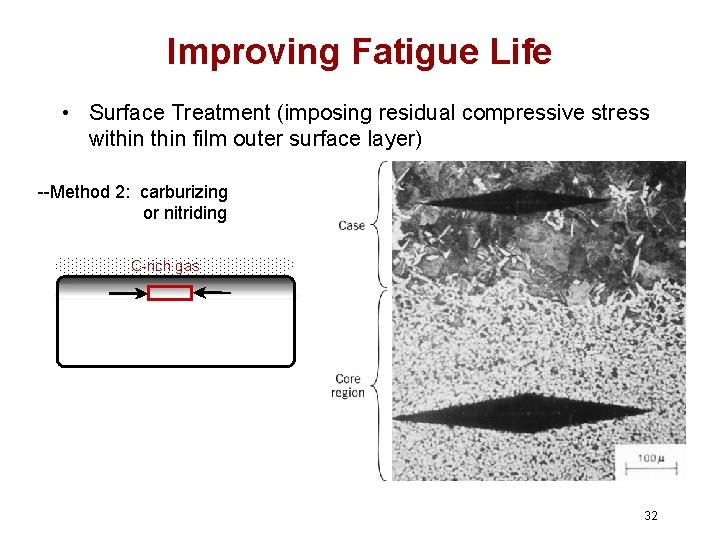
Improving Fatigue Life • Surface Treatment (imposing residual compressive stress within film outer surface layer) --Method 2: carburizing or nitriding C-rich gas 32
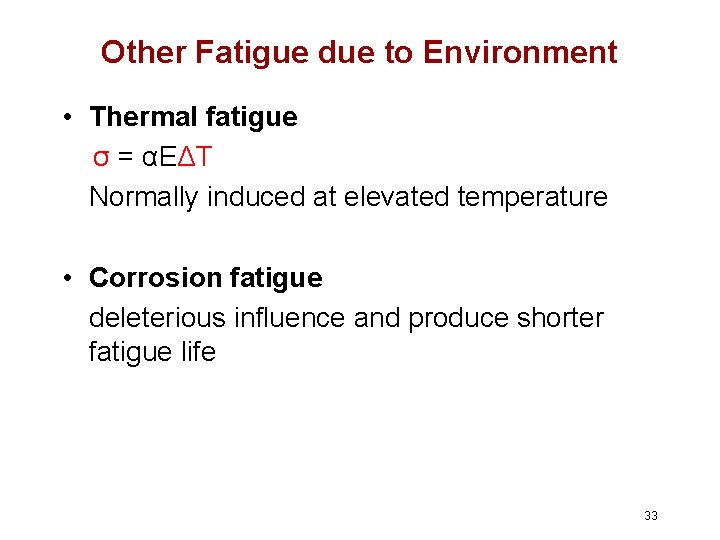
Other Fatigue due to Environment • Thermal fatigue σ = αEΔT Normally induced at elevated temperature • Corrosion fatigue deleterious influence and produce shorter fatigue life 33
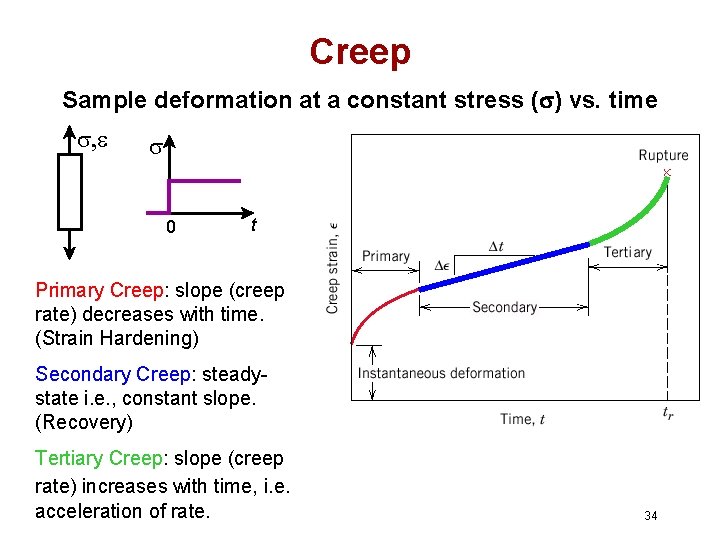
Creep Sample deformation at a constant stress ( ) vs. time s, e s 0 t Primary Creep: slope (creep rate) decreases with time. (Strain Hardening) Secondary Creep: steadystate i. e. , constant slope. (Recovery) Tertiary Creep: slope (creep rate) increases with time, i. e. acceleration of rate. 34
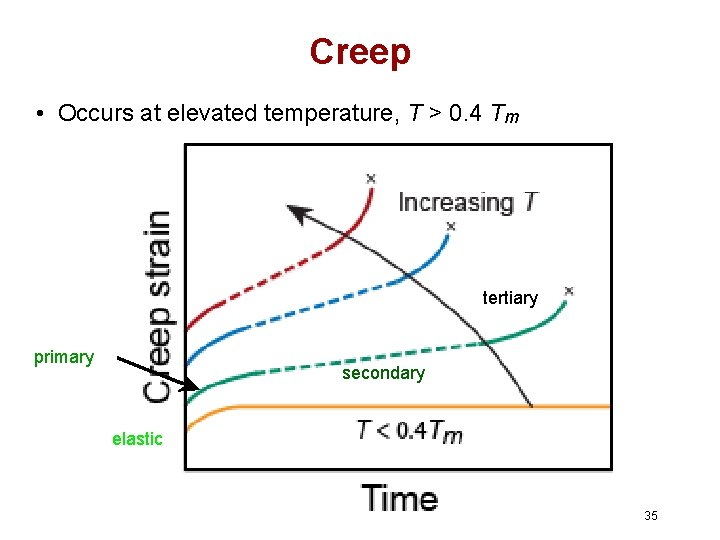
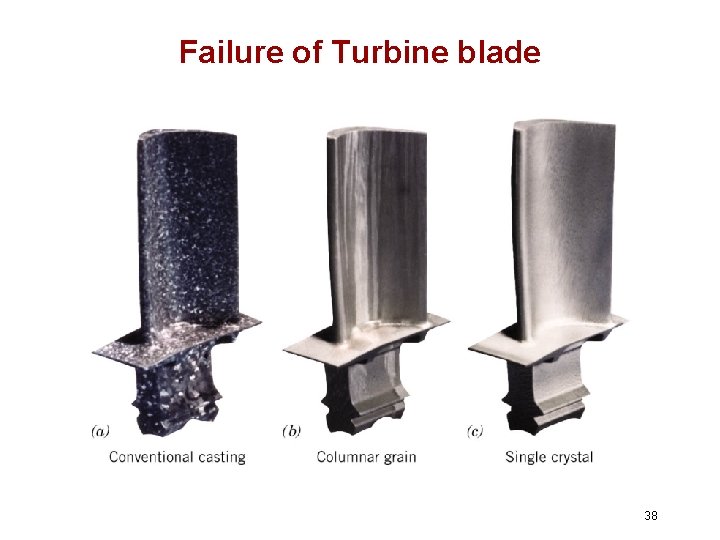
Creep • Occurs at elevated temperature, T > 0. 4 Tm tertiary primary secondary elastic 35
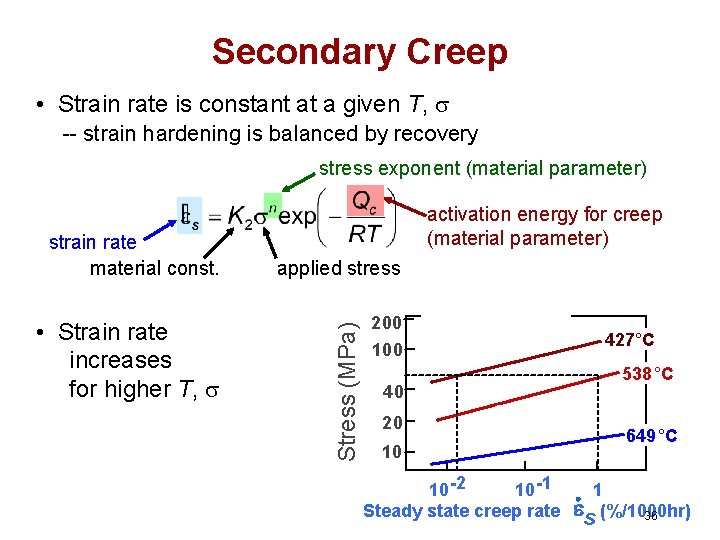
Secondary Creep • Strain rate is constant at a given T, s -- strain hardening is balanced by recovery stress exponent (material parameter) • Strain rate increases for higher T, s applied stress Stress (MPa) strain rate material const. activation energy for creep (material parameter) 200 100 40 20 10 10 -2 10 -1 Steady state creep rate 427°C 538 °C 649 °C 1 es (%/1000 hr) 36
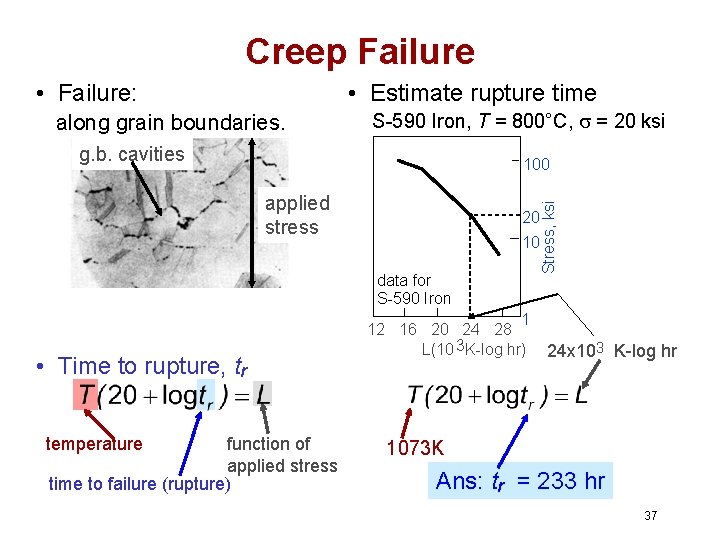
Creep Failure • Estimate rupture time • Failure: along grain boundaries. S-590 Iron, T = 800°C, s = 20 ksi g. b. cavities applied stress 20 10 data for S-590 Iron • Time to rupture, tr function of applied stress time to failure (rupture) temperature Stress, ksi 100 1 12 16 20 24 28 L(10 3 K-log hr) 24 x 103 K-log hr 1073 K Ans: tr = 233 hr 37
Failure of Turbine blade 38
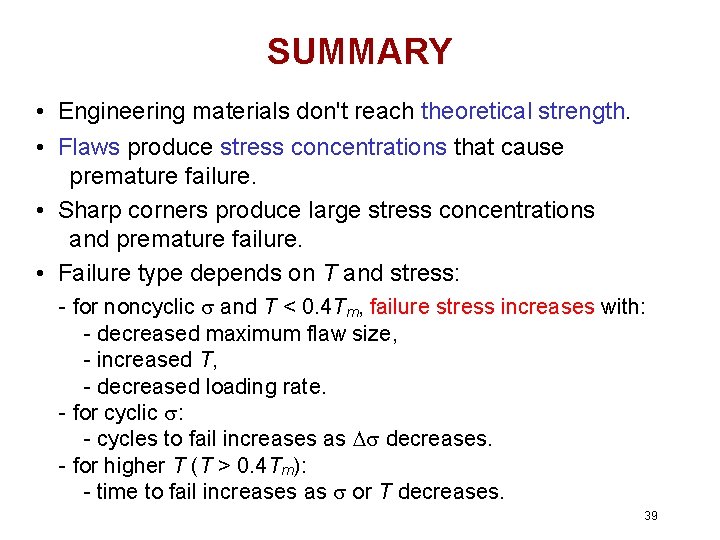
SUMMARY • Engineering materials don't reach theoretical strength. • Flaws produce stress concentrations that cause premature failure. • Sharp corners produce large stress concentrations and premature failure. • Failure type depends on T and stress: - for noncyclic s and T < 0. 4 Tm, failure stress increases with: - decreased maximum flaw size, - increased T, - decreased loading rate. - for cyclic s: - cycles to fail increases as Ds decreases. - for higher T (T > 0. 4 Tm): - time to fail increases as s or T decreases. 39