
Chapter 8 European Civilization in the Early Middle
- Slides: 17
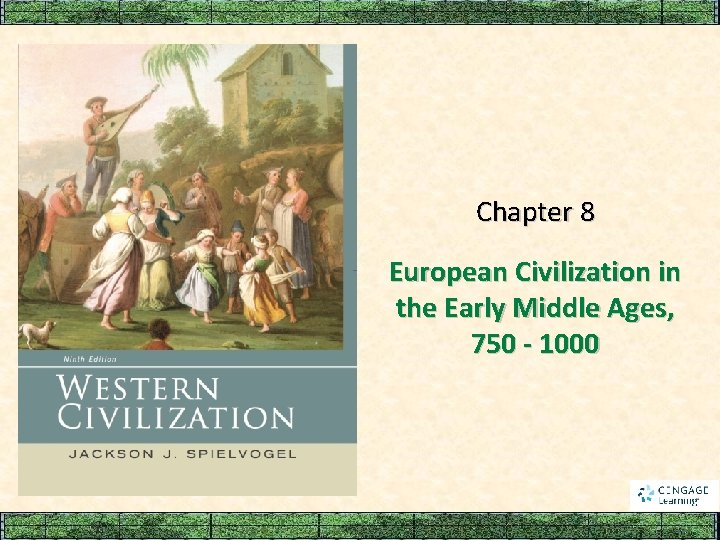
Chapter 8 European Civilization in the Early Middle Ages, 750 - 1000
Europeans and the Environment § Farming § The difficulty of cultivating new land § § § German attitudes toward forests The limitations of agricultural methods The Climate § The threat of natural disasters § Result: a small population living a precarious existence
The World of the Carolingians § Pepin (751 – 768) § § Deposition of the last Merovingian Charlemagne and the Carolingian Empire (768 – 814) The character of Charlemagne Expansion of the Carolingian Empire § Campaigns against the Lombards in Italy (773), in Spain (777), and against the Saxons, Bavarians, Slavs, and Avars
Charlemagne’s Empire § Governing the Empire § § Income from royal estates Counts as administrators § § The inefficiency of government § § Assistance from the Church Charlemagne as Emperor § § Missi dominici Pope Leo III and Charlemagne’s coronation (800) What Was the Significance of Charlemagne?
The Carolingian Intellectual Revival § The Carolingian Renaissance § The monastic setting § § § Scriptoria Carolingian miniscule The patronage of Charlemagne § § The palace school Alciun Roman models Revival of the arts
Life in the Carolingian World § The Family and Marriage § The stability of monogamy § § The nuclear family § § Impact on women Christianity and Sexuality § § The celibate ideal Sexual activity permitted only within marriage § § Divorce prohibited Condemnation of homosexuality New Attitudes toward Children
Life in the Carolingian World § Travel and Hospitality § § Diet § § Hospitality as a sacred duty Bread as the basic staple Pork, wild game, dairy, eggs, vegetables Gluttony, drunkenness, and hygiene Health § Medical Practices § § Herbs and Bleeding Magical remedies
Disintegration of the Carolingian Empire § Louis the Pious (814 – 840) § § Conflicts between his three sons The Treaty of Verdun (843) § § Charles the Bald (843 – 877): western section Louis the German (843 – 876): eastern section Lothar (840 – 855): middle section and imperial title Emergence of two different cultures § Continuing struggles of heirs
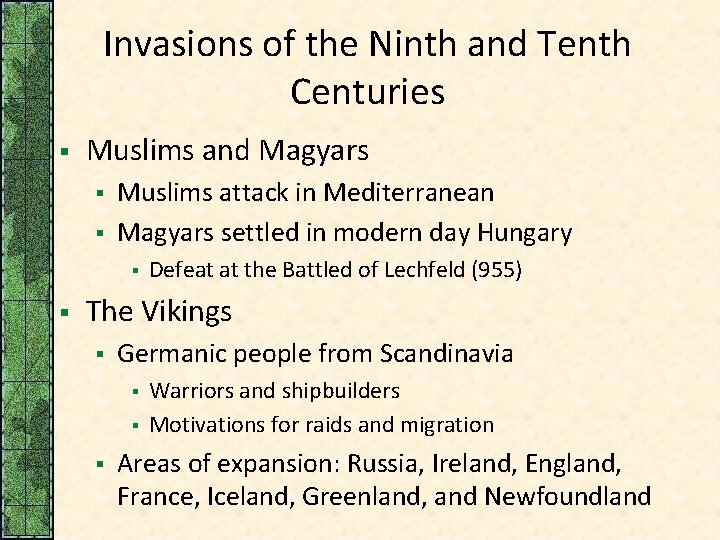
Invasions of the Ninth and Tenth Centuries § Muslims and Magyars § § Muslims attack in Mediterranean Magyars settled in modern day Hungary § § Defeat at the Battled of Lechfeld (955) The Vikings § Germanic people from Scandinavia § § § Warriors and shipbuilders Motivations for raids and migration Areas of expansion: Russia, Ireland, England, France, Iceland, Greenland, and Newfoundland
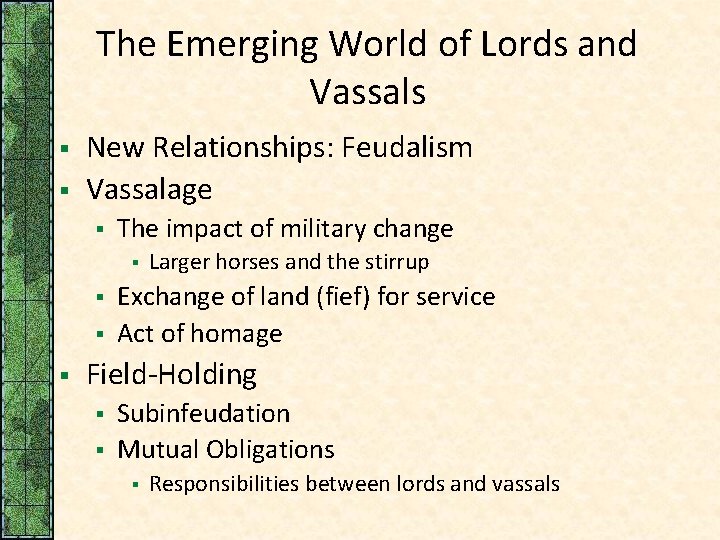
The Emerging World of Lords and Vassals § § New Relationships: Feudalism Vassalage § The impact of military change § § Larger horses and the stirrup Exchange of land (fief) for service Act of homage Field-Holding § § Subinfeudation Mutual Obligations § Responsibilities between lords and vassals
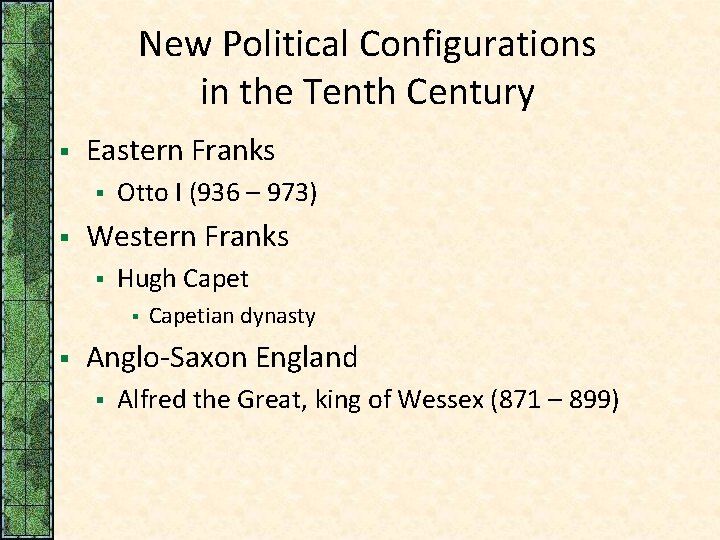
New Political Configurations in the Tenth Century § Eastern Franks § § Otto I (936 – 973) Western Franks § Hugh Capet § § Capetian dynasty Anglo-Saxon England § Alfred the Great, king of Wessex (871 – 899)
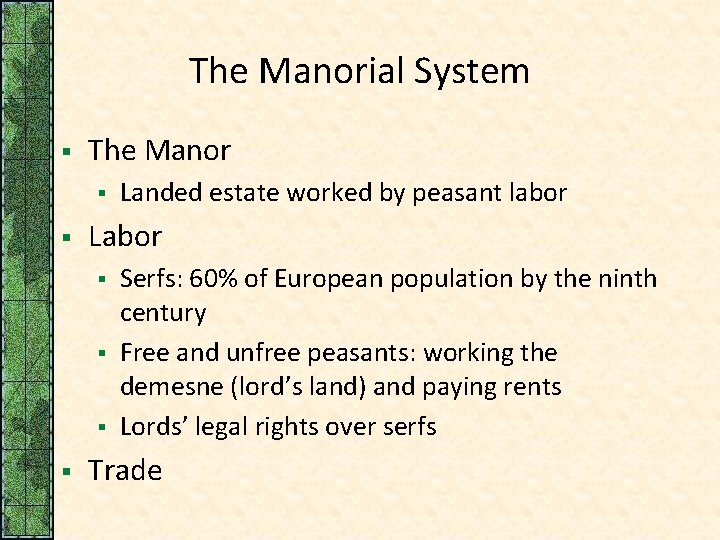
The Manorial System § The Manor § § Labor § § Landed estate worked by peasant labor Serfs: 60% of European population by the ninth century Free and unfree peasants: working the demesne (lord’s land) and paying rents Lords’ legal rights over serfs Trade
The Zenith of Byzantine Civilization § The Revival of Michael III (842 – 867) § § Intellectual renewal Foreign attacks continue Differences with the West The Macedonian Dynasty (867 – 1056) § § § Increased prosperity Conversion of the Prince of Kiev, Russia Military offensive in the tenth century § § Basil II (976 – 1025) Women in Byzantium
The Slavic Peoples of Central and Eastern Europe § Western Slavs: Poland Bohemia § § Conversion by German missionaries Southern Slavs § Conversion by the Byzantines § § § Eastern Slavs § § Encounters with Vikings The “Rus” and Kiev § § Moravia Bulgars Vladimir (c. 980 – 1015) and conversion Women in the Slavic World
The Expansion of Islam § The Abbasid Dynasty § § Abu al-Abbas puts an end to the Umayyads (750) New capital in Baghdad The wealth of Harun al-Rashid (786 – 809) and al-Ma’mun (813 – 833) Fragmentation of the Islamic empire § Abd al-Rahman (756): the continuation of the Umayyads in Spain § § Córdoba Fatimid Egypt (973)
Islamic Civilization § Urban Culture § § § Cities: Baghdad, Cairo, and Córdoba (population of 100, 000) Male domination and the treatment of women The Culture of Islam § Preservation of ancient science and philosophy § § Paper and books Advances in mathematics and the natural sciences § Chemistry and medicine § Ibn Sina (980 – 1037): medical encyclopedia
Discussion Questions § § § § How was Charlemagne able to unite and govern his large empire? Why were the invasions of the ninth and tenth centuries so damaging to Europe? What liberties did peasants give up in exchange for land protection from their lords? What impact did the Byzantine world have on the Slavic people of Central and Eastern Europe and vice versa? What were the factors that contributed to the flourishing of Islamic Civilization under the Abbasids? What were some of the problems within the Abbasid Empire? How did the lives of medieval women differ, east and west?