
Chapter 8 Employee Behavior and Motivation If all
Chapter 8 Employee Behavior and Motivation If all it took was a pretty picture and a catchy saying to motivate people, 1 running a business would be a whole lot simpler. Copyright © 2005 Prentice Hall, Inc. All rights reserved.
MPC’s Deeper Offerings • Busi 22 Human Behavior/Leadership Ø Psychological techniques in job performance and satisfaction Ø Leadership skills, human motivation, time management, values, decision making, career management Ø Instructor: Leandro Castillo aka MPC’s running back coach! Copyright © 2005 Prentice Hall, Inc. All rights reserved. 2
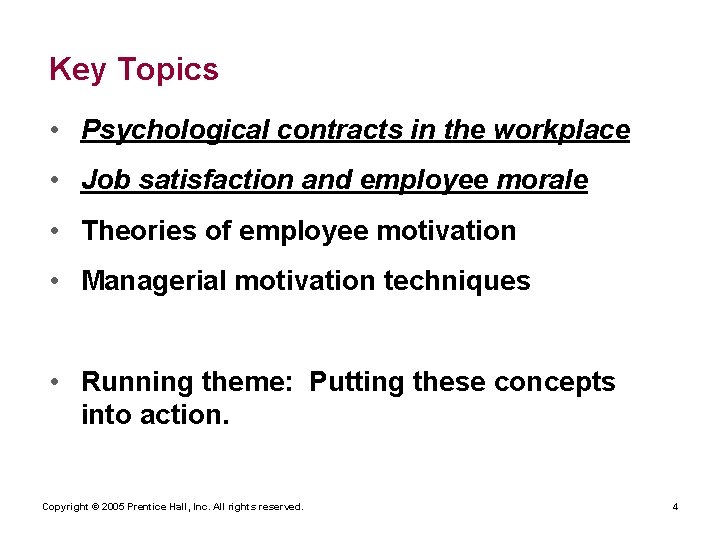
Key Topics • Psychological contracts in the workplace • Job satisfaction and employee morale • Theories of employee motivation • Managerial motivation techniques • Running theme: Putting these concepts into action. Copyright © 2005 Prentice Hall, Inc. All rights reserved. 4
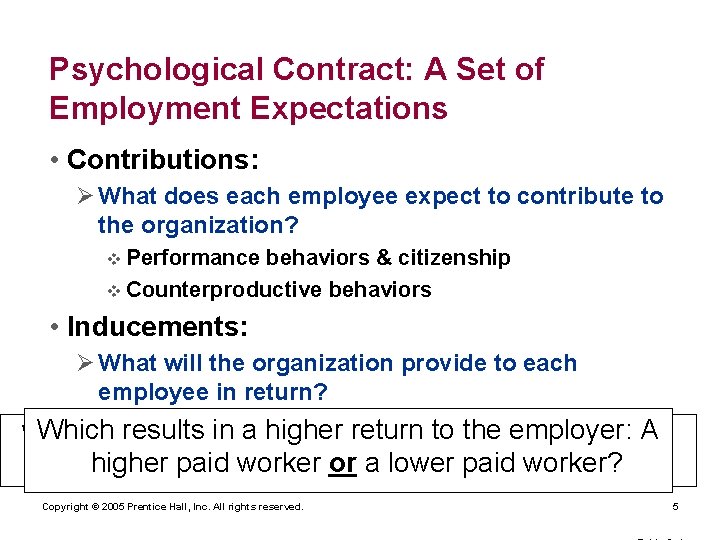
Psychological Contract: A Set of Employment Expectations • Contributions: Ø What does each employee expect to contribute to the organization? v Performance behaviors & citizenship v Counterproductive behaviors • Inducements: Ø What will the organization provide to each employee in return? vresults Pay, benefits, security, and more Which in expect a higher to the. Get employer: A What should you asreturn aopportunity, worker: paid more a lower worker? thenhigher work paid hard, worker or workorhard thenpaid get paid more? Copyright © 2005 Prentice Hall, Inc. All rights reserved. 5
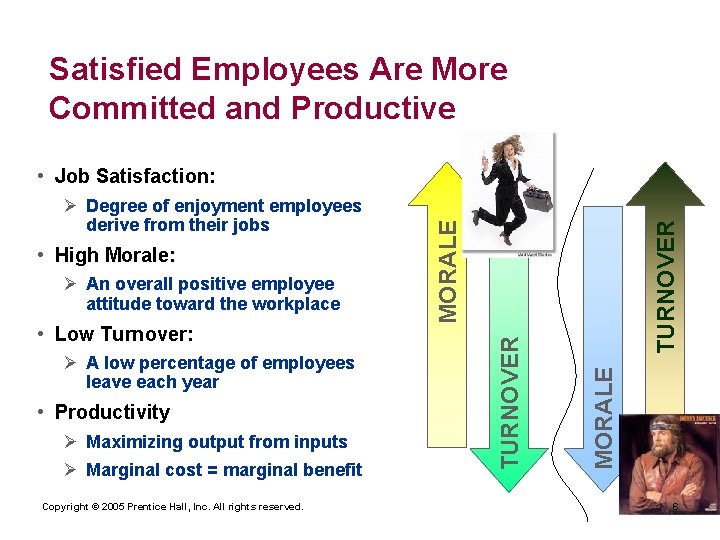
Satisfied Employees Are More Committed and Productive • Low Turnover: Ø A low percentage of employees leave each year • Productivity Ø Maximizing output from inputs Ø Marginal cost = marginal benefit Copyright © 2005 Prentice Hall, Inc. All rights reserved. TURNOVER Ø An overall positive employee attitude toward the workplace MORALE • High Morale: TURNOVER Ø Degree of enjoyment employees derive from their jobs MORALE • Job Satisfaction: 6
Effective Motivation leads to desired behavior, satisfaction, and performance • Motivation: Ø The set of forces that cause people to behave in certain ways • So how do we do it already? • • • Copyright © 2005 Prentice Hall, Inc. All rights reserved. • Job Satisfaction High Morale Low Turnover Productivity 7
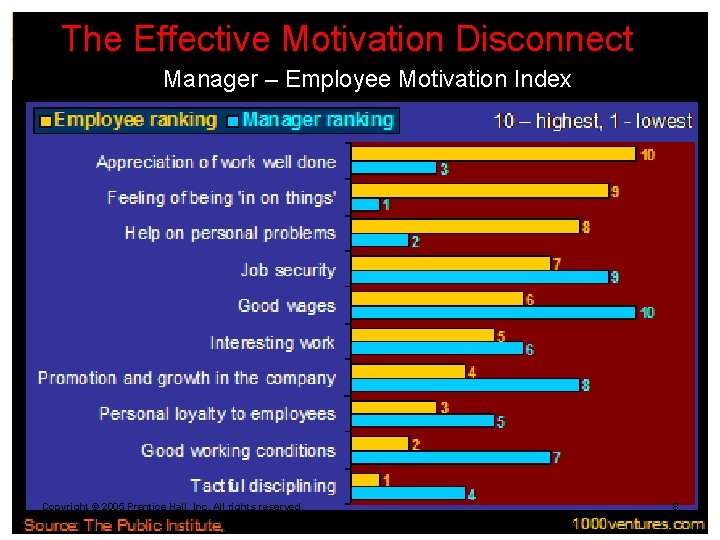
The Effective Motivation Disconnect Manager – Employee Motivation Index Copyright © 2005 Prentice Hall, Inc. All rights reserved. 8
Key Topics • Psychological contracts in the workplace • Job satisfaction and employee morale • Theories of employee motivation • Managerial motivation techniques • Running theme: Putting these concepts into action. Copyright © 2005 Prentice Hall, Inc. All rights reserved. 9
The evolution of motivational theory • Classical Theory Ø Fredrick Taylor’s Scientific Management • Behavior Ø The Hawthorne Effect • Contemporary motivational theories Ø More detailed psychological approaches Ø Recognizing people as individuals Copyright © 2005 Prentice Hall, Inc. All rights reserved. 11
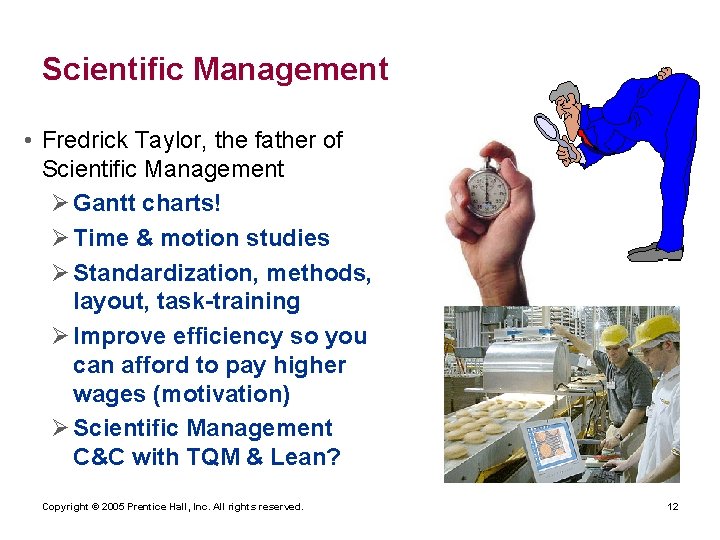
Scientific Management • Fredrick Taylor, the father of Scientific Management Ø Gantt charts! Ø Time & motion studies Ø Standardization, methods, layout, task-training Ø Improve efficiency so you can afford to pay higher wages (motivation) Ø Scientific Management C&C with TQM & Lean? Copyright © 2005 Prentice Hall, Inc. All rights reserved. 12
The Hawthorn Studies: 1925 ish-1933 • A Harvard group led by Elton Mayo invaded the Hawthorn Western Electric plant in Cicero Illinois • Experimented with the effects of lighting levels on productivity • Any change increased productivity, even very dim lighting. • The productivity increases were maintained even when lighting was returned to previous levels……. • They thought their experiments were a total failure Copyright © 2005 Prentice Hall, Inc. All rights reserved. 13
The Hawthorn Effect was born: • The workers thought of themselves as a team, or group with something in common. • The workers helped plan the experiments. Their ideas were appreciated and implemented. • The workers got special attention. Their increased productivity was compensated. • Learned: People perform better when they matter. • This unleashed the storm of modern motivational theories that we will now explore. Copyright © 2005 Prentice Hall, Inc. All rights reserved. 14
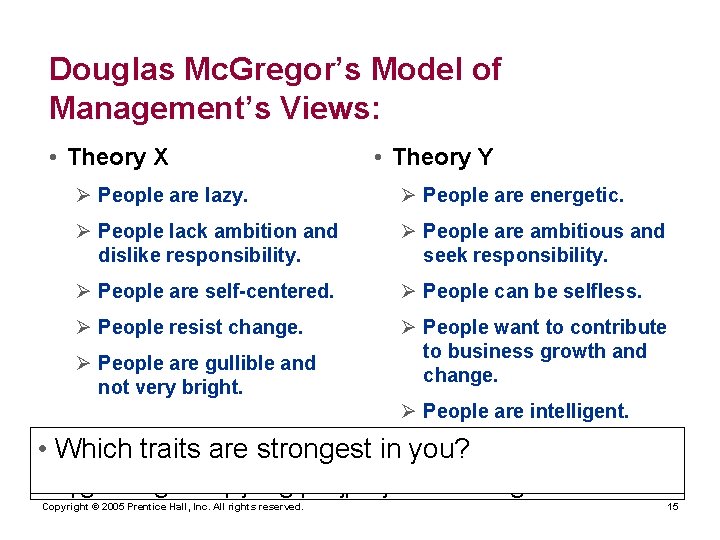
Douglas Mc. Gregor’s Model of Management’s Views: • Theory X • Theory Y Ø People are lazy. Ø People are energetic. Ø People lack ambition and dislike responsibility. Ø People are ambitious and seek responsibility. Ø People are self-centered. Ø People can be selfless. Ø People resist change. Ø People want to contribute to business growth and change. Ø People are gullible and not very bright. Ø People are intelligent. • Which traits manager are strongest will feel has gives runs attracts misses trouble more workers deadlines most more inrisk delegating? you? comfortable high-contributing the of being because “in thetaken loop” inthey a tall organization? updates advantage workers didn’t follow to their make ofup bywith organization? employees? them employees feel involved? enough? Copyright © 2005 Prentice Hall, Inc. All rights reserved. Table 9– 1 15
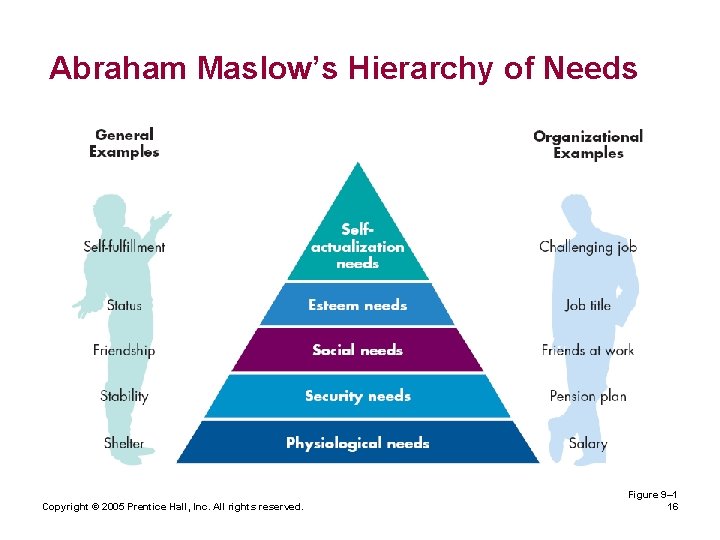
Abraham Maslow’s Hierarchy of Needs Copyright © 2005 Prentice Hall, Inc. All rights reserved. Figure 9– 1 16
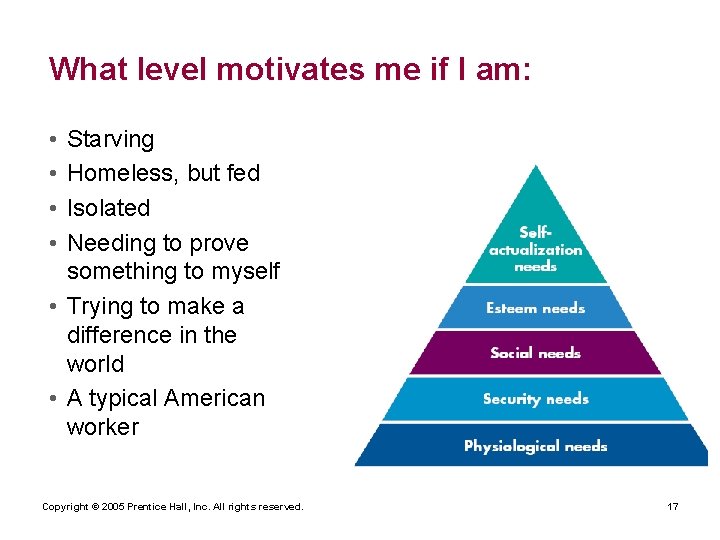
What level motivates me if I am: • • Starving Homeless, but fed Isolated Needing to prove something to myself • Trying to make a difference in the world • A typical American worker Copyright © 2005 Prentice Hall, Inc. All rights reserved. 17
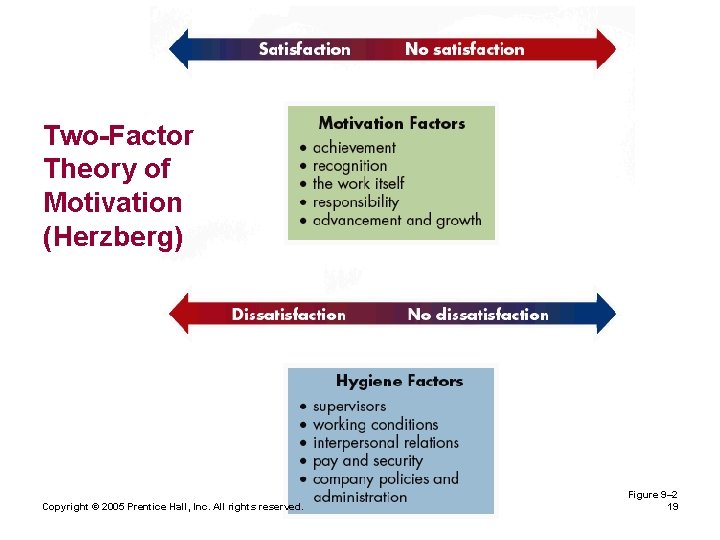
Two-Factor Theory of Motivation (Herzberg) Copyright © 2005 Prentice Hall, Inc. All rights reserved. Figure 9– 2 19
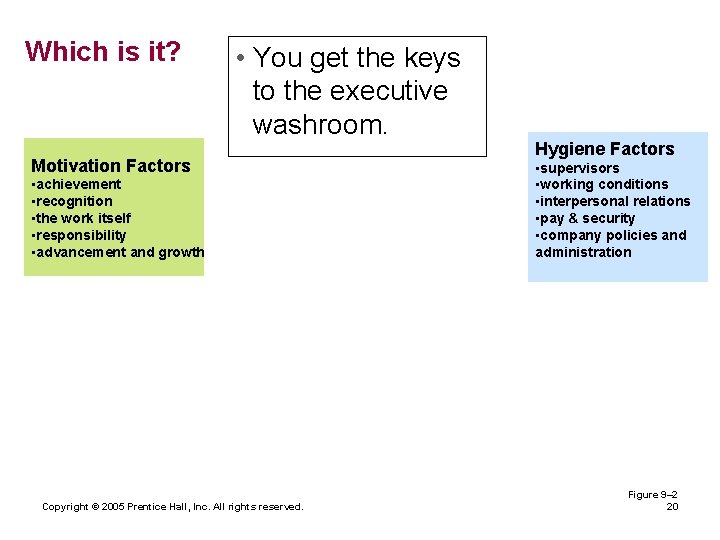
Which is it? • Yourget got just are earn boss alearning the love abonus iskeys forthe driving new completely comfortable to outstanding things executive that cab living. performance? like everyday. unreasonable. washroom. a maniac. Motivation Factors • achievement • recognition • the work itself • responsibility • advancement and growth Copyright © 2005 Prentice Hall, Inc. All rights reserved. Hygiene Factors • supervisors • working conditions • interpersonal relations • pay & security • company policies and administration Figure 9– 2 20
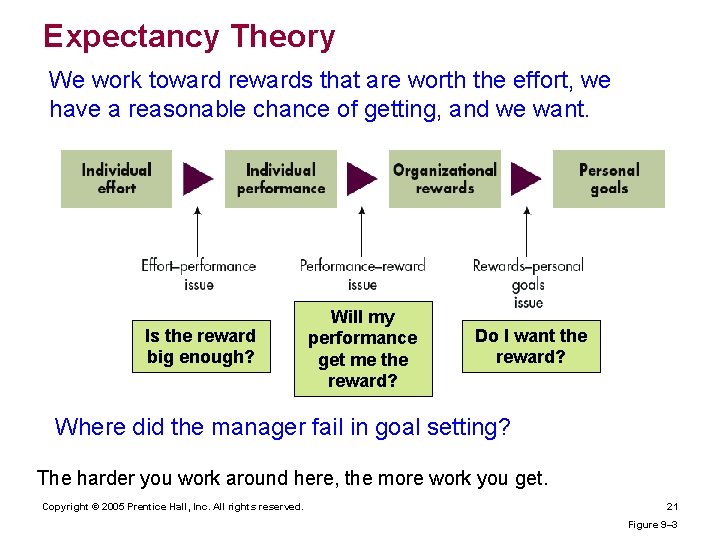
Expectancy Theory We work toward rewards that are worth the effort, we have a reasonable chance of getting, and we want. Is the reward big enough? Will my performance get me the reward? Do I want the reward? Where did the manager fail in goal setting? The To That Oh harder getopen boy! my you next promotion A whole work promotion around $5. 00 is sure Ifor have here, to winning go to the to move more theboss’s to sales work Timbuktu contest you daughter. get. Copyright © 2005 Prentice Hall, Inc. All rights reserved. 21 Figure 9– 3
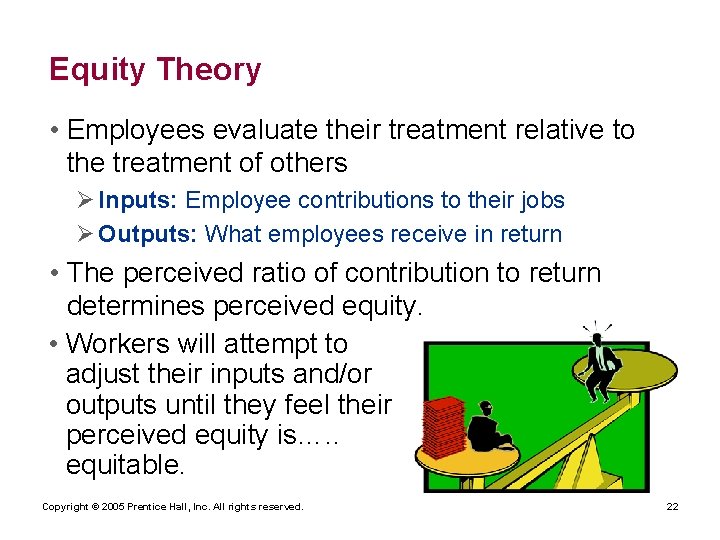
Equity Theory • Employees evaluate their treatment relative to the treatment of others Ø Inputs: Employee contributions to their jobs Ø Outputs: What employees receive in return • The perceived ratio of contribution to return determines perceived equity. • Workers will attempt to adjust their inputs and/or outputs until they feel their perceived equity is…. . equitable. Copyright © 2005 Prentice Hall, Inc. All rights reserved. 22
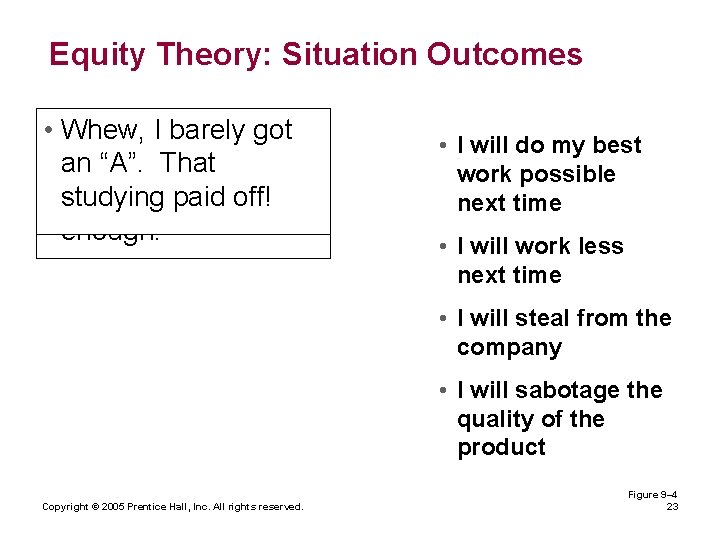
Equity Theory: Situation Outcomes • Whew, My boss That test I barely just took waswon’t all way hard, got the too“A”. pay credit but an easy. ithard, me was for. That asthat I’ll because We much never areas all be II going able am production just studying worth. didn’t totoget paid study an process A’s. off! “A”. suggestion I made. enough. • I will do my best work possible next time • I will work less next time • I will steal from the company • I will sabotage the quality of the product Copyright © 2005 Prentice Hall, Inc. All rights reserved. Figure 9– 4 23
Individual differences in employees Different people are at different points in all of these scales. Personality typing is one technique to gauge how to manage or lead individuals. • Personality type lessons we’ll learn: Ø Your strengths Ø Your weaknesses Ø How you need to be treated Ø How others need you to treat them Copyright © 2005 Prentice Hall, Inc. All rights reserved. 24
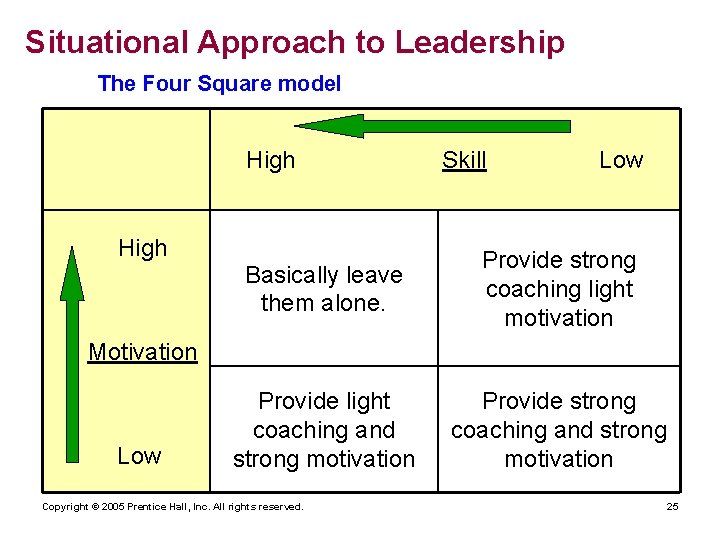
Situational Approach to Leadership The Four Square model High Skill Low Basically leave them alone. Provide strong coaching light motivation Provide light coaching and strong motivation Provide strong coaching and strong motivation Motivation Low Copyright © 2005 Prentice Hall, Inc. All rights reserved. 25
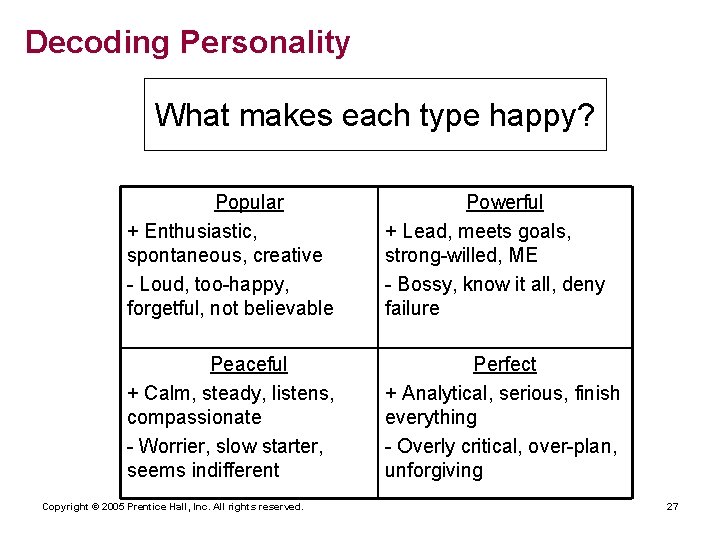
Decoding Personality What Where types Can makes doany make conflicts each type strong type lead? happen? happy? teams? Popular + Enthusiastic, spontaneous, creative - Loud, too-happy, forgetful, not believable Powerful + Lead, meets goals, strong-willed, ME - Bossy, know it all, deny failure Peaceful + Calm, steady, listens, compassionate - Worrier, slow starter, seems indifferent Perfect + Analytical, serious, finish everything - Overly critical, over-plan, unforgiving Copyright © 2005 Prentice Hall, Inc. All rights reserved. 27
Follow up questions: • What strengths does your personality type give you? How do these strengths show up in your behaviors? • What weaknesses does your personality type give you? How do these weaknesses show up in your behaviors? • What other personality type do you find most irritating? Ø Which of their behaviors are the most troublesome to you? Ø Which of your behaviors most upset them? • Create two scripts to role play. Try to get them to take charge of organizing a customer appreciation party for you. v Script 1: What you want to naturally say. – What happens when you actually use this approach? v Script 2: The approach your target would find most effective – long term. Copyright © 2005 Prentice Hall, Inc. All rights reserved. 29
Strategies for Enhancing Job Satisfaction and Morale • Reinforcement/behavior modification • Management by objectives • Participative management and empowerment • Job enrichment and job redesign • Modified work schedules Then we will see if we can connect strategy theory to apply some serious motivation! Copyright © 2005 Prentice Hall, Inc. All rights reserved. 31

Reinforcement/Behavior Modification Punishment When negative consequences are attached directly to undesirable behavior. Positive Reinforcement When rewards are tied directly to performance. No one is apathetic except in the pursuit of someone else’s goals. - Anonymous Copyright © 2005 Prentice Hall, Inc. All rights reserved. 32
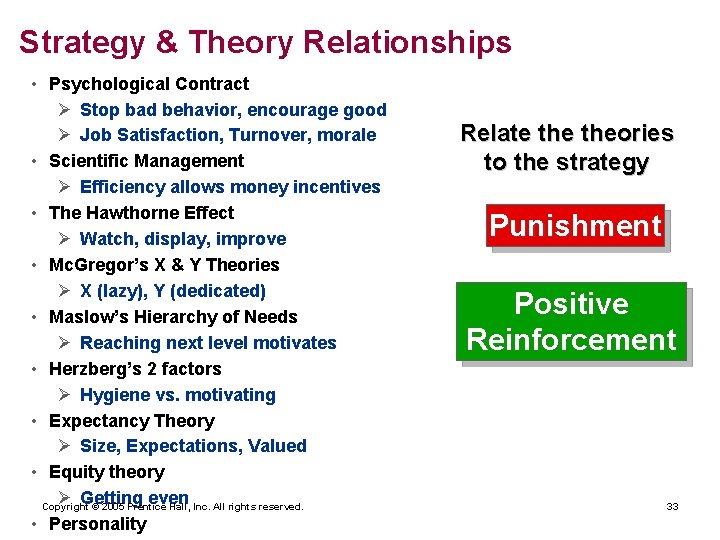
Strategy & Theory Relationships • Psychological Contract Ø Stop bad behavior, encourage good Ø Job Satisfaction, Turnover, morale • Scientific Management Ø Efficiency allows money incentives • The Hawthorne Effect Ø Watch, display, improve • Mc. Gregor’s X & Y Theories Ø X (lazy), Y (dedicated) • Maslow’s Hierarchy of Needs Ø Reaching next level motivates • Herzberg’s 2 factors Ø Hygiene vs. motivating • Expectancy Theory Ø Size, Expectations, Valued • Equity theory Ø Getting even Copyright © 2005 Prentice Hall, Inc. All rights reserved. • Personality Relate theories to the strategy Punishment Positive Reinforcement 33
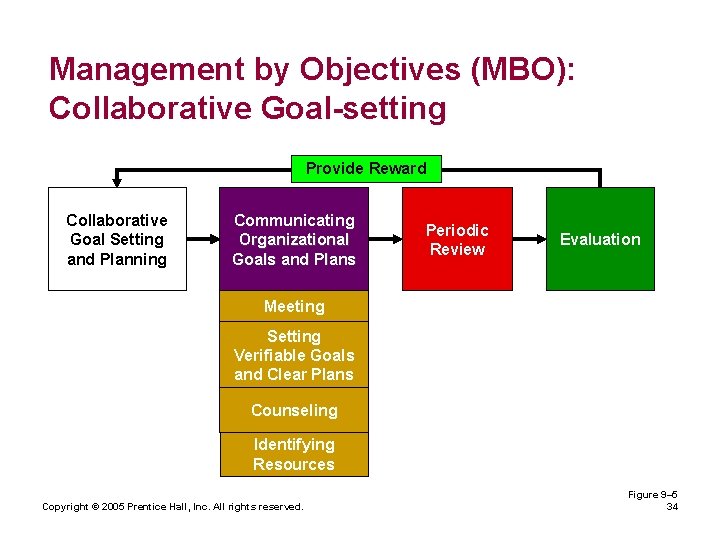
Management by Objectives (MBO): Collaborative Goal-setting Provide Reward Collaborative Goal Setting and Planning Communicating Organizational Goals and Plans Periodic Review Evaluation Meeting Setting Verifiable Goals and Clear Plans Counseling Identifying Resources Copyright © 2005 Prentice Hall, Inc. All rights reserved. Figure 9– 5 34
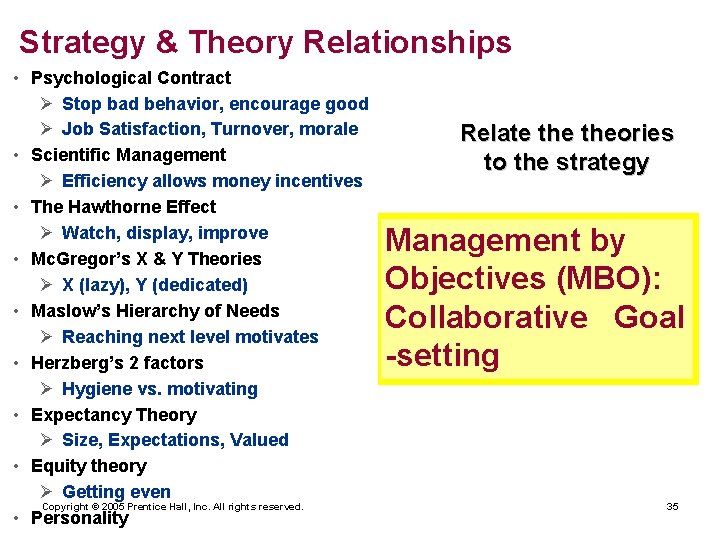
Strategy & Theory Relationships • Psychological Contract Ø Stop bad behavior, encourage good Ø Job Satisfaction, Turnover, morale • Scientific Management Ø Efficiency allows money incentives • The Hawthorne Effect Ø Watch, display, improve • Mc. Gregor’s X & Y Theories Ø X (lazy), Y (dedicated) • Maslow’s Hierarchy of Needs Ø Reaching next level motivates • Herzberg’s 2 factors Ø Hygiene vs. motivating • Expectancy Theory Ø Size, Expectations, Valued • Equity theory Ø Getting even Copyright © 2005 Prentice Hall, Inc. All rights reserved. • Personality Relate theories to the strategy Management by Objectives (MBO): Collaborative Goal -setting 35
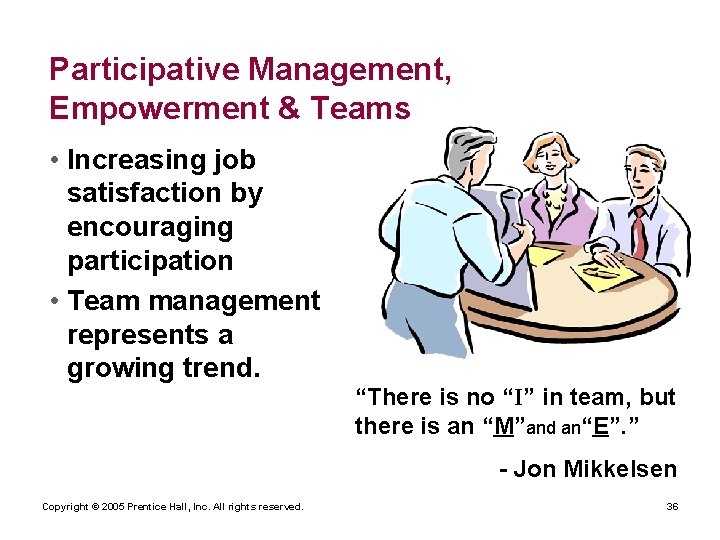
Participative Management, Empowerment & Teams • Increasing job satisfaction by encouraging participation • Team management represents a growing trend. “There is no “I” in team, but there is an “M”and an“E”. ” - Jon Mikkelsen Copyright © 2005 Prentice Hall, Inc. All rights reserved. 36
Strategy & Theory Relationships • Psychological Contract Ø Stop bad behavior, encourage good Ø Job Satisfaction, Turnover, morale • Scientific Management Ø Efficiency allows money incentives • The Hawthorne Effect Ø Watch, display, improve • Mc. Gregor’s X & Y Theories Ø X (lazy), Y (dedicated) • Maslow’s Hierarchy of Needs Ø Reaching next level motivates • Herzberg’s 2 factors Ø Hygiene vs. motivating • Expectancy Theory Ø Size, Expectations, Valued • Equity theory Ø Getting even Copyright © 2005 Prentice Hall, Inc. All rights reserved. • Personality Relate theories to the strategy Empowerment & Teams 37
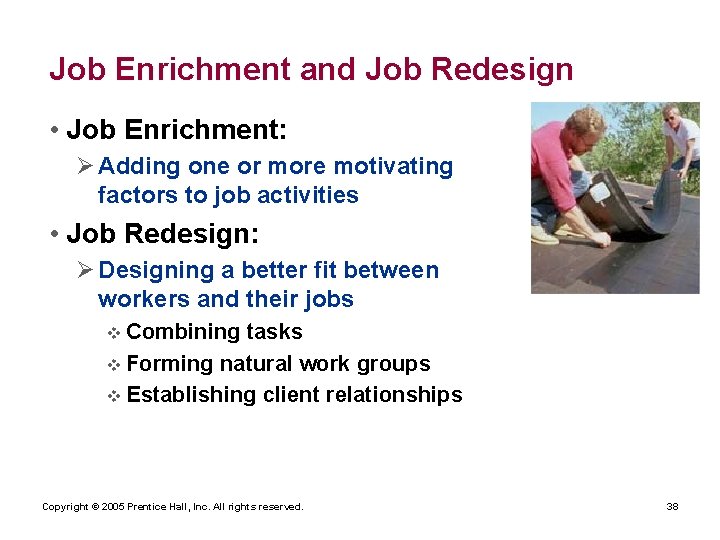
Job Enrichment and Job Redesign • Job Enrichment: Ø Adding one or more motivating factors to job activities • Job Redesign: Ø Designing a better fit between workers and their jobs v Combining tasks v Forming natural work groups v Establishing client relationships Copyright © 2005 Prentice Hall, Inc. All rights reserved. 38
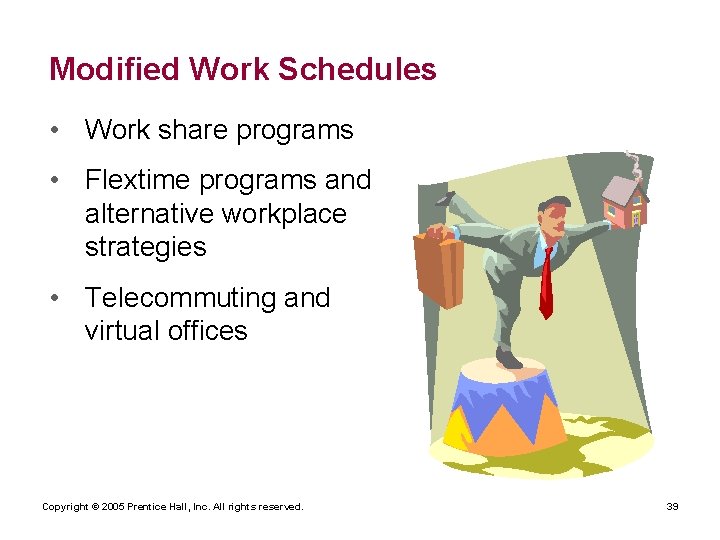
Modified Work Schedules • Work share programs • Flextime programs and alternative workplace strategies • Telecommuting and virtual offices Copyright © 2005 Prentice Hall, Inc. All rights reserved. 39
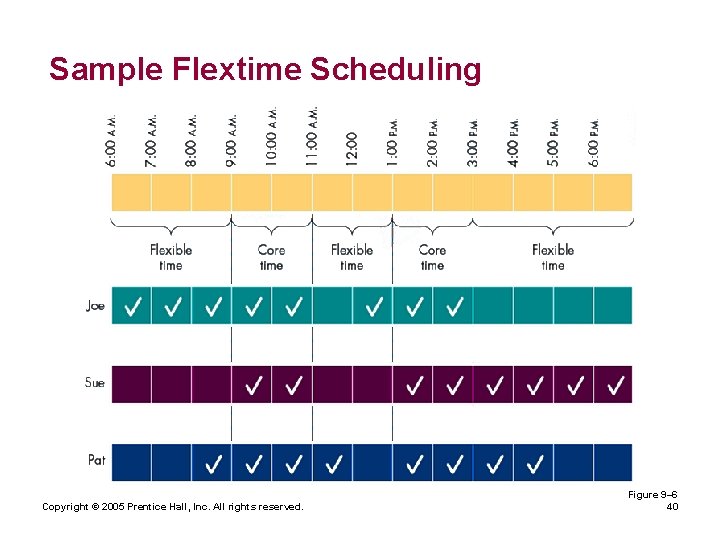
Sample Flextime Scheduling Copyright © 2005 Prentice Hall, Inc. All rights reserved. Figure 9– 6 40
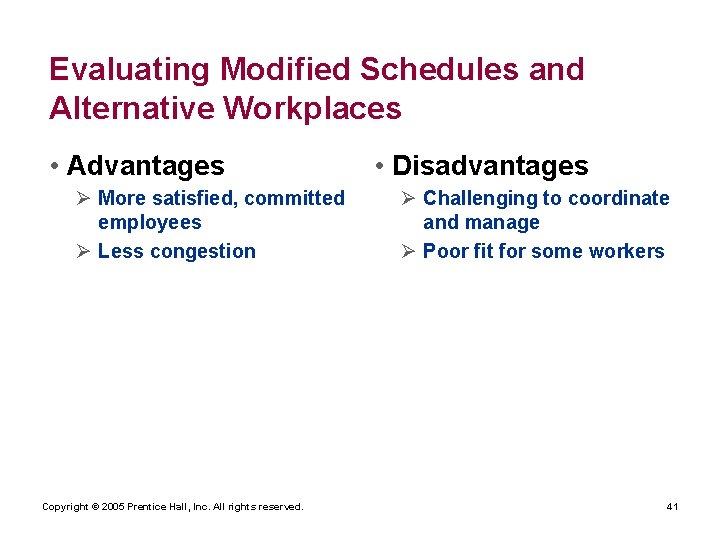
Evaluating Modified Schedules and Alternative Workplaces • Advantages Ø More satisfied, committed employees Ø Less congestion Copyright © 2005 Prentice Hall, Inc. All rights reserved. • Disadvantages Ø Challenging to coordinate and manage Ø Poor fit for some workers 41
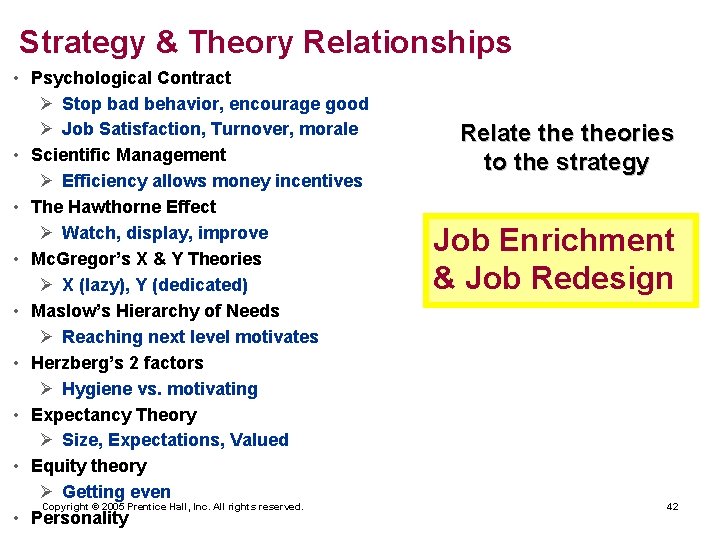
Strategy & Theory Relationships • Psychological Contract Ø Stop bad behavior, encourage good Ø Job Satisfaction, Turnover, morale • Scientific Management Ø Efficiency allows money incentives • The Hawthorne Effect Ø Watch, display, improve • Mc. Gregor’s X & Y Theories Ø X (lazy), Y (dedicated) • Maslow’s Hierarchy of Needs Ø Reaching next level motivates • Herzberg’s 2 factors Ø Hygiene vs. motivating • Expectancy Theory Ø Size, Expectations, Valued • Equity theory Ø Getting even Copyright © 2005 Prentice Hall, Inc. All rights reserved. • Personality Relate theories to the strategy Job Enrichment & Job Redesign 42
Leadership The process of motivating others to work to meet specific objectives Copyright © 2005 Prentice Hall, Inc. All rights reserved. 43
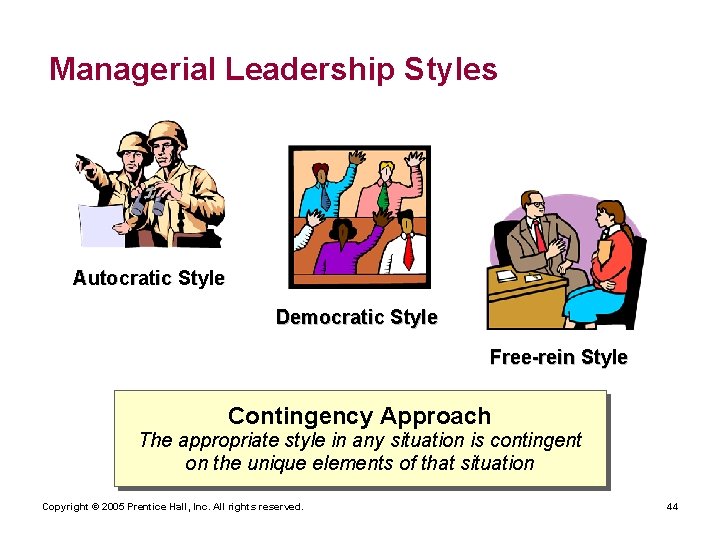
Managerial Leadership Styles Autocratic Style Democratic Style Free-rein Style Contingency Approach The appropriate style in any situation is contingent on the unique elements of that situation Copyright © 2005 Prentice Hall, Inc. All rights reserved. 44
Strategy & Theory Relationships • Psychological Contract Ø Stop bad behavior, encourage good Ø Job satisfaction, turnover, morale • Scientific Management Ø Efficiency allows money incentives • The Hawthorne Effect Ø Watch, teamwork, improve • Mc. Gregor’s X & Y Theories Ø X (lazy), Y (dedicated) • Maslow’s Hierarchy of Needs Ø Reaching next level motivates • Herzberg’s 2 factors Ø Hygiene vs. motivating • Expectancy Theory Ø Size, Expectations, Valued • Equity theory Ø Getting even Copyright © 2005 Prentice Hall, Inc. All rights reserved. • Personality Managerial Leadership Style: Autocratic Democratic Free-reign 45
Motivation and Leadership in the 21 st Century • Motivation Ø Security and pay are no longer enough • Leadership Ø “Coach” mentality v Supporting role Ø Diversity Ø Flexibility • Leading down, sideways, & up Copyright © 2005 Prentice Hall, Inc. All rights reserved. 46
Chapter Review • Describe psychological contracts • Discuss the importance of job satisfaction and employee morale • Summarize the most important theories of employee motivation • Describe strategies to improve job satisfaction and employee motivation • Discuss different managerial styles Copyright © 2005 Prentice Hall, Inc. All rights reserved. 47
- Slides: 41