
Chapter 8 DNA Fingerprinting and Forensic Analysis Introduction

- Slides: 30
Chapter 8 DNA Fingerprinting and Forensic Analysis
Introduction to DNA Fingerprinting and Forensics v Forensic science can be defined as the intersection of law and science v First photography-then fingerprint- then, in 1985, DNA Fingerprinting
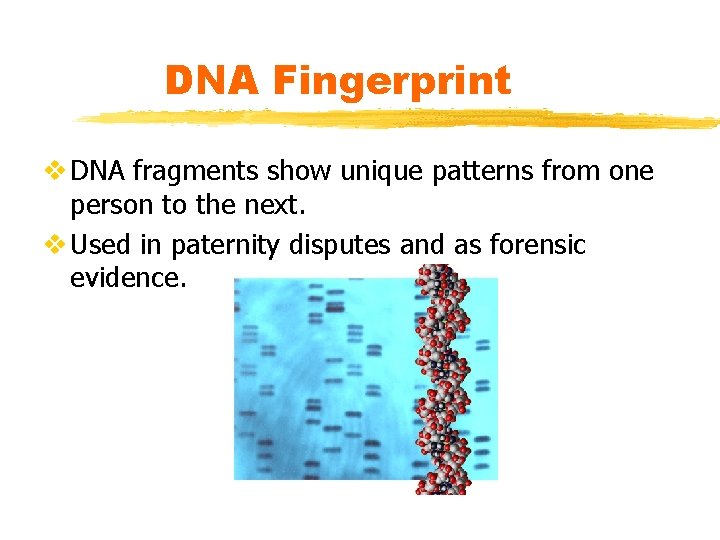
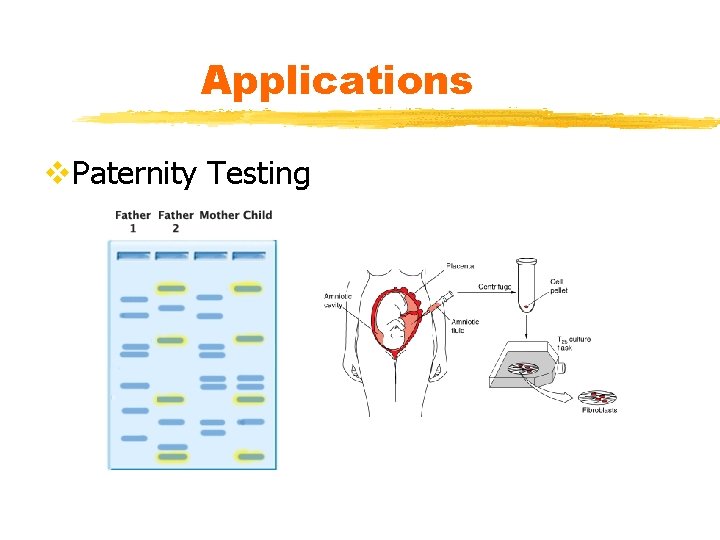
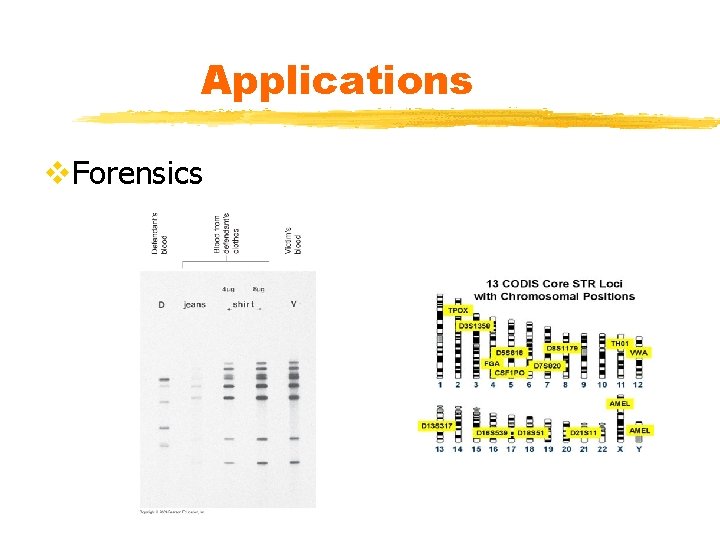
DNA Fingerprint v DNA fragments show unique patterns from one person to the next. v Used in paternity disputes and as forensic evidence.
Preparing a DNA Fingerprint v Specimen Collection- Could be a licked envelope, dirty laundry, a cigarette butt, saliva • Special precautions in handling specimens: gloves, disposable instruments, avoid talking and sneezing, avoid touching sample with your skin, air-dry the evidence before packaging so mold does not grow • Enemies of evidence: sunlight, high temperatures, bacteria, moisture • Ideal sample: 1 m. L of fresh, whole blood (white blood cells) treated with EDTA
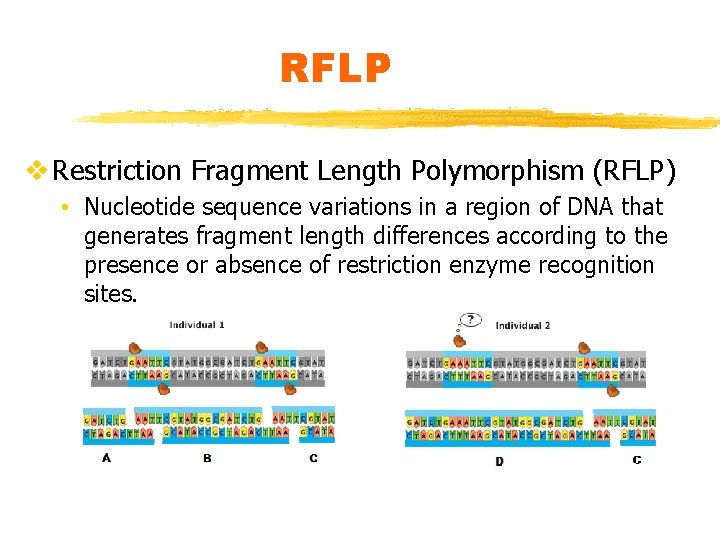
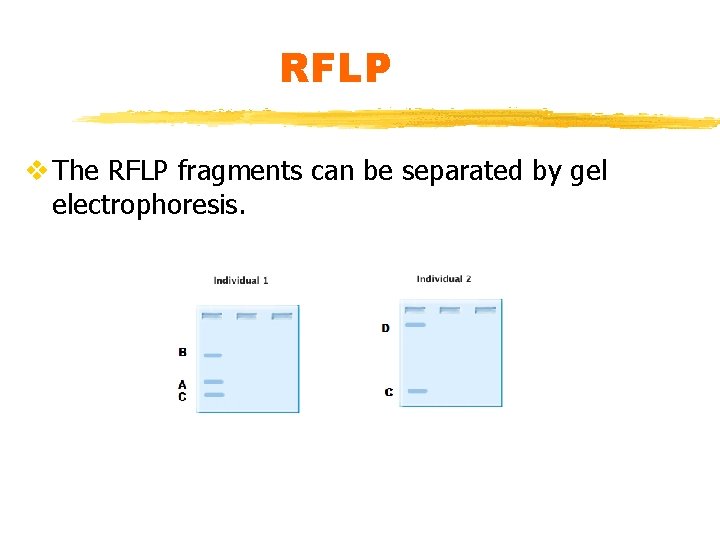
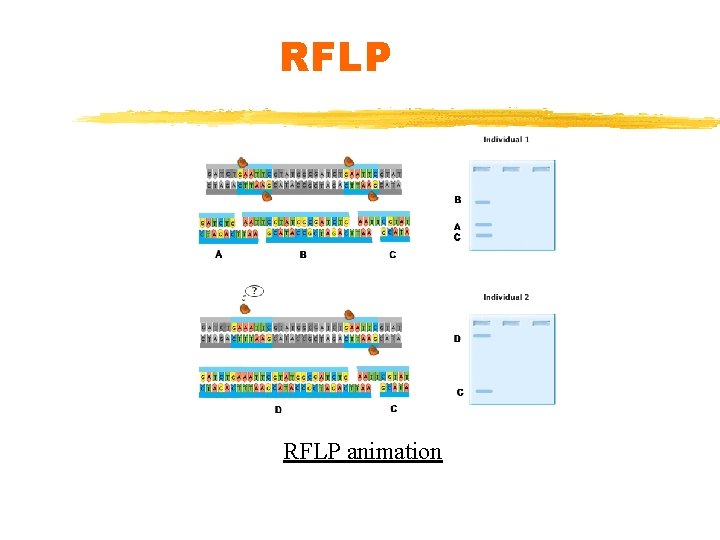
RFLP v Restriction Fragment Length Polymorphism (RFLP) • Nucleotide sequence variations in a region of DNA that generates fragment length differences according to the presence or absence of restriction enzyme recognition sites.
RFLP v The RFLP fragments can be separated by gel electrophoresis.
RFLP animation
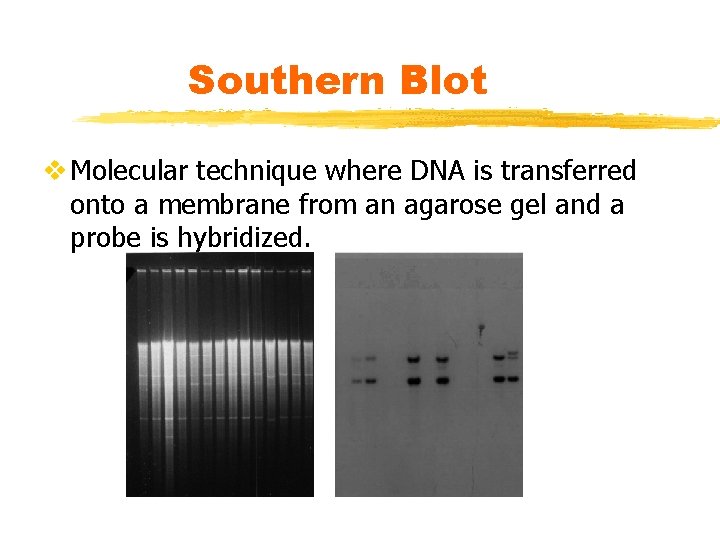
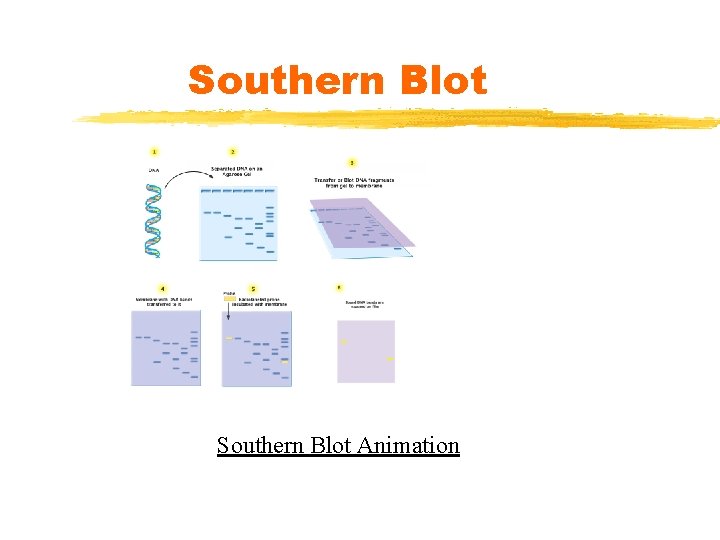
Southern Blot v Molecular technique where DNA is transferred onto a membrane from an agarose gel and a probe is hybridized.
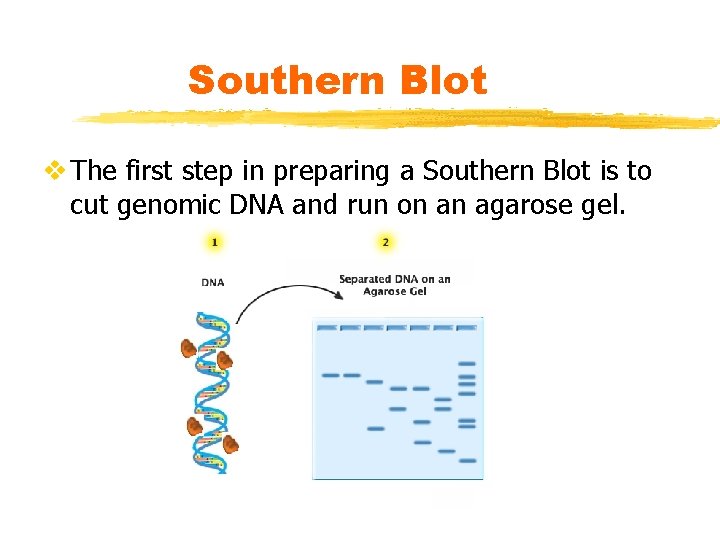
Southern Blot v The first step in preparing a Southern Blot is to cut genomic DNA and run on an agarose gel.
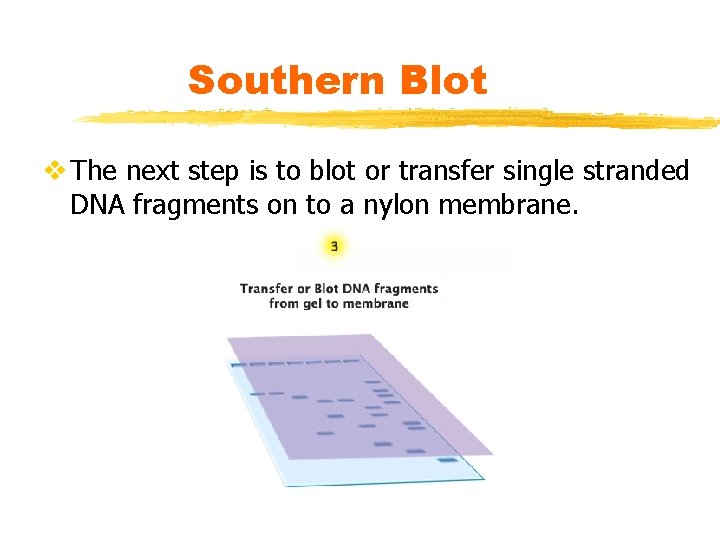
Southern Blot v The next step is to blot or transfer single stranded DNA fragments on to a nylon membrane.
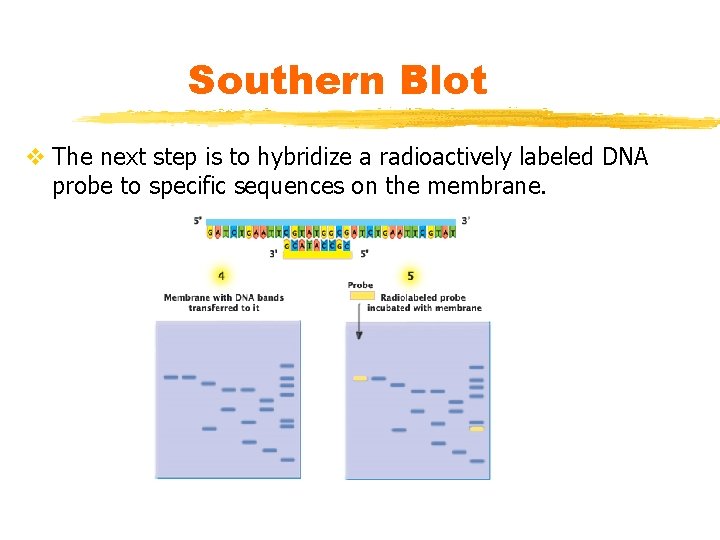
Southern Blot v The next step is to hybridize a radioactively labeled DNA probe to specific sequences on the membrane.
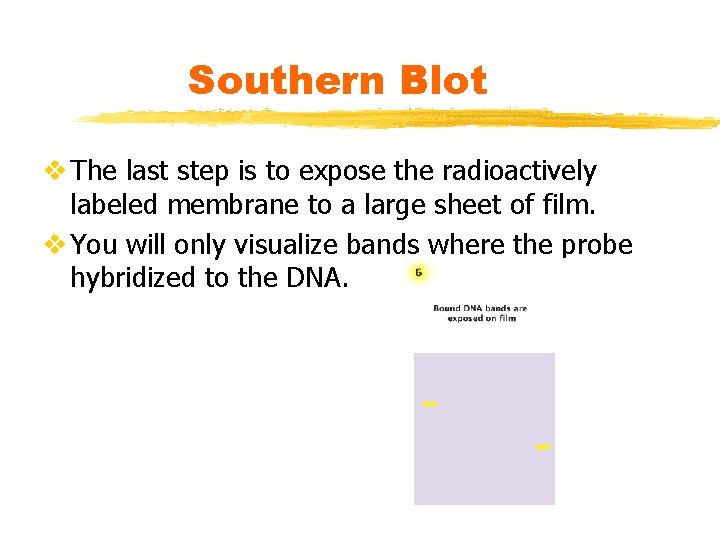
Southern Blot v The last step is to expose the radioactively labeled membrane to a large sheet of film. v You will only visualize bands where the probe hybridized to the DNA.
Southern Blot Animation
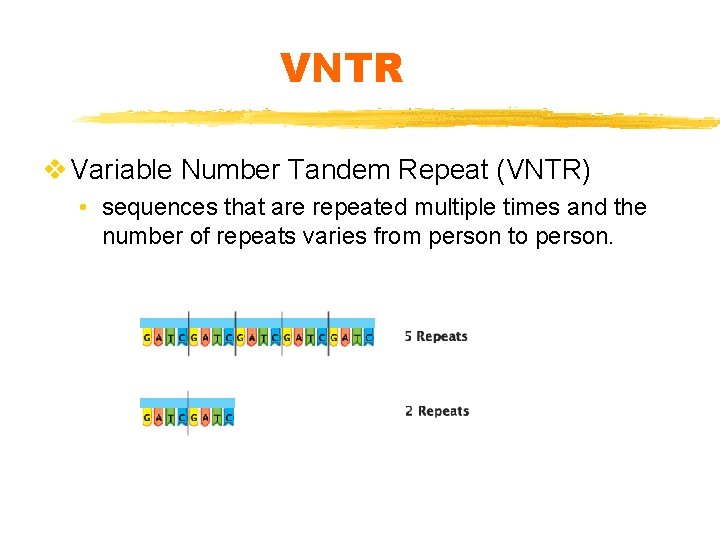
VNTR v Variable Number Tandem Repeat (VNTR) • sequences that are repeated multiple times and the number of repeats varies from person to person.
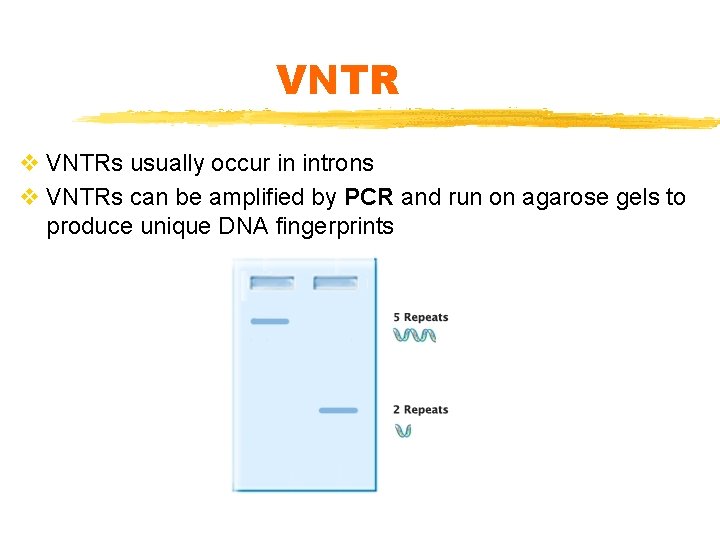
VNTR v VNTRs usually occur in introns v VNTRs can be amplified by PCR and run on agarose gels to produce unique DNA fingerprints
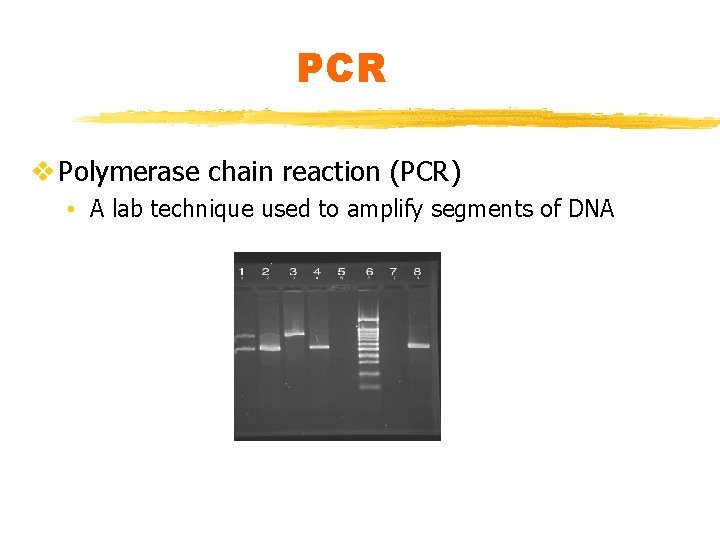
PCR v Polymerase chain reaction (PCR) • A lab technique used to amplify segments of DNA
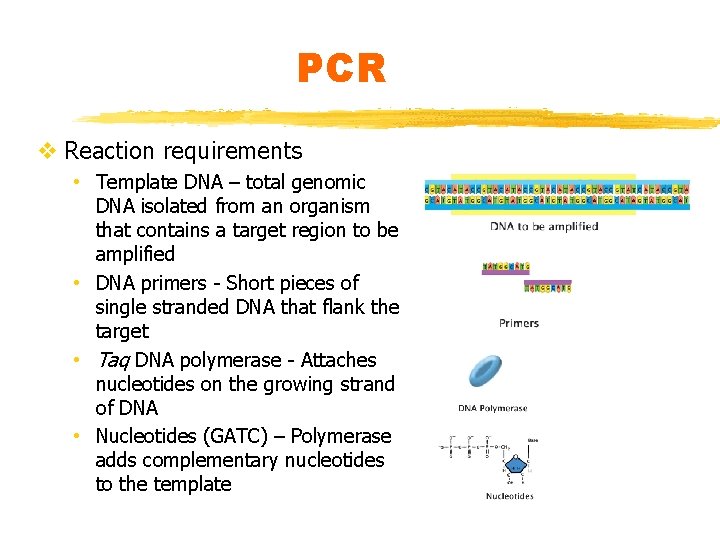
PCR v Reaction requirements • Template DNA – total genomic DNA isolated from an organism that contains a target region to be amplified • DNA primers - Short pieces of single stranded DNA that flank the target • Taq DNA polymerase - Attaches nucleotides on the growing strand of DNA • Nucleotides (GATC) – Polymerase adds complementary nucleotides to the template
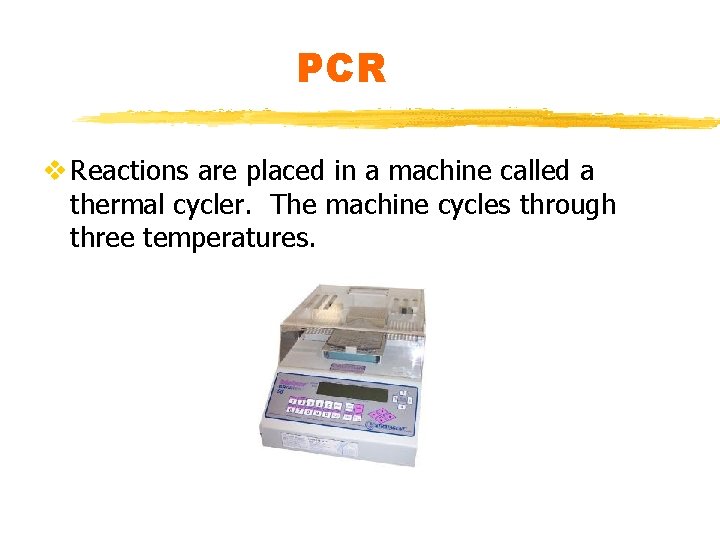
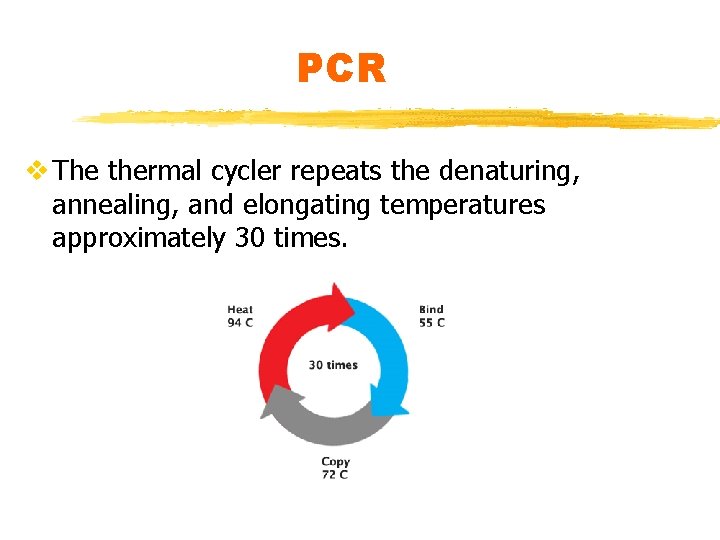
PCR v Reactions are placed in a machine called a thermal cycler. The machine cycles through three temperatures.
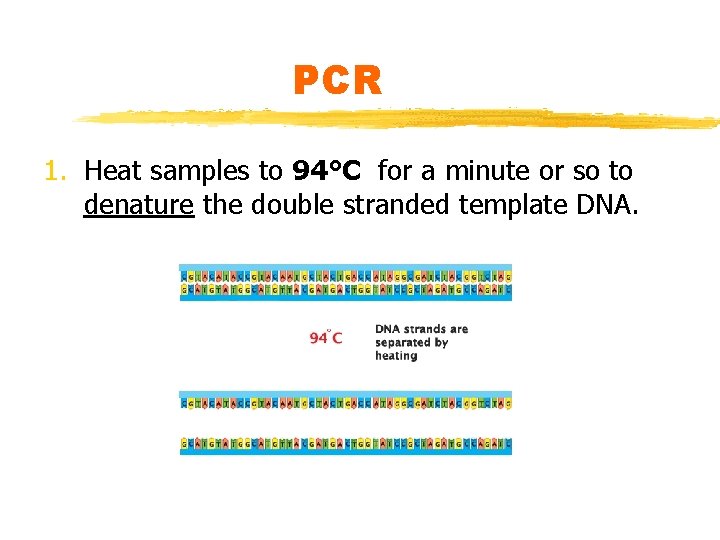
PCR 1. Heat samples to 94°C for a minute or so to denature the double stranded template DNA.
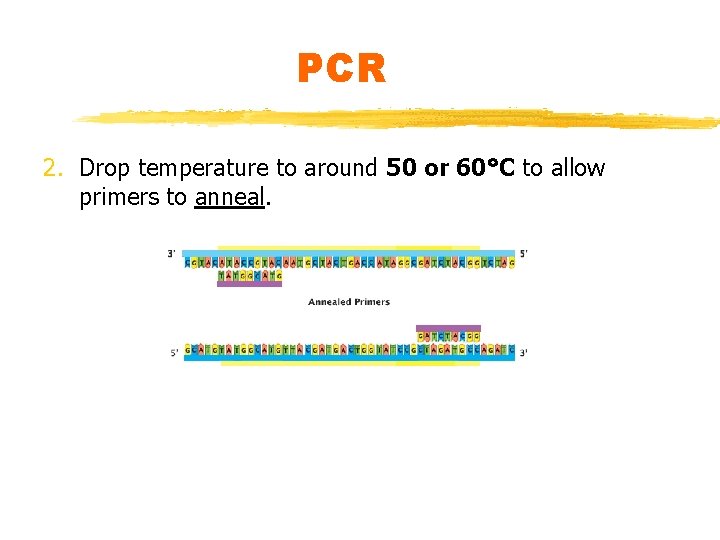
PCR 2. Drop temperature to around 50 or 60°C to allow primers to anneal.
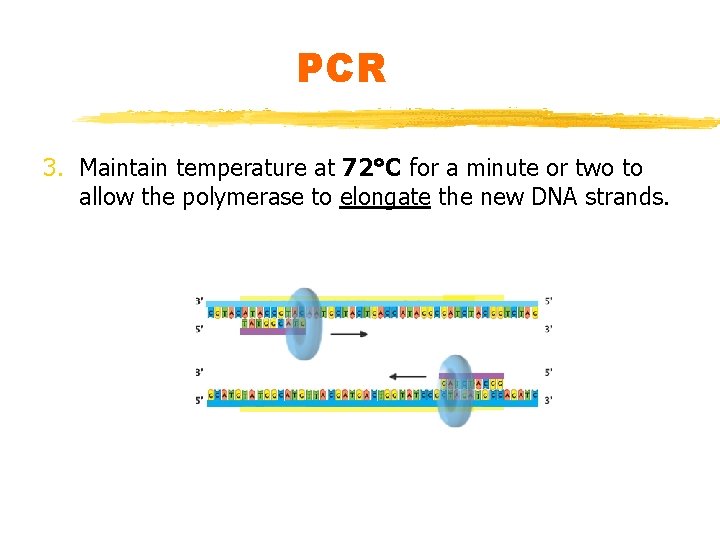
PCR 3. Maintain temperature at 72°C for a minute or two to allow the polymerase to elongate the new DNA strands.
PCR v The thermal cycler repeats the denaturing, annealing, and elongating temperatures approximately 30 times.
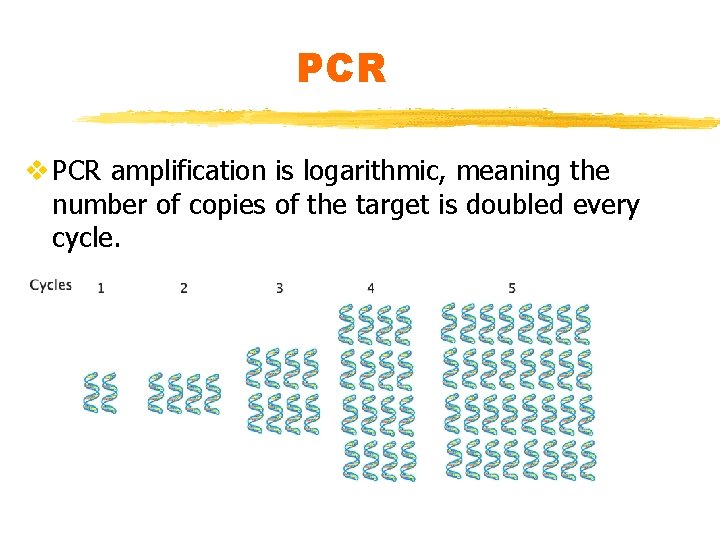
PCR v PCR amplification is logarithmic, meaning the number of copies of the target is doubled every cycle.
PCR animation
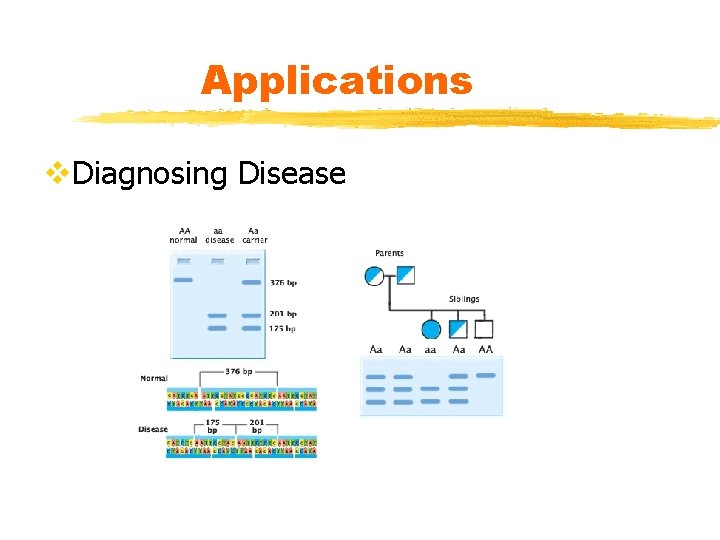
Applications v. Diagnosing Disease
Applications v. Paternity Testing
Applications v. Forensics
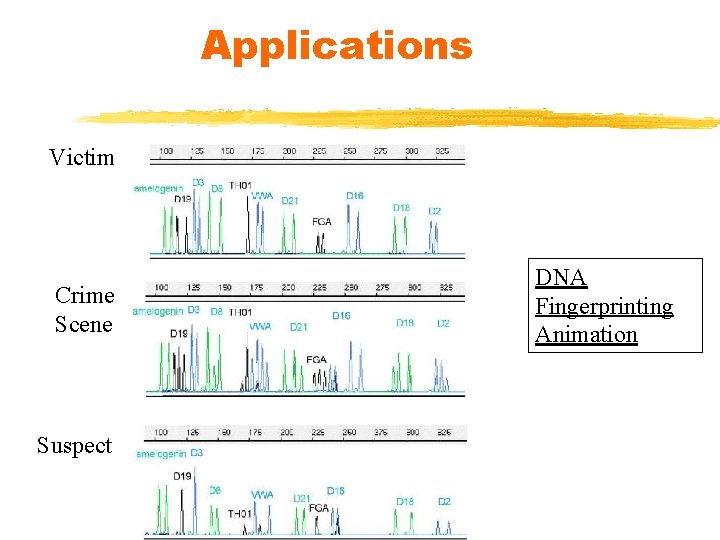
Applications Victim Crime Scene Suspect DNA Fingerprinting Animation
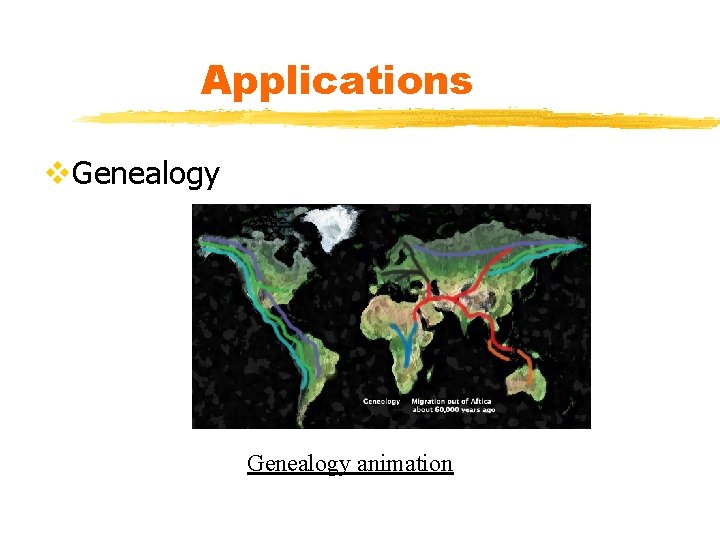
Applications v. Genealogy animation
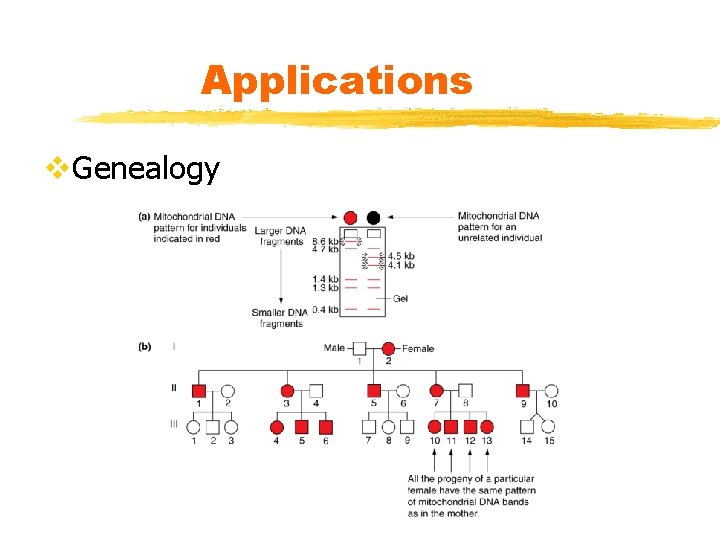
Applications v. Genealogy