
Chapter 8 Developing and Managing Knowledge Repositories 1

- Slides: 26
Chapter 8 Developing and Managing Knowledge Repositories 1
Introduction • Knowledge repositories support effective management of knowledge content in the KMS • They provide a systematic single access point for knowledge activities and sources • Considered planning and management of the repository assists with its optimal use and support by knowledge users 2
Effective Knowledge Repositories (1/11) • • • Link users and core knowledge Single point of entry Codify explicit knowledge in a logical manner Direct the user to enabling sources Vehicle for contributing new knowledge Provide personalized knowledge services 3
Effective Knowledge Repositories (2/11) Knowledge repository content • Factual – terminology, specific details and elements or organizational practice • Conceptual – theories, models, principles and generalisations • Procedural – skills, techniques and methods • Meta-cognitive – learning, thinking, problemsolving 4
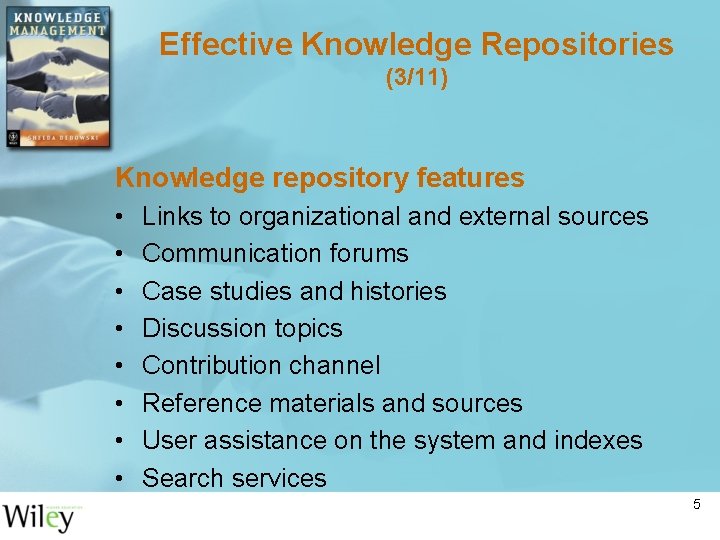
Effective Knowledge Repositories (3/11) Knowledge repository features • • Links to organizational and external sources Communication forums Case studies and histories Discussion topics Contribution channel Reference materials and sources User assistance on the system and indexes Search services 5
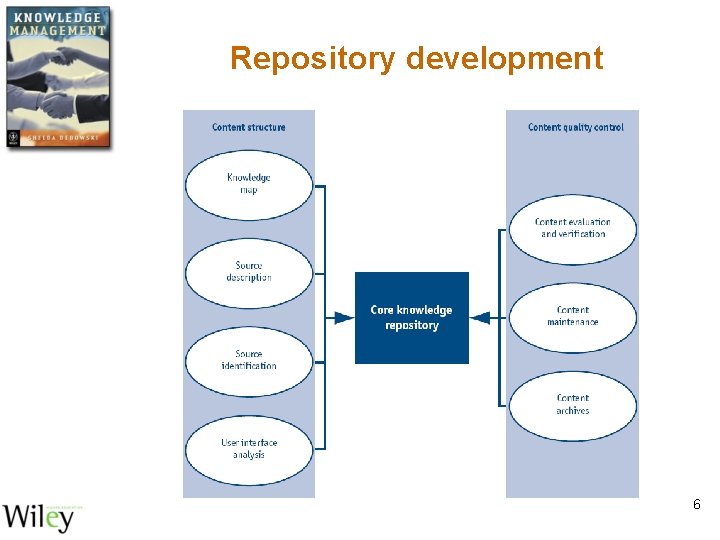
Repository development 6
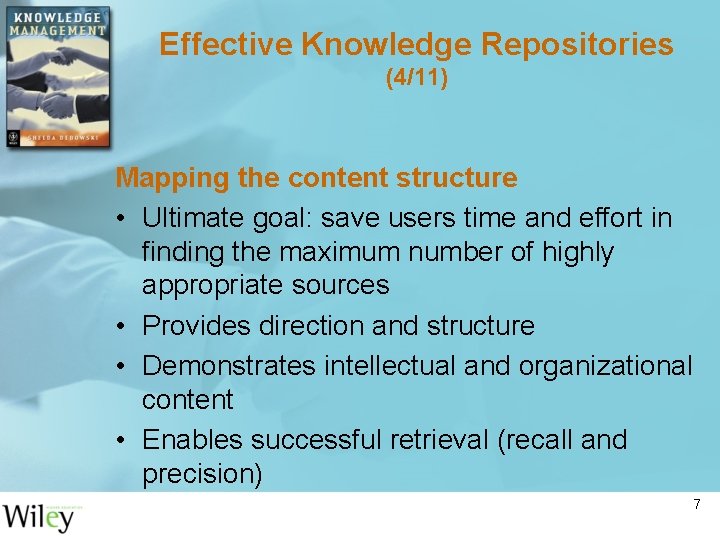
Effective Knowledge Repositories (4/11) Mapping the content structure • Ultimate goal: save users time and effort in finding the maximum number of highly appropriate sources • Provides direction and structure • Demonstrates intellectual and organizational content • Enables successful retrieval (recall and precision) 7
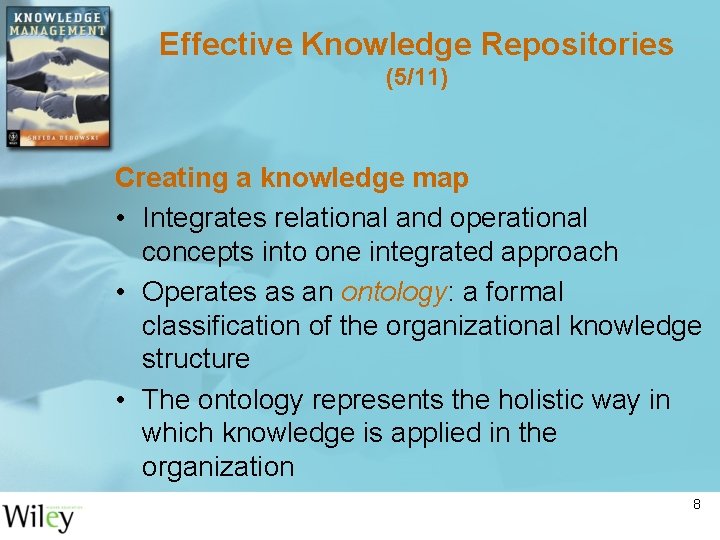
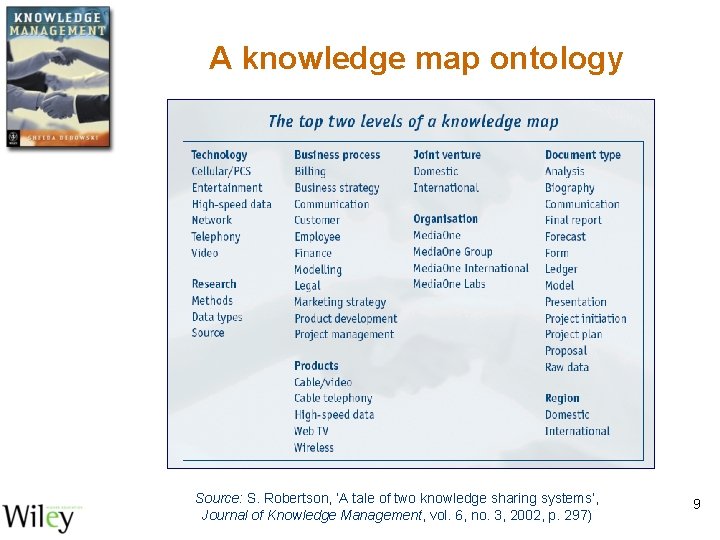
Effective Knowledge Repositories (5/11) Creating a knowledge map • Integrates relational and operational concepts into one integrated approach • Operates as an ontology: a formal classification of the organizational knowledge structure • The ontology represents the holistic way in which knowledge is applied in the organization 8
A knowledge map ontology Source: S. Robertson, ‘A tale of two knowledge sharing systems’, Journal of Knowledge Management, vol. 6, no. 3, 2002, p. 297) 9
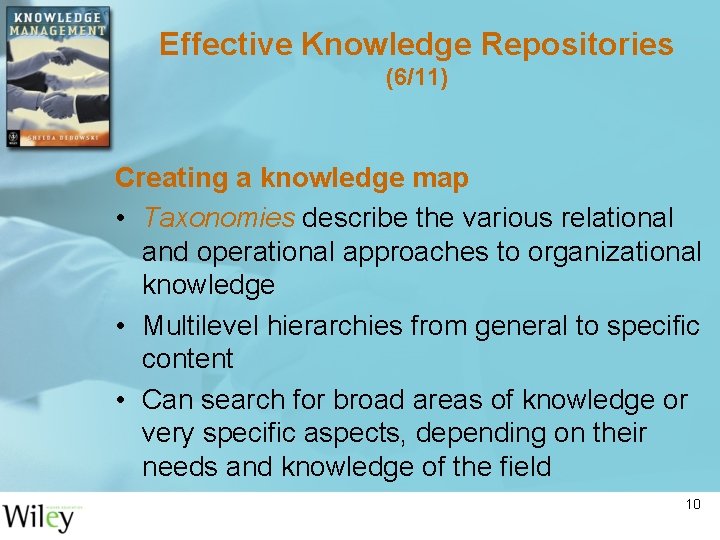
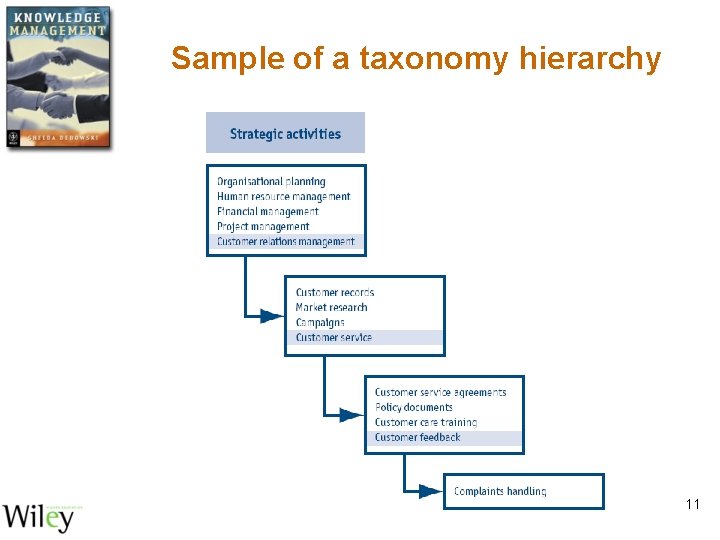
Effective Knowledge Repositories (6/11) Creating a knowledge map • Taxonomies describe the various relational and operational approaches to organizational knowledge • Multilevel hierarchies from general to specific content • Can search for broad areas of knowledge or very specific aspects, depending on their needs and knowledge of the field 10
Sample of a taxonomy hierarchy 11
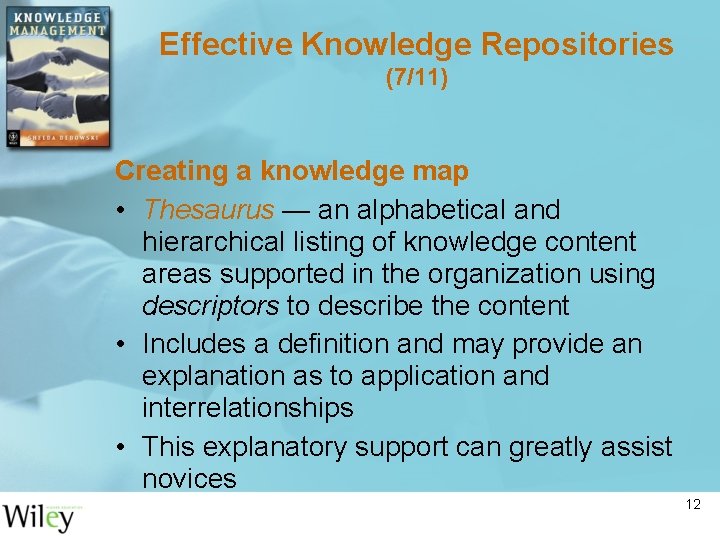
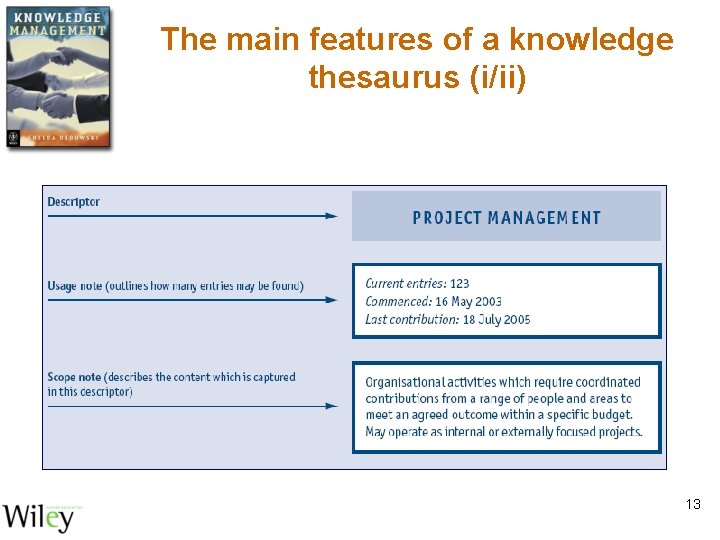
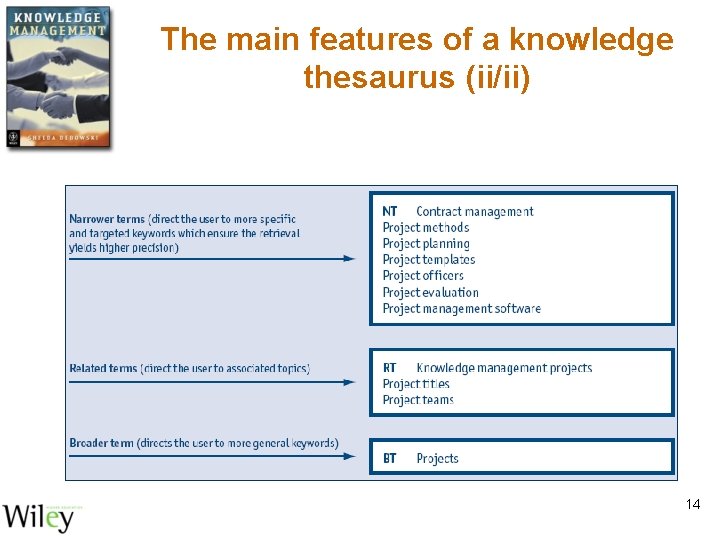
Effective Knowledge Repositories (7/11) Creating a knowledge map • Thesaurus — an alphabetical and hierarchical listing of knowledge content areas supported in the organization using descriptors to describe the content • Includes a definition and may provide an explanation as to application and interrelationships • This explanatory support can greatly assist novices 12
The main features of a knowledge thesaurus (i/ii) 13
The main features of a knowledge thesaurus (ii/ii) 14
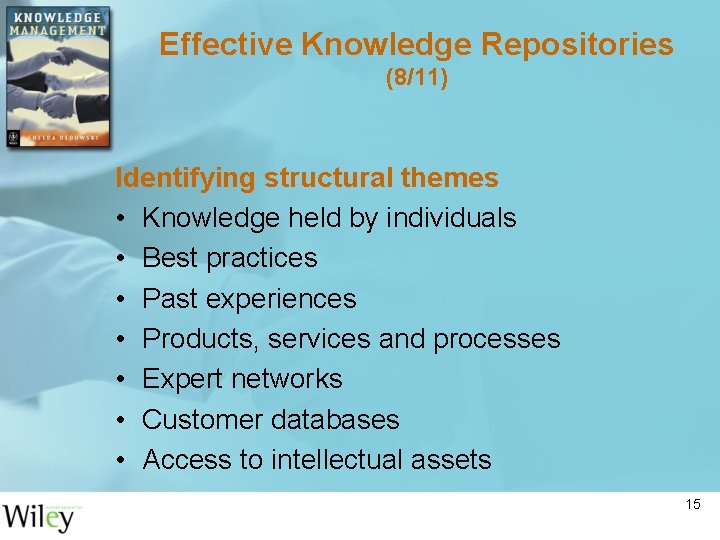
Effective Knowledge Repositories (8/11) Identifying structural themes • Knowledge held by individuals • Best practices • Past experiences • Products, services and processes • Expert networks • Customer databases • Access to intellectual assets 15
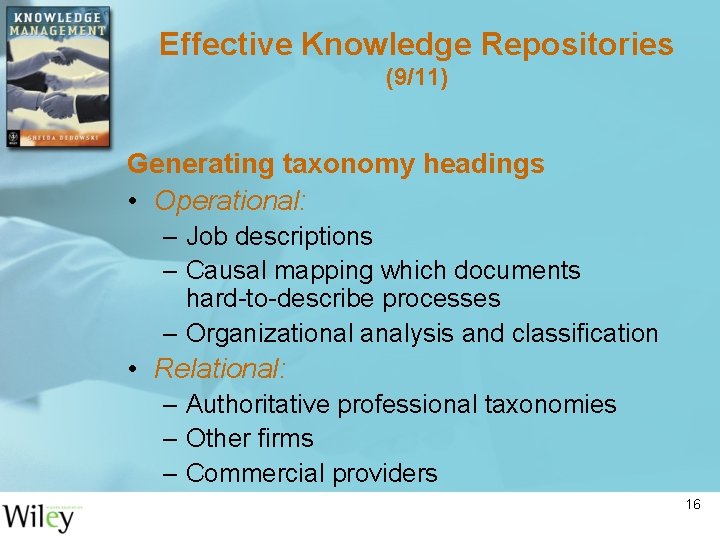
Effective Knowledge Repositories (9/11) Generating taxonomy headings • Operational: – Job descriptions – Causal mapping which documents hard-to-describe processes – Organizational analysis and classification • Relational: – Authoritative professional taxonomies – Other firms – Commercial providers 16
Effective Knowledge Repositories (10/11) Source description • Increased classification of the source on the basis of metadata – e. g. author, date of contribution, level of access, contact names, project titles etc • Templates and standardization can assist in data classification 17
Effective Knowledge Repositories (11/11) User interface analysis • Screen accessibility • Navigation • Ease of retrieval and lodgement of knowledge • Security processes • Tools and other support 18
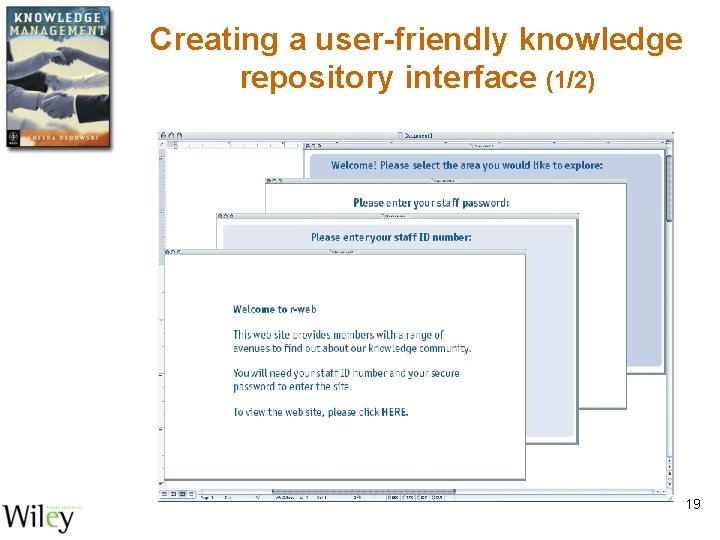
Creating a user-friendly knowledge repository interface (1/2) 19
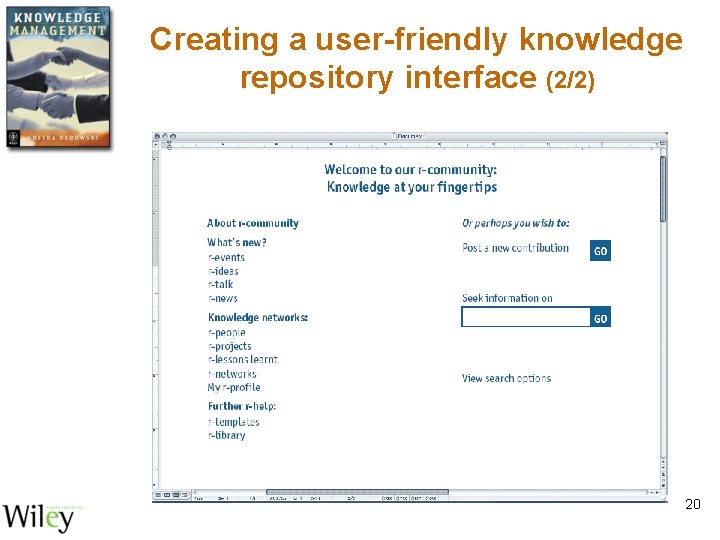
Creating a user-friendly knowledge repository interface (2/2) 20
Repository Quality Control (1/4) • Monitors the value and suitability of contributed sources • Verifies the credibility of the data • Maintains the relevance and viability of the repository • Archives sources which are no longer current 21
Repository Quality Control (2/4) Content evaluation / verification • Knowledge life • Authoritative source • Contributor profile • Accuracy of inputs / editorial policy • Knowledge officers • Downstream / upstream filtering 22
Repository Quality Control (3/4) Content maintenance • Is knowledge current? • Changes to terminology, business focus, loss of expertise etc • High resource commitment to maintain the repository • Taxonomy and descriptor monitoring • Maintaining source information accuracy 23
Repository Quality Control (4/4) Content archives • Usability • Perceived value • Tagged as to importance • Archive old sources? • Policies on archival principles 24
Concluding Points • Knowledge repositories are most effective if they are structured in a systematic manner • A range of strategies can be considered: development of ontologies, thesauruses, use of metatags, strong quality control • The ongoing currency and integrity of the system need to be rigorously preserved and protected 25
Today’s focus questions: • How can a highly effective knowledge repository be developed? • What are the maintenance issues which will need to be considered in managing a repository? – Lecture reference: Debowski, Chapter 8 26